




Japanese Christmas Cake: A Complete Guide
From the classic strawberry shortcake to premium hotel creations — everything you need to know about Japan’s most beloved holiday tradition
Every year on Christmas Eve, almost every family in Japan opens a white box to reveal a cake covered in clouds of fresh whipped cream and jewel-bright strawberries. Japanese Christmas cake (クリスマスケーキ) is not like any other country’s Christmas dessert. It is lighter, less sweet, and more beautiful — and understanding its history, varieties, and culture reveals something essential about modern Japan’s relationship with celebration.
🎄 Contents
What Is Japanese Christmas Cake?
The dessert that defines Christmas Eve in Japan
The Classic: Strawberry Shortcake
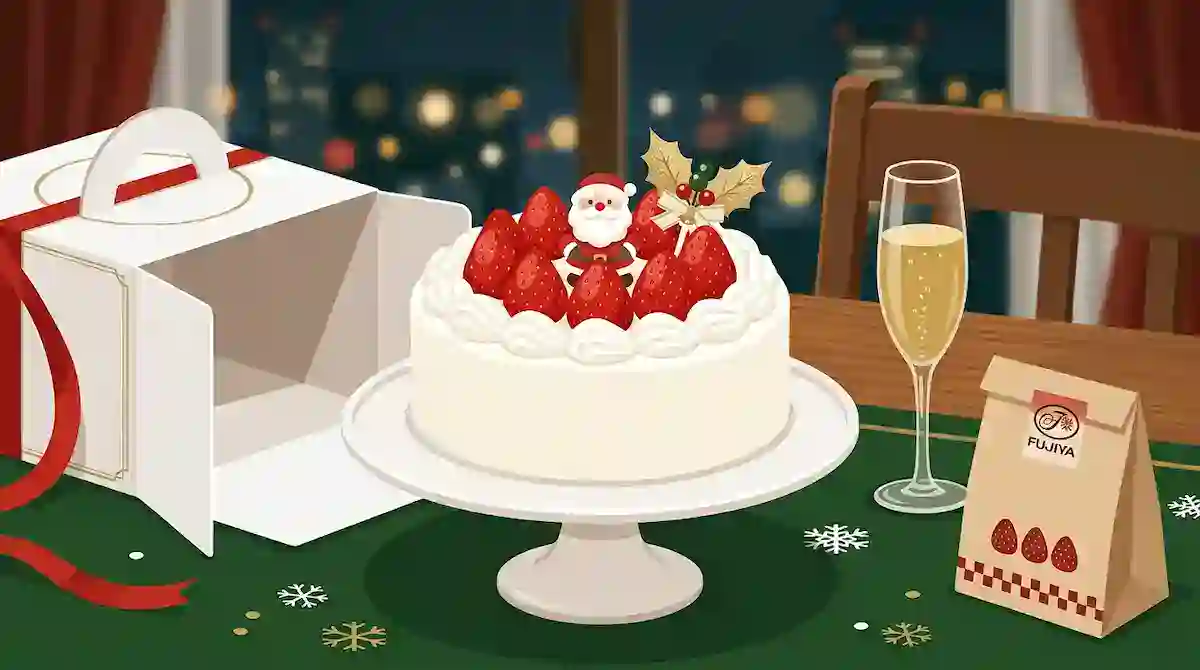
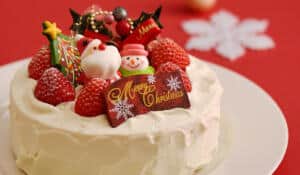
クリスマスケーキ · Kurisumasu KeekiAt its core, the standard Japanese Christmas cake is a Japanese-style strawberry shortcake: a light, airy sponge cake layered with fresh whipped cream and sliced strawberries, then covered in a smooth white cream coating and decorated with whole strawberries, Santa Claus figurines, and festive sugar decorations. The red of the strawberries and the white of the cream are considered colors of celebration in Japan, making the color scheme naturally Christmas-appropriate. Unlike Western Christmas cakes, it contains no dried fruit, no alcohol, and no dense spiced batter. It is deliberately light and delicate, designed to be eaten after a full dinner without feeling heavy.
Why Japan Has Christmas Cake
Japan is not a predominantly Christian country, yet Christmas cake is one of its most deeply embedded food traditions. The explanation lies in post-war commerce and the genius of Japanese marketing. Christmas in Japan evolved as a secular, romantic celebration focused on lights, gifts, and special meals — and cake became the dessert centerpiece not because of religious tradition but because Fujiya confectionery made it so. The white cream and red strawberries were visually perfect for Christmas, affordable enough for most families by the economic miracle period, and delicious enough to become genuinely loved across generations.
History of Japanese Christmas Cake
Over a century of tradition, from Meiji-era imports to a national ritual
Fujiya, a European-style confectionery in Yokohama founded by Rihei Fujii, introduced Japan’s first Christmas cake. It was a dense, dried-fruit cake coated in sugar syrup — closer to a British Christmas pudding than today’s version. At the time it was extremely expensive and only accessible to the wealthy.
Inspired by American confectionery observed during a trip abroad, Fujiya published a strawberry shortcake recipe adapted for Japanese tastes. The castella-based sponge, lighter cream, and fresh strawberry topping became the template for the modern Christmas cake.
Christmas celebrations were suppressed during World War II. After the war ended in 1945, Christmas culture returned rapidly under American influence. The whipped cream version of Christmas cake appeared in 1947, replacing buttercream as refrigeration became more widespread.
As Japan’s economy grew, Christmas cake became affordable to all. Department stores, convenience stores, and bakeries all began selling their own versions. Pre-ordering systems developed because demand far exceeded supply in the weeks before December 25.
Hotel patisseries, top pastry chefs, and luxury department stores began competing with elaborate, visually spectacular Christmas cakes. Prices climbed from ¥2,000 to ¥50,000 and above. Online pre-order systems now open in September or October for December delivery.
Types of Japanese Christmas Cake
From the classic shortcake to elaborate hotel creations
1Standard Strawberry Shortcake
いちごショートケーキThe original and still the most beloved: a round sponge cake with layers of whipped cream and sliced strawberries, decorated with whole berries and Christmas figurines. Available at every convenience store, supermarket, and bakery in Japan from late November through December 25. The convenience store version (from Lawson, 7-Eleven, FamilyMart) is surprisingly good and costs from ¥2,000 to ¥3,500.
2Buche de Noel (Yule Log Cake)
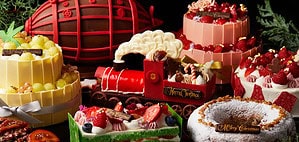
ブッシュ・ド・ノエルThe traditional French Christmas cake, made as a chocolate roll cake decorated to resemble a log. The Japanese version tends to be lighter and less dense than the French original, often using Japanese-style fresh cream rather than buttercream. Many premium patisseries in Japan produce extraordinary buche de noel with elaborate sugar decorations, mushrooms, and forest scenes. Baumkuchen, the German log-shaped ring cake, is also popular as a Christmas gift item for similar symbolic reasons.
3Chocolate Christmas Cake
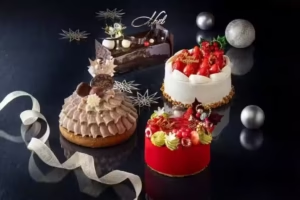
チョコレートクリスマスケーキA darker, more adult alternative using chocolate sponge, chocolate mousse layers, or ganache coating instead of white cream. Often decorated with berries, gold leaf, and elaborate chocolate work. The 2025 Christmas cake landscape shows chocolate varieties growing steadily in popularity, particularly versions using Venezuelan or single-origin cacao. Many use intense dark chocolate mousse with berry gelée layers for complexity.
4Premium Hotel and Department Store Cakes
プレミアムクリスマスケーキJapan’s luxury Christmas cake market is unmatched globally. Top hotels (The Ritz-Carlton, Park Hyatt, Hotel Gajoen Tokyo, Four Seasons) and premium department stores release limited-edition cakes that sell out within hours of going on sale in September. These use premium ingredients such as Amaou strawberries, Dom Perignon champagne cream, Venezuelan cacao, and Hokkaido milk, with decoration by pastry chefs using sugar sculpture and edible gold. See the full 2025 Christmas cake selection for current examples.
5Japanese Ingredient Christmas Cakes
和素材クリスマスケーキA growing trend blending Japanese wagashi ingredients with Western cake structure. Popular versions use matcha cream instead of white cream, hojicha mousse layers, sweet potato (satsumaimo) filling, yuzu curd, black sesame sponge, and kinako (roasted soybean flour) powder. These cakes appeal to both domestic customers looking for something distinctive and foreign visitors seeking a uniquely Japanese Christmas experience.
Christmas Cake Culture in Japan
How, when, and with whom Japanese people eat Christmas cake
🕯️ The Ritual of Opening the Box
A significant part of the Japanese Christmas cake experience is the presentation. Cakes arrive in elegant branded boxes, often with special holiday packaging. Opening the box to reveal the decorated cake is a moment of anticipation, particularly for children. The cake is always the visual centerpiece of the Christmas Eve table, photographed before being cut.
📅 The Pre-Order System
Because demand is so concentrated on December 24th, Japan developed an extensive Christmas cake pre-order culture. Most department stores, hotel patisseries, and premium bakeries open pre-orders in September or October. Convenience stores begin taking reservations in November. Walk-in purchase on December 24th is possible at convenience stores and supermarkets, but the most desirable cakes sell out entirely. Most pre-orders require full payment in advance and specify an exact pickup date and time.
🎂 The “Christmas Cake” Social Metaphor
In Japanese popular culture, there was historically a cruel saying comparing unmarried women over 25 to unsold Christmas cake — both “past their best” after December 25th. While this metaphor is now widely criticized and no longer commonly used, it reflects how deeply Christmas cake was embedded in social consciousness. Today the phrase is mostly encountered in historical discussions of Japanese gender attitudes rather than in everyday speech.
How to Buy a Japanese Christmas Cake
Options for every budget and situation
Convenience Stores (コンビニ)
Lawson, 7-Eleven, and FamilyMart all release Christmas cake collections each November. Pre-order online or in-store from early November for pickup on December 23rd or 24th. Quality is genuinely good — convenience store Christmas cakes in Japan are far better than their reputation abroad. Size options typically run from 12cm (2 to 3 people) to 21cm (6 to 8 people). Prices range from ¥1,500 to ¥4,500.
Department Stores (デパ地下)
The basement food halls of major department stores (Takashimaya, Isetan, Mitsukoshi, Sogo) carry Christmas cakes from 30 to 50 different patisseries and confectioneries. This is where you can compare options side by side and often sample. Pre-orders open in October. The range typically runs from ¥3,000 to ¥30,000. An in-person visit to Isetan Shinjuku or Takashimaya Tokyo in late November is one of the best ways to experience the Christmas cake season.
Hotel Patisseries and Specialty Bakeries
For the most spectacular cakes, order directly from hotel websites or top patisseries. Many require online pre-order only with no walk-in option. Delivery is available for most premium cakes, with careful temperature-controlled packaging. International shipping is not generally available due to the fresh cream content and shelf life requirements.
Christmas Cake Price Guide
What to expect at each price point
| Price Range | What You Get | Where to Buy |
|---|---|---|
| ¥1,500 to ¥3,000 | Small convenience store shortcake (12 to 15cm), 2 to 4 people | Lawson, 7-Eleven, FamilyMart |
| ¥3,000 to ¥6,000 | Standard bakery or supermarket shortcake (15 to 18cm), 4 to 6 people | Fujiya, supermarkets, local bakeries |
| ¥6,000 to ¥15,000 | Premium patisserie cake with specialty ingredients, 6 to 8 people | Department store food halls |
| ¥15,000 to ¥40,000 | Top-tier hotel or celebrity chef cake with luxury ingredients | Hotel websites, flagship patisseries |
| ¥40,000 and above | Ultra-premium: Dom Perignon cream, edible gold, championship-level decoration | Direct hotel pre-order only |
Christmas Food Culture in Japan
The full picture of what Japanese people eat at Christmas
🍗 KFC Christmas: Japan’s Other Christmas Tradition
Alongside the Christmas cake, KFC fried chicken is Japan’s most famous Christmas food. The “Kurisumasu ni wa Kentakkii” (Kentucky for Christmas) campaign began in 1974 and rapidly became a national institution. Today, KFC Christmas dinner sets (including fried chicken, wine, and a small cake) are pre-ordered months in advance. Japan accounts for a significant portion of KFC’s global December revenue. The combination of KFC fried chicken followed by Christmas cake has become Japan’s definitive Christmas Eve dinner format for millions of families. See the full Japanese Christmas food guide for more.
🥂 Champagne and Christmas Cake
In recent years, pairing Christmas cake with sparkling wine or champagne has become fashionable in Japan. The lightness of the strawberry shortcake pairs naturally with dry sparkling wine, and many premium hotel Christmas cake packages now include a bottle of champagne. Cider (non-alcoholic sparkling apple juice) is the traditional pairing for families with children.
Tips for Visitors
How to experience Japanese Christmas cake as a visitor to Japan
🗓️ Timing
Christmas cake is only sold from late November through December 25th. If you are visiting Japan during this period, experiencing Christmas cake is one of the most genuinely local food experiences available. Prices drop significantly on December 25th as shops clear remaining stock — convenience stores and supermarkets often discount remaining cakes by 30 to 50% on Christmas evening.
🎂 Buying a Single Slice
If you do not want to buy a whole cake, many cafes and patisseries sell individual Christmas cake slices throughout December for ¥400 to ¥900 per piece. Department store food halls, hotel lobbies, and dedicated Christmas cake pop-up stands are the best places to find slices. This is the easiest option for solo travelers or those staying in hotels without refrigeration.
🎁 Christmas Cake as a Souvenir
Whole Christmas cakes do not travel well due to fresh cream and strawberry contents. However, related products make excellent gifts: baumkuchen (room temperature, long shelf life), holiday-packaged wagashi, and Christmas-themed chocolate boxes from patisseries all serve as excellent festive souvenirs from Japan.
🌐 Ordering Online from Abroad
International shipping of fresh Christmas cakes is not available due to food safety regulations. However, Japanese cake mixes and recipe books are available internationally, allowing you to recreate Japanese shortcake at home. Some Japanese confectionery brands ship non-perishable Christmas items internationally.




Comments