



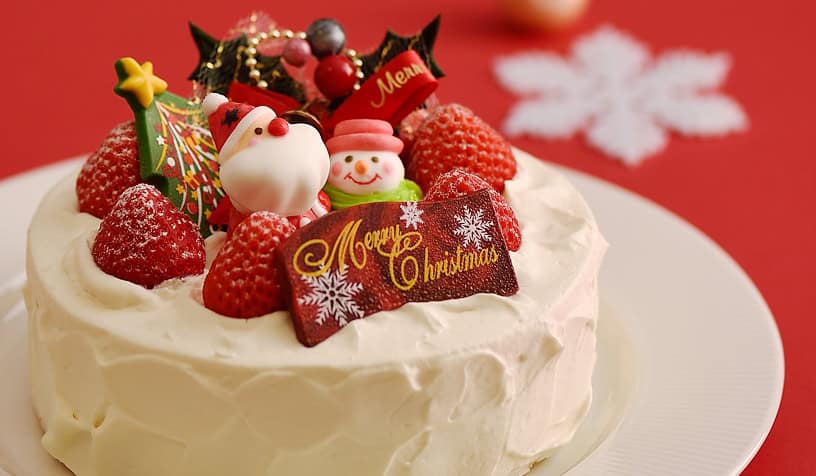
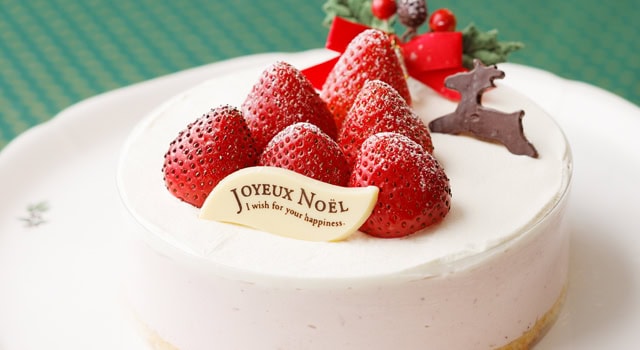
Japanese Christmas cake is a light sponge cake layered with whipped cream and strawberries. For the holiday, bakeries dress it with a sugar Santa, a chocolate plaque, or a sprig of holly. Families and couples share it around Christmas Eve, and as a result the red-and-white look has become one of Japan’s most recognizable Christmas images.
In short, this page is the foundation guide: where the cake came from, how it differs from other Christmas cakes, how to bake one at home, and what to expect when you buy one. For year-by-year products and trends, see our seasonal round-ups linked below.
What is Japanese Christmas cake?
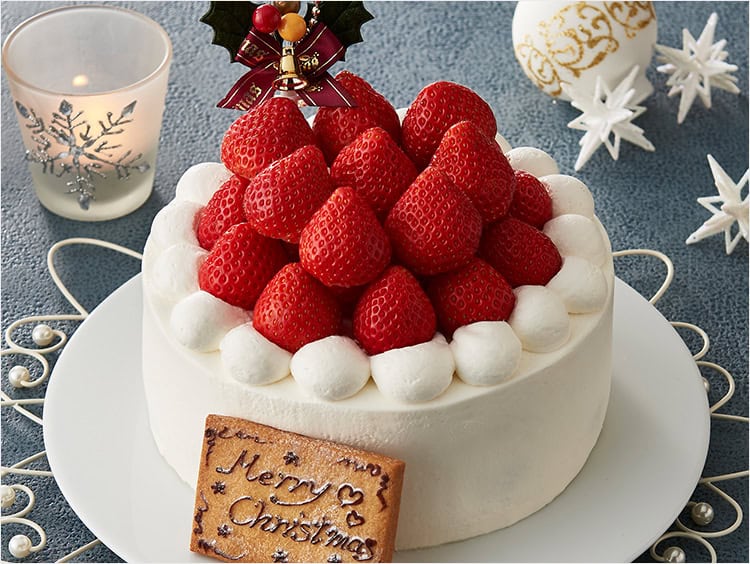
Japanese Christmas cake is a round strawberry shortcake in the Japanese style: airy sponge, lightly sweetened whipped cream, and fresh strawberries, finished with seasonal decorations. People commonly serve it around Christmas Eve, especially on December 24, although timing differs by household. By contrast, the cake sold in 1910, the earliest one Fujiya records, was a different dried-fruit predecessor.
Quick facts
- Japanese name
- クリスマスケーキ (kurisumasu kēki)
- Base cake
- Japanese strawberry shortcake: sponge, whipped cream, strawberries
- What makes it “Christmas”
- Seasonal decorations and the December setting
- Earliest company record
- Fujiya records launching Christmas cakes in December 1910
- When it is eaten
- Often around Christmas Eve, December 24
- Common sizes
- 4-gou (about 12 cm) to 6-gou (about 18 cm)
- Price benchmark
- ¥4,740 before tax, 2025 season average for comparable cakes (Teikoku Databank)
- Where to buy
- Bakeries, department stores, hotels, supermarkets, convenience stores, online
- Price information last checked
- October 2026
Jump to
The classic strawberry-and-cream version
The sponge is soft and fine-grained, closer to a cloud than to a buttery pound cake. The cream, meanwhile, is only lightly sweetened, so the cake tastes gentle rather than rich. Strawberries play an important role in the cake’s flavor, appearance, and festive red-and-white color scheme. Their acidity cuts through the cream, which is why a slice rarely feels heavy.
Decoration is where the holiday shows. For example, a sugar or marzipan Santa, a chocolate plaque reading “Merry Christmas,” holly leaves, and a dusting of powdered-sugar snow are all common. Incidentally, Japanese shops may call the dairy cream nama cream, meaning fresh cream.
History of Japanese Christmas cake
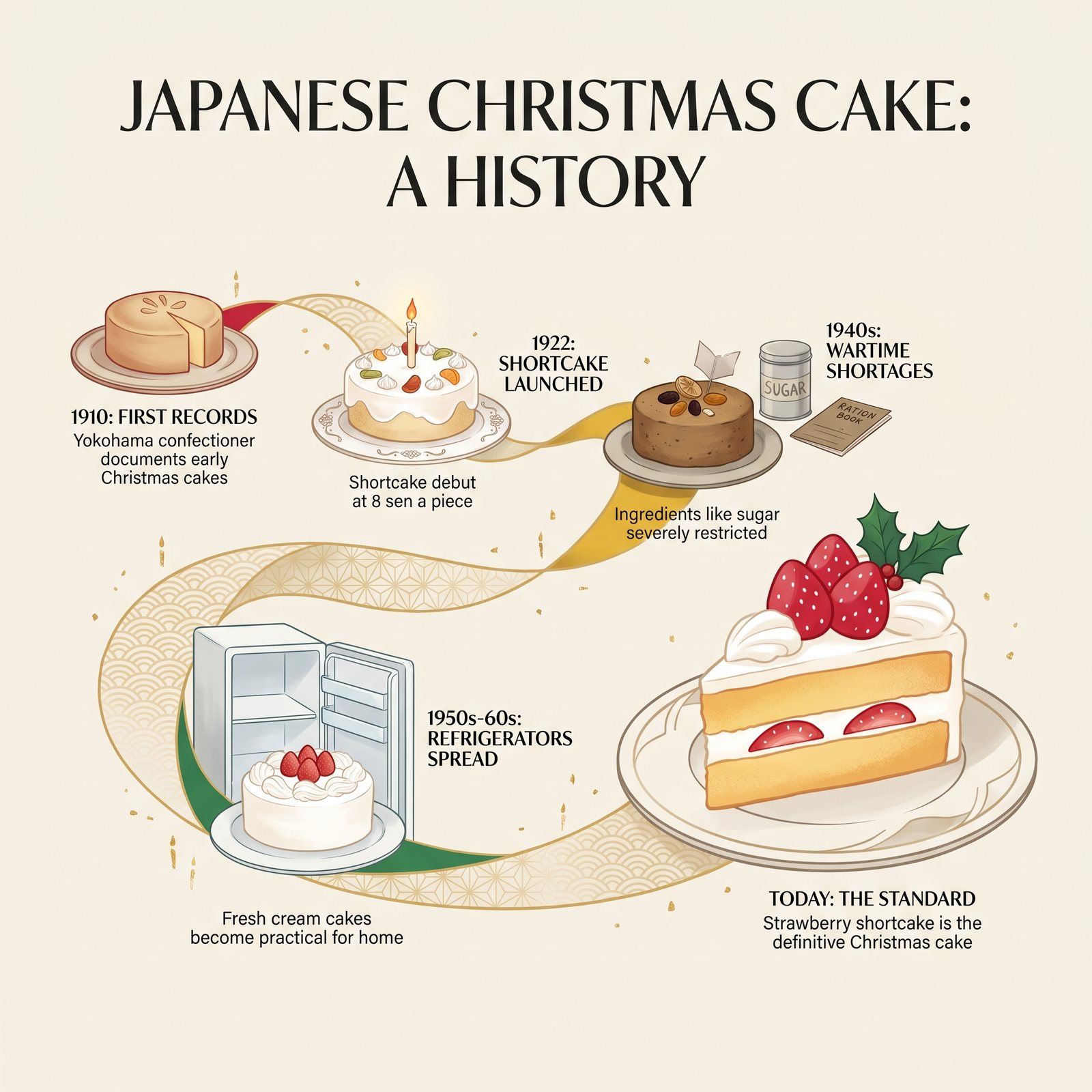
The documented story begins with one company. Specifically, Fujiya records that it launched Christmas cakes in December 1910, one month after opening its confectionery shop in Yokohama’s Motomachi district. Fujiya’s corporate timeline also records the release of its shortcake in 1922, at 8 sen a piece.
What the 1910 cake was
Fujiya’s timeline shows only a restored image of the early cake. However, later descriptions associated with the company identify it as a fruit-based cake with a sugar coating, rather than the airy sponge, whipped cream, and strawberry cake familiar today. Evidence about its exact price and buyers, however, is limited. Even so, Fujiya continued promoting Christmas cakes in Japan as the custom became more familiar to consumers.
Was it Japan’s first? That claim is hard to prove. Library researchers have examined earlier advertisements from 1878 and a separate 1904 account, and they conclude that the origin remains uncertain. In other words, Fujiya’s record is the clearest company date, not a national starting point.
War, recovery, and fresh cream
Historical accounts describe wartime shortages in the 1940s, including limited access to sugar, as reducing confectionery production and public celebrations. After the war, celebrations gradually returned. Fresh whipped-cream cakes, however, did not replace buttercream immediately. Buttercream keeps at room temperature, whereas fresh cream needs cold storage from shop to table.
Instead, confectionery specialists associate the later spread of fresh-cream cakes with improving refrigeration and the wider availability of household refrigerators from the 1960s. Its lighter flavor also helped strawberry shortcake gain broader popularity. The exact timing varies by source, so treat the decades as approximate.
Why is Christmas cake popular in Japan?
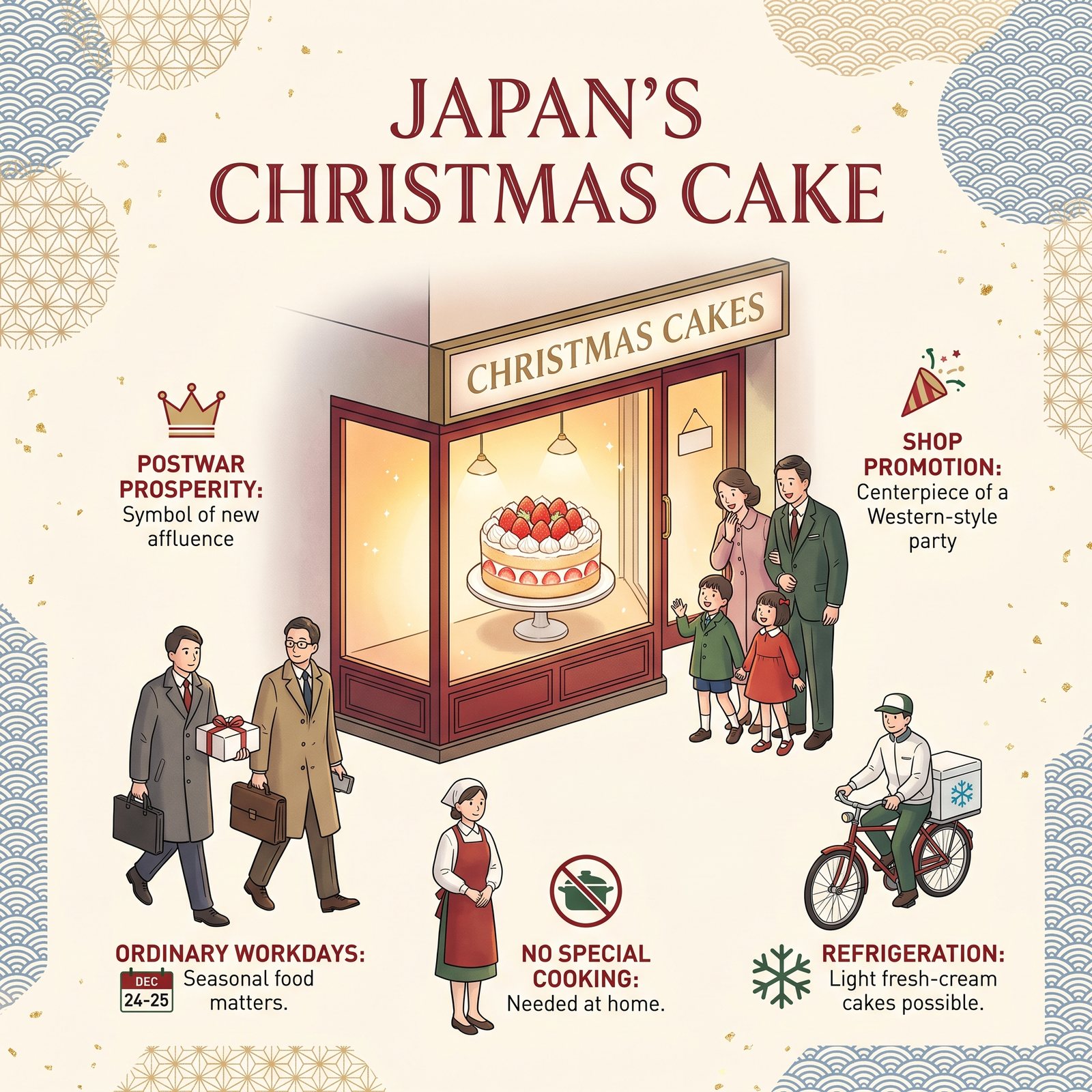
Histories of Japanese confectionery commonly connect the cake’s postwar spread with retail promotion, rising household consumption, and improved refrigeration. For example, shops promoted the cake as the centerpiece of a Western-style celebration. Writers on the subject, including Smithsonian Magazine, also describe it as a symbol of postwar prosperity.
Christmas is not a national holiday in Japan, so December 24 and 25 are generally ordinary working or school days unless they fall on a weekend. In popular culture and retail, therefore, celebrations often emphasize seasonal food, gifts, and illuminations. A cake fits that pattern, because it needs no special cooking at home. Other dishes join it on the table too; our guide to Japanese Christmas foods covers the chicken and the party platters.
Japanese Christmas cake compared with other Christmas cakes
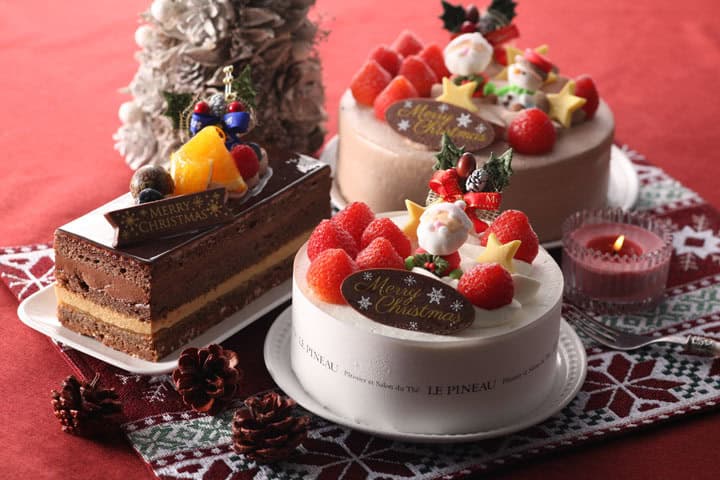
Compared with British fruitcake and many buttercream-based bûches de Noël, the Japanese strawberry version is generally lighter in texture and uses fresh fruit. The table sets the three side by side.
| Feature | Japanese strawberry shortcake | British Christmas fruitcake | French bûche de Noël |
|---|---|---|---|
| Texture | Light, airy sponge | Dense and moist | Soft rolled sponge |
| Cream or filling | Lightly sweetened whipped cream | Marzipan and royal icing | Buttercream or ganache |
| Fruit | Fresh strawberries | Dried fruit, often soaked in alcohol | Little or none; chocolate dominates |
| Shape | Round layer cake | Round or square, often heavy | Log shape; bûche means “log” |
| Serving tradition | Shared on or around Christmas Eve | Made weeks ahead, cut over the holidays | Christmas dinner dessert |
Japanese Christmas cake vs. Japanese shortcake
Both use the same sponge, cream, and strawberries. The difference, however, is context. Year-round Japanese shortcake is a birthday and everyday dessert, while the Christmas version carries seasonal decorations and arrives in December. In other words, seasonal decoration commonly distinguishes the holiday cake rather than any change in the recipe.
Other cakes sold at Christmas
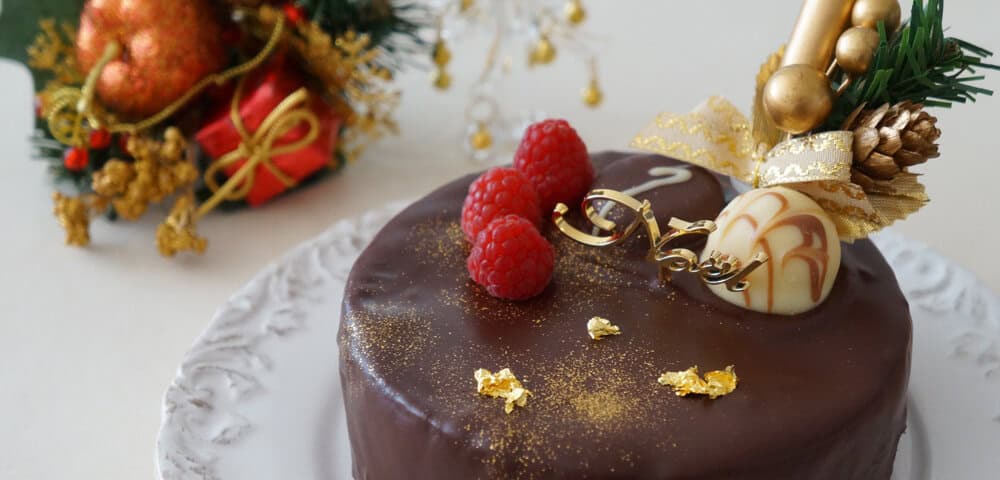
Chocolate cakes provide a richer alternative, often with cocoa, ganache, or chocolate cream. Likewise, bûche de Noël, a log-shaped Christmas cake from France, appears in many pastry-shop lineups. Fresh-fruit cakes use strawberries, berries, or other fruit for brighter acidity, color, and texture.
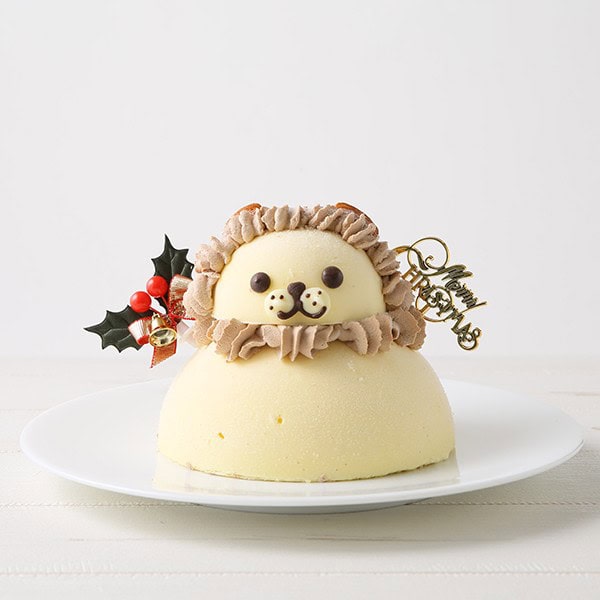
Cheesecakes and gelato or ice-cream cakes round out the range at some retailers. In addition, individual cakes, small two-person cakes, allergy-conscious products, frozen cakes, and decoration kits may also be available, although not every shop stocks them.
How to make Japanese Christmas cake
Homemade Japanese Christmas cake follows seven stages: bake the sponge, cool it, slice it, brush it with syrup, fill it, frost it, and decorate it. The summary below stands on its own, and the detailed recipe follows.
- First, bake a sponge in an 18 cm round pan.
- Then cool it completely on a rack.
- Next, slice it into three even layers.
- Brush each layer with cooled sugar syrup.
- After that, fill with whipped cream and sliced strawberries.
- Frost the top and sides with cream.
- Finally, decorate with whole strawberries and Christmas ornaments.
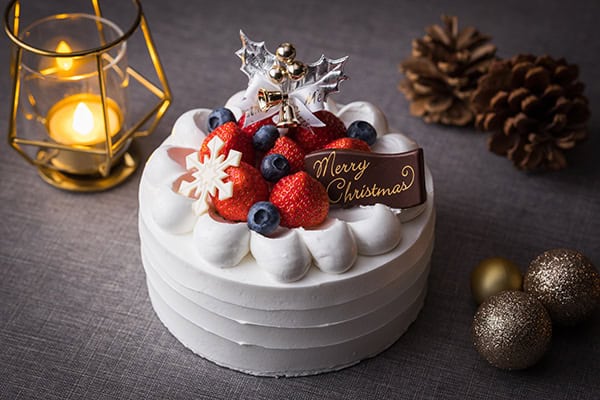
Recipe at a glance
Difficulty: moderate. Store the finished cake covered in the refrigerator. Status: unverified reference recipe. The quantities come from our earlier version, the times are estimates, and a baker has not yet tested the 18 cm batch. Published 18 cm recipes differ in oven temperature and time, so check doneness by the cues in the steps.
Japanese Christmas cake ingredients
Sponge (18 cm pan)
- Eggs: 150 g without shells, about 3 large
- Granulated sugar: 100 g (½ cup)
- Cake flour: 90 g (¾ cup), weighed before sifting
- Unsalted butter: 15 g (1 tbsp)
- Milk: 15 ml (1 tbsp)
Syrup
- Sugar: 30 g (2 tbsp), as a starting amount
- Hot water: 60 ml (¼ cup); published recipes use more water, so adjust to taste
- Kirsch: 15 ml (1 tbsp), optional
Whipped cream
- Heavy cream, 35 to 40 percent fat: 400 ml (1⅔ cups)
- Granulated sugar: 32 g (2½ tbsp)
Filling and decoration
- Strawberries: 450 g (1 lb) with hulls, about 20 large; reserve 8 for the top
- Powdered sugar: 1 tbsp for dusting
- Christmas ornaments, such as a sugar Santa or a chocolate plaque
Equipment
- 18 cm round pan with baking paper for base and sides
- Hand mixer, large bowl, fine sieve, spatula
- Wire rack, serrated knife, palette knife, piping bag and tip
No kirsch? Use the plain syrup, or stir a spoonful of strawberry jam into it for a non-alcoholic version. For stable frosting, use dairy cream with about 35 to 40 percent fat and keep it thoroughly chilled. Lower-fat products, however, may give a softer finish, depending on the brand.
Preparation
Preheat a conventional oven fully to 160°C (320°F); for a fan oven, use about 150°C (300°F). Meanwhile, line the base and sides of the pan with baking paper.
Put the butter and milk in a small bowl and set it over warm water until the butter melts. Keep the mixture warm; it goes in at the end of the batter, not into the flour.
Sponge
Beat the eggs lightly, add the sugar, and set the bowl over warm water. Next, whip on high speed until the mixture is pale and thick. Then beat the egg mixture until batter falling from the whisk leaves a visible trail for several seconds. Finish on low speed for a minute to tighten the bubbles.
Sift the flour over the egg mixture in two additions. Then fold gently with a spatula, using broad bottom-to-top motions, until no dry streaks remain. Stop as soon as the flour disappears, because overmixing deflates the batter.
Mix a small scoop of batter into the warm butter mixture first, then gently fold the lightened mixture back into the main bowl. Fold just until the surface looks glossy and even.
Pour the batter into the pan in one motion and tap the pan once to release large bubbles. Then bake for about 25 minutes, and longer if needed. The cake is ready when the top is lightly golden, the center springs back gently when touched, and a skewer inserted into the center comes out clean.
Syrup and cooling
Drop the pan once from a low height to prevent shrinking, then turn the cake out onto a rack. Peel off the paper and cool for at least an hour, because a warm cake tears and compresses when sliced.
Dissolve the sugar in the hot water. Then let the syrup cool before adding the optional kirsch, so that its aroma is not lost.
Wash the strawberries, then dry them thoroughly before slicing. Added surface moisture can loosen the cream and shorten the cake’s keeping quality. Afterward, hull and slice 12 for the filling, and keep 8 whole for the top.
Assembly and decoration
Add the sugar to the cold cream and whip it over a bowl of ice water. For spreading, stop at soft-to-medium peaks, when the cream holds a shape but still looks smooth. Overwhipped cream turns grainy within seconds, so whip in short bursts near the end.
Slice the sponge horizontally into three even layers with a serrated knife. Brush the bottom layer generously with syrup, spread a thin layer of cream, and arrange half the sliced strawberries. Then cover with a little more cream. Next, place the middle layer, press lightly, and repeat.
Add the top layer, brush it with syrup, and coat the top and sides with cream using a palette knife. After that, pipe rosettes around the edge, set the whole strawberries on top, and dust with powdered sugar for a snow effect. Finally, add the Christmas ornaments and chill the cake for 30 minutes before serving.
Common mistakes and a make-ahead plan
Common mistakes
- Under-whipped eggs: the sponge bakes flat. Wait for the ribbon stage.
- Overmixed flour: the sponge may lose volume or develop a tighter crumb. Fold gently and stop when no dry flour remains.
- Warm sponge: it tears when sliced and melts the cream.
- Over-whipped cream: the cream becomes grainy and difficult to spread. Stop while it is still smooth.
- Wet strawberries: they loosen the cream. Dry them well.
- Uneven layers: the cake leans. Mark the sides before cutting.
Make-ahead plan
- One day ahead: bake the sponge, cool it, and wrap it well at room temperature or in the refrigerator. Make the syrup.
- Serving day: whip the cream, slice the strawberries, and assemble. Frosting and decorating are best done within a few hours of serving.
- After serving: cover and refrigerate leftovers promptly.
How to store Japanese Christmas cake
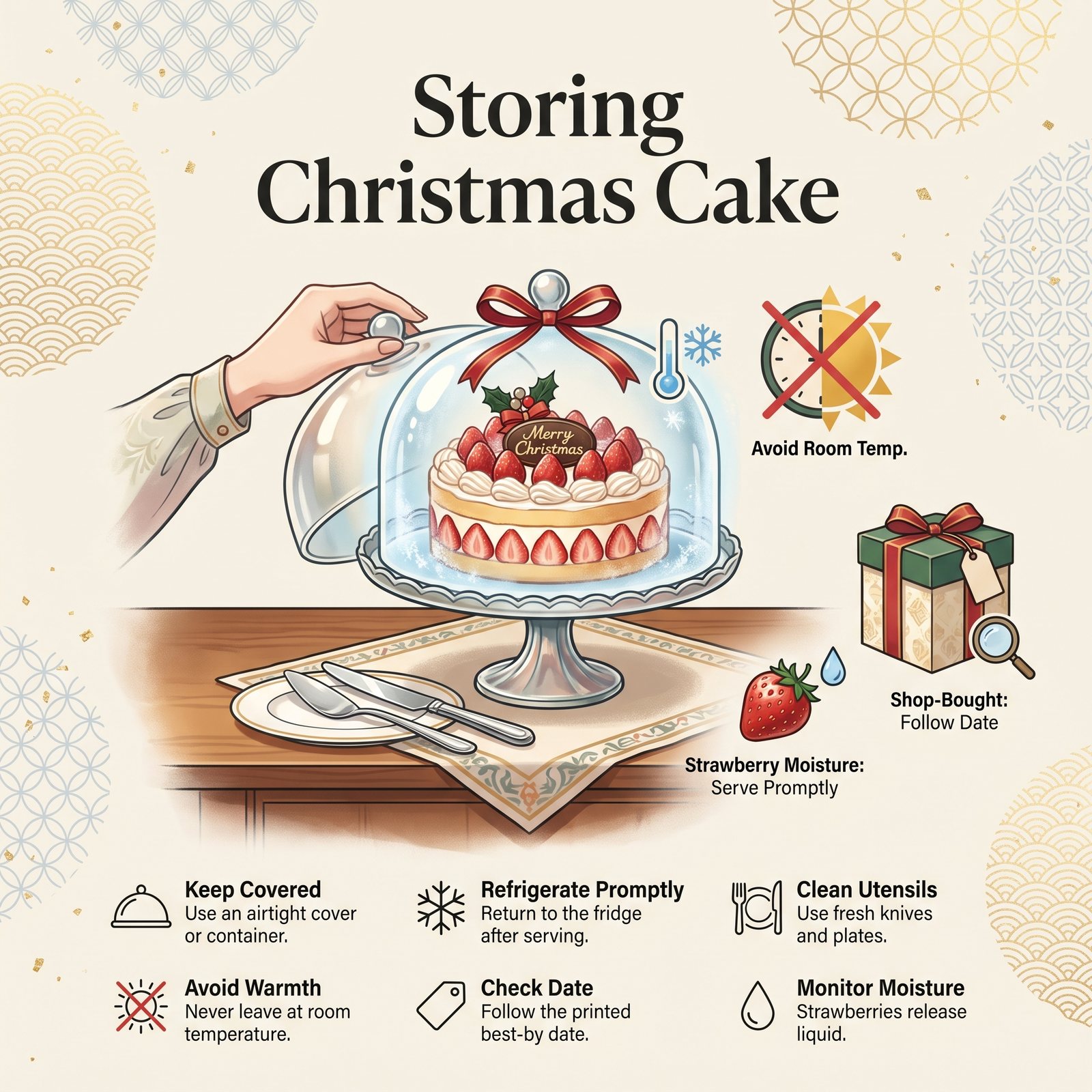
Because the finished cake contains whipped cream and fresh fruit, keep it covered and refrigerated, and return it to the refrigerator promptly after serving. Do not leave it at room temperature for extended periods, especially in a heated room. Strawberries also release moisture over time, so the texture is best on the day of assembly.
- First, store in a covered container or under a cake dome in the refrigerator.
- For a shop-bought cake, follow the printed date and the shop’s instructions; they take priority over any general rule.
- For the best texture, serve a homemade cake on the day it is assembled. We have not run a formal storage test, so we give no fixed number of days.
- Also, use clean knives and plates, since cream and cut fruit pick up contamination easily.
Japanese Christmas cake price
As a dated benchmark, Teikoku Databank reported an average pre-tax price of ¥4,740 for the 2025 winter season, based on 100 companies and brands and generally comparing standard 5-gou strawberry cakes or featured cakes. That was ¥179, or 3.9 percent, higher than the previous season. Beyond that benchmark, the final price moves with size, ingredients, and seller.
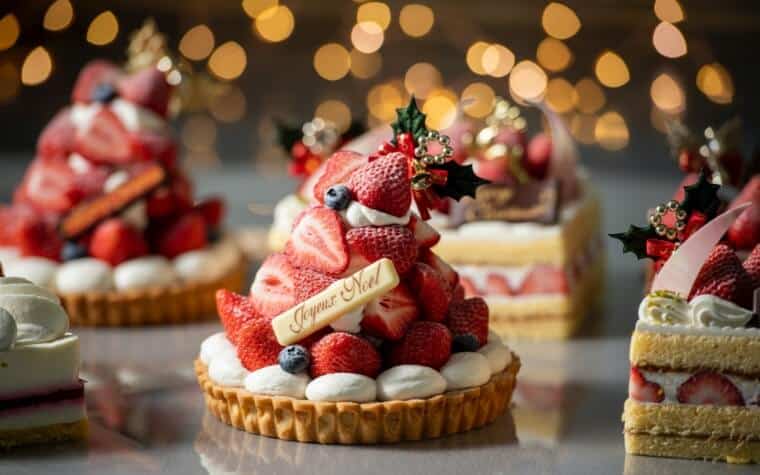
Different channels occupy different ranges. Mass-market retailers often offer lower-priced options, while hotel, collaboration, and premium-fruit cakes may cost substantially more. Labor-intensive decoration, premium fruit, specialty chocolate, and luxury branding can increase the price further.
Japanese cake sizes: the gou system
Japanese shops size round cakes in gou (号), a convention in which each number equals roughly 3 cm of diameter. Choose the cake size according to the number of guests and the portions you plan to serve.
| Size | Diameter | Approximate servings | Suitable for |
|---|---|---|---|
| 4-gou | About 12 cm (5 in) | 2 to 4 | Couples, small households |
| 5-gou | About 15 cm (6 in) | 4 to 6 | The standard family size |
| 6-gou | About 18 cm (7 in) | 6 to 8 | Parties and larger families |
Serving estimates vary according to slicing style, appetite, cake height, and each shop’s specifications. Price information last checked: October 2026.
Where to buy Christmas cake in Japan
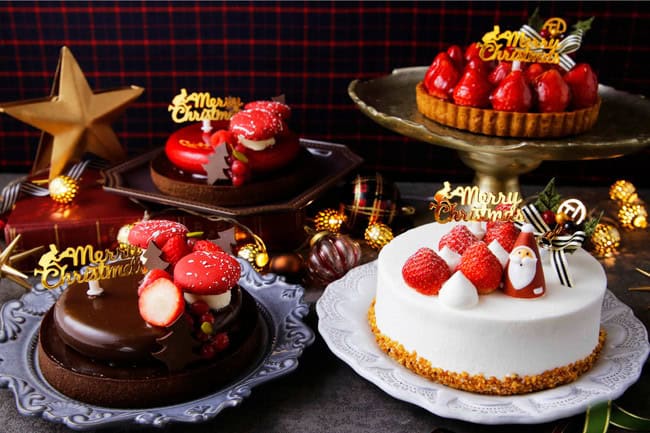
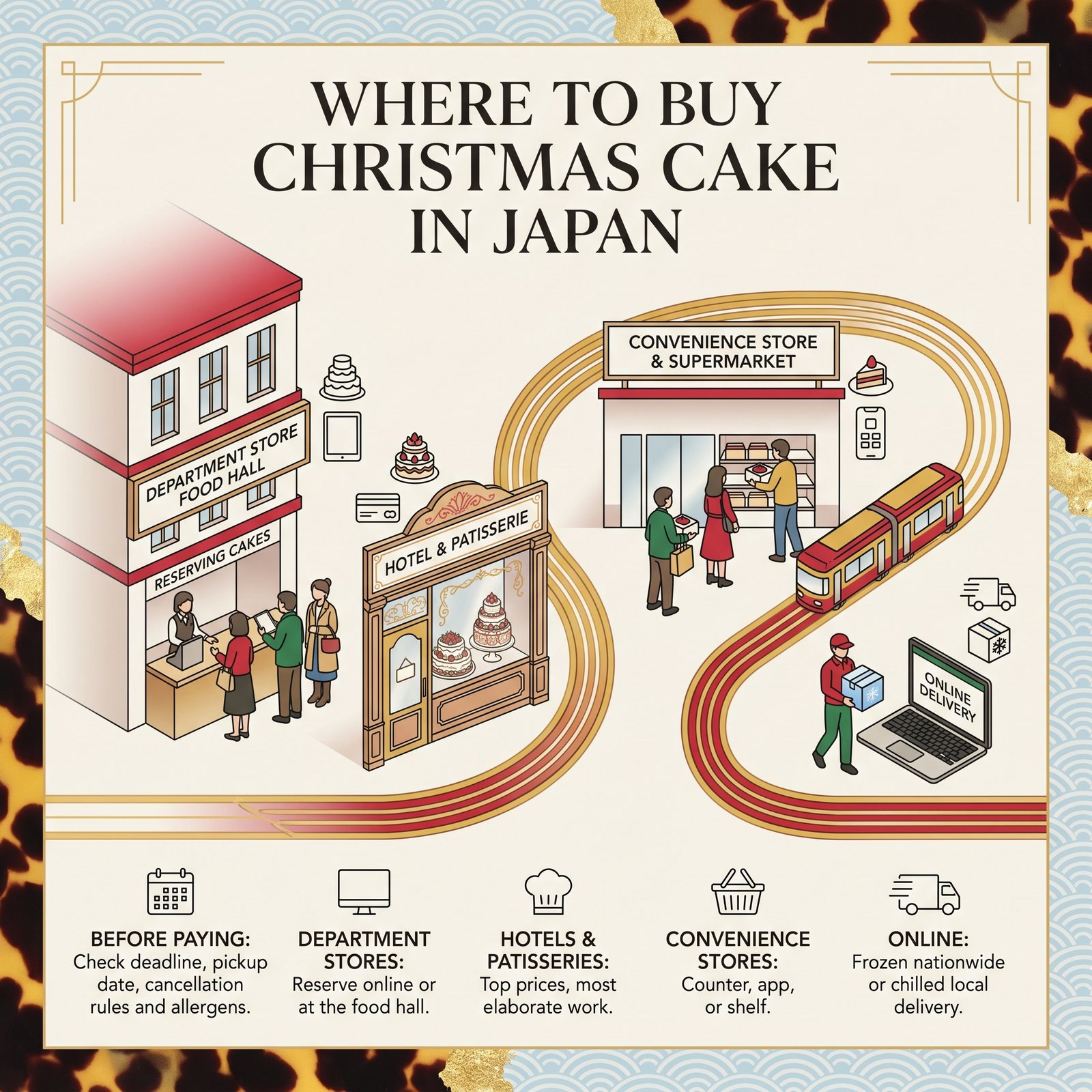
You can reserve Christmas cakes through bakeries, department stores, hotels, supermarkets, convenience stores, and online shops. Popular bakeries often close reservations before Christmas, so customers should check each shop’s current ordering schedule. For that reason, the guide below is grouped by channel rather than by shop, because products and deadlines change every year.
In practice, four purchase routes exist: reservation with in-store pickup, same-day purchase from stock, local refrigerated delivery, and nationwide frozen delivery. For frozen cakes, schedule delivery early enough to allow the full refrigerated thawing period stated by the seller. Pickup windows and cancellation conditions may become stricter near December 24, although policies differ by seller.
- Confirm the reservation deadline and the pickup date and location.
- Then read the cancellation policy before paying.
- Also check allergens; most cakes contain egg, milk, and wheat, and some contain nuts or alcohol.
- For delivery, check whether the cake arrives chilled or frozen and how long it must thaw.
For specific products and trends by year, see Japan’s 2025 Christmas cake landscape. Our premium Japanese Christmas cake selections in 2024 remains online as an archive of past examples; those products are no longer on sale.
Conclusion
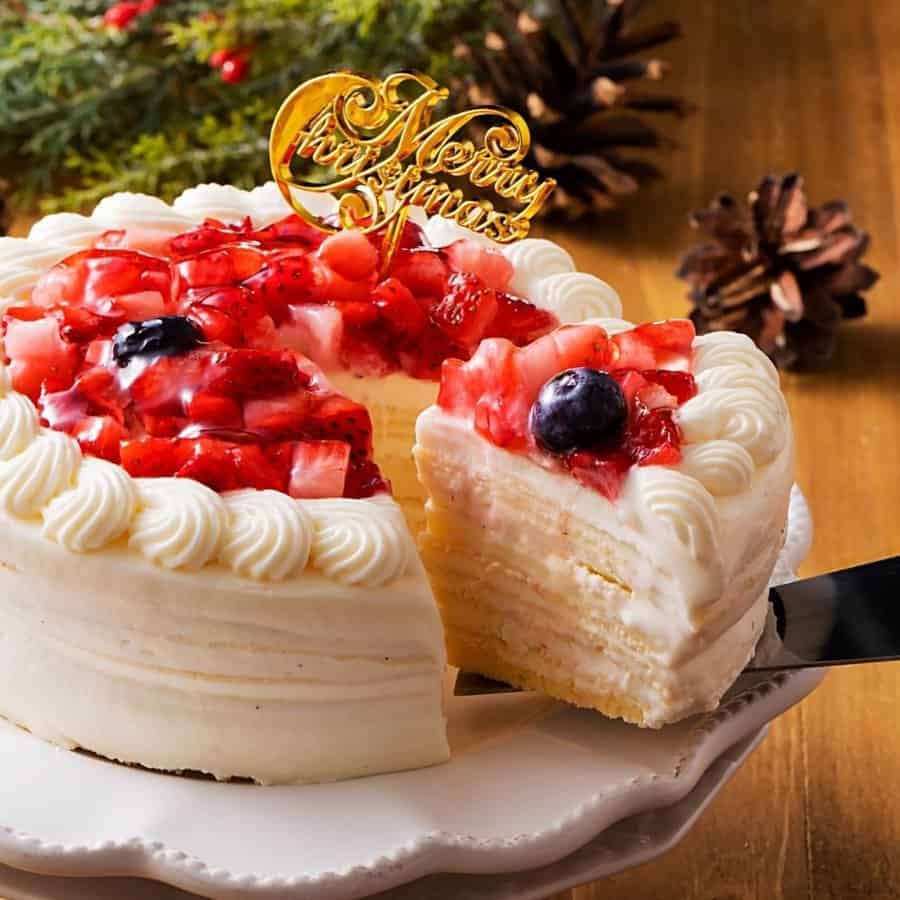
Japanese Christmas cake is a strawberry shortcake in holiday dress: light sponge, soft cream, red fruit, and a small Santa on top. In Japan, the cake is associated with a largely secular Christmas season centered on food, gifts, and illuminations. Because December 24 is not a national holiday, many people fit the celebration around work or school. Fujiya’s 1910 record gives the custom a date, even if its true beginning is lost.
Should you bake or buy? Bake if you have time to prepare and cool the sponge before assembly; the result depends on egg aeration, gentle folding, and thorough cooling. Otherwise, buy if you want a decorated cake without the work, and reserve early. For the best texture, serve a homemade cake on the day it is assembled, and follow the labeled date for a shop-bought one.
Japanese Christmas cake FAQ
- What is Japanese Christmas cake?
-
It is a round sponge cake layered with lightly sweetened whipped cream and fresh strawberries, decorated for Christmas. The recipe matches year-round Japanese shortcake. Only the seasonal ornaments and the December setting make it a Christmas cake.
- When do Japanese people eat Christmas cake?
-
Most often around Christmas Eve, December 24, although habits differ by household. In 2011 household survey data, spending on cake peaked on December 24, although the category covered cake generally. Some families, however, eat it on December 25 instead.
- How much does a Japanese Christmas cake cost?
-
For the 2025 season, Teikoku Databank reported an average of ¥4,740 before tax across 100 companies and brands. The comparison covered standard 5-gou strawberry shortcakes or each company’s featured cake. Convenience-store cakes cost less, while hotel and premium-fruit cakes cost far more. Prices also change each season.
- Do I need to order a Christmas cake in advance?
-
For a specific cake from a popular bakery, department store, or hotel, yes. Reservations often close before Christmas. Convenience stores and supermarkets, however, usually keep some cakes in stock for same-day purchase.
- How should I store Japanese Christmas cake?
-
Keep it covered in the refrigerator, because it contains whipped cream and fresh fruit. Also, do not leave it out for long periods. For a shop-bought cake, follow the printed date and instructions. A homemade one tastes best on the day you assemble it.
About this guide
- Last updated
- October 5, 2026
- Researched and updated by
- Food in Japan editorial team
- Recipe status
- Reference recipe based on our earlier version and standard Japanese shortcake methods. The 18 cm quantities have not yet been verified by a baker, and no calorie figure has been calculated.
- Update note
- We attributed the 1910 and 1922 dates to Fujiya’s company history, removed the claim that Christmas was banned in wartime, separated postwar popularity from the shift to fresh cream, rebuilt the recipe, and replaced the old shop list with channel-based buying guidance.
References
- Fujiya – History of Fujiya, Meiji era to 1945 (不二家の歴史) (Accessed October 2026)
- National Diet Library, Collaborative Reference Database – Reference case on the origin of Japanese shortcake, registration no. 1000255522 (Accessed October 2026)
- Teikoku Databank – 2025 Winter Season Christmas Cake Price Survey, December 6, 2025 (Accessed October 2026)
- Cabinet Office, Government of Japan – National holidays (「国民の祝日」について) (Accessed October 2026)
- Statistics Bureau of Japan – Spending on cake, Family Income and Expenditure Survey bulletin No. 466, December 2012 (Accessed October 2026)
- Fujin Gaho (via Yahoo! News Japan) – Christmas cake then and now: the 1910 Fujiya cake and the shift to fresh cream (Accessed October 2026)
- Delish Kitchen – Strawberry shortcake, 18 cm pan, with syrup and whipping guidance (いちごのショートケーキ) (Accessed October 2026)
- Smithsonian Magazine – Why the Japanese Eat Cake For Christmas (Accessed October 2026)
Related Articles
- Japanese Short Cake (Surveyed: October 2026)
- Japanese Christmas Food (Surveyed: October 2026)
- Japan’s 2025 Christmas Cake Landscape (Surveyed: October 2026; covers the 2025 season)
- Premium Japanese Christmas Cake Selections in 2024 (Surveyed: October 2026; archive of the 2024 season)
- Osechi Ryori (おせち料理) (Surveyed: October 2026)





Comments
List of comments (2)
Wonderful 👍
Thank you so much! Let me know if you want to know something any time from contact form!