





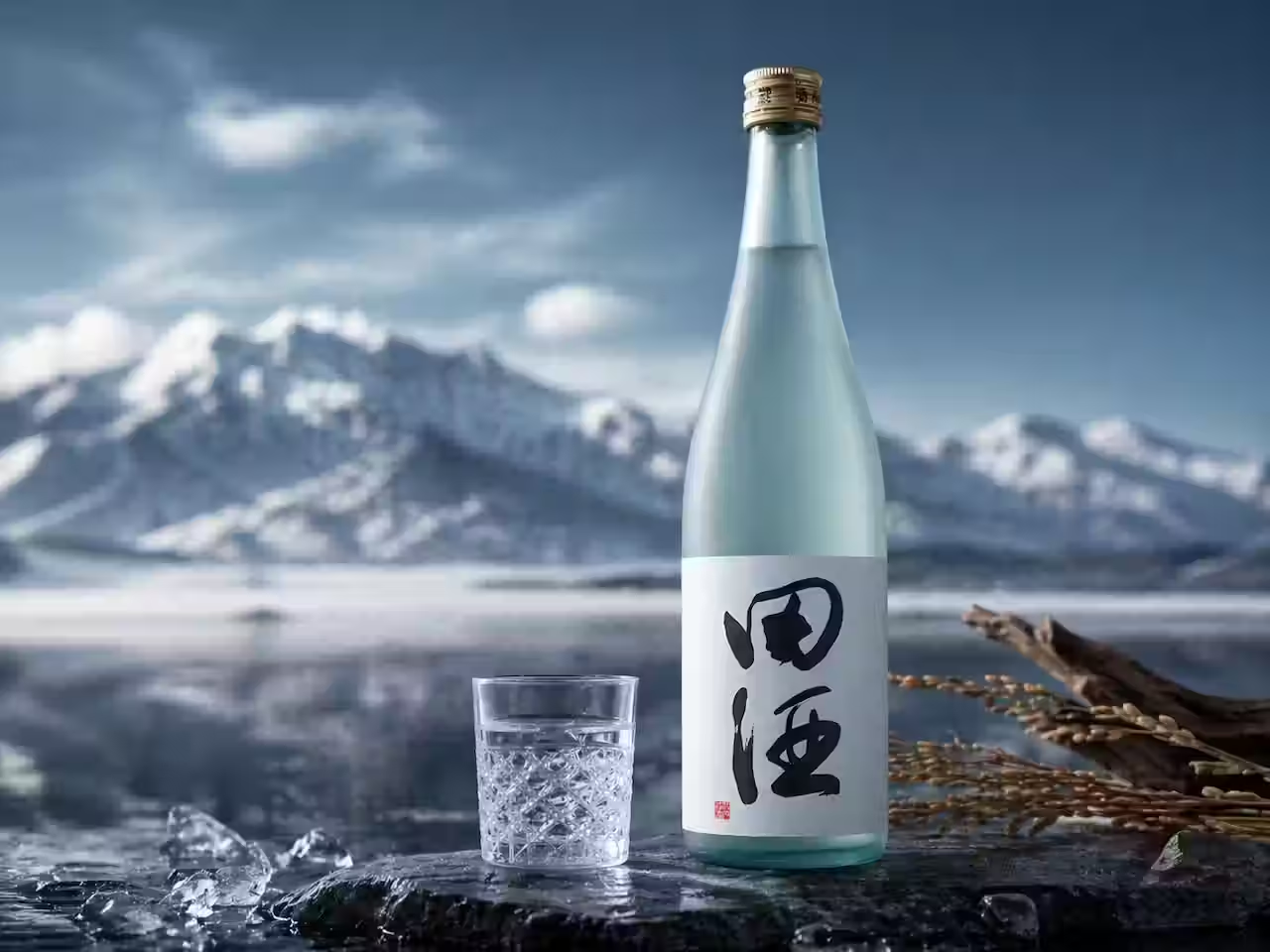
Aomori is a quiet heavyweight in the world of Japanese sake. The prefecture sits at the northern tip of Honshu. Winters bite hard and snow piles high. That harsh cold helps brewers control fermentation slowly and precisely. Combine this with some of Japan’s purest mountain water. You get a recipe for genuinely memorable sake. Labels like Denshu, Mutsu Hassen, Hōhai, and Hato Masamune have earned devoted followings. If you are new to Aomori sake, think of it as clean, food-friendly, and surprisingly layered.
What Exactly Is Aomori Sake?
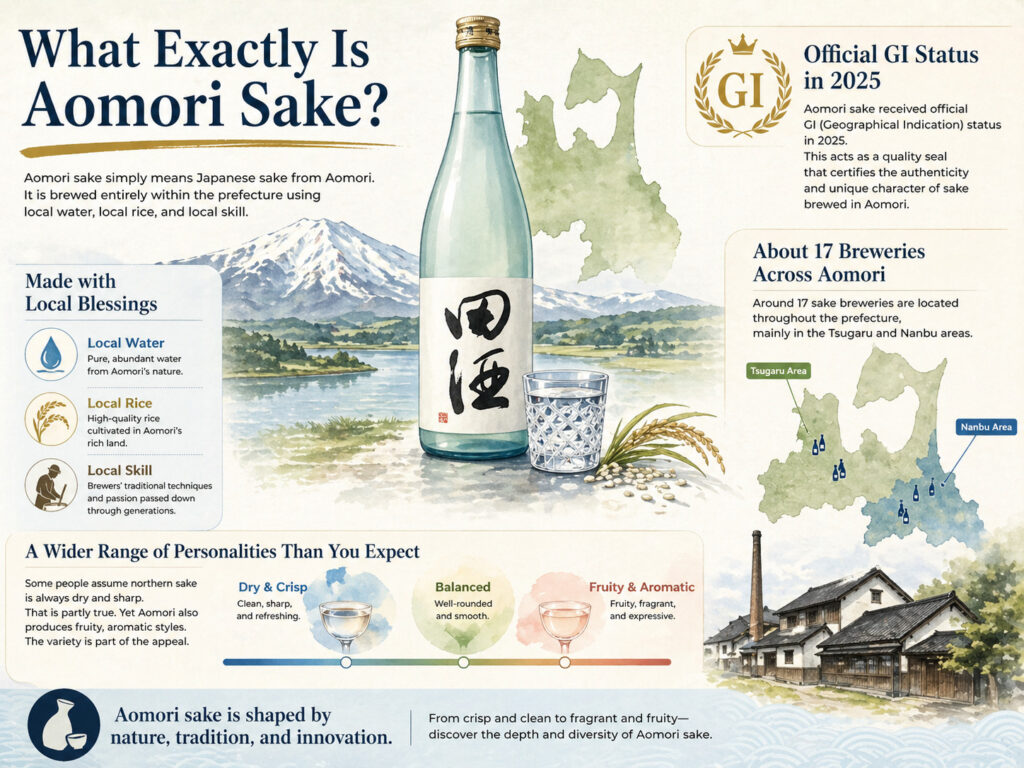
Aomori sake simply means Japanese sake from Aomori. It is brewed entirely within the prefecture using local water, local rice, and local skill. In 2025 the region received official GI status, which acts like a quality seal. About 17 Aomori sake breweries dot the landscape, mostly clustered in the Tsugaru and Nanbu areas. Each brewery draws on different water sources and microclimates. So you encounter a wider range of personalities than many drinkers expect.
Some people assume northern sake is always dry and sharp. That is partly true. Yet Aomori also produces fruity, aromatic styles. The variety is part of the appeal.
Why Is Aomori Sake So Famous?

Many ask why Aomori sake is famous. The short answer involves a trio of natural gifts and human dedication. First, the water. Brewers tap snowmelt from the Hakkōda Mountains and the Shirakami Sanchi. This water is soft and low in iron, encouraging gentle fermentation and a smooth mouthfeel. Second, the cold climate. Low winter temperatures let fermentation proceed slowly. It builds layered flavors without sharp off‑notes. Third, Aomori developed its own sake‑specific rice varieties. Hanafubuki and Hanaomoi thrive in cool northern paddies. Many breweries also use proprietary yeasts, including a local Asunaro yeast, pushing premium sake from Aomori onto a national stage.
One pivotal moment came when Denshu was named Japan’s most delicious sake by a magazine in 1981. That threw a sudden spotlight on the region. Later, Mutsu Hassen captured first place at the 2021 World Sakagura Ranking. These accolades keep the region buzzing.
What Does Aomori Sake Taste Like?
The question what does Aomori sake taste like deserves an honest, slightly messy answer. No single flavor profile fits all brands. But a common thread runs through them. A clean, umami‑forward core with balanced acidity. Many offerings feel deliberately less perfumed than their Kyoto counterparts. They sit quietly in the glass, then open up gently on the palate.
Denshu typically shows apple and melon notes, rich body, and a crisp finish. Most of its lineup is unfiltered, so the texture feels slightly weightier. Mutsu Hassen leans brighter, with fresh fruitiness, a whisper of yoghurt‑like lactic softness, and a clean, swift finish. Hōhai is crafted at tiny Miura Shuzo using the rare Hōhai‑mai rice. It is restrained, subtle, and built specifically for the dinner table. Hato Masamune prizes light, crisp drinkability. It’s the kind of sake you reach for again without thinking.
Put side by side, the four brands show the range of Aomori local sake. From bold and fruity to delicate and transparent.
A Short History and the Current Scene
Sake brewing took root in Aomori during the Edo period. Farms needed winter work, so farmers became seasonal brewers. That tradition still lingers in some cellars. Two schools of master brewers, Tsugaru tōji and Nanbu tōji, shaped early styles. Over time, the prefecture invested heavily in rice breeding and yeast development.
The turning point arguably arrived in the 1970s. Denshu launched in 1971 as a small, hand‑crafted project. It struggled for consistency at first. By the early 1980s it had matured into a label that commanded attention nationwide. More recently, an alliance called Aomori Quattro Esperanza united four breweries. Denshu, Mutsu Hassen, Hōhai, and Hato Masamune joined hands to promote Aomori sake through shared releases. This collaboration has brought a fresh energy to the region.
Today’s breweries balance tradition with gentle innovation. Organic rice, natural yeast, and sustainable methods are gaining ground. Hachinohe Shuzo, maker of Mutsu Hassen, operates in a registered tangible cultural property building. Nishida Shuzo, home of Denshu, remains a family‑run operation that produces limited quantities each year. The sense of place feels strong and genuine.
Where to Drink Sake in Aomori
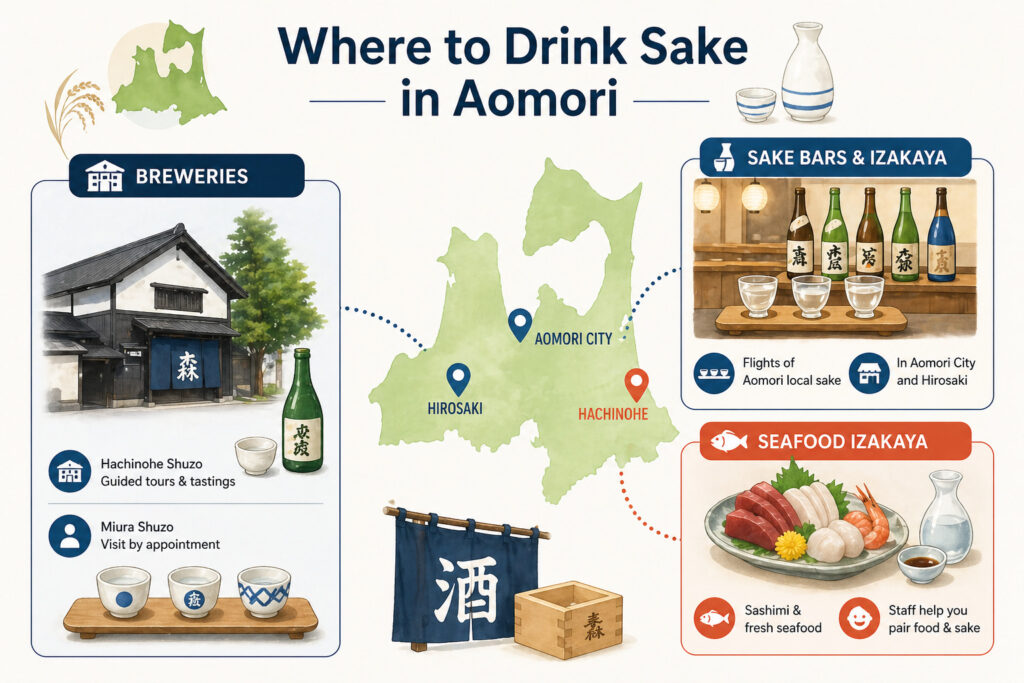
Wondering where to drink sake in Aomori? The obvious starting point is the breweries themselves. Many offer tastings. Hachinohe Shuzo runs guided tours ending at a tasting counter. Smaller breweries like Miura Shuzo sometimes welcome visitors by appointment. In Aomori City and Hirosaki, specialty sake bars and izakaya pour generous flights of local labels. Some seafood izakaya near the ports serve sashimi platters alongside a rotating selection of Aomori local sake. The staff genuinely enjoy helping you match food to glass.
Aomori Sake and Food Pairing
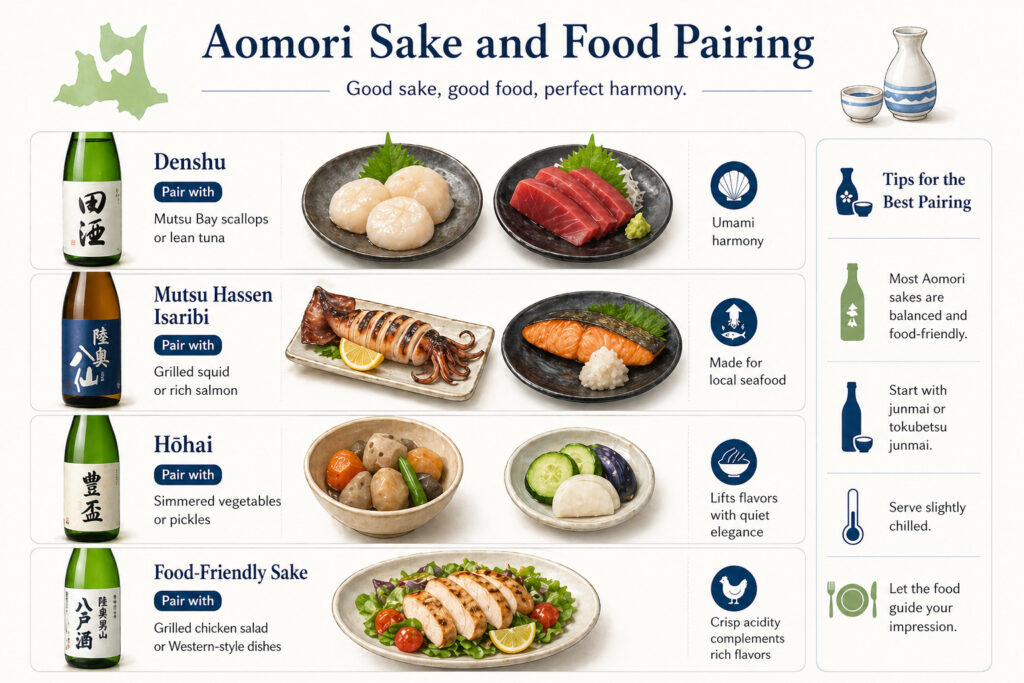
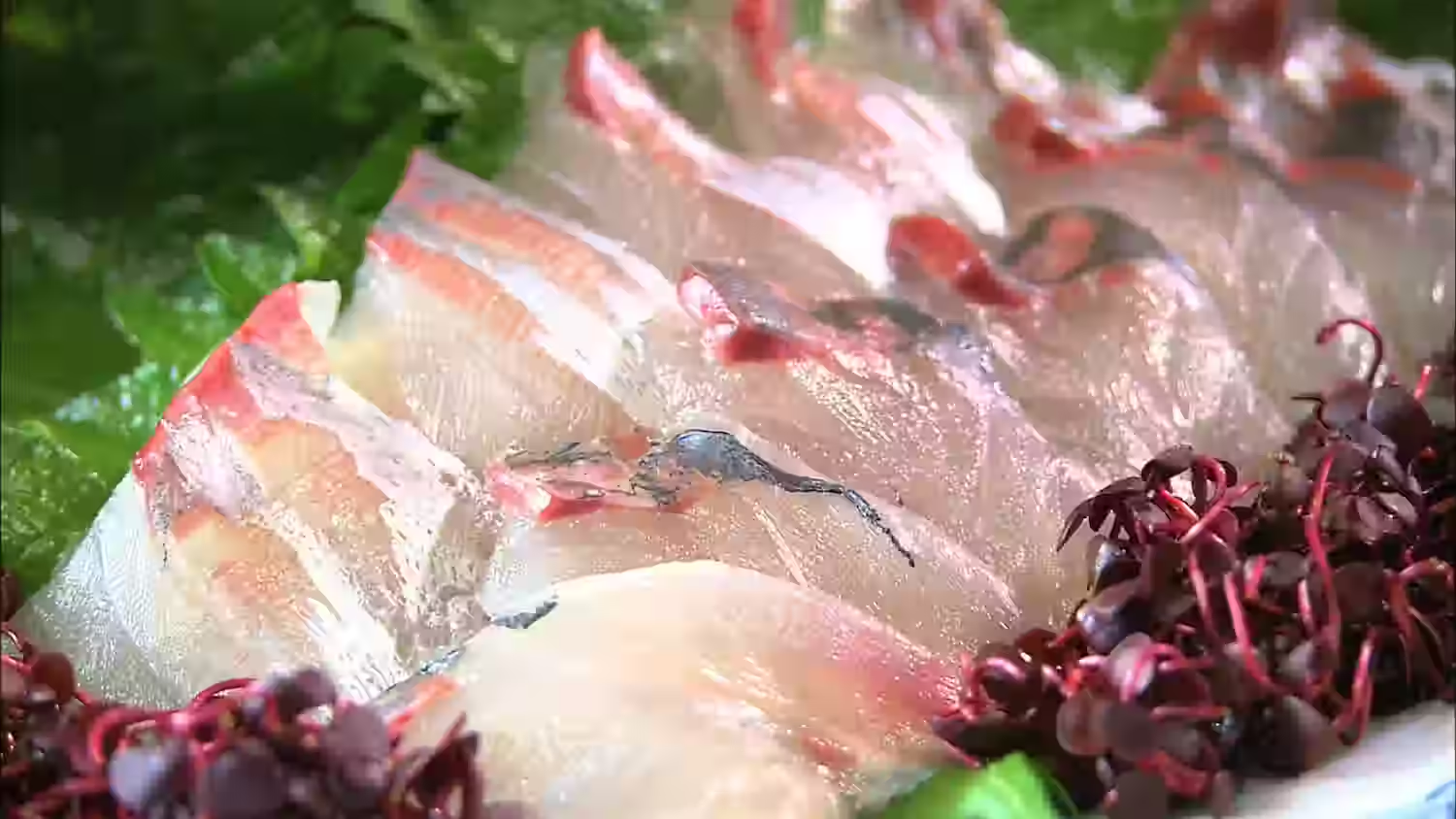
Good Aomori sake and food pairing feels instinctive. The region’s sake evolved alongside its cuisine. Aomori is blessed with seafood. Pair chilled Denshu with thick, sweet scallops from Mutsu Bay. The umami of sake and shellfish lock together beautifully. Lean tuna sashimi with Denshu works just as well. The sake’s clean body does not override the fish.
Mutsu Hassen Isaribi was designed specifically to accompany local seafood. It makes an easy go‑to for grilled squid or rich salmon. Hōhai shines with simple Japanese home dishes. Think simmered root vegetables or pickles. Its quiet presence lifts flavors rather than masking them. Even Western‑style dishes can find a match. Many Aomori sakes are food‑friendly Japanese sake at heart. Try a dry, crisp cup with a grilled chicken salad. The acidity cuts through the dressing without clashing.
If you feel unsure which bottle to open, remember that most Aomori sake brands aim for balance at the table. Start with a junmai or tokubetsu junmai. Serve it slightly chilled, and let the food guide your impression. You might be surprised how naturally the pairing clicks. For more pairing tips with regional Japanese dishes, you can explore our guide on foodinjapan.org.
Aomori Jizake FAQ
What is Aomori Jizake?
Aomori Jizake is a premium local rice wine from Aomori Prefecture. Master brewers make it with pristine snowmelt water and high-quality local rice. Drinkers know it for its crisp, clean, and elegant finish.
Where does Aomori Jizake come from?
This local sake originates from the snowy regions of northern Japan. Dedicated breweries in Aomori Prefecture have crafted these exceptional beverages since the Edo period.
What does Aomori Jizake taste like?
It has a crisp, dry, and surprisingly fruity flavor. The texture feels smooth and incredibly refreshing. Drinkers often compare it to a high-quality white wine with a clean, sharp finish.
Where can I drink Aomori Jizake in Japan?
You will find the best bottles right in Aomori Prefecture. Famous areas include traditional breweries in Hirosaki and Aomori City. Upscale izakaya pubs and specialty liquor stores also serve these famous brands nationwide.
How much does Aomori Jizake cost?
A standard bottle typically costs between 1,500 and 5,000 yen. Prices vary heavily depending on the specific brewery and the rice-milling ratio you select.
Is Aomori Jizake vegetarian or vegan friendly?
This traditional beverage contains absolutely no animal products. Vegans and vegetarians can safely enjoy this 100% plant-based drink anywhere.
What are the main ingredients in Aomori Jizake?
The main ingredients include special sake rice, koji mold, and pure mountain spring water. The cold winter climate and local rice give the drink its distinctive crispness and deep umami.
Can I drink Aomori Jizake at home?
Yes, you can easily enjoy it at home. Japanese liquor stores and supermarkets stock the famous local brands everywhere. Drinkers serve it chilled or gently warmed effortlessly depending on the season.
What is the difference between Aomori Jizake and mass-produced sake?
The main difference involves the production scale and ingredient quality. The Aomori specialty features locally grown rice and artisanal brewing methods, while mass-produced sake relies on bulk ingredients and industrial factories.
Is Aomori Jizake popular outside Japan?
It enjoys massive popularity outside Japan. You will easily find the major Aomori brands at high-end Japanese restaurants in North America, Europe, and Asia. This historic brewing region successfully exports its crisp taste to the entire world.
References
- Aomori Prefecture local sake feature (Japanese): https://www.umai-aomori.jp/pickup/detail_180.html
- Denshu background: https://news.mainpao.com/2023/11/29/青森縣「田酒」充滿大自然氣息-嘗一口日本最美味清酒/
- Mutsu Hassen brewery history: https://universaltravelpages.com/visit/mutsu-hassen-hachinohe-shuzo-co-ltd/
- Hato Masamune information: https://imadeya.co.jp/pages/hato-masamune
- Hōhai reviews: https://www.sakenote.com/sakes/9970







Comments