



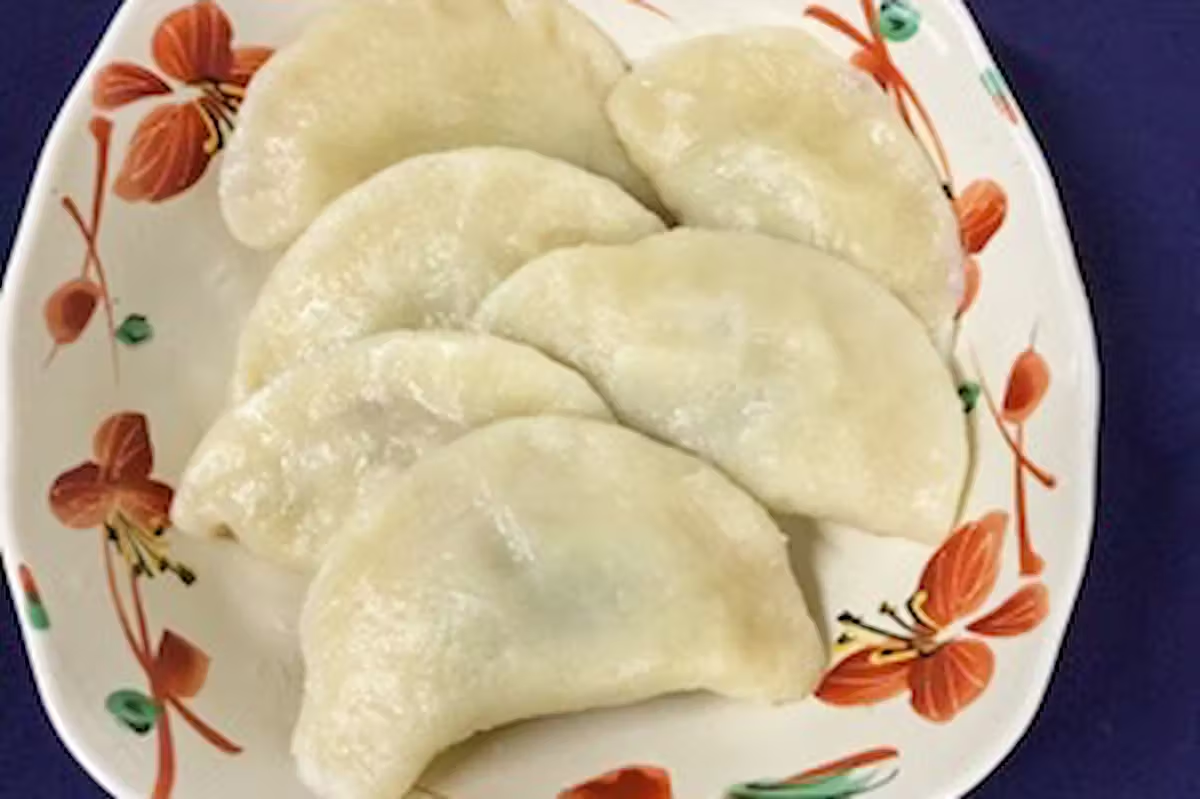
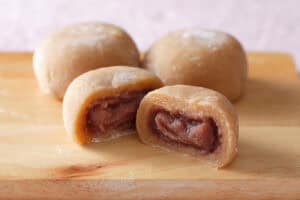
Kinkamochi is a nostalgic local confection from Aomori, shaped like a half moon and boiled until silky. Inside, a rich filling of black sugar, walnuts, and miso creates a sweet–savory surprise. People often make it for seasonal festivals, New Year gatherings, and family celebrations.
The charm is not elegance in the city sense. This is rural Japanese food with warmth and practicality. The dough feels simple, the filling feels bold, and the shape feels friendly in your hand. If you like handmade Japanese sweets, this one is a memorable starting point.
For regional context, see Aomori Food.
What Is Kinkamochi?
Kinkamochi is a boiled mochi sweet from Aomori’s Nanbu area. It uses a wheat-based dough rather than pounded glutinous rice. Cooks wrap a filling inside, fold the dough into a half-moon shape, and boil it briefly.
That method places kinkamochi between several familiar sweets. It is not daifuku, because the dough is not the same stretchy mochi skin and it usually has no bean paste focus. It is not uiro either, because it is not a steamed block with uniform texture. The best description is a boiled rice-flour-and-wheat comfort sweet with a soft, slippery surface.
If you want broader background, see Wagashi and Mochi.
Taste and Texture: Sweet, Nutty, and Rustic
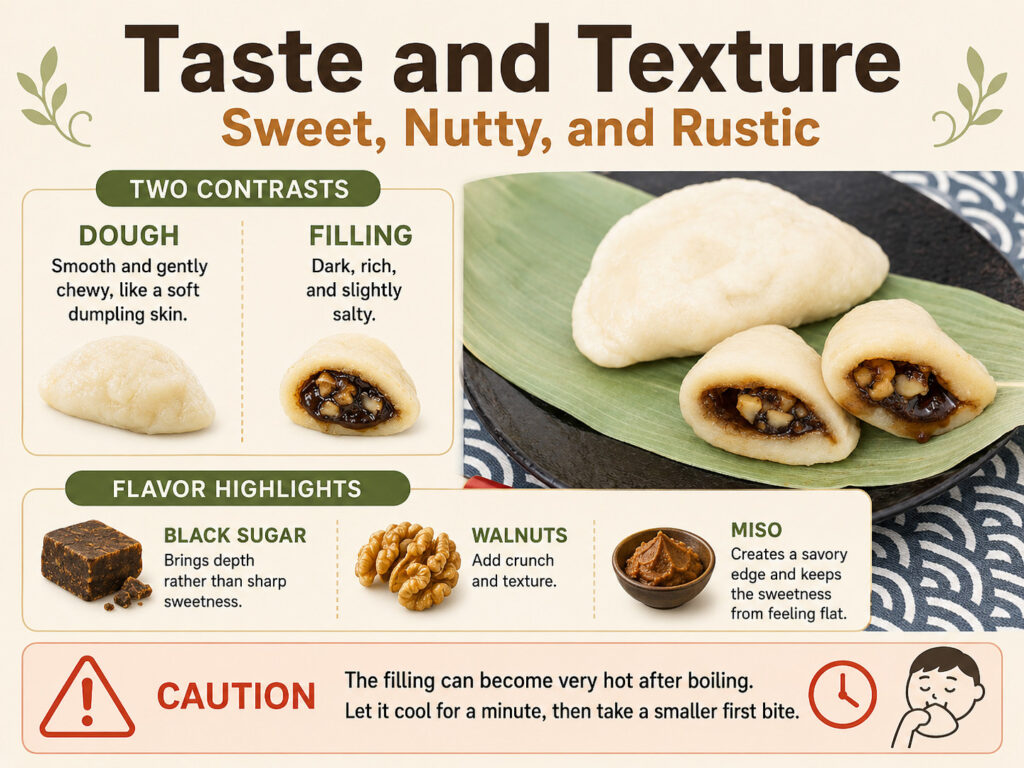
Kinkamochi taste and texture depend on two contrasts. The dough feels smooth and gently chewy, almost like a soft dumpling skin. The filling tastes dark, rich, and slightly salty.
Black sugar brings depth rather than sharp sweetness. Walnuts add crunch, while miso creates a savory edge that keeps the sweetness from feeling flat. The result feels rich, but not heavy, especially when eaten warm.
One caution feels important. The filling can become very hot after boiling. First-time visitors sometimes bite too fast. Let it cool for a minute, then take a smaller first bite.
Why Is It Shaped Like a Half Moon?
The half-moon shape is practical and symbolic. Folding the dough makes sealing easier, which matters when the filling melts. The curved shape also feels like a small parcel, easy to hold and eat.
In the Nanbu region, people also used descriptive names for foods based on shape. Kinkamochi fits that countryside logic. It looks simple, but the shape carries local identity.
A Quick Comparison with Similar Sweets
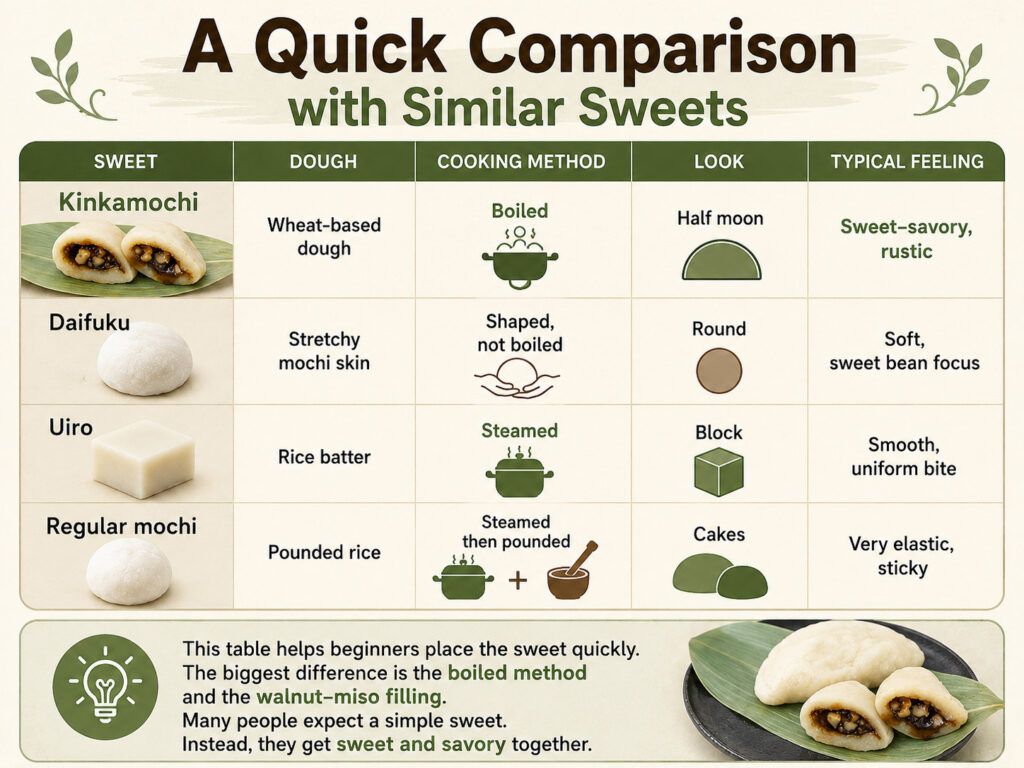
| Sweet | Dough | Cooking method | Look | Typical feeling |
| Kinkamochi | Wheat-based dough | Boiled | Half moon | Sweet–savory, rustic |
| Daifuku | Stretchy mochi skin | Shaped, not boiled | Round | Soft, sweet bean focus |
| Uiro | Rice batter | Steamed | Block | Smooth, uniform bite |
| Regular mochi | Pounded rice | Steamed then pounded | Cakes | Very elastic, sticky |
This table helps beginners place the sweet quickly. The biggest difference is the boiled method and the walnut–miso filling. Many people expect a simple sweet. Instead, they get sweet and savory together.
For related festival sweets, you may enjoy Kashiwa Mochi.
How Kinkamochi Is Made at Home
Home methods stay surprisingly straightforward. People knead wheat flour with hot water to form a smooth dough. Then they prepare the filling with black sugar, crushed walnuts, and miso.
Next comes the defining step. Cooks flatten a dough piece, add filling, fold it into a half moon, and seal the edge firmly. Finally, they boil it until it floats and the surface turns glossy.
A simple home flow looks like this.
- Knead dough with hot water until smooth.
- Mix black sugar, walnuts, and miso for filling.
- Wrap filling and form a half moon.
- Boil until cooked through.
- Cool briefly, then serve.
This is a handmade Japanese sweet, so small variations happen. Some families prefer more miso for a stronger savory note. Others add more walnuts for crunch.
History: A Northern Household Sweet That Survived
Kinkamochi is closely tied to Nanbu regional sweet culture. In colder farming areas, wheat-based foods supported daily life. People developed simple sweets that used pantry ingredients.
Over time, the sweet became a seasonal festival food. Families prepared it for New Year events, Obon offerings, or community gatherings. The act of making it often mattered as much as eating it.
Modern life changed the pattern. Fewer households make large batches now. Still, the sweet survives through local events, regional food education, and shops that continue the tradition.
Where Travelers Can Find It
Finding kinkamochi in Japan is easiest in Aomori, especially in Nanbu areas. Look for regional wagashi shops, local markets, and roadside stations. Seasonal festivals also provide good chances, since handmade sweets appear more often then.
If you travel in spring or around year-end, you may have better luck. Local souvenir corners at stations sometimes carry regional sweets during event seasons. Asking directly for “kinkamochi” can also help.
For planning local food experiences, the Tohoku food guide can be useful.
Is Kinkamochi Good for Beginners?
Yes, for most people. The flavor feels approachable, especially if you enjoy sweet–savory combinations. The dough tastes mild, so the filling becomes the star.
Still, a small surprise can happen. Some visitors expect soft daifuku texture. This sweet feels more dumpling-like, with a slippery surface from boiling. Trying one piece first is wise.
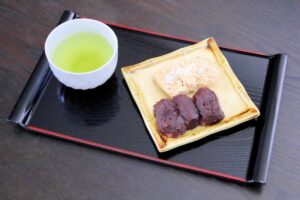
Green tea works well beside it. The tea balances sweetness and highlights the nutty miso note.
Final Thoughts
Kinkamochi is not a luxury wagashi. It is handmade comfort food from Aomori, shaped by local life and seasonal rhythm. The half-moon shape, boiled texture, and sweet–savory filling create a taste that feels truly regional.
If you enjoy discovering quiet local sweets, this one is worth seeking out. Try it warm, take a careful first bite, and let the walnut–miso filling surprise you.
Kinkamochi FAQ
What is Kinkamochi?
It represents a traditional sweet dumpling from Aomori’s Nanbu region. Local cooks wrap a rich filling of walnuts, miso, and black sugar inside a soft wheat-based dough. They then fold the dough into a half-moon shape and boil it in hot water until the surface turns glossy. Families often eat this comforting treat during autumn harvests, seasonal festivals, and special family gatherings.
What does Kinkamochi taste like?
It delivers a wonderfully sweet, nutty, and slightly savory flavor profile. The unrefined black sugar provides a deep, caramel-like sweetness. Crunchy walnuts add a satisfying bite, while local miso contributes a subtle, salty finish. The surrounding wheat dough remains mild and chewy, allowing the rich, melting center to stand out beautifully.
Why do cooks boil Kinkamochi instead of steaming it?
Boiling the dumplings creates a remarkably smooth surface and gives the dough a slippery, soft texture. This boiling method cooks the dough incredibly fast, helping home cooks prepare large batches efficiently. It perfectly reflects the practical nature of rural farming kitchens where speed and simplicity mattered most.
Why do makers shape Kinkamochi like a half moon?
This classic half-moon fold simplifies the sealing process, which prevents the sugary filling from leaking out when it melts. The compact shape also makes it incredibly practical for people to eat by hand during outdoor festivals. In historic northern kitchens, the shape itself deeply influenced the naming and regional identity of local sweets.
Where can travelers buy Kinkamochi?
You should explore local fresh markets, roadside stations (Michi-no-Eki), and traditional sweet shops across Aomori Prefecture. Regional autumn festivals and year-end community events often increase your chances of finding them fresh. Outside of northern Japan, shops rarely stock this hyper-local delicacy. We recommend planning a culinary trip to the Nanbu region to experience the most authentic flavors.
Where does Kinkamochi come from?
This unique sweet originates from the Nanbu region, which covers southeastern Aomori Prefecture and northern Iwate Prefecture. Local farming households developed the recipe centuries ago to celebrate the autumn wheat and walnut harvests. Today, the local community treasures it as a rare monument to the region’s historic agricultural lifestyle.
Is Kinkamochi vegetarian or vegan friendly?
This traditional sweet contains absolutely no animal products. Cooks prepare the simple dough and filling using only wheat, walnuts, brown sugar, and miso paste. Vegans and vegetarians can safely enjoy this 100% plant-based local treat anywhere.
What are the main ingredients in Kinkamochi?
The main ingredients include wheat flour, chopped walnuts, red miso, and dark brown sugar. The rich brown sugar melts into the salty miso during the boiling process, giving the filling its distinctive hot-caramel consistency. These simple mountain and farm ingredients create a surprisingly complex taste.
Can I make Kinkamochi at home?
Yes, you can easily make these sweet dumplings in your own kitchen. Japanese grocery stores stock the key ingredients — wheat flour, walnuts, brown sugar, and miso paste. Home cooks knead the dough, fill it with the sweet paste, and boil the pieces in a large pot within thirty minutes.
Is Kinkamochi popular outside Japan?
It remains completely unknown to international audiences outside of specialized Japanese culinary circles. You will rarely find this specific regional pastry at Asian supermarkets in North America or Europe. This hidden countryside treasure successfully preserves its exclusive status entirely within northern Japan.
References
- Ministry of Agriculture, Forestry and Fisheries Japan – Kinka mochi — checked in 2026; Nanbu area tradition, ingredients, and event context.
- Aomori Food — checked in 2026; regional food culture and traveler context.
- Wagashi — checked in 2026; overview of Japanese traditional sweets.
- Mochi — checked in 2026; mochi background and texture basics.
- Tohoku food guide — checked in 2026; travel context for northern Japanese foods.




Comments