



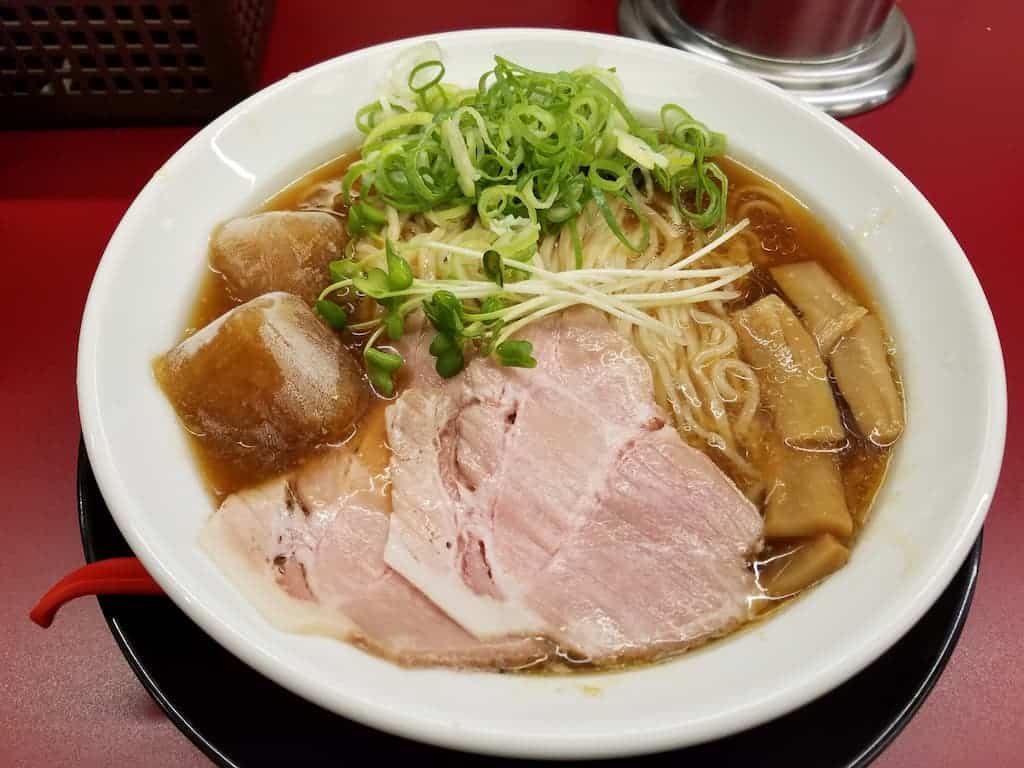
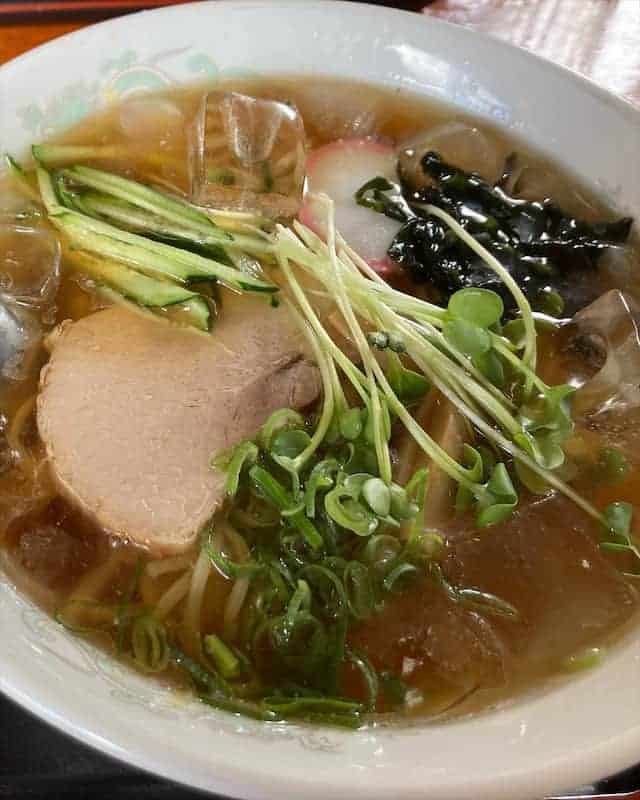
Hiyashi ramen is Yamagata’s signature cold ramen, served as chilled noodles in a full bowl of cold, soy sauce based broth. Unlike Hiyashi Chuka, it uses abundant soup rather than a small amount of tangy dressing. Ice cubes often float on the surface, and the flavor stays clean until the last sip. I still remember doubting the idea before my first bowl. One spoonful settled the argument.
- A complete cold noodle soup: chilled soy sauce broth with katsuo and kombu dashi, not a dressing.
- Born in 1952 at Sakaeya Honten, a soba restaurant in Yamagata City, after a customer’s request.
- Classic toppings include chashu, bamboo shoots, cucumber, and floating ice cubes.
What Is Hiyashi Ramen, Yamagata’s Cold Ramen?
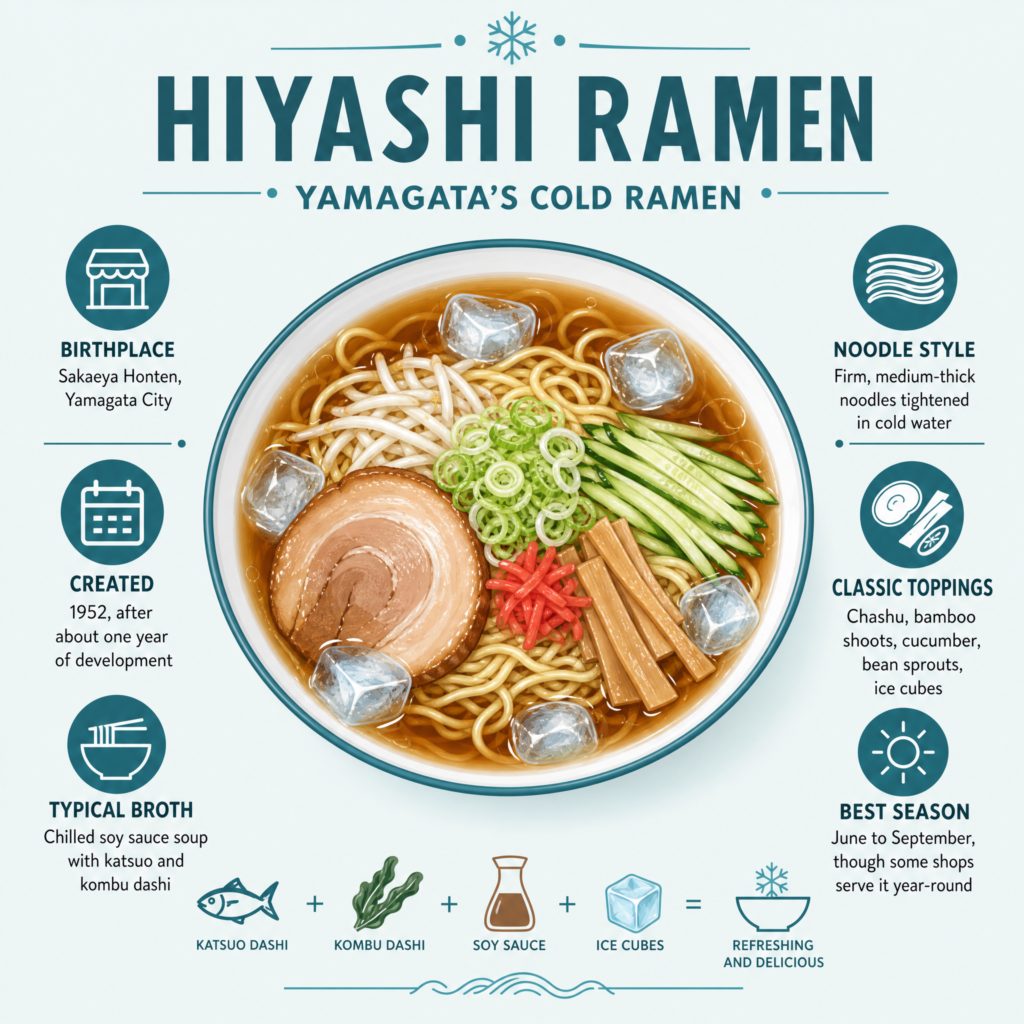
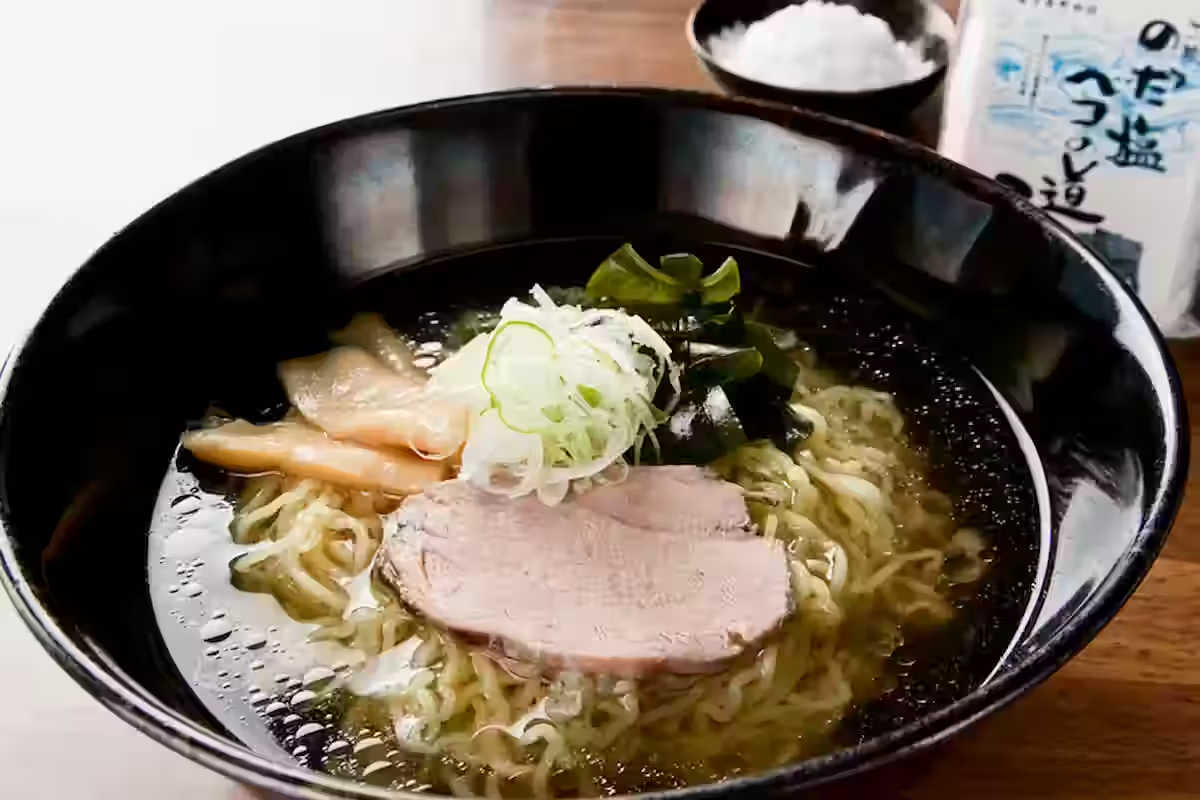
Hiyashi ramen is a Yamagata noodle dish served with chilled noodles in a generous bowl of cold, usually soy-based broth. In other words, it is real ramen, only cold. The soup tastes like a refined shoyu ramen, built on bonito and kelp dashi with a light touch of oil. Many shops float ice cubes directly in the bowl to keep everything crisp and cold.
First-time visitors often confuse it with Hiyashi Chuka, the dressed summer noodle plate. However, the two dishes share little beyond temperature. Hiyashi ramen keeps the structure of a proper ramen bowl, soup and all. For quick reference, the table below sums up the essentials.
| Quick Facts | Details |
|---|---|
| Birthplace | Sakaeya Honten, Yamagata City |
| Created | 1952, after about one year of development |
| Typical broth | Chilled soy sauce soup with katsuo and kombu dashi |
| Noodle style | Firm, medium-thick noodles tightened in cold water |
| Classic toppings | Chashu, bamboo shoots, cucumber, bean sprouts, ice cubes |
| Best season | June to September, though some shops serve it year-round |
Hiyashi Ramen vs Hiyashi Chuka vs Reimen
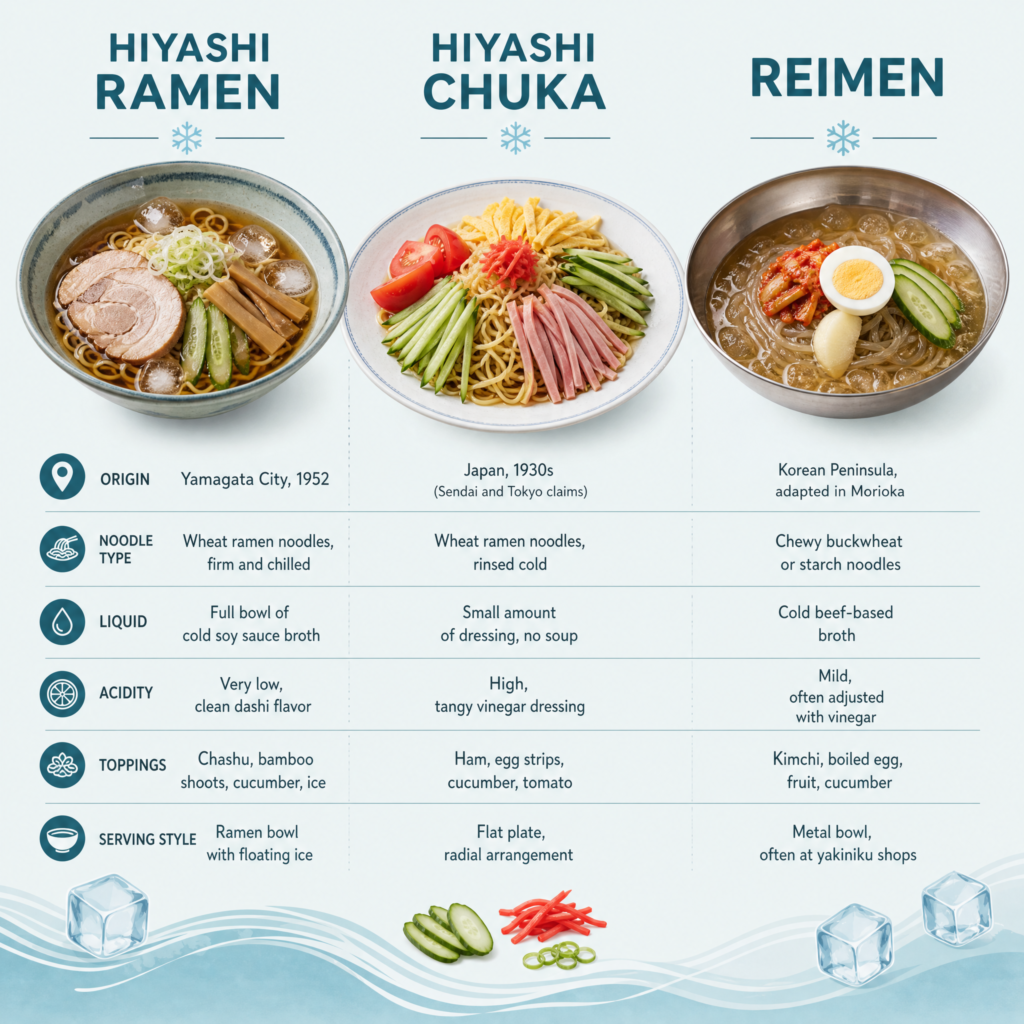
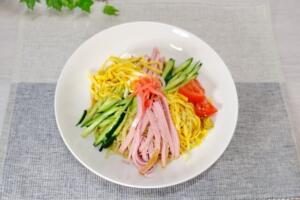
The key difference is simple: Hiyashi ramen is a cold soup, Hiyashi Chuka is a dressed noodle plate, and Reimen is a Korean-rooted dish with chewy starch noodles. Each one delivers a completely different eating experience. As a result, locals never treat them as interchangeable. The comparison below makes the contrast clear at a glance.
| Hiyashi Ramen | Hiyashi Chuka | Reimen | |
|---|---|---|---|
| Origin | Yamagata City, 1952 | Japan, 1930s (Sendai and Tokyo claims) | Korean Peninsula, adapted in Morioka |
| Noodle type | Wheat ramen noodles, firm and chilled | Wheat ramen noodles, rinsed cold | Chewy buckwheat or starch noodles |
| Liquid | Full bowl of cold soy sauce broth | Small amount of dressing, no soup | Cold beef-based broth |
| Acidity | Very low, clean dashi flavor | High, tangy vinegar dressing | Mild, often adjusted with vinegar |
| Toppings | Chashu, bamboo shoots, cucumber, ice | Ham, egg strips, cucumber, tomato | Kimchi, boiled egg, fruit, cucumber |
| Serving style | Ramen bowl with floating ice | Flat plate, radial arrangement | Metal bowl, often at yakiniku shops |
Curious about the dressed style? The Hiyashi Chuka summer noodle guide covers its sauces, history, and top restaurants. Meanwhile, fans of chewy noodles should read about Morioka Reimen, Iwate’s beef-broth cold noodles, which took a very different path to fame.
Hiyashi Ramen History: Born in a Soba Restaurant
According to the widely cited origin story, Hiyashi ramen began at Sakaeya Honten, a soba restaurant in Yamagata City. Founder Senshiro Abe opened the shop in 1932 after years of soba training. One day, a regular customer made a simple observation. Since cold soba existed, why not cold ramen too?
The request inspired the owner to begin testing a cold ramen. After a year of development, the shop introduced it in the summer of 1952. Word spread quickly through the city, and other soba shops and ramen restaurants followed. Cold ramen traditions later appeared in other regions too, such as Fukushima and Niigata, but Yamagata remains the style’s best-known home.
| Timeline | What happened |
|---|---|
| 1932 | Senshiro Abe opens Sakaeya Honten as a soba restaurant |
| 1951 | A customer’s request sparks a year of cold-soup experiments |
| 1952 | The shop launches “Hiyashi ramen” in summer |
| 1960s onward | Shops across Yamagata adopt their own cold ramen |
| Today | Restaurants nationwide offer summer versions; Yamagata serves it year-round |
Why the Broth Stays Smooth When Chilled
Simply chilling hot ramen fails, because animal fat hardens into waxy white flakes. Cooks solve this by skimming away fat that would solidify at low temperatures. Then they rebuild richness with carefully balanced vegetable and sesame oils plus a strong katsuo and kombu dashi. That single technical breakthrough took Sakaeya Honten a full year. Honestly, I find that persistence more impressive than the recipe itself.
Why Yamagata? The Hot Basin Behind a Cold Ramen
Yamagata created cold ramen because its geography practically demanded it. Yamagata City sits in a basin that traps heat in summer. In fact, the city recorded 40.8 degrees Celsius in July 1933, a national record that stood for decades. Hot soup loses its appeal fast in that kind of weather.
At the same time, the region had two strong food traditions ready to merge. First, a deep soba culture where cold noodles were already normal. Second, an extraordinary love of ramen; government household surveys have repeatedly ranked Yamagata City first in Japan for ramen spending. Local pride runs deep here, from Sakata Ramen on the coast to hearty Imoni stew in autumn. Put brutal summers, soba habits, and ramen obsession together, and a full-broth cold ramen feels almost inevitable.
What Does Hiyashi Ramen Taste Like?
Hiyashi ramen tastes savory, clean, and quietly deep, with soy sauce and dashi umami leading the way. The first spoonful surprises you: the chilled broth carries a clear soy aroma, then a light oil richness follows without any heaviness. Firm, cold-tightened noodles slide through the soup with a springy bite. Finally, the dashi finish lingers pleasantly after each mouthful.
I will admit the cold temperature felt strange for the first few seconds. Even so, by mid-bowl I understood why locals order it in winter too. The refreshing chill sharpens every flavor rather than muting it.
Traditional Hiyashi Ramen Ingredients
A traditional bowl uses the same core elements as hot shoyu ramen, adjusted for cold serving. The broth combines soy sauce with katsuo and kombu dashi, sometimes deepened with beef stock. Cooks remove solidifying fat and add a restrained blend of sesame and vegetable oil instead.
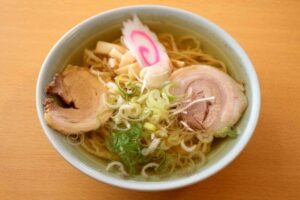
Toppings stay familiar yet lean toward coolness. Chashu, bamboo shoots (menma), and green onions provide the ramen backbone. Then cucumber and crisp bean sprouts add a refreshing crunch you rarely see in hot bowls. Ice cubes complete the picture, floating right in the soup. Because the broth is engineered for cold, melting ice barely dulls the flavor at good shops.
Popular Hiyashi Ramen Variations
Home cooks and restaurants across Japan now riff on the cold-soup idea. Each summer brings new versions, yet three home-style arrangements stand out for how well they suit the chilled format.
Salted Mackerel and Plum Hiyashi Ramen
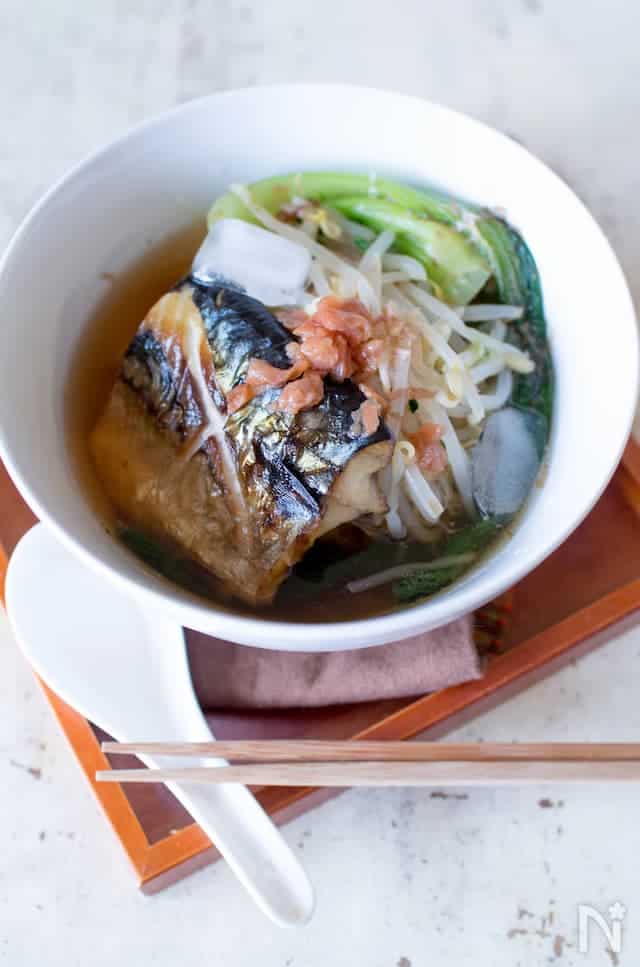
This version pairs grilled salted mackerel with pickled plum over cold noodles, bean sprouts, and bok choy. Flake the mackerel gradually and mix it into the noodles as you eat. The fish adds smoky depth, while the plum cuts through with bright acidity. For extra lift, shiso leaves and a pinch of sansho pepper work beautifully. It eats like a Japanese-style cold ramen with a seaside accent.
Plum and Chicken Tenderloin Hiyashi Ramen
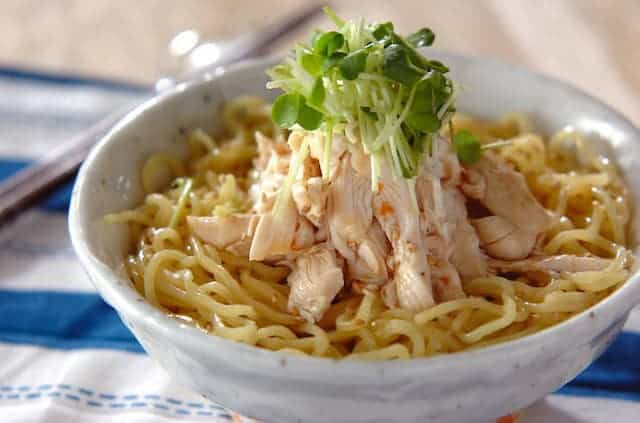
Here, gently cooked chicken tenderloin brings a moist, tender texture to the chilled bowl. Heat the chicken briefly and let residual warmth finish it, which keeps the meat from drying out. Plum paste threads tartness through the mild broth. Meanwhile, kaiware sprouts and white sesame add a peppery, nutty accent. It is light enough for days when even eating feels like effort.
Lemon and Miso Hiyashi Ramen
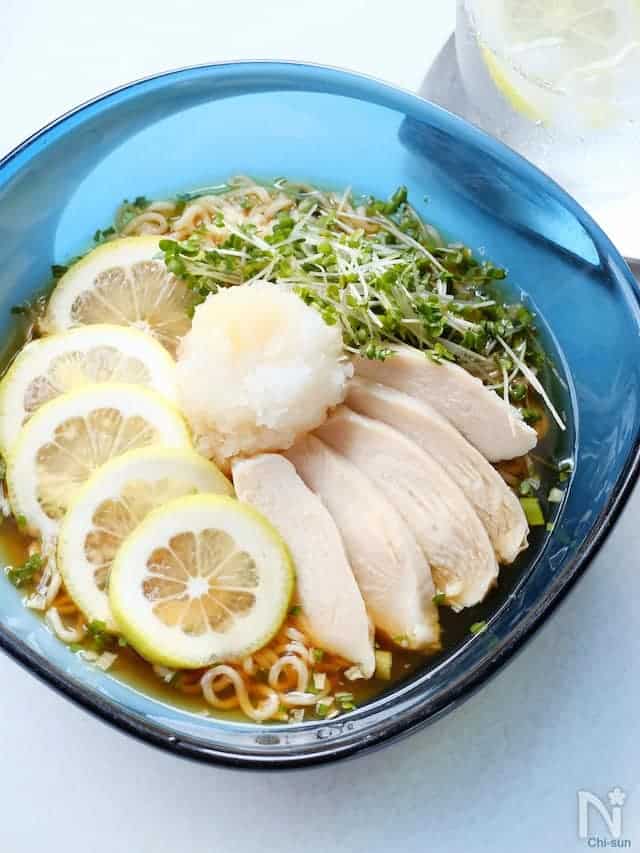
This quick version leans sweet and tangy. Lemon juice and a little honey brighten an instant soy sauce ramen base, and grated daikon adds a cooling, juicy texture on top. Ready-made salad chicken keeps preparation almost effortless. The result feels closer to a citrus broth than a classic Yamagata bowl, but on a humid evening that is exactly the point.
How to Make Yamagata Hiyashi Ramen at Home
You can reproduce a faithful Yamagata-style bowl at home with dashi, soy sauce, and careful chilling. The recipe below serves two people. Chill the broth to below 5 degrees Celsius, which takes about two hours in the refrigerator. Honestly, the waiting is the hardest part.
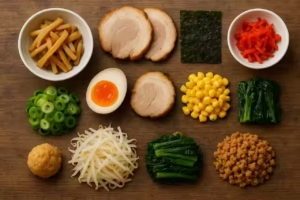
Ingredients for 2 Servings
| Ingredient | Amount |
|---|---|
| Fresh medium-thick ramen noodles | 2 portions (about 240 g) |
| Water (for broth) | 600 ml |
| Kombu (dried kelp) | 1 piece, about 5 g |
| Bonito flakes | 10 g |
| Soy sauce | 3 tbsp |
| Mirin | 1 tbsp |
| Sugar | 1 tsp |
| Salt | 1/2 tsp |
| Sesame oil | 1 tsp |
| Chashu slices (lean) | 4 slices |
| Seasoned bamboo shoots (menma) | 40 g |
| Cucumber, julienned | 1/2 cucumber |
| Boiled egg, halved | 1 |
| Green onion, sliced | 2 tbsp |
| Ice cubes | 6 to 8 |
Instructions
Soak the kombu in 600 ml of water for 30 minutes. Heat gently and remove the kombu just before boiling. Add the bonito flakes, turn off the heat, and wait 2 minutes. Then strain gently through a fine sieve. Why this step matters: a slow, gentle dashi keeps the broth crystal clear when chilled.
Stir in the soy sauce, mirin, sugar, and salt while the dashi is still warm. Add the sesame oil, cool to room temperature, and refrigerate for at least 2 hours. Skim off any fat film before serving. Why this step matters: seasoning slightly stronger than usual compensates for the melting ice later.
Slice the cucumber into thin strips and halve the boiled egg. Choose lean chashu, because fatty pork hardens unpleasantly in cold soup. Keep everything in the refrigerator until assembly. Why this step matters: cold toppings prevent the chilled broth from warming up in the bowl.
Boil the noodles in 2 liters of water, about 30 seconds less than the package time. Drain immediately, then rinse under cold running water for 30 seconds while rubbing off surface starch. Next, plunge them into ice water for 1 minute and drain very thoroughly. Why this step matters: the ice-water shock creates the firm, springy bite that defines Yamagata cold ramen.
Divide the noodles between two chilled bowls and pour the cold broth over them. Arrange the chashu, menma, cucumber, egg, and green onion on top. Finally, add 3 to 4 ice cubes per bowl and serve at once. Why this step matters: chilled bowls and immediate serving keep the soup below 5 degrees from first bite to last.
Troubleshooting Common Problems
- Cloudy broth: you boiled the kombu or squeezed the bonito flakes; strain gently and never press.
- White fat flakes: the chashu or stock was too fatty; use lean cuts and skim after chilling.
- Diluted flavor: the ice melted into weak soup; season stronger, or freeze some broth into cubes.
- Soggy noodles: they overcooked or sat too long; undercook slightly and rinse fast.
- Watery bowl: the noodles were poorly drained; shake the colander hard before plating.
Where to Eat Hiyashi Ramen in Yamagata
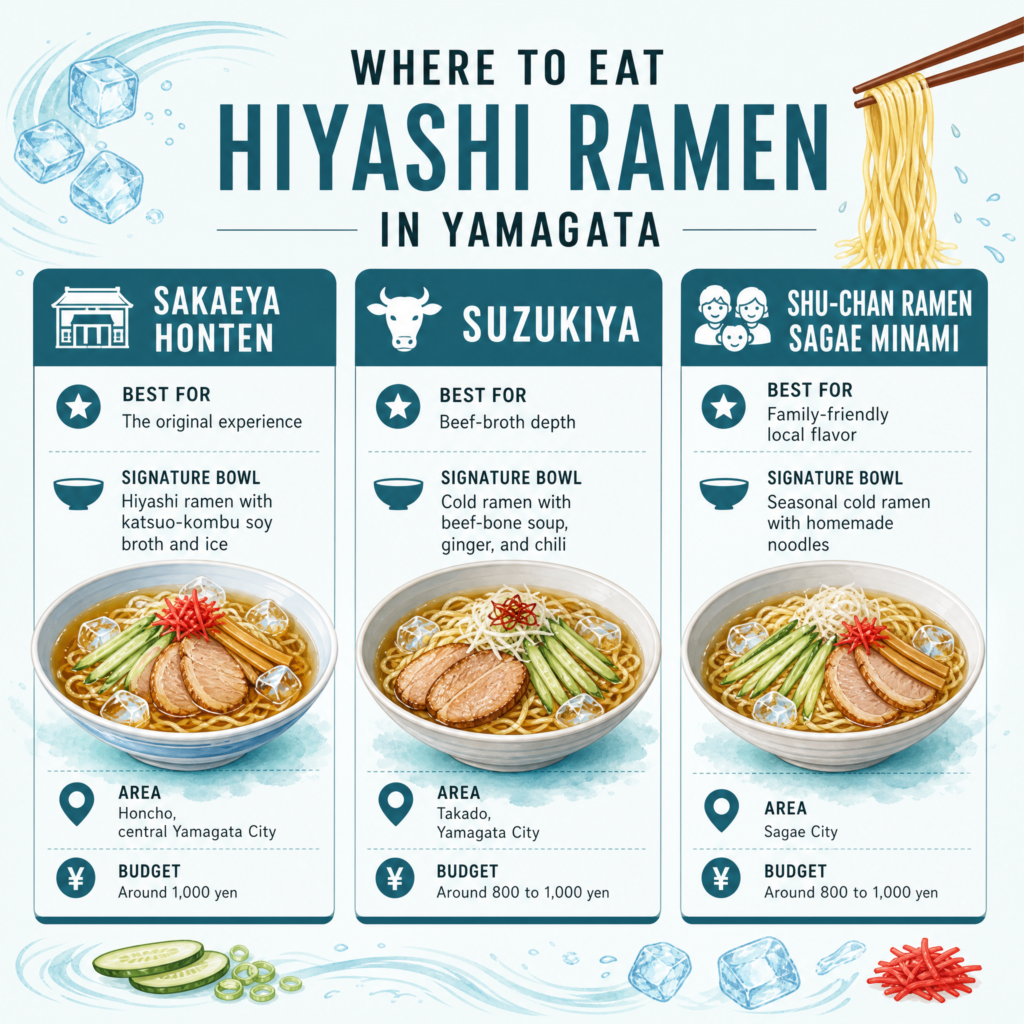
Yamagata offers dozens of cold ramen shops, but three stand out for history, flavor, and access. Each shop interprets the dish differently, so comparing bowls is half the fun. The table gives a quick overview before the details.
| Shop | Best for | Signature bowl | Area | Budget |
|---|---|---|---|---|
| Sakaeya Honten | The original experience | Hiyashi ramen with katsuo-kombu soy broth and ice | Honcho, central Yamagata City | Around 1,000 yen |
| Suzukiya | Beef-broth depth | Cold ramen with beef-bone soup, ginger, and chili | Takado, Yamagata City | Around 800 to 1,000 yen |
| Shu-chan Ramen Sagae Minami | Family-friendly local flavor | Seasonal cold ramen with homemade noodles | Sagae City | Around 800 to 1,000 yen |
Sakaeya Honten (栄屋本店)
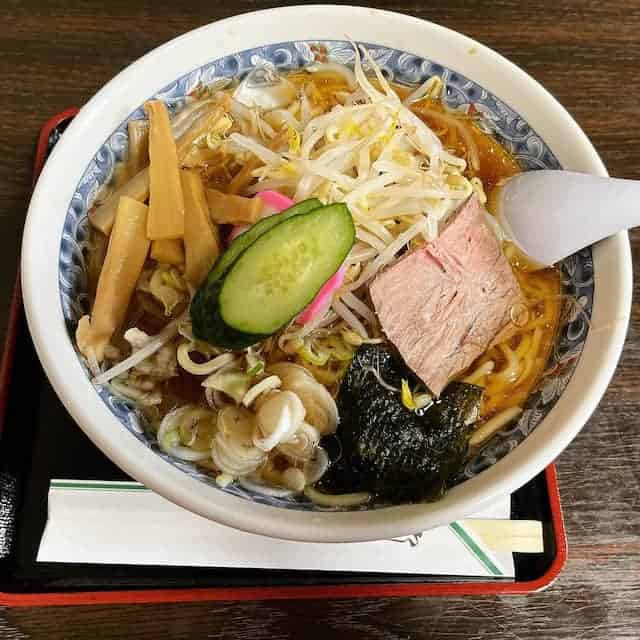
Sakaeya Honten is the birthplace of Hiyashi ramen and still the benchmark. The founder spent a year perfecting the recipe, and his family has guarded it since 1952. Their secret broth combines soy sauce with bonito and kelp dashi, finished with a delicate oil blend. Ice floats in the bowl, yet the flavor barely shifts as it melts. Lines form on summer lunchtimes, so arrive early. If you try only one cold ramen in Yamagata, make it this one.
Suzukiya (すゞ木屋)
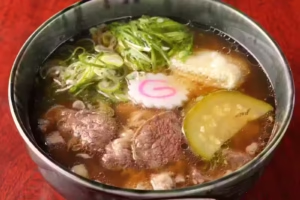
Suzukiya is a local soba and ramen shop with more than 50 years of history. Their cold ramen uses a beef-bone soup that recalls Korean-style chilled noodle broth. Ginger and red chili pepper tighten the refreshing flavor even further. Kaiware sprouts and cucumber add crunch and a cooling look. Their old-school chuka soba also draws regulars, so hesitant companions have a warm option too.
Shu-chan Ramen Sagae Minami (修ちゃんラーメン 寒河江南店)
Shu-chan Ramen Sagae Minami is a cozy family restaurant in Sagae City, west of Yamagata City. Their seasonal Hiyashi ramen pairs a flavorful yet light cold soup with homemade noodles. Classic toppings like chashu and menma meet cucumber and ice for extra coolness. Locals also love their Negi Miso Natto Ramen, a punchy mix of natto, miso, and green onions. The generous portions make it a reliable stop on a Sagae day trip.
Dietary Notes and Vegetarian Options
Standard Hiyashi ramen is not vegetarian. Typical bowls may contain pork or beef chashu, chicken or beef stock, fish dashi, soy, wheat noodles, and egg. Travelers with allergies should ask each shop directly, because broth recipes vary widely.
At home, however, a plant-based version works surprisingly well. Build the broth from kombu and dried shiitake instead of bonito and meat stock. Then swap chashu for chilled grilled tofu or seasoned king oyster mushrooms. The cold format actually flatters vegetable dashi, since delicate flavors stay bright at low temperatures.
Conclusion
Hiyashi ramen proves that ramen does not need steam to satisfy. A full bowl of chilled soy sauce broth, firm noodles, and floating ice sets it apart from every other cold noodle in Japan. Born at a Yamagata soba shop in 1952, this beloved regional comfort food now inspires summer menus nationwide. Try the home recipe first if Japan feels far away. Better yet, visit the restaurants above and taste the original. Afterward, explore Morioka Reimen and Hiyashi Chuka to complete your cold noodle journey.
Hiyashi Ramen FAQ
Is the soup in Hiyashi ramen really cold?
Yes, the soup arrives genuinely cold, often with ice cubes floating on the surface. Shops chill both the broth and the noodles before serving. The bowl itself usually feels cool to the touch. This complete chill separates it from lukewarm or room-temperature noodle dishes.
Does Hiyashi ramen taste sour?
No, the dish tastes savory rather than sour. The broth relies on soy sauce, bonito, and kelp dashi with very little acidity. This clean umami profile clearly distinguishes it from vinegar-forward Hiyashi Chuka. People who dislike tangy dressings often prefer it for exactly that reason.
How does it differ from Hiyashi Chuka?
The biggest difference is the soup. Hiyashi ramen submerges the noodles in a full bowl of cold broth, exactly like hot ramen. Hiyashi Chuka instead dresses cold noodles with a small amount of tangy sauce on a plate. The toppings and the overall flavor direction also differ considerably.
Do restaurants always add ice cubes?
Not always, though floating ice is the famous signature at Sakaeya Honten and many Yamagata shops. Some restaurants simply chill the broth thoroughly instead. Ice keeps the bowl cold to the last bite but slowly dilutes the soup. Well-made versions season the broth slightly stronger to compensate.
When can I eat Hiyashi ramen in Yamagata?
Summer, from June to September, is the peak season across the prefecture. However, several famous shops, including Sakaeya Honten, serve it all year. Local regulars famously order the cold bowl even in snowy January. Visiting outside summer therefore does not mean missing out.
Can Hiyashi ramen be made vegetarian?
Traditional versions contain meat stock, fish dashi, and animal toppings, so they are not vegetarian. At home, you can build a plant-based broth from kombu and dried shiitake instead. Chilled tofu or seasoned mushrooms replace the chashu nicely. Always confirm ingredients with restaurants, since most standard bowls remain animal-based.
Why does the fat not harden in the cold broth?
Cooks deliberately remove animal fat that would solidify at low temperatures. They then restore body with vegetable and sesame oils, which stay liquid when chilled. A strong katsuo and kombu dashi covers any lost richness. This balancing act took the original creator about a year to perfect.
Where did Hiyashi ramen originate?
The widely cited origin is Sakaeya Honten, a soba restaurant in Yamagata City. A regular customer asked for a cold ramen in the early 1950s, since cold soba already existed. Founder Senshiro Abe developed the dish over a year and launched it in 1952. Other regions later created their own cold ramen traditions independently.
References
- Takara no Yamagata (Yamagata City official), Hiyashi Ramen, Local Cuisine, https://www.yamagatakara.jp/takara/specialties/hiyashi-ramen.html (Surveyed: July 2026)
- Yamagata Prefecture Official Tourism Site (Yamagata e no Tabi), Hiyashi Ramen, https://yamagatakanko.com/attractions/detail_12718.html (Surveyed: July 2026)
- Sakaeya Honten Official Online Shop, Ganso Hiyashi Ramen, https://yamagata-sakaeyahonten.com/ (Surveyed: July 2026)
- VISIT YAMAGATA (Yamagata City tourism), Cold Noodle Culture Feature, https://www.visityamagata.jp/topics-yamagata-tsumetaimen/ (Surveyed: July 2026)
- Yamagata City Tourism Association, Tourism Database: Hiyashi Ramen, https://www.kankou.yamagata.yamagata.jp/db/cgi-bin/search/search.cgi?panel=detail&d01=1137&c=10 (Surveyed: July 2026)
Related Articles
- Hiyashi Chuka (冷やし中華) (Surveyed: July 2026)
- Morioka Reimen (盛岡冷麺) (Surveyed: July 2026)
- Sakata Ramen (酒田ラーメン) (Surveyed: July 2026)
- Imoni (芋煮) (Surveyed: July 2026)




Comments