



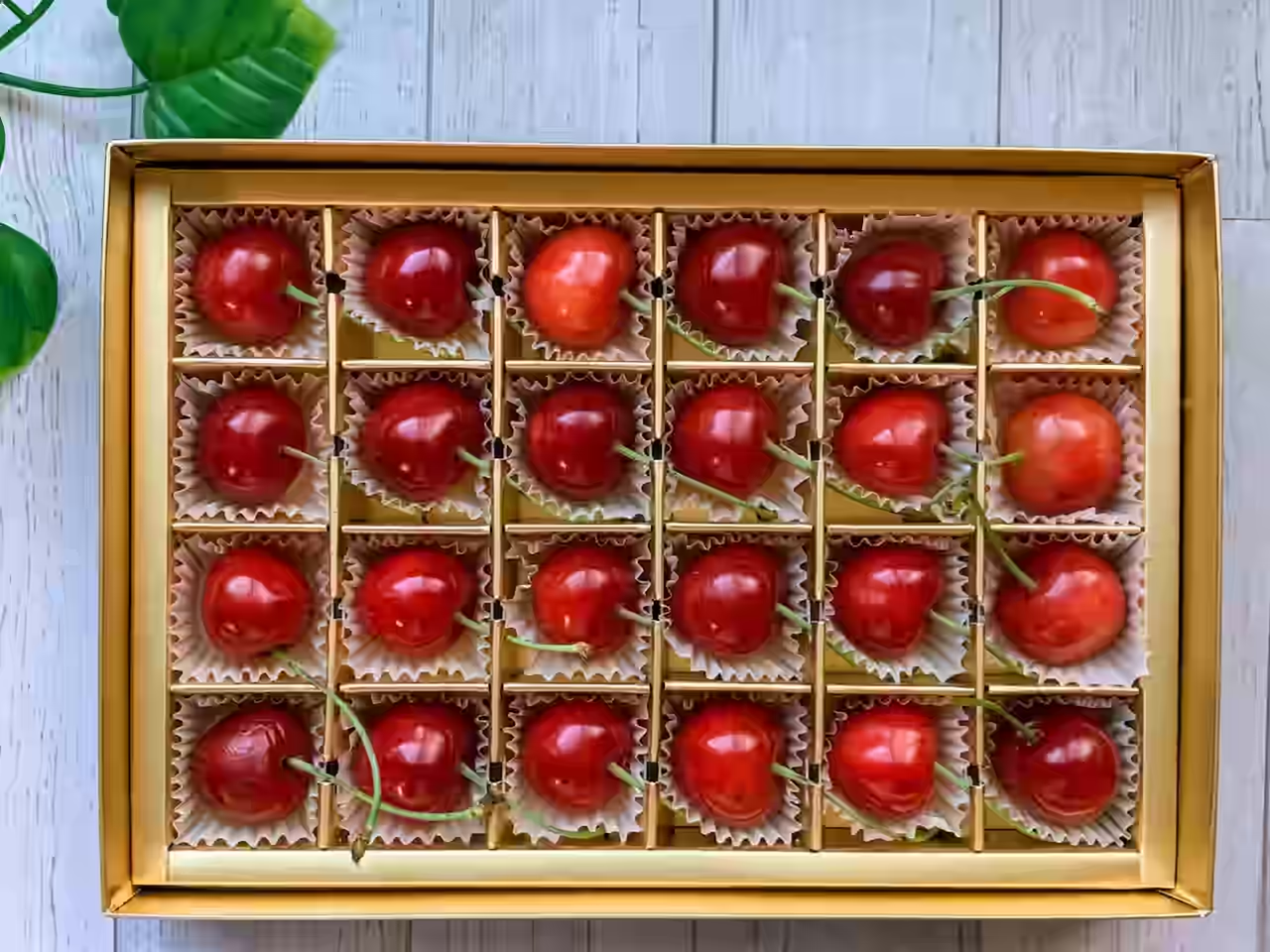
If you’ve ever wandered through a Japanese department store in June, you’ve probably seen them. Small, glossy, ruby red cherries. Sitting in a perfectly arranged box, each one nestled in its own little cushion. The price tag might stop you in your tracks. These are 佐藤錦 Sato Nishiki — and once you taste one, you’ll understand exactly why.
What Is Sato Nishiki?
So, what is Sato Nishiki exactly? It’s a Japanese cherry variety. It’s also the most celebrated sweet cherry grown in Japan. The name breaks down simply: “Sato” comes from the farmer who created it, and “Nishiki” means “brocade” — a nod to its rich, jewel-like appearance.
These are not your typical grocery-store cherries. Sato Nishiki are known for their thin, tender skin and remarkably juicy flesh. They feel almost weightless in your hand. Then you bite in, and the flavor hits you — deeply sweet, with just a whisper of tartness underneath.
Japan takes its premium cherry seriously. And Sato Nishiki sits at the very top.
Why Are Sato Nishiki Cherries Famous?
People often ask: why Sato Nishiki cherries are famous when Japan has so many incredible fruits? The answer lies in a combination of rarity, season, and sheer flavor.
These are a short seasonal fruit from Japan. The harvest window runs roughly through June, sometimes spilling into early July. That’s it. A few weeks. Once they’re gone, they’re gone — and that brevity makes every single cherry feel precious.
Sato Nishiki are also notoriously fragile. They bruise easily. They don’t travel well. You won’t find them piled up in bins at a convenience store. That scarcity drives demand, and demand drives prestige. High-end department stores like Isetan and Takashimaya showcase them like jewels. Some premium sets sell for tens of thousands of yen.
If you’re curious about Japan’s broader luxury fruit culture — where melons can cost more than a hotel stay — Sato Nishiki fits perfectly into that world. They’re part of something larger: Japan’s deep, almost philosophical relationship with seasonal produce.
What Does Sato Nishiki Taste Like?
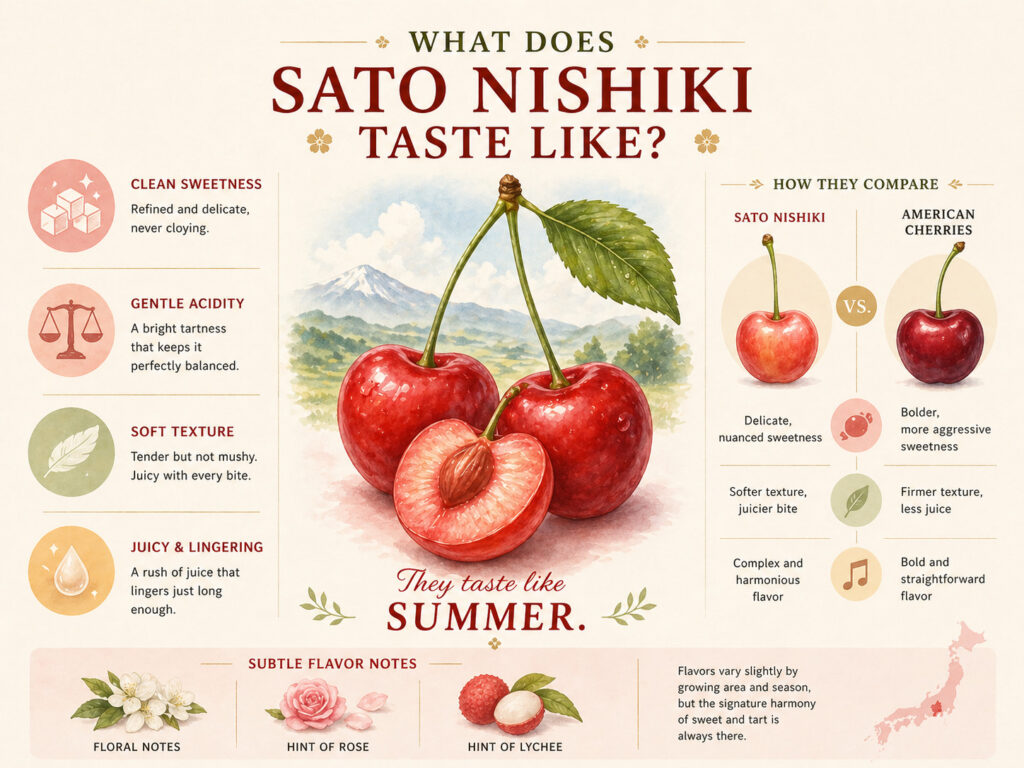
This is the question most people really want answered. What does Sato Nishiki taste like?
Honestly, it’s hard to describe without sounding dramatic. The sweetness is clean and refined — not cloying, not one-dimensional. There’s a gentle acidity that keeps things interesting. The texture is soft but not mushy. Each bite releases a rush of juice that lingers just long enough.
They taste like summer. That’s the simplest way to put it.
Compared to American cherries, which tend toward a bolder, firmer, more aggressively sweet profile, Sato Nishiki feel more delicate. More nuanced. The balance is almost musical — everything in its right place.
Some people taste floral notes. Others find a faint hint of rose or lychee. It varies slightly by growing area and season conditions. But the throughline is always that signature harmony of sweet and tart.
The History Behind 佐藤錦 Sato Nishiki
The story starts in the early 1900s, in the mountains of Yamagata Prefecture in northern Japan. Cherry cultivation had only recently arrived in the country, introduced from Europe and the United States during the Meiji era (1868–1912).
The Mountain That Made It Possible
Farmers across Japan struggled to grow cherries. The rainy season in June was the enemy. Cherries hate prolonged rain, as it splits the skin, ruins the flavor, and invites disease. Most regions simply gave up.
But Yamagata was different. The surrounding mountains acted as a natural barrier. The rainy season here was shorter. The air drier. The conditions, almost by accident, happened to be ideal.
One Farmer, Fifteen Years
A farmer named Sato Eisuke saw the potential. He wasn’t satisfied with what existed. The cherries of his time were too sour, too soft, too quick to spoil. He wanted something better. Something people could actually enjoy fresh, not just canned or preserved.
He began experimenting. He crossed two distinct varieties: the Napoleon cherry, known for its firm texture and tart punch, and the Kidama cherry, prized for its sweetness and tender flesh. The goal was to capture the best of both.
It took fifteen years.
In 1928, after a decade and a half of careful cultivation and relentless refinement, the new variety was finally ready. Sato named it Nishiki, meaning brocade, perhaps because it shimmered like silk in the summer light. The full name, 佐藤錦, honors both the creator and the fruit’s beauty.
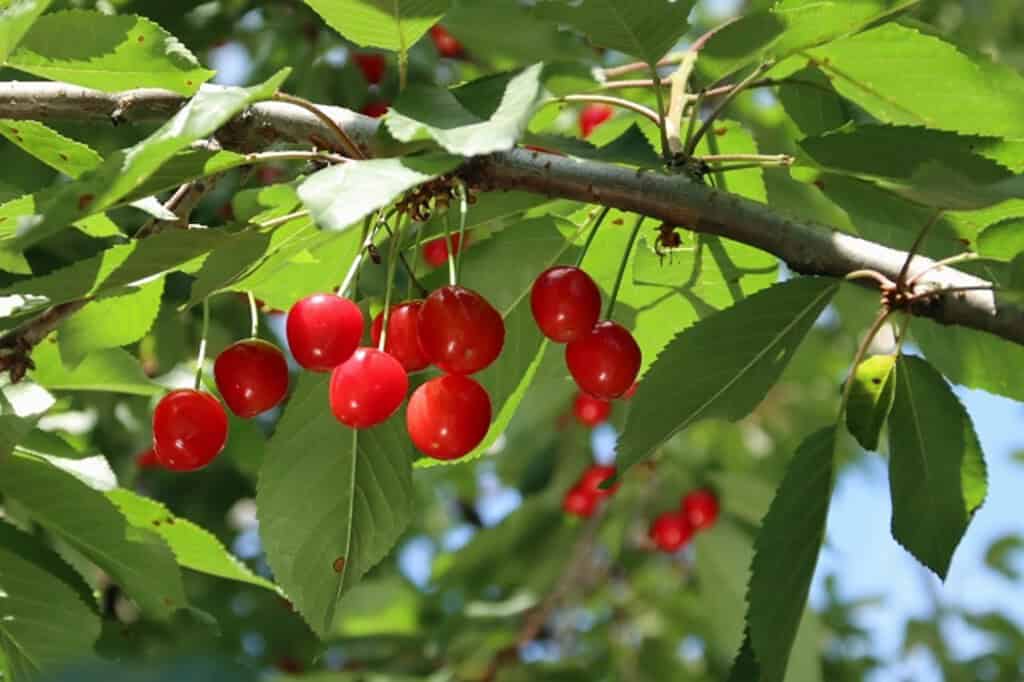
The cherry spread quickly through Yamagata. Farmers recognized immediately that this was something different. It tasted better. Sato nishiki cherry lasted longer on the tree. It held up just well enough to reach markets in Tokyo and beyond.
Today, Yamagata Prefecture produces over 70% of all domestic cherries in Japan. The 山形のさくらんぼ Yamagata cherries have become synonymous with quality. Entire festivals are held in the region to celebrate the harvest. Cherry-picking farms open their gates each June, drawing families from across the country.
Sato Nishiki as a Gift
Gift cherries are a genuine category in Japan. And among gift options, Sato Nishiki sit near the very top.
Premium Japanese cherries for gifting are packaged with enormous care. Each cherry is often individually checked for color, size, and ripeness. The most prized specimens — dark, heavy, perfectly formed — are sorted into gift boxes lined with soft padding. Some high-end sets are wrapped and tied like wedding gifts.
The gifting season overlaps almost exactly with the harvest. June in Japan is cherry season, and cherry boxes appear prominently in department store gift sections. They make ideal ochugen gifts — the mid-year Japanese tradition of presenting something meaningful to someone you respect.
If you’re exploring other Japanese premium fruit for gifting, you’ll find that Sato Nishiki competes easily with Yubari melon or Ruby Roman grapes in terms of cultural prestige.
Finding and Enjoying Sato Nishiki
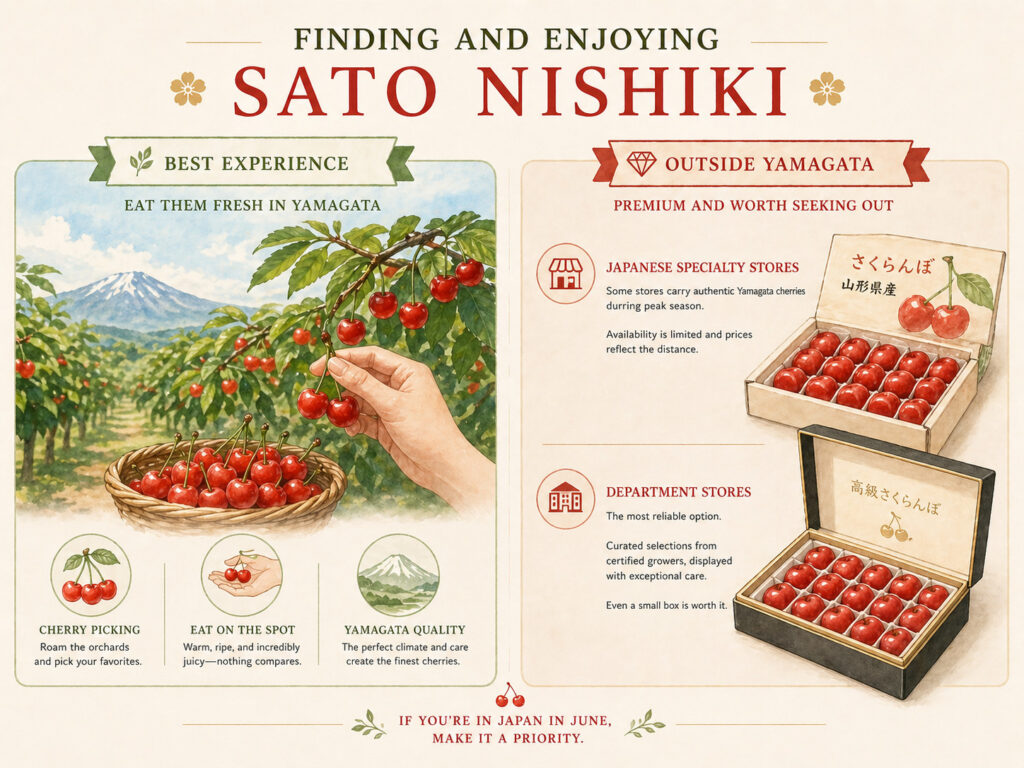
The best experience is eating them fresh, straight from a Yamagata orchard. Cherry-picking farms in the region let visitors roam the rows, searching for the plumpest, reddest specimens and eating them on the spot. There’s something about plucking a warm cherry directly from the tree that makes it taste even better.
Outside of Japan, finding authentic 高級さくらんぼ premium cherry from Yamagata is genuinely difficult. Some Japanese specialty stores carry them during peak season, but availability is limited and prices reflect the distance. If you’re in Japan in June, make it a priority.
Department stores are the most reliable option outside of Yamagata itself. They stock curated selections from certified growers and display them with the same care you’d expect from a jewelry shop. Even a small box is worth it — if only to understand why the Japanese treat these ruby red cherries the way they do.
Still the King
Sato Nishiki have been Japan’s leading sweet cherry variety for nearly a century. Newer varieties have emerged — some sweeter, some larger — but none have displaced the original. There’s a reason the name persists.
Part of it is taste. Part of it is history. And part of it is something harder to define: the sense that this cherry belongs to a particular place, a particular season, a particular way of paying attention to what you eat.
Japan’s best seasonal Japanese fruit always carries that quality. A short window. A deep flavor. A feeling that if you miss it, you’ll have to wait a whole year.
With Sato Nishiki, the wait is always worth it.
Sato Nishiki FAQ
What is Sato Nishiki?
Sato Nishiki is a premium cherry variety from Yamagata Prefecture. Farmers grow it with incredible care and precision. Food lovers know it for its bright ruby-red color and perfect sweet-tart balance.
Where does Sato Nishiki come from?
Sato Nishiki originates from Yamagata Prefecture. A local farmer named Eisuke Sato developed this specific cherry breed during the early 20th century.
What does Sato Nishiki taste like?
Sato Nishiki has a sweet, juicy, and mildly tart flavor. The texture feels incredibly soft and delicate. Diners often compare it to tasting a bright, edible jewel bursting with fresh juice.
Where can I eat Sato Nishiki in Japan?
You will find the best Sato Nishiki cherries right in Yamagata Prefecture. Famous agricultural areas host fun, interactive cherry-picking farms. Luxury fruit parlors in Tokyo also serve these premium cherries in seasonal parfaits.
How much does Sato Nishiki cost?
A premium box of Sato Nishiki typically costs between 3,000 and 10,000 yen. Prices vary greatly depending on the cherry size, the harvest timing, and the beautiful gift packaging.
Is Sato Nishiki vegetarian or vegan friendly?
Sato Nishiki contains absolutely no animal products. Vegans and vegetarians can safely enjoy this 100% plant-based luxury fruit anywhere.
What are the main ingredients in Sato Nishiki desserts?
The main ingredients in a Sato Nishiki dessert include fresh cherries, whipped cream, and vanilla ice cream. The premium fresh cherry gives the parfait its distinctive sweet pop and elegant appearance.
Can I eat Sato Nishiki at home?
Yes, you can easily eat Sato Nishiki at home. High-end Japanese grocery stores sell the fresh fruit during the early summer harvest season. Home cooks wash them gently and serve them chilled as an elegant dessert.
What is the difference between Sato Nishiki and American cherries?
The main difference involves the color and the flavor profile. Sato Nishiki features a bright red skin and a delicate sweet-sour balance, while American cherries possess a dark, almost black skin and a much heavier, sweeter taste.
Is Sato Nishiki popular outside Japan?
Sato Nishiki enjoys immense popularity among fruit lovers outside Japan. Shoppers eagerly buy them at premium Japanese supermarkets in Hong Kong and Taiwan. This luxury fruit successfully represents Japanese agricultural perfection to the entire world.
References
- Web Japan – Kids Web Japan, “Yamagata: Sato Nishiki Cherries”: https://web-japan.org/kidsweb/local/satonishiki/
- Kikkoman Food Forum, “Japanese Cherries” (Vol. 35 No. 1, July 2021): https://www.kikkoman.com/en/culture/foodforum/japanese-style/35-1.html




Comments