





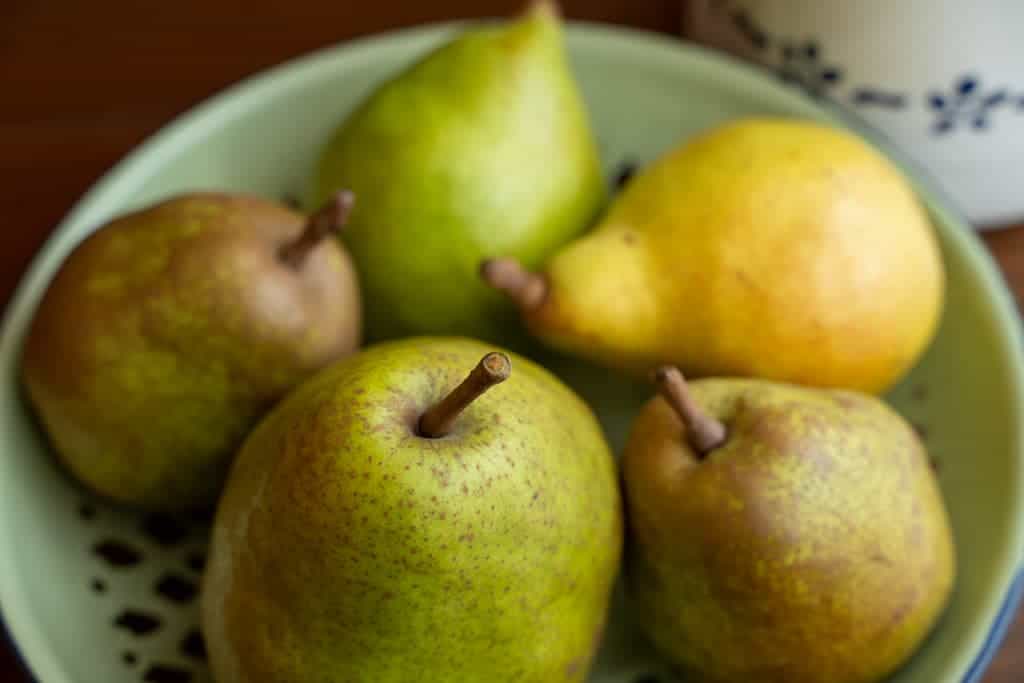
La France pear is a premium western pear grown mainly in Yamagata. It has a buttery texture, floral aroma, and mellow sweetness. People usually ripen it after harvest before eating.
Many shoppers feel unsure about this fruit. They wonder how to pick it, store it, and eat it. Here is what you should know before buying and enjoying one.
What Is La France Pear? Yamagata’s Premium Western Pear
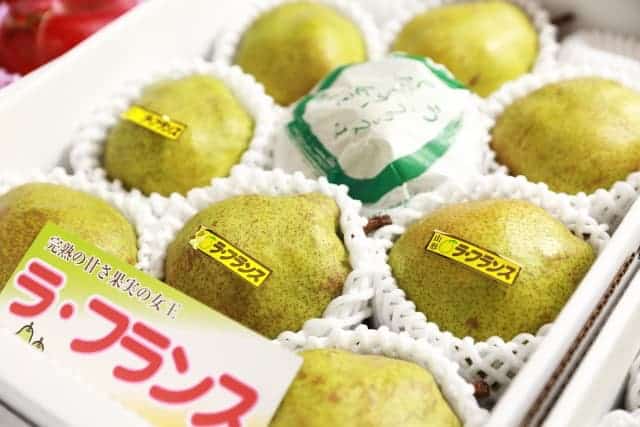
La France pear is a western pear that first appeared in France in the 1800s. Despite the name, it almost vanished from France. Today, about 80 percent of Japan’s crop grows in Yamagata Prefecture. So Yamagata is now the true home of this fruit.
Why did Yamagata take the lead? The region offers an ideal climate and rich soil. As a result, the trees produce large, fragrant, and deeply sweet pears. Locals treasure it as a luxury autumn fruit. To explore more, browse our guide to Japanese pears.
Taste and Texture of La France Pear
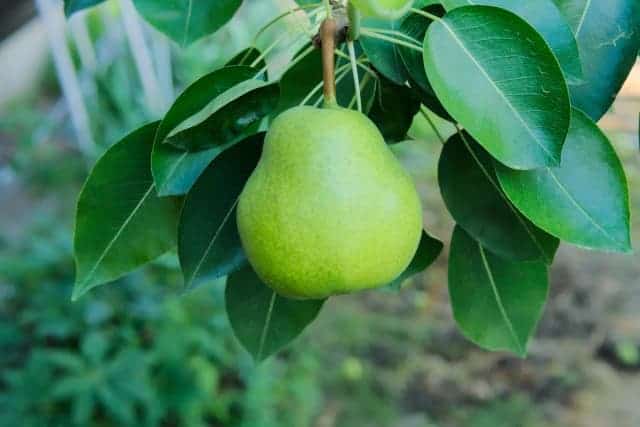
So what does it taste like? The flesh turns meltingly soft when ripe. People often compare its smoothness to butter. A floral aroma rises as you slice it open. The flavor stays mellow, juicy, and richly sweet.
Honestly, the texture surprises many first-timers. It feels nothing like a crisp Japanese pear. Instead, it almost dissolves on the tongue. That silky bite is exactly why fans love it.
La France Pear vs Japanese Pear
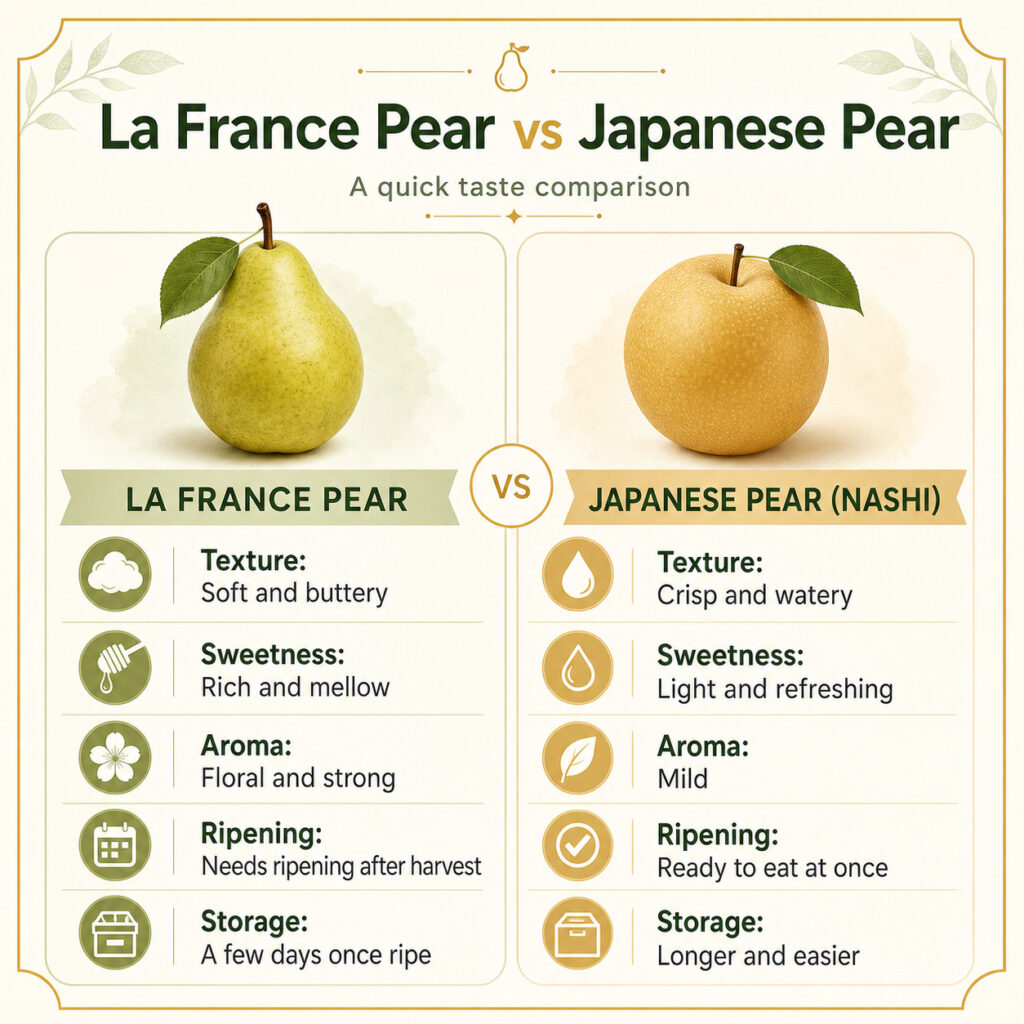
How does it differ from a Japanese nashi pear? The contrast is clear once you taste both. The table below sums it up.
| La France Pear | Japanese Pear (Nashi) | |
|---|---|---|
| Texture | Soft and buttery | Crisp and watery |
| Sweetness | Rich and mellow | Light and refreshing |
| Aroma | Floral and strong | Mild |
| Ripening | Needs ripening after harvest | Ready to eat at once |
| Storage | A few days once ripe | Longer and easier |
Best Season and Availability
When can you find it? The season runs from late October to December. The peak arrives in November, when shops fill with fresh stock. Careful distribution then keeps it available into winter. For more seasonal picks, see our Japanese fruit guide.
One detail surprises many people. The fruit is not ready right at harvest. Growers set an official release date each year, often in mid to late October. After that, the pears still need time to ripen at home.
Why Yamagata Is Famous for La France
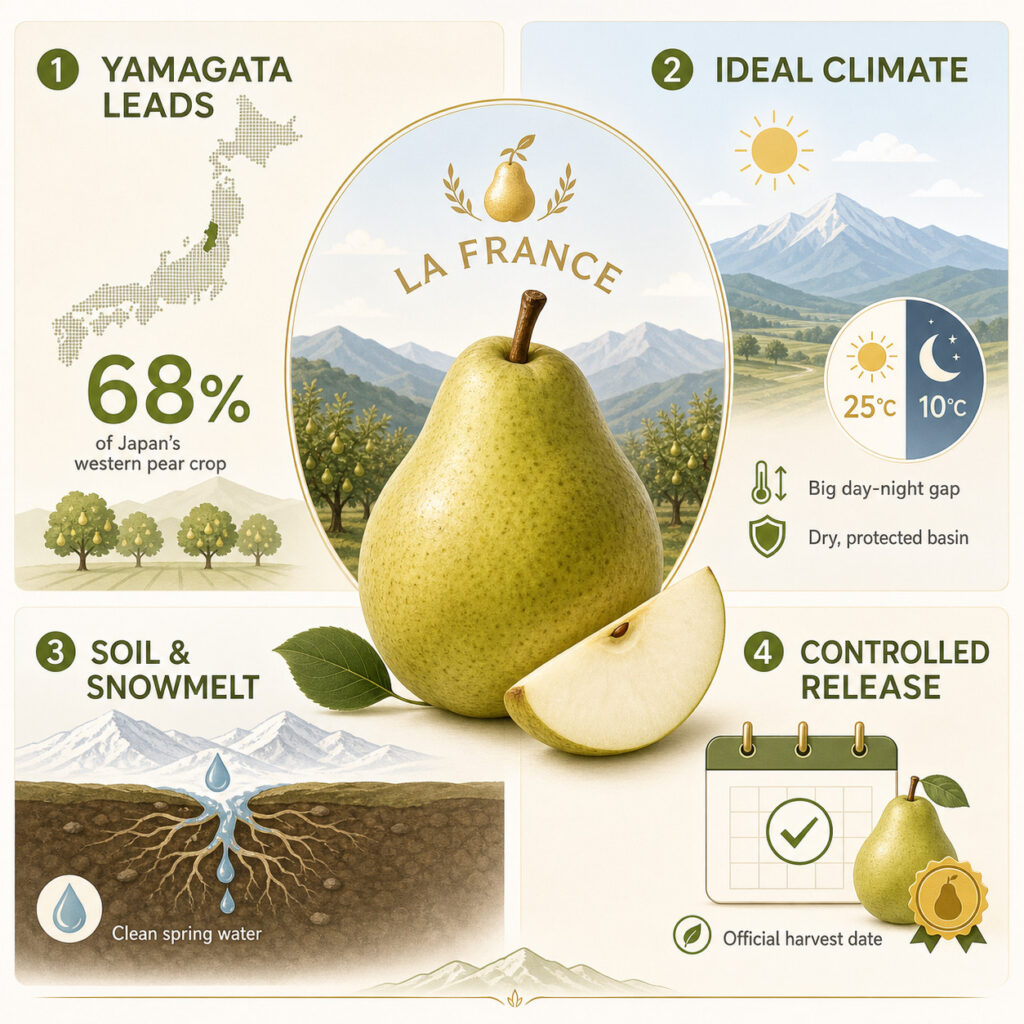
Yamagata leads Japan in western pear production by a wide margin. The prefecture grows roughly 68 percent of the national crop. La France itself fills most of that orchard space. The region also holds the GI mark “Yamagata La France,” a sign of protected quality.
Ideal Climate and Soil
Yamagata sits in a basin ringed by mountains. So it sees a big gap between day and night temperatures. In late summer, that gap reaches about 9 to 10 degrees. This swing builds large, sweet fruit.
The basin also stays drier during the rainy season. Mountains shield the orchards from strong typhoon winds. Since La France dislikes prolonged rain and wind, this matters a lot. Clean snowmelt then feeds the soil through spring.
Harvest Release Dates
Yamagata sets an official release date each season. The prefecture and local JA decide it together. They weigh the weather and the sugar content first. This system keeps quality high and supply steady.
History of La France in Japan
Here is how La France took root in Japan. It nearly disappeared in France. Farmers found it hard to grow. The tree took time to bear fruit and got sick easily.
People introduced western pears, including La France, to Japan in the early Meiji era. Records suggest growers brought western pears to Yamagata around 1875, and La France followed around 1893. At first, though, few farmers succeeded. The ripening was tricky, and the bumpy fruit looked unappealing.
For decades, La France survived only as a pollinator for Bartlett trees. Then tastes changed around the 1960s. Shoppers wanted fresh fruit over canned, and research improved cultivation. Eventually, La France grew into Yamagata’s signature autumn delicacy.
How to Eat La France Pear
Eating it well comes down to timing. A firm pear straight from the shop tastes flat. So you ripen it first, then chill it briefly. Follow these three simple steps.
Wrap the pear in paper and place it in a bag. Keep it at room temperature, away from sunlight and drafts. Most pears need a few days to soften.
Watch the area around the stem closely. When it softens slightly and wrinkles appear, the pear is ready. A sweet aroma also signals the right moment.
Cool the ripe pear in the fridge for one to two hours. Then peel and slice it just before eating. A short chill sharpens the sweetness nicely.
Not sure if a pear has ripened enough? These signs help you judge.
- The stem starts to wilt and dry.
- Wrinkles appear around the stem.
- The flesh softens slightly under gentle pressure.
Storage and Ripening Guide
This fruit behaves unlike most. Straight after harvest, it tastes hard and bland. Growers pre-chill it, then let it ripen slowly. Only then does the buttery texture appear.
- Before ripening: keep it wrapped at room temperature.
- Once ripe: store it in the fridge and eat within 3 to 4 days.
- After cutting: wrap it well and eat it promptly.
- For longer storage: freeze cut pieces for about a month.
One tip for frozen pears: enjoy them semi-thawed. At that point, the texture feels like sherbet. A little lemon juice also keeps cut surfaces from browning.
Where to Buy La France Pear in Japan
Finding it is easy during the season. You can spot it through several channels across Japan.
- Farm stands in Yamagata: the freshest, often cheapest option.
- Station shops: easy to grab at Yamagata Station.
- Autumn and winter supermarkets: widely stocked in season.
- Department store gifts: premium boxes for special occasions.
- Online shops: handy if you live outside Yamagata.
Keep one thing in mind when choosing. Buyers value aroma and flavor over a flawless look. A slightly bumpy pear can still taste superb. This is why it shines as a high-end gift. For more local specialties, explore our Yamagata food guide.
Recipes Using La France Pear
Ripe La France shines fresh, yet it also bakes beautifully. Here are a few dessert ideas to try.
Oven-Baked La France Pear
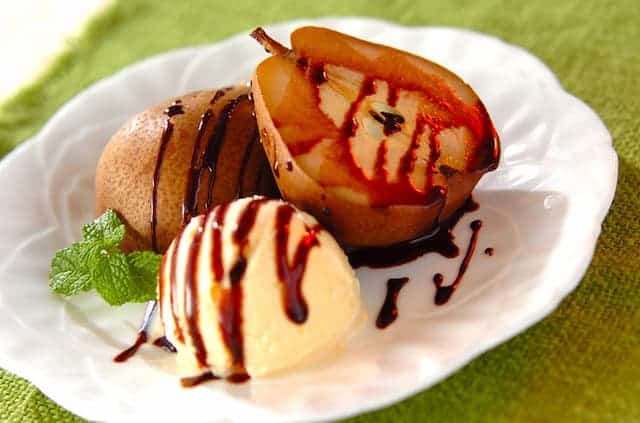
Bake a whole pear to bring out its full flavor. Drizzle it with rum and chocolate syrup for an elegant treat. The warm fruit pairs perfectly with a cool scoop of ice cream.
La France Fruit Roll
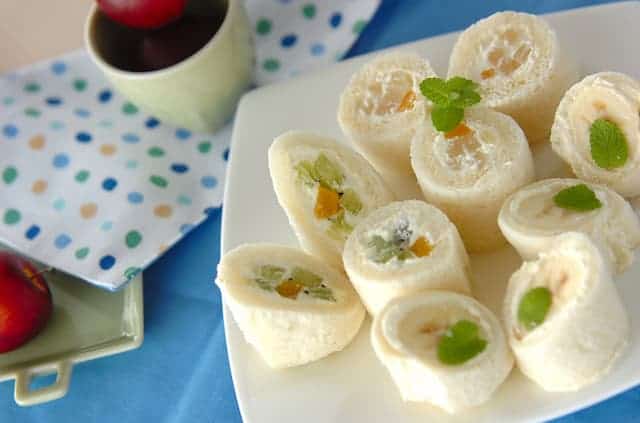
Roll thin pear slices into soft bread with cream. A touch of lemon in the cream cheese adds freshness. This simple roll tastes gentle, nostalgic, and lightly sweet.
Cinnamon Sugar Pear Gratin
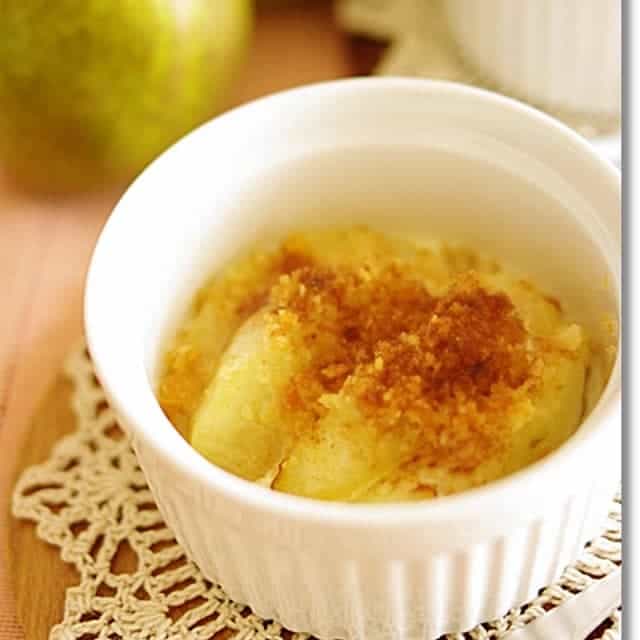
This easy gratin lets the pear’s sweetness shine. Cinnamon sugar adds warm, cozy depth. It is simple enough for children to help make.
La France Pear Parfait
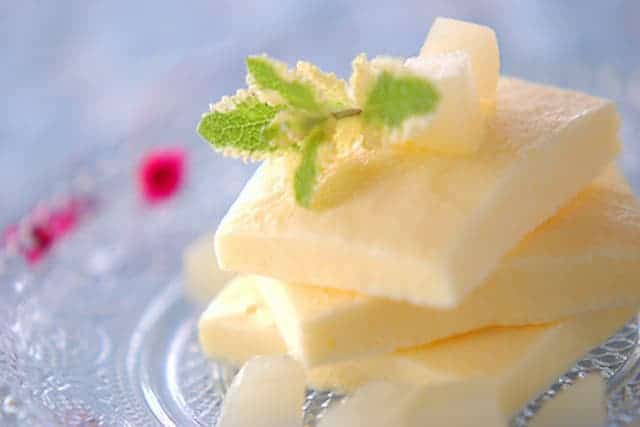
Layer pear with cream for a cozy home café treat. It works even on chilly days indoors. Each spoonful mixes fruit, cream, and crunch.
Cafés to Enjoy La France Desserts
Yamagata Pudding
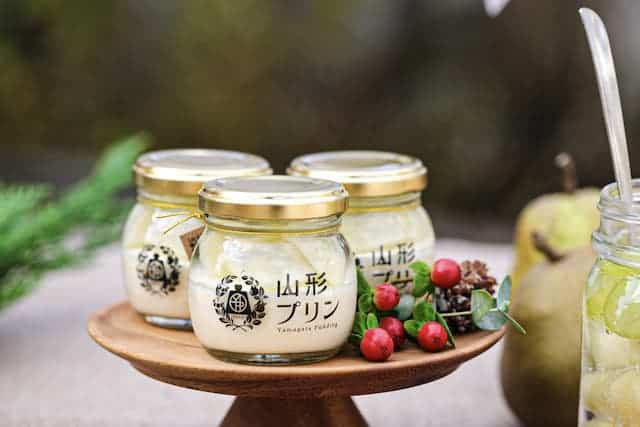
Yamagata Pudding is a cozy café with a warm vibe. It offers many flavors, from plain to sakuranbo and onsen tamago. You can also try La France or Shine Muscat pudding. Pair it with coffee, tea, or La France juice.
Sugiyama Cherry Garden
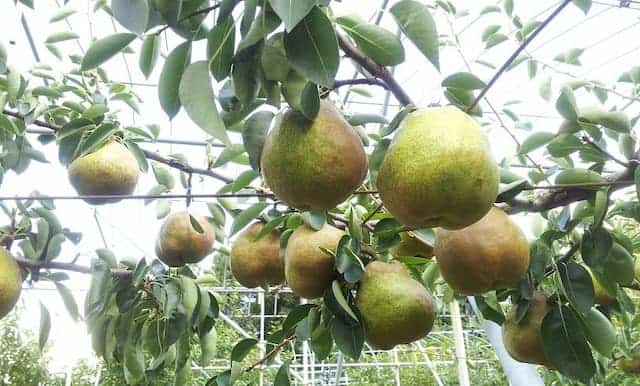
Sugiyama Cherry Garden sits at the foot of the Zao mountains. A family of three runs this welcoming orchard. They grow cherries, La France pears, and grapes with great care. You can also find treats like Kaminoyama La France canelé.
Natural Cafe
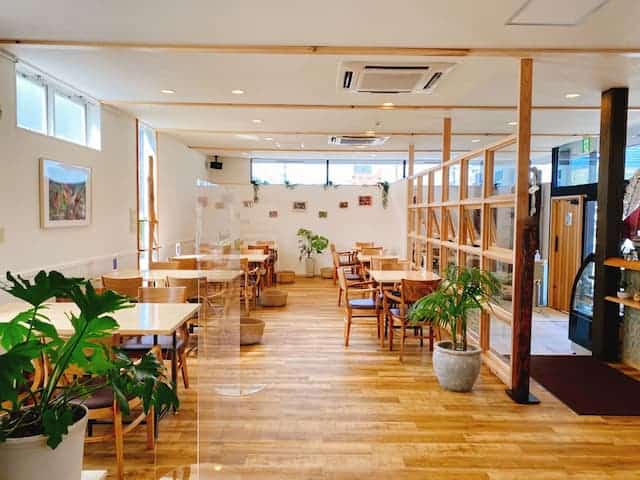
Natural Cafe focuses on fresh, local organic vegetables. The team sources produce straight from nearby farmers. The menu runs from savory meals to sweet treats. You will also find products made with La France pears.
Conclusion
La France pear sums up the best of Yamagata. The prefecture grows most of Japan’s crop, thanks to its ideal climate. The fruit rewards patience with a soft, buttery texture and rich aroma.
Remember to ripen it first, then chill it briefly before eating. It is a true pleasure of autumn and early winter. So look for one at a Yamagata farm stand, or order a gift box online this season. For more regional treasures, explore our food in Yamagata collection.
La France Pear FAQ
What does La France pear taste like?
This fruit tastes rich, mellow, and deeply sweet. When ripe, the flesh turns soft and buttery. A floral aroma rises as you cut it open. Many people find it far smoother than a crisp Japanese pear.
When is it in season?
The season runs from late October to December. It peaks in November, when stores stock plenty. Careful distribution keeps it on shelves into winter. So autumn and early winter are the best times to buy.
How do you know it is ripe?
Check the area around the stem first. As it ripens, the stem wilts and small wrinkles appear. The flesh also softens slightly under gentle pressure. A sweet aroma confirms it is ready to eat.
Can you refrigerate it?
Yes, but timing matters. Ripen it at room temperature first, never in the fridge. Once it softens, chill it and eat within a few days. A short chill before serving also boosts the sweetness.
Where can you buy it in Japan?
You can find it across several channels in season. Yamagata farm stands and station shops offer the freshest fruit. Autumn supermarkets and department stores also stock it widely. Online shops ship it nationwide, which suits gift buyers.
Why is Yamagata famous for it?
Yamagata grows most of Japan’s western pears. Its basin climate brings wide day-night temperature gaps. That swing, plus low rainfall and rich soil, builds sweet fruit. The region even holds a GI mark for its La France.
References
- Ministry of Agriculture, Forestry and Fisheries (MAFF), Western Pear Harvest Data, https://www.maff.go.jp/j/tokei/kouhyou/sakumotu/sakkyou_kazyu/index.html (Surveyed: June 2026)
- Yamagata Prefecture, La France and Local Fruit, https://www.pref.yamagata.jp/ (Surveyed: June 2026)
- Wikipedia, La France (pear), https://en.wikipedia.org/wiki/Pear (Surveyed: June 2026)
Related Articles
- Sato Nishiki (佐藤錦) (Surveyed: June 2026)
- Shinsetsu Nashi (新雪梨) (Surveyed: June 2026)
- Japanese Apple (りんご) (Surveyed: June 2026)
- Japanese Fruit Guide (Surveyed: June 2026)
- Yamagata Food Guide (Surveyed: June 2026)




Comments