


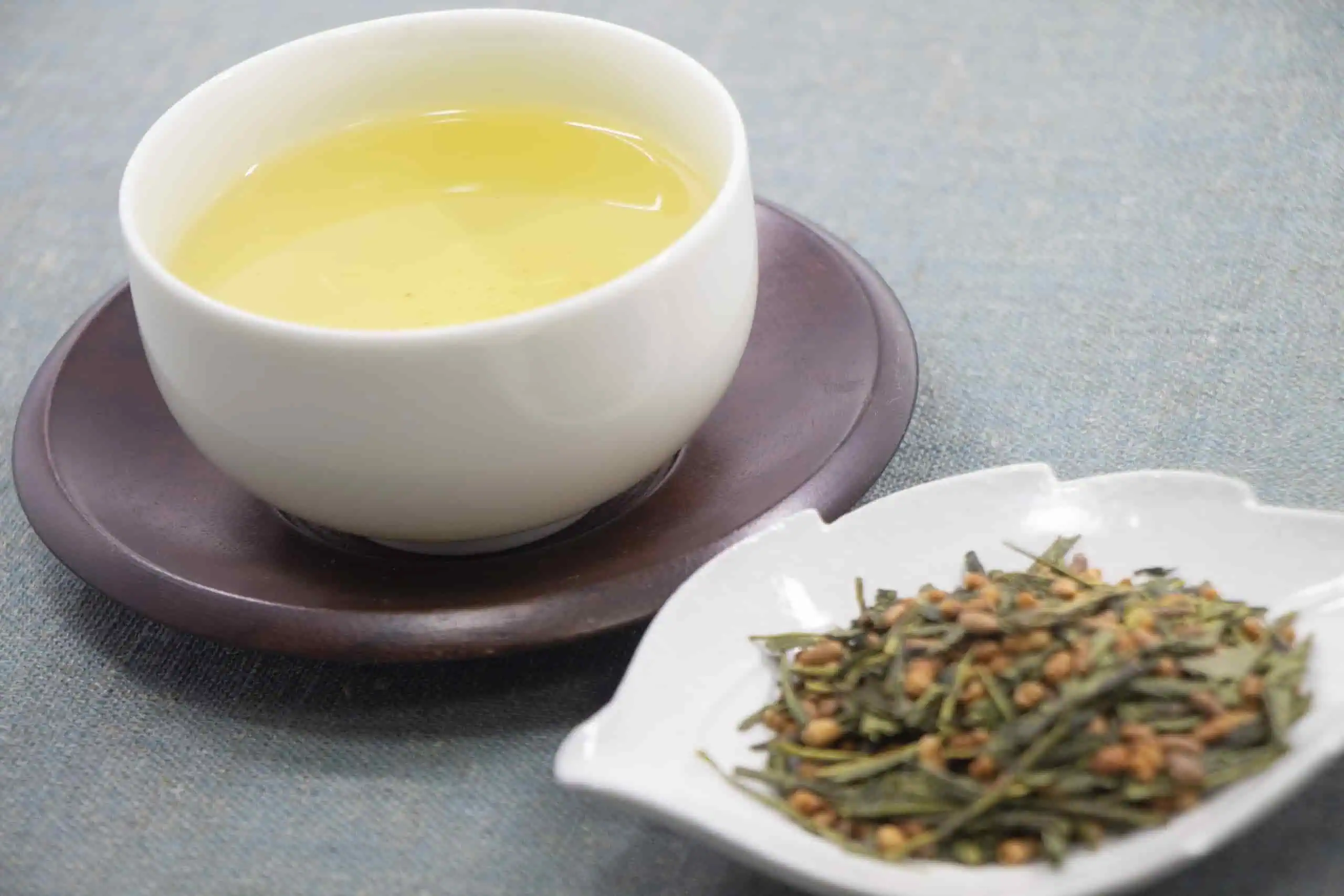

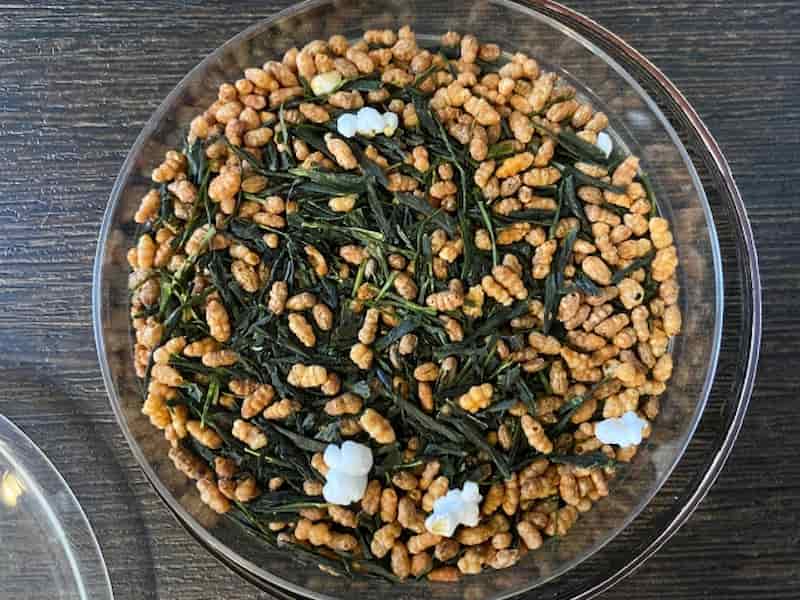
Genmaicha (玄米茶) is a Japanese green tea blended with roasted rice. Producers mix bancha or sencha with roasted rice, usually in close to equal parts. The rice is soaked, steamed, and roasted until golden brown. Some of it pops open during roasting, much like popcorn. That’s why English speakers sometimes call genmaicha “popcorn tea.”
The rice does more than add crunch and color to the dry leaf. It brings a warm, toasty, nutty flavor that softens green tea’s grassy edge. It also dilutes the tea itself, so genmaicha ends up noticeably lower in caffeine than a plain sencha or bancha. That combination has made it one of Japan’s most popular everyday teas. It’s easy to drink in large amounts without much bitterness or jitters.
This guide covers what genmaicha is, the story behind it, and how producers make it. It also covers flavor, caffeine, brewing, and buying, plus how it compares with the base teas that go into it. For those base teas, see the complete Sencha and the complete Bancha guide.
What Is Genmaicha?
Two Ingredients, One Tea
Genmaicha starts with an ordinary green tea base. Traditionally, producers used bancha, Japan’s inexpensive everyday tea made from mature, later-picked leaves. Today, though, many producers use sencha instead, and some sell both versions side by side. They blend that base with roasted rice, close to a 1:1 ratio by most accounts. The exact mix still varies from brand to brand.
The rice, meanwhile, goes through its own separate process. Producers soak raw rice, steam it, then roast it until it turns golden to dark brown. Some kernels burst open during roasting, the same way popcorn does. Those puffed grains are part of what gives genmaicha its distinctive look in the bag. Once both ingredients are ready, producers simply mix them together, so no further processing actually links the tea and the rice.
What the Name Means
“Genmai” (玄米) means brown rice, and “cha” (茶) means tea. Taken literally, the name promises a tea made with unpolished brown rice. In practice, most producers today roast ordinary polished white rice instead, since it’s cheaper and easier to source. The rice still turns brown from roasting, so the name fits the finished color even when it doesn’t fit the raw ingredient. A smaller number of producers do use genuine brown rice, or glutinous mochi rice. They often market that choice specifically, since mochi rice tends to give a sweeter, more fragrant cup.
How Genmaicha Is Made
Genmaicha isn’t a single processed leaf. Rather, it’s a blend of two separately made ingredients.
Farmers grow and process bancha or sencha the normal way: picking, steaming, rolling, and drying the leaf. This step doesn’t differ from making either tea on its own.
Producers soak raw rice in water, then steam it. Roasting comes next, often in stages, until the grains turn golden to dark brown. Some kernels pop open from the heat, similar to popcorn.
Producers combine the finished tea leaf with the roasted rice, close to equal parts by weight in most blends. Even so, the two ingredients stay physically separate in the bag; nothing fuses them together.
Because blending happens after both ingredients are already finished, producers have room to experiment. Some use sencha instead of bancha, for a more refined cup. Others swap in mochi rice instead of plain white rice, for extra sweetness and aroma. A few add a pinch of matcha powder on top of that. That version is sold as matcha-iri genmaicha, its own distinct variant with a greener color and a rounder, more umami-forward taste. Each choice changes the final blend without changing the basic two-ingredient idea behind it.
The Story Behind Genmaicha
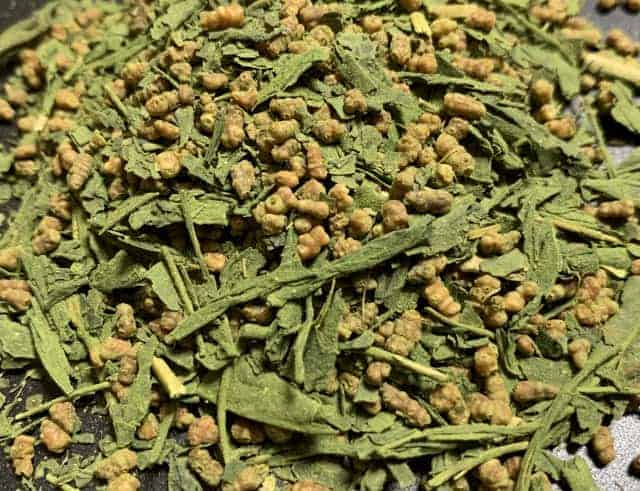
Tea sellers tell more than one story about how genmaicha began, and it’s hard to say for certain which one is accurate. The most common explanation ties it to the Edo period, when tea was expensive and out of reach for many households. Merchants stretched their tea supply by mixing in roasted rice. That cut costs and made tea affordable for people who couldn’t otherwise buy it often.
A more specific version places the blend’s popularization in Kyoto, sometime in the late Taishō or early Shōwa era, roughly the 1920s to 1930s. In that account, a tea merchant found a use for leftover mochi, the pounded rice cakes left over from New Year celebrations. Instead of throwing them away, he roasted them and mixed them into tea. Other tellings describe households in Tōhoku doing something similar with their own rice, to make an expensive ingredient go further.
Whichever version is closest to the truth, the stories share a common thread: mottainai, the Japanese idea that it’s wasteful to throw away something still useful. Genmaicha’s roots as an economical, waste-avoiding blend explain its unpretentious, everyday reputation in Japan. That reputation has stuck even as the tea has become popular well beyond the households that first mixed it.
Genmaicha vs. Sencha, Bancha, and Hōjicha
Genmaicha is easy to place once you know it’s a blend rather than a single processed tea. The table below compares it with the plain teas it’s built from, and with hōjicha, a roasted tea people sometimes confuse it with.
Genmaicha and hōjicha taste closer to each other than either does to a plain green tea, since both have a toasty character. The source of that toastiness is different, though. Hōjicha gets it from roasting the tea leaf itself. Genmaicha, by contrast, gets it from roasted rice sitting alongside a green tea leaf that was never roasted at all. Matcha-iri genmaicha adds a small amount of matcha powder to that same rice-and-tea blend. It’s its own distinct variant, covered in its own guide, rather than a simple stronger version of plain genmaicha.
Flavor and Aroma
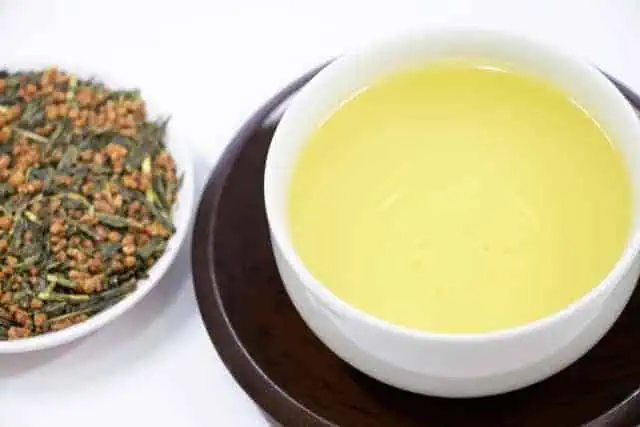
Genmaicha’s aroma leads with toasted rice: warm, nutty, and a little like popcorn or roasted grain, with a lighter green tea scent underneath it. Overall, the brewed liquor comes out a pale yellow-green, lighter than a straight sencha.
The rice changes more than the smell, in fact. Sugars and starches in the roasted grains soften the cup and add a mild sweetness that plain green tea doesn’t have. That sweetness balances out the tea leaf’s natural astringency, so genmaicha usually tastes gentler and rounder than the base tea would on its own. A bancha base gives a simpler, more rustic cup. A sencha base gives more body and a slightly grassier edge under the roasted rice. Either way, genmaicha is a forgiving tea. It’s mellow enough that small differences in water temperature or steeping time rarely ruin it.
Caffeine and Who Should Try Genmaicha
Rice has no caffeine at all, and it typically makes up close to half of a genmaicha blend by weight. That alone dilutes the caffeine genmaicha delivers, compared with an equal amount of plain sencha or bancha. Estimates for the exact numbers vary by source and brewing method. For instance, one brewing guide puts a cup of genmaicha at roughly 6 to 12mg of caffeine, against roughly 20 to 30mg for plain green tea. Other sources land on somewhat different figures. Even so, the direction stays consistent: genmaicha runs noticeably lower than an unblended tea made the same way.
That lighter caffeine load, combined with its mellow flavor, is a large part of why genmaicha works well as an everyday, all-day tea in Japan. It’s often served with meals, since its toasty, savory notes pair easily with food rather than competing with it. It still contains caffeine, though, and isn’t caffeine-free. Anyone who needs to avoid caffeine entirely should treat it like any other tea, and check with a doctor if unsure.
How to Brew Genmaicha at Home
Genmaicha is one of the easiest Japanese teas to brew. Its rice content, and often a bancha base, make it fairly tolerant of hot water and a slightly longer steep.
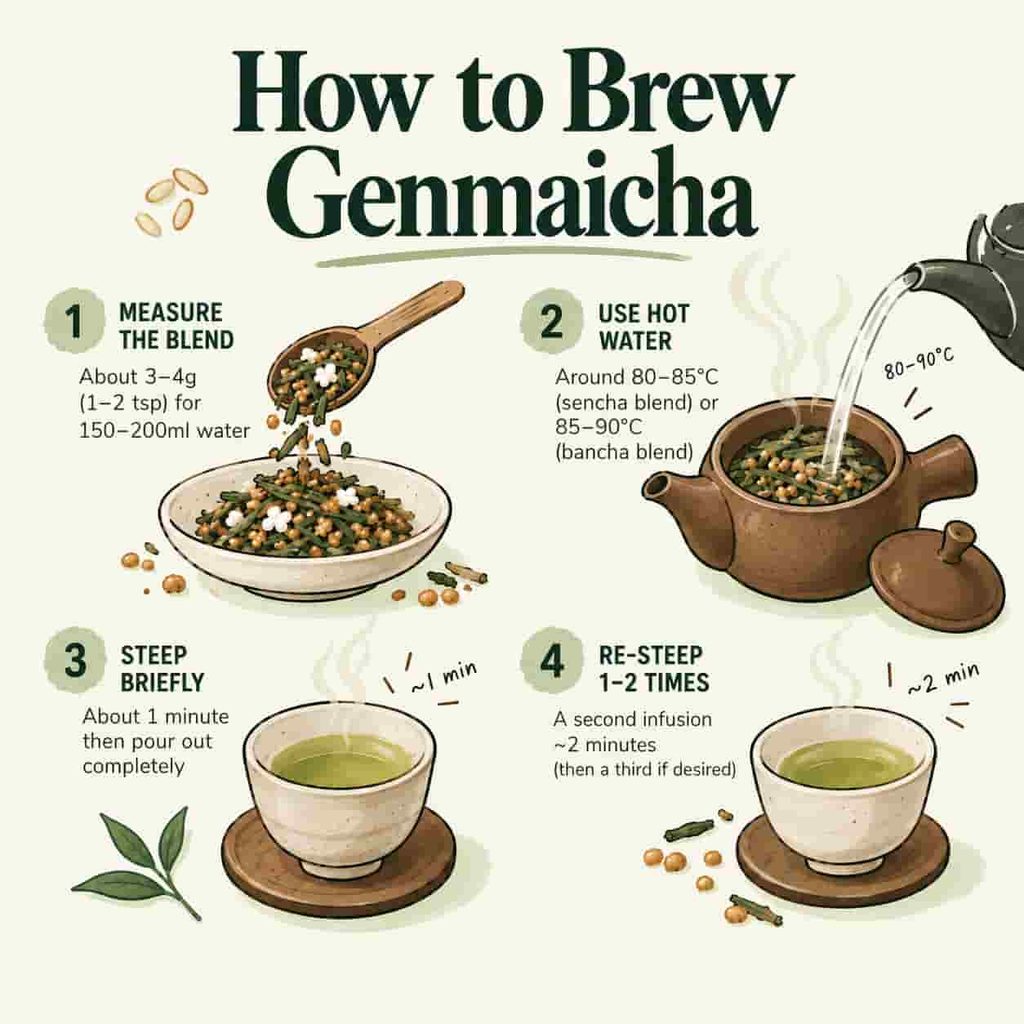
Use about 3 to 4g of genmaicha, roughly one to two teaspoons, for every 150 to 200ml of water. The rice takes up extra room, so the blend looks bulkier than a plain sencha at the same weight.
Pour water at around 80 to 85°C for a sencha-based blend, or 85 to 90°C for a bancha-based blend. Genmaicha tolerates hotter water far better than a delicate plain sencha does.
Steep for a little over a minute on the first infusion. Pour the tea out completely so the leaves and rice don’t keep steeping and turn the next cup too strong.
A second infusion, closer to two minutes with slightly hotter water, still gives a pleasant cup. By the third infusion, both the tea and the rice have usually given up most of their flavor.
Choosing and Buying Genmaicha
Genmaicha is widely available, but a few label details point to a better cup.
- 🍃Check the base tea. Bancha genmaicha gives a simpler, more everyday cup. Sencha genmaicha costs a bit more and gives more body and depth. Neither is more correct; they’re simply different styles.
- 🍃Look at the rice, if you can. Plain white rice is standard and perfectly good. Mochi (glutinous) rice tends to taste sweeter and more fragrant, and producers who use it usually say so on the package.
- 🍃Don’t confuse it with matcha-iri genmaicha. That variant adds matcha powder for a greener color and a rounder taste. If you want plain genmaicha, check that matcha isn’t listed as an ingredient.
- 🍃Smell before you buy, if you can. Fresh genmaicha should smell distinctly toasty and nutty. A faint or stale smell usually means the rice has lost its aroma over time.
Storing Genmaicha
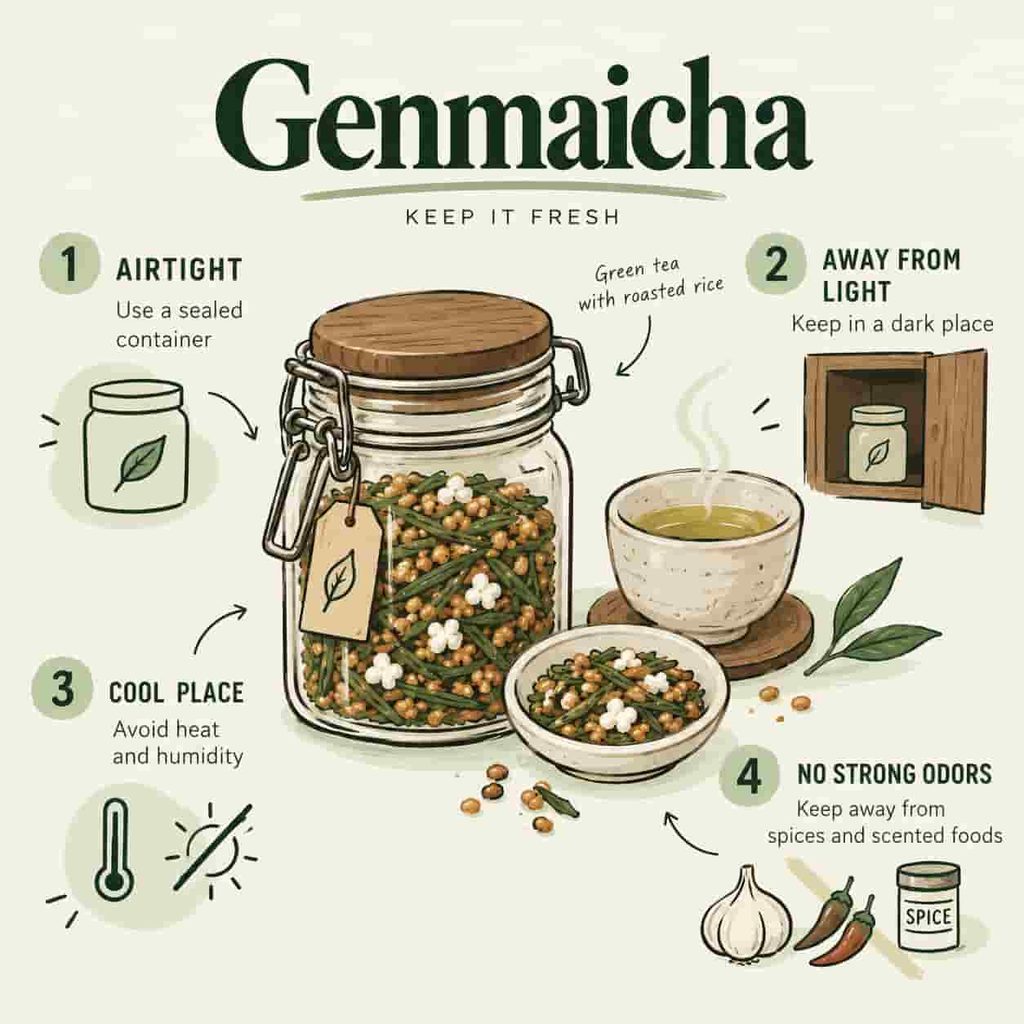
Store genmaicha in an airtight container, away from light, heat, and strong odors. That’s the same basic rule as for any tea, though the rice component makes freshness matter a little more than it does for some roasted teas. That’s because roasted rice loses its toasty aroma faster than the tea leaf sitting next to it does. Genmaicha that’s been open for many months often tastes flatter than a fresher bag, even if the tea leaf itself hasn’t gone stale. Buying only as much as you’ll use within a few months keeps that rice aroma at its best.
Common Genmaicha Myths
Final Thoughts
Genmaicha turns a simple, thrifty idea, stretching tea with roasted rice, into one of Japan’s most comforting everyday drinks. The rice softens the tea’s grassy edge, adds a warm, nutty aroma, and lowers the caffeine. It does all that without any extra processing beyond roasting and blending two separate ingredients.
That makes it an easy, low-pressure tea for anyone new to Japanese green tea. It tolerates hot water and a relaxed brewing style. It pairs comfortably with meals, and rarely tastes bitter even when you don’t measure carefully.
The best way to get a feel for genmaicha is to compare a bancha-based blend with a sencha-based one. The toasted rice stays constant between the two. So whatever difference you taste comes down to the tea underneath it, and that alone changes the whole character of the cup.
To explore more Japanese tea culture, read these related guides:
.jpg)
Genmaicha FAQ
What is genmaicha?
Genmaicha is a Japanese green tea, usually bancha or sencha, blended with roasted rice in close to equal parts. The rice gives it a nutty, toasty flavor and lowers its caffeine compared with plain green tea.
Why is genmaicha called “popcorn tea”?
Some of the rice grains pop open during roasting, similar to popcorn. Those puffed white kernels mixed in with the dark tea leaves gave genmaicha its popcorn-tea nickname in English.
Is genmaicha made with actual brown rice?
Usually not. Most producers roast polished white rice until it turns brown, rather than using unpolished brown rice. A smaller number of producers do use genuine brown or mochi rice and usually mention it on the label.
Does genmaicha have caffeine?
Yes, but generally less than plain sencha or bancha, since rice has no caffeine and makes up close to half the blend. It isn’t caffeine-free.
How do I brew genmaicha at home?
Use about 3 to 4g of genmaicha per 150 to 200ml of hot water. Aim for around 80 to 85°C for a sencha-based blend, or 85 to 90°C for a bancha-based blend. Steep for a little over a minute.
What is the difference between genmaicha and matcha-iri genmaicha?
Matcha-iri genmaicha is plain genmaicha with a small amount of matcha powder added. It has a greener color and a rounder, more umami-forward taste than plain genmaicha.
Why was genmaicha originally made?
Several stories describe it as a way to stretch an expensive tea supply by mixing in roasted rice. That made tea more affordable for ordinary households. It’s hard to confirm which specific origin story is accurate, but they share the same waste-avoiding, budget-conscious idea.
References
- Global Japanese Tea Association, Genmaicha, on the tea-and-rice blend, base tea options, and general characteristics.
- Wikipedia, Genmaicha, on the definition, roasting process, and popcorn-tea nickname.
- Shizuokatea, Genmaicha: A Popular Japanese Tea with Toasted Brown Rice, on the sencha-versus-bancha base, rice-to-tea ratio, caffeine estimates, and brewing temperatures.
- Kawagiri Tea, Genmaicha Guide, on the Kyoto origin account, matcha genmaicha variant, and mochi rice quality notes.
- Nio Teas, Genmaicha History, on the Edo-period origin story and the mottainai, waste-avoiding tradition behind the blend.



Comments