



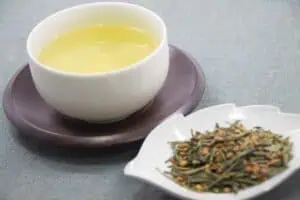
Pour a cup of plain genmaicha and it comes out thin, clear, and pale yellow-green, calm and unassuming in the cup. Pour a cup of matcha-iri genmaicha next to it, and the difference is obvious before you even taste it: a deeper, cloudier green, with a faint shimmer of powder that never quite settles. That’s matcha doing its work.
Matcha-iri genmaicha (抹茶入り玄米茶) is genmaicha, green tea leaf blended with roasted rice, with a small amount of matcha powder mixed in on top. The matcha doesn’t replace anything in the original blend. Rather, it layers a third ingredient onto genmaicha’s existing two: the tea leaf still brings its grassy base, the roasted rice still brings its nutty warmth, and matcha adds umami, a rounder body, and that brighter color on top of both.
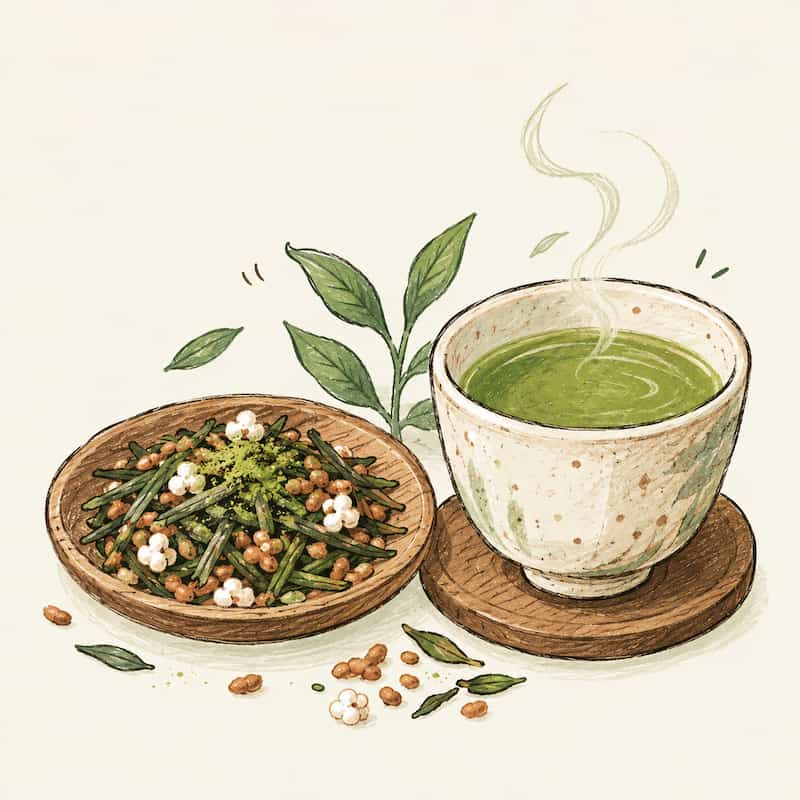
Quick Facts
抹茶入り玄米茶 (matcha-iri genmaicha)
Genmaicha with matcha powder blended in
Roughly 3 to 5g of matcha per 100g of genmaicha
Steeped and strained like leaf tea, not whisked
Slightly higher than plain genmaicha
Genmaicha fans who want more depth and umami
This guide covers what matcha-iri genmaicha is, how producers make it, and how it compares with both plain genmaicha and pure matcha. It also covers flavor, caffeine, brewing, and buying. For the tea it’s built from, see the complete Genmaicha guide. For the powder that sets this variant apart, see the complete Matcha guide.
What Is Matcha-Iri Genmaicha?
Three Ingredients, One Blend
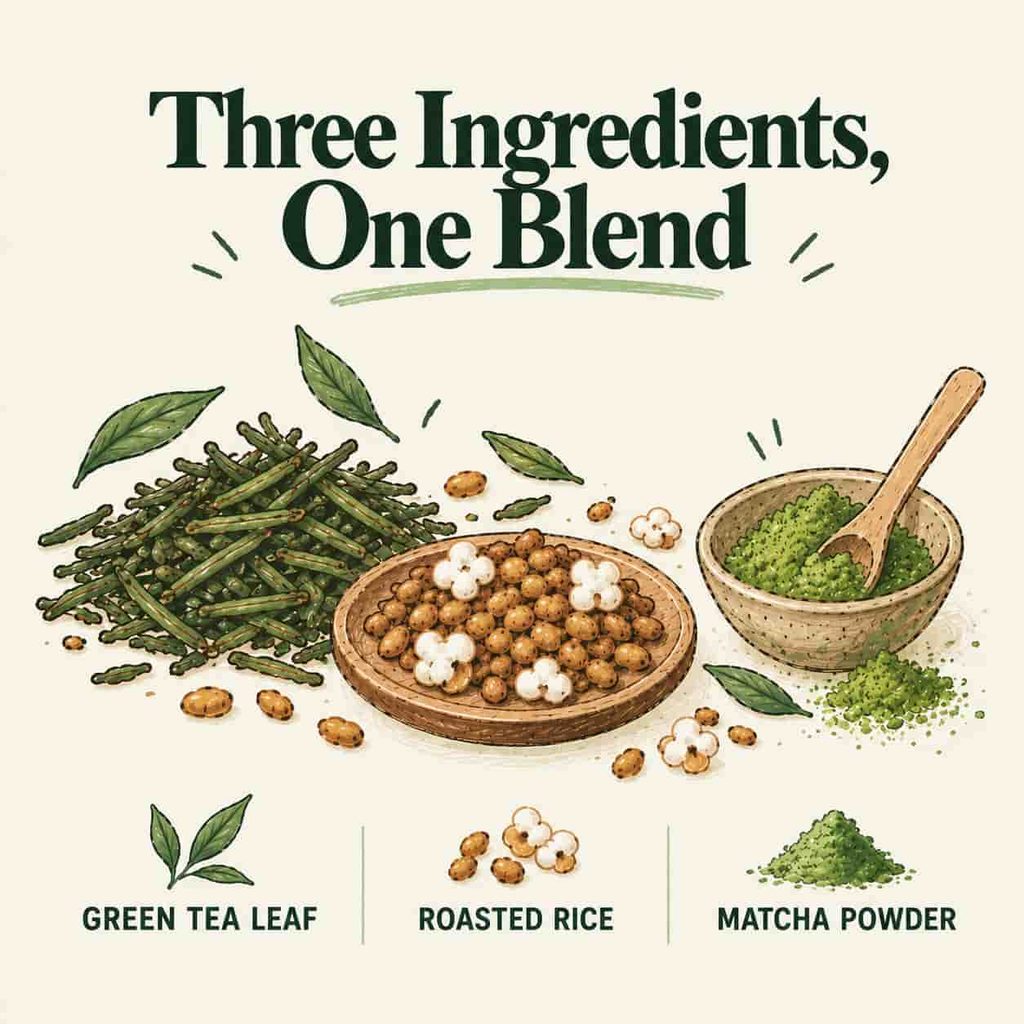
Genmaicha on its own already combines two ingredients: a green tea base, usually bancha or sencha, and roasted rice, mixed in close to equal parts. Matcha-iri genmaicha adds a third. Producers dust or mix in matcha powder, ground from shaded tencha leaf the same way any matcha is made. Multiple tea sellers describe the added matcha as a small fraction of the total blend. A common range is somewhere around 3 to 5 grams of matcha for every 100 grams of genmaicha. That figure isn’t an official standard, though, and producers vary the exact ratio to fit their own house style.
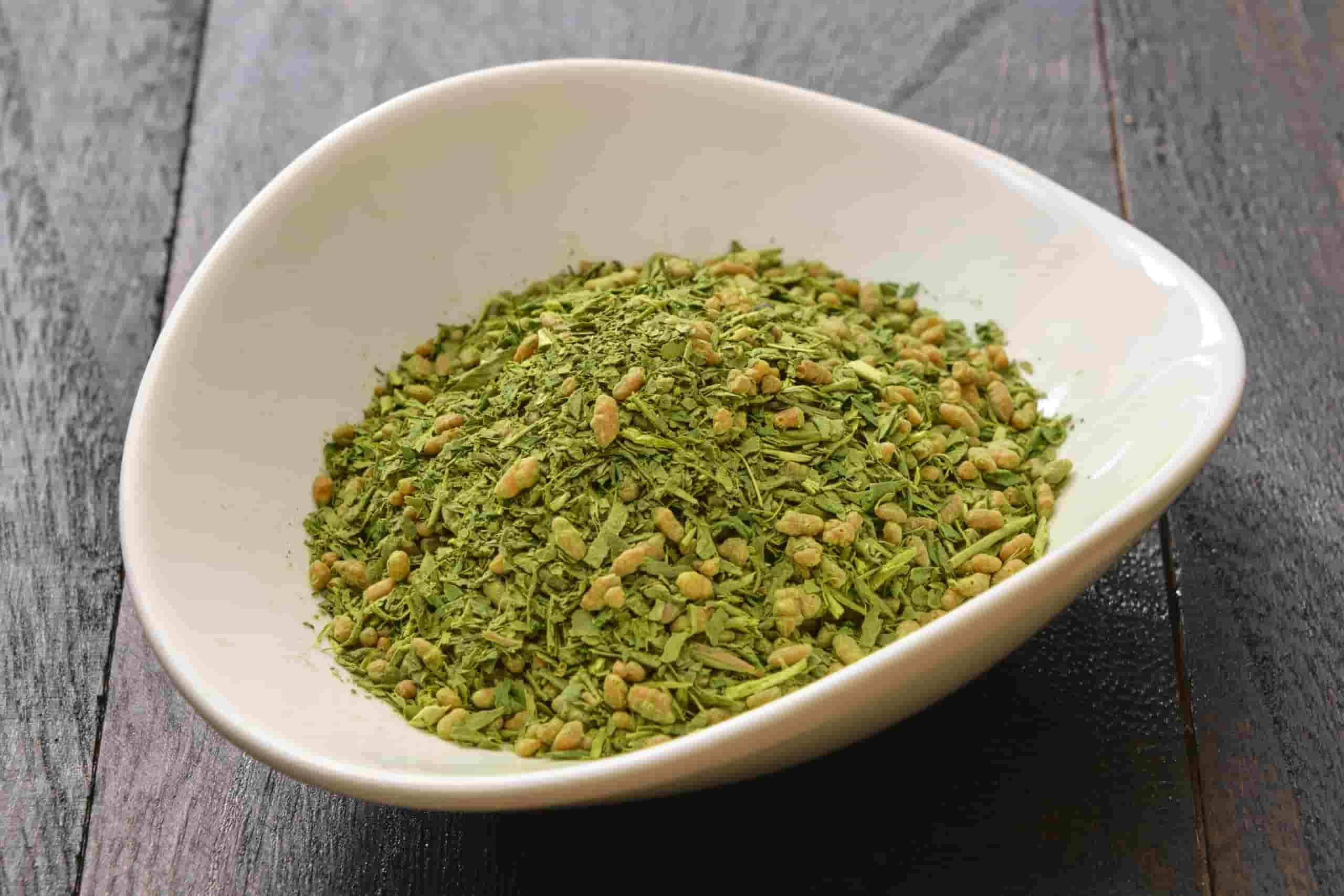
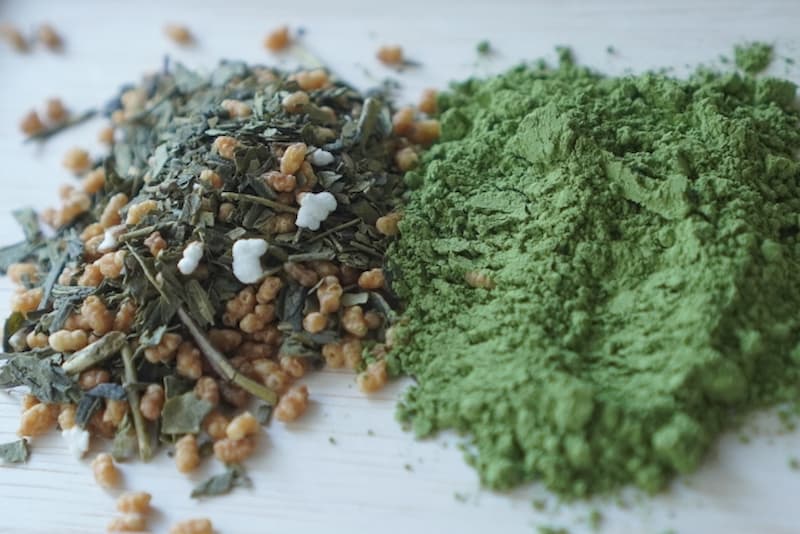
Because the matcha sits alongside the tea leaf and rice rather than replacing either one, the blend keeps genmaicha’s basic identity. You still see whole tea leaves and roasted grains in the dry mix. The matcha shows up as a fine green powder clinging to both, along with a faint green cast over the whole blend. Some producers source each ingredient from a different region. One commercial example blends sencha from Kagoshima, matcha from Aichi, and rice from Niigata. Sourcing like that varies by brand, though, and isn’t a requirement of the style.
What the Name Means
“Matcha-iri” (抹茶入り) means “with matcha added” or “matcha included.” Attached to genmaicha, the name describes exactly what the tea is: ordinary genmaicha, plus matcha. Some English-language sellers shorten it to “matcha genmaicha” or “genmaicha matcha,” dropping the “-iri” but keeping the same meaning. All three names point to the same style of tea, though “matcha-iri genmaicha” stays closest to the original Japanese phrasing.
How Matcha-Iri Genmaicha Is Made
Producers build matcha-iri genmaicha from three separately finished ingredients, not one continuous process. For the base tea and rice steps, the method matches ordinary genmaicha production. For a closer look at those two steps on their own, see the complete Genmaicha guide.
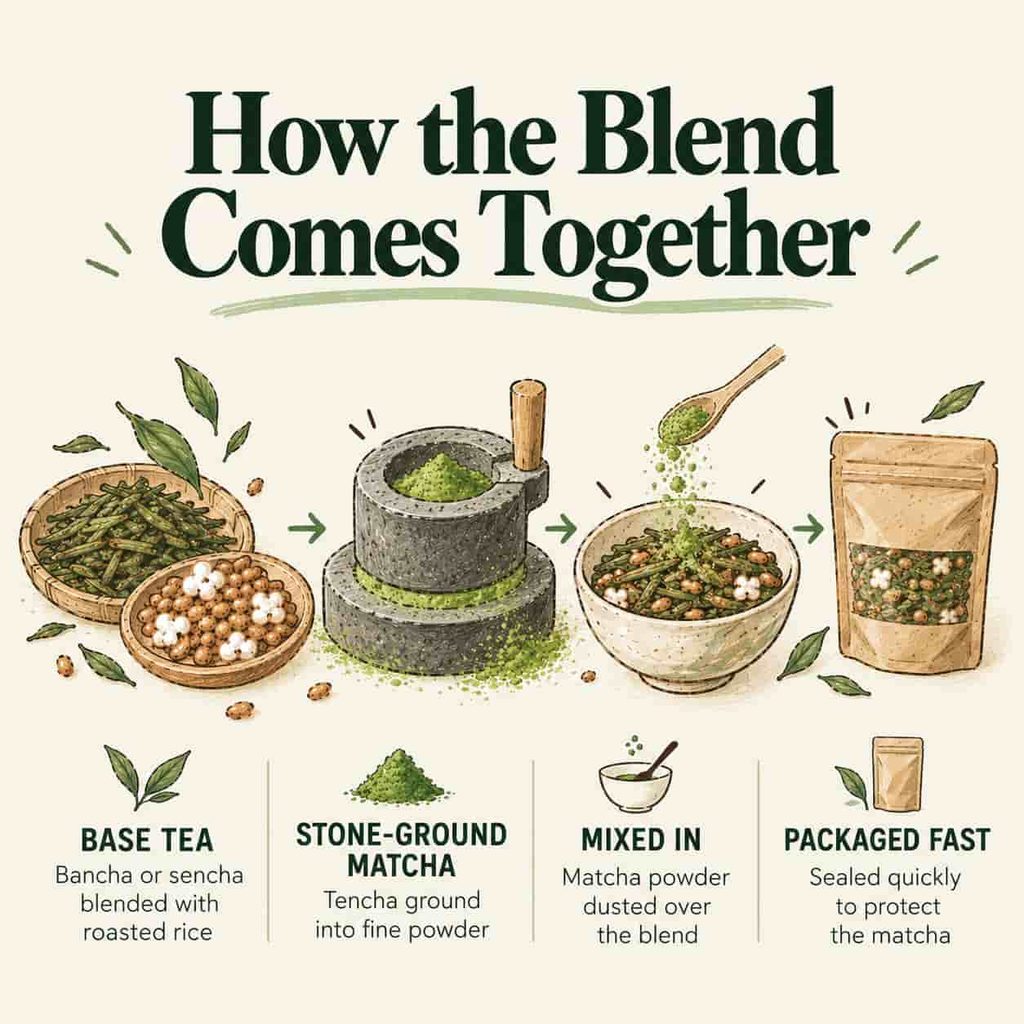
Farmers grow and process bancha or sencha the normal way, then blend the finished leaf with roasted rice. This part of the process is identical to making plain genmaicha.
Producers shade tea bushes before harvest, then steam, dry, and grind the leaf into matcha, traditionally with a stone mill. This tencha-to-matcha process happens completely apart from the genmaicha blend and follows the same steps used for any matcha.
Once both the genmaicha and the matcha are finished, producers mix the matcha powder into the blend. They use small proportions, commonly a few percent of the total weight. Careful mixing keeps the powder distributed evenly rather than clumped in one spot.
Matcha loses its bright color and aroma faster than whole tea leaf once exposed to air. Producers typically package the finished blend promptly to protect that added matcha from light, heat, and moisture.
Home cooks can approximate the same idea without any special equipment. Sources describing homemade versions suggest whisking or shaking a small amount of matcha, roughly 3 to 5 percent by weight, into an existing bag of genmaicha. The result won’t perfectly match a producer’s carefully sourced blend, but it captures the same basic combination.
Matcha-Iri Genmaicha vs. Plain Genmaicha vs. Matcha
Matcha-iri genmaicha sits between its two source teas, though it’s much closer to genmaicha in how you actually prepare and drink it. The cards below line up all three side by side.
Matcha-Iri Genmaicha
What it is: Genmaicha with matcha powder blended in
How you drink it: Steeped and strained, like leaf tea
Color: Deeper green, often cloudy or opaque
Caffeine: Slightly higher than plain genmaicha
Plain Genmaicha
What it is: Green tea blended with roasted rice, nothing else
How you drink it: Steeped and strained, like leaf tea
Color: Pale yellow-green, clear
Caffeine: Lower than plain sencha or bancha
Matcha
What it is: Pure ground tencha leaf, no additions
How you drink it: Whisked into water; you consume the whole powder
Color: Vivid, opaque green
Caffeine: Highest of the three, since you drink the whole leaf
The biggest practical difference is how you prepare each one. Matcha-iri genmaicha still works like an infused tea, not a whisked one. You measure it into a pot or infuser, pour hot water over it, and strain the solids out before drinking. Straight matcha skips that step entirely: the whole powder goes into the bowl and stays there. That distinction matters more than the shared green color might suggest.
Flavor, Aroma, and Appearance
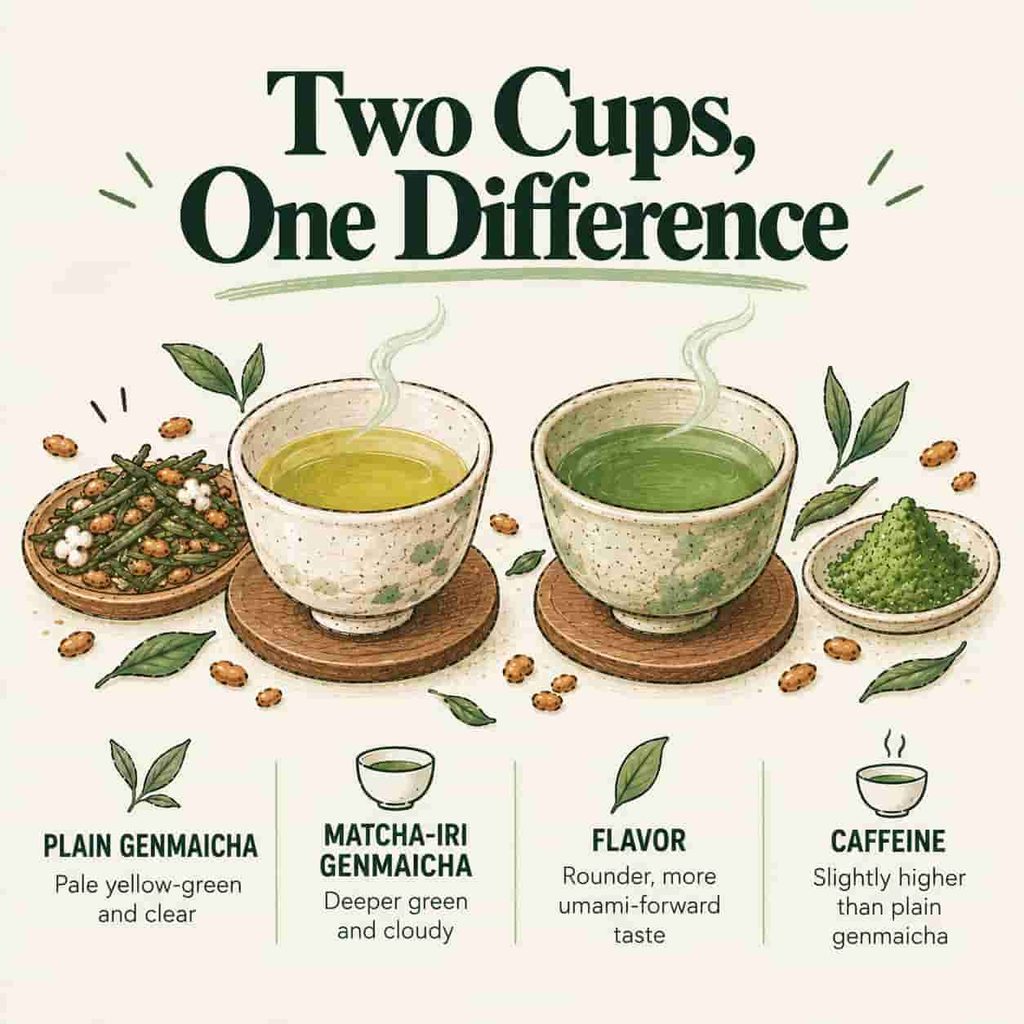
Plain genmaicha’s aroma leans almost entirely on toasted rice, with a lighter green tea scent underneath it. Matcha-iri genmaicha keeps that toasty base but adds a second layer: a fresher, more vegetal scent that sits closer to the surface. The two aromas don’t compete so much as stack, so you pick up roasted grain first and a grassier, more matcha-like note right behind it.
Taste follows a similar pattern. The roasted rice still supplies warmth and a mild sweetness. Matcha adds umami and a touch more body on top of that, along with a gentle bitterness that plain genmaicha doesn’t really have. Multiple tea sellers describe the combined effect as rounder and creamier than plain genmaicha, rather than simply stronger. The rice keeps the matcha from tasting one-dimensional, and the matcha keeps the rice from tasting flat.
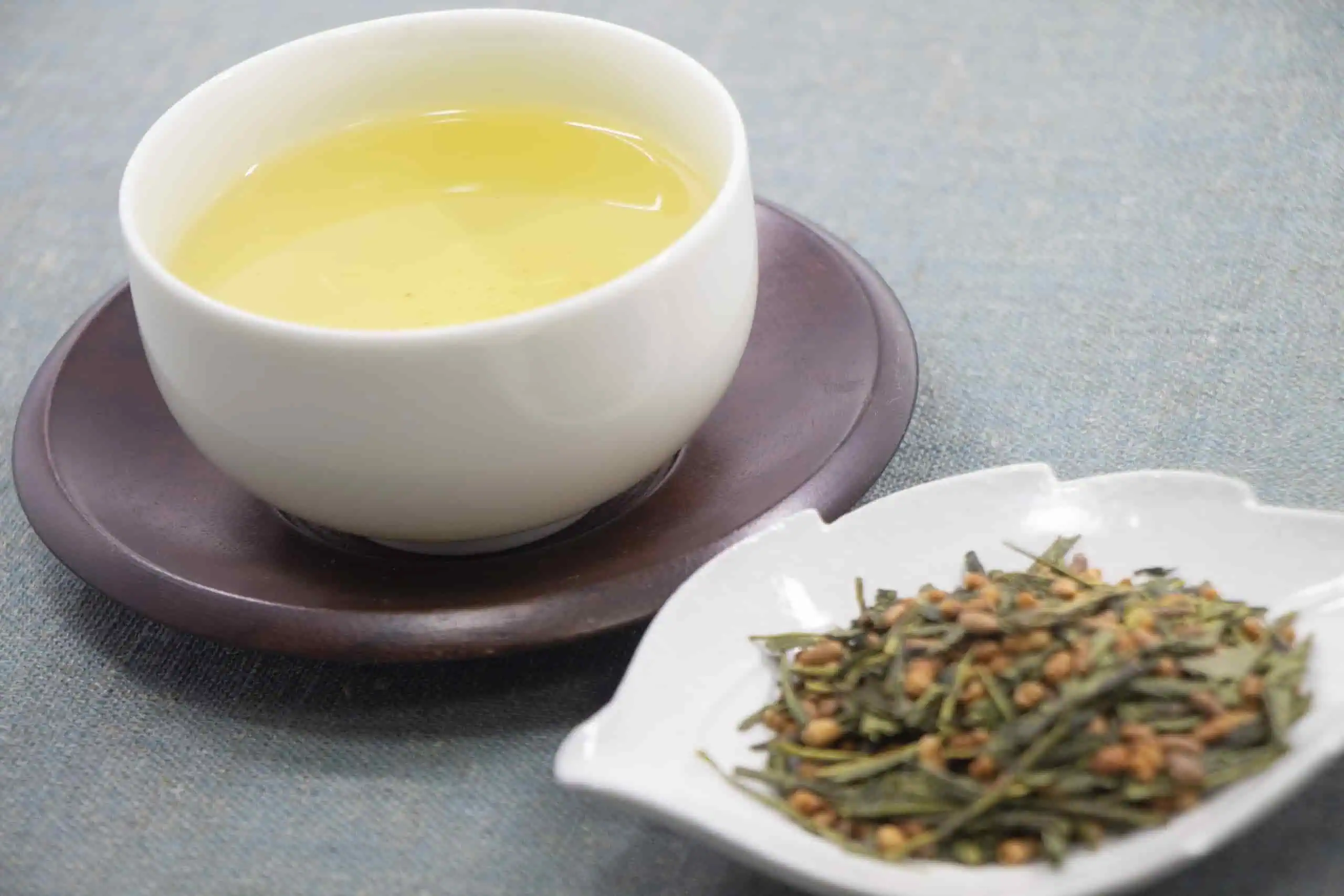
Appearance changes the most. A cup of plain genmaicha comes out pale yellow-green and clear enough to see through. Matcha-iri genmaicha brews into a deeper green that often looks cloudy or faintly opaque, since some of the matcha stays suspended in the liquid rather than dissolving completely. That suspended matcha also gives the tea a slightly thicker, more velvety mouthfeel than a plain infusion has. Some of it settles toward the bottom of the pot, though. A gentle stir or a quick swirl before pouring helps distribute the color and flavor more evenly across each cup.
Caffeine and Who Should Try It
Adding matcha raises genmaicha’s caffeine slightly, though not by a dramatic amount. One brewing guide puts plain genmaicha at roughly 30mg of caffeine per cup, and matcha-iri genmaicha at around 35mg. That’s close to what a typical cup of sencha delivers. Other sources estimate plain genmaicha’s caffeine considerably lower, in the 6 to 12mg range. That gap shows how much these figures vary by source, brewing method, and the specific blend being measured. What stays consistent across sources is the direction: matcha-iri genmaicha runs a little higher than plain genmaicha, but nowhere near a full bowl of whisked matcha.
That gap comes down to how much of the matcha you actually drink. In a whisked bowl of matcha, you consume the entire powder suspended in the water. That’s why matcha delivers noticeably more caffeine per serving than a typical infused tea does. In matcha-iri genmaicha, matcha makes up only a small fraction of the blend, and part of what you drink still comes from an infusion you eventually strain out. Both factors keep the caffeine boost modest, even though the tea looks and tastes closer to matcha than plain genmaicha does.
That makes matcha-iri genmaicha a reasonable choice for anyone who enjoys genmaicha’s mellow character. It offers a bit more depth and a slightly stronger lift than the plain version does. It still contains caffeine, though, and isn’t caffeine-free. Anyone who needs to avoid caffeine entirely should treat it the same way they’d treat any other tea, and check with a doctor if unsure.
How to Brew Matcha-Iri Genmaicha at Home
Brewing matcha-iri genmaicha looks almost identical to brewing plain genmaicha, with one extra step at the end to account for the suspended matcha.
Use about 3 to 4g of matcha-iri genmaicha, roughly one to two teaspoons, for every 150 to 200ml of water. Because the tea includes rice and a dusting of powder, it looks slightly bulkier in the scoop than a plain leaf tea at the same weight.
Pour water at around 80 to 90°C. Matcha-iri genmaicha tolerates hot water well, since the rice and matcha both soften any harshness that hotter water can bring out in a plain green tea.
Steep for about 30 seconds to a minute. Because matcha releases its color and flavor quickly, a short steep is usually enough to reach full strength.
Give the pot a gentle stir or swirl before serving, since some matcha settles toward the bottom during steeping. This keeps the color and flavor consistent from the first cup to the last.
A second infusion still works, but it comes out milder than a second cup of plain genmaicha. Much of the matcha’s color and flavor washes out in the first steep, so later cups lean more on the tea leaf and rice underneath it.
Matcha-iri genmaicha also works cold. A common approach: steep around 10g of tea in 500ml of cold water in the refrigerator for four to six hours. Shake or stir well before pouring, to redistribute any settled matcha.
Choosing and Buying Matcha-Iri Genmaicha
Matcha-iri genmaicha is less common than plain genmaicha, but specialty Japanese tea sellers usually carry at least one version. A few details point to a better cup.
- 🍃Check that matcha is actually listed. A greenish tint alone doesn’t confirm matcha is in the blend; a sencha-based genmaicha can already look a little more vivid than a bancha-based one. Look for “matcha” on the ingredient list itself.
- 🍃Look for a stated origin. Sellers who name where the matcha, tea, and rice come from are usually more transparent about the blend’s actual composition than those who don’t.
- 🍃Smell before you buy, if you can. Fresh matcha-iri genmaicha should smell toasty and grassy at once, with a lively rather than dusty edge from the matcha.
- 🍃Don’t expect ceremonial-tea pricing. Since matcha is only a small part of the blend, matcha-iri genmaicha usually costs closer to plain genmaicha than to a tin of straight matcha.
Storing Matcha-Iri Genmaicha
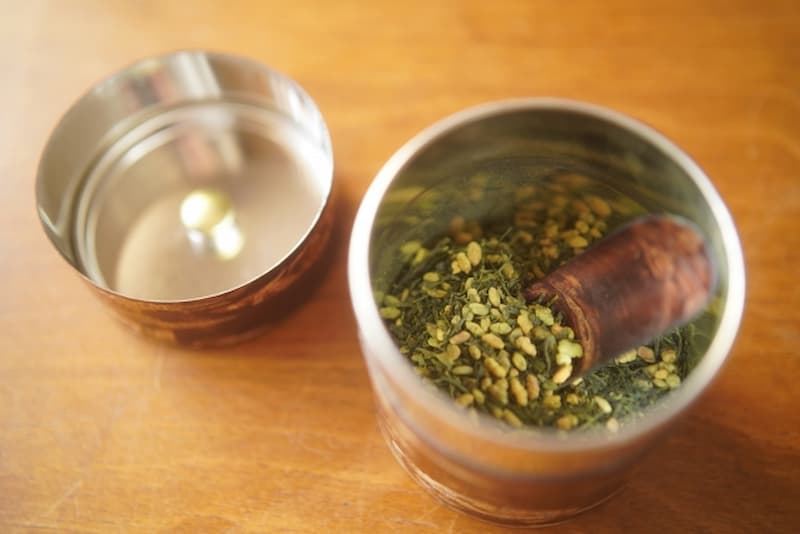
Store matcha-iri genmaicha the same way you’d store any tea: airtight, away from light, heat, and strong odors. The matcha component makes freshness matter a bit more here than it does for plain genmaicha, though. Matcha loses its bright color and aroma faster than whole tea leaf once it’s exposed to air. A bag that’s been open for months often tastes duller and less vivid than a fresh one. That holds even if the underlying genmaicha itself hasn’t gone stale. Buying only as much as you’ll use within a few weeks to a couple of months keeps that matcha character intact for longer.
Common Matcha-Iri Genmaicha Myths
Final Thoughts
Matcha-iri genmaicha takes an already comforting, everyday tea and layers a small amount of matcha on top of it. The rice still supplies warmth and sweetness, and the tea leaf still supplies its grassy base. Matcha adds umami, a fuller body, and a deeper green color, all without turning genmaicha into a different drink entirely.
That makes it a natural next step for anyone who already enjoys plain genmaicha and wants a bit more depth. It also suits anyone curious about matcha’s flavor without committing to whisking a full bowl. It brews the same easy way genmaicha always has, just with a little extra color and complexity in the cup.
The clearest way to notice matcha’s contribution is to brew plain genmaicha and matcha-iri genmaicha side by side, using the same leaves-to-water ratio for both. The rice and base tea stay constant between the two cups. So whatever extra body, color, and umami you taste comes entirely from that small amount of added matcha.
To explore more Japanese tea culture, read these related guides:
Matcha-Iri Genmaicha FAQ
What is matcha-iri genmaicha?
It’s plain genmaicha, green tea blended with roasted rice, with a small amount of matcha powder mixed in. The matcha adds umami, a greener color, and a fuller body compared with plain genmaicha.
How is matcha-iri genmaicha different from plain genmaicha?
The matcha addition makes it greener, cloudier, and more rounded in flavor, with a hint of bitterness plain genmaicha doesn’t have. Plain genmaicha brews pale yellow-green and clear, while matcha-iri genmaicha comes out deeper green and often slightly opaque.
Does matcha-iri genmaicha have more caffeine than genmaicha?
Slightly, yes. Estimates vary by source, but matcha-iri genmaicha consistently comes out a little higher in caffeine than plain genmaicha, while staying well below a full bowl of whisked matcha.
Do I whisk matcha-iri genmaicha like ceremonial matcha?
No. It’s steeped like ordinary leaf tea and then strained. A gentle stir before pouring helps redistribute any matcha that’s settled, but whisking isn’t necessary.
How much matcha is in matcha-iri genmaicha?
There’s no official standard, but sellers commonly describe roughly 3 to 5 grams of matcha for every 100 grams of genmaicha. The exact ratio varies from producer to producer.
Can I make matcha-iri genmaicha at home?
Yes. Mix a small amount of matcha, around 3 to 5 percent by weight, into an existing bag of plain genmaicha. Shake or stir well to distribute it evenly.
Is matcha-iri genmaicha the same as culinary matcha?
No. Culinary matcha is straight matcha powder marketed for lattes and baking. Matcha-iri genmaicha is a genmaicha blend with only a small amount of matcha added, and you brew and strain it like leaf tea rather than whisking it.
References
- Nio Teas, Learn All About Matcha Iri Genmaicha with a Tea Master, on the definition, production process, and flavor and color differences from plain genmaicha.
- Nio Teas, Matcha-Iri Genmaicha Caffeine Is Higher Than You Think, on caffeine estimates for matcha-iri genmaicha compared with plain genmaicha and matcha.
- Sorate, Genmaicha Matcha Iri: Taste, Caffeine and Brewing Guide, on flavor, appearance, and hot and cold brewing methods.
- My Japanese Green Tea, How to Make Matcha Iri Genmaicha, on typical matcha-to-genmaicha ratios for homemade blends.
- Curious Tea, Matcha Genmaicha, on a commercial example blending sencha, matcha, and rice from named regions, with brewing measurements.
- Kawashimaya, The Japan Store, Matcha-Iri Genmaicha Recipe, on a homemade preparation method and typical brewing proportions.



Comments