


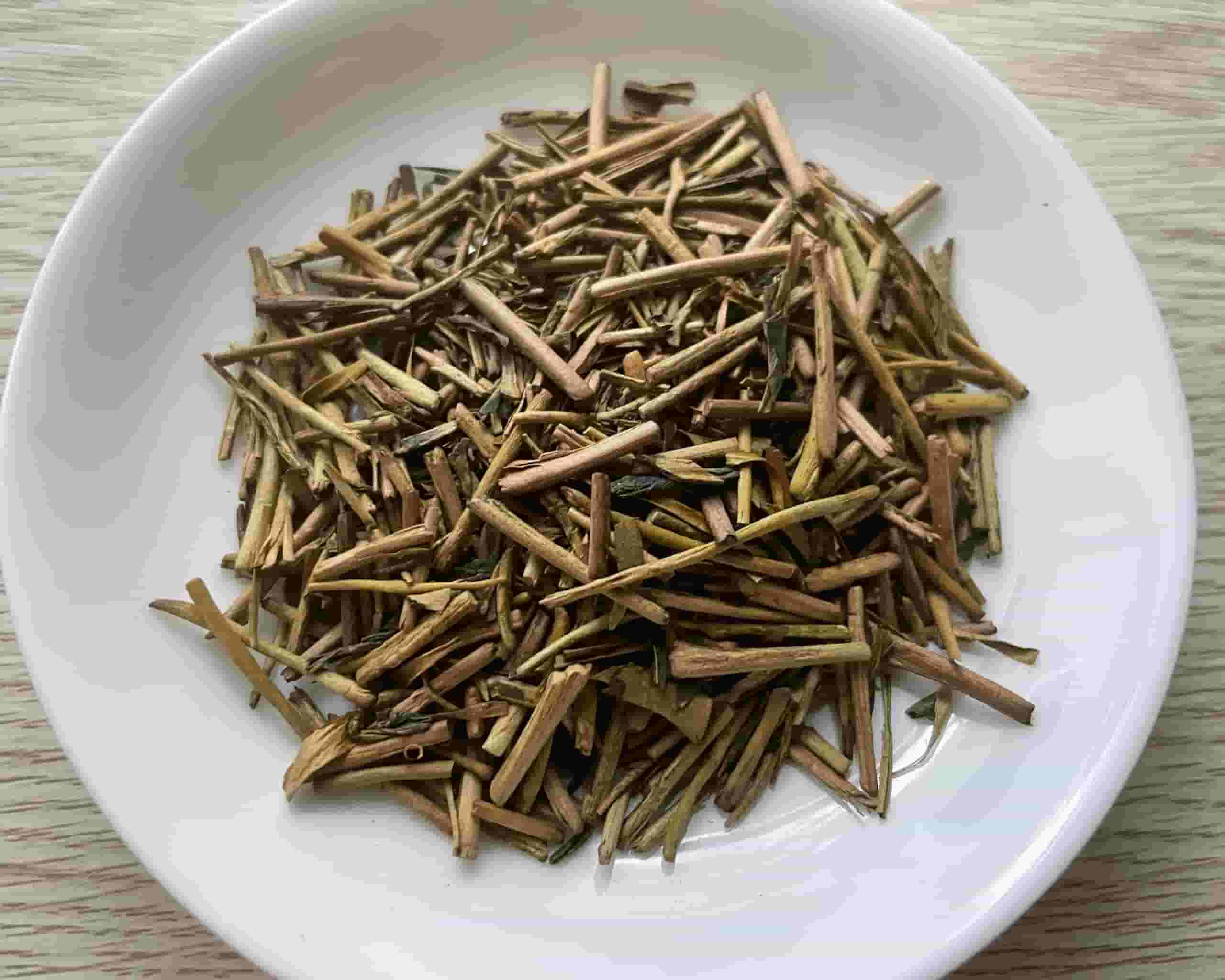


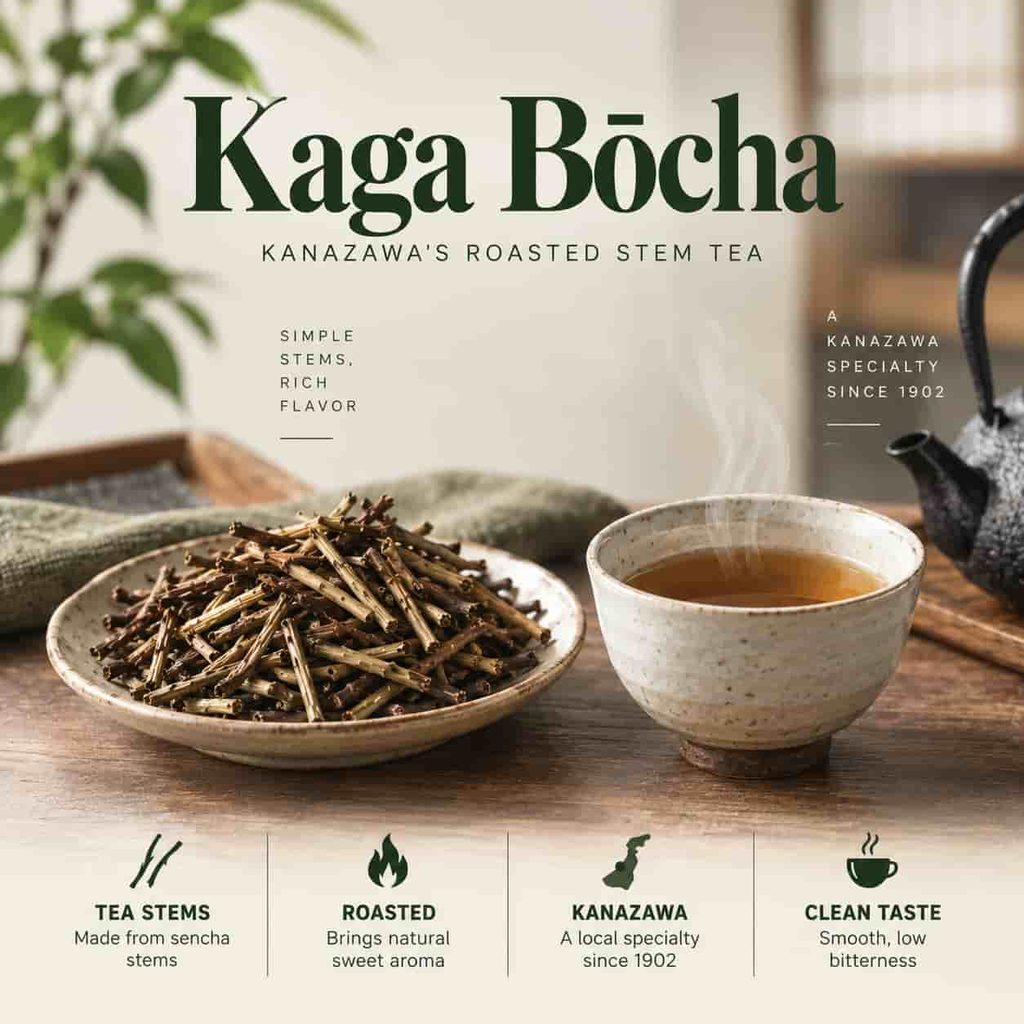
Kaga Bōcha (加賀棒茶) is a roasted Japanese tea made almost entirely from tea stems rather than leaves. It comes from Kanazawa, in Ishikawa Prefecture. Dozens of local roasting houses there turn separated tea stems into a naturally sweet, floral-scented cup. Technically, it counts as a style of hōjicha, since both are roasted. What sets it apart is the raw material: stems only, not leaves, plus a distinct regional identity built around that choice.
The tea has a specific origin story. A Kanazawa merchant invented it in 1902 as a way to use stems that tea processing normally discarded. It grew from a frugal byproduct into a defining local specialty. Emperor Shōwa reportedly received it as a gift in 1983. Kanazawa still treats the tea as a point of civic pride today, alongside gold leaf and other local crafts.
This guide covers Kaga Bōcha’s history and how producers make it. It also covers how the tea compares with plain hōjicha and other stem teas, plus flavor, brewing, and buying. For the wider bancha family it relates to, see the complete Bancha guide and the Sannen Bancha guide.
What Is Kaga Bōcha?
A Kanazawa Specialty Born From Leftover Stems
Kaga Bōcha traces back to 1902. A Kanazawa tea merchant named Shinbei Hayashiya noticed that stems, sorted out while processing sencha, usually went to waste. He roasted them instead and sold the result. Customers liked the aroma and the low price, and the idea spread across Ishikawa Prefecture. More than twenty roasting companies still make their own version of it today, each with a slightly different style.
Ishikawa’s connection to tea runs deeper than that one invention, though. The Maeda clan governed the old Kaga Domain through the Edo period. Under that rule, Kanazawa developed a strong tea ceremony culture. That history helped tea processing take root locally. Even so, most of the tea plants used today are grown in other prefectures and simply finished and roasted in Ishikawa.
What the Name Means
“Kaga” refers to the old Kaga Domain, the historical name for the Kanazawa region. “Bō” means stick or rod, and “cha” means tea. Put together, the name literally describes what’s in the cup: stem tea from the Kaga region.
How Kaga Bōcha Is Made
Kaga Bōcha starts out exactly like sencha. Only the last two steps make it different.
Producers pluck, steam, knead, and dry the tea the same way they would for sencha. Steaming stops oxidation, and kneading and drying shape the leaf.
A sorting stage separates the batch by size and shape. Tough leaf pieces, powder, and fine leaf go toward sencha and other leaf teas. The stems are set aside for Kaga Bōcha.
Producers roast the sorted stems at high heat until they turn a deep amber and release a toasty, floral aroma. The specific roasting method shapes the final flavor, covered below.
Roasting method is where individual producers set themselves apart. The table below covers the three main approaches.
Roast depth adds another layer of variation. A lighter roast keeps more of the tea’s original umami. A darker roast pushes the toasty aroma and sweetness further, at the cost of some of that original flavor. Neither is more correct; they’re simply different styles. That variety is a large part of why Ishikawa’s many roasting houses each have their own following.
Kaga Bōcha vs. Plain Hōjicha
Every Kaga Bōcha is a hōjicha, in the sense that both are roasted. Not every hōjicha is Kaga Bōcha, though. A standard hōjicha usually roasts ordinary tea leaves, sometimes mixed with a few stems. Kaga Bōcha uses stems only. Roasting technique also varies far more between individual Ishikawa producers than it typically does for generic hōjicha.
Kaga Bōcha also fits into a wider group of Japanese stem teas, including Kukicha, Karigane, and Sannen Bancha. The complete Sannen Bancha guide covers that family in full. Among that group, roasting and its regional identity are what set Kaga Bōcha apart.
Flavor and Aroma
Kaga Bōcha’s most distinctive trait is its aroma. Researchers have found that roasted stem tea like this contains more of certain floral aroma compounds than a typical leaf-based hōjicha. Two examples are geraniol and linalool. That gives it a noticeably flowery note layered over the usual roasted, toasty smell.
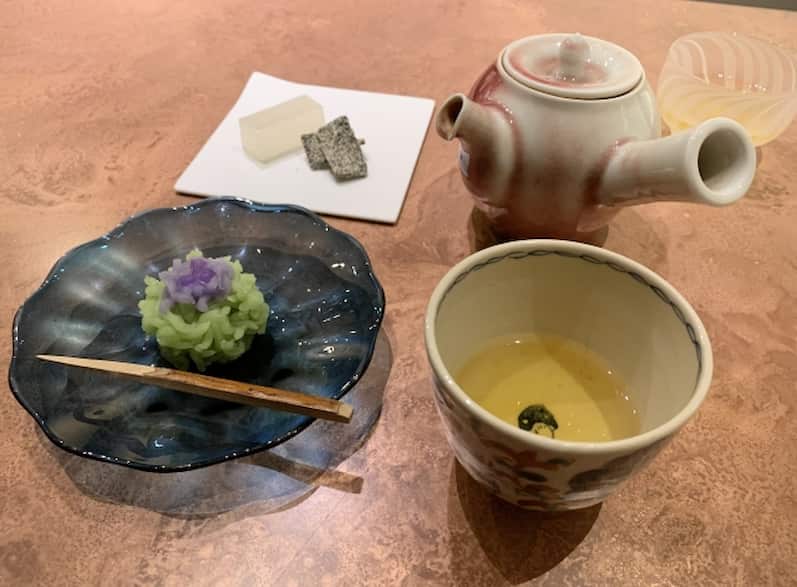
The taste itself is clean and naturally sweet, with very little bitterness or astringency. The brewed color runs amber rather than the deeper brown of some hōjicha. Because it’s so mild, it pairs comfortably with meals. It works just as well with a dessert or a Japanese sweet alongside it.
Kaga Bōcha in Kanazawa Culture
Kaga Bōcha isn’t just a product in Kanazawa. It’s woven into the city’s identity, alongside its famous gold leaf, textile dyeing, and pottery traditions. Long-running tea shops treat serving a good cup of it as a point of hospitality, not just a transaction.
The tea even has its own unofficial holiday. Some producers mark November 11th as Kaga Bōcha Day. The date’s four vertical “1”s look like stems standing upright, a playful nod to the tea’s main ingredient. Around Kanazawa’s Ōmichō Market area, several tea shops also serve Kaga Bōcha alongside modern twists. Think soft-serve ice cream dusted with roasted tea powder, or a Kaga Bōcha-flavored dessert. Visitors researching a trip to the city can look up these shops directly, since options and hours change over time.
One especially notable moment in the tea’s history: Emperor Shōwa reportedly received Kaga Bōcha as a gift in 1983. At least one Ishikawa producer still sells a premium version tied to that occasion. It’s made from higher-grade, first-flush stems, rather than the everyday byproduct the tea started as.
Caffeine and Who Should Try Kaga Bōcha
Tea stems generally contain less caffeine and fewer catechins than the fine young leaves used for premium sencha or gyokuro. Kaga Bōcha is made entirely from stems, then roasted. It tends to follow that same pattern, landing on the milder end of Japanese tea. Exact figures vary by producer and roast. It’s more useful to think of it as “generally gentle” than to expect one fixed number.
It still contains caffeine, though, and isn’t a caffeine-free drink. Anyone who needs to avoid caffeine entirely should treat it like any other tea. Check with a doctor if you’re unsure. For most people, its mild character makes it an easy, approachable introduction to roasted Japanese tea.
How to Brew Kaga Bōcha at Home
Kaga Bōcha brews quickly, much like a typical hōjicha. Its stems don’t turn bitter easily, so it tolerates hot water well.
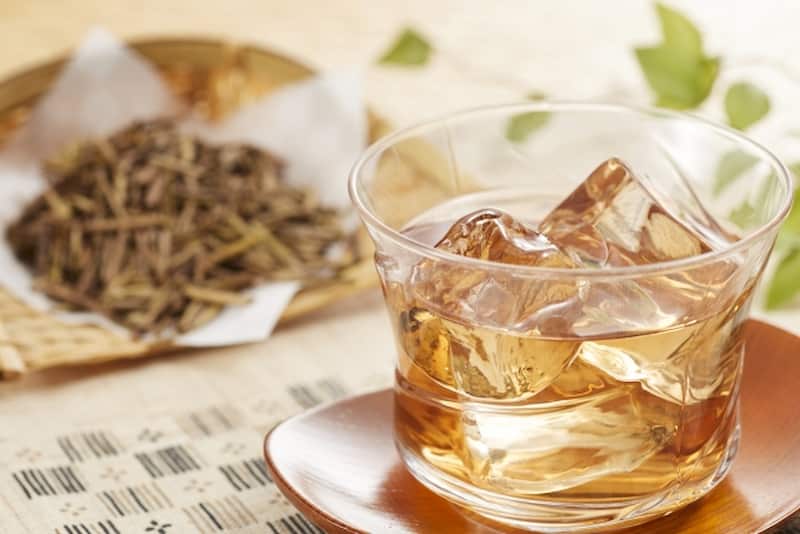
Use about 4 to 5g of Kaga Bōcha, roughly two tablespoons, for every 150ml of water. Scale up evenly for a larger pot.
Pour water at around 98°C, close to a full boil. The roasted stems won’t turn bitter at this heat the way a delicate sencha would.
Steep for about 30 seconds, then pour out the tea completely. A short steep keeps the aroma bright without turning the cup harsh.
Kaga Bōcha also works well as a cold brew. Steep the leaves in cold water in the refrigerator for a few hours for a refreshing, naturally sweet iced tea.
Choosing and Buying Kaga Bōcha
With more than twenty roasting houses in Ishikawa making their own version, a bit of comparison shopping pays off.
- 🍃Check the roasting method, if listed. Drum, sand, and far-infrared roasting all give a slightly different result, from rich and full to light and clean.
- 🍃A low origin price is normal, not a red flag. Kaga Bōcha started as an inexpensive way to use leftover stems, so an everyday price doesn’t signal poor quality.
- 🍃Look for a premium, first-flush version if you want one. Several producers also sell a higher-grade Kaga Bōcha made from young, first-harvest stems, priced accordingly.
- 🍃Don’t expect it to be grown in Ishikawa. The prefecture farms very little tea today. Most Kaga Bōcha is roasted there from stems grown elsewhere in Japan.
Storing Kaga Bōcha
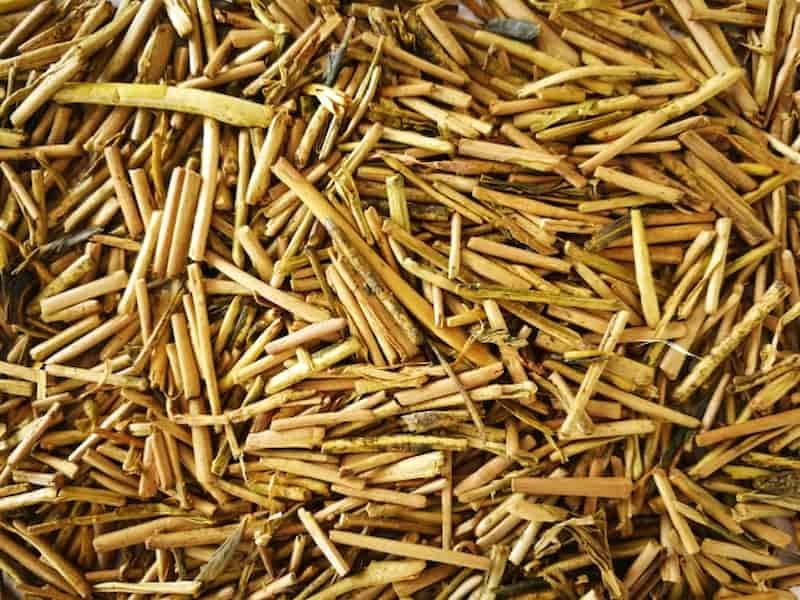
Store Kaga Bōcha in an airtight container, away from light, heat, and strong odors. That’s the same rule as any tea. Its roasted character makes it fairly stable, so it holds its aroma longer than an unroasted green tea would. Even so, it’s best enjoyed within a few months of opening, while that floral, toasty scent is at its strongest.
Common Kaga Bōcha Myths
Final Thoughts
Kaga Bōcha turned a discarded part of the tea plant into one of Kanazawa’s signature flavors. What began in 1902 as a frugal use for leftover stems is now a point of local pride. Ishikawa Prefecture roasts it in more than twenty different ways today.
Its appeal is simple: a naturally sweet, floral, low-bitterness cup. It works just as well with a meal as it does with dessert. That easygoing character is exactly why it remains a household tea in Kanazawa, not a rare specialty item.
The best way to understand it is to compare a couple of versions side by side. A drum-roasted cup and a far-infrared-roasted cup can taste surprisingly different. Both still carry the Kaga Bōcha name.
To explore more Japanese tea culture, read these related guides:

Kaga Bōcha FAQ
What is Kaga Bōcha?
Kaga Bōcha is a roasted Japanese tea made from tea stems, a specialty of Kanazawa in Ishikawa Prefecture. It has a naturally sweet, floral aroma and a clean, low-bitterness flavor.
Is Kaga Bōcha the same as hōjicha?
It’s a style of hōjicha, since both are roasted, but not identical to a typical one. A standard hōjicha usually roasts leaves. Kaga Bōcha uses stems only, giving it a more floral character.
Where does Kaga Bōcha come from?
It comes from Kanazawa in Ishikawa Prefecture, where a tea merchant invented it in 1902. Most of the raw tea stems used today are grown in other prefectures and roasted in Ishikawa.
Does Kaga Bōcha have caffeine?
Yes, but generally less than a fine leaf tea like sencha or gyokuro. Stems naturally carry less caffeine than young leaves. It isn’t caffeine-free.
How do I brew Kaga Bōcha at home?
Use about 4 to 5g of tea per 150ml of boiling water, around 98°C, and steep for about 30 seconds. It also works well as a cold brew.
Why does Kaga Bōcha smell floral?
Roasted tea stems contain higher levels of certain floral aroma compounds than typical leaf-based hōjicha. That’s what gives Kaga Bōcha its distinct flowery note alongside the usual toasty roast smell.
References
- Ministry of Agriculture, Forestry and Fisheries of Japan, Kaga Bocha, on the tea’s history, aroma compounds, and roasting techniques.
- Tealife, The Ultimate Guide to Kaga-Boucha, on production, plant material sourcing, and brewing.
- Kanbayashi Kanazawa Chaho, Enjoying Kaga-bocha, on far-infrared roasting and brewing ratios.
- Tomotcha, Kaga Bōcha from Kanazawa, on the tea’s history and cultural background in the old Kaga Domain.
- Cultivate Tea, Japanese Roasted Tea and Maruhachi Tea Factory, on Maruhachi Tea Factory’s roasting method and the 1983 imperial connection.
- Local Japan, Kaga Bocha Roasted Stem Tea, on production steps and buying information.
- Hoshino Resorts, Four Hōjicha Cafes in Kanazawa, on where Kaga Bōcha is served around Kanazawa today.



Comments