



Walk into an old tea shop in Kyoto and you’ll find gyokuro, the shaded tea Japan treats as one of its finest, priced and packed with care. Look a little further along the shelf and there’s often a quieter bag nearby. It’s full of pale green stems instead of dark needles, and its label reads karigane.
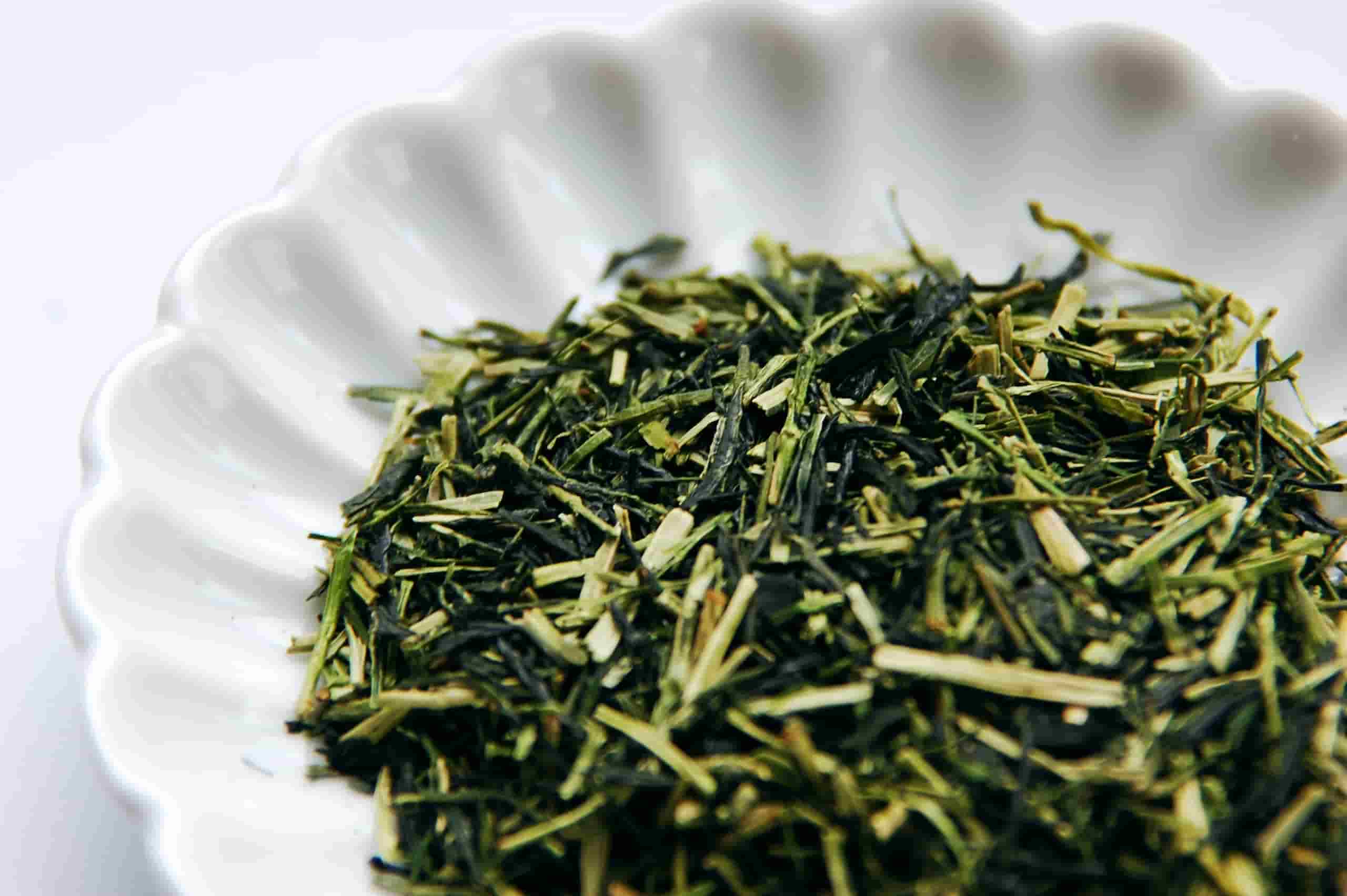
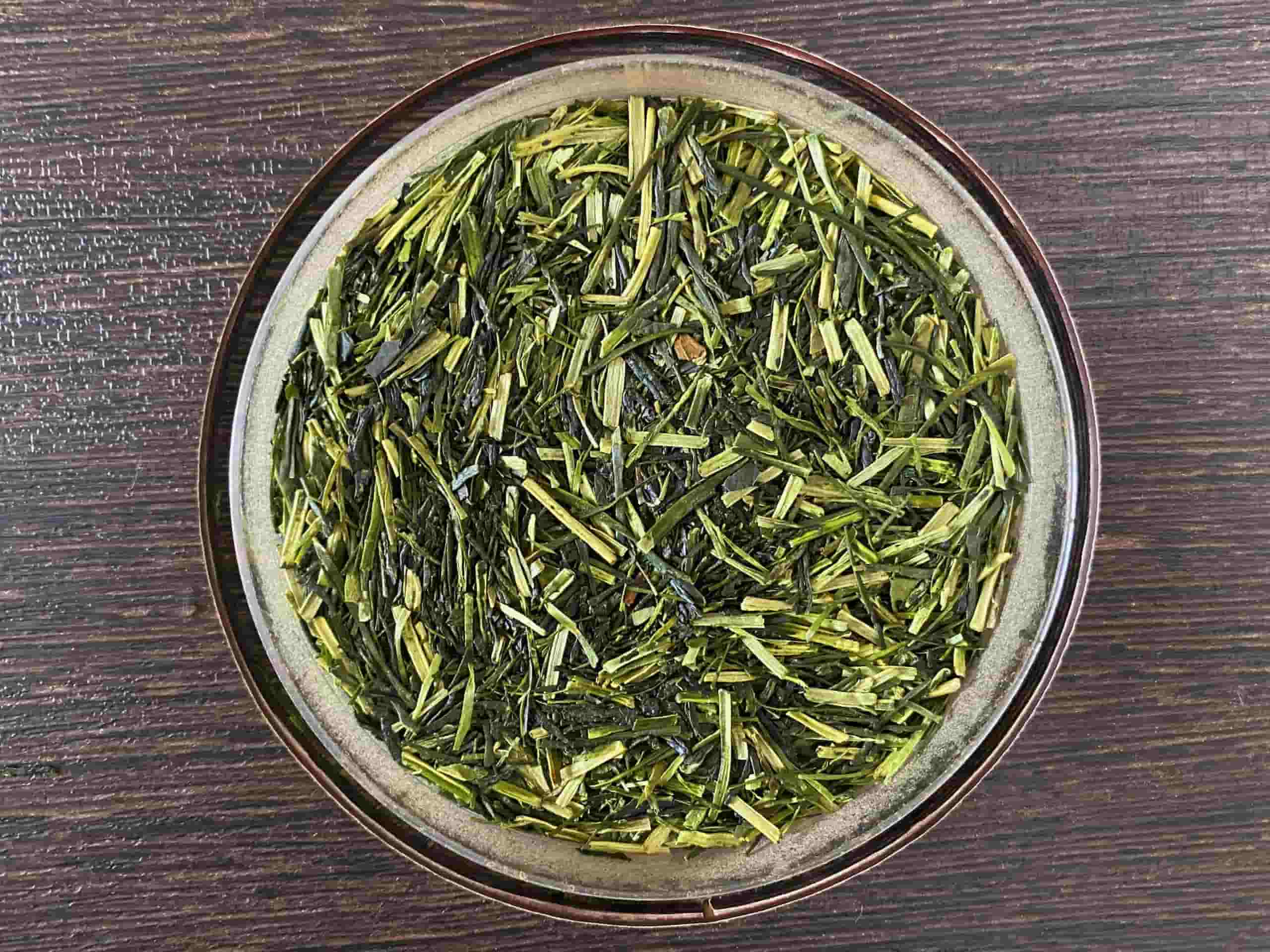
Karigane (雁ヶ音) is a Japanese stem tea made from stems and leaf stalks separated during the finishing of gyokuro or other high-grade green teas. It brews a light, sweet, gently savory cup with very little bitterness. In Kyoto it’s a familiar everyday tea, and the name itself carries a small poem about wild geese.
The short answer
Karigane is a type of stem tea (kukicha), usually made from the stems of high-grade tea: most often gyokuro, sometimes kabusecha or fine sencha. The name is used mainly around Kyoto. Compared with everyday stem tea, it usually tastes sweeter and rounder, and it rewards a slightly cooler, gentler brew.
What Is Karigane?
It belongs to the stem-tea family. During the finishing of crude tea, machines separate the leaf from the stems and leaf stalks, and that stem-rich portion is sold as its own tea. What makes a stem tea “karigane” rather than plain kukicha is mainly where the stems come from and where the tea is sold.
Karigane Quick Facts
- Japanese name
- 雁ヶ音, also written 雁が音 or 雁金; read karigane
- Type
- Green stem tea (kukicha), usually unroasted
- Main source
- Stems sorted while finishing gyokuro; also kabusecha and high-grade sencha
- Where the name is used
- Mainly Kyoto and nearby Shiga; elsewhere the same style may be sold as kukicha, bōcha or shiraore
- Flavor
- Sweet, mellow, lightly grassy, low in bitterness
- Brewing
- About 60°C for gyokuro karigane, or about 80°C for an easy everyday cup
- Caffeine
- Contains caffeine; stems generally hold less than the leaves of the same tea
Karigane vs. Kukicha
Karigane is generally treated as a type of stem tea. Kukicha is the broader term, and much of it comes from ordinary sencha, while “karigane” is often associated with stems from gyokuro or other high-grade, often shade-grown tea. Several Kyoto tea houses explain the difference simply: in Kyoto, people tend to say “karigane,” while much of Japan just says “kukicha.” So the word can hint at both the grade and the region.
The names aren’t a strict grading system, though. One Kyoto shop sells versions made from gyokuro stems, a blend of gyokuro and sencha stems, and sencha stems alone, all under the same name. Reading the description for the base tea tells you more than the name does.
What the Name Means
“Karigane” is an old poetic word for the call of wild geese. One commonly cited explanation links it to geese resting on floating branches at sea, an image people saw in pale stems drifting in a cup. The roasted version of this tea has its own guide, which covers the story in more detail: see the Karigane Hōjicha guide.
You’ll see the name written in more than one way on Japanese packaging. All of these point to the same tea:
- 雁ヶ音the most common spelling
- 雁が音same reading, different kana
- 雁金used by some Uji shops
- かりがねwritten in hiragana
Where Karigane Comes From
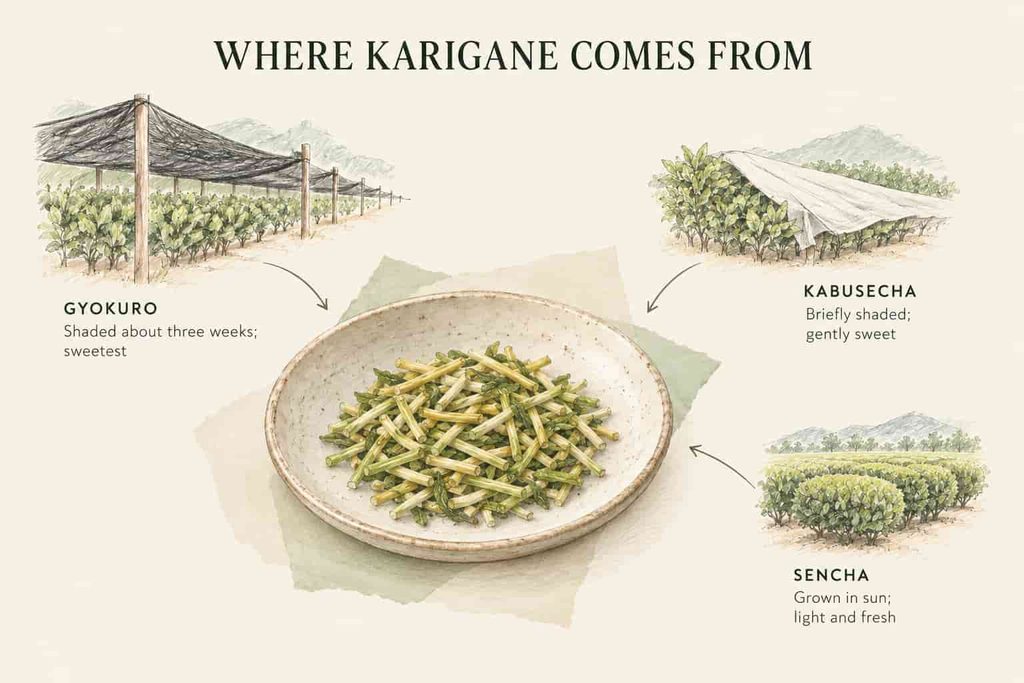
This tea is a byproduct of finishing, so its character depends on the leaf tea it was sorted from. Japanese tea sellers commonly name three main sources. Some Uji houses also mention stems sorted while finishing tencha, the leaf that is later ground into matcha.
Gyokuro karigane
玉露雁ヶ音
Stems from gyokuro, typically shaded for about three weeks (around 20 days) before harvest. Usually the sweetest and most savory, and treated as the premium style.
Kabusecha karigane
some sellers: 冠かりがね
Stems from kabusecha, a tea shaded more briefly, often about a week. Sellers describe a refined, gentle sweetness between gyokuro and sencha styles.
Sencha karigane
煎茶雁ヶ音
Stems from high-grade sencha. Lighter and fresher, and the easiest to brew well with hotter water.
The shading matters. Gyokuro and kabusecha are covered before harvest, which changes the balance of flavor compounds in the leaf and keeps more of the sweet, savory amino acid theanine. Stems may add to that: a 1993 Japanese study comparing a kukicha with a sencha found more theanine and less caffeine and catechins in the kukicha sample. For more on how shading works, see the complete Gyokuro guide.
Some bags are almost pure stem. Other shops deliberately leave a little leaf in, to carry more of the original tea’s flavor. Neither approach is wrong, and the difference shows in the bag: a greener, leafier mix tends to taste closer to the parent tea.
Karigane, Shiraore and Bōcha: Regional Names
Japan uses several names for high-grade stem tea, and region matters as much as grade. The table below shows how sellers commonly use these names. Usage overlaps and isn’t an official classification, so treat it as a guide rather than a rule.
| Name | Where it’s common | What it usually means |
|---|---|---|
| Karigane (雁ヶ音) | Kyoto and Shiga | Stem tea, often from gyokuro or other high-grade tea |
| Shiraore (白折) | Kyushu, among other areas | High-grade stem tea; the name refers to the pale, folded stems |
| Bōcha (棒茶) | Various regions | Stem tea in general; some sellers use it for roasted stem tea, such as Kaga Bōcha |
| Kukicha (茎茶) | Nationwide | The general name for stem-rich tea of any grade |
In practice, a stem tea from Uji and a shiraore from Kyushu can be very similar teas sold under different local names. Kaga Bōcha, Ishikawa’s roasted stem tea, is a different product with its own regional tradition.
What Does Karigane Taste Like?
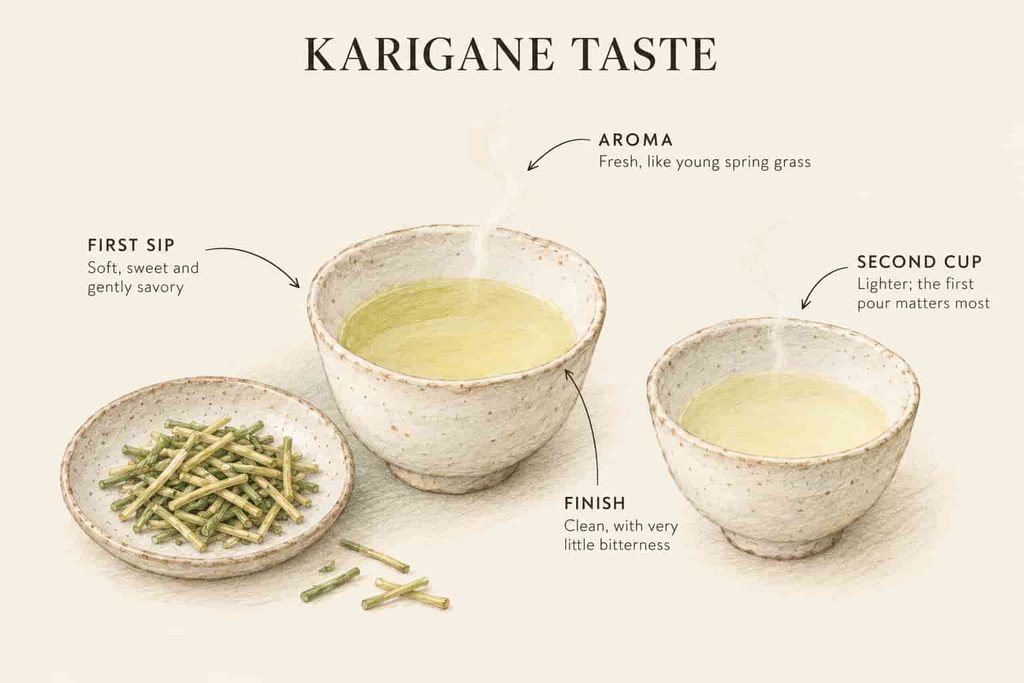
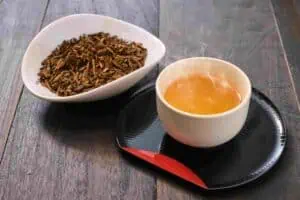
The first impression is sweetness. The first sip is soft and rounded, with a savory, brothy depth that’s strongest in gyokuro karigane. A light, grassy freshness follows, and the finish stays clean, with very little of the drying astringency of a strong sencha.
How the Base Tea Changes the Cup
Gyokuro karigane tastes the richest, with a hint of the deep umami that gyokuro is known for. The kabusecha version sits in the middle, sweet but a little brighter. The sencha version is the lightest and freshest of the three, closer to a crisp everyday kukicha. If you’re used to gyokuro, this will feel like a lighter, more relaxed cousin rather than a cheaper copy.
Why the First Cup Matters Most
Stems release their flavor in a different way from leaves. An Uji tea shop notes that the aroma and taste drop noticeably after the first infusion, more than a leaf tea’s would. Other sellers say high-grade stems can still give two or three good cups. Both can be true, depending on the grade and how much leaf is in the mix. Either way, put your care into the first pour, and expect later cups to be lighter.
How to Brew Karigane
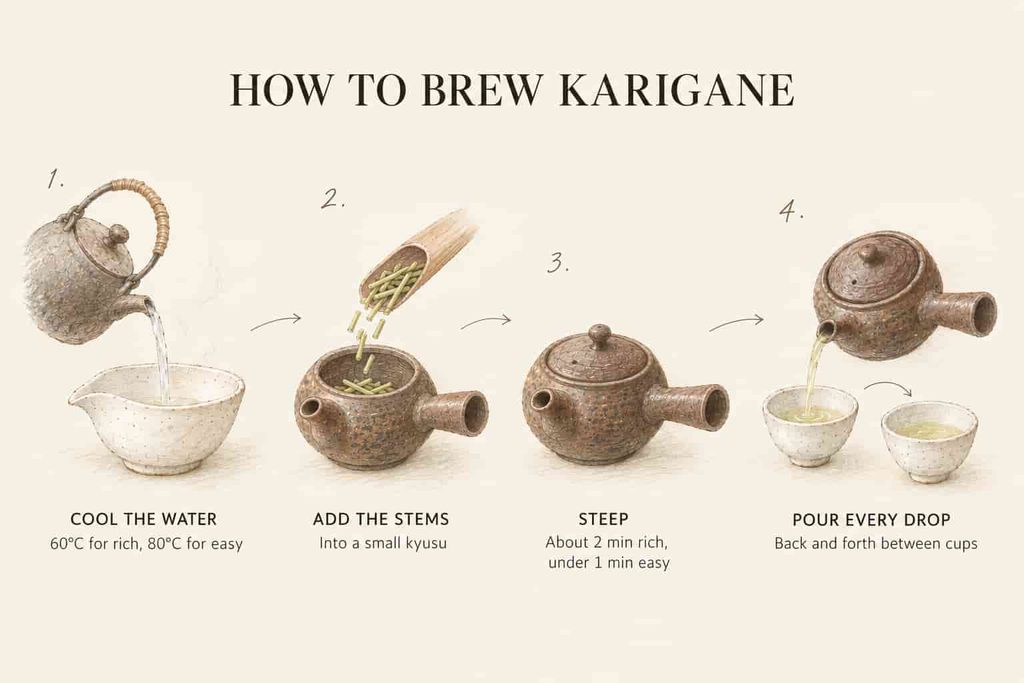
There are two good ways to brew it. Kyoto tea houses often treat the gyokuro version almost like gyokuro, with cool water and a longer steep. Many sellers also recommend a quicker, hotter brew that’s easier for everyday drinking.
Rich, gyokuro-style brew
Best for gyokuro karigane, when you want sweetness and umami
- Tea
- About 8 to 10g for 2 to 3 small cups
- Water
- About 80 to 100ml
- Temperature
- About 60°C
- Steep
- About 2 minutes
Easy everyday brew
Best for sencha karigane, or a quick mug
- Tea
- About 3g per cup
- Water
- About 150 to 200ml
- Temperature
- About 80°C
- Steep
- 40 to 60 seconds
Boil the water, then pour it into the empty cups or a cooling bowl. Each transfer usually lowers the water by about 5 to 10°C, depending on the vessel and the season, so a few pours bring it close to the range you want.
Measure the stems into a small kyusu. Stems are bulky for their weight, so the scoop will look fuller than it would for sencha.
Pour the cooled water over the stems and steep for the time above. Pour into the cups a little at a time, going back and forth, so each cup gets the same strength. Finish with the last drops, which carry the most flavor.
For the next cup, use slightly hotter water and a shorter steep. Expect a lighter, fresher taste rather than a repeat of the first cup.
Cooler water brings out sweetness, while hotter water adds sharpness and a little astringency. That makes temperature the easiest thing to adjust if the cup isn’t to your taste. It also works as a cold brew. Use a little more tea than for hot brewing and steep it in cold water. Sellers suggest anything from a couple of hours to about six hours, or overnight in the refrigerator, for a soft, sweet iced tea.
Karigane Compared With Gyokuro, Sencha and Karigane Hōjicha
This tea sits between several others in this series. The table below compares it with the leaf teas it comes from and with its roasted version.
| Tea | Main material | Roasted? | Typical character | Typical water |
|---|---|---|---|---|
| Karigane | Stems from gyokuro or high-grade tea | No | Sweet, mellow, light | About 60 to 80°C |
| Gyokuro | Shaded leaf | No | Deep umami, rich, thick | Cool, often around 60°C or lower |
| Sencha | Unshaded leaf | No | Fresh, grassy, some bitterness | Around 70 to 80°C |
| Karigane Hōjicha | Karigane stems, roasted | Yes | Toasty, caramel-like, very mild | Near boiling |
The roasted version is a good test of how much the base tea matters. Roasting the same stems swaps the green sweetness for a toasty one, but the soft, low-bitterness character carries through. To learn more about the leaf tea most stem teas come from, see the complete Sencha guide.
Caffeine in Karigane
Karigane contains caffeine. Stems generally hold less caffeine than the leaves of the same plant, so this tea tends to be milder than the leaf tea it was sorted from. Gyokuro itself is a relatively high-caffeine tea, though, and there’s no single figure for a cup. The amount depends on the base tea, how much leaf is mixed in, and how strongly you brew it. Treat it like any other green tea rather than as a caffeine-free drink.
How to Choose and Store Karigane
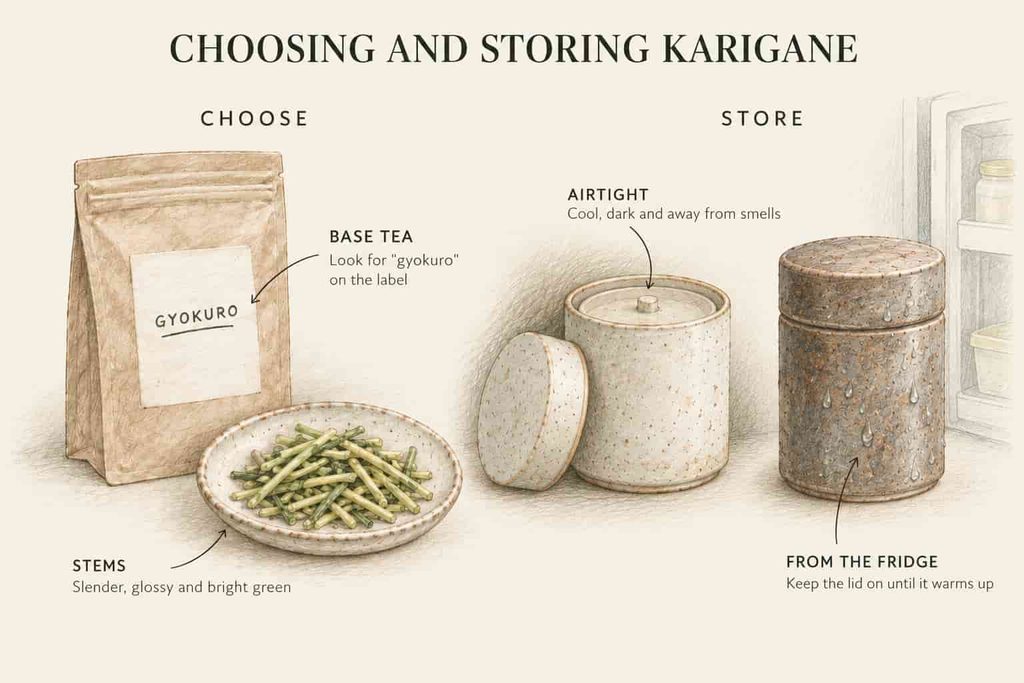
Because the name isn’t standardized, the label and the stems themselves tell you most of what you need to know.
- Look for the base tea: “gyokuro karigane” (玉露雁ヶ音) points to the sweetest, richest style; “sencha karigane” to a lighter one.
- Check the origin: Uji, Kyotanabe and Wazuka in Kyoto Prefecture are well-known gyokuro areas, but good stem tea comes from other regions too.
- Look at the stems: slender, glossy, bright green stems usually brew a sweeter cup than dull or thick, woody ones.
- Note the leaf content: a little leaf in the mix gives more of the parent tea’s flavor; a pure-stem bag tastes lighter and cleaner.
- Buy small amounts: unroasted green tea loses its fresh aroma fairly quickly after opening.
Store the tea in an airtight container, away from light, heat, moisture and strong smells. Once a bag is open, Japanese tea guides suggest finishing it within a few weeks to a month. If you keep unopened tea in the refrigerator or freezer, let it return fully to room temperature before opening, so moisture doesn’t condense on the cold stems.
Why Karigane Is Worth Trying
This is one of the easiest ways to taste what makes shaded Japanese tea special without committing to a full gyokuro session.
- A taste of gyokuro’s sweetness: gyokuro karigane carries the parent tea’s soft umami in a lighter cup.
- Forgiving to brew: it works at 60°C for depth or at 80°C for a quick, easy cup.
- A Kyoto tradition: in Kyoto, it’s an ordinary everyday tea, not a specialty item.
If you already drink gyokuro, try a gyokuro karigane from the same shop side by side with it. The leaf and the stem come from the same tea, yet each shows a different side of it.
Karigane FAQ
About the Tea
What is karigane tea?
Karigane is a Japanese stem tea made from stems and leaf stalks separated during the finishing of high-grade tea, most often gyokuro. It has a sweet, mellow flavor with very little bitterness.
Is karigane the same as kukicha?
Karigane is generally treated as a type of kukicha. Kukicha is the broader name for stem tea, while karigane usually points to stems from higher-grade tea and is the name most often used around Kyoto. The names overlap and aren’t a strict grading system.
What is the difference between karigane and shiraore?
They’re very similar high-grade stem teas. The first name is common around Kyoto, while shiraore is used in Kyushu and some other areas.
Does karigane have caffeine?
Yes. Stems generally contain less caffeine than leaves, so it’s usually milder than the leaf tea it comes from, but it isn’t caffeine-free.
Brewing and Buying
What temperature should I use for karigane?
Use about 60°C with a 2-minute steep for a rich gyokuro karigane, or about 80°C for 40 to 60 seconds for an easy everyday cup.
How many times can I brew karigane?
Karigane often gives two or three infusions, with later cups usually lighter. The exact number depends on the tea and how you brew it.
How do I know if karigane is made from gyokuro?
Check the label for “gyokuro karigane” or 玉露雁ヶ音, or for a description that names gyokuro as the base tea. The name “karigane” alone doesn’t guarantee it.
References
Industry and Academic Sources
- Japan Tea Central Public Interest Incorporated Association – Green Tea Labeling Standard (緑茶の表示基準), on the definition of kukicha/bōcha. (Accessed October 2026)
- Hara, Fukatsu and Ina – Comparison of Flavor Components Between Kukicha and Sencha (茎茶と煎茶の香味成分の比較), Tea Research Journal, 1993, on higher theanine and lower caffeine in stem tea. (Accessed October 2026)
- Ministry of Agriculture, Forestry and Fisheries of Japan – How to Brew Tea (お茶の淹れ方), on how much water cools with each transfer between vessels. (Accessed October 2026)
Tea Shops and Producers
- Tsujiri Hei Honten – Karigane (雁ヶ音), on gyokuro and sencha karigane, stems from tencha and sencha finishing, and brewing parameters. (Accessed October 2026)
- Senkien – Karigane and Kukicha (雁ヶ音・くき茶), on regional names, gyokuro, kabusecha (冠かりがね) and sencha karigane, and cold brewing. (Accessed October 2026)
- Maiko no Cha Honpo – Karigane (かりがね), on Kyoto usage of the name and blends of gyokuro and sencha stems. (Accessed October 2026)
- Okunishi Rokuhoen – Karigane (雁金, gyokuro stem tea), on gyokuro karigane from Kyotanabe and low-temperature brewing. (Accessed October 2026)
- Shohokuen – Karigane and Konacha (雁が音・粉茶), on the name’s origin and how flavor drops after the first infusion. (Accessed October 2026)
- Shizuokatea – Karigane-cha: Japanese Tea Made from Green Tea Leaf Stalks, on the Kyoto and Kyushu names, temperature and flavor, and cold brewing. (Accessed October 2026)
- Ocha.tv – How to Store Tea (お茶の保存方法), on airtight storage and letting chilled tea reach room temperature before opening. (Accessed October 2026)



Comments