



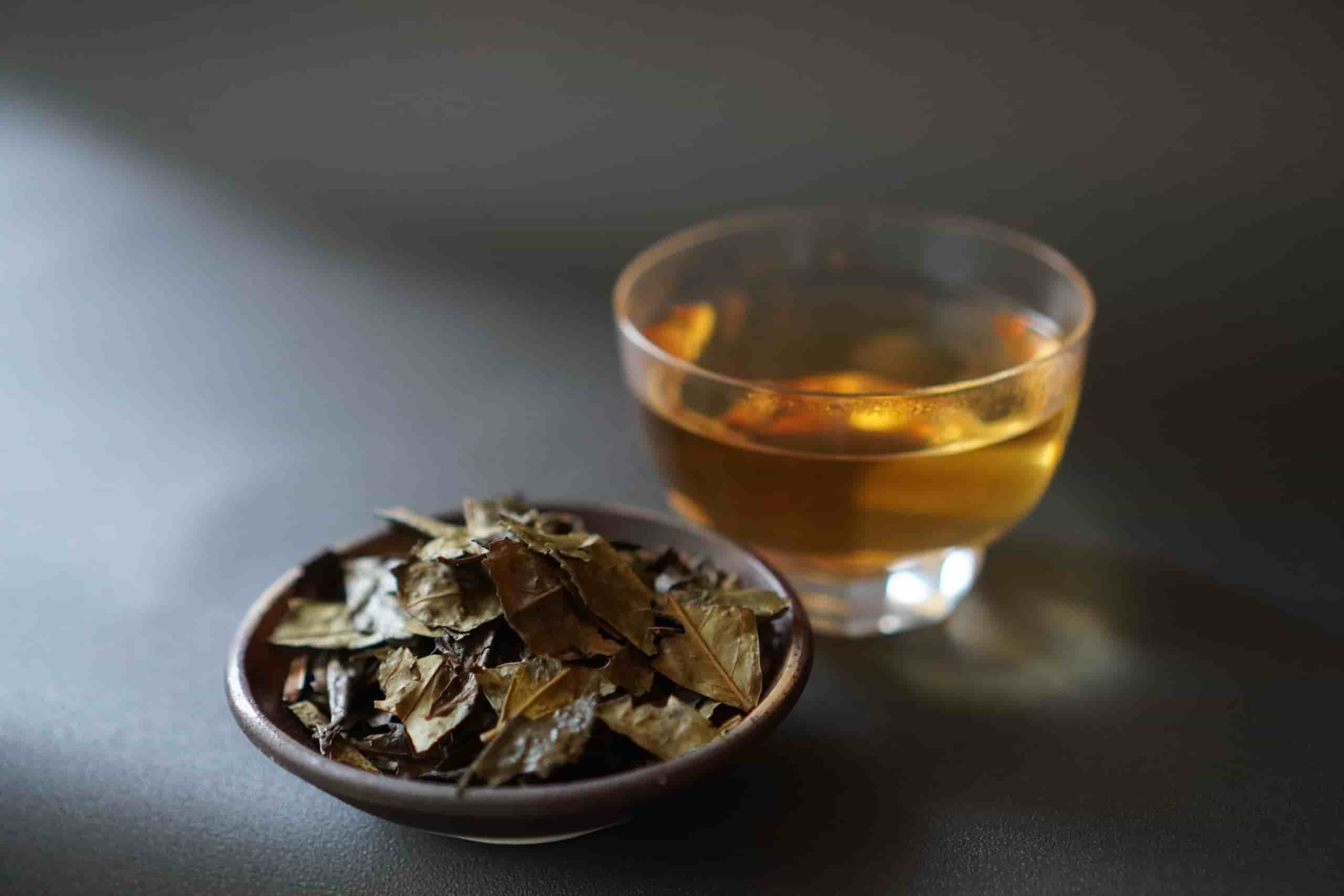
Kyobancha (京番茶), also sold as Iribancha, is Kyoto’s own style of roasted green tea: large, unrolled leaves with an intensely smoky aroma, brewed into a surprisingly mellow, low-bitterness cup. It’s made from the coarse, mature leaves left over after a tea bush’s more delicate flushes have already gone toward sencha, gyokuro, or tencha. Producers steam, dry, and roast those leaves over direct heat until smoke works its way into the leaf.
Outside Kyoto, this style of tea often goes by other regional names. At a glance, it’s sometimes grouped in with hōjicha, but it isn’t quite the same as either. Kyobancha skips a step that most other Japanese teas go through. That single difference gives it shaggy, oversized leaves and an unusually strong smoky character.
This guide covers what makes Kyobancha distinct, how it’s made, and how it compares with hōjicha. It also covers how to brew and buy it. For the broader category it belongs to, see the complete Bancha guide. For the roasting process it’s sometimes confused with, see the Hōjicha guide.
What Is Kyobancha?
Where the Leaves Come From
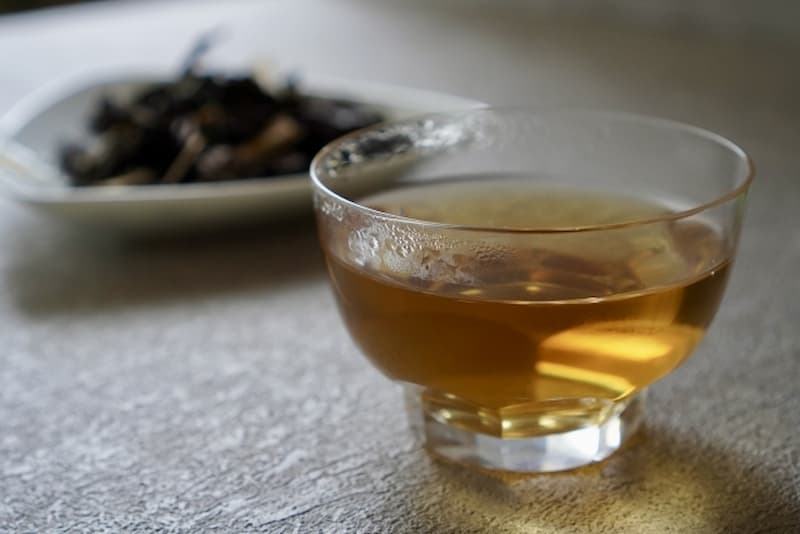
Kyobancha uses the large, tough leaves a tea bush grows after farmers pick its prized flushes. Producers trim these leaves away during routine pruning. Depending on the farm, that happens either after the autumn harvest or just before the next spring’s new growth. Left on the bush, that material would simply go back into the soil as green manure. Kyobancha turns it into tea instead.
What the Name Means
“Kyo” refers to Kyoto, and “bancha” marks it as a common, lower-grade tea. That’s the same word used for Japan’s everyday green tea more broadly. Kyoto tea shops often sell it as Iribancha instead, from iru, meaning to roast or parch. Both names point to the same tea. In other regions, similar unrolled, coarse-leaf teas go by other local names. The exact processing can vary from one producer to the next.
How Kyobancha Is Made
Kyobancha’s process shares its first step with ordinary bancha, then breaks off in its own direction at the point where most Japanese teas get rolled. Here’s how the leaf gets from bush to cup.
Producers steam the leaves right after picking, the same way they treat sencha. This halts oxidation and locks in the tea’s green color before processing continues.
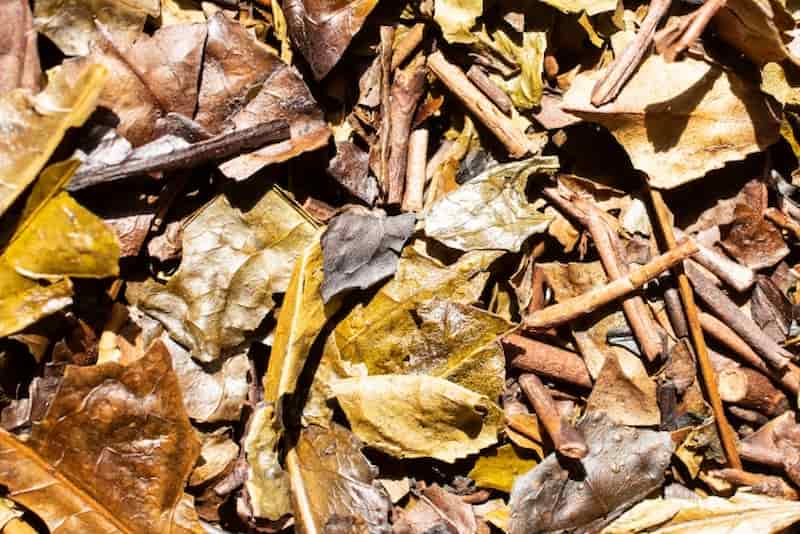
Most Japanese green tea goes on to be rolled next, a step that shapes the leaf and helps release its juices. Kyobancha skips this entirely. The whole, uncrushed leaf goes straight to drying, traditionally in the sun, which is why the finished tea keeps its large, flat, almost leaf-litter appearance rather than the tight needles or curls typical of sencha.
The final step is roasting, and it’s what gives Kyobancha its character. Producers roast the dried leaf at high heat in a large metal pan or kettle, stirring it constantly until smoke works its way into the tea. Because the leaves are wide, flat, and unrolled, they dry out and roast faster than a rolled leaf would, so this stage runs shorter than a full hōjicha roast, even though the aroma it produces is considerably stronger.
The exact equipment varies from one producer to the next: a wide, shallow metal pan, a barrel over an open fire, or superheated metal and ceramic surfaces instead of a flame. The details differ, but one thing stays constant: direct, high heat meeting a whole, uncrushed leaf — something a rolled leaf destined for hōjicha never gets.
Kyobancha vs. Bancha vs. Hōjicha
Kyobancha sits at the point where three related teas overlap. It’s a type of bancha, and people sometimes describe it as a style of hōjicha. Still, it isn’t quite interchangeable with either. The table below sums up where it fits.
The rolling step is the clearest dividing line. Producers roll ordinary bancha and leave it green. Hōjicha usually starts from that same rolled leaf, and producers roast it afterward. Kyobancha never gets rolled at all. Instead, the leaf goes straight from steaming to drying to roasting in its original, whole shape. That’s also why its smoky character comes through so much more strongly than a typical hōjicha’s toasty, nutty roast.
Flavor and Aroma: A Tea That Smells Stronger Than It Tastes
Kyobancha’s aroma is its most dramatic feature, and often its most surprising one. People commonly describe it as smelling like a campfire, burnt firewood, or even cigarette smoke. That scent is strong enough that first-time drinkers sometimes expect an equally intense, bitter cup.
The taste doesn’t match the smell, though. Brewed Kyobancha comes out light-bodied and mellow, with a soft sweetness and very little bitterness or astringency behind the smoke. Some drinkers pick up notes closer to toasted grain or roasted wood than to anything acrid. That gap between a bold nose and a gentle cup is part of what makes Kyobancha memorable. It’s also part of why the tea works so well for casual, all-day drinking rather than careful sipping in small amounts.
The smokiness also tends to soften with each re-steep. A first cup from a freshly brewed pot usually carries the strongest campfire character. A second or third pot from the same leaves comes out milder and a little sweeter. Households that keep a pot going all day are, in effect, drinking their way from Kyobancha’s boldest expression toward its gentlest.
Kyobancha in Everyday Kyoto Life
Kyobancha isn’t a specialty or ceremonial tea. It’s closer to tap water in Kyoto households. Families brew it in large pots or kettles and keep it on hand to drink throughout the day, especially during the colder months. Long-running Kyoto tea shops describe it as an everyday, practical tea passed down through generations. It isn’t something reserved for guests or special occasions.
Kyobancha is low in caffeine and gentle on the stomach compared with sencha. Because of that, people in the region have traditionally called it “akachan bancha,” or baby bancha. They’ve given it to infants and served it to elderly family members for generations. That’s a long-standing local custom, not medical advice. Check with a pediatrician before giving any tea to an infant.
Kyobancha’s everyday reputation runs deep enough that even households connected to formal tea practice drink it outside the tea room. Ryuoen Chaho is one example. Founded in 1875, this Kyoto tea producer supplies tea to the Omotesenke school of tea ceremony. Even there, Kyobancha remains the ordinary household tea, quite separate from the matcha served in formal gatherings.
Its warming, comforting character has also given it a reputation as a cold-season tea in particular. It’s the kind of drink Kyoto households lean on once the weather turns. They brew it in bulk and keep it simmering or resting nearby, even though it’s a kitchen fixture the rest of the year too.
How to Brew Kyobancha at Home
Kyobancha is one of the most forgiving Japanese teas to brew. Its large, roasted leaves don’t turn bitter the way a delicate sencha can. That means there’s little risk of ruining a pot with overly hot water or a long steep.
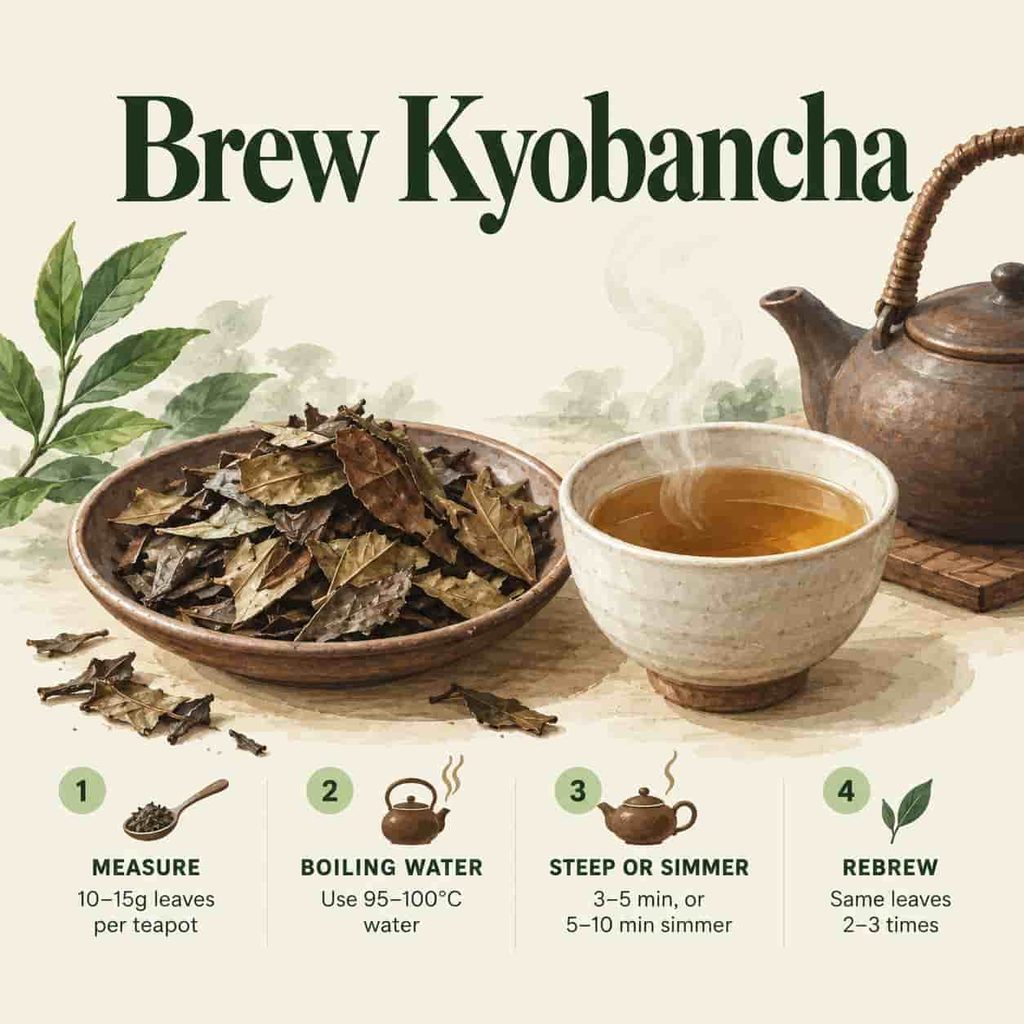
Use about 10 to 15g of Kyobancha for a medium teapot, or roughly one to two tablespoons. Its bulky, uncrushed leaves take up far more room than a fine sencha. Don’t be surprised by how much they fill the pot.
Pour water straight off the boil, around 95 to 100°C. Unlike sencha, Kyobancha’s roasted, mature leaves need that heat to release their flavor, and won’t turn bitter from it.
Steep for 3 to 5 minutes in a teapot for a lighter cup. Or simmer the leaves gently in a pot for 5 to 10 minutes for a deeper, more roasted result. Kyoto households traditionally lean toward the second method, brewing a whole pot at once.
The same leaves generally hold up for a second or third pot. Many households brew Kyobancha by the potful and drink it throughout the day. It’s common to simply top up the pot with more hot water rather than measuring a fresh batch each time.
Caffeine and Who Should Try Kyobancha
Kyobancha’s low caffeine content starts with its leaf. Like other bancha, it’s made from older, more mature growth. That growth naturally carries less caffeine than the young leaves used for sencha or gyokuro. Many tea sellers also credit the roasting step itself with lowering caffeine further. How much of that effect comes from roasting specifically, rather than from the mature leaf underneath it, isn’t something this guide can state with certainty. Either way, Kyobancha has a well-established reputation in Kyoto as a gentle, low-caffeine tea. That’s exactly why families have traditionally considered it suitable for children and older relatives.
It’s still a tea, not a caffeine-free drink. Anyone who needs to avoid caffeine entirely, or who is deciding whether to give it to an infant, should treat that “baby bancha” nickname as a cultural tradition rather than a guarantee. Check with a doctor first.
Choosing and Buying Kyobancha
Kyobancha stays a regional specialty even within Japan, so it’s worth knowing what to look for before buying.
- 🍃Either name is fine. “Kyobancha” and “Iribancha” generally point to the same tea; Kyoto shops often prefer the latter.
- 🍃Expect an unusual look. Large, flat, uneven, dark brown leaves are normal, not a sign of poor quality. It should look nothing like a fine, needle-shaped sencha.
- 🍃Smell before you buy, if you can. A pronounced, smoky aroma is the main sign of freshness and quality. A faint or musty smell usually means the tea is old.
- 🍃Look beyond the supermarket. Kyobancha is far less common outside Kyoto than hōjicha. Specialty Japanese tea shops, whether in Kyoto or online, are a more reliable source than a general grocery aisle.
Storing Kyobancha
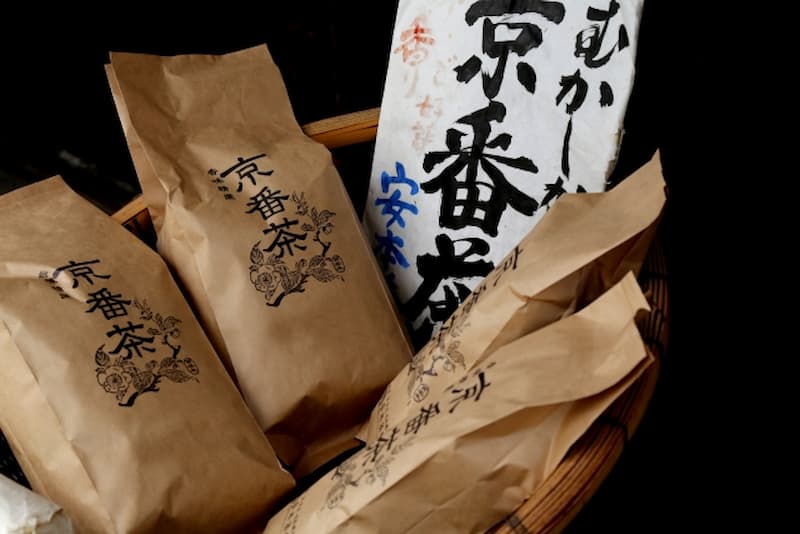
Keep Kyobancha sealed in an airtight container, away from light, heat, and strong odors, the same basic rule as any tea. Because it’s already roasted, Kyobancha is more forgiving over time than an unroasted green tea like plain bancha or sencha. The roasting process removes much of the moisture, along with some of the delicate compounds that make green tea go stale quickly. Even so, its signature smoky aroma is strongest when the tea is fresh. It’s worth buying only as much as you’ll use within a few months.
Common Kyobancha Myths
Final Thoughts
Kyobancha turns Kyoto’s pruning leftovers into one of Japan’s most distinctive everyday teas. Producers take leaves too coarse for sencha, steam and dry them whole rather than rolling them, then roast them until smoke settles in. The result smells far bolder than it tastes, and that contrast is exactly what makes it worth trying.
No one sips Kyobancha carefully or judges it the way they would a fine sencha or gyokuro. It’s built for the opposite: a big pot, boiling water, and a long simmer if you like it deeper. It’s a cup that’s just part of the day, not the center of it.
The simplest way to understand Kyobancha is to brew a full pot rather than a single small cup. Let the smoky smell fill the kitchen before you ever taste it.
To explore more Japanese tea culture, read this related guide:
.jpg)
Kyobancha FAQ
What is Kyobancha?
Kyobancha is a roasted green tea unique to Kyoto, made from large, mature tea leaves. Producers steam and dry them, then roast them without ever rolling them. It has an intensely smoky aroma but a mellow, low-bitterness flavor.
Is Kyobancha the same as Iribancha?
Generally, yes. “Iribancha” is the name Kyoto tea shops often use for the same tea, from a word meaning to roast. “Kyobancha” is the more common name for it elsewhere.
What is the difference between Kyobancha and hōjicha?
Hōjicha is usually roasted from bancha or sencha that producers have already rolled. Kyobancha skips rolling altogether. That’s why its leaves look larger and shaggier, and why its roasted, smoky character is much stronger.
Does Kyobancha have caffeine?
Yes, but it’s generally low, mainly because it’s made from mature, late-season leaves rather than young growth. It isn’t caffeine-free, though its reputation as a gentle tea has made it a traditional choice for children and older family members in Kyoto.
How do I brew Kyobancha at home?
Use about 10 to 15g of leaves per medium teapot with boiling water. Steep for 3 to 5 minutes for a lighter cup, or simmer for 5 to 10 minutes in a pot for a deeper, more roasted result.
Why does Kyobancha smell so much stronger than it tastes?
The direct-heat roasting process creates a very pronounced smoky aroma in the dry and brewing leaf. Yet the tea itself brews into a light, mellow cup with little bitterness. The two don’t need to match, and that contrast is one of Kyobancha’s defining features.
Where can I buy Kyobancha outside Japan?
It’s harder to find than hōjicha or sencha. Specialty Japanese tea retailers, including several based in Kyoto that ship internationally, are generally a more reliable source than a general grocery store.
References
- Global Japanese Tea Association, Kyobancha, on harvest timing, the extended steaming process, and its regional alternative names.
- Kyoto Obubu Tea Farms, Kyobancha, on the harvest timing of overwintered leaves and the specific steaming, drying, and roasting steps.
- Ippodo Tea, Iribancha, Kyoto’s Daily Tea, on the roasting process, flavor profile, and its role as an everyday Kyoto beverage.
- Leafhopper, Iribancha/Kyobancha: A Seasonal Tea, on the roasting method, flavor and aroma contrast, and the tea’s connection to Ryuoen Chaho and the Omotesenke school.
- My Japanese Green Tea, Kyobancha, on the “akachan bancha” nickname and its relationship to hōjicha.
- Tealife, The Complete Guide to Kyobancha, on processing without rolling, caffeine content, and brewing ratios.
- Kyo-Chikiriya, Kyōbancha, on its cultural role as a cold-season, everyday household tea in Kyoto.



Comments