



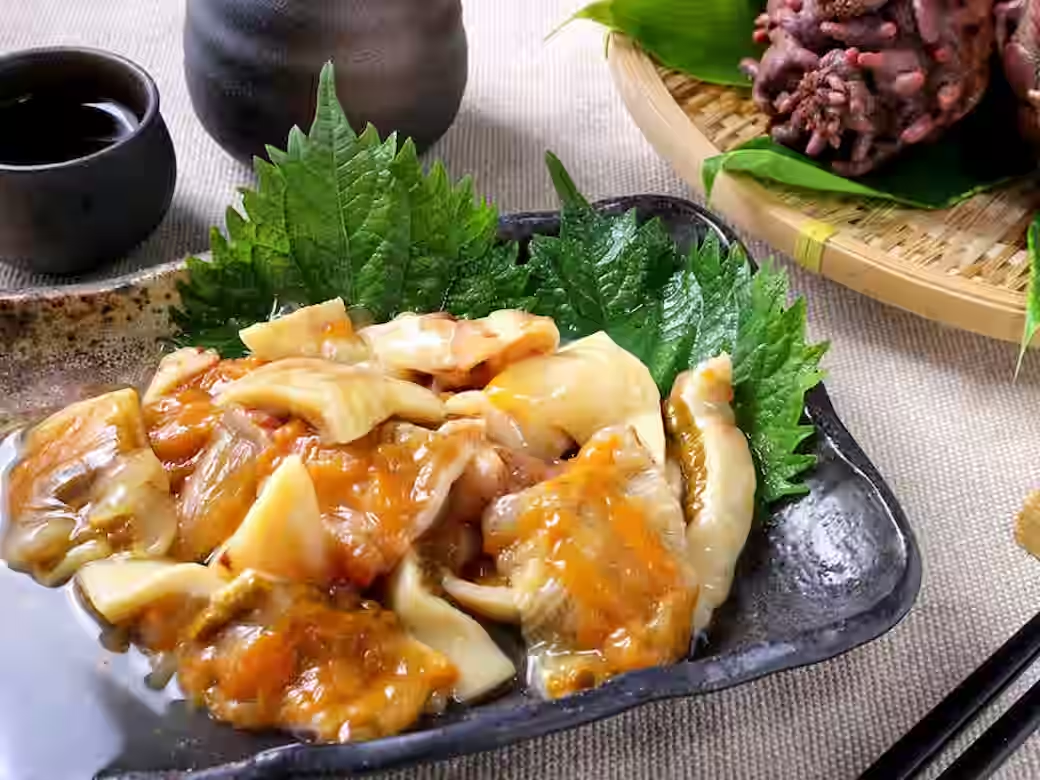
Early summer at a Sendai fish counter can bring a strange sight. Knobbly, orange-red lumps sit in the display, and they look more like fruit than seafood. Those lumps are the Hoya sea squirt, or maboya. Miyagi farmers raise them along the Sanriku Coast, so they turn up in local markets every summer.
So what is it, and should you actually eat it? This guide covers the taste, the season, the history, and the simplest ways to prepare it at home. It also explains prices and where to eat Hoya in Miyagi. Fair warning, though: the aroma divides people, even among locals.
What Is Hoya Sea Squirt?
Hoya is an edible sea squirt from Miyagi and the Sanriku Coast. Often called a sea pineapple, it has firm, springy flesh. Its flavor mixes salty, sweet, sour, bitter, and umami notes. People commonly eat it raw, vinegared, steamed, grilled, or preserved.
- Japanese name
- ホヤ (Hoya), マボヤ (maboya)Halocynthia roretzi
- English names
- Sea squirt, sea pineapple
- Food category
- Marine animal (tunicate)
- Main region
- Miyagi and the Sanriku Coast
- Peak season
- June to August
- Flavor
- Briny, sweet, bitter, umami
- Texture
- Firm and springy
- Common preparations
- Sashimi, vinegared, steamed, grilled, preserved
Is Hoya a Fish, Shellfish, or Plant?
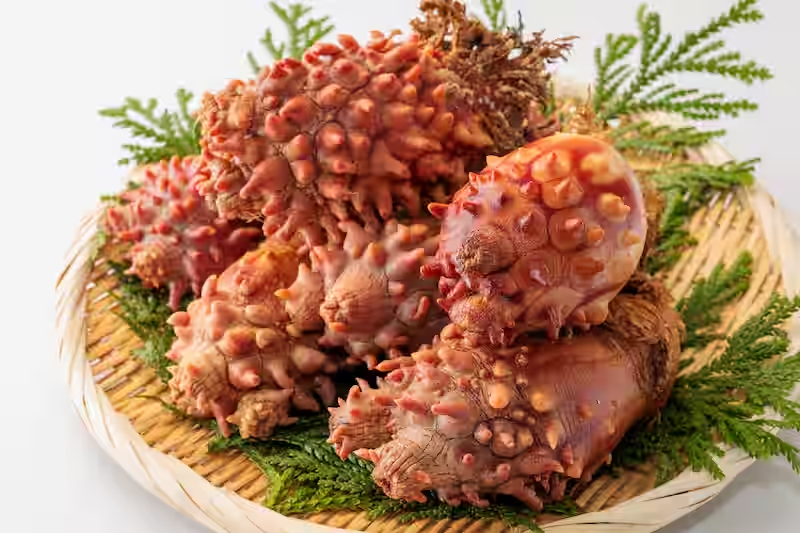
None of the three. In fact, Hoya is a marine animal called a tunicate, with the scientific name Halocynthia roretzi. The World Register of Marine Species places it among chordates, so it sits closer to vertebrates than to clams.
Some shoppers still say hoya-gai, which hints at shellfish. Biologically, though, it has no link to clams at all. Its larva even swims like a tiny tadpole before it settles on rock.
Why People Call It the Sea Pineapple
Its bumpy orange shell resembles a pineapple, so people call it the “sea pineapple.” Two short spouts, or siphons, also poke out from the top. One draws seawater in, while the other pushes it back out.
Miyagi mainly farms maboya, the knobby species with yellowish flesh. By contrast, Hokkaido lands a smoother red type called akaboya, according to MAFF. So when a Miyagi menu simply says Hoya, it almost always means maboya.
What Does Hoya Taste Like?
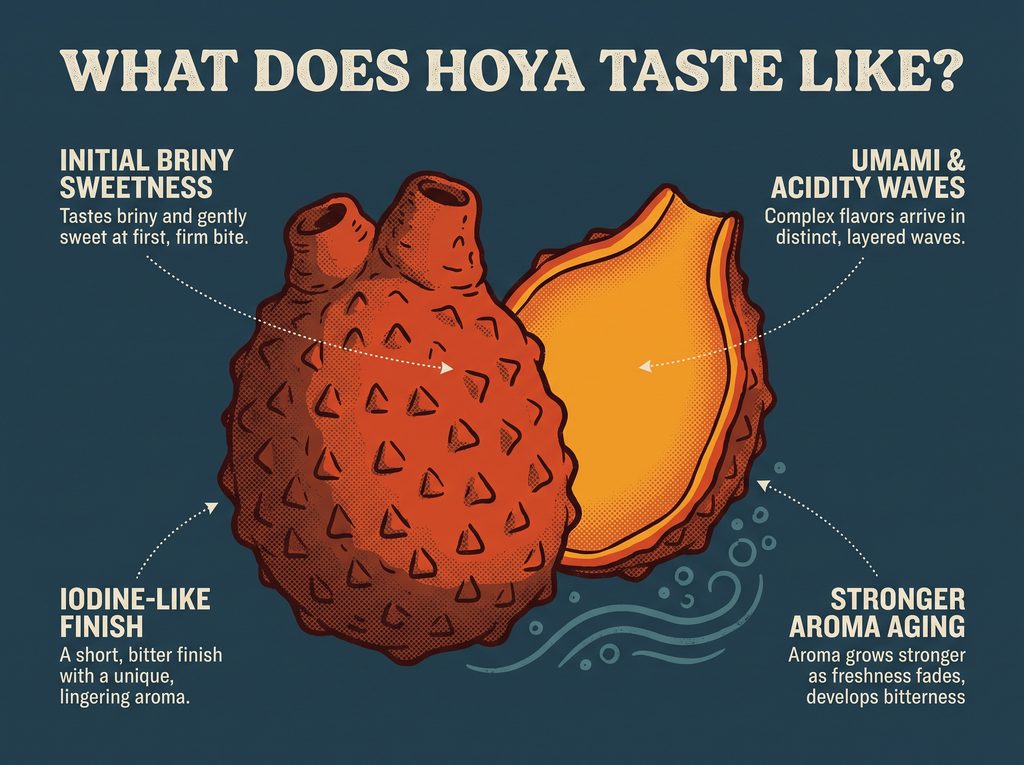
Fresh Hoya tastes briny and gently sweet at first. Next come umami and a light acidity, then a short bitter, iodine-like finish. However, the aroma grows stronger as freshness fades.
Miyagi Prefecture describes Hoya as a rare food with all five basic tastes. That sounds like marketing at first. With a very fresh slice, though, the flavors really do arrive in waves.
Picture the orange flesh just out of the shell. A cold, tide-pool smell reaches you, clean rather than fishy. The bite feels firm, a little like scallop but springier. Then a brief sweetness flashes past before a long ocean flavor settles in.
Is it pleasant? Honestly, opinions split. Plenty of first-timers wince, while locals often call it addictive. Few Japanese delicacies divide a table so neatly, though.
Freshness decides almost everything. MAFF notes that harsh bitterness and odor develop as Hoya ages. So Miyagi Prefecture advises cooking shell-on Hoya quickly or shucking it soon.
Scientists have studied that smell for decades. For example, a 1982 Tohoku University study linked the flavor to precursor compounds in the flesh. Later, a 1995 Korean study also profiled the volatile compounds behind the aroma.
History of Hoya in Miyagi
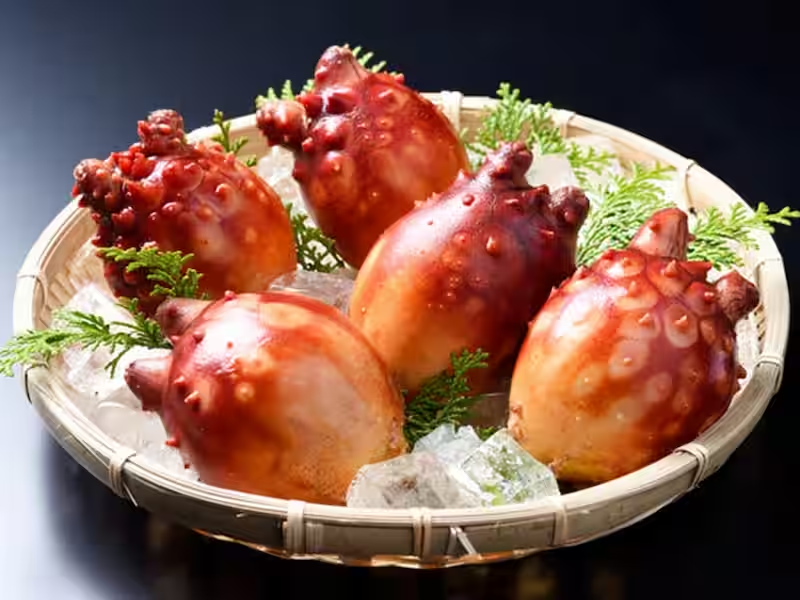
Japanese writing mentions Hoya more than 1,000 years ago. MAFF points to its appearance in Tosa Nikki, a travel diary by Ki no Tsurayuki. Still, that record shows early eating in Japan, not specifically in Miyagi.
Farming came much later. During the Meiji era, about 120 years ago, growers began raising Hoya in Karakuwa, now part of Kesennuma. Today, farmers lower oyster shells into the sea so that wild larvae attach. After that, they grow the young Hoya on hanging ropes for about three years.
Why this coast? Because the Sanriku Coast has deep ria inlets and plenty of plankton, it suits the animal well. As a result, farms cluster north of the Oshika Peninsula, from Samenoura Bay up to Kesennuma Bay.
Disease, Tsunami, and Recovery
According to a 2013 Norinchukin Research Institute report, exports to South Korea once absorbed much of the harvest. National output then peaked at 15,093 tonnes in 2004. The years that followed brought hard shocks, though.
Soon after, soft tunic syndrome appeared on Miyagi farms in 2007. Researchers later traced the disease to a tiny parasite, Azumiobodo hoyamushi. Then the 2011 tsunami wrecked farms in Ishinomaki, Kesennuma, and Minami-Sanriku. Because Hoya needs about three years to grow, full shipments only returned around 2014.
How Much Hoya Does Miyagi Produce?
According to Japan’s 2023 fisheries statistics, Miyagi harvested 4,850 tonnes of farmed sea squirt. That equals about 68 percent of the national total of 7,129 tonnes. Older sources, however, still cite roughly 80 percent. That higher share matches the years before 2011, when Miyagi supplied about 84 percent.
Hoya Season in Japan
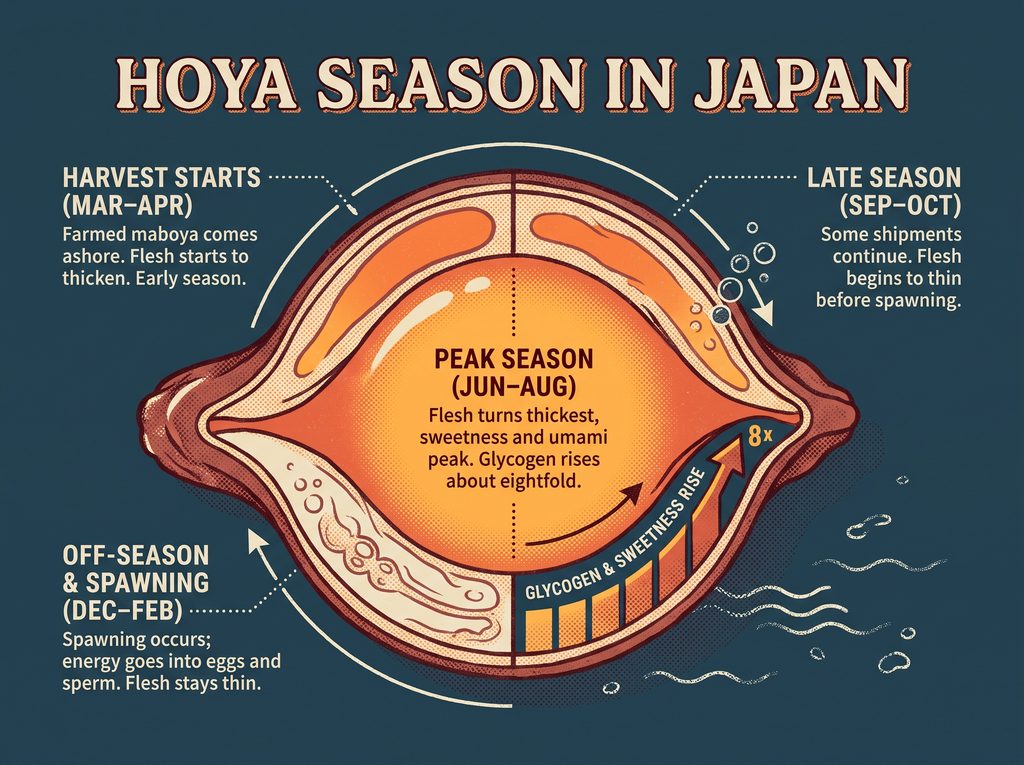
Hoya season in Japan starts early but peaks in summer. Farmed maboya comes ashore from around March. However, the flesh turns thickest and sweetest from June through August.
| Months | What happens | Eating quality |
|---|---|---|
| March to April | Harvest begins | Early season |
| May | Flesh then starts to thicken | Good |
| June to August | Sweetness and umami peak | Peak season |
| September to October | Some shipments still continue | Late season |
| November | Flesh thins before spawning | Limited |
| December to February | Spawning, so flesh stays thin | Off-season |
Why the gap? Hoya spawns from around the winter solstice into early spring, so its energy goes into eggs and sperm. Afterward, it feeds heavily on plankton, and the flesh fills out again.
JF Zengyoren’s Pride Fish program also reports that glycogen rises about eightfold after the rainy season, compared with winter. As a result, sweetness and umami climb. Even so, freshness still matters as much as the month.
When, Where, and How at a Glance
When
Harvest starts around March. The best flavor then runs from June to August.
Where
Sendai, Ishinomaki, Onagawa, Kesennuma, and other towns along the Sanriku Coast.
How
Try sashimi, cucumber sunomono, steamed Hoya, or grilled Hoya. Salt-cured and smoked products also travel well.
How to Prepare and Eat Hoya
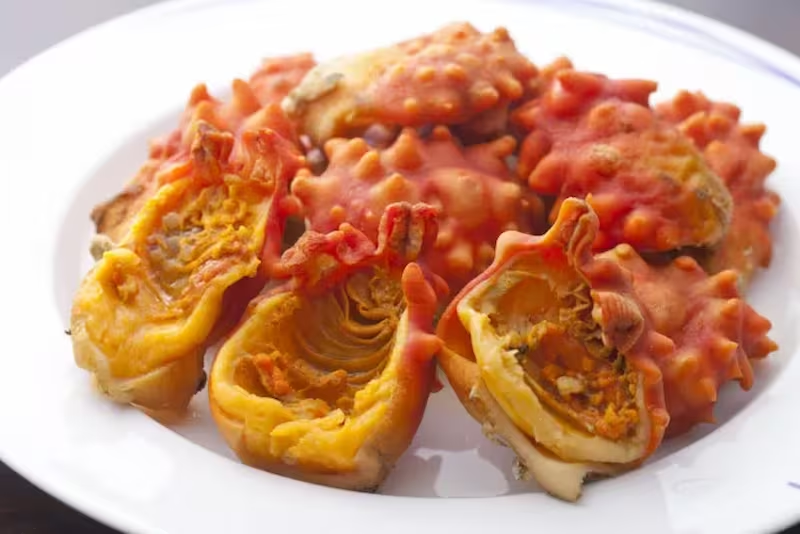
Cleaning a whole Hoya looks tricky, but it takes about two minutes once you know the parts. First, though, you need a good one.
How to Choose and Store Fresh Maboya
Look for a deep red-orange shell that feels tight and springy. A good specimen also feels heavy for its size, because it still holds seawater. On the other hand, a dull or wrinkled shell usually means it has lost moisture.
Storage is simple: keep it cold and eat it fast. Refrigerate shell-on Hoya at 10°C (50°F) or below, then eat it the day you buy it. Always follow the seller’s use-by date too, since rules vary by product.
How to Prepare Sea Squirt Step by Step
- Find the two siphons. The plus-shaped one takes water in, while the minus-shaped one lets it out.
- Hold the Hoya over a sink, then trim the tip of one siphon so the liquid drains.
- Cut down through the shell from that siphon, but keep the blade shallow.
- Slip a finger between shell and flesh, then turn the Hoya to free the orange body.
- Turn the flesh inside out and pull away the dark digestive tract.
- Then open each siphon tube with the knife tip and scrape out any black matter.
- Rinse quickly under cold water, because long rinsing washes away flavor.
- Finally, slice the flesh into bite-size pieces and serve it cold.
Knife safety: Use a stable board and a sharp knife, and keep your fingers clear of the blade. The wet shell feels slippery, so cut slowly. Also, liquid can spray when you open a siphon.
Which siphon comes first? Sources differ here. JF Miyagi starts from the minus side, while some prefectural guides start from the plus side. Either way works when you drain it over the sink.
Serving Methods Compared
| Preparation | Texture | Flavor intensity | Ideal for | Typical pairing |
|---|---|---|---|---|
| Sashimi | Springy and juicy | Strong | Fans of oysters and uni | Soy sauce, vinegar, cucumber |
| Sunomono | Firm, with crisp cucumber | Medium | Most first-timers | Sweet vinegar, wakame |
| Steamed | Denser and moist | Medium | Anyone wary of raw aroma | Sake, vinegared miso |
| Grilled | Firm and toasty | Medium to strong | Cooked seafood lovers | Soy sauce, miso |
| Shiokara or smoked | Varies by product | Strong | Sake drinkers | Cold sake |
Sashimi
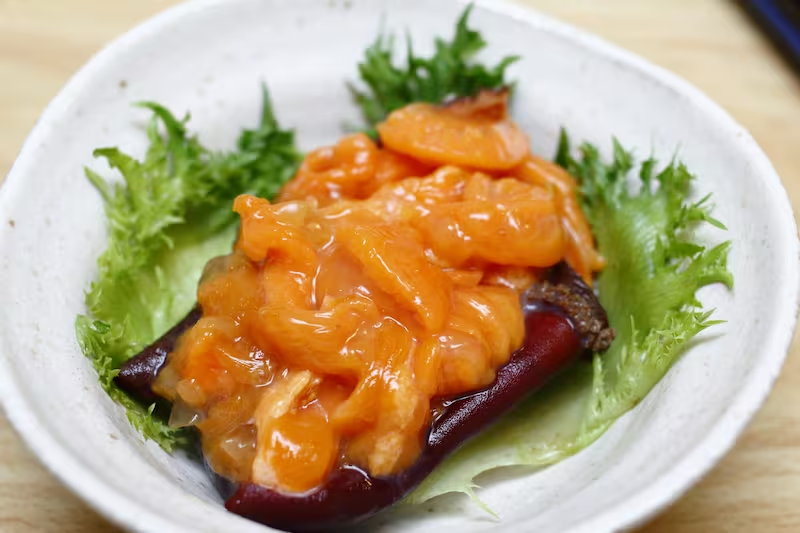
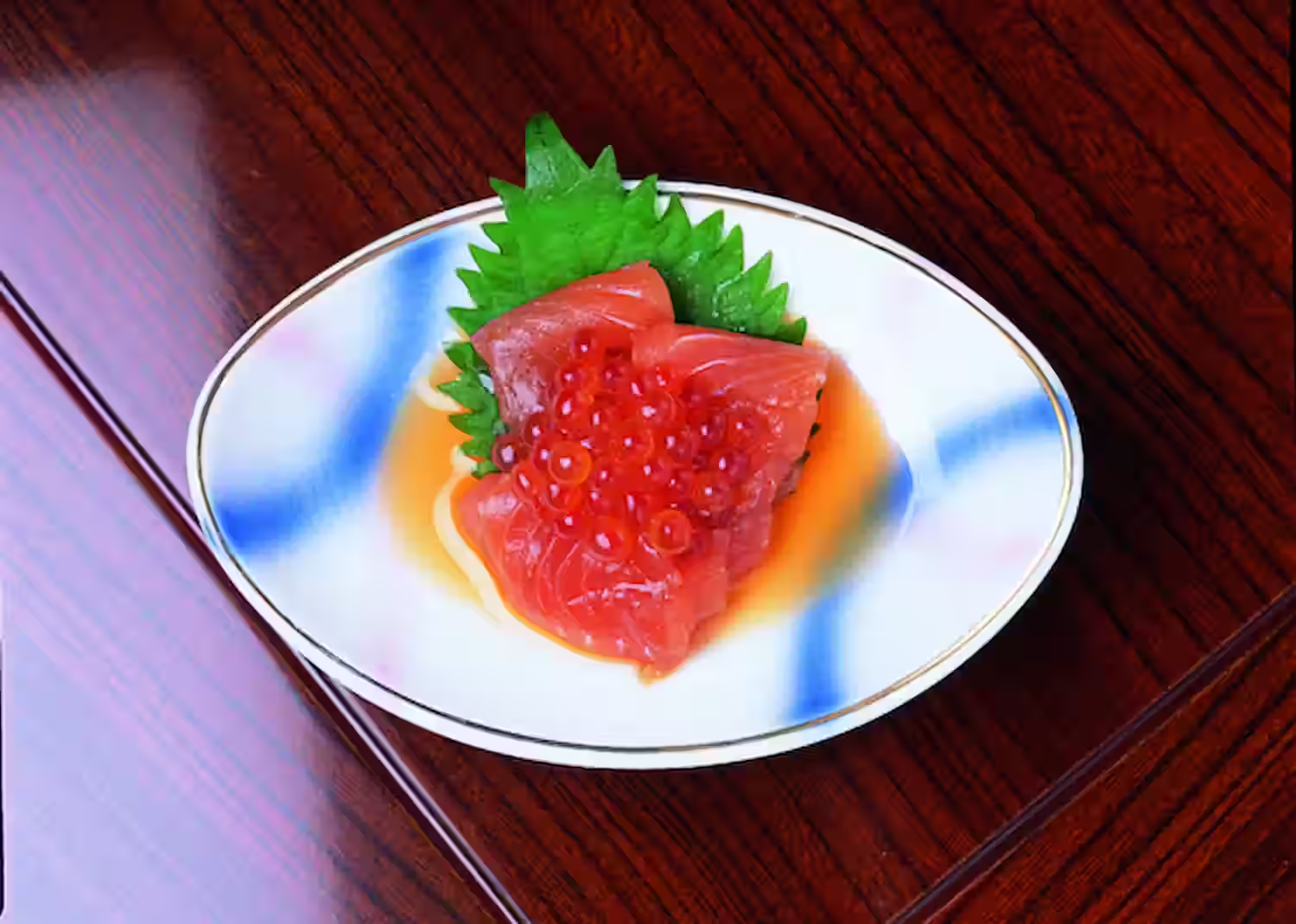
Diners often eat Hoya as sashimi or pair it with vinegar or soy sauce. Sea squirt sashimi also gives the fullest ocean flavor and the springiest bite. Because of that, it suits fans of raw oysters or sea urchin.
Vinegared Hoya
Vinegar softens the sharp edges, so many locals start here. In Miyagi, Hoya-su, or Hoya with vinegar, works as a home dish and an izakaya snack. MAFF also lists Hoya sunomono with cucumber as a Miyagi regional recipe.
Hoya Sea Squirt Recipe: Cucumber Sunomono
Ingredients
- 2 fresh Hoya, cleaned (about 60 g flesh)
- 1 Japanese cucumber (about 100 g)
- 1/4 tsp salt
- 2 tbsp rice vinegar
- 1 tsp light soy sauce
- 2 tsp sugar
- 1 tsp finely shredded ginger
Instructions
- Slice the cleaned Hoya into 1 cm (1/2 in) strips.
- Cut the cucumber into thin rounds, then sprinkle with salt and wait 5 minutes.
- Squeeze the cucumber gently to remove extra water.
- Stir the vinegar, soy sauce, and sugar until the sugar dissolves.
- Toss the Hoya, cucumber, and ginger with the dressing.
- Chill for 10 minutes, then serve in small bowls.
This mild version makes a good first try. For a more local touch, also add rehydrated wakame or sliced myoga ginger.
Steamed Hoya
Steaming firms the flesh and tames the aroma. As a result, MAFF describes steamed Hoya, or mushi hoya, as easier for people who dislike it raw. Producers often steam it with sake. Vacuum packing also keeps it available outside summer.
Grilled Hoya
Grilling adds a toasty, savory edge. Cooks sear chunks over charcoal, then finish them with soy sauce or miso. Miyagi Prefecture notes that heat boosts umami and sweetness. However, overcooking makes the flesh tough, so keep it brief.
Processed Products and Regional Dishes
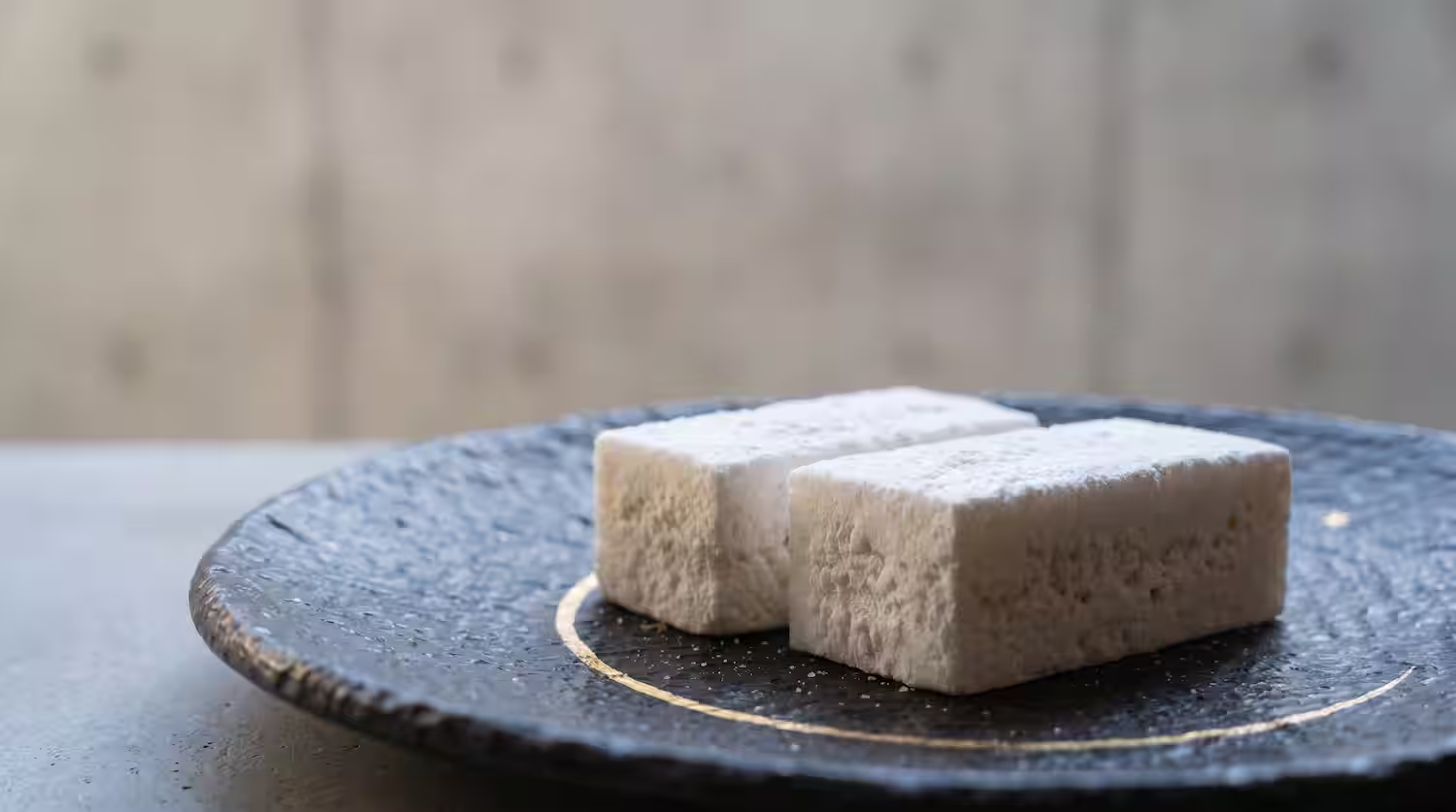
Salt-cured Hoya shiokara, smoked Hoya, and dried snacks all keep well, so they suit a night of sake. Some shops also sell Hoya miso and cheese-paired snacks as souvenirs.
In Ishinomaki, Hoya zoni offers a coastal twist on New Year soup. Today, cooks use steamed Hoya for both the broth and the topping. The Agency for Cultural Affairs also certified it as a 100-Year Food in fiscal 2022. If you like regional New Year dishes, also read about Sendai zouni, the city’s own New Year soup.
Sea Squirt Nutrition and Dietary Notes
Sea squirt nutrition data comes from Japan’s official food composition tables. MEXT lists raw Hoya at 27 kcal per 100 g, so it stays light.
| Nutrient | Per 100 g raw |
|---|---|
| Energy | 27 kcal |
| Protein | 5.0 g |
| Fat | 0.8 g |
| Salt equivalent | 3.3 g |
| Iron | 5.7 mg |
| Zinc | 5.3 mg |
| Vitamin B12 | 3.8 µg |
The numbers also show notable zinc, iron, and vitamin B12. However, raw Hoya carries 3.3 g of salt equivalent per 100 g, so watch portions if you limit sodium. MEXT lists no data for iodine or selenium, either. Therefore, treat claims that Hoya is “rich in iodine” with caution.
Since Hoya is a marine animal, it does not fit vegetarian or vegan diets. Its link to shellfish allergy remains unclear, too. So if you have any seafood allergy, ask a doctor before you try it.
Where to Eat Hoya in Miyagi
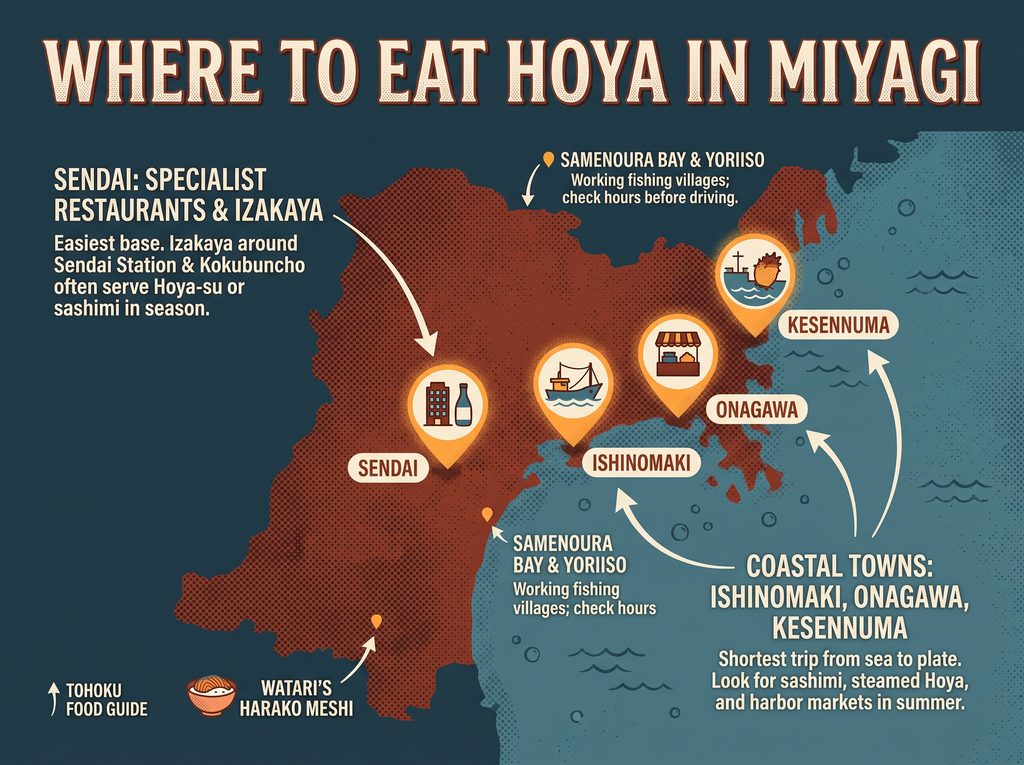
Hoya appears across the prefecture in summer, but the setting shapes the experience. MAFF notes that several Hoya specialty restaurants operate in Sendai. Meanwhile, coastal towns offer the shortest trip from sea to plate.
Sendai: Specialist Restaurants and Izakaya
Sendai makes the easiest base. In season, izakaya around Sendai Station and Kokubuncho often add Hoya-su or sashimi to their menus. Have more time in the city? Then our guide to what to eat in Sendai covers other local classics.
Maboya (まぼ屋), a Hoya-focused bar near Sendai Station, serves live Hoya sashimi from Ogatsu in Ishinomaki. The menu also runs to Hoya karaage, Hoya gyoza, and even Hoya ice cream. When we checked in September 2026, live Hoya sashimi cost ¥899. Since the shop listed no English menu, a translation app helps.
Ishinomaki, Onagawa, and Kesennuma
Ishinomaki sits close to the main farms on the Oshika Peninsula. Look for sashimi and steamed Hoya in summer, then Hoya zoni around New Year. Onagawa also has fish shops and restaurants near its rebuilt station. Meanwhile, Kesennuma, where Hoya farming began, adds harbor markets and seafood restaurants.
Samenoura Bay and Yoriiso grow large volumes, but they are working fishing villages. So check hours and seasonal menus before you drive out. Planning a wider regional trip? Then pair Hoya with the 11 dishes in our guide to Tohoku food. In autumn, Watari’s harako meshi also makes a fine next stop for Miyagi seafood.
How Much Does Hoya Cost?
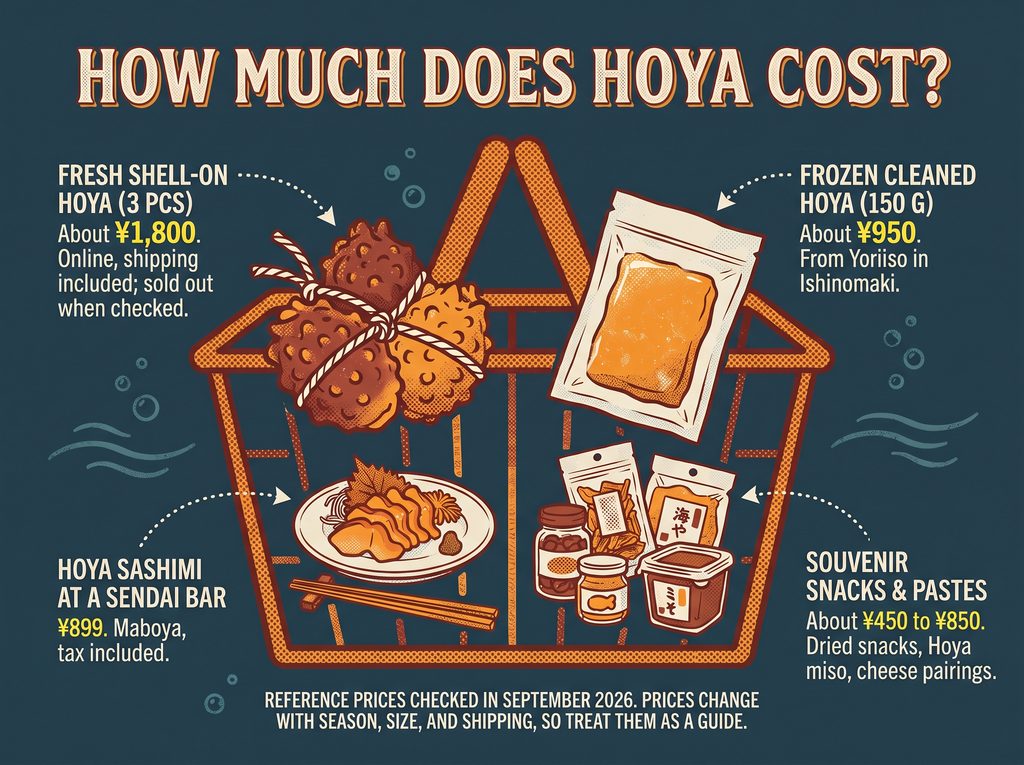
| Product | Reference price | Notes |
|---|---|---|
| Fresh shell-on Hoya, 3 pieces | About ¥1,800 | Online, shipping included; sold out when checked |
| Frozen cleaned Hoya, 150 g | About ¥950 | From Yoriiso in Ishinomaki |
| Hoya sashimi at a Sendai bar | ¥899 | Maboya, tax included |
| Souvenir snacks and pastes | About ¥450 to ¥850 | Dried snacks, Hoya miso, cheese pairings |
Final Thoughts on Hoya
The Hoya sea squirt suits curious eaters who already like oysters, uni, or briny sake snacks. So visit Miyagi between June and August for the sweetest flesh, and eat it close to the harbor. If the raw aroma worries you, however, start with vinegared or steamed Hoya. Then move to sashimi once you trust the source.
It also fits neatly into a Sendai night out or a coastal day trip to Ishinomaki. You might not love it. Still, you will probably remember it.
Frequently Asked Questions About Hoya
Basics and Flavor
- What is Hoya?
-
Hoya is an edible sea squirt, a marine animal called a tunicate. Its scientific name is Halocynthia roretzi, and many Japanese speakers also call it maboya. Miyagi farms most of Japan’s supply along the Sanriku Coast. Because of its bumpy shell, English speakers often call it the sea pineapple.
- What does Hoya taste like?
-
Fresh Hoya tastes briny and gently sweet, then turns savory with a slight acidity. A brief bitter, iodine-like note often lingers at the end. Meanwhile, the texture feels firm and springy, a little like scallop. Older Hoya tastes harsher, so freshness shapes your first impression.
- Why does some Hoya smell so strong?
-
Freshness explains most of it. As Hoya ages after harvest, its odor and bitterness intensify, according to MAFF. Shucking it quickly or steaming it also helps keep the smell in check. So if your first taste seemed harsh, try a fresher sample near the coast.
Safety and Diet
- Is Hoya safe to eat raw?
-
Many people in Miyagi eat it raw, but choose Hoya that the seller labels for raw eating. Also keep shell-on Hoya cold and eat it the day you buy it. Follow the use-by date and storage label closely. When in doubt, steam or grill it instead.
- Is Hoya vegetarian or vegan?
-
No. Since Hoya is a marine animal, it does not suit vegetarian or vegan diets. It also flavors broths, such as Ishinomaki’s Hoya zoni, so ask about ingredients when you order. Its link to shellfish allergy remains unclear, so check with a doctor if you have seafood allergies.
Season, Preparation, and Travel
- When is Hoya in season?
-
Farmed Hoya reaches Miyagi markets from around March. The flesh then fills out through spring, and the best flavor usually runs from June to August. Some shipments still continue into autumn. In winter, however, spawning leaves the flesh thin, so fresh supply drops.
- How do you prepare Hoya?
-
Start by trimming the tip of a siphon over a sink to drain the liquid. Next, slit the shell, peel the orange flesh free, and remove the dark digestive parts. Then rinse it briefly under cold water and slice it into bite-size pieces. A sharp knife and a stable board also make the job safer.
- Where can you eat Hoya in Japan?
-
Sendai offers the easiest access, since specialty restaurants and izakaya cluster near the station. Coastal towns such as Ishinomaki, Onagawa, and Kesennuma serve it closest to the source. You can also buy frozen or steamed Hoya online year-round. Before you travel, however, check seasonal menus and opening hours.
References
- Ministry of Agriculture, Forestry and Fisheries (MAFF) – Mushi Hoya, Nippon Dentoshoku Zukan (Accessed September 2026)
- Miyagi Prefectural Government – Miyagi Seafood Day: July Recommendation, Hoya (Accessed September 2026)
- Ministry of Agriculture, Forestry and Fisheries (MAFF) – Hoya no Sunomono, Miyagi, Uchi no Kyodo Ryori (Accessed September 2026)
- JF Miyagi (Miyagi Prefectural Fisheries Cooperative) – Miyagi Hoya: Season, Preparation, and Recipes (Accessed September 2026)
- Ministry of Agriculture, Forestry and Fisheries (MAFF) – Fisheries and Aquaculture Production Statistics 2023 (Accessed September 2026)
- JF Zengyoren Pride Fish – Hoya (Maboya), Miyagi Prefecture (Accessed September 2026)
- Agency for Cultural Affairs – 100-Year Food List: Miyagi Prefecture (Hoya Zoni) (Accessed September 2026)
- Ministry of Education, Culture, Sports, Science and Technology (MEXT) – Food Composition Database, 2023 Edition (Accessed September 2026)
- World Register of Marine Species (WoRMS) – Halocynthia roretzi (Drasche, 1884), AphiaID 250680 (Accessed September 2026)
- Norinchukin Research Institute – Recovery of Hoya Aquaculture in Miyagi Prefecture, 2013 (Accessed September 2026)
- Hoya & Junmai Sakaba Maboya – Official Website, Sendai Ekimae (Accessed September 2026)
- Diseases of Aquatic Organisms (Inter-Research) – Kumagai, A., et al. (2011). Soft tunic syndrome in the edible ascidian Halocynthia roretzi is caused by a kinetoplastid protist. Vol. 95, pp. 153–161 (Accessed September 2026)
- PubMed – Kumagai, A., Ito, H., & Sasaki, R. (2013). Detection of the kinetoplastid Azumiobodo hoyamushi in wild ascidians Halocynthia roretzi. Diseases of Aquatic Organisms, 106(3) (Accessed September 2026)
- AGRIS (FAO) – Fujimoto, K., et al. (1982). Alkyl sulfates as precursors of ascidian flavor in Halocynthia roretzi. Bulletin of the Japanese Society of Scientific Fisheries, 48(9), 1327–1331 (Accessed September 2026)
- KoreaScience – Choi, B.-D., & Ho, C.-T. (1995). Volatile compounds of ascidian, Halocynthia roretzi. Korean Journal of Fisheries and Aquatic Sciences, 28(6), 761–769 (Accessed September 2026)
Related Articles
- Discover Tohoku: 11 Japanese Foods You Need to Taste (Surveyed: September 2026)
- What to Eat in Sendai: 20 Must-Try Foods for Every Visitor (Surveyed: September 2026)
- Harako Meshi: Miyagi’s Salmon Roe Rice from Watari (Surveyed: September 2026)
- Sendai Zouni (Surveyed: September 2026)
- Gyutan (牛タン) (Surveyed: September 2026)
- Tohoku Food Guide: 10 Dishes to Eat in Northern Japan (Surveyed: September 2026)



Comments