Seme sake is the final press sake collected at the end of sake pressing. Because brewers apply stronger pressure at this stage, the liquid often tastes richer, deeper, and more intense than earlier fractions. This is the last cut of the press, and it shows a powerful side of Japanese sake.
The style is not always delicate. Instead, seme can feel full-bodied, savory, and slightly rustic. Some drinkers find the flavor strong at first. However, people who enjoy bold flavor may appreciate its weight, umami, and complex taste.
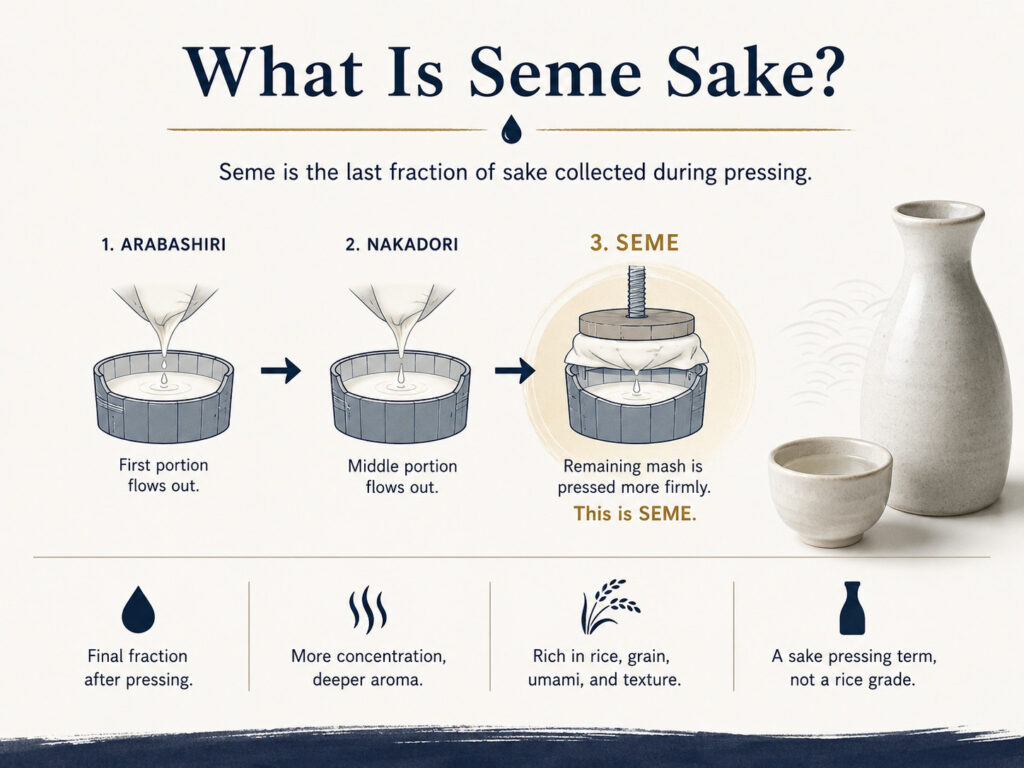
Seme is the last fraction of sake collected during pressing. After arabashiri and nakadori flow out, brewers press the remaining mash more firmly. That final portion becomes seme.
The seme meaning connects to pressing or pushing. In practical terms, the word describes the final stage of separation. The liquid comes from moromi mash that has already released easier-flowing sake.
Because of that, seme often carries more concentration. Aroma can feel deeper, while flavor may show rice, grain, umami, and texture. It is a sake pressing term rather than an official rice grade.
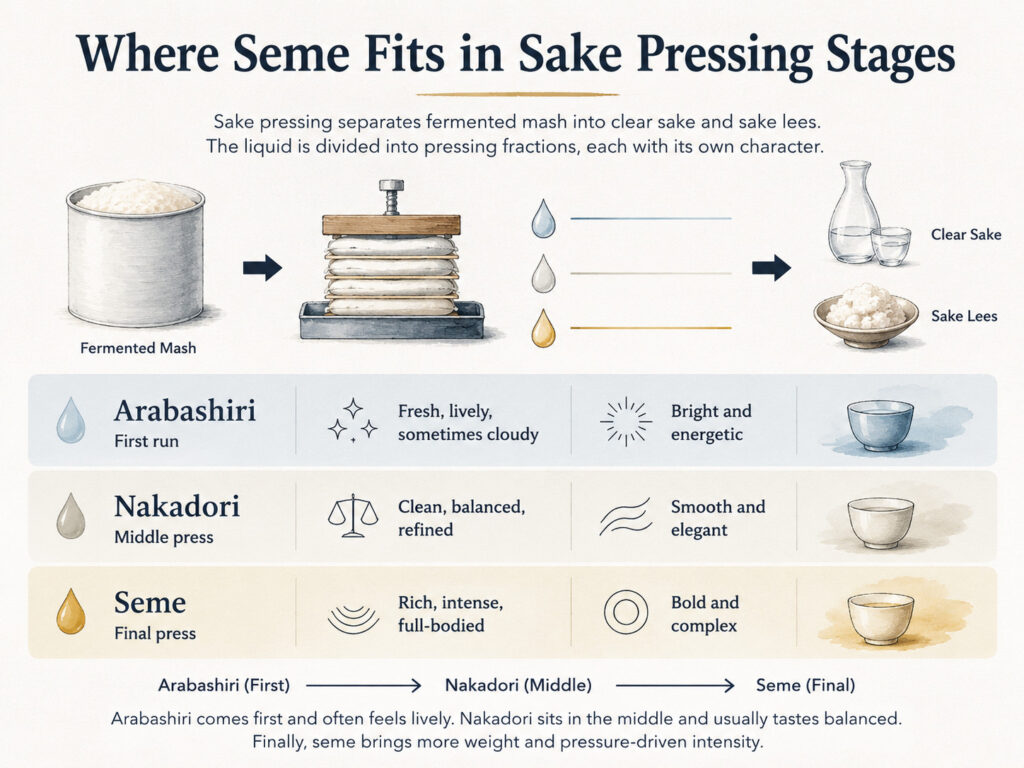
Sake pressing stages explain why seme tastes different. Brewers separate fermented mash into clear sake and sake lees. During this process, the liquid can be divided into pressing fractions.
Pressing stage
Timing
Typical character
Drinking image
Arabashiri
First run
Fresh, lively, sometimes cloudy
Bright and energetic
Nakadori
Middle press
Clean, balanced, refined
Smooth and elegant
Seme
Final press
Rich, intense, full-bodied
Bold and complex
Arabashiri comes first and often feels lively. Nakadori sits in the middle and usually tastes balanced. Finally, seme brings more weight and pressure-driven intensity.
Seme tastes more intense because brewers collect it during the final pressing phase. By that point, easier liquid has already flowed out. Stronger pressure then extracts the remaining sake from the mash.
That extraction can bring more body, bitterness, umami, and grain character. Sometimes the result feels powerful. In other cases, the flavor may seem rough or uneven. The final result depends on rice, fermentation, equipment, and brewery style.
This does not mean seme is low quality. Instead, the fraction has a different personality. A clean nakadori bottle may feel polished, while seme can feel muscular and expressive.
Personally, I find seme most interesting with food. Alone, it can feel intense. With grilled or fermented dishes, that intensity often starts making sense.
Seme vs Arabashiri and Nakadori
Seme, arabashiri, and nakadori come from the same sake pressing process. However, each part feels different in the glass. Arabashiri has freshness, nakadori brings balance, and seme offers density.
The difference between seme and nakadori is especially clear. Nakadori sake usually tastes cleaner and more balanced because it comes from the stable middle portion. Seme feels fuller, stronger, and more savory.
The contrast with Arabashiri sake is also useful. Arabashiri may feel bright, fresh, and slightly cloudy because it comes from the first run. Meanwhile, seme tends to feel deeper and more extracted.
Neither end of the press is automatically better. Arabashiri gives freshness. Nakadori gives harmony. Seme gives power. Trying all three helps sake terminology feel real.
Seme Flavor and Aroma
Seme sake flavor and aroma can vary widely. Many bottles show steamed rice, cereal, mushroom, nuts, earth, or deep savory notes. Some may also carry fruit, although fruit usually feels less dominant than in nakadori.
The mouthfeel often feels firm and full. Alcohol warmth may appear more clearly. A slightly bitter finish can also occur. However, good seme keeps those edges controlled.
This is why seme works well for people who like bold and complex Japanese sake. It may not be the easiest sake for everyone, but it has character. For fans of intense flavor, that character is the point.
Is Seme Always Bottled Separately?
No, many breweries blend seme with other fractions. Blending helps create balance and consistency. In fact, most commercial sake does not clearly separate each press cut on the label.
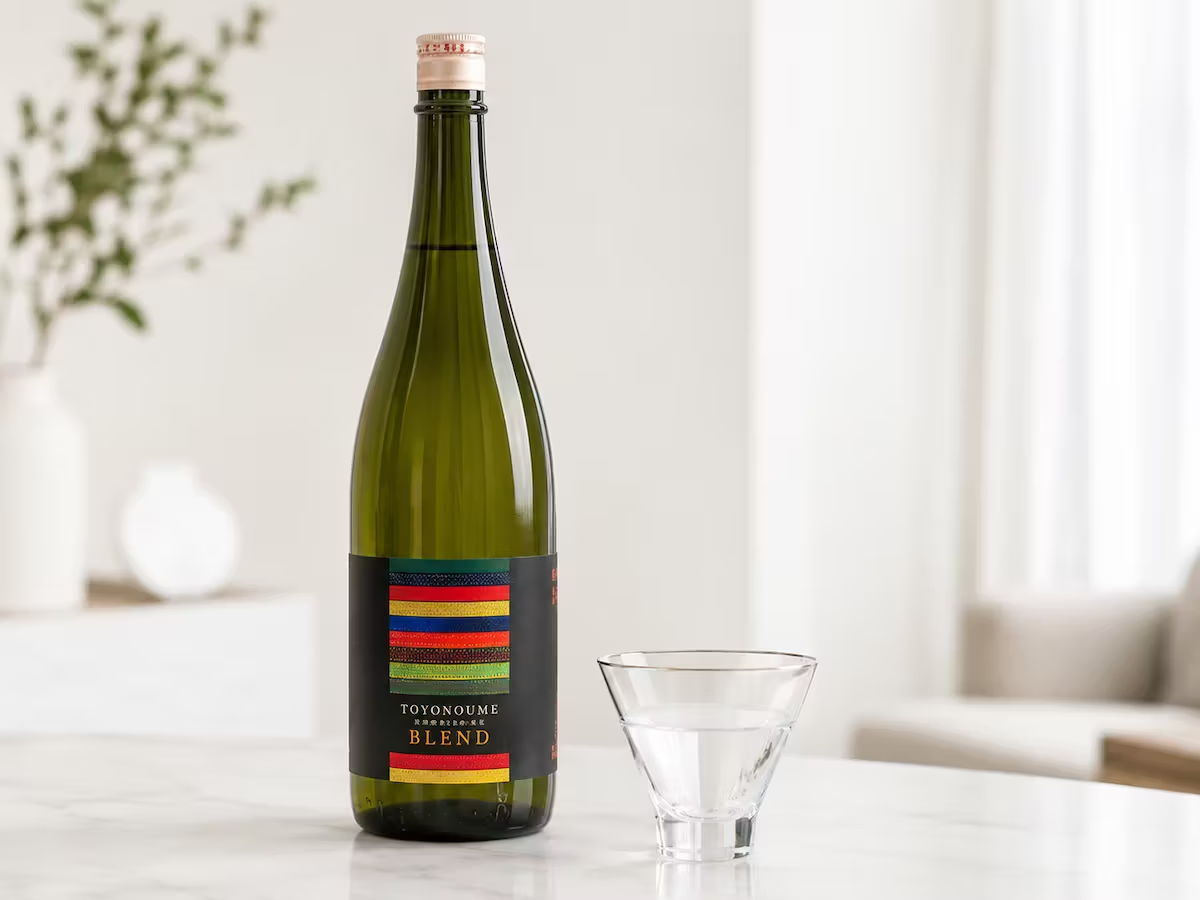
Some breweries bottle seme as a limited release sake. These bottles can feel unusual because they highlight a part normally hidden inside a blend. As a result, seme releases often attract curious sake drinkers.
Availability depends on the brewery. You may see seme at sake shops, brewery events, or seasonal tastings. It is less common than regular grades like junmai or ginjo.
How to Drink Seme Sake
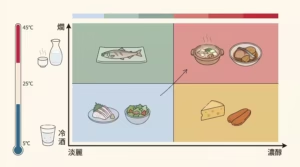
Start slightly chilled or at room temperature. Chilling can tighten the flavor and reduce rough edges. However, room temperature may show more umami and depth.
Food pairing is important. Seme often works better with rich dishes than delicate ones. The flavor needs something strong enough to meet it.
Good pairings include these.
Grilled mackerel or sardines
Yakitori with tare sauce
Miso-marinated fish
Mushroom dishes
Aged cheese
Soy sauce-based stews
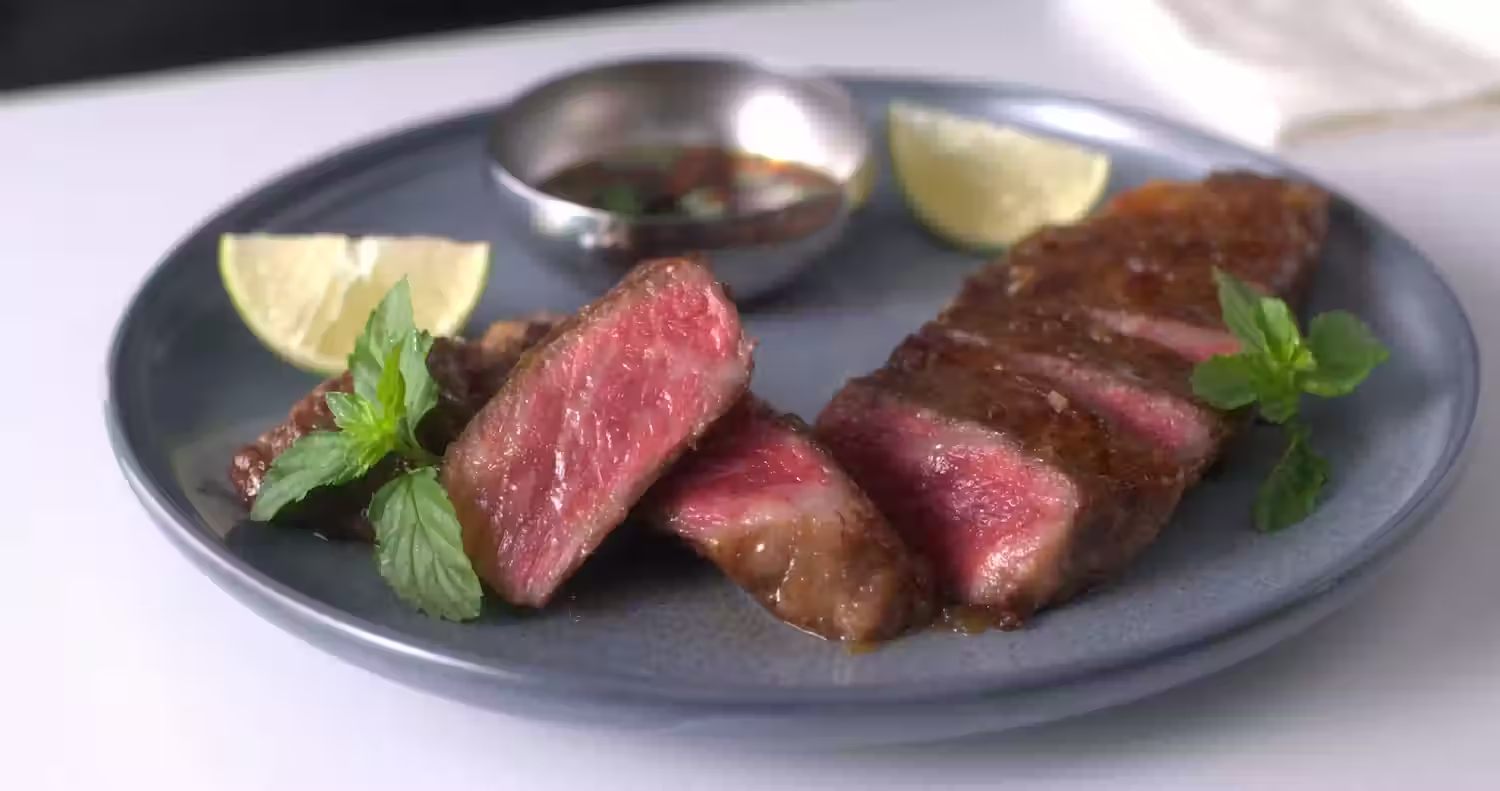
Pork belly or grilled meat
Pickled vegetables
If the sake feels too strong, try a smaller pour. Another option is to drink it with food before judging it alone.
Is Seme Good for Beginners?
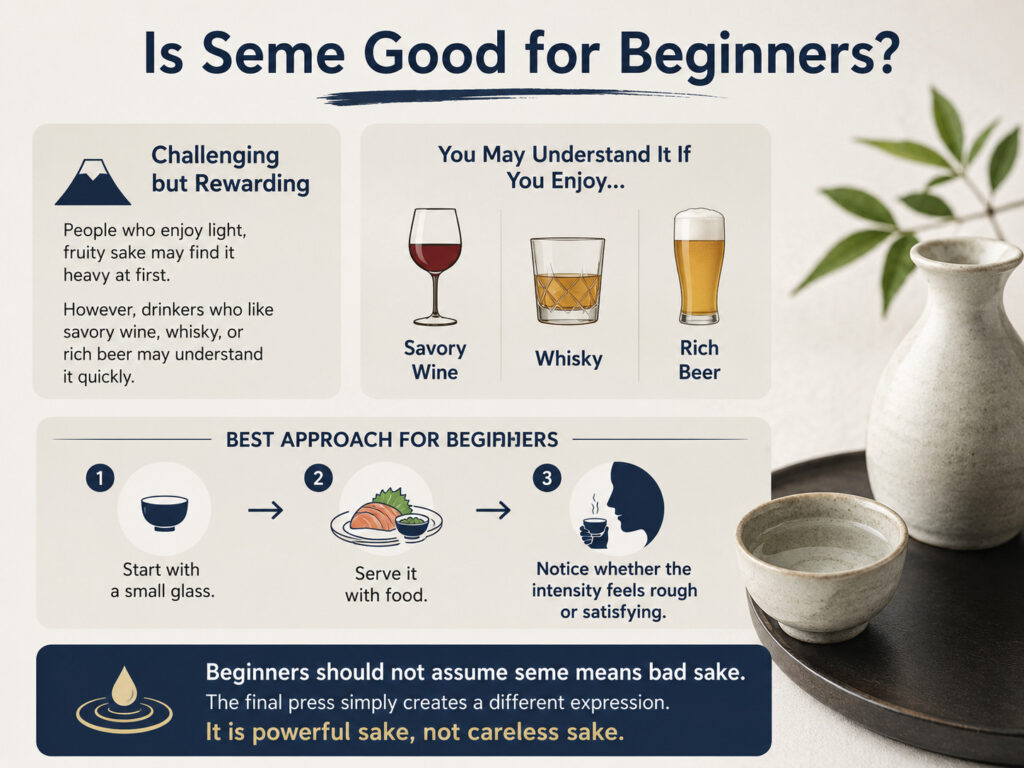
Seme can be challenging for beginners, but it can also be rewarding. People who enjoy light, fruity sake may find it heavy at first. However, drinkers who like savory wine, whisky, or rich beer may understand it quickly.
The best approach is simple. Start with a small glass. Serve it with food. Then notice whether the intensity feels rough or satisfying.
Beginners should not assume seme means bad sake. The final press simply creates a different expression. It is powerful sake, not careless sake.
History and Modern Interest
The idea of pressing fractions has existed as long as brewers noticed changing liquid during pressing. Traditional tools made those differences easy to sense. Over time, breweries learned how arabashiri, nakadori, and seme could shape flavor.
Modern labeling made the concept more visible. Some breweries now bottle fractions separately for education, tasting, or limited releases. This helps drinkers understand how sake pressing changes flavor.
Today, seme remains a niche term. It appears less often than arabashiri or nakadori, partly because the taste can be more assertive. Still, its directness gives it appeal. It shows the full strength of the mash at the end of pressing.
Final Thoughts
Seme sake represents the bold final press of Japanese sake. It is deep, complex, and rich, often with a full-bodied character. The flavor can feel intense, but that intensity gives it identity.
For people who only know clean premium sake, seme may feel surprising. Still, that surprise is valuable. It shows how sake pressing can create completely different personalities from the same mash.
If you enjoy powerful sake expressions, seme is worth trying. Start with food, pour small, and give the flavor time to open.
Seme Sake FAQ
What is seme in Japanese sake?
It represents the final, most robust liquid fraction that brewers obtain during the pressing process. Brewmasters apply much stronger mechanical pressure to the fermentation bags after the first and middle portions have naturally flowed out. Because of this late timing, this final press delivers a much richer, denser, and more intense flavor profile. It marks the very last cut of the filtration process, capturing the deepest elements of the brew.
What does seme mean?
The Japanese term translates literally to “pressing” or “pushing” in English. This name perfectly matches the intense physical force brewers apply to extract the remaining liquid from the rice sediment. It does not describe the rice-polishing ratio, sweetness level, or alcohol percentage directly. Instead, the expression strictly defines the exact timing and order of the filtration stage.
How is seme different from nakadori?
The celebrated middle cut represents the pristine, highly balanced portion of the press, while this final run contains heavily extracted compounds from the solid rice. The middle press usually tastes cleaner, softer, and more harmonious. In contrast, this late-stage fraction feels much fuller, stronger, and more savory on the tongue. Discerning drinkers choose this robust beverage when they want a bold, rustic flavor with maximum umami.
Is seme the same as arabashiri?
No, these two categories sit at completely opposite ends of the pressing process. The very first free-run liquid tastes fresh, lively, and sometimes carries a slight, natural cloudiness. Conversely, this final fraction tastes significantly deeper, heavier, and more intensely extracted. Drinkers experience these two press fractions as contrasting expressions of the same original batch.
How should I drink seme sake?
We highly recommend drinking this bold beverage slightly chilled at first. Afterward, you should let the glass warm up gently to reveal its deeper, hidden umami notes. It pairs exceptionally well with intense, savory dishes like grilled fish, miso-glazed eggplants, wild mushrooms, or rich meats. Diners should enjoy small, slow pours because the robust flavor can easily overwhelm your palate.
Where does seme sake come from?
This rare category originates from traditional sake breweries located all across Japan. To prevent waste, historic brewmasters collected every single drop of the fermenting rice mash using heavy wooden presses. Today, craft breweries package this final press selectively as an exclusive seasonal release or a limited-batch specialty. It showcases the complete, unadorned extraction of the brewery’s local ingredients.
How much does seme sake cost?
A standard 720ml bottle of this final press typically costs between 1,200 and 2,500 yen. Prices vary slightly depending on the specific brewery brand, the rice-polishing ratio, and the overall premium category. Because this final run often carries slightly more bitterness, breweries sometimes price it lower than the prized middle cut. It still offers fantastic value for those seeking a highly complex and robust flavor profile.
Is seme sake vegetarian or vegan friendly?
This traditional Japanese beverage contains absolutely no animal products. Brewmasters craft it using only sake rice, water, yeast, and koji mold. Vegans and vegetarians can safely consume this 100% plant-based rice wine with any meal. It pairs beautifully with grilled seasonal vegetables and cold silken tofu.
Can I age seme sake at home?
Yes, you can successfully age these bold bottles in your own cellar. However, we recommend drinking unpasteurized versions fresh to enjoy their vibrant, clear aroma. If you buy a pasteurized bottle, you can store it in a dark, cold place to let the flavors mellow over time. Always keep the bottle upright to prevent the liquid from touching the metal cap.
Is seme sake popular outside Japan?
It remains a highly niche and rare find outside Japan. You will almost never see this specific final-press label at standard Japanese restaurants in North America or Europe. However, global sake connoisseurs increasingly seek out these rare bottles to experience the deep, unfiltered complexity of traditional Japanese brewing.
Ryo Iwa is the founder and editor of foodinjapan.org. Born and raised in Japan, he writes from regional travel, market visits, and Japanese-language primary sources that rarely reach English readers, including brewing institute publications and industry glossaries. Where a figure cannot be traced to a source, the article says so.
He has been a Google Maps Local Guide for over 10 years, with more than 1,800 reviews and over 41,000 photos viewed hundreds of millions of times. He previously spent two decades as an IT consultant in Japan, the US, and the UK.














Comments