




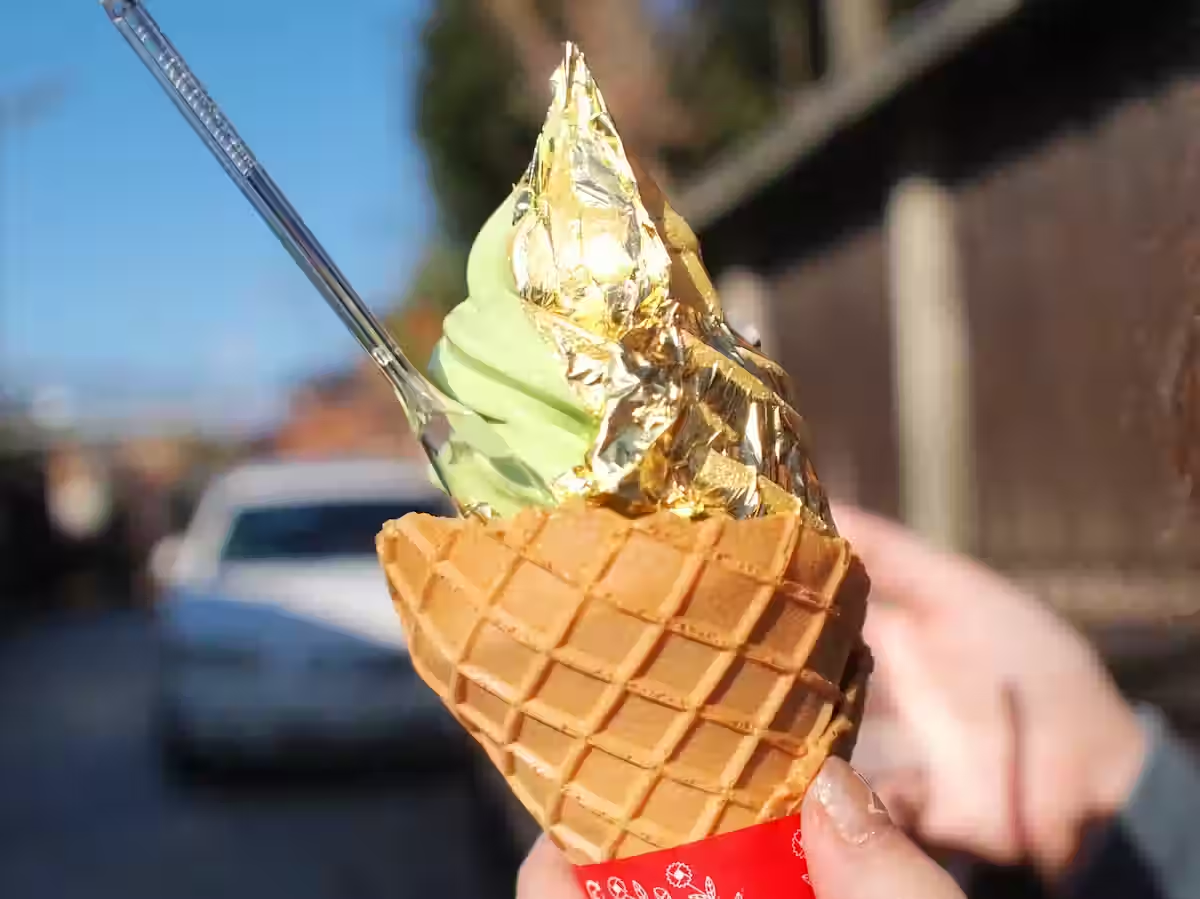
Gold leaf soft serve is one of Japan’s most dazzling desserts. Picture a swirl of vanilla ice cream, crowned with a shimmering sheet of real gold. Naturally, it catches the light, and honestly, it stops people in their tracks. So what is gold leaf soft serve, exactly?
It is a soft-serve ice cream cone wrapped in edible 24K gold leaf. Even so, the gold adds no flavor, yet it turns a simple cone into spectacle. In fact, this treat comes from Kanazawa, Japan’s capital of gold leaf. Naturally, it has become the city’s most photographed snack. Let me walk you through this shining piece of Kanazawa street food.
Quick Facts About Gold Leaf Soft Serve
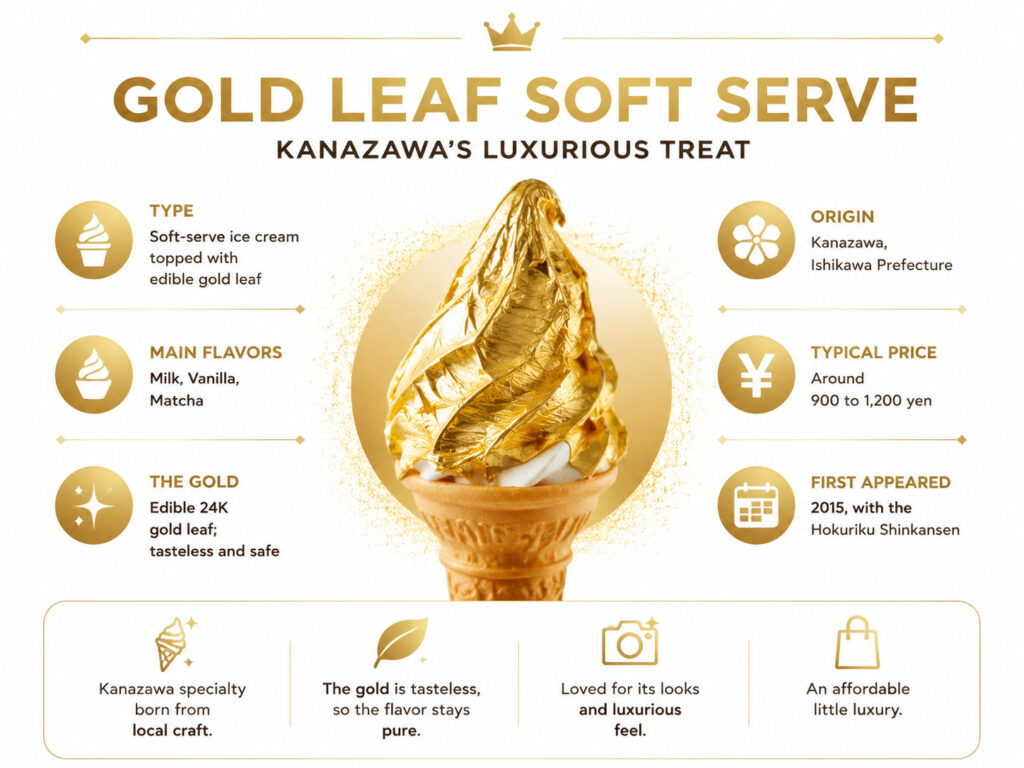
| Japanese Name | 金箔ソフト (kinpaku soft) |
| Origin | Kanazawa, Ishikawa Prefecture |
| Type | Soft-serve ice cream topped with edible gold leaf |
| Main Flavors | Milk, vanilla, matcha |
| The Gold | Edible 24K gold leaf; tasteless and safe |
| Typical Price | Around 900 to 1,200 yen |
| First Appeared | 2015, with the Hokuriku Shinkansen |
Gold leaf soft serve is a Kanazawa specialty, born from local craft. A whole sheet of edible gold leaf covers a classic soft-serve cone. The gold is tasteless, so the flavor stays pure milk or matcha. People love it above all for its looks and its luxurious feel. Most cones sit around 900 to 1,200 yen, an affordable little luxury.
What Is Gold Leaf Soft Serve?
Gold leaf soft serve, or kinpaku soft serve, is exactly what it sounds like. A staff member takes a swirl of soft-serve ice cream in a cone. Then they apply a full, shimmering sheet of edible gold leaf on top of it. Instantly, the gold clings to the cold surface and wraps the cone in shine.
Typically, vanilla and milk are the classic flavors, though matcha is popular too. The gold itself is flavorless and odorless, so it never changes the taste. Instead, it changes the experience, turning a snack into a small event. In Kanazawa, this glittering cone has become a signature souvenir moment.
Kanazawa: Japan’s City of Gold Leaf
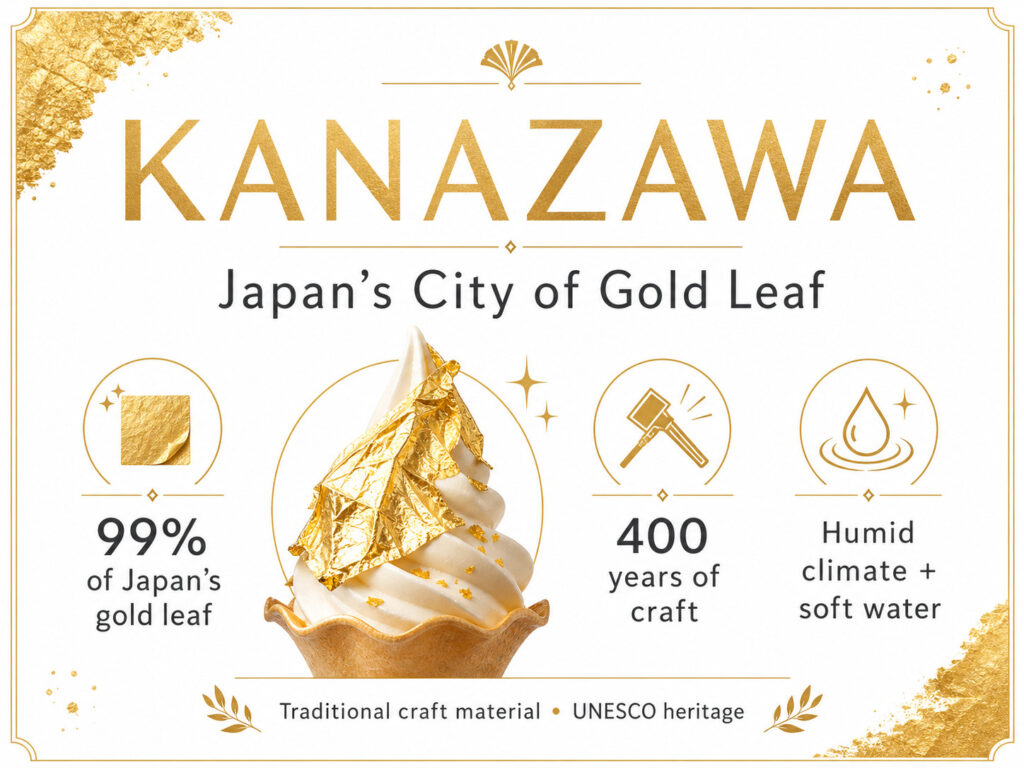
You cannot separate this dessert from the city that created it. Kanazawa, in Ishikawa Prefecture, produces almost all of Japan’s gold leaf. The commonly cited figure is around 99 percent of the nation’s output. This craft, known as kanazawa haku, goes back roughly 400 years.
So why did gold leaf settle here? The reason is partly the climate. For one thing, Kanazawa is famously humid, with plenty of rain and snow. That moist air, along with the soft local water, suits the delicate paper used in beating. As a result, the leaf is far less likely to tear as artisans work it.
History played a big role, too. Records show the Maeda lord ordered gold leaf here as early as 1593. Later, the shogunate even banned leaf-beating outside Edo and Kyoto. Yet Kanazawa’s artisans quietly kept the craft alive under the Kaga domain. Eventually, by the Meiji era, Kanazawa dominated the whole country’s supply.
The craft still earns high honors today. Notably, Japan named kanazawa haku a traditional craft material in 1977. In 2020, the old “enzuke” leaf technique even joined a UNESCO heritage listing. So each golden cone rests on a genuinely storied tradition.
How the Gold Leaf Is Made
The gold leaf itself is a small marvel of craftsmanship. First, artisans beat a tiny amount of gold into an impossibly thin sheet. A single sheet measures about one ten-thousandth of a millimeter thick, roughly 0.1 microns. Indeed, at that thinness, a single breath can lift it away.
This fragility is exactly why applying it is a performance. Typically, at many shops, staff lift the leaf with bamboo chopsticks. They lay it gently on the ice cream, then puff a soft breath across it. Then the gold ripples and settles like a wave, and it is mesmerizing. This technique, called haku-utsushi, is a genuine artisan skill. Watching it happen is half the fun of ordering the cone.
Is Gold Leaf Safe to Eat?
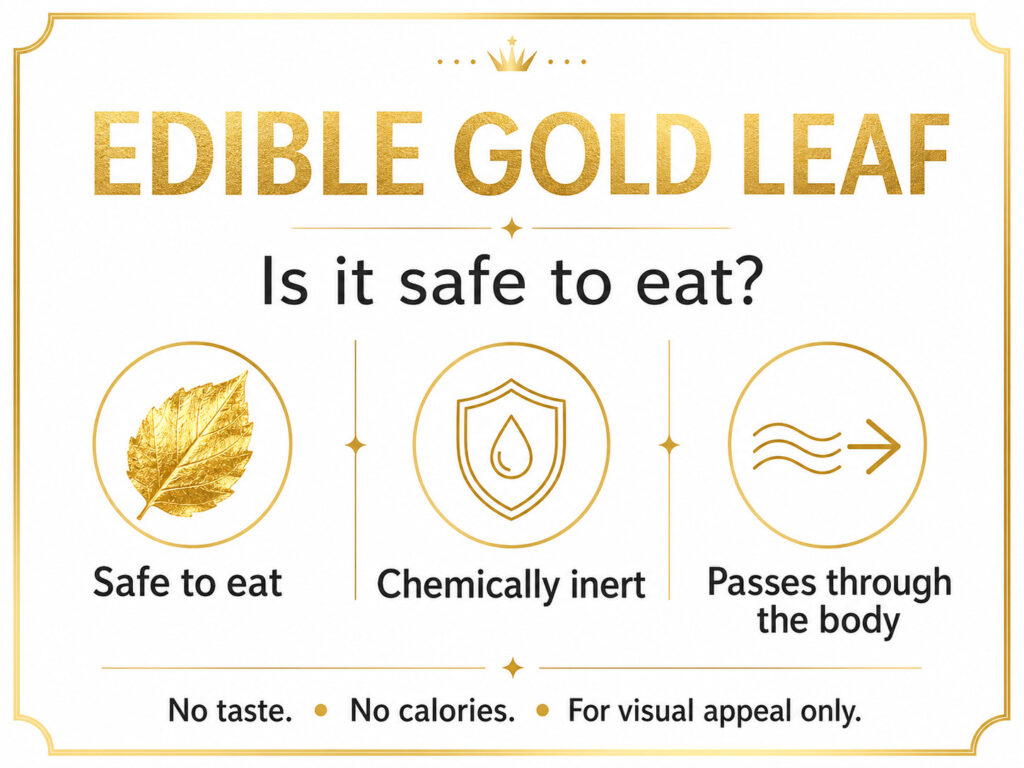
This is the question almost everyone asks first. The short answer is yes, edible gold leaf is completely safe. Japan approves it as a food additive, regulated by the health ministry. The World Health Organization also recognized gold as a food additive back in 1983.
So why is metal safe to swallow? Gold is chemically inert. Because your body cannot absorb it, it simply passes through and leaves naturally. Moreover, edible gold leaf is very pure, usually gold with a little silver. Reputable makers leave out copper entirely for extra peace of mind.
Naturally, it carries almost no calories and no real taste. You are eating it purely for the spectacle, not for nutrition.
What Does Gold Leaf Soft Serve Taste Like?
Here is the honest truth that surprises many visitors. The gold leaf tastes like nothing at all. It has no flavor, no smell, and no texture you can really feel. Instead, it melts and slips away as the ice cream hits your tongue.
So the flavor is simply the flavor of the soft serve underneath. A good milk base tastes rich, creamy, and gently sweet. Meanwhile, the matcha version brings an earthy, slightly bitter note. In that sense, this is a dessert you taste first with your eyes. I found the first bite oddly thrilling, even knowing the gold is flavorless. After all, there is something playful about eating pure shine on a hot afternoon.
How It Compares to Other Desserts
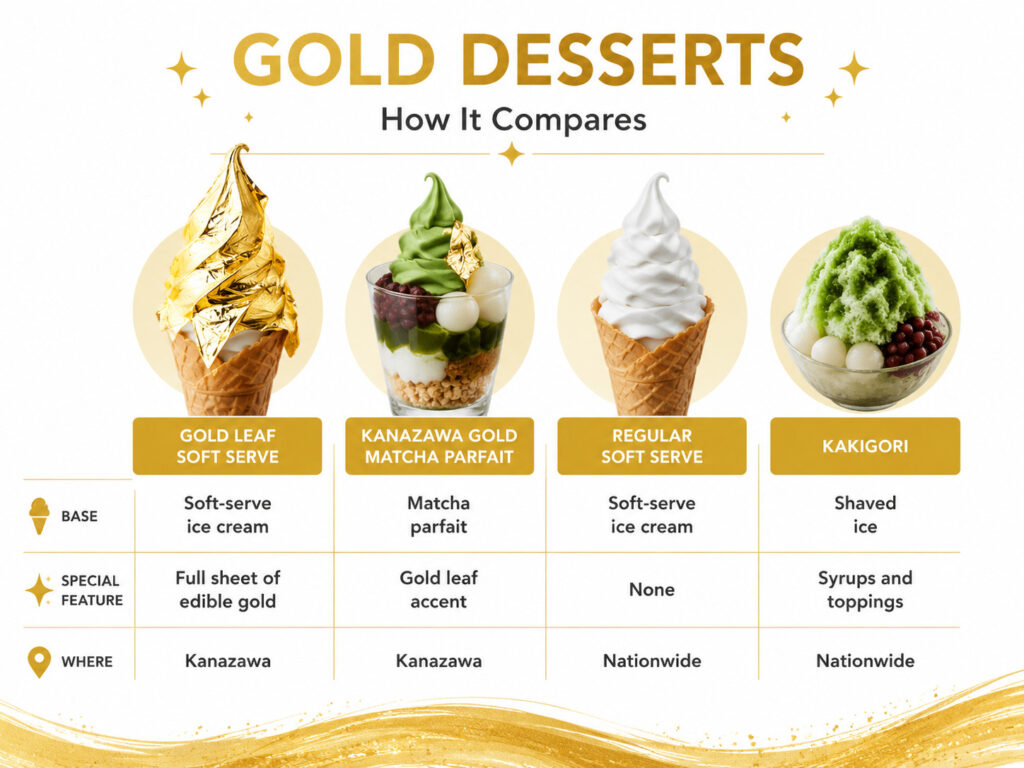
Gold leaf soft serve is really a twist on familiar treats. At its core, it is just Japanese soft-serve ice cream, dressed up in gold. The gold is the whole difference, adding luxury rather than flavor.
In fact, you will find gold used on other Kanazawa sweets, too. For example, it appears on matcha parfaits, castella, and even local ramen. Some shops sprinkle gold flakes, while others use one bold full sheet. The full-sheet cone remains the most dramatic and photogenic of them all. For a cooler cousin, compare it with kakigori, Japan’s shaved ice.
| Dessert | Base | Special Feature | Where |
|---|---|---|---|
| Gold leaf soft serve | Soft-serve ice cream | Full sheet of edible gold | Kanazawa |
| Gold matcha parfait | Matcha parfait | Gold leaf accent | Kanazawa |
| Regular soft serve | Soft-serve ice cream | None | Nationwide |
| Kakigori | Shaved ice | Syrups and toppings | Nationwide |
Where to Try Gold Leaf Soft Serve in Kanazawa
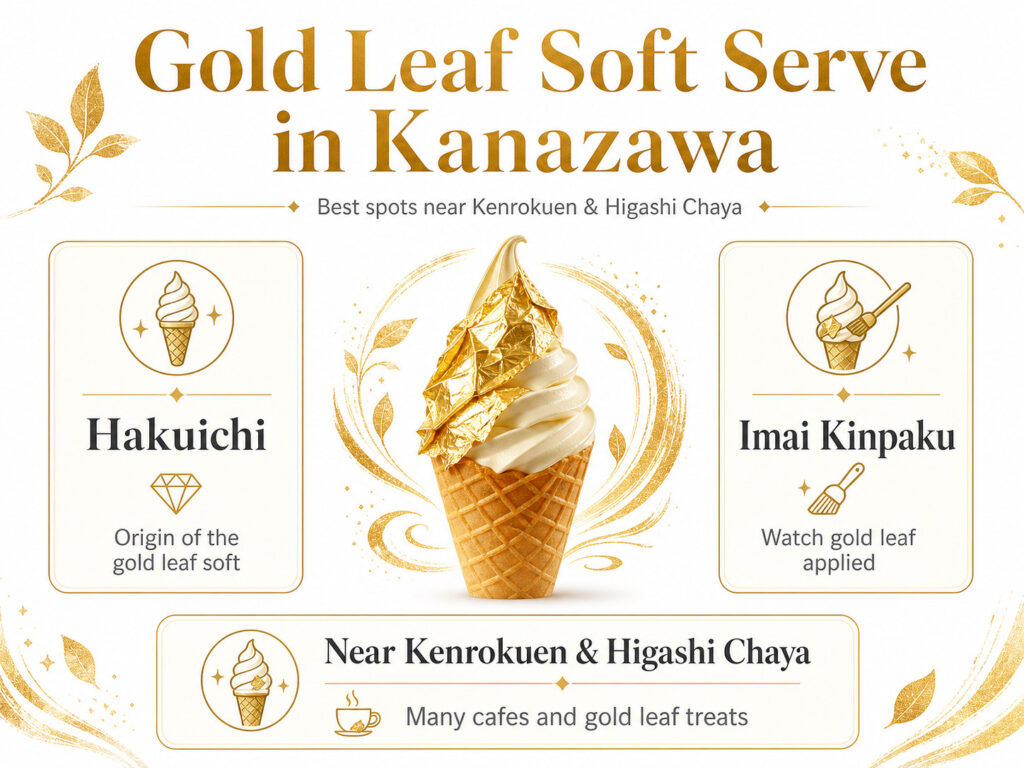
Kanazawa offers several famous spots, mostly near the top sights. Look around Kenrokuen Garden and the Higashi Chaya district first.
Hakuichi
Hakuichi is the shop that started it all. Its “kagayaki soft” launched in 2015, just before the Hokuriku Shinkansen opened. The team even wraps a full sheet of gold over the swirl. You can find it near Kenrokuen and in the Higashi Chaya district. The price, around 891 yen, is a nod to the company name Hakuichi.
Imai Kinpaku
Imai Kinpaku is another respected gold leaf maker with a cafe. Notably, its Hirosaka shop sits close to Kenrokuen and the 21st Century Museum. Here you can watch the gold go on right in front of you. At the main store, you can even apply the gold leaf yourself.
Around Kenrokuen and Higashi Chaya
Beyond these names, many shops near Kenrokuen sell their own versions. Similarly, the historic Higashi Chaya district is another gold leaf hotspot. Some cafes offer platinum or double gold-and-silver cones too. Wandering between the teahouses with a shining cone feels wonderfully Kanazawa.
Why It Became So Popular
The timing of this dessert was close to perfect. It appeared in 2015, right as the Hokuriku Shinkansen reached Kanazawa. Suddenly, Tokyo sat only a few hours away by bullet train. Tourists poured in, and the golden cone was ready to greet them.
Social media did the rest of the work. After all, the cone is impossibly photogenic, made for travel posts. Indeed, national television featured it the very day the Shinkansen opened. From there, it spread fast, becoming a symbol of a Kanazawa trip. Today, no visit feels complete without that shining photo.
Final Thoughts
Gold leaf soft serve is a small, glittering piece of Kanazawa. Somehow, it blends a 400-year craft with a modern, playful dessert. The gold adds no flavor, yet it turns a plain cone into a memory. First-time visitors should try it once, purely for the joy of it. Certainly, photographers will find few desserts more rewarding to shoot. So when you reach Kanazawa, follow the shine and treat yourself.
That first golden lick is a little moment of harmless, delicious luxury.
Gold Leaf Soft Serve FAQ
What is gold leaf soft serve?
It is a soft-serve ice cream cone topped with edible gold leaf. The dessert comes from Kanazawa, Japan’s gold leaf capital. A full sheet of gold wraps the swirl. It is famous for its dazzling, luxurious look.
Is the gold leaf real gold?
Yes, it is genuine edible gold leaf. Shops use very thin, food-grade gold, usually with a little silver. It is safe to eat and approved as a food additive. The gold adds shine, not flavor.
Is it safe to eat gold leaf?
Yes, edible gold leaf is completely safe. Gold is inert, so the body does not absorb it. It simply passes through and leaves naturally. Japan and the WHO both recognize it as a food additive.
Does gold leaf have a taste?
No, gold leaf is tasteless and odorless. You cannot really feel its texture either. It melts away as the ice cream touches your tongue. You taste only the soft serve underneath.
Where can I try gold leaf soft serve?
Kanazawa is the best place by far. Shops cluster near Kenrokuen Garden and the Higashi Chaya district. Hakuichi and Imai Kinpaku are famous makers. Many other cafes serve their own versions.
How much does gold leaf soft serve cost?
Most cones cost around 900 to 1,200 yen. Hakuichi’s famous version is about 891 yen. That price nods to the company name, Hakuichi. It is an affordable little luxury.
Why is Kanazawa famous for gold leaf?
Kanazawa makes around 99 percent of Japan’s gold leaf. The craft dates back roughly 400 years. Its humid climate suits the delicate beating process. Legend also ties it to the warlord Toyotomi Hideyoshi.
When did gold leaf soft serve become popular?
It launched in 2015, with the Hokuriku Shinkansen. The faster train brought a wave of tourists. The cone was wonderfully photogenic for social media. It quickly became a symbol of Kanazawa.
References
- Hakuichi – on the “kagayaki soft” gold leaf ice cream and its 2015 launch. (Surveyed: July 2026)
- Imai Kinpaku – on edible gold leaf, its types, and safety. (Surveyed: July 2026)
- Kanazawa Tourism Association – on Kanazawa gold leaf shops and sightseeing. (Surveyed: July 2026)
- Ministry of Health, Labour and Welfare – on gold as an approved food additive in Japan. (Surveyed: July 2026)
- Yasue Gold Leaf Museum (Kanazawa) – on the history of kanazawa haku and its UNESCO-listed enzuke technique. (Surveyed: July 2026)
- Ishikawa Gold Leaf Commerce and Industry Cooperative – on the history of Kanazawa gold leaf and why the local climate suits it. (Surveyed: July 2026)
- Kanazawa City – on the city as Japan’s leading producer of gold leaf. (Surveyed: July 2026)
Related Articles
- Kanazawa Curry (Surveyed: July 2026)
- Kanazawa Ramen (Surveyed: July 2026)
- Kabura Sushi (Surveyed: July 2026)
- Matcha Green Tea (Surveyed: July 2026)
- Kakigori (Japanese Shaved Ice) (Surveyed: July 2026)




Comments