



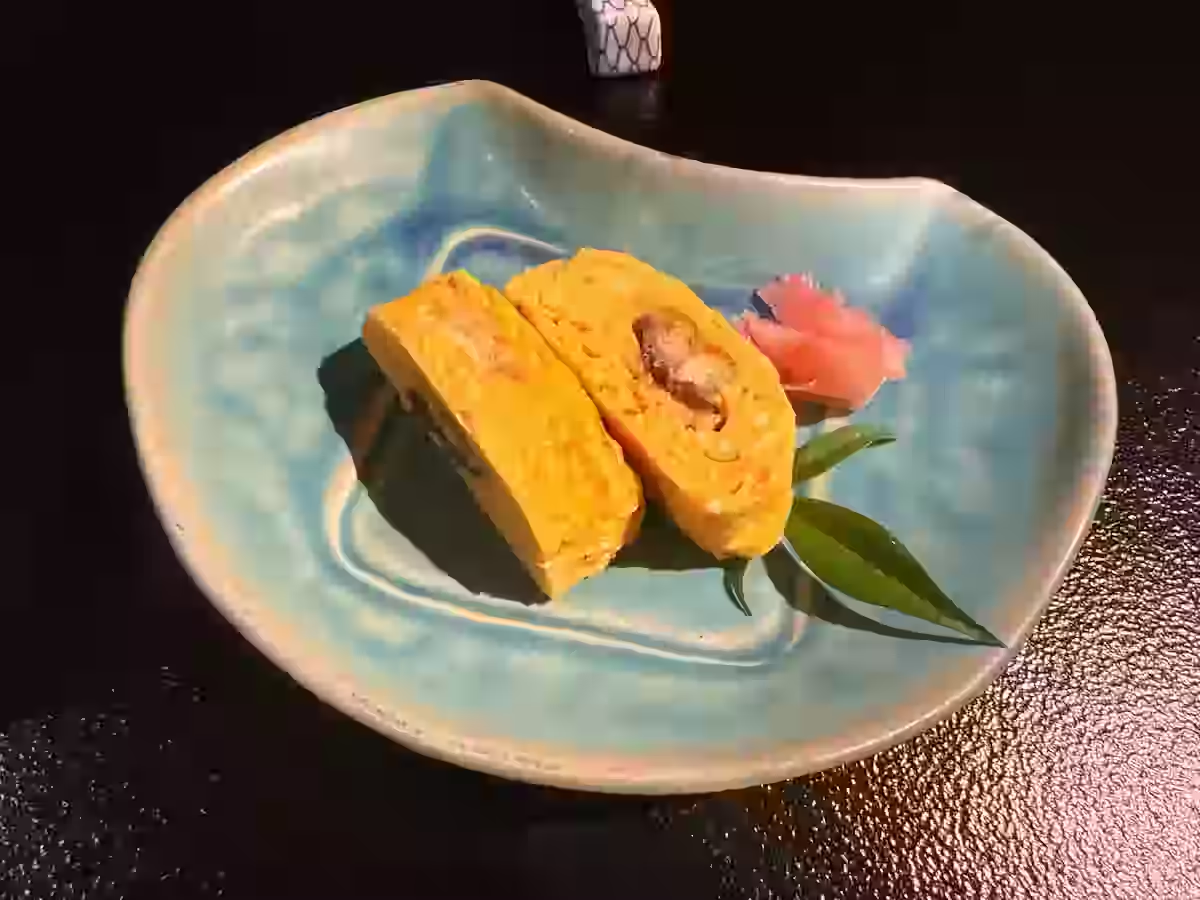
Umaki is one of those Japanese dishes that quietly shows off two crafts at once.
It tucks rich, glazed eel inside a soft, savory omelet. So a single slice carries both the smoky sweetness of grilled eel and the gentle warmth of a Japanese omelet. The result feels at once humble and a little luxurious.
So what exactly is umaki? It is grilled eel wrapped in a rolled Japanese omelet, and it appears most often at eel restaurants and izakaya. Cooks lay a strip of kabayaki eel inside the egg as they roll it. Then slice the log into neat rounds.
It is a favorite with sake and beer for good reason. The dish is savory, mildly sweet. satisfying without being heavy, so it works beautifully as a small plate to share. Let me walk you through this elegant little classic.
Quick Facts About Umaki
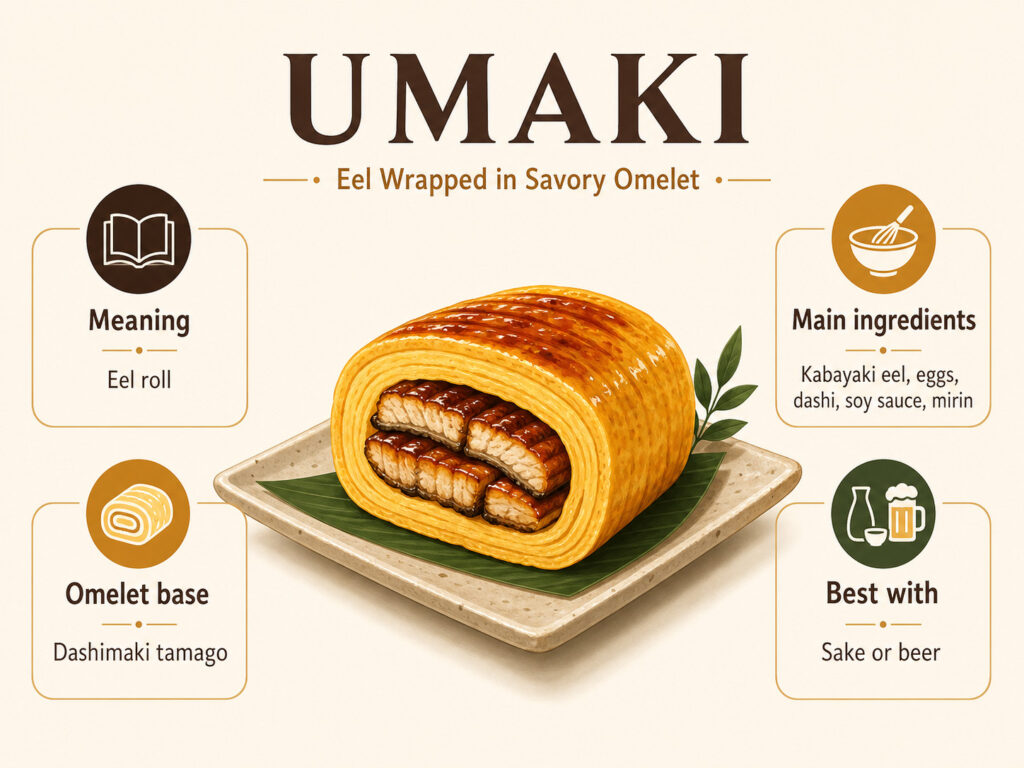
Here is a quick snapshot before the details begin.
| Japanese Name | う巻き (umaki) |
| Meaning | “Eel roll” (u = unagi/eel, maki = roll) |
| Type | Grilled eel wrapped in a rolled Japanese omelet |
| Main Ingredients | Kabayaki eel, eggs, dashi, soy sauce, mirin |
| Omelet Base | Dashimaki tamago (savory, dashi-seasoned) |
| Where to Find It | Eel restaurants, izakaya, kappo and kaiseki |
| Best Served With | Sake or beer, with grated daikon |
At heart, umaki is a simple idea done carefully. Grilled eel sits at the center, wrapped in a rolled, dashi-seasoned omelet. the two are cooked together into one tidy roll.
The name says it all, really. “U” comes from unagi, the Japanese word for eel. “maki” means roll. So umaki is literally an “eel roll.” It is usually served sliced. It is often with a little grated daikon on the side.
What Is Umaki?
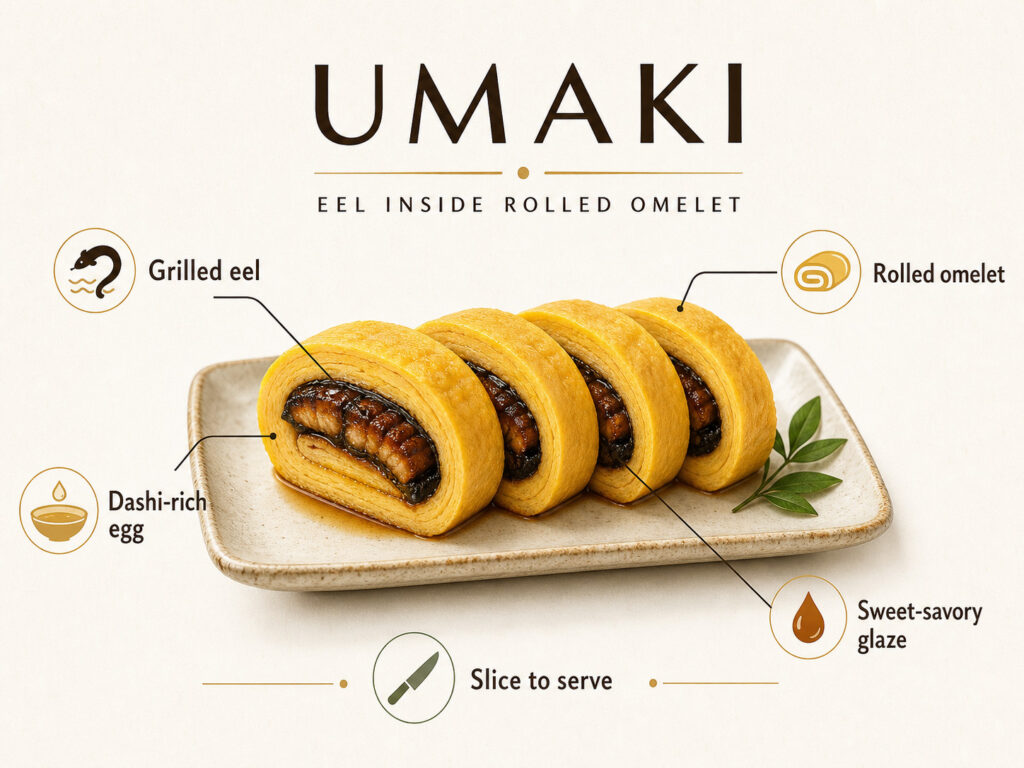
Umaki is grilled eel wrapped inside a Japanese rolled omelet. Cooks take a strip of kabayaki, the sweet-savory glazed eel. roll it up inside layers of beaten egg as the omelet cooks.
The omelet itself is not a plain one.
It is closer to dashimaki tamago, the classic rolled omelet seasoned with dashi stock. That savory, umami-rich egg is what makes umaki feel so distinctly Japanese. it balances the richness of the eel beautifully.
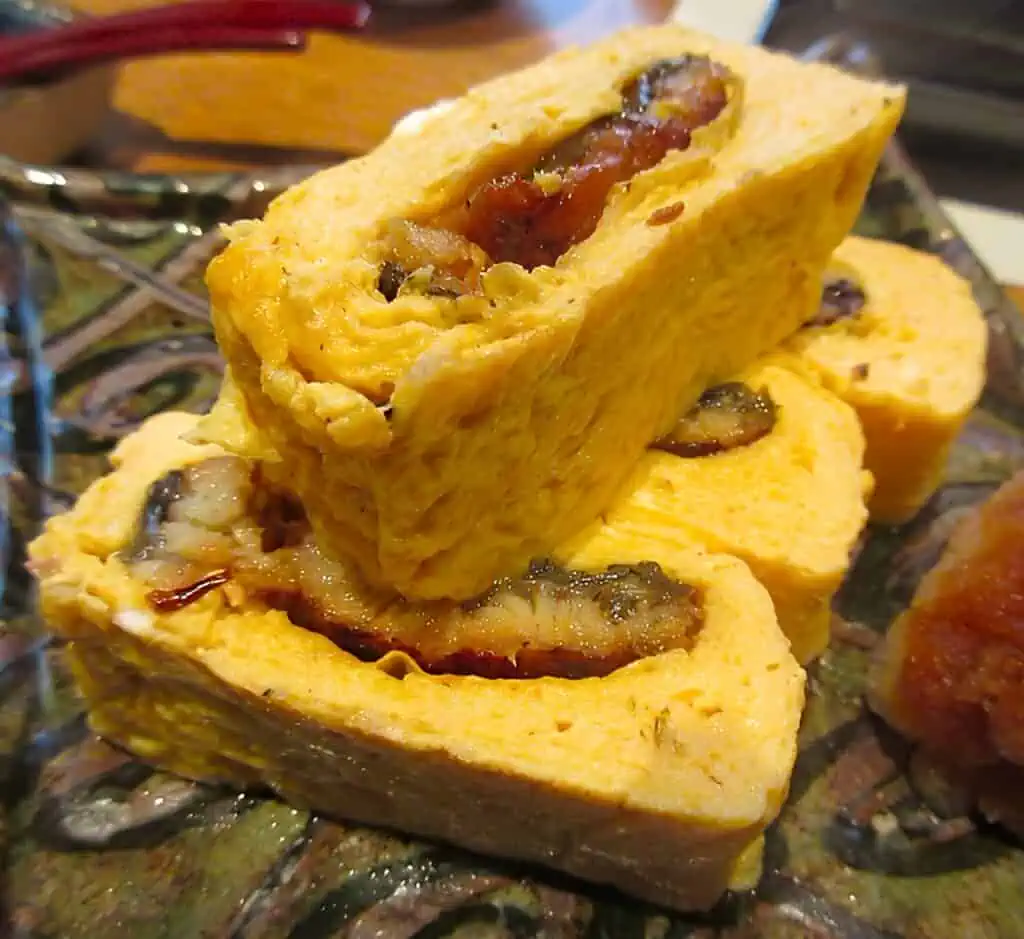
Once rolled, cooks slice the log into rounds. Each piece shows a warm yellow spiral of egg wrapped around a dark, glossy core of eel. This is part of why the dish looks so appealing on a plate.
A Short History of Umaki
The exact origin of umaki is surprisingly hazy. No one can point to a single inventor or date. Most accounts simply link the dish to the Kansai region. Its story grew alongside the eel dishes around it.
To place umaki, it helps to know how old eel eating is.
People in Japan have eaten eel since the Jomon period. Archaeologists have found eel bones in ancient shell mounds. Eel even appears in the Manyoshu, Japan’s oldest poetry collection. There, the poet Otomo no Yakamochi praises it as a food for summer strength.
Kabayaki itself changed a great deal over time. Early cooks grilled whole eels on skewers, which looked like cattail reeds. The modern split-and-glaze style spread later, in the Edo period. Soy sauce and mirin then turned kabayaki into a national favorite.
Umaki fits neatly into this long tradition.
Once glazed eel became beloved, cooks looked for new ways to serve it. Wrapping a little eel in a savory omelet was one clever answer. The dish also let a small amount of precious eel stretch further. That thrift still matters, because good eel keeps getting more expensive.
Kabayaki: The Eel at Its Heart
You cannot understand umaki without unagi no kabayaki. This is grilled eel brushed with a sweet, glossy soy-based sauce. it is one of Japan’s most beloved ways to eat unagi.
The sauce is the key. It usually blends soy sauce, mirin, sugar. sometimes sake, cooked down into a rich, sticky glaze that clings to the eel. Brushed on during grilling, it caramelizes into something deeply savory and faintly sweet.
Kabayaki alone is a treasure, often served over rice as unadon or unaju.
Umaki simply gives it a second life. By wrapping a strip of glazed eel in a savory omelet, cooks turn a little eel into an elegant dish. This matters because good eel is precious and increasingly expensive.
What Does Umaki Taste Like?
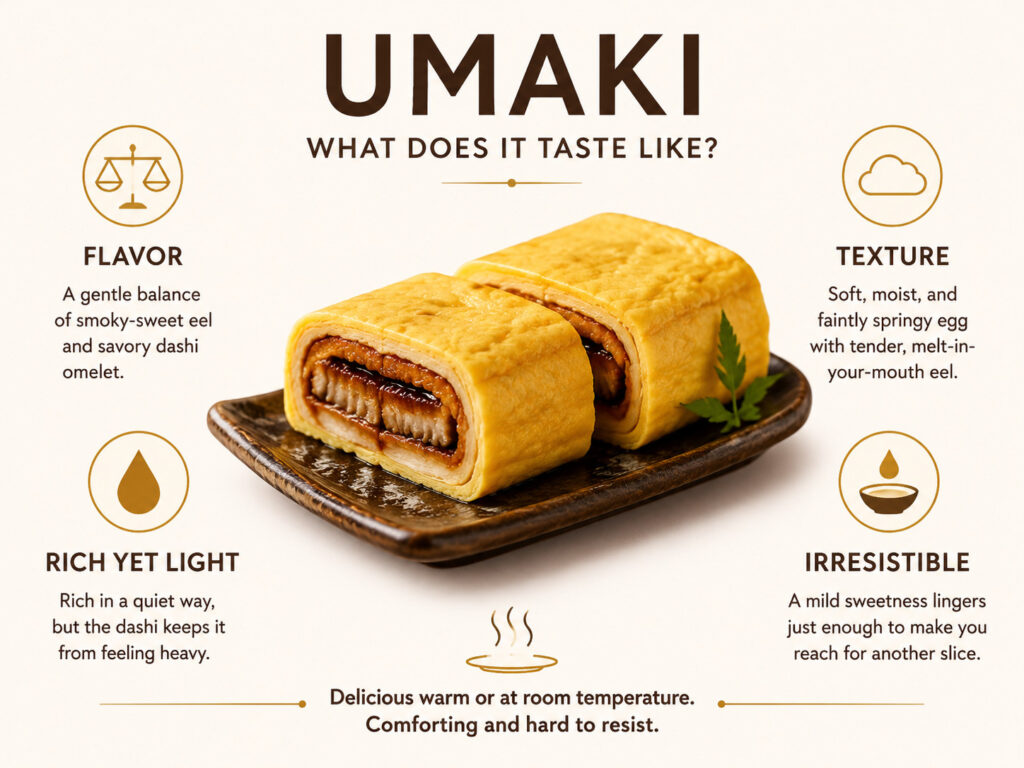
The flavor is a gentle push and pull between rich and light. The eel brings a deep, smoky sweetness, while the dashi omelet answers with a soft, savory warmth. So neither side overwhelms the other.
The texture is part of the pleasure too. The egg is soft, moist. faintly springy, and the eel inside is tender and almost melting, so each bite feels comforting rather than heavy.
I will admit I hesitate to call it a light dish, exactly.
It is rich in its own quiet way. Yet the dashi keeps it from ever feeling cloying. the mild sweetness of the eel sauce lingers just long enough to make you reach for another slice. Warm or at room temperature, it is hard to resist.
Is Umaki Nutritious?
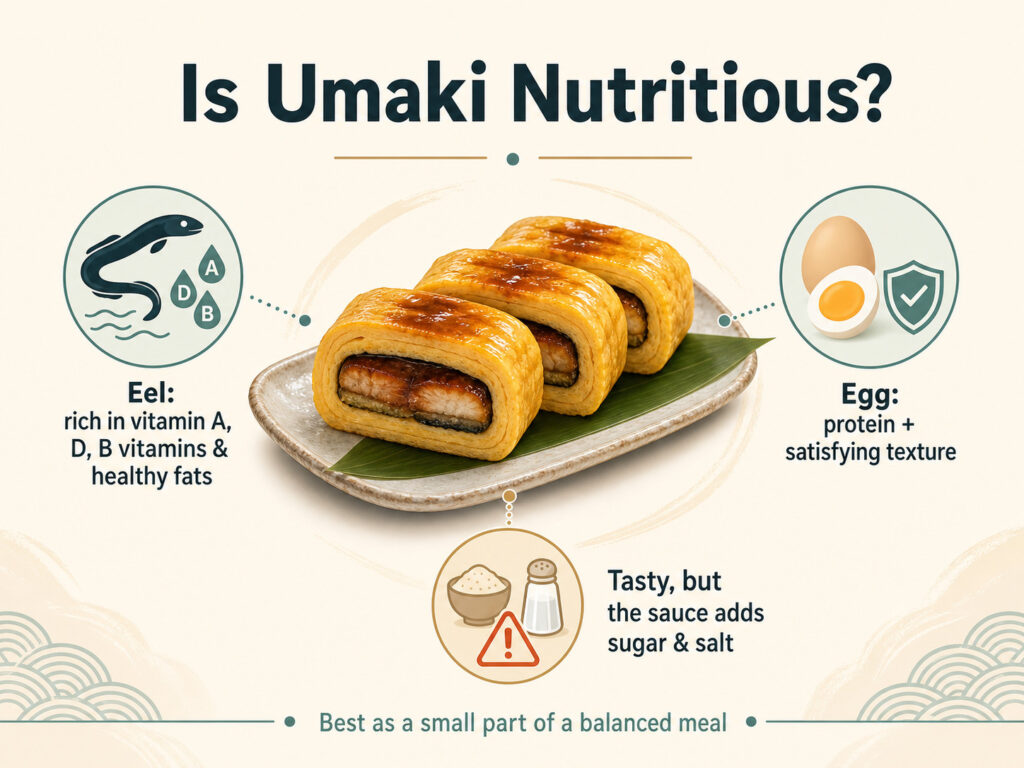
Umaki brings together two nourishing foods on one plate. The eel is rich, and the egg is wholesome. Together they make a fairly balanced little dish.
Eel is the nutritional star here.
Grilled eel is famously rich in vitamins A and D. It also offers B vitamins, zinc, and healthy fats. For centuries, people have eaten it to fight summer fatigue. That is why eel is a classic dish for hot Japanese summers.
The egg adds its own quiet benefits. It brings protein and a smooth, satisfying texture. The dashi seasoning keeps the flavor light despite the richness. So a few slices feel nourishing without feeling too heavy.
Of course, the sweet eel sauce does add sugar and salt. Umaki is a treat, not an everyday health food. Enjoyed as a small plate, though, it fits happily into a balanced meal.
Kansai vs Kanto Umaki
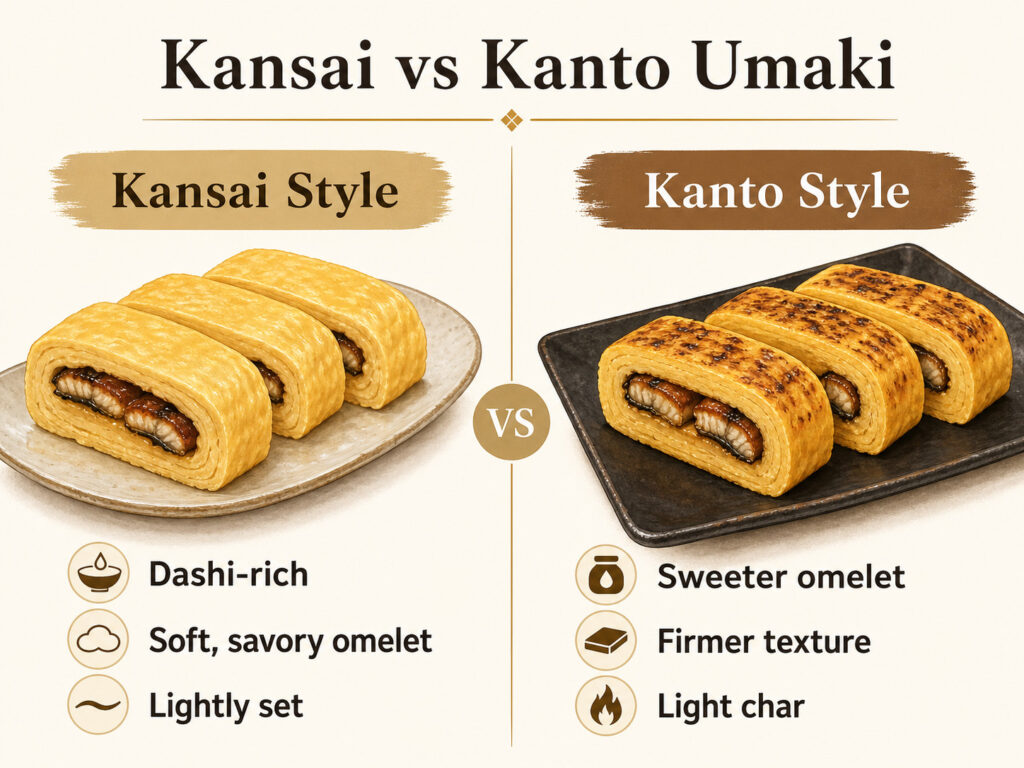
Like many Japanese dishes, umaki shifts a little from region to region. The clearest split runs between the Kansai and Kanto styles. it comes down to the omelet more than the eel.
The Kansai Style
Umaki is often said to have Kansai roots, though its exact history is hazy. The Kansai version is built on a dashimaki tamago base, so the egg is savory, soft. full of dashi flavor.
This fits the region perfectly. Kansai has a deep culture of dashi, running through its udon, its okonomiyaki. its beloved rolled omelets, so a dashi-forward umaki feels right at home there.
The Kanto Style
The Kanto version leans sweeter. Its omelet is closer to a sweetened tamagoyaki. it is often grilled a little more firmly, so the surface can carry a light, appetizing char.
That firmer, sweeter style is rarer these days. Even in Kanto, many shops now serve the softer, dashi-rich Kansai style. So a truly sweet, well-browned umaki has become a bit of a treat to find.
Kansai vs Kanto Umaki at a Glance
A quick comparison makes the regional differences easy to see.
| Style | Omelet Base | Flavor | Look |
|---|---|---|---|
| Kansai umaki | Dashimaki tamago | Savory, dashi-rich | Soft, pale yellow |
| Kanto umaki | Sweetened tamagoyaki | Sweeter | Firmer, light char |
Where You Will Find Umaki
Umaki lives most naturally in a few familiar places. Specialist eel restaurants often serve it as a starter. It is a graceful way to open a meal before the main bowl of unadon arrives.
It is also a classic izakaya dish.
In a good izakaya, umaki sits comfortably among the small plates meant for slow drinking. it pairs especially well with sake. The savory egg and glazed eel simply seem made for a cold cup or a chilled beer.
You will spot it in kappo and kaiseki dining too. There its neat slices and glossy core suit a more refined, seasonal course. Wherever it appears, it tends to feel like a small, considered luxury.
How Umaki Is Made
Making umaki is really an exercise in patience and timing. Cooks beat eggs with dashi and a touch of seasoning. Then cook the mixture in thin layers in a rectangular tamagoyaki pan.
The eel goes in as the rolling begins.
A strip of warmed kabayaki goes across the egg. the omelet wraps around it layer by layer. Each new pour of egg wrapping the growing roll a little tighter. It takes a steady hand to keep the eel centered.
Once the roll is set, it rests briefly and is shaped, often with a bamboo mat, into a clean rectangle. Then it is sliced into rounds and plated, usually with grated daikon and a drizzle of soy sauce alongside.
It looks simple, yet it rewards practice. Keeping the egg soft, the eel centered. the roll tidy all at once is quietly difficult. This is part of why a beautifully made umaki feels like such a treat.
Other Eel Dishes to Try
If umaki wins you over, a whole world of eel dishes awaits. Each one shows off unagi in a different way.
The most famous are the rice bowls.
Glazed eel over rice in a bowl is called unadon. The same eel served in a lacquered box becomes unaju, which is usually a grander, pricier treat. In Nagoya, hitsumabushi lets you enjoy the eel three ways in one meal.
Not every eel dish is sweet and glazed, though. In unagi no shirayaki, the eel is grilled plain, with no sauce at all. That simple style shows off the pure flavor of the fish. It pairs beautifully with a little wasabi or salt.
How to Enjoy Umaki
Umaki is happiest as a small, savored plate rather than a main event. Served in neat rounds, it is easy to share, and it slots naturally into a spread of other little dishes.
It shines brightest alongside a drink.
The savory dashi egg and sweet, glossy eel make it a natural partner for sake. it works just as well with a crisp beer. A dab of grated daikon on the side keeps each bite feeling fresh.
It also makes a lovely starter before a heavier eel dish, easing you into the meal. However you serve it, umaki is best enjoyed slowly, one warm slice at a time.
Umaki FAQ
What is umaki?
Umaki is grilled eel wrapped in a rolled Japanese omelet. Cooks roll a strip of glazed kabayaki eel inside dashi-seasoned egg. Cooks then slice the roll into rounds. It is a popular dish at eel restaurants and izakaya.
What does umaki mean?
The name means “eel roll” in Japanese. “U” comes from unagi, meaning eel. “Maki” means roll. So umaki is simply an eel roll.
What kind of eel is used in umaki?
Umaki uses kabayaki, or glazed grilled eel. Cooks brush the eel with a sweet soy-based sauce. Then cooks grill it until glossy and tender. Cooks use this same eel for rice bowls like unadon.
What does umaki taste like?
Umaki tastes rich, savory, and mildly sweet. The eel brings a smoky sweetness, and the dashi omelet adds a soft, savory warmth. Its egg is moist and tender. Both flavors balance each other well.
Is umaki a Kansai or Kanto dish?
Many link umaki to Kansai. The Kansai style uses a savory dashi omelet. The Kanto style relies on a sweeter, firmer omelet. Today the softer Kansai style is the most common.
How is umaki served?
Umaki is sliced into neat rounds and plated. It is often served with grated daikon and a little soy sauce. Many enjoy it warm or at room temperature. This makes a great small plate or starter.
What do you drink with umaki?
Umaki pairs wonderfully with sake. Its savory egg and sweet eel suit a cold cup well. It also goes nicely with a crisp beer. This makes it a favorite izakaya dish.
Is umaki hard to make?
Umaki is simple in idea but tricky in practice. Keeping the egg soft and the eel centered takes skill. The roll must stay tidy while it cooks. A well-made umaki reflects real care.
References
- Ministry of Agriculture, Forestry and Fisheries (MAFF), “Our Local Cuisine: Eel Kabayaki (Tokyo)”, covering kabayaki history, the Kanto and Kansai styles, and eel dishes such as umaki and uzaku. (Surveyed: June 2026)
- Kibun Academy, “Kabayaki”, citing historical texts including the Muromachi-era Okusa-ke Ryorisho and the Edo encyclopedia Wakan Sansai Zue on how kabayaki developed. (Surveyed: June 2026)
- Higashimaru Shoyu, umaki recipe using white dashi and light (usukuchi) soy sauce. (Surveyed: June 2026)
- Otomo no Yakamochi, Manyoshu (Nara period), the poem recommending eel as a food for summer weakness, Japan’s earliest written reference to eating eel. (Surveyed: June 2026)
- Terajima Ryoan, Wakan Sansai Zue (Edo-period illustrated encyclopedia, 1712), describing the split-and-skewer style of grilling eel. (Surveyed: June 2026)
- Standard Tables of Food Composition in Japan (MEXT), nutritional data for grilled eel (kabayaki), including vitamins A and D, B vitamins, and zinc. (Surveyed: June 2026)
Related Articles
- Unagi no Kabayaki (Grilled Glazed Eel) (Surveyed: June 2026)
- Unadon (Eel Rice Bowl) (Surveyed: June 2026)
- Unaju (Eel in a Lacquered Box) (Surveyed: June 2026)
- Hitsumabushi (Nagoya-Style Eel) (Surveyed: June 2026)
- Unagi no Shirayaki (Plain Grilled Eel) (Surveyed: June 2026)
- Sushi (Surveyed: June 2026)




Comments