Nakadori is the middle press sake collected after the first rough run and before the final heavy press. Because it comes from the most stable part of sake pressing, it often shows clean aroma, balanced flavor, and a smooth finish. Many breweries treat Nakadori as a premium sake selection, especially for high-quality sake like Junmai Daiginjo Nakadori.
This style does not shout for attention. Instead, it feels calm, precise, and refined. If arabashiri shows the bold start of pressing, Nakadori shows the center. That middle position gives it a clear sake profile and a graceful drinking experience.
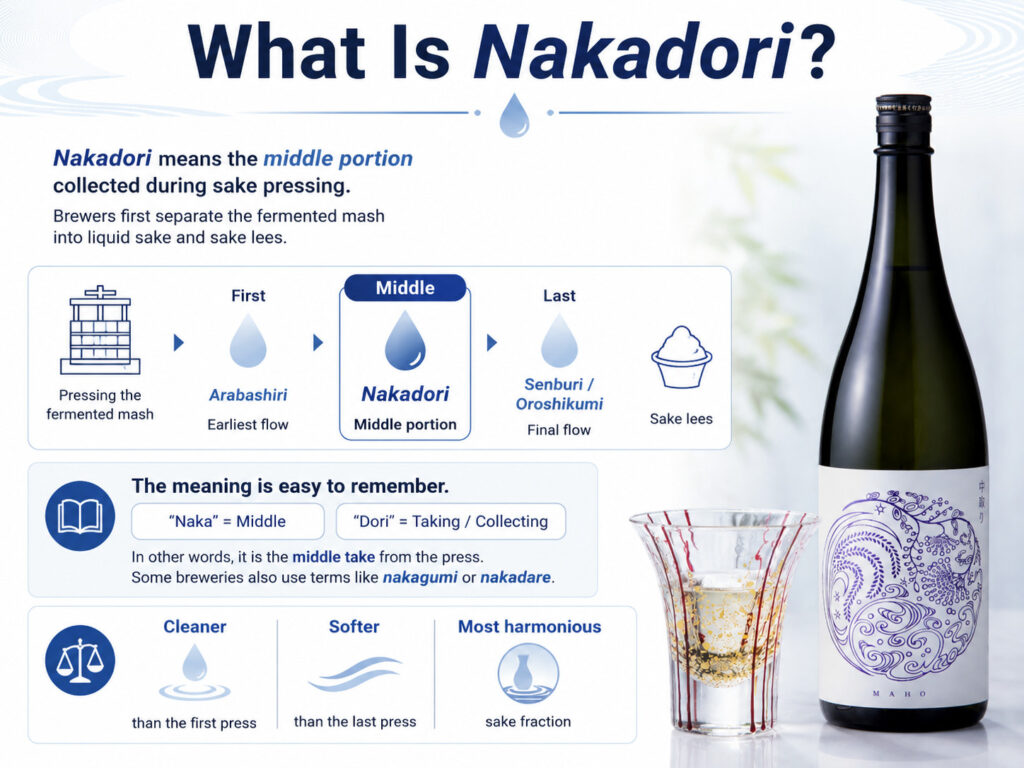
Nakadori means the middle portion collected during sake pressing. Brewers first separate the fermented mash into liquid sake and sake lees. The earliest flow becomes arabashiri. After that, the middle fraction appears, and this part is called Nakadori.
The Nakadori meaning is easy to remember. “Naka” means middle, while “dori” means taking or collecting. In other words, it is the middle take from the press. Some breweries also use terms like nakagumi or nakadare.
This middle fraction of sake often tastes cleaner than the first press and softer than the last press. That balance explains why many drinkers call it the most harmonious sake fraction.
Nakadori tends to taste balanced because the pressing has settled by this stage. The first flow may carry more rough energy and fine particles. The last press can bring heavier flavors from stronger pressure. The middle part often lands between those extremes.
That does not mean every bottle tastes identical. Rice type, polishing ratio, yeast, water, and brewery style still matter. However, the pressing stage gives Nakadori a natural advantage. It often shows clean and balanced flavor with less turbulence.
A good bottle can feel smooth, aromatic, and quietly elegant. The aroma may show pear, melon, apple, white flowers, or steamed rice. The finish often feels clear rather than heavy. That refined sake taste makes it popular for premium releases.
Sake Pressing Stages at a Glance
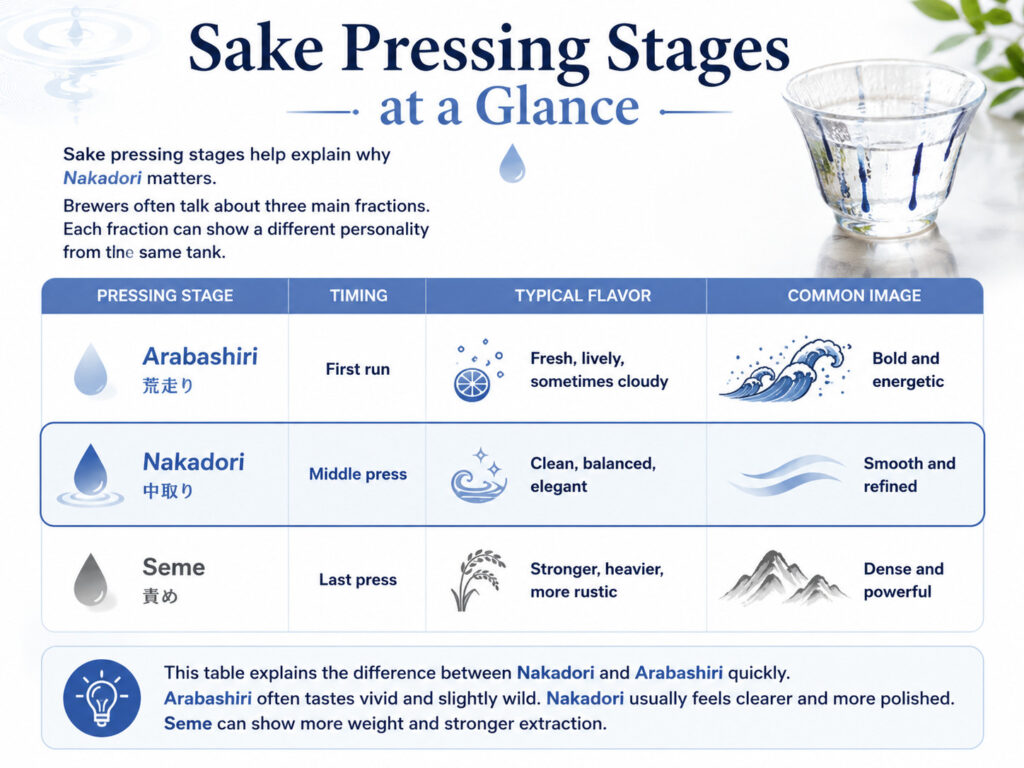
Sake pressing stages help explain why Nakadori matters. Brewers often talk about three main fractions. Each fraction can show a different personality from the same tank.
スクロールできます
Pressing stage
Timing
Typical flavor
Common image
Arabashiri
First run
Fresh, lively, sometimes cloudy
Bold and energetic
Nakadori
Middle press
Clean, balanced, elegant
Smooth and refined
Seme
Last press
Stronger, heavier, more rustic
Dense and powerful
This table explains the difference between Nakadori and Arabashiri quickly. Arabashiri often tastes vivid and slightly wild. Nakadori usually feels clearer and more polished. Seme can show more weight and stronger extraction.
The difference between Nakadori and Arabashiri matters for anyone learning sake. Arabashiri comes first. It can feel fresh, aromatic, and sometimes rough. Some bottles look slightly cloudy because early pressing can carry fine rice particles.
Nakadori comes after that first rush. The liquid often looks clearer and tastes more settled. The aroma still feels expressive, but the edges become smoother. If arabashiri feels like winter energy, Nakadori feels like quiet focus.
Neither style is automatically better. Some drinkers love arabashiri for its raw personality. Others prefer Nakadori for its elegance. Trying both from the same brewery can teach more than reading labels alone.
Nakadori vs Shizuku Sake
Nakadori and shizuku sake can confuse beginners. Nakadori describes the middle fraction of sake pressing. Shizuku describes a method, where sake drips naturally from hanging bags without strong pressure.
A bottle can be both, but the words do not mean the same thing. Shizuku sake often appears in very premium bottlings because the method protects delicate aroma. Nakadori focuses on which portion of the press the brewer collects.
If a label says Junmai Daiginjo Nakadori, the brewery highlights selection from the middle press. If it says shizuku, the brewery highlights the gentle drip method. Both can point to high-quality sake, but they explain different choices.
How Sake Is Divided During Pressing
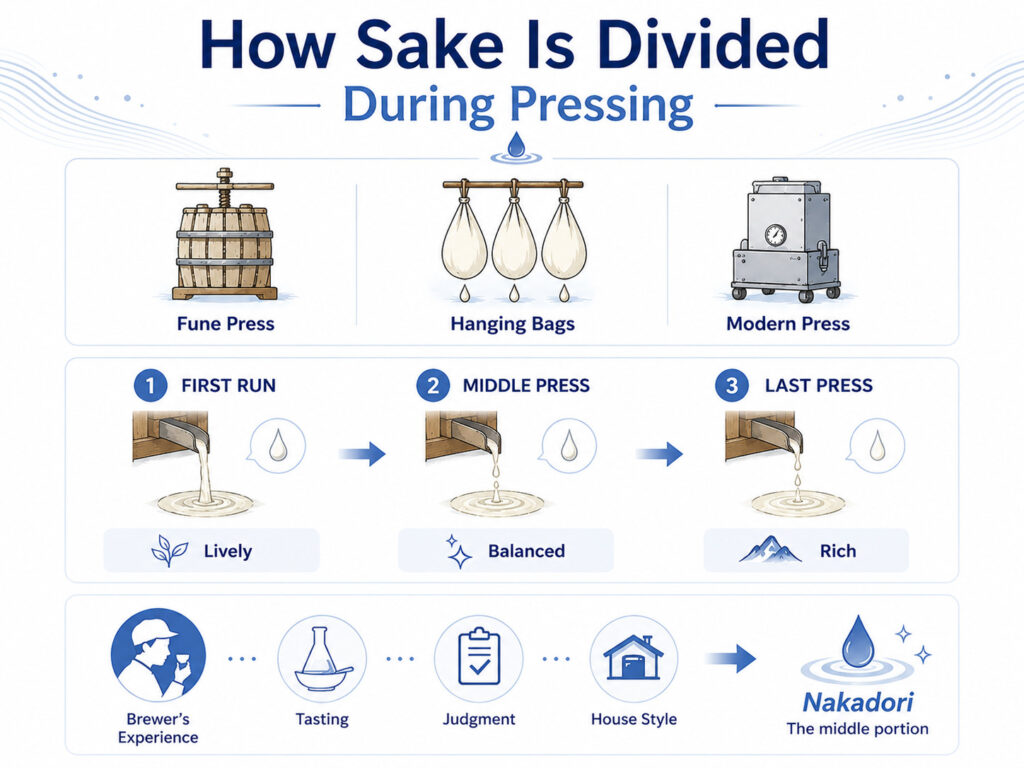
Sake pressing separates fermented mash into clear liquid and solids. Brewers may use a traditional fune press, hanging bags, or modern pressing equipment. The method changes texture, clarity, and aroma.
At the start, liquid comes out quickly. That early part can feel lively. The middle stage follows with more stable flow. Finally, stronger pressure extracts the last portion from the mash.
Brewers decide how to divide these parts. There is no universal line for every brewery. Experience, tasting, and house style all guide the choice. That human judgment gives Nakadori its craft value.
Nakadori Flavor and Aroma
Nakadori flavor and aroma usually feel clean, elegant, and smooth. Many bottles show fruit notes like pear, melon, or apple. Some lean toward rice sweetness, soft umami, or floral aroma.
The mouthfeel often feels polished rather than sharp. Alcohol warmth stays controlled in well-made bottles. The finish can be dry, lightly sweet, or softly savory, depending on the base sake.
This clear sake profile makes Nakadori friendly for people who enjoy aromatic sake. At the same time, it does not feel too loud. That balance helps it pair with food and stand alone.
Best Nakadori Sake for Beginners
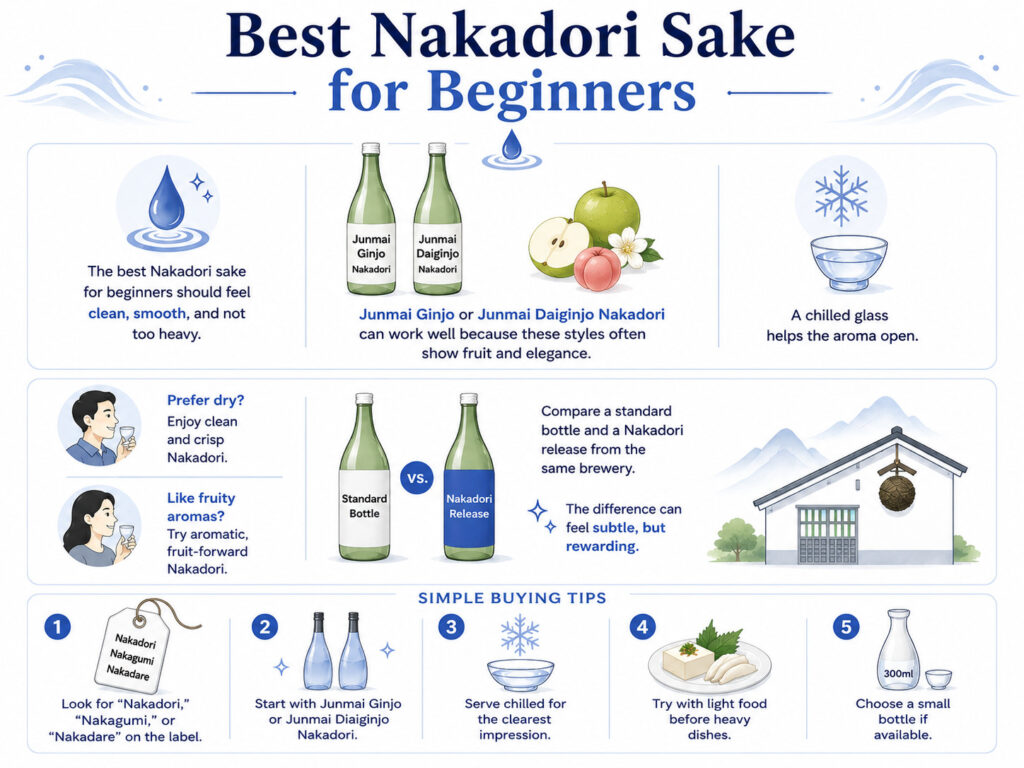
The best Nakadori sake for beginners should feel clean, smooth, and not too heavy. Junmai Ginjo or Junmai Daiginjo Nakadori can work well because these styles often show fruit and elegance. A chilled glass helps the aroma open.
Beginners who dislike strong sweetness may enjoy dry Nakadori. People who like aromatic white wine may prefer fruity versions. If possible, compare a standard bottle and a Nakadori release from the same brewery. The difference can feel subtle, but rewarding.
Here are simple buying tips.
Look for “Nakadori,” “Nakagumi,” or “Nakadare” on the label.
Start with Junmai Ginjo or Junmai Daiginjo Nakadori.
Serve chilled for the clearest impression.
Try with light food before heavy dishes.
Choose a small bottle if available.
How to Drink Nakadori
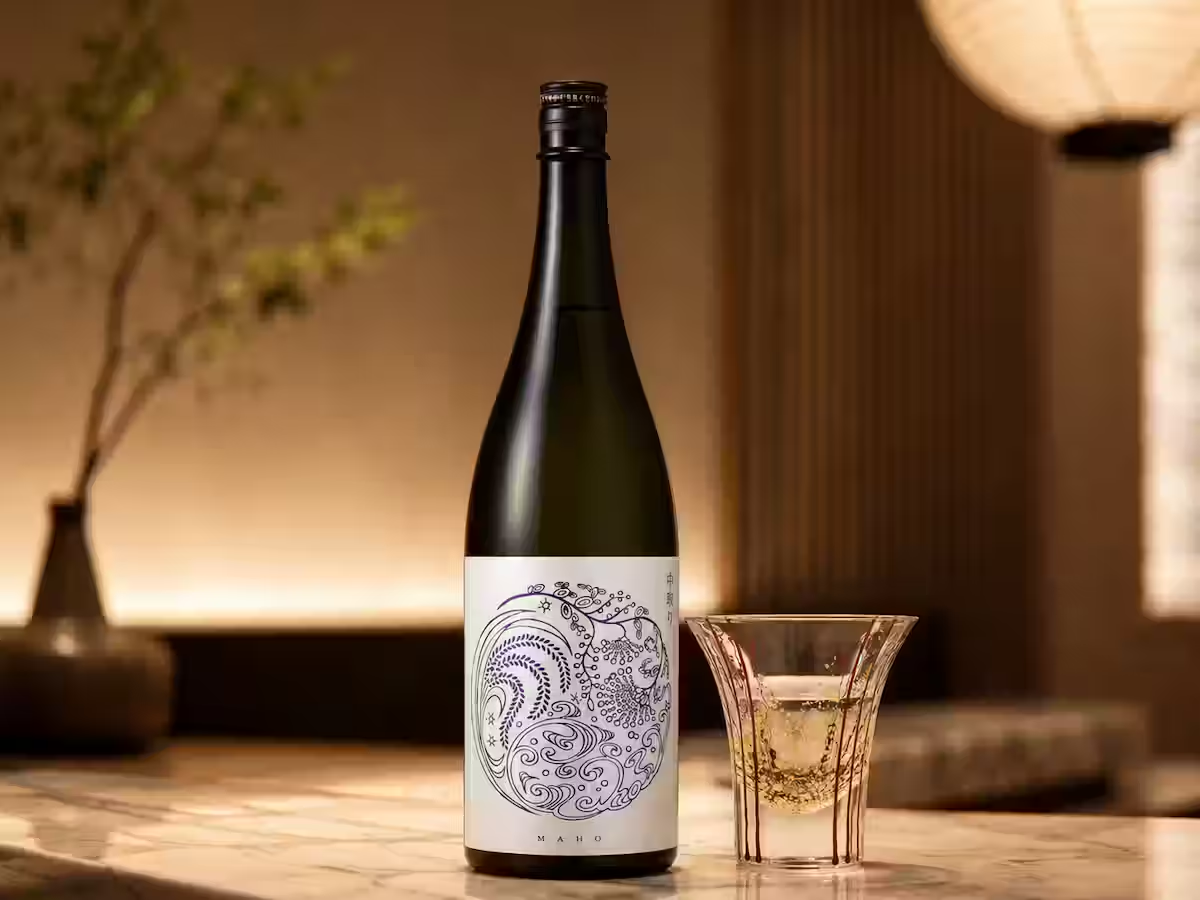
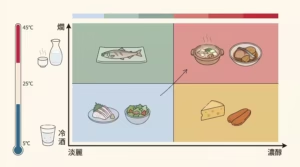
Serve Nakadori chilled first. Cool temperature highlights clear aroma and smooth texture. A wine glass works well for fruity or floral bottles. A small sake cup works better for quiet rice-driven styles.
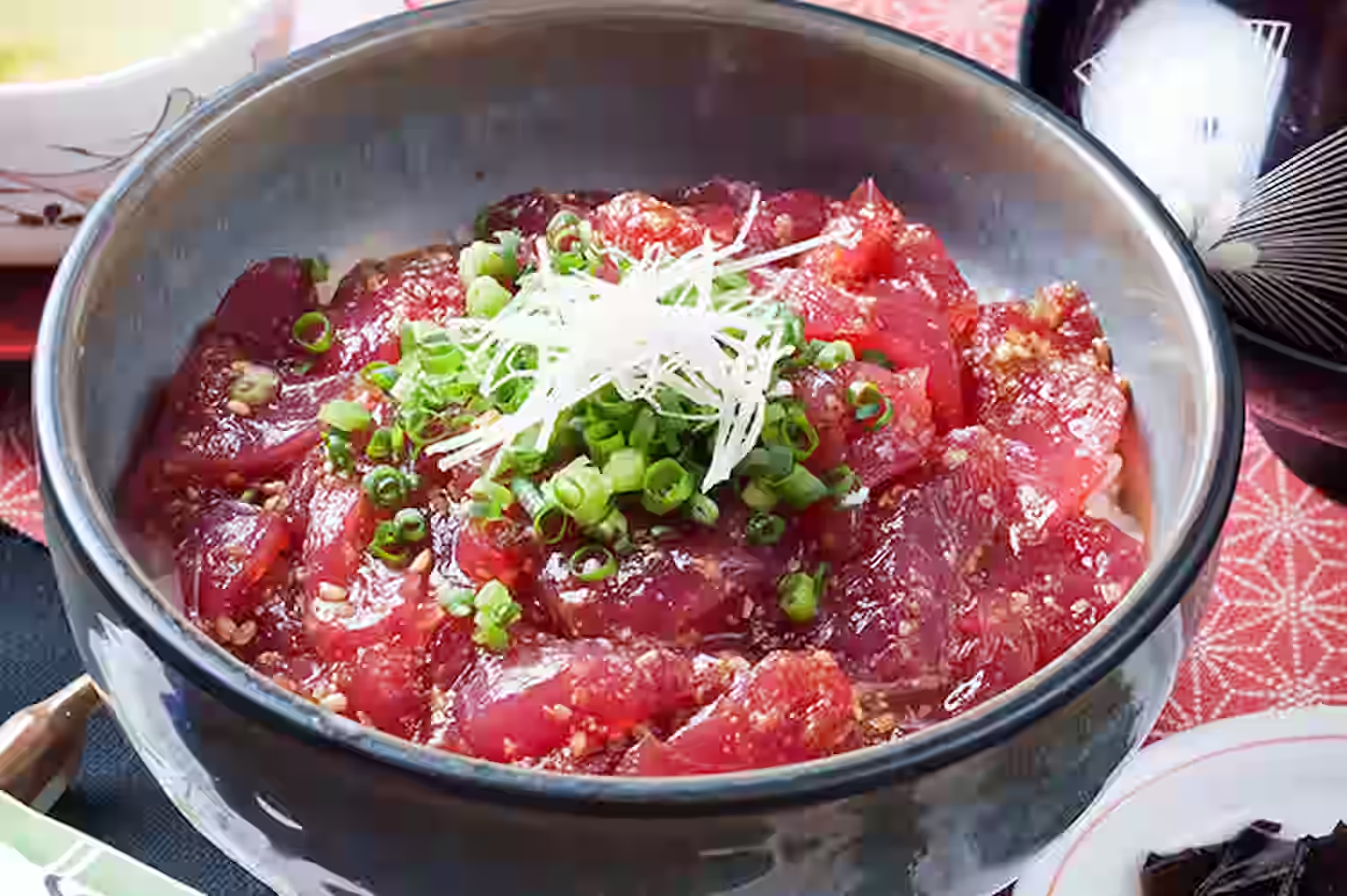
Food pairing should support the clean profile. Try sashimi, sushi, grilled white fish, tofu, chicken with salt, or light tempura. Mild cheese can also work. Strong sauces may hide the careful balance.
This is not a sake to rush. Sip slowly and notice the middle-ground character. The appeal often comes from clarity rather than impact.
History and Today
Brewers have long noticed that sake changes during pressing. Older tools made these shifts easier to sense. Over time, breweries learned to separate fractions for quality, competition, or limited edition sake.
Nakadori gained a premium image because it often shows the cleanest balance. Some breweries use it for competition entries or special releases. Modern drinkers also like the story. The idea of “the best middle part” is easy to understand.
Today, Nakadori appears across several grades. You may see Honjozo Nakadori, Ginjo Nakadori, or Junmai Daiginjo Nakadori. The label signals selection, not a separate official grade. Still, many drinkers treat it as a mark of care.
Final Thoughts
Nakadori represents the balanced middle press in Japanese sake. It avoids the wildness of the first press and the heaviness of the last press. The result often feels clean, elegant, and refined.
If you want premium Japanese sake with a smooth finish, look for Nakadori on the label. It may cost more, but the style offers clarity and harmony. For many sake lovers, that middle point is exactly where the beauty begins.
Nakadori FAQ
What is Nakadori in Japanese sake?
It represents the highly prized middle fraction that brewers collect during the pressing process. This portion emerges after the initial free-run liquid and before the final, heavy squeeze. This premium cut delivers a remarkably clean, balanced, and refined flavor profile. Many craft breweries select this specific run to bottle their absolute highest-quality sakes and limited seasonal releases.
What does Nakadori mean?
The Japanese expression translates literally to “middle take” or “middle collection” in English. This term strictly describes the specific timing during the filtration stage rather than a particular rice polishing grade or sweetness level. Some traditional brewers also write similar words like nakagumi or nakadare on their bottles. All of these designations highlight the same pristine middle run of the press.
How is Nakadori different from Arabashiri?
The first-run fraction offers a wild, robust, and sometimes cloudy profile, while this middle press provides the ultimate smooth, clean elegance. The initial liquid contains slight yeast sediment and natural effervescence, whereas this subsequent cut delivers an exceptionally pure, balanced taste. Discerning sake lovers select this middle run when they want a smooth mouthfeel paired with a crystal-clear, focused aroma. It lacks the wild, uneven edges of the very first press.
Is Nakadori the same as Shizuku sake?
No, these terms define completely different aspects of the brewing process. This “middle collection” refers strictly to a specific timeline during pressing, whereas the other term indicates a slow, gravity-based drip filtration method. A single bottle can possess both qualities if the brewmaster gathers only the middle run of the dripping sake. Reading the bottle’s back label carefully will help you understand the exact production style.
Is Nakadori good for beginners?
Yes, this balanced cut serves as an excellent introduction for newcomers. Its remarkably clean, harmonious, and approachable flavor profile makes it very easy to appreciate. We highly recommend starting with a chilled glass of a premium Ginjo or Daiginjo that features this middle-press label. Beginners should enjoy small pours alongside light foods like sashimi, fresh tofu, or chicken.
Where does Nakadori come from?
This premium selection method originates from traditional Japanese breweries. For centuries, master brewers recognized that the middle cut of the press delivered the most balanced and pristine flavors. Today, craft breweries across every prefecture utilize this rigorous separation to showcase their technical brewing skills. It represents the pinnacle of artisanal sake pressing.
How much does Nakadori cost?
A standard 720ml bottle of this premium cut typically costs between 2,000 and 5,000 yen. Prices vary depending on the specific brewery brand, the rice polishing ratio, and the overall premium category. Because brewers only collect a small portion of the total batch for this label, it commands a slight premium over standard agency blends. It still offers fantastic value for such an elegant and refined flavor.
Is Nakadori vegetarian or vegan friendly?
This traditional Japanese beverage contains absolutely no animal products. Brewmasters craft it using only sake rice, water, yeast, and koji mold. Vegans and vegetarians can safely consume this 100% plant-based rice wine with any meal. It pairs beautifully with grilled seasonal vegetables and cold silken tofu.
Can I age Nakadori at home?
Yes, you can age certain premium bottles in your own cellar. However, we recommend drinking unpasteurized versions fresh to enjoy their vibrant, clear aroma. If you buy a pasteurized bottle, you can store it in a dark, cold place to let the flavors mellow over time. Always keep the bottle upright to prevent the liquid from touching the metal cap.
Is Nakadori popular outside Japan?
This specialized pressing cut enjoys rapidly growing popularity among international sake connoisseurs. High-end Japanese restaurants in North America, Europe, and Asia proudly feature these premium bottles on their curated beverage lists. Global wine lovers appreciate its clean, balanced profile because it closely resembles the elegance of fine dry white wines. It successfully introduces the sophisticated side of Japanese brewing to the global market.
Ryo Iwa is the founder and editor of foodinjapan.org. Born and raised in Japan, he writes from regional travel, market visits, and Japanese-language primary sources that rarely reach English readers, including brewing institute publications and industry glossaries. Where a figure cannot be traced to a source, the article says so.
He has been a Google Maps Local Guide for over 10 years, with more than 1,800 reviews and over 41,000 photos viewed hundreds of millions of times. He previously spent two decades as an IT consultant in Japan, the US, and the UK.














Comments