


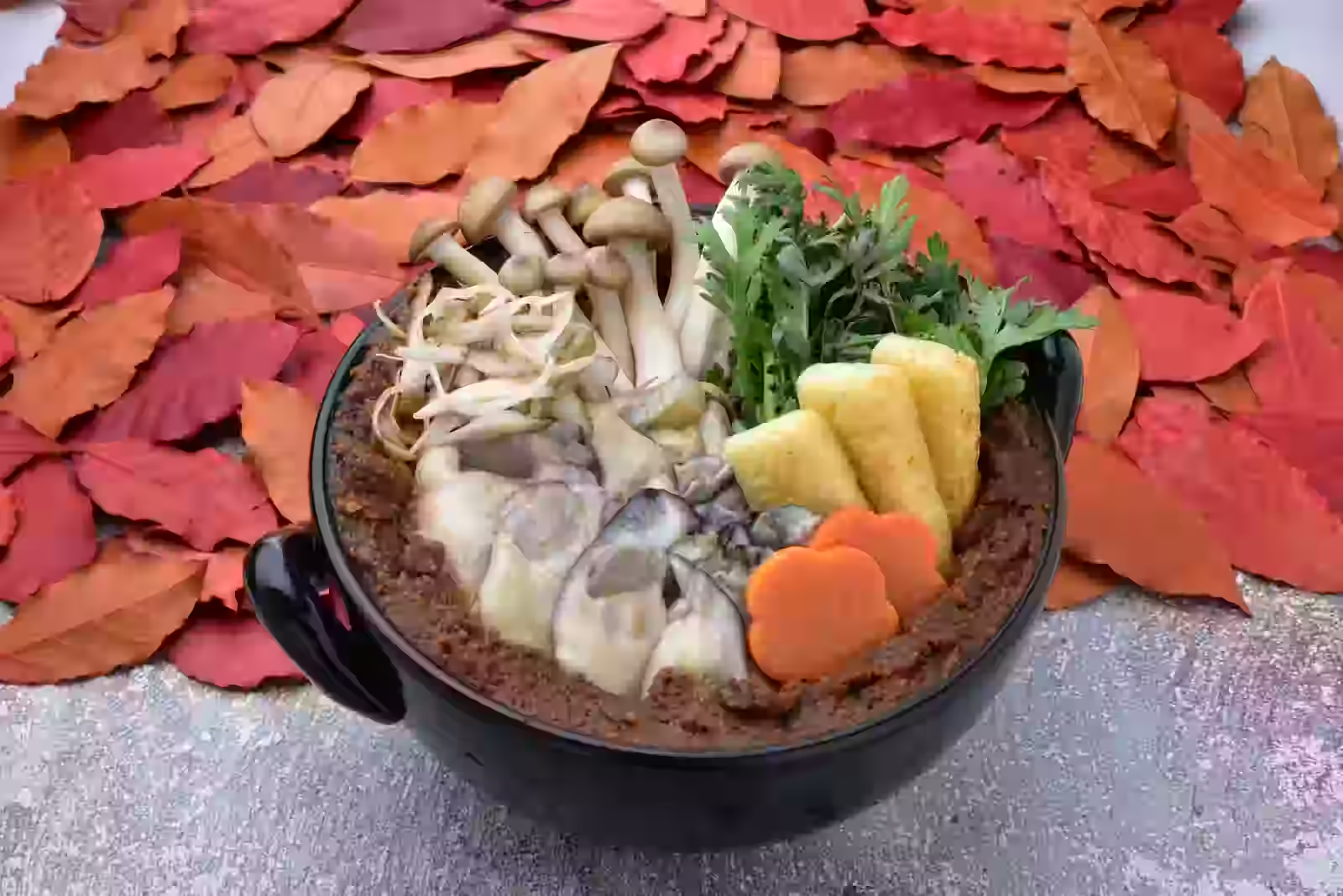

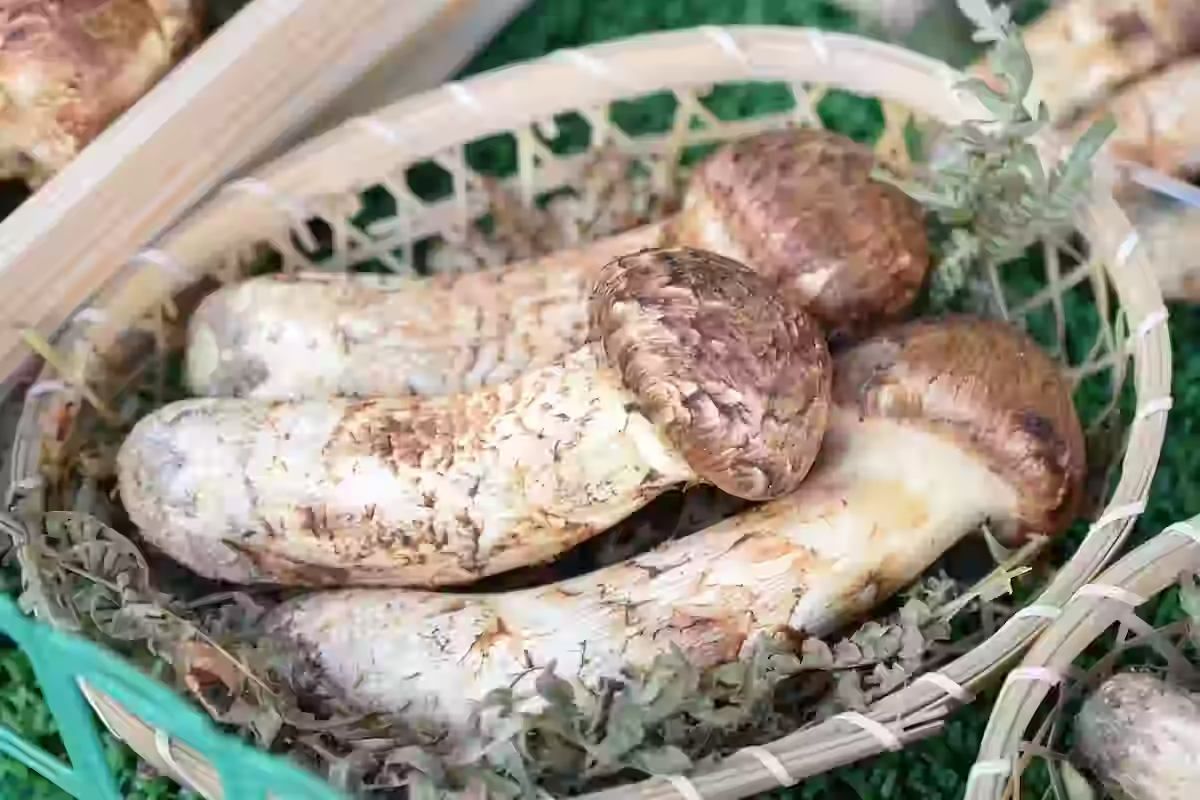
Matsutake is the most prized mushroom in Japan, and perhaps the most romantic. Each autumn, its scent drifts through Japanese kitchens and signals the arrival of the season. People pay astonishing sums for a single fragrant mushroom. So what makes matsutake so special? It is a wild mushroom celebrated above all for its bold, spicy-sweet aroma. No one can farm it, and it grows only in specific pine forests for a few short weeks. That rarity, paired with its unforgettable scent, has made it a symbol of Japanese autumn.
For many, the smell alone captures the feeling of the season. This guide explores the matsutake mushroom from every angle. It covers the aroma, the biology, the reasons for its high price, and the classic ways to enjoy it. Let me walk you through Japan’s fragrant king of mushrooms.
Quick Facts About Matsutake
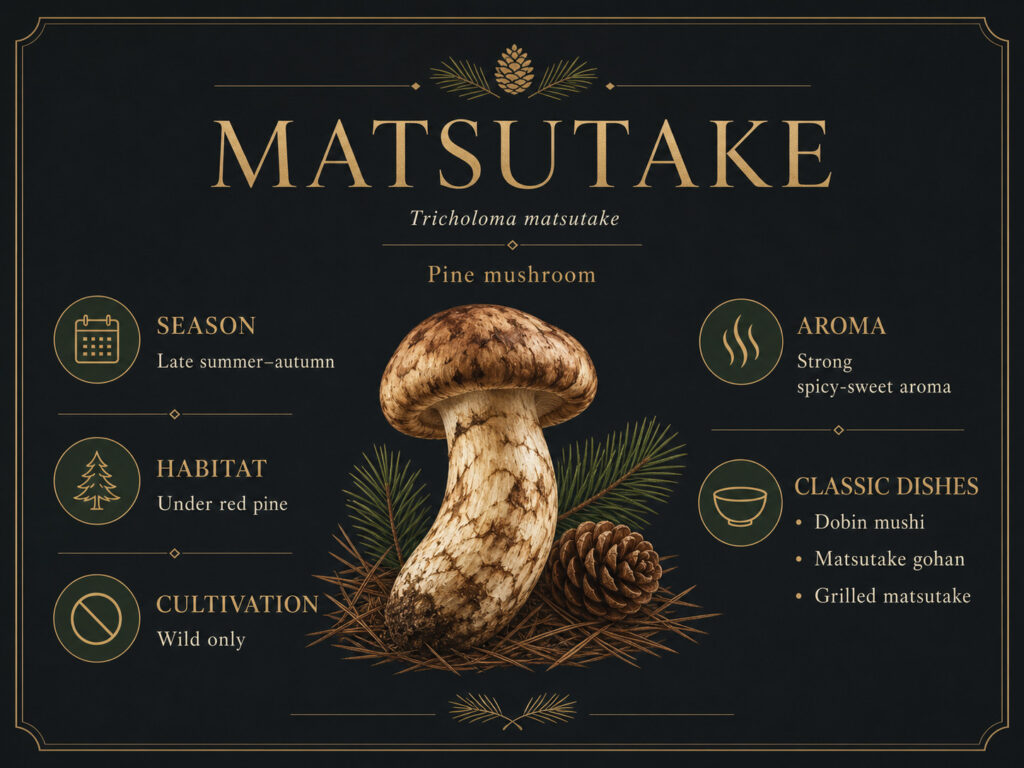
| Japanese Name | 松茸 (matsutake) |
| Scientific Name | Tricholoma matsutake |
| Meaning | “Pine mushroom” |
| Season | Late summer to autumn; peak September to October |
| Habitat | Under Japanese red pine (akamatsu), on dry, poor soil |
| Cultivation | Cannot be farmed; foraged in the wild |
| Prized For | Its strong, spicy-sweet aroma |
| Classic Dishes | Dobin mushi, matsutake gohan, grilled matsutake |
Matsutake is a wild autumn mushroom native to Japan and parts of Asia. Its scientific name is Tricholoma matsutake, and it belongs to the Tricholoma family. The name means “pine mushroom,” a nod to the pine forests where it grows. It is famous for a strong, distinctive aroma and a firm, meaty texture. Above all, matsutake is prized for its scent rather than its raw flavor. Because it resists cultivation, foragers gather every matsutake by hand from the wild.
What Is Matsutake?
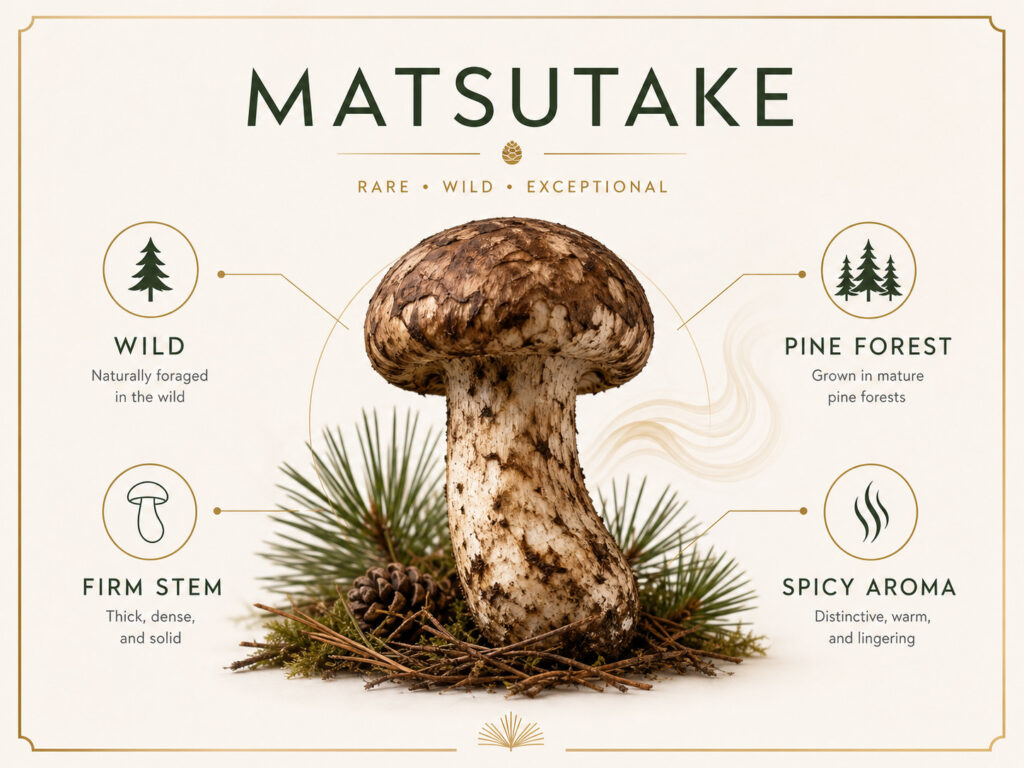
Matsutake is a wild mushroom that grows in pine forests across Japan. Visually, it has a firm, thick stem and a brown, scaly cap, so it looks sturdy compared with softer mushrooms. Indeed, the whole mushroom feels dense and substantial in the hand. Above all, its defining trait is the aroma. Matsutake gives off a powerful, spicy, and slightly sweet fragrance that no other mushroom quite matches. In fact, this scent is so central that a Japanese saying sums it up neatly.
The phrase “kaori matsutake” praises matsutake for its aroma above all else. In Japan, this smell is deeply tied to autumn itself. Catch it drifting from a kitchen, and you know the season has arrived. For many people, that fragrance stirs warm memories of family meals and cool autumn evenings.
The Famous Aroma of Matsutake
The aroma is the whole reason matsutake is so treasured. It is bold, spicy, and earthy, with a hint of sweetness and a whiff of cinnamon. Two natural compounds create most of this scent. One is matsutakeol, also known to chemists as 1-octen-3-ol, the classic mushroom-alcohol note. The other is methyl cinnamate, which carries a sweet, faintly fruity edge. Together they give matsutake its unmistakable perfume.
Studies of the mushroom’s volatile compounds confirm these two as the dominant players. Interestingly, not everyone loves this smell. In Japan, it is celebrated as the very essence of autumn luxury. Yet some people from other countries find it strong or even unpleasant. In that sense, matsutake is a little like truffle, adored in one culture and puzzling to another.
The scent is also delicate in its own way.
Research shows the aroma compounds fade as the cap opens and the mushroom matures. That is why a tight, unopened matsutake commands the highest price and the freshest smell. This is also why people enjoy the mushroom best soon after picking. Curiously, this powerful scent may serve the mushroom itself. Scientists have found that these same compounds help repel tiny soil creatures that feed on fungi. What we treasure as perfume may have evolved partly as a natural defense.
Why Matsutake Cannot Be Farmed
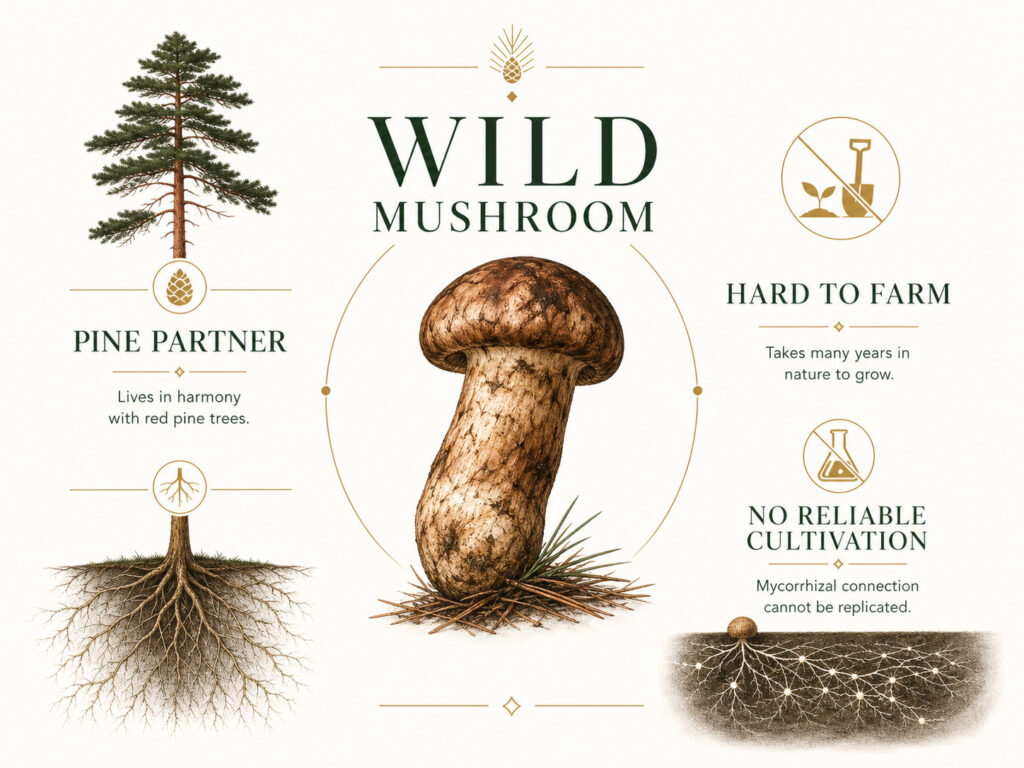
Here lies the heart of the matsutake mystery. Unlike shiitake or button mushrooms, matsutake resists all commercial cultivation. Foragers must find and pick every single one in the wild. Fundamentally, the reason is biological. Matsutake is a mycorrhizal mushroom, which means it lives in partnership with living trees. Its underground threads wrap around the roots of red pine trees in a close, mutual relationship.
The mushroom draws sugars from the tree. In return, it helps the tree absorb nutrients and water. Unfortunately, this bond is remarkably hard to recreate. You cannot simply grow a matsutake on a log or in a bag like shiitake. It needs a living pine, the right soil, and a delicate balance of conditions. Science has yet to reproduce that balance reliably. For decades, researchers have tried to cultivate it.
Progress has been slow, and no reliable farming method exists even today. So every matsutake on the market is a genuinely wild mushroom, foraged by hand from a hillside forest.
The Science of the Shiro
Underground, matsutake builds a living structure that brewers of forests might envy. Scientists call it the shiro, a dense mat of fungal threads bound to the pine roots. The word shiro means “castle,” and it fits the way the colony holds its ground. From this network, the mushrooms we see push up above the soil.
Over time, the shiro spreads slowly outward, forming a ring in the earth. Typically, fresh mushrooms appear along the advancing edge of that ring. Researchers have mapped these colonies in natural red pine forests. Their work shows how tightly matsutake weaves itself into the life of the tree. However, recreating a healthy shiro in a lab has proven extremely difficult. Some scientists have managed to form matsutake roots on pine seedlings under controlled conditions.
Even so, coaxing that fragile bond to yield real mushrooms remains a huge challenge. This delicate underground world is the true reason matsutake stays so wild and so rare.
Where and When Matsutake Grows
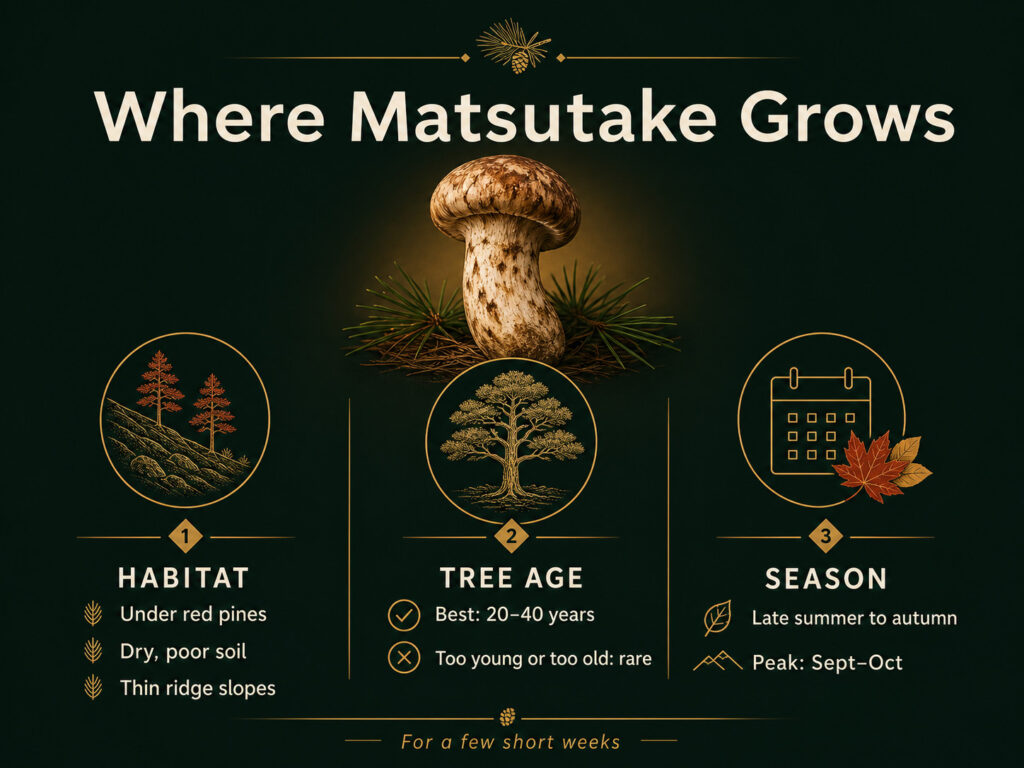
Matsutake keeps particular company, and it is fussy about its home. It grows mainly under Japanese red pine, known as akamatsu, on dry, poor, and slightly barren soil. Surprisingly, rich, fertile ground works against it, because there other fungi crowd it out. So it favors the thin soil along ridges and mountainsides. Furthermore, the trees must be the right age as well.
Matsutake tends to appear under red pines that are roughly twenty to forty years old. Younger and much older forests rarely produce it. Similarly, timing is just as strict. The season runs from late summer into autumn, with the peak in September and October. For a few short weeks, foragers climb into the hills to search the forest floor.
Foragers treasure a hillside that yields matsutake, and they often keep such spots secret. Some families guard these spots closely and pass them down across generations.
Why Matsutake Is So Expensive
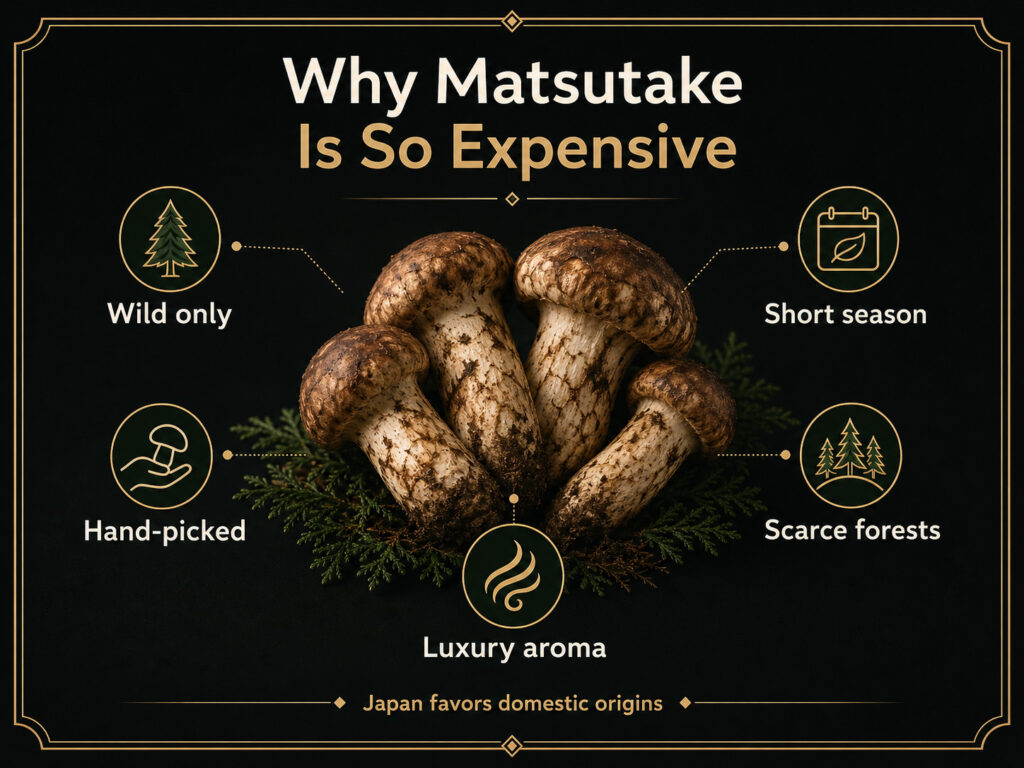
Few foods carry a price tag like matsutake. Top-grade mushrooms can sell for hundreds of dollars per kilogram, and the very best fetch far more. In fact, several forces push the price so high. To begin with, it cannot be farmed, so supply depends entirely on the wild harvest.
The second is the short season, which lasts only a few weeks each year. The third is the labor, since foragers find and pick every mushroom by hand on steep forest slopes. Moreover, domestic supply has collapsed over time. Japan’s matsutake harvest today is a tiny fraction of what it was decades ago.
As pine forests were neglected and pine trees fell to disease, the mushroom grew scarcer still. In 2020, it was even listed as a threatened species on the international red list. To meet demand, Japan now imports matsutake from countries such as China, Korea, Canada, and the United States. Naturally, imported mushrooms cost less, yet many people still prize the domestic ones for their aroma. Certain origins carry extra prestige, and Tamba matsutake from the Kyoto area is especially famous. A perfect closed-cap matsutake from such a region remains a true luxury.
What Does Matsutake Taste Like?
People often assume matsutake must taste as dramatic as it smells. In truth, its flavor is milder than its powerful aroma suggests. Instead, the taste is gentle, earthy, and savory, with a clean, woodland quality. There is a pleasant umami depth, but it never overwhelms. Meanwhile, the texture is a real part of the pleasure. Matsutake is firm and meaty, with a satisfying bite that holds up to cooking.
In particular, the stem has a wonderful springy snap. I always find the first taste of the season slightly surprising. The aroma promises something huge, yet the flavor is quiet and refined. That contrast is part of its charm, and it rewards slow, thoughtful eating. A Japanese saying captures this beautifully.
It notes that matsutake wins on aroma, while another mushroom, shimeji, wins on taste. In other words, you eat matsutake first with your nose, and only then with your tongue.
How to Cook and Enjoy Matsutake
With matsutake, the golden rule is simple: protect the aroma. Cooks avoid strong seasonings and heavy sauces that would bury its delicate scent. Light, gentle preparations always win. Likewise, washing is discouraged. Rinsing under water strips away the precious fragrance, so cooks wipe the mushroom clean with a damp cloth instead. Cooks trim only the tough base of the stem, keeping as much of the mushroom as possible.
Classic Matsutake Dishes
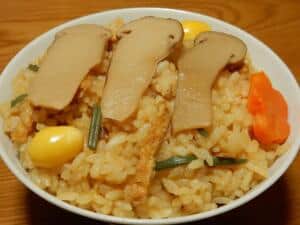
A few classic dishes show matsutake at its best. The first is dobin mushi, a fragrant broth steamed and served in a small clay teapot. Then diners pour the aromatic soup into a cup and breathe in the steam before sipping. Another favorite is matsutake gohan, rice cooked together with sliced matsutake.
As it cooks, the rice soaks up the aroma, turning a simple bowl into something special. Grilling is perhaps the purest approach of all. For yaki matsutake, cooks tear the mushroom by hand and grill it over charcoal. Typically, a squeeze of citrus, such as sudachi, and a little soy sauce are all it needs. Finally, clear soups also let the fragrance shine, floating a few slices in a delicate broth.
Handling Matsutake at Home
Fresh matsutake does not keep for long. Instead, its aroma fades day by day, so people eat it as soon as possible after buying. If you must store it, wrap it in paper and keep it chilled, unwashed, in the refrigerator. Tearing the mushroom by hand rather than slicing it with a knife is often preferred. The rough, torn surfaces are said to release more of the treasured aroma.
Matsutake vs Other Japanese Mushrooms
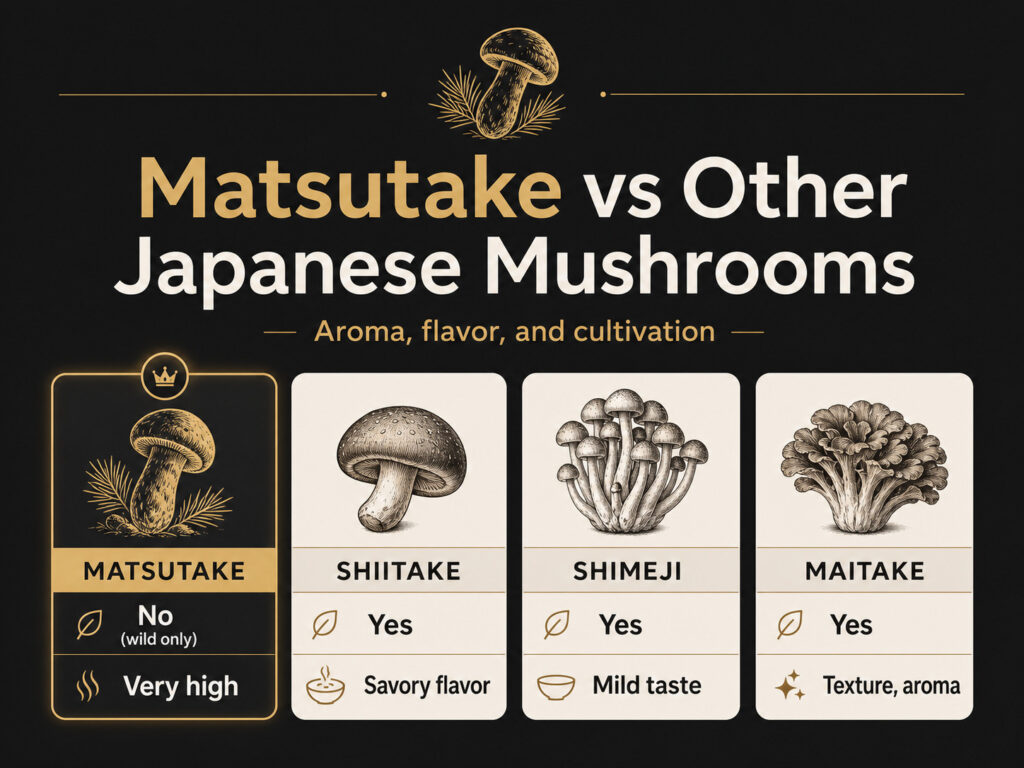
It helps to place matsutake alongside Japan’s everyday mushrooms. Shiitake is the most familiar, grown widely on logs and sold fresh or dried. It is affordable, richly savory, and used in countless dishes. Shimeji is another common favorite, mild and gently nutty.
An old saying pairs the two greats: matsutake for aroma, shimeji for flavor. Meanwhile, enoki and maitake round out the usual basket of cultivated mushrooms. Farmers grow all of these, which keeps them cheap and available year-round. By contrast, matsutake stands apart on every count. No one can farm it, it appears only in autumn, and people prize it above all for scent.
| Mushroom | Farmed? | Prized For | Price |
|---|---|---|---|
| Matsutake | No (wild only) | Aroma | Very high |
| Shiitake | Yes | Savory flavor | Low |
| Shimeji | Yes | Mild taste | Low |
| Maitake | Yes | Texture, aroma | Low |
So matsutake is less an everyday ingredient than a seasonal event. In short, you reach for shiitake to cook dinner, and for matsutake to celebrate the season.
Is Matsutake Nutritious?
Matsutake is more about pleasure than nutrition, but it is not without benefits. Like other mushrooms, it is very low in calories, at roughly twenty-three per hundred grams. Additionally, it offers dietary fiber, which supports healthy digestion. Beyond that, it provides vitamin D, potassium, and niacin, along with other minerals.
Honestly, though, no one eats matsutake for its nutrition. Its value lies in the aroma and the experience, not in any dietary boost. After all, cheaper mushrooms deliver similar nutrients for a tiny fraction of the price. In the end, it is a seasonal luxury, savored for its scent and its meaning rather than any health effects.
Matsutake in Japanese Culture
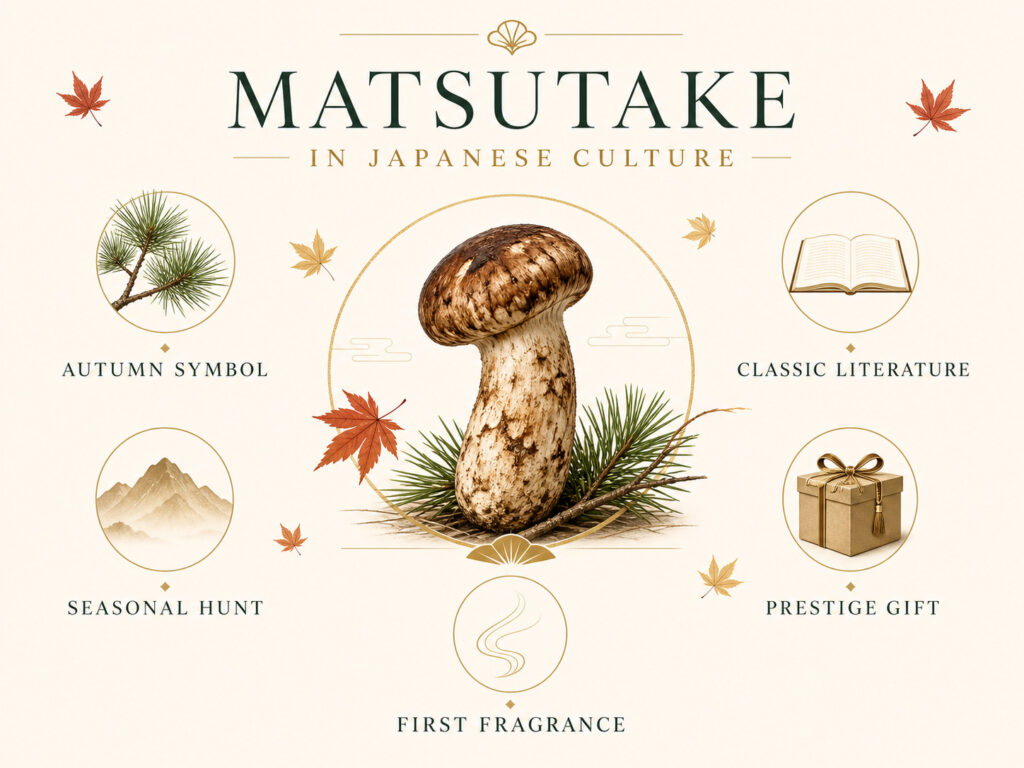
In Japan, this mushroom means far more than a costly ingredient. It is a cherished symbol of autumn, woven into the culture of the season. Indeed, its arrival marks the turning of the year toward cooler days. Historically, the mushroom appears in old poetry and classic literature, prized for centuries.
In the past, matsutake was far more common, and gathering it was a beloved autumn outing. Families would head into the hills for matsutake hunting, much as others go leaf-viewing. Likewise, as a gift, a fine matsutake carries real prestige. Presenting one is a gesture of respect and seasonal celebration. Even the anticipation is part of the joy, as people wait each year for the first fragrant mushrooms. In this way, matsutake is not just food, but a small, fragrant piece of the Japanese autumn itself.
Final Thoughts
Matsutake is one of Japan’s most treasured autumn foods, and it is easy to see why. Above all, its bold, spicy aroma captures the very feeling of the season in a single scent. Because no one can farm it, foragers gather every mushroom by hand in the wild. Together, that rarity, a short season, and a shrinking harvest explain its remarkable price. Yet the appeal was never really about status or cost.
It is about the fragrance, the memories, and the quiet luxury of a seasonal treat. In the end, the flavor is gentle, the texture firm, and the scent unforgettable. Understand matsutake, and you understand something about how Japan celebrates its seasons. The next time autumn arrives, that unmistakable aroma will feel like an old friend.
Matsutake FAQ
What is matsutake?
Matsutake is a prized wild mushroom from Japan. It grows in pine forests, and no one can farm it. It is famous for its strong, spicy-sweet aroma. People treasure it as a symbol of autumn.
Why is matsutake so expensive?
Matsutake resists all commercial cultivation. Foragers gather every mushroom by hand in the wild. The season is short, and the domestic harvest has shrunk. Limited supply and high demand push prices up.
Why can’t matsutake be farmed?
Matsutake lives in partnership with living pine trees. Its threads wrap around the roots in a mutual bond. This relationship is very hard to recreate. So far, no reliable farming method exists.
What does matsutake smell like?
Matsutake has a bold, spicy, and slightly sweet aroma. Some people detect a hint of cinnamon. The scent comes mainly from matsutakeol and methyl cinnamate. In Japan, it is the smell of autumn.
What does matsutake taste like?
The flavor is milder than the aroma suggests. It is gentle, earthy, and savory. The texture is firm and pleasantly meaty. People prize matsutake more for its scent than its taste.
When is matsutake in season?
Matsutake appears from late summer into autumn. The peak season is September and October. It grows for only a few short weeks. Foragers gather it during this narrow window.
Where does matsutake grow?
Matsutake grows under Japanese red pine trees. It prefers dry, poor soil on ridges and slopes. The pines are usually twenty to forty years old. Foragers treasure good spots and often keep them secret.
How do you cook matsutake?
The key is to protect the aroma. Cooks use light seasonings and gentle methods. Popular dishes include dobin mushi, matsutake rice, and grilled matsutake. A squeeze of citrus is often all it needs.
Should you wash matsutake?
No, washing strips away the aroma. Instead, wipe it clean with a damp cloth. Trim only the tough base of the stem. Handle it gently to keep the scent.
Is matsutake healthy?
Matsutake is low in calories and high in fiber. It also offers vitamin D and potassium. Still, its nutrition is not remarkable. People eat it for the aroma, not the health benefits.
What is the difference between matsutake and other mushrooms?
Farmers grow most mushrooms, like shiitake, with ease. Matsutake cannot, so it stays rare and costly. It is also prized above all for aroma. A Japanese saying calls it the king of fragrant mushrooms.
Is matsutake only eaten in Japan?
Matsutake grows in several countries, including Korea and Canada. Yet it is most treasured in Japan and Korea. Some people elsewhere find the aroma too strong. In Japan, it is a symbol of autumn luxury.
References
- Ministry of Agriculture, Forestry and Fisheries (MAFF), on matsutake, pine forests, and the decline of the domestic harvest. (Surveyed: July 2026)
- Standard Tables of Food Composition in Japan (MEXT), nutritional data for raw matsutake (item 08034). (Surveyed: July 2026)
- IUCN Red List, 2020 assessment listing Tricholoma matsutake as vulnerable. (Surveyed: July 2026)
- Lian, C., Narimatsu, M., Nara, K., & Hogetsu, T. (2006). “Tricholoma matsutake in a natural Pinus densiflora forest: correspondence between above- and below-ground genets.” New Phytologist, 171(4), 825-836. (Surveyed: July 2026)
- Cho, I. H., et al. (2016). “Chemical compositions and volatile compounds of Tricholoma matsutake from different geographical areas at different stages of maturity,” on 1-octen-3-ol (matsutakeol) and methyl cinnamate. Food Science and Biotechnology, 25(1). (Surveyed: July 2026)
- Yamada, A., et al. (2006). “Ectomycorrhizal synthesis of Tricholoma matsutake with Pinus densiflora seedlings,” on the shiro and cultivation research. Mycorrhiza. (Surveyed: July 2026)
Related Articles
- Japanese Fruit and Seasonal Produce (Surveyed: July 2026)
- Traditional Japanese Soups (Surveyed: July 2026)




Comments