


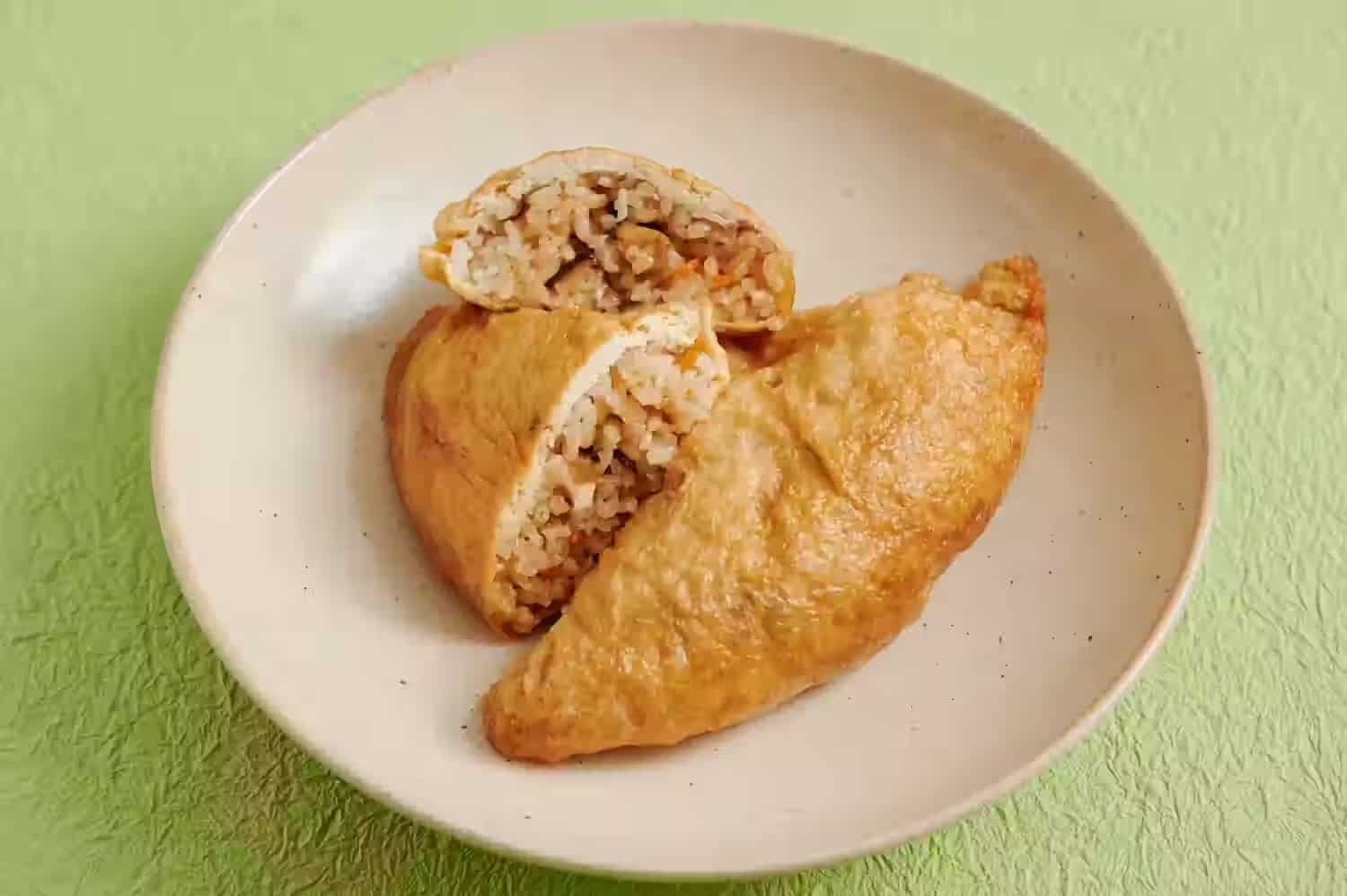

At first glance, it looks like an oversized piece of inarizushi. Then you bite in and find no vinegared sushi rice. Instead, the pouch holds rice and vegetables cooked together in seasoned broth. This is Itadaki (いただき), a regional dish of western Tottori Prefecture, especially the Yumigahama Peninsula.
Locals also call it nonokomeshi, and both names come with a story. In this guide, we explain how cooks make itadaki and how it differs from inarizushi. We’ll also look at the local stories behind its name and origin.
What Is Itadaki?
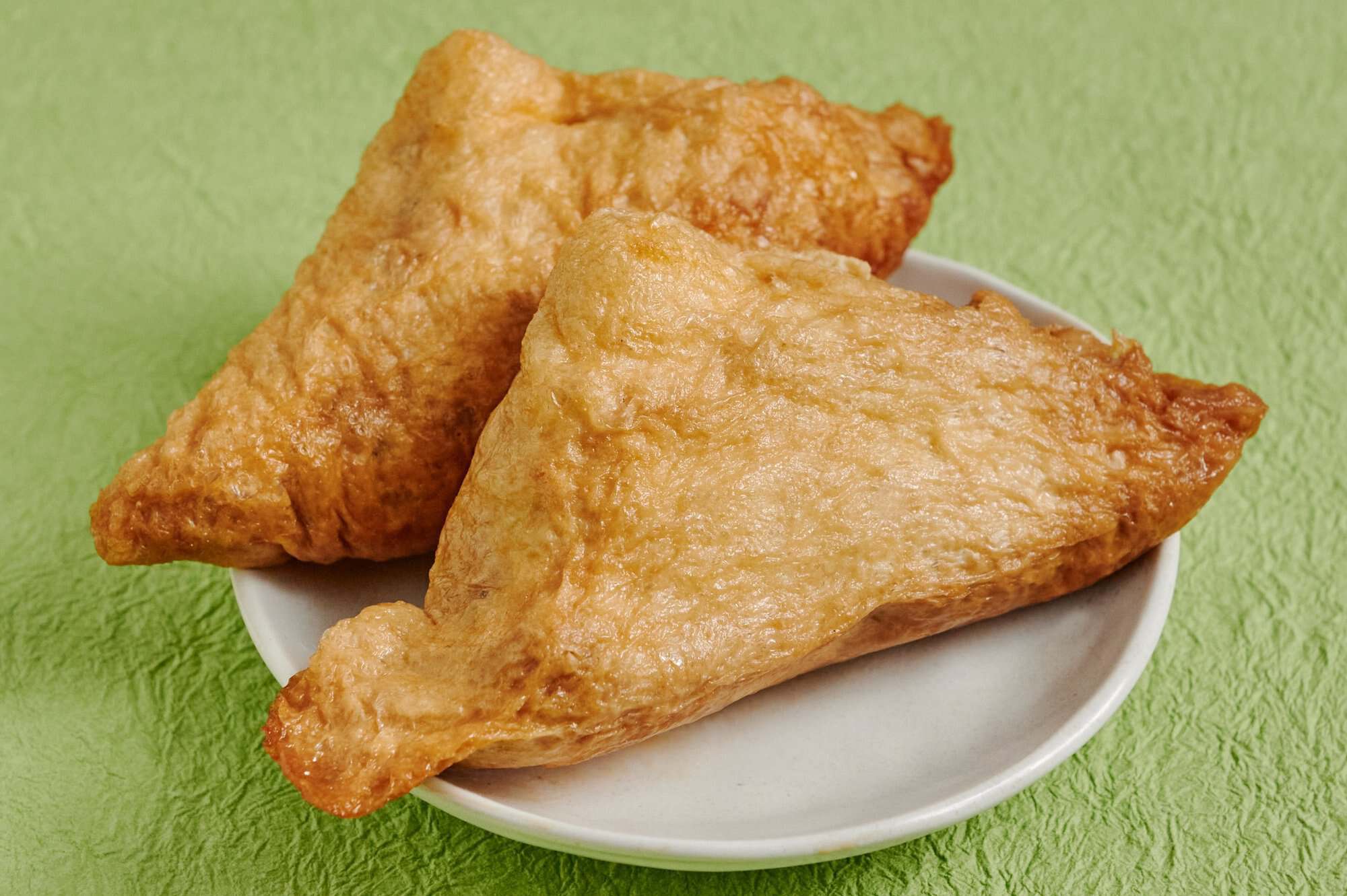
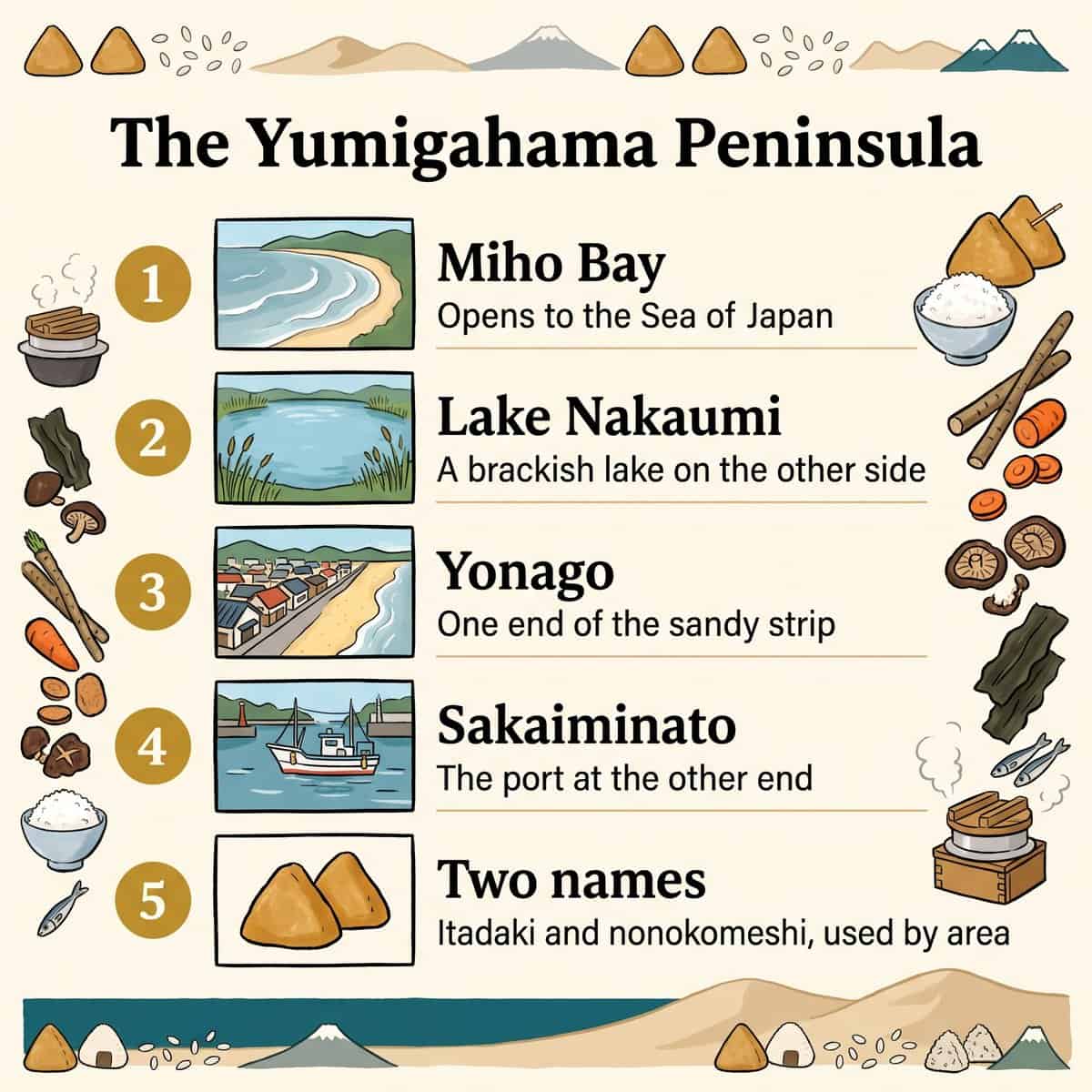
Itadaki, also called nonokomeshi, is a regional rice dish of western Tottori. Cooks fill large fried tofu pouches (aburaage) with uncooked rice and vegetables. Then they cook the filled pouches in seasoned dashi until the rice is tender. Japan’s Ministry of Agriculture, Forestry and Fisheries (MAFF) notes that it looks like big inarizushi. However, the method and flavor differ.
Quick Facts
- Japanese name
- いただき (itadaki)
- Also called
- Nonokomeshi (ののこめし, ののこ飯)
- Region
- Western Tottori, centered on the Yumigahama Peninsula (Yonago and Sakaiminato)
- Main ingredients
- Large triangular aburaage, uncooked rice, burdock root, carrot, dried shiitake
- Common broth
- Kombu kelp and niboshi (dried sardines) in some published recipes, usually seasoned with soy sauce and sugar
- Key technique
- Uncooked rice goes into the pouch and cooks there
- Origin tradition
- A local story links it to a temple priest in the mid-Meiji era (late 1800s); no record from that time is cited
- Traditional occasions
- Festivals and special days; one school-nutrition source also links it to kan no iri in early January
The Yumigahama Peninsula is a long, sandy strip between Miho Bay, which opens to the Sea of Japan, and the brackish Lake Nakaumi. It runs from Yonago up to the port of Sakaiminato, on the Sea of Japan coast of western Honshu. Local sources say the two names vary by area. However, they don’t draw a clear line between them, so you may see either one on a label.
What Does Itadaki Taste Like?
Itadaki tastes sweet and savory, much like Japanese seasoned rice dishes. A 2019 feature by the regional food site Sanin Iimono Tankentai describes a simple sweet-salty flavor. In its account, the rich taste of the fried tofu soaks into the rice. The feature also says it tastes good after cooling.
Why does it taste that way? Because the rice cooks while sealed in the seasoned pouch, the broth flavors both the tofu and the filling. Even so, the exact texture varies with the recipe and how long the rice soaks and cooks.
Will it feel familiar? Probably, if you like soy-simmered dishes. On the other hand, fans of tangy sushi rice might be a little thrown at first. So expect a substantial seasoned rice dish rather than a small piece of sushi.
Itadaki vs Inarizushi: What’s the Difference?
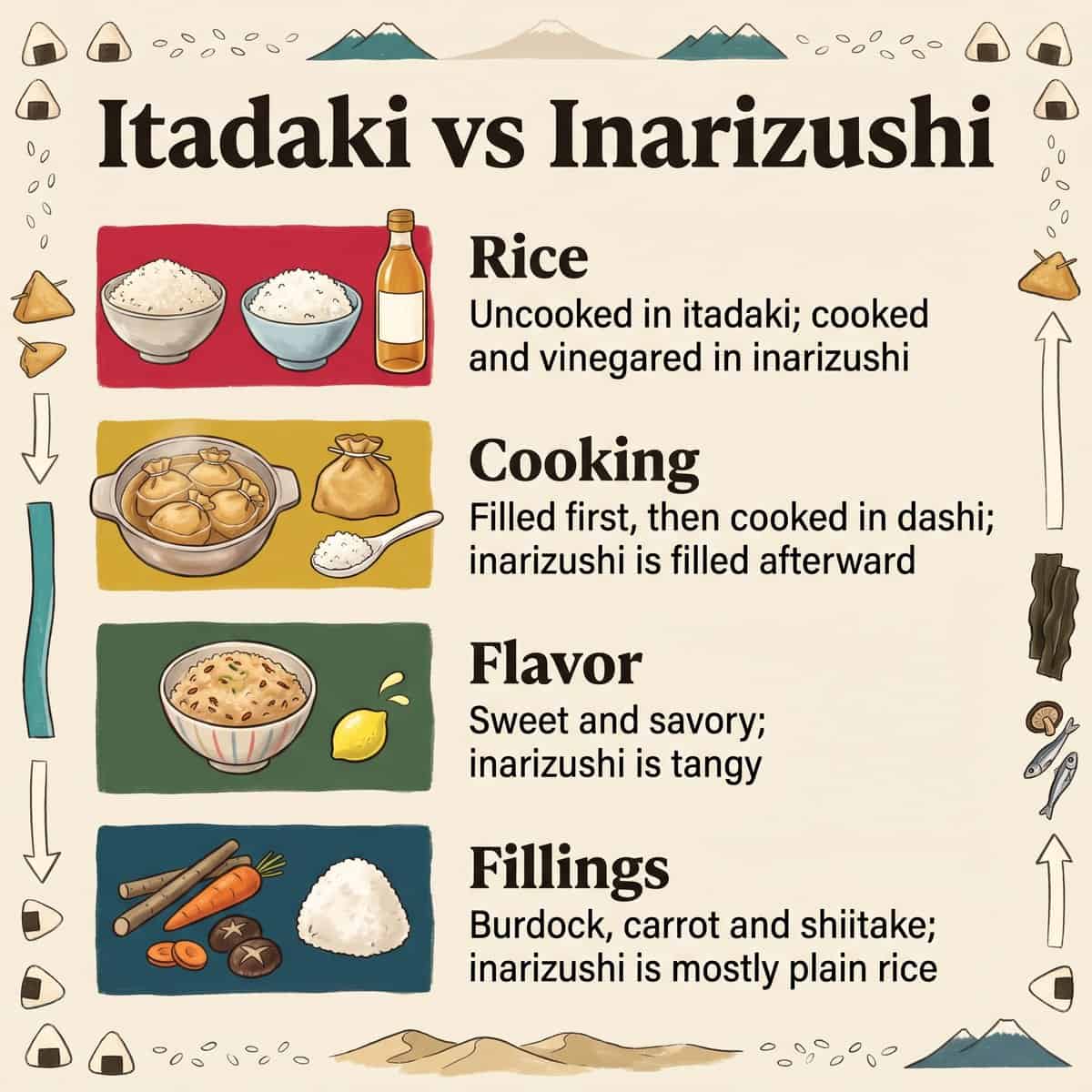
Both use aburaage, and both end up as golden tofu pouches filled with rice. Beyond that, though, they’re built in opposite ways. With inarizushi, you cook the rice first and fill the pouch afterward. With itadaki, by contrast, you fill the pouch first and cook everything together.
| Feature | Itadaki (Tottori) | Inarizushi (nationwide) |
|---|---|---|
| Rice when filled | Uncooked rice, sometimes soaked first, mixed with vegetables | Cooked, vinegared sushi rice |
| Cooking | Filled pouches cook in seasoned dashi, often in a rice cooker in modern recipes | Seasoned pouches are prepared separately, then filled with cooked rice |
| Flavor | Sweet and savory, like seasoned rice | Sweet pouch with tangy rice |
| Fillings | Burdock, carrot, shiitake; sometimes chicken | Mostly plain sushi rice |
| Typical use | Often filling enough for a meal or packed lunch | Often part of a sushi meal, lunch, or side selection |
Japan has other regional dishes built on fried tofu, too. For example, Ehime has its own Matsuyama age sushi. If you’re new to the basics, our guides to sushi and tofu are a good place to start.
How Is Itadaki Made?
The method is simple, yet a little nerve-racking the first time. After all, you’re trusting uncooked rice to cook inside a closed pouch. The recipe on MAFF’s regional food page, provided by the Tottori Dietetic Association, goes roughly like this.
Open the pouches
Slit the short side of each large triangular aburaage and open it into a bag.
Prepare the vegetables
Shave the burdock and soak it, cut the carrot into thin strips, and chop rehydrated shiitake.
Fill and close
Mix the uncooked rice with the vegetables, stuff the pouches, and pin each one shut with a toothpick.
Poke holes
Pierce each pouch about 10 times with a cooking chopstick, so the flavor can soak in.
Cook in dashi
Lay kombu and niboshi in a rice cooker, stand the pouches upright, add the seasoned liquid, and cook.
Summarized from the recipe on MAFF’s “Our Regional Cuisines” page.
The seasoning in that version is soy sauce, sugar, and sake. MAFF also notes that its recipe video adapts the dish slightly for home kitchens. Published home recipes today commonly use a rice cooker, but that doesn’t mean the appliance was part of the original method.
How Big Is Itadaki?
Itadaki is generally larger than ordinary inarizushi. MAFF describes it as resembling a big inarizushi, and its recipe calls for large triangular aburaage. Still, there’s no standard size. MAFF’s recipe uses 300 grams of rice for six pouches, while Tottori Prefecture’s uses 220 grams for eight. So the size depends on the household or maker.
Recipes Vary by Household and Source
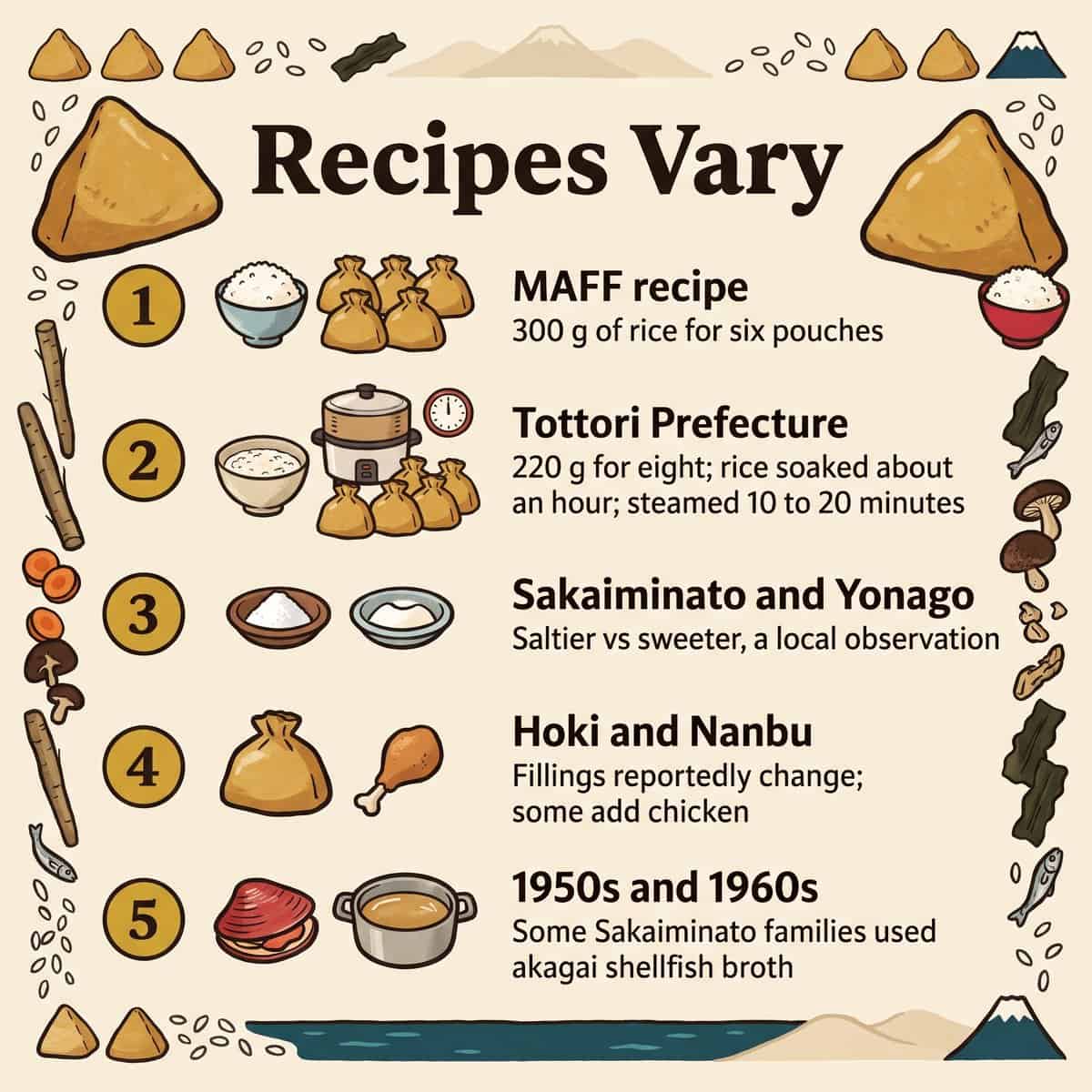
Here’s the thing, though: there’s no single standard recipe. Even published versions differ on soaking and piercing, and their seasoning lists vary a little. Tottori Prefecture’s own recipe, for instance, washes the rice and soaks it for about an hour first. Then it cooks the pouches in a rice cooker and lets them steam for 10 to 20 minutes. Notably, that version doesn’t mention poking holes at all.
Flavor may shift by area, too. A local promotion group’s leader told Tottori Prefecture that Sakaiminato versions tend to be saltier, while Yonago leans sweeter. That’s a local observation, not a fixed rule. In inland towns such as Hoki and Nanbu, the fillings reportedly change as well. Some cooks add chicken. And in Sakaiminato during the 1950s and 1960s, some families used local akagai shellfish and cooked the pouches in its broth.
Where Did Itadaki Come From? The Local Traditions
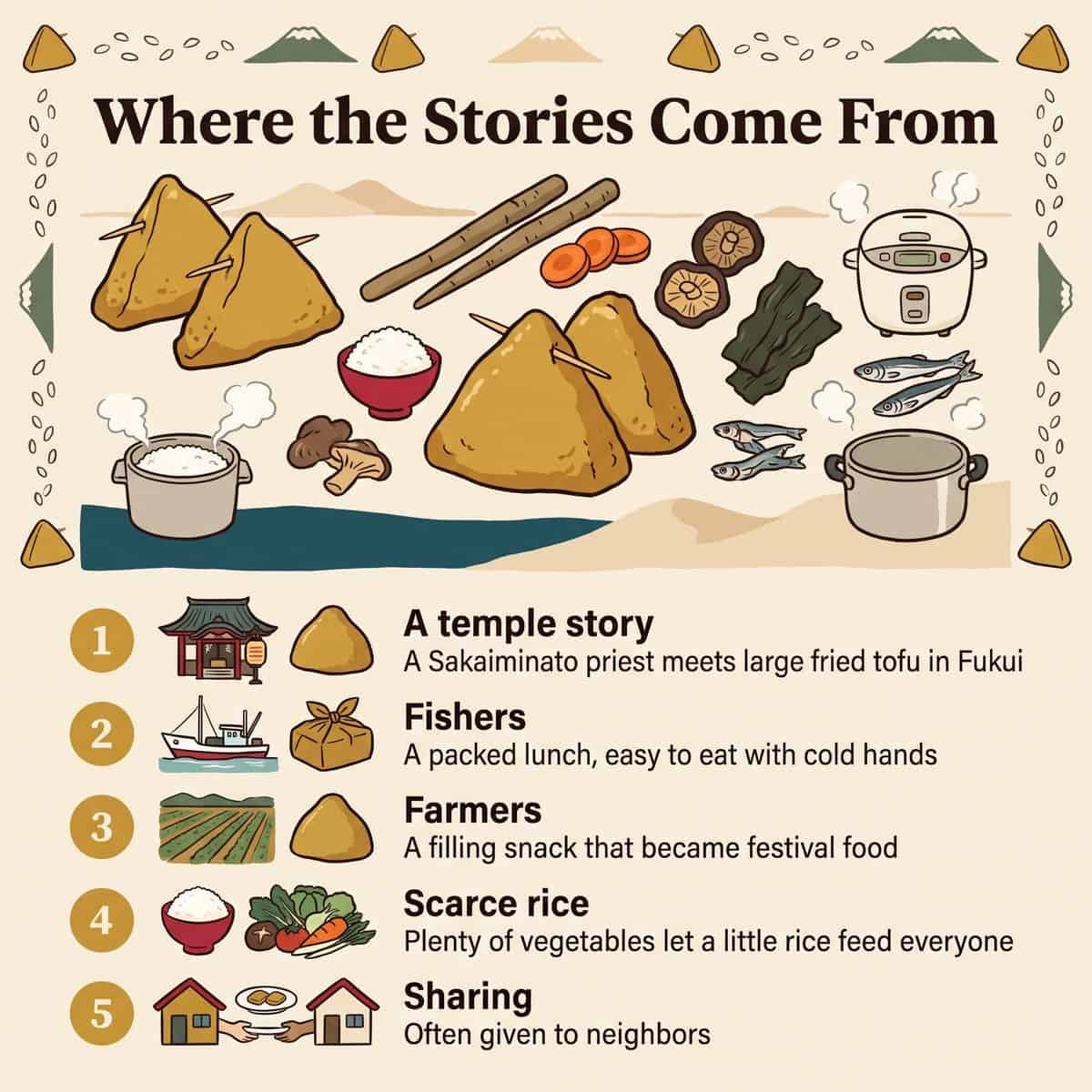
The exact origin of itadaki is unknown. MAFF and Tottori Prefecture both repeat a local tradition linking it to a temple priest in the mid-Meiji era. Neither cites a record from that time, so it’s best read as oral tradition. The earliest published reference in a Yonago City Library guide is a 1979 local recipe collection, though earlier ones may exist.
A Temple Story
As the tradition goes, a head priest at a temple in Sakaiminato visited a temple in Fukui Prefecture. There, the temple served him large fried tofu as part of Buddhist vegetarian cuisine. He liked it so much that he brought some home, filled it with rice and vegetables, and cooked it.
Neither page names the temple, the priest, or a year. A 2019 regional feature gives a late Edo period version instead, but it also cites no historical record. So the date remains unresolved.
Food for Fishers, Farmers, and Feast Days
Fishing once thrived along Yumigahama. Zengakuei, Japan’s national council of school nutritionists, shares a local account from those days. In it, itadaki served as a packed lunch, or bento, and a snack for busy fishers. It was easy to eat even with hands stiff from the cold. The council adds that people reportedly made it as an offering, or as a lunch, when visiting Daisenji Temple.
Tottori Prefecture’s recipe page describes it as a filling snack for farmers that later became festival food. Official accounts also say that when rice was scarce, families used plenty of vegetables so a little rice could fill everyone up. They often shared the results with neighbors, too. Still, these are preserved cultural accounts, not a dated history.
A Modern Interpretation: The “Waste-Nothing” Theory
Local fans also tie itadaki to a habit of throwing nothing away. Mr. Matsubara, who leads a Yonago group promoting the dish, links the old akagai shellfish broth to that spirit. He also guesses that carrot and burdock may have gone in so that kitchen scraps wouldn’t go to waste. He frames this as his own theory, though, so we’d treat it that way too.
Why Is It Called Itadaki?
Honestly, there’s no single answer here. None of the proposed name origins has been proven. Instead, official and local sources keep several competing explanations alive, and each one is charming in its own way.
Gratitude
“To receive with thanks”
One theory ties the name to itadaku, a polite way of saying “to receive,” showing thanks for a dish made with precious rice. It’s the same verb behind itadakimasu, said before meals.
Mountain
“The summit”
Itadaki also means peak. The triangle shape may recall the summit of Mount Daisen, the highest peak in the Chugoku region.
Clothing
Nonokomeshi
Another theory derives nonoko from nunoko, a padded cotton garment the plump pouches were thought to resemble.
Sources: MAFF; Tottori Prefecture; Zengakuei.
The cotton theory fits local history nicely. According to the 2019 Sanin Iimono Tankentai feature, the peninsula once grew a lot of Hakushu cotton (Hakushū-men, 伯州綿). That feature favors the gratitude theory, but it cites no historical evidence. In short, the available sources don’t let us rank the three with confidence.
Where to Find Itadaki Today
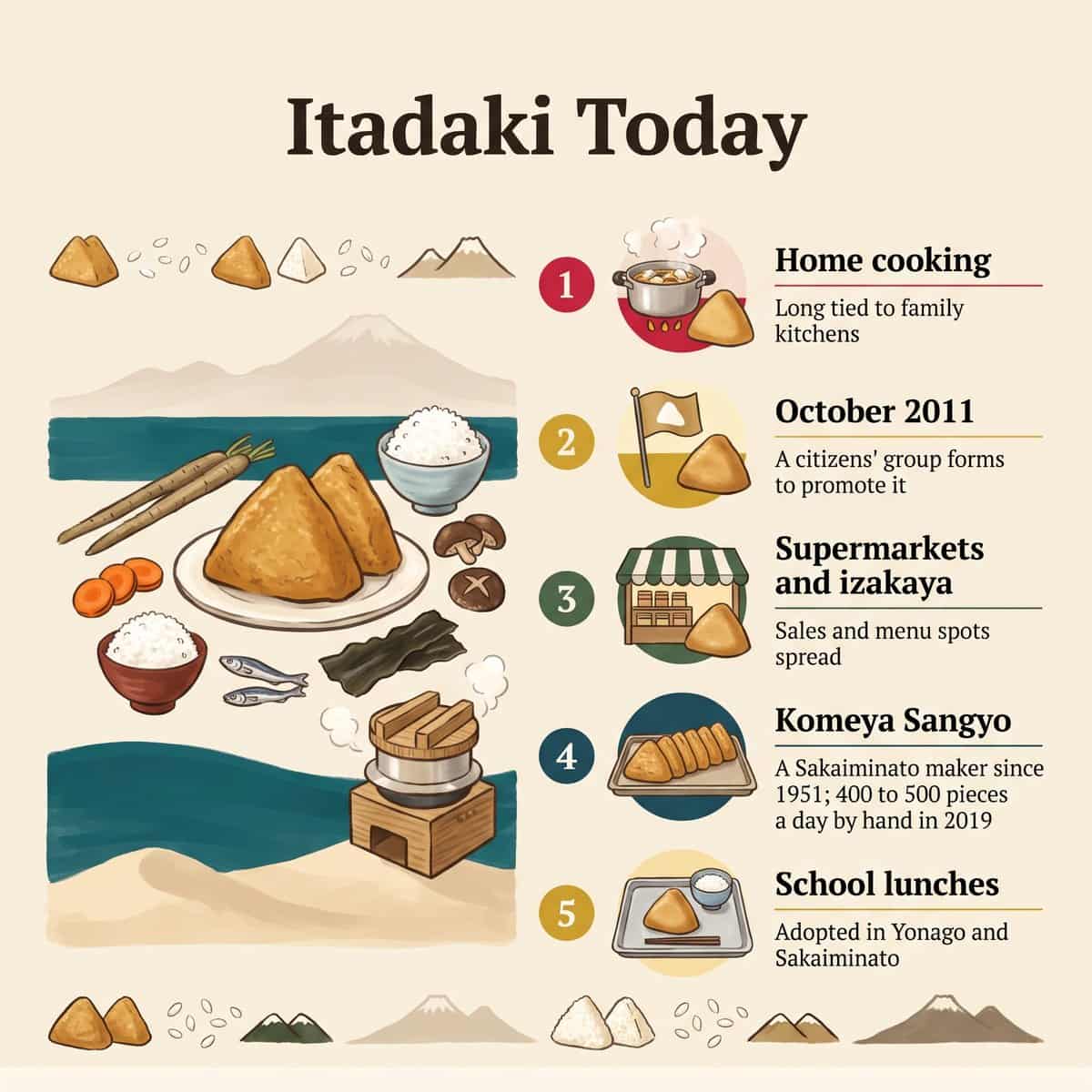
Official regional pages report that itadaki has been sold in supermarkets and served at some restaurants in western Tottori. However, they don’t list current sellers, so check locally. Since it goes by two names, look for nonokomeshi on labels as well.
Itadaki has long been tied to home cooking. Then, in October 2011, a citizens’ group called Yonago Itadaki Gainatai formed to promote it more widely. The group has pushed for more shops to sell it, joined events, and held cooking classes for parents and children. According to Tottori Prefecture, these efforts helped spread it to supermarkets and some izakaya menus.
Local food businesses have helped, too. Take Komeya Sangyo (こめや産業), a Sakaiminato maker founded in 1951. A 2019 feature reported that the company made about 400 to 500 pieces a day by hand. At the time, it supplied supermarkets and department stores around Sakaiminato and Yonago. The same feature reported that school lunches in both cities had adopted itadaki.
Before you buy
- Look for both names: itadaki and nonokomeshi.
- Stock and sellers change, so check local supermarkets or ask your accommodation before making a special trip.
- Common published recipes use niboshi (dried sardine) dashi, and some add chicken. So it isn’t necessarily vegetarian.
How local is it? A 1991 record of local food life, Kikigaki Tottori no Shokuji, ties it closely to this area. According to a Yonago City Library research guide, its preface describes itadaki as handed down only on the Yumigahama Peninsula. That shows a strong regional link, though it doesn’t rule out similar dishes elsewhere. In eastern Tottori, by contrast, tofu shapes daily food in other ways, such as tofu chikuwa.
Final Thoughts: Why Itadaki Is Worth Trying
Itadaki is easy to mistake for a supersized inarizushi. Yet once you know how it’s made, it feels like a different dish entirely. Rice, vegetables, and dashi all cook together inside one fried tofu pouch. The result is closer to a portable seasoned rice meal than to sushi.
It also carries a lot of local memory, from temple stories to fishers’ lunches and shared feast-day food. So if you’re passing through Yonago or Sakaiminato, it’s worth looking for one. While you’re in Tottori, you could also try Matsuba crab in winter, or browse more Tottori foods.
Key Takeaways
- Itadaki is fried tofu filled with uncooked rice and vegetables, then cooked in dashi.
- It looks like inarizushi, but it uses no vinegared rice.
- Locals also call it nonokomeshi.
- Its temple origin story is a tradition, not a documented fact.
- Ask at supermarkets around Yonago and Sakaiminato, since sellers change.
Frequently Asked Questions
About the Dish
- What is the difference between itadaki and nonokomeshi?
-
Official sources treat them as two names for the same dish. Local sources say usage varies by area, though no clear boundary is documented. One theory links nonokomeshi to nunoko, a padded cotton garment.
- Is itadaki a type of sushi?
-
It’s generally treated as a seasoned rice dish rather than sushi. Although it looks like inarizushi, it uses no vinegared rice. Instead, the rice cooks inside the tofu pouch in dashi.
- Can you eat itadaki cold?
-
Yes, if it has been stored properly. A 2019 regional feature says it tastes good after cooling, and local accounts describe it as a packed lunch. That isn’t advice to leave cooked rice at room temperature, though.
- Is the origin of itadaki historically proven?
-
No. Official pages repeat a local story about a temple priest in the mid-Meiji era, but they cite no record from that time. The earliest published reference in a Yonago City Library guide is a 1979 local recipe collection, though earlier ones may exist.
- When do people traditionally eat itadaki?
-
Families made it for festivals and special days. One school-nutrition source also links it to kan no iri, the start of the traditional midwinter period in early January. Today, though, official pages also report sales in supermarkets.
Buying and Dietary Needs
- Where can I buy itadaki?
-
Official pages report sales at supermarkets and some restaurants in western Tottori, around Yonago and Sakaiminato. Labels may say itadaki or nonokomeshi. They don’t list current sellers, so ask locally first.
- Is itadaki vegetarian?
-
Not necessarily. The temple story mentions Buddhist vegetarian food, but common published recipes use niboshi (dried sardine) dashi. Some versions also add chicken, so ask if you avoid fish or meat.
- Can I make itadaki at home?
-
Yes, with large triangular aburaage, rice, burdock, carrot, and shiitake. Both MAFF and Tottori Prefecture publish home recipes that use a rice cooker. Their steps differ a little, so pick one and follow it closely.
References
- Ministry of Agriculture, Forestry and Fisheries – Our Regional Cuisines: Itadaki, Tottori Prefecture (Accessed October 2026)
- Tottori Prefecture – Itadaki: Tottori’s Local Specialties (Accessed October 2026)
- Tottori Prefecture – Itadaki Recipe (Accessed October 2026)
- Tottori Prefecture – Yonago Itadaki Gainatai (Accessed October 2026)
- Zengakuei (全国学校栄養士協議会) – Kan no Iri: Itadaki, Tottori Prefecture (Accessed October 2026)
- National Diet Library Collaborative Reference Database – Yonago City Library: Researching Local Cuisine of Western Tottori, citing Kikigaki Tottori no Shokuji (Rural Culture Association Japan, 1991), Furusato no Aji Vol. 1 (1979), and Yamamoto, T., Sato no Aji Goyomi (Imai Shoten, 1996) (Accessed October 2026)
- Sanin Iimono Tankentai – Tankenki Vol. 140: Nonokomeshi, the Port Town’s Soul Food, April 2019 (Accessed October 2026)
Related Articles
- Matsuyama Age Sushi (松山揚げずし) (Surveyed: October 2026)
- Tofu Chikuwa (とうふちくわ) (Surveyed: October 2026)
- Matsuba Crab (松葉ガニ) (Surveyed: October 2026)
- Tofu (豆腐) (Surveyed: October 2026)
- Sushi (寿司) (Surveyed: October 2026)
- Japanese Rice (Surveyed: October 2026)
- Bento (弁当) (Surveyed: October 2026)
- Iriko Meshi (いりこ飯) (Surveyed: October 2026)
Photo source: Ministry of Agriculture, Forestry and Fisheries website (https://www.maff.go.jp/j/keikaku/syokubunka/k_ryouri/search_menu/menu/itadaki_tottori.html)
出典:農林水産省ウェブサイト(https://www.maff.go.jp/j/keikaku/syokubunka/k_ryouri/search_menu/menu/itadaki_tottori.html)




Comments