


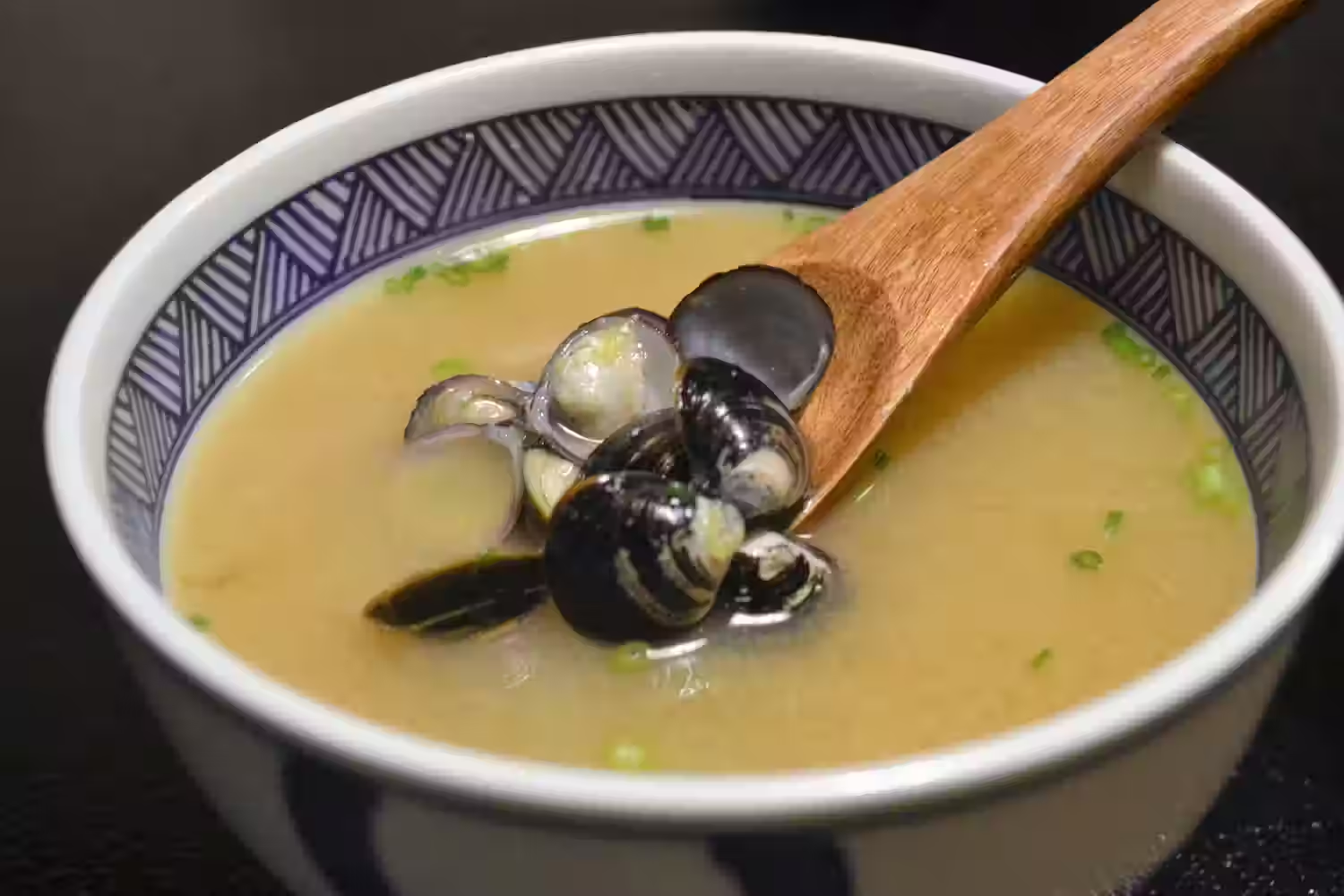

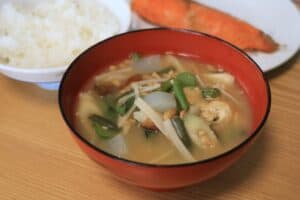
A small bowl of soup arrives at a table in Matsue. Inside, dozens of tiny dark clams sit in a steaming broth. This is Shijimi Jiru (しじみ汁), the clam soup of Shimane Prefecture, made with Yamato shijimi from nearby Lake Shinji.
It looks humble, yet locals take it seriously. Traditionally, cooks around the lake served it as a clear broth in summer and as miso soup in winter. This guide explains that difference, how locals cook the soup, and how it tastes. It also answers the question many visitors ask at the table: are you supposed to eat the clams?
What Is Shijimi Jiru?
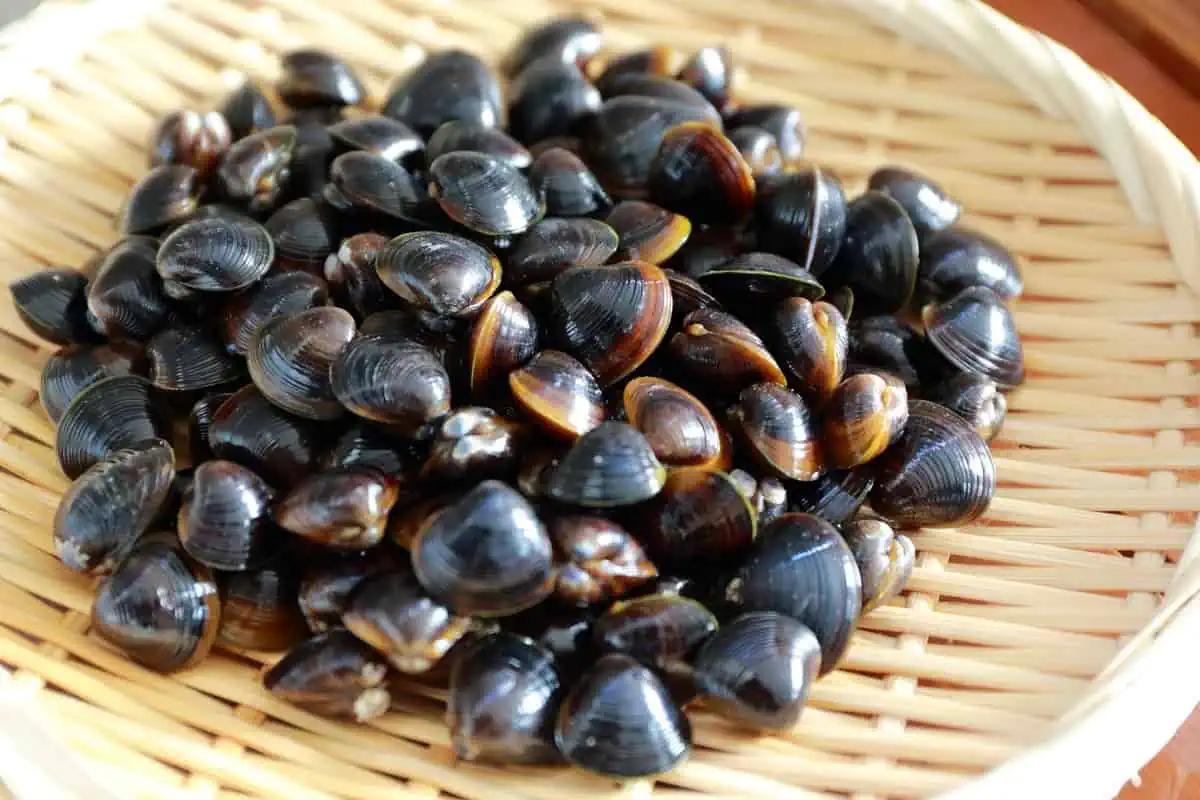
Shijimi jiru is a Japanese soup of small shijimi clams and water, finished with miso or as a lightly seasoned clear broth. People enjoy it across Japan. In eastern Shimane, however, the local version uses wild-harvested Yamato shijimi from brackish Lake Shinji, between Matsue and Izumo.
Quick Facts
- Japanese name
- しじみ汁 (shijimi jiru)
- Region
- Eastern Shimane Prefecture, around Lake Shinji (Matsue and Izumo)
- Main ingredient
- Yamato shijimi (Corbicula japonica), a brackish-water clam
- Two styles
- Miso soup (traditionally winter) and sumashi, a clear broth (traditionally summer)
- Peak seasons
- Doyo (midsummer) shijimi around July; kan (coldest-season) shijimi in mid-winter
- GI-protected ingredient
- “Lake Shinji Brackish Water Clam,” Japan GI No. 171, registered November 17, 2025. The GI covers the clam’s product name, not the soup as a dish
- Harvest
- Wild-harvested from the lake by hand or boat under cooperative rules
- When eaten
- Year-round, as an everyday soup
Shijimi are small. The local cooperative grades Lake Shinji clams by shell thickness, measured across the closed shell from one half to the other. Sizes run S at 10 to 12 millimeters, M at 12 to 14, and L at 14 or more. So a single bowl holds many shells, which is why the eating question comes up so often.
Why Lake Shinji Clams Stand Out
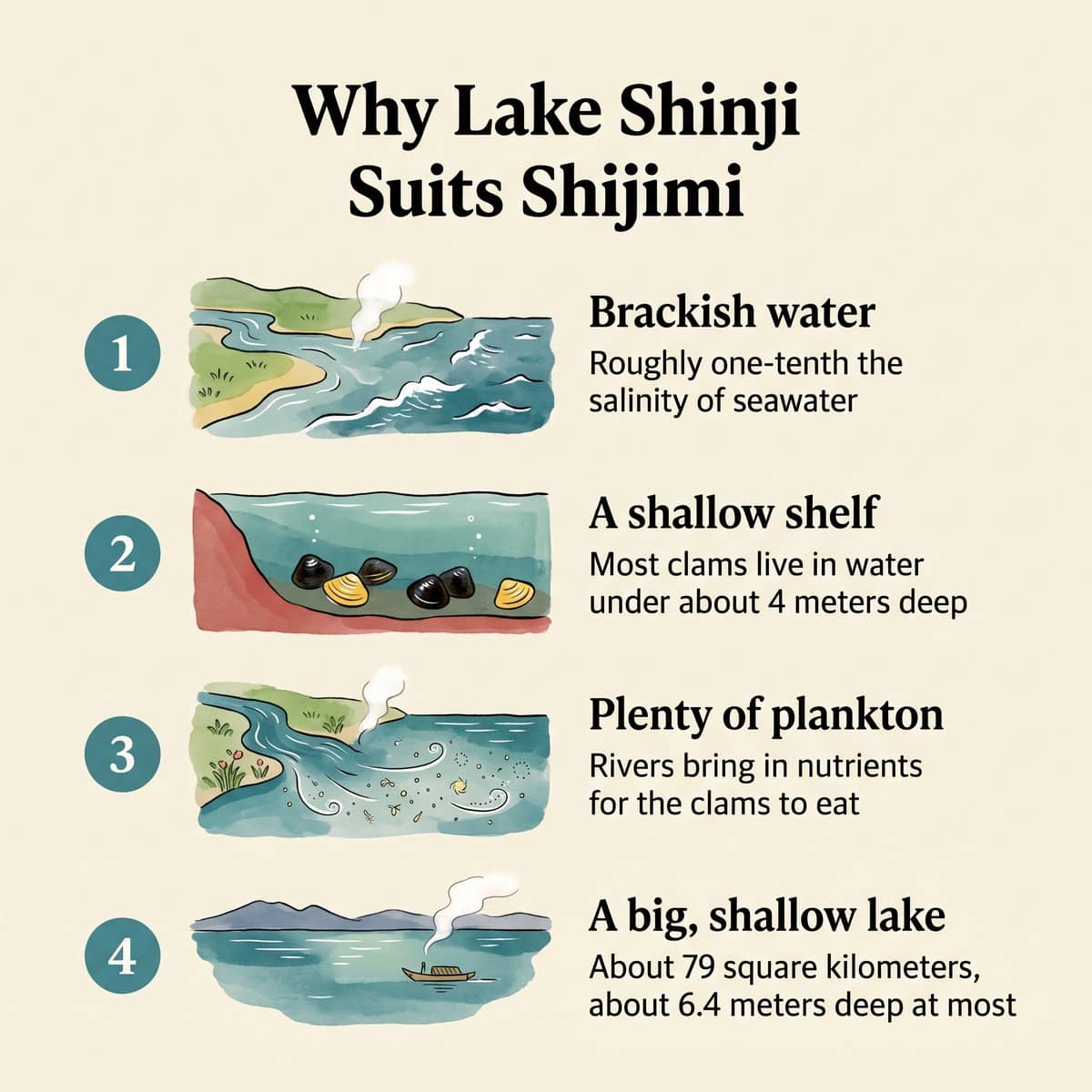
Lake Shinji suits Yamato shijimi because it is shallow, mildly salty, and rich in the phytoplankton they eat. It is a brackish lake, where river water meets seawater flowing in from the coast. Japan’s geographical indication (GI) record describes its salinity as roughly one-tenth that of seawater. Shimane’s fisheries research center gives 0.3 to 1.0 percent across the lake and the Ohashi River.
According to the center, that range matches the slightly salty water Yamato shijimi prefer. The GI specification adds that several surrounding rivers bring in nutrients, so phytoplankton, the clams’ main food, grows in abundance. The clams cluster on the shallow shelf, mostly in water under about 4 meters deep. In those conditions, they grow into the large, meaty clams the GI record highlights.
The lake at a glance
Lake Shinji covers about 79 square kilometers, according to the local fisheries cooperative. It is Japan’s seventh-largest lake, with a maximum depth of only about 6.4 meters. That shallowness is part of what makes so much of it good clam habitat. Depth is not the only factor, though. A long-term Shimane study found that bottom sediment, especially its silt and clay content, was the main limit on where the clams lived.
One of the Seven Delicacies of Lake Shinji
Locals also group the lake’s best-known catches as the Shinjiko Shitchin, or seven delicacies. Shimane Prefecture lists them as follows.
- Yamato shijimi (clam)
- Wakasagi (pond smelt)
- Shirauo (icefish)
- Koi (carp)
- Unagi (eel)
- Suzuki (Japanese sea bass)
- Yoshiebi, also called moroge-ebi (shrimp)
Where did the grouping come from? The Shimane Prefectural Library checked the original newspaper for one clue. A series called “Ten Views and Eight Delicacies of Lake Shinji” ran in the local Shoyo Shimpo. It appeared from March 30 to May 1, 1930. From its fourth installment, the title became “Seven Delicacies,” and kisu (sillago) dropped off the list.
Two Seasons, Two Styles
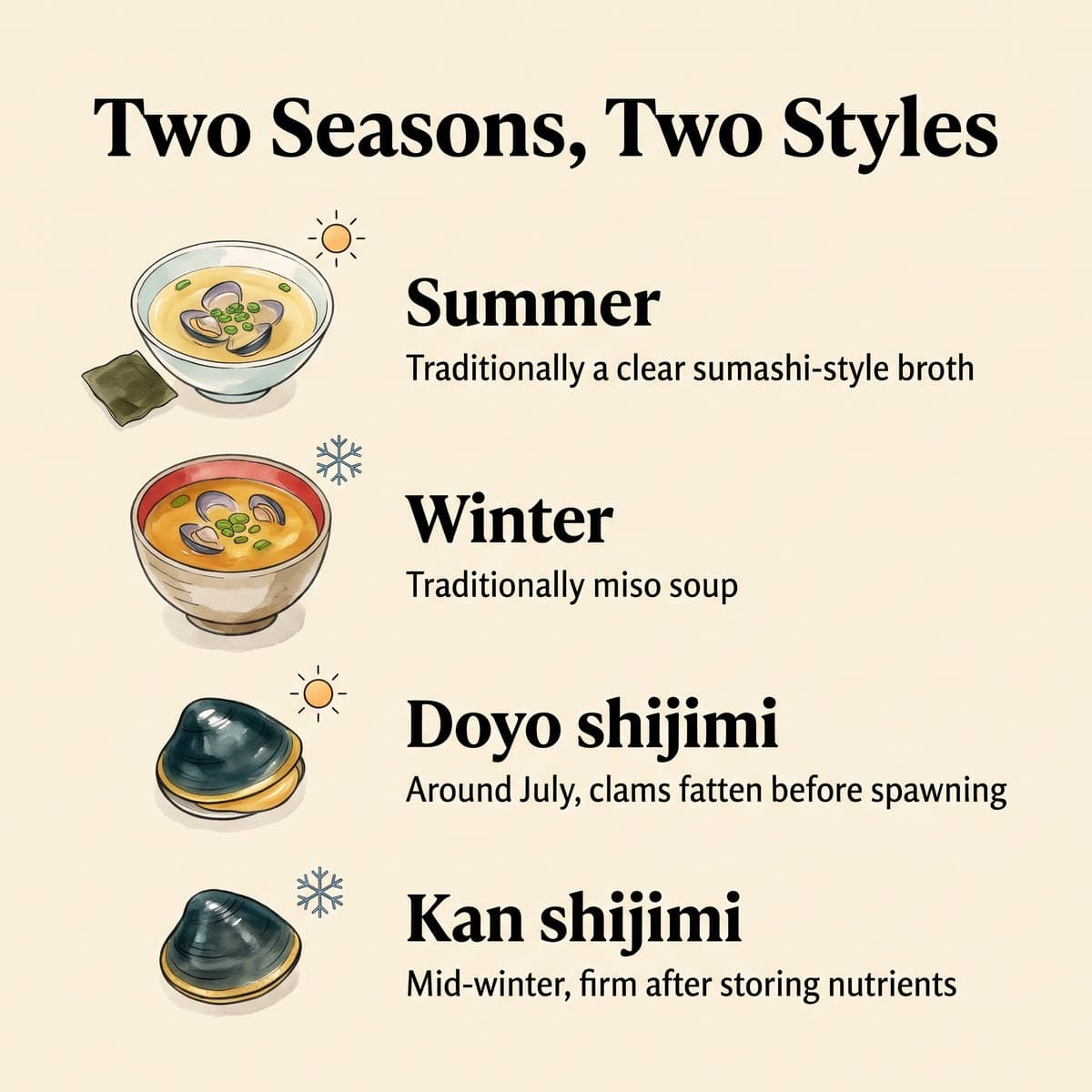
Miso is not the only option. Around Lake Shinji, the style has traditionally changed with the season. This table brings together what the agriculture ministry and Shimane Prefecture say.
| Point | Summer | Winter |
|---|---|---|
| Traditional style | Clear sumashi-style broth | Miso soup |
| Peak name | Doyo shijimi, around July | Kan shijimi, mid-winter |
| Why it peaks | Clams fatten before spawning | Clams store nutrients to overwinter, and the meat firms up |
| Local note | Doyo shijimi soup was considered especially good, and summer clams were valued against summer fatigue | Shimane’s eastern fisheries office features a shijimi hot pot as its February recipe |
Sources differ slightly on winter timing. Shimane’s eastern fisheries office says January to February, while the GI specification says January to March. The ministry also describes the seasonal split in the past tense. So don’t expect every household or restaurant to follow it today; you may meet either style at any time.
Easy Shijimi Jiru Recipe: Lake Shinji Style
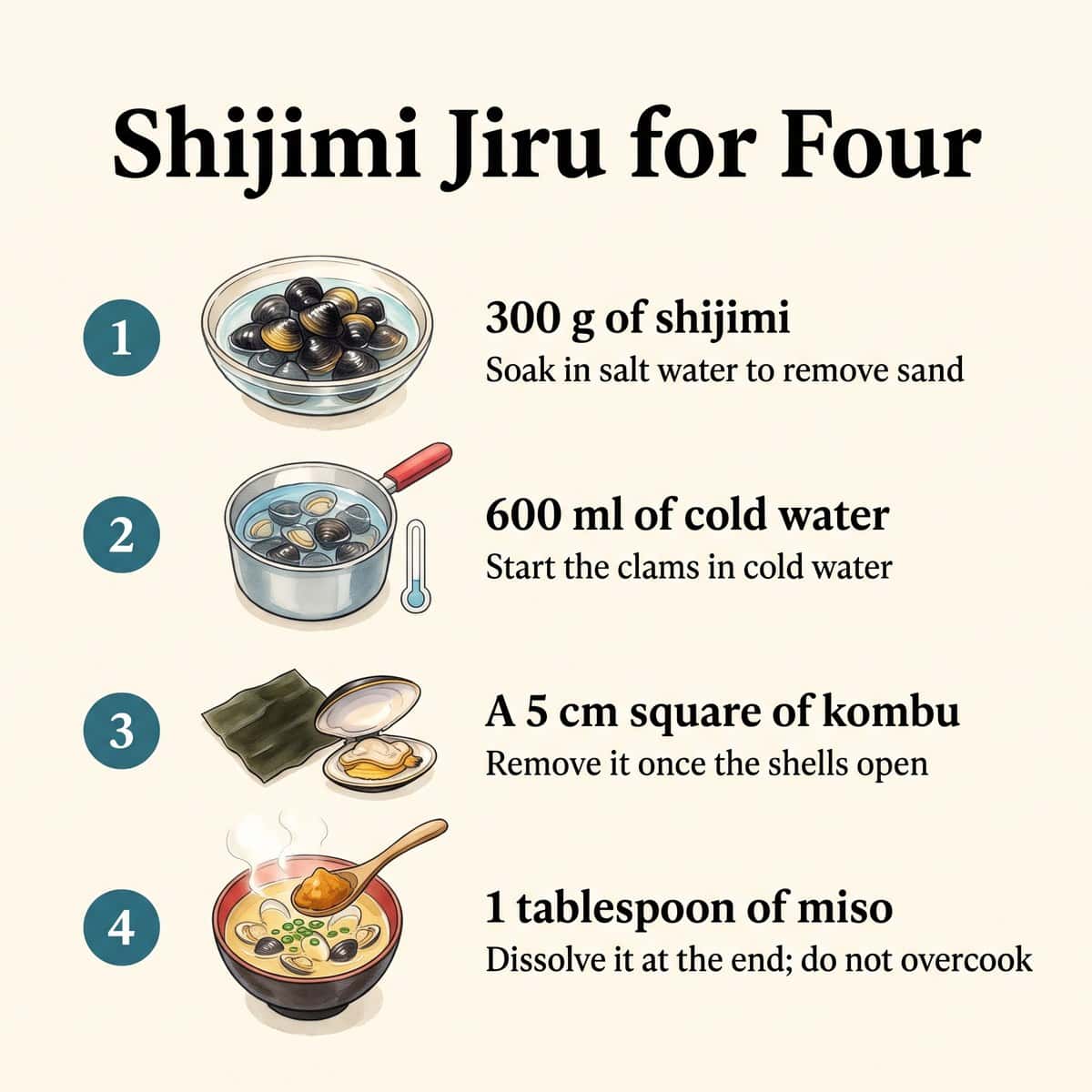
For four servings, use 300 grams of cleaned shijimi and 600 milliliters of water. Add a 5-centimeter square of kombu and one tablespoon of miso. Start the clams in cold water, remove the kombu once the shells open, and stop cooking soon after. These amounts come from the agriculture ministry’s Shimane recipe, supplied by a local dietary improvement group. Kombu is also a classic base for kombu-based dashi.
- Soak the clams so they spit out sand. The ministry’s notes suggest salt water at about 1 percent, overnight.
- Put water, kombu, and clams in a pot together, then heat over medium.
- Once it boils, lower the heat. When the shells open, remove the kombu.
- Dissolve the miso and adjust the taste. Do not let it overcook.
Izumo even has a saying about it, recorded by the ministry. It translates loosely as “shijimi from cold water, just one boil.” In other words, start cold and stop soon after the shells open. For a summer-style clear soup, omit the miso and finish the clam broth with restrained seasoning. The official recipe gives no single formula for this version, so household recipes vary.
Why Soak Them in Salt Water?
Shimane’s fisheries center recommends about 10 grams of salt per liter, which is roughly 1 percent. That is close to the clams’ own brackish home. Research also suggests salinity matters for flavor. A 2017 study at Hokkaido’s fisheries research institute held Yamato shijimi at different salinities. At 10 psu (practical salinity units), about 1 percent, free amino acids in the meat nearly doubled within 24 hours.
The Freezer Trick
Here is a tip that surprises many cooks. Shimane’s fisheries center says freezing does not spoil the flavor. Frozen shijimi, it says, actually release more umami into soup than fresh ones. The center suggests a freezer life of up to about six months. It also notes that a few hours in the fridge after sand removal can boost umami further. Store-bought frozen shijimi are a different matter. Products differ in whether they are already cleaned or heat-treated, so follow the package instructions.
Food-safety note
For bivalves, Japan’s agriculture ministry suggests heating the center to at least 85°C for one minute. It also warns against splashing water from raw clams onto food, dishes, or utensils. Cover the container during sand removal, wash your hands, and clean utensils right away.
That guidance sits a little apart from the traditional advice not to overcook shijimi. So follow the official food-safety rules where you cook, and buy clams from a regulated commercial supplier. In Japan, prefectures and the fishing industry test shellfish for toxins before shipment.
What Does Shijimi Jiru Taste Like?
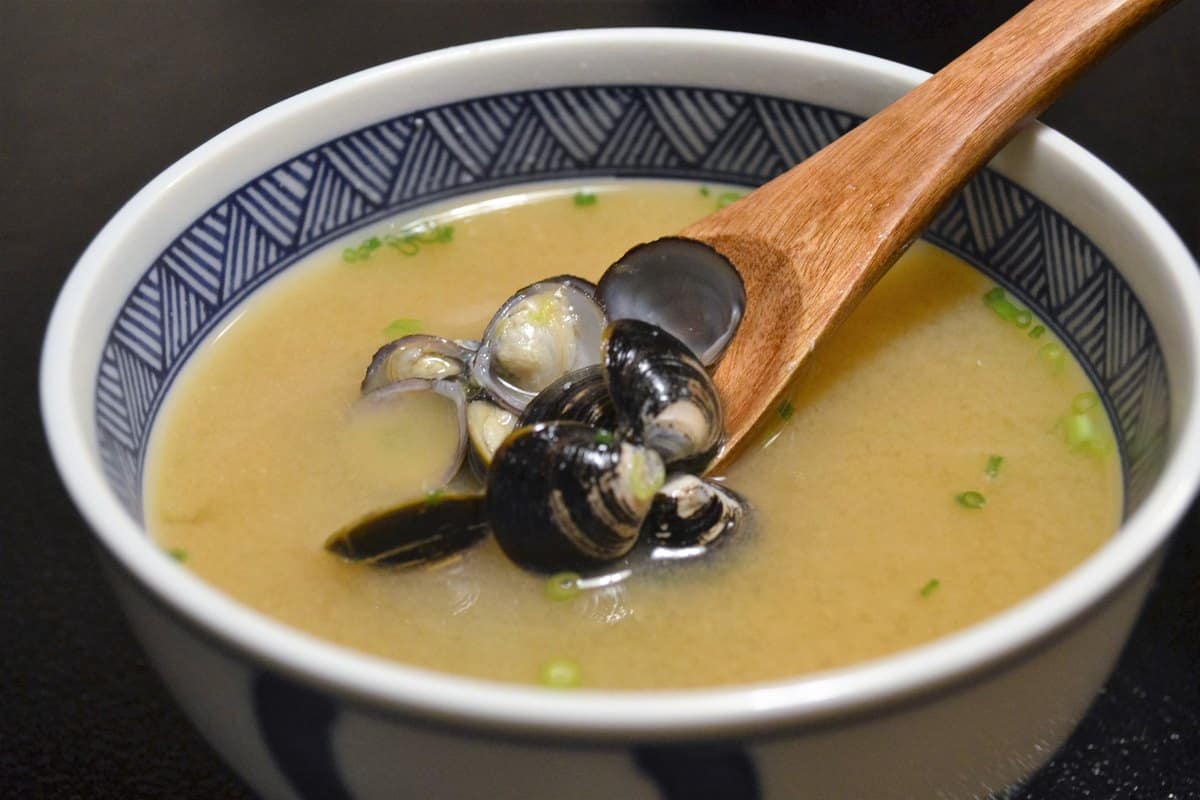
Expect a deeply savory broth with concentrated clam umami. Japan’s agriculture ministry describes Lake Shinji’s Yamato shijimi as black-shelled and large, with rich umami. It links that umami to succinic acid, which the ministry says increases as the clams adapt to the lake’s shifting salinity. Shimane’s fisheries center also names glutamic acid and glycine, while kombu adds a boost of its own.
Texture depends on the season. Around July, the ministry says doyo shijimi are large, with a plump, springy bite. The miso version, meanwhile, adds the flavor and saltiness of miso. The clear version keeps seasoning restrained, so the clam broth stays front and center. At first glance, either bowl can look almost too simple, but that plainness is the point.
Do You Eat the Clams?
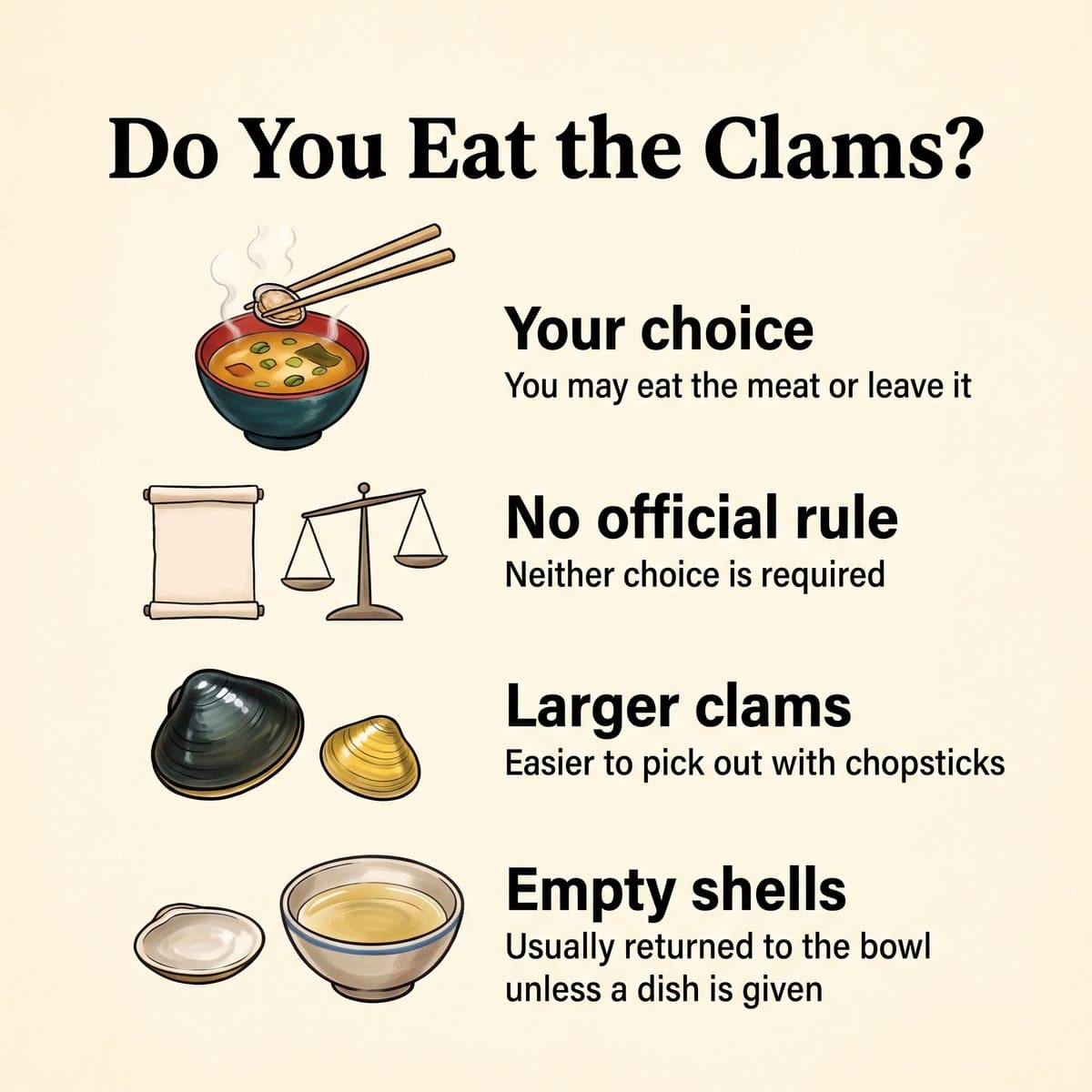
Yes, you can eat the clam meat, but you do not have to. No official etiquette rule requires either choice. The larger Lake Shinji grades are easier to pick from the shell with chopsticks than very small shijimi. If there is no shell dish, you can usually return empty shells to the bowl. Restaurant practice varies, so follow any table setting or staff instructions.
The meat is edible and contributes nutrients, although one bowl holds only a small amount. Japan’s food composition tables report high iron and vitamin B12 values for raw shijimi meat. Per 100 grams, they list 8.3 milligrams and 68 micrograms. Still, that entry lists a related species, Corbicula leana, not Lake Shinji clams. And since most of a bowl’s weight is shell, these figures do not describe one serving.
Is It Really a Hangover Soup?
In Japan, shijimi soup is often associated with the morning after drinking. Some local materials, including a page from Shimane’s fisheries center, also link its nutrients to liver function. That tradition, however, is not evidence that the soup prevents or treats a hangover or any liver condition.
So this guide makes no health claim. Think of it instead as a warm, savory, easy-to-eat comfort food after a night of hot sake. If you drink heavily, water and rest still matter most.
A Wild Clam Under Careful Management
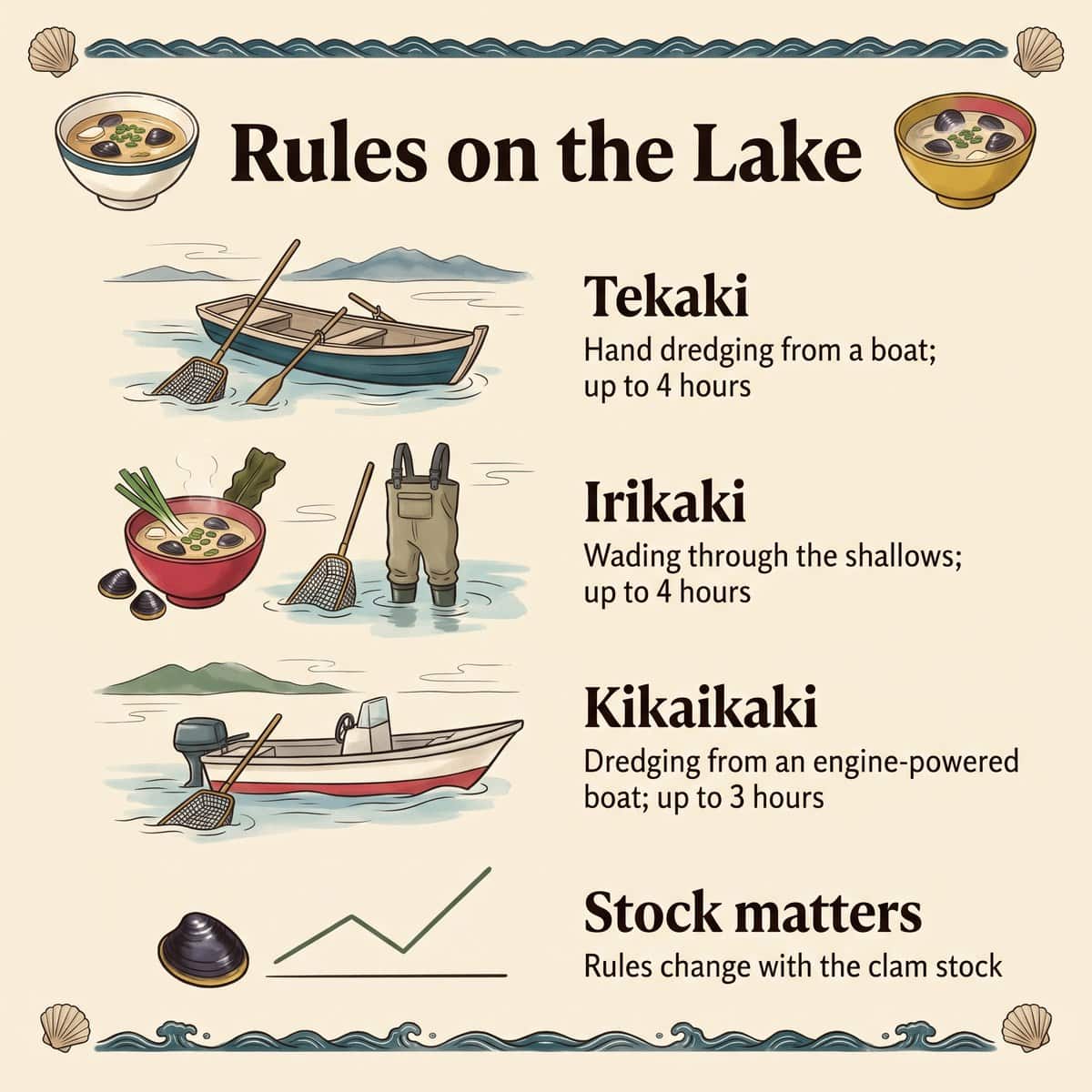
GI-certified Lake Shinji shijimi are wild-harvested from the lake rather than raised in aquaculture. Fishers collect them with a joren, a rake-like dredge basket. The local cooperative describes three methods, each with a daily time limit.
- Tekaki: hand dredging from a boat; up to 4 hours.
- Irikaki: wading through the shallows; up to 4 hours.
- Kikaikaki: dredging with an engine-powered boat; up to 3 hours.
Other rules cover fishing days, catch volume, and shipping size. The agriculture ministry, for instance, describes a cap of about 100 kilograms per fisher. The GI specification adds that management has tightened step by step since 1973. Figures for the fleet differ by source and date. The GI specification lists 260 fishers, while the ministry’s cuisine page says about 300.
The rules also change with the stock. In August 2024, machine dredging switched to joren with a wider mesh, from 11 to 12 millimeters. Shimane’s spring 2025 survey then found small adult clams still at their lowest recorded level, so the outlook stays cautious.
A Long History on Matsue Tables
Shijimi from the lake also have a long local history. According to the GI specification, part of the lake supplied clams to the Matsue domain in the late Edo period. People called them “goyo shijimi,” or official-use clams. By 1981, Lake Shinji ranked first in Japan for Yamato shijimi catch. Shimane reports a 2018 catch of 3,980 tons, over 40 percent of Japan’s total that year.
Local demand remains strong, too. The GI specification cites Japan’s 2024 national household survey, which ranked Matsue first in per-household shijimi purchases and spending. It was the city’s 14th straight year at the top.
Where to Try and Buy Shijimi Jiru
Around Lake Shinji, look for it as a side on set meals and restaurant menus. It also makes a natural side for a bowl of Izumo Soba. Menus and prices vary widely, so we do not list a standard price here.
If you want clams to take home, the cooperative itself is a good start. It runs a direct sales shop in Matsue that grades clams by shell thickness into three sizes. The agriculture ministry also mentions two related options worth knowing about.
Where to Look
- Cooperative shop
- Shinjiko Fisheries Cooperative Shijimi Direct Sales Shop, 6-9 Sodeshi-cho, Matsue. Business days listed as Monday to Friday, 9:00 to 16:30. No shipping on Wednesdays, weekends, or public holidays. Sizes by shell thickness: S (10 to 12 mm), M (12 to 14 mm), and L (14 mm and up)
- Ready-to-cook pack
- “Shijimi-jiru no Shijimi-chan,” a retort pack of raw Lake Shinji clams, at least 14 mm thick and harvested before spawning, developed by the cooperative. Add hot water and dissolve miso
- Shijimi museum
- Shinjiko Shijimi-kan, beside the lake, exhibits shijimi ecology and fishing and sells frozen clams and processed goods
Checked October 25, 2026. Please confirm hours and stock directly with the cooperative before visiting.
Because fresh clams are perishable, the frozen or retort options travel more easily within Japan. Import rules for fresh, frozen, or packaged shellfish vary by destination, though. So check the customs and quarantine rules of the country you will enter before buying any to take abroad.
Editorial note
This guide separates the traditional dish, current fishery rules, and the GI-protected clam name. We checked shop details and fishery figures in October 2026. Recipes and customs vary by household and restaurant.
Conclusion: A Small Bowl From a Big Lake
Shijimi jiru shows how much flavor a brackish lake can put into a simple bowl. The clams are wild-harvested, carefully managed, and cooked only until they open. If you visit Matsue, try it at least once, and pick out a few clams to judge for yourself. To explore more Shimane food, see our guides to Uzume Meshi and Nodoguro. You can also learn the basics in The Complete Guide to Miso Soup.
Frequently Asked Questions about Shijimi Jiru
Eating and Ordering
- Should you eat the clams in shijimi soup?
-
You may, but it is not required. No official rule says you must eat or leave the meat. Larger Lake Shinji clams are easier to pick out with chopsticks. If there is no shell dish, you can usually return empty shells to the bowl.
- Is shijimi jiru always miso soup?
-
No. Around Lake Shinji, people traditionally made it as miso soup in winter and as a clear broth in summer. Both versions appear today. Ask which style a restaurant serves if you have a preference.
- When is the best season for shijimi?
-
Shimane names two peaks. Doyo shijimi around July are plump before spawning. Kan shijimi in mid-winter are firm after storing nutrients. Shimane’s eastern fisheries office notes that the clams are caught throughout the year.
- What is the difference between shijimi and asari?
-
They are different kinds of clams. Yamato shijimi, the Lake Shinji species, prefer slightly salty brackish water. Asari, or Manila clams, are marine clams of coastal tidal flats. Both may appear in Japanese soups, but they are not interchangeable regional ingredients. For an asari dish, see our guide to Fukagawa Meshi.
Cooking and Health
- Can I freeze shijimi before cooking?
-
Yes. Shimane’s fisheries center says freezing does not hurt the flavor. It adds that frozen clams release more umami into soup than fresh ones. The center gives a freezer life of up to about six months. For store-bought frozen packs, follow the package instructions.
- Does shijimi soup cure hangovers?
-
No evidence cited in this article shows that it does. Shijimi soup is better described as a traditional, warm, easy-to-eat comfort food after drinking. Rely on water and rest for recovery.
- Are Lake Shinji shijimi farmed?
-
No. GI-certified Lake Shinji shijimi are wild-harvested from the lake under cooperative rules on hours, days, and catch. The rules change with the stock, as with a wider dredge mesh adopted in August 2024.
- Can I make shijimi jiru outside Japan?
-
You can make a similar clam soup with locally available small clams, following the same cold-start method. The flavor and texture will differ, though. Only call it Lake Shinji shijimi jiru if the clams actually come from Lake Shinji.
References
- Ministry of Agriculture, Forestry and Fisheries (MAFF) – Our Regional Cuisines: Shijimi Jiru, Shimane Prefecture (Accessed October 2026)
- MAFF Traditional Foods of Japan – Lake Shinji Shijimi Tsukudani (Accessed October 2026)
- Shimane Prefecture Fisheries Technology Center – Ecology of Yamato Shijimi (Accessed October 2026)
- MAFF Geographical Indication Registry – No. 171: Lake Shinji Brackish Water Clam (Accessed October 2026)
- Shimane Prefecture Fisheries Technology Center – Nutrition of Shijimi (Accessed October 2026)
- MAFF Geographical Indication Registry – No. 171 Product Specification (PDF) (Accessed October 2026)
- Shimane Prefecture Fisheries Technology Center – Shijimi Fishery of Lake Shinji (Accessed October 2026)
- Shinjiko Fisheries Cooperative – Fishing in Lake Shinji (Accessed October 2026)
- Shimane Prefecture – The Seven Delicacies of Lake Shinji (Accessed October 2026)
- Shinjiko Fisheries Cooperative – Shijimi Direct Sales Shop (Accessed October 2026)
- Shimane Prefecture Fisheries Technology Center – Tobiuo Tsushin No. 124: Spring 2025 Yamato Shijimi Stock Survey, August 1, 2025 (Accessed October 2026)
- National Diet Library Collaborative Reference Database – Shoyo Shimpo Series on the Seven Delicacies, answered by Shimane Prefectural Library (Accessed October 2026)
- Shimane Prefecture Eastern Agriculture, Forestry and Fisheries Promotion Center – Seasonal Recommendation: Shijimi (Accessed October 2026)
- Ministry of Education, Culture, Sports, Science and Technology (MEXT) – Standard Tables of Food Composition in Japan, 2023: Shijimi, Raw, No. 10297 (Accessed October 2026)
- Hokkaido Research Organization – Satou A. et al., “Effect of Different Salinities Used for Preservation on the Taste of Corbicula japonica,” Scientific Reports of Hokkaido Fisheries Research Institutes 92: 21–27, 2017 (Accessed October 2026)
- Shimane Prefectural Fisheries Experimental Station – Nakamura M., “A Physiological and Ecological Study of Yamato Shijimi and the Environment in Lake Shinji,” Research Report No. 9 (Accessed October 2026)
- MAFF Food Safety – Norovirus (Accessed October 2026)
- MAFF Food Safety – Q&A on Shellfish Toxin Risk Management (Accessed October 2026)
- Shinjiko Fisheries Cooperative – About Lake Shinji (Accessed October 2026)
Related Articles
- The Complete Guide to Miso Soup (Surveyed: October 2026)
- Izumo Soba (出雲そば) (Surveyed: October 2026)
- Uzume Meshi (うずめ飯) (Surveyed: October 2026)
- What Is Nodoguro? Taste, Season & Best Restaurants (Surveyed: October 2026)
- Dashi (出汁) (Surveyed: October 2026)
- Hamaguri (蛤) (Surveyed: October 2026)
- Fukagawa Meshi (深川めし) (Surveyed: October 2026)
- Hot Sake (熱燗) (Surveyed: October 2026)
Photo Credits
- Ministry of Agriculture, Forestry and Fisheries (MAFF) – Our Regional Cuisines: Shijimi Jiru, Shimane Prefecture. Image provided by Shimane Prefecture Dietary Life Improvement Promotion Council (出典:農林水産省ウェブサイト「うちの郷土料理」しじみ汁 島根県/画像提供:島根県食生活改善推進協議会) (Accessed October 2026)




Comments