




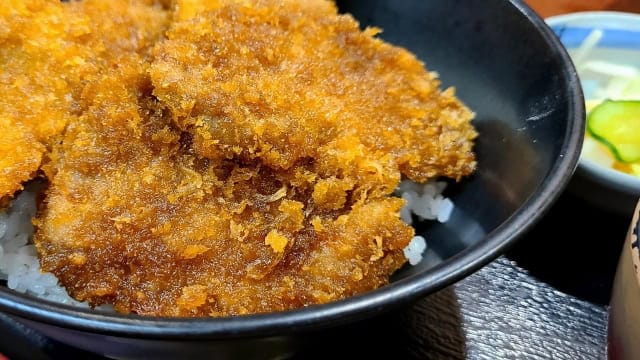
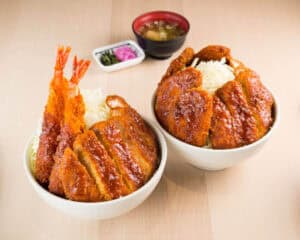
Tarekatsu don is Niigata’s distinctive take on katsudon. It pairs thin, crisp pork cutlets with a sweet and savory soy-based sauce over rice. Unlike traditional katsudon, it skips the egg entirely, which keeps the coating crunchy right until the last bite. This local specialty from Niigata started in a small restaurant and grew into one of the city’s most familiar comfort foods. Here is how this simple rice bowl became one of Niigata City’s best-known local dishes.
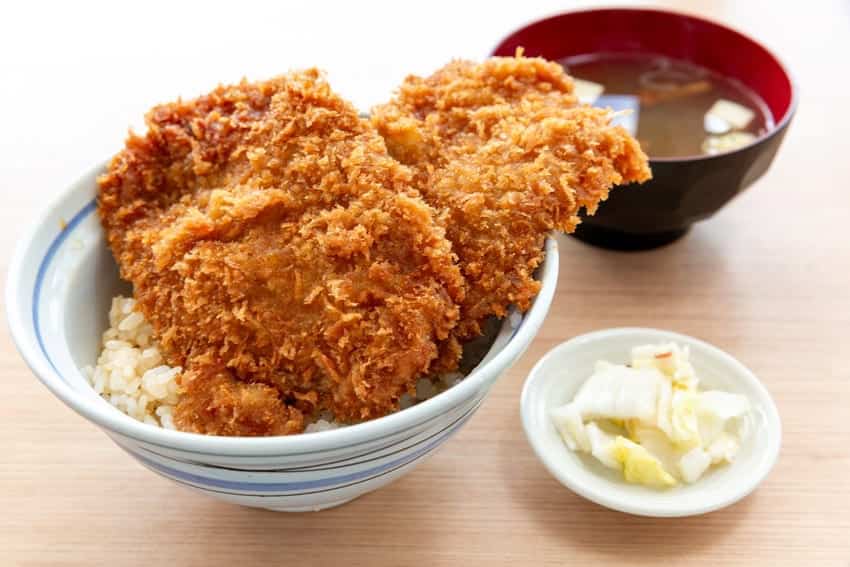
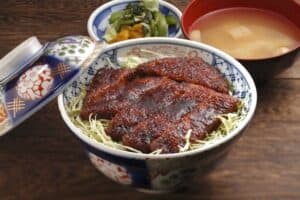
Tarekatsu don is a Niigata rice bowl topped with thin pork cutlets dipped in a sweet and savory soy-based sauce. Unlike standard katsudon, it contains no egg. The light coating stays crisp while the sauce flavors both the cutlet and the rice underneath.
What Is Tarekatsu Don?
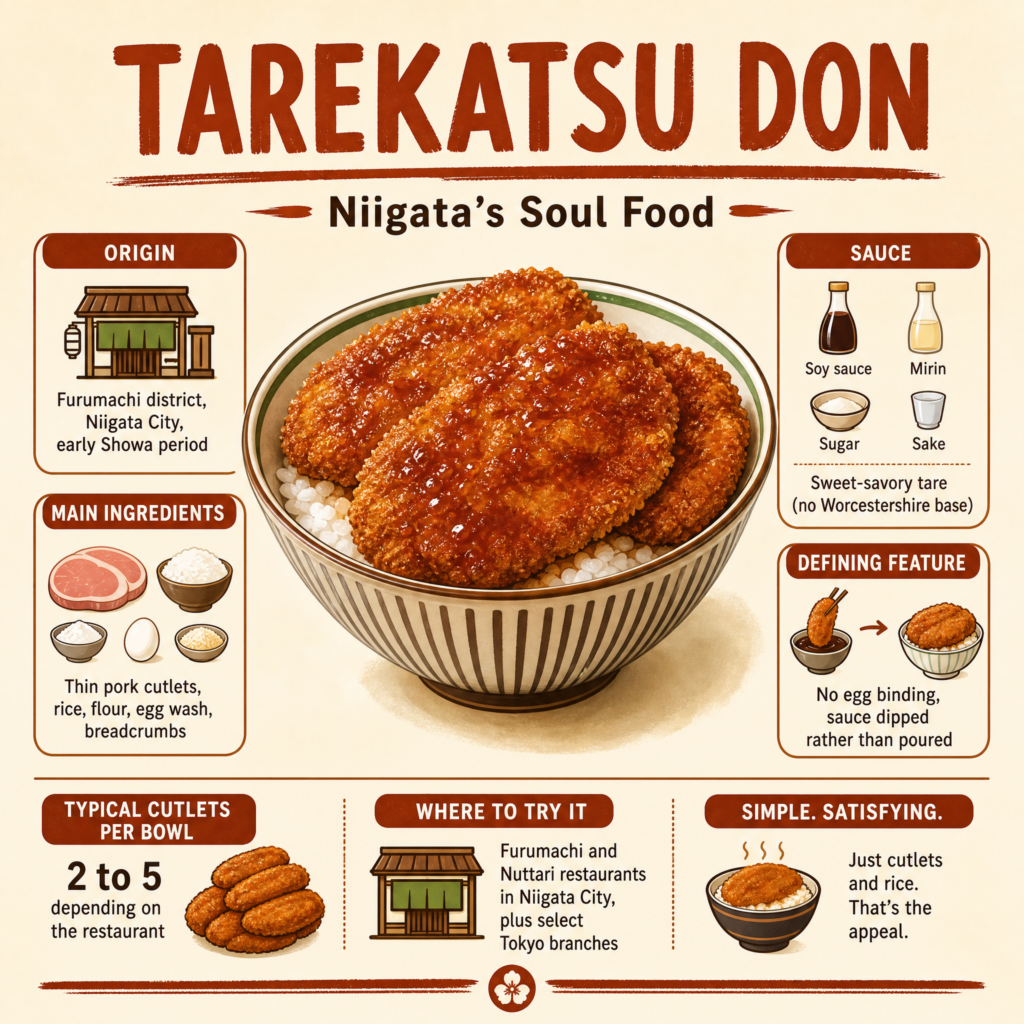
The word “tare” simply means seasoning sauce in Japanese, not a specific recipe. In Niigata, the tare for this dish usually combines soy sauce, mirin, sugar, and sake rather than the thick, Worcestershire-style sauce used for tonkatsu elsewhere in Japan. Thin cutlets get fried until golden, then dipped briefly in that warm sauce before landing on the rice.
A typical bowl holds two or more cutlets, nothing else. No cabbage, no egg, no extra garnish. That simplicity is part of the appeal, and it is exactly why locals consider tarekatsu don an easy weekday lunch rather than a special-occasion meal.
Tarekatsu Don at a Glance
| Origin | Furumachi district, Niigata City, early Showa period |
| Main ingredients | Thin pork cutlets, rice, flour, egg wash, breadcrumbs |
| Sauce | Soy sauce, mirin, sugar, sake (sweet-savory tare, no Worcestershire base) |
| Defining feature | No egg binding, sauce dipped rather than poured |
| Typical cutlets per bowl | 2 to 5, depending on the restaurant |
| Where to try it | Furumachi and Nuttari restaurants in Niigata City, plus select Tokyo branches |
History of Tarekatsu Don in Niigata
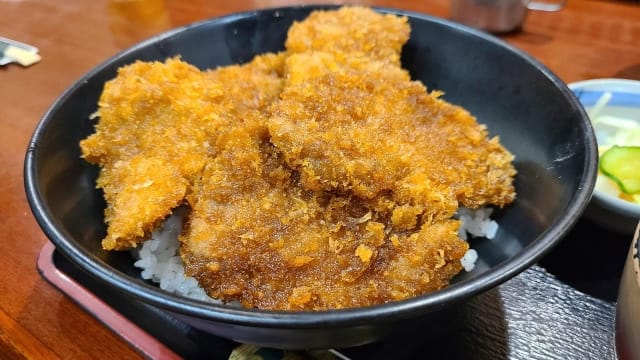
Niigata prospered as a port during the Edo period through Kitamae-bune trade. Its Furumachi district later became known for restaurants, entertainment, and early Western-style cuisine. Western dishes took hold quickly, and small eateries began lining the stalls near Nishibori.
A restaurant in Furumachi, now recognized as Tonkatsu Taro, reportedly created the dish by dipping freshly fried cutlets in soy-based sauce and placing them over rice. At the time, deep-fried cutlets counted as a modern novelty, so the simple soy dip felt new and exciting to diners.
Word spread quickly through Niigata City. Former apprentices from the original shop opened their own restaurants, and each one carried the same basic method forward. For years, locals simply called it “sauce katsudon,” the same generic name used in Fukui and Fukushima. A second-generation restaurant owner later coined the name “tarekatsu don” specifically to avoid that confusion, and the term stuck across the city.
Tarekatsu Don vs Other Katsudon Styles
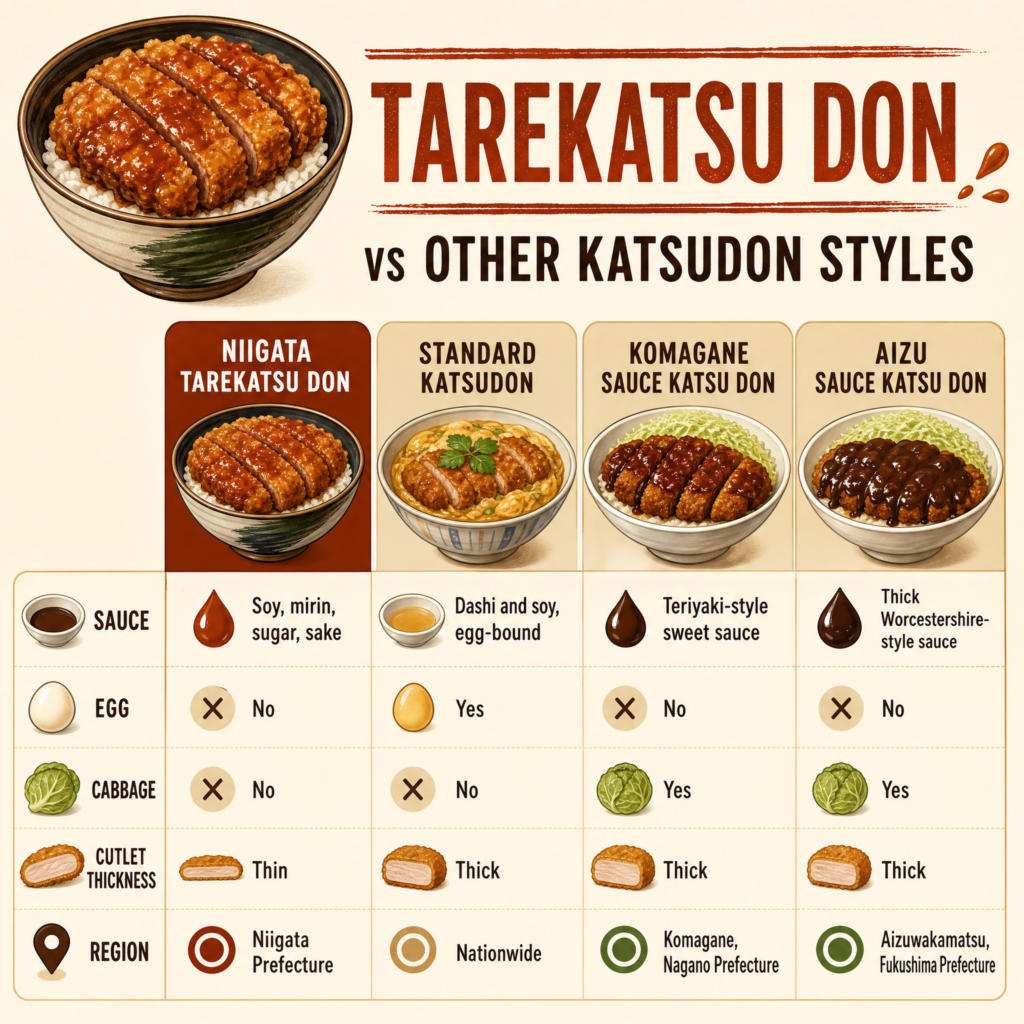
Japan has several regional katsudon variations, and confusion between them is common. The table below separates Niigata’s version from three others that sometimes get mixed up online.
| Style | Sauce | Egg | Cabbage | Cutlet thickness | Region |
|---|---|---|---|---|---|
| Niigata Tarekatsu Don | Soy, mirin, sugar, sake | No | No | Thin | Niigata Prefecture |
| Standard Katsudon | Dashi and soy, egg-bound | Yes | No | Thick | Nationwide |
| Komagane Sauce Katsu Don | Teriyaki-style sweet sauce | No | Yes | Thick | Komagane, Nagano Prefecture |
| Aizu Sauce Katsudon | Thick Worcestershire-style sauce | No | Yes | Thick | Aizuwakamatsu, Fukushima Prefecture |
Aizu sauce katsudon often gets confused with Niigata’s dish because both skip the egg. However, they come from different prefectures and use very different sauces. Aizu’s version leans on a thick, tangy Worcestershire-style sauce, while Niigata keeps things closer to a traditional soy tare.
How Locals Eat Tarekatsu Don
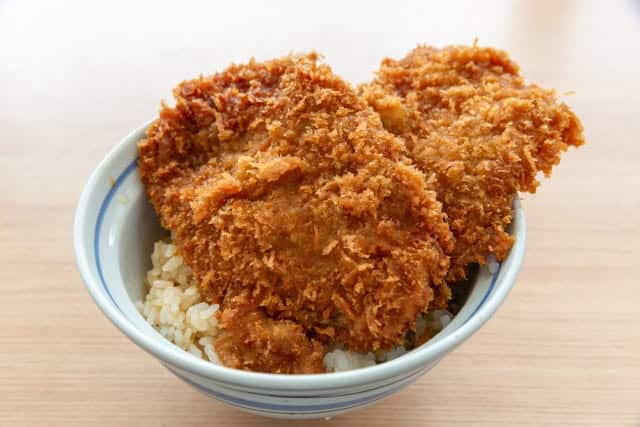
Most regulars try the first cutlet plain before adding extra sauce. That first bite lets the pork’s flavor come through without competing against the tare. After that, later bites usually get paired with rice that has already soaked up sauce from underneath.
Portion size varies by appetite. Some diners order the standard two-cutlet bowl, while heartier eaters go for four or five. Either way, the sauce should coat the meat lightly rather than drown it, since the crisp coating is part of what makes the dish worth ordering.
Tarekatsu Don Recipe
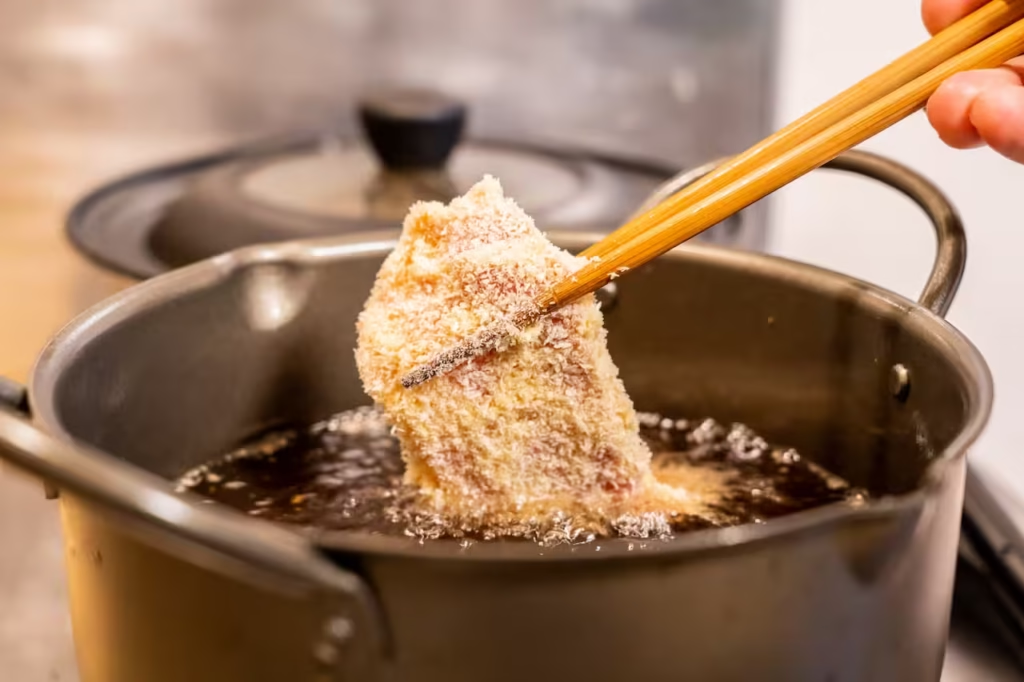
This home version follows the same basic method used in Niigata kitchens. The soy aroma fills the room as the sauce simmers, and the pork stays tender under a thin, crisp shell once fried correctly.
- Prep time: 20 minutes
- Cook time: 20 minutes
- Total time: 40 minutes
- Yield: 4 servings
- Recommended cut: Pork loin or thigh, sliced thin
- Cutlet thickness: About 5mm before coating
| Ingredients for 4 persons | Measurements |
|---|---|
| Thin pork slices, about 30g each | 16 slices |
| Flour | 100g |
| Egg, beaten | 75g (about 1.5 eggs) |
| Bread crumbs (fine) | 150g |
| Frying oil | Enough for 3-4cm depth in the pan |
| Cooked rice | 200g per bowl |
| For the tare sauce: | |
| Soy sauce | 80g |
| Mirin | 80g |
| Sake | 80g |
| Sugar | 30g |
| Kombu | 10g |
How to Make Tarekatsu Don
Tenderize each pork slice lightly with a rolling pin. Coat every slice in flour, dip it in the beaten egg, then press it firmly into the breadcrumbs.
Combine soy sauce, mirin, sake, sugar, and kombu in a small pot. Heat gently and simmer for about 1 minute, then set aside off the heat.
Heat the oil to 170-180°C. Fry two or three cutlets at a time, since overcrowding drops the oil temperature and softens the coating. Cook each side for 3-4 minutes until golden, then drain on a rack.
Dip each drained cutlet into the warm tare for just a few seconds, not longer. Place the rice in a bowl first, then lay the cutlets on top so the sauce soaks into the rice below.
A few small habits make a real difference here. Check the oil temperature with a thermometer rather than guessing, since oil below 170°C leaves the coating greasy instead of crisp. Frying in small batches keeps the temperature steady, and a quick dip in the sauce, rather than a soak, protects that crunch.
Where to Eat Tarekatsu Don
Tonkatsu Taro, Furumachi (Recognized Origin)
This small shop in Niigata City’s Furumachi district is widely credited as the birthplace of tarekatsu don. Domestic pork thigh cutlets arrive golden and hot, topped with a sauce recipe the restaurant has kept close to its original version for decades. The atmosphere feels unpretentious, closer to a neighborhood diner than a tourist stop.
Tonkatsu Masachan Nuttari Main Store
Masachan opened in 1965 after its founder trained at Tonkatsu Taro, giving its house sauce roughly six decades of accumulated depth. The restaurant uses high-quality domestic pork and aims for a tender, juicy bite in every cutlet. The Niigata Umamimon Zanmai set pairs tarekatsu don with Echigo miso soup and the local dish noppe, which makes it a good introduction to Niigata food specialties in one sitting.
Nagaya, Furumachi
Nagaya sits in the Furumachi area and keeps its menu centered on tonkatsu set meals, with tarekatsu don among the regular options alongside egg-bound katsudon. The setting feels casual, suited to a quick solo lunch rather than a long sit-down meal.
Niigata Katsudon Tarekatsu, Kagurazaka (Tokyo)
For travelers who cannot make it to Niigata, this Tokyo specialty shop recreates the dish using Koshihikari rice and carefully selected domestic pork. The sauce leans sweeter than some Niigata originals, but it still follows the same soy, mirin, and sake base rather than a thick Japanese tonkatsu sauce. Diners can also order Niigata sake alongside the meal for a fuller taste of the region.
Niigata’s Rice Culture and Everyday Comfort Food
Niigata grows some of Japan’s most prized Koshihikari rice, and that reputation shapes how tarekatsu don gets served. Restaurants pair the dish with freshly cooked rice specifically because the grain absorbs the tare so well without turning mushy. Furumachi’s Western-influenced dining history also explains why a fried cutlet, once considered exotic, found its way into a distinctly Japanese presentation. For many residents, ordering tarekatsu don for lunch feels as routine as grabbing a bowl of ramen, not a special outing.
Dietary Considerations
Standard tarekatsu don is not vegetarian, vegan, or gluten-free. It contains pork, egg wash, wheat breadcrumbs, and soy sauce, which typically includes wheat as well. Home cooks sometimes swap in gluten-free breadcrumbs or plant-based proteins, but these substitutions are personal kitchen adaptations rather than the traditional Niigata recipe.
Final Thoughts
Tarekatsu don earns its place among Japan’s regional comfort foods through simplicity rather than complexity. Thin, crisp cutlets, a soy-based tare, and warm rice come together without an egg to soften the crunch. That combination has kept Furumachi’s original recipe alive for nearly a century, one bowl at a time. If this dish sparked your curiosity, Nagano’s Komagane sauce katsudon makes an interesting next comparison, since both use cutlets but very different sauces.
If you enjoy tarekatsu don, explore more regional cutlet dishes like Japanese tonkatsu and Komagane sauce katsudon, or browse more Niigata sake pairings to round out a Niigata-style meal.
Tarekatsu Don FAQ
- What is tarekatsu don?
-
It is a Niigata rice bowl topped with thin, freshly fried pork cutlets dipped in a sweet and savory soy-based sauce. This dish leaves out the egg found in standard katsudon. The result is a crisp coating paired with rice that soaks up the sauce underneath. Most bowls include two or more cutlets, nothing else.
- Where does tarekatsu don come from?
-
Tarekatsu don originated in Niigata City, Niigata Prefecture, specifically in the Furumachi district. A restaurant now recognized as Tonkatsu Taro is widely credited with creating the dish in the early Showa period. It should not be confused with Aizu sauce katsudon, which comes from Aizuwakamatsu City in Fukushima Prefecture and uses a completely different sauce style.
- What does the tarekatsu don sauce taste like?
-
The sauce carries a sweet and savory balance built from soy sauce, mirin, sugar, and sake. This tare tastes lighter than thick Worcestershire-style tonkatsu sauce found elsewhere in Japan. Sweetness levels vary slightly between restaurants, but the soy base stays consistent across most Niigata versions.
- How is tarekatsu don different from regular katsudon?
-
Regular katsudon binds the cutlet with egg and a dashi-soy sauce, while this Niigata version skips the egg entirely. The cutlet also tends to be thinner, and the sauce gets dipped on rather than poured over the whole bowl. That difference keeps the coating crisper for longer.
- How much does tarekatsu don cost?
-
Prices in Niigata restaurants generally range from about 1,000 to 2,000 yen per bowl, depending on the number of cutlets. Tokyo branches serving the dish charge a similar range. Prices can shift with ingredient costs, so checking current menus before visiting is a good habit.
- Why is it called “tarekatsu don” instead of “sauce katsudon”?
-
Locals originally called it “sauce katsudon,” the same generic name used for Fukui’s and Fukushima’s versions. A second-generation restaurant owner in Niigata later renamed it “tarekatsu don” to highlight its distinct soy-based sauce. The new name stuck across the city and now distinguishes it clearly from other regional cutlet bowls.
References
- Tonkatsu Taro — Official Company Information (Surveyed: July 2026)
- Niigata Prefecture Tourism Association — Niigata’s Soul Food Tarekatsu Don: Five Local Favorites (Surveyed: July 2026)
- Tonkatsu Masachan — The History of Niigata Tarekatsu Don (Surveyed: July 2026)
- Tonkatsu Masachan — Company Outline and Founding History (Surveyed: July 2026)
- Made in Local — The History of Niigata’s Distinctive Tarekatsu Don (Surveyed: July 2026)
- Edge of Niigata — About Niigata’s Food Culture (Surveyed: July 2026)
- Unique Nagano — Eat Komagane Sauce Katsu Don at an Official Restaurant (Surveyed: July 2026)
- Niigata Katsudon Tarekatsu — Official Restaurant Website (Surveyed: July 2026)
Related Articles
- Tonkatsu (Surveyed: July 2026)
- Komagane Sauce Katsu Don (Surveyed: July 2026)
- Sauce Katsu Don (Surveyed: July 2026)
- Katsu Don (Surveyed: July 2026)



Comments