


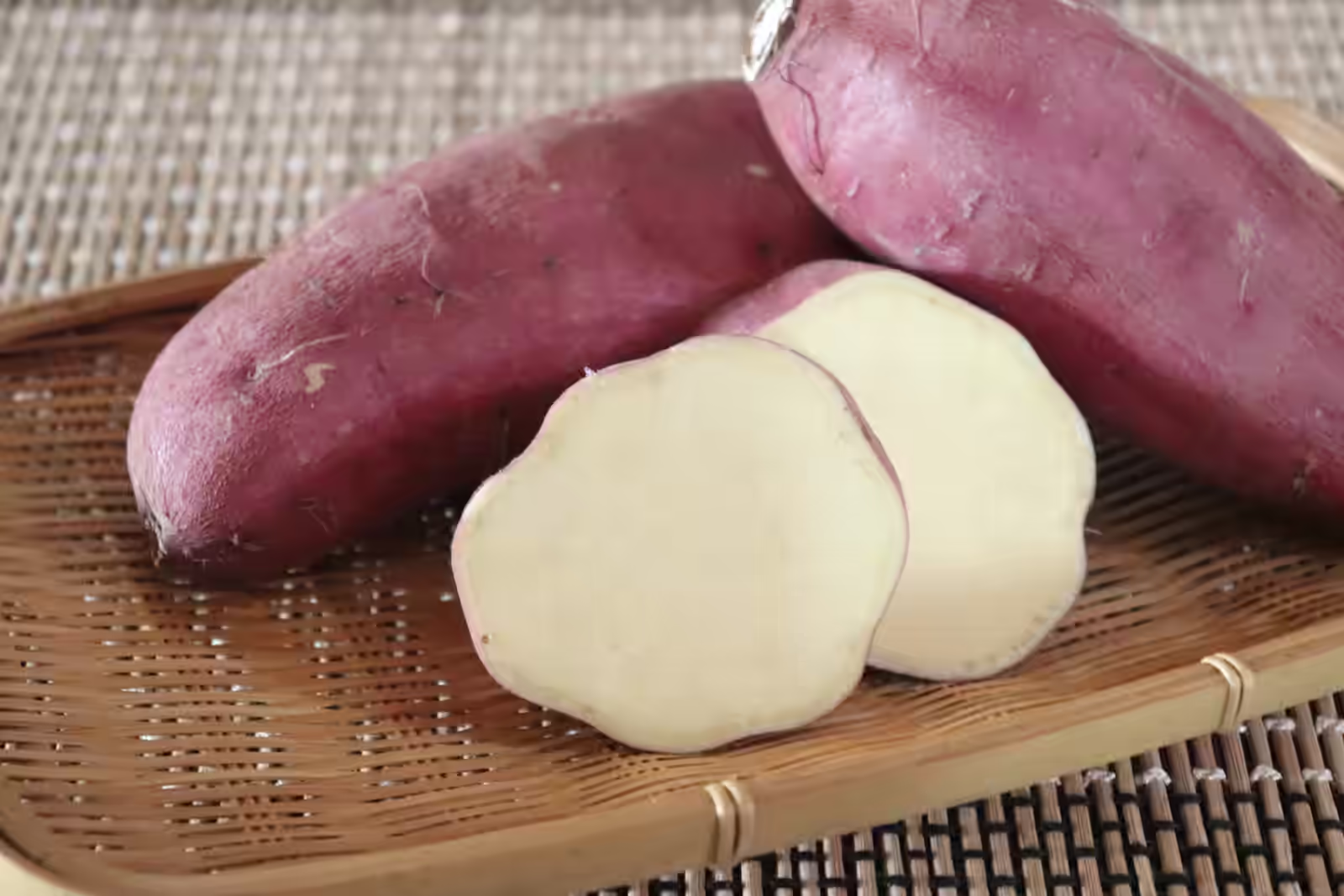

On a cold evening in Tokyo, the aroma of yaki imo, Japan’s roasted sweet potato, still drifts through shopping streets. Today, many vendors favor moist, intensely sweet cultivars, but Beniazuma once defined the classic fluffy style across Kanto, the region around Tokyo. Beniazuma sweet potato (紅あずま) is a cultivar of satsumaimo, the Japanese sweet potato, with deep reddish-purple skin. Its yellow, floury flesh also turns fluffy in the oven or steamer.
This guide explains how Beniazuma tastes, where it grows, and when to buy it. It also compares the cultivar with Beniharuka, Anno imo, and Naruto Kintoki. After that, you will find cooking methods, nutrition data, and storage tips. Most facts come from Japan’s variety registry, national research reports, and official food composition tables.
What Is Beniazuma Sweet Potato?
Put simply, Beniazuma is a table sweet potato from a 1980s national breeding program for eastern Japan. Breeders crossed a Kanto breeding line with Koganesengan, a high-yielding cultivar widely associated with sweet potato shochu production in Kyushu. They wanted a root that swelled early, cropped heavily, and still tasted good. Official trials rated its eating quality highly, and the new cultivar soon spread across Kanto.
Quick Facts
Beniazuma, 紅あずま
- Japanese name
- 紅あずま; officially registered as ベニアズマ
- Other spelling
- Beni Azuma
- Type
- Table sweet potato cultivar (Ipomoea batatas)
- Parents
- Kanto 85 and Koganesengan (the official registry records the first parent as Kanto 859)
- Registration
- Applied for in 1984; registered July 18, 1985 (registration number 892); Norin 36
- Skin and flesh
- Deep red to reddish-purple skin; yellow flesh
- Texture
- Floury and low in fiber; fluffy (hokuhoku) after cooking
- Main areas
- Kanto, especially Ibaraki and Chiba
- Harvest
- Mainly October and November, with early digging from summer
- Best uses
- Yaki imo, tempura, daigaku imo, Japanese sweets
Meaning and Pronunciation of Beniazuma
The name has two parts. Beni (紅) means crimson, so it points to the skin color. Azuma (あずま), on the other hand, is an old word for the eastern provinces of Japan. According to the Japan Tuber Crops Research Association, the name reflects the skin color. It also reflects the region where breeders expected the potato to spread.
In English, say it roughly as “beh-nee-ah-zoo-mah,” giving each syllable similar weight. The registry writes the name in katakana as ベニアズマ, while shops and farms usually write 紅あずま. English labels vary too, showing both Beniazuma and Beni Azuma for the same cultivar. This guide sticks with Beniazuma.
How Beniazuma Became Popular in Japan
MAFF’s cultivar table lists Beniazuma as Norin 36, a national registration number for approved cultivars, with the regional breeding number Kanto 91. Breeders at the national Agriculture Research Center then selected and named it in 1984. After an application that March, Japan registered the variety on July 18, 1985, as registration number 892. That sequence explains why some sources say 1984, while others say 1985.
Each parent brought something. Kanto 85 contributed attractive skin color and shape, while Koganesengan added fast bulking and good flesh quality. The registration database writes the first parent as Kanto 859, a different notation from the cultivar tables. The registry also classifies its suitability for early harvesting as high.
Growers had good reasons to switch. For example, MAFF’s table credits Beniazuma with strong disease resistance, early bulking, and high yields. It had some weak points against other pests, but the balance worked. Consequently, a NARO report on Beniharuka later described Beniazuma as the most widely grown table cultivar in Kanto. That report also links its popularity to fluffy, floury flesh and strong sweetness.
Why Beniazuma’s Planted Area Declined
Beniazuma peaked around the turn of the century. In fact, MAFF data indicate that Beniazuma accounted for 18.1 percent of Japan’s total sweet potato planted area in 1990. That share rose to 32.0 percent in 2000. By 2022, however, it had fallen to a preliminary 9.2 percent. Meanwhile, Beniharuka had reached a preliminary 21.9 percent share by 2022.
Beniazuma’s share of Japan’s total sweet potato planted area, all uses
Source: MAFF, The Situation Surrounding Sweet Potatoes (May 2025). Figures for 2022 are preliminary. Beniharuka held 21.9% that year.
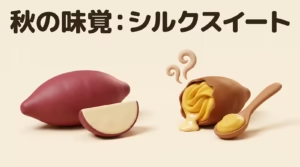
Why the drop? MAFF explains that moist, intensely sweet cultivars such as Beniharuka and Silk Sweet gained ground in the fresh market. At the same time, makers of wagashi, traditional Japanese sweets, rely on fluffy Beniazuma. MAFF’s May 2025 report notes that they now struggle to source enough raw potatoes. As fans of the fluffy style, we find that a little sad. It also explains why you may scan a supermarket shelf and never see the name.
Where Beniazuma Is Grown
Beniazuma belongs to Kanto, and above all to Ibaraki and Chiba, the two prefectures northeast and east of Tokyo. An Ibaraki Prefectural Agricultural Center paper recalls a time when Beniazuma made up about 75 percent of the prefecture’s table sweet potato plantings. That share describes the study period, not the present. Still, it shows how completely one cultivar once shaped a region.
Both prefectures remain major producers. In 2024, for example, MAFF recorded 7,800 hectares of sweet potatoes in Ibaraki and 3,400 in Chiba, across all cultivars. In Oarai, a coastal town in Ibaraki, JA Group Ibaraki reports that farmers grow Beniazuma in well-drained red volcanic-ash soil. The same page also names Hokota and Namegata as leading sweet potato areas in the prefecture.
MAFF also notes that Ibaraki sends a notable share of its crop to processors. In particular, much of it becomes hoshiimo, the chewy dried sweet potato, or candied daigaku imo.
What Does Beniazuma Look and Taste Like?
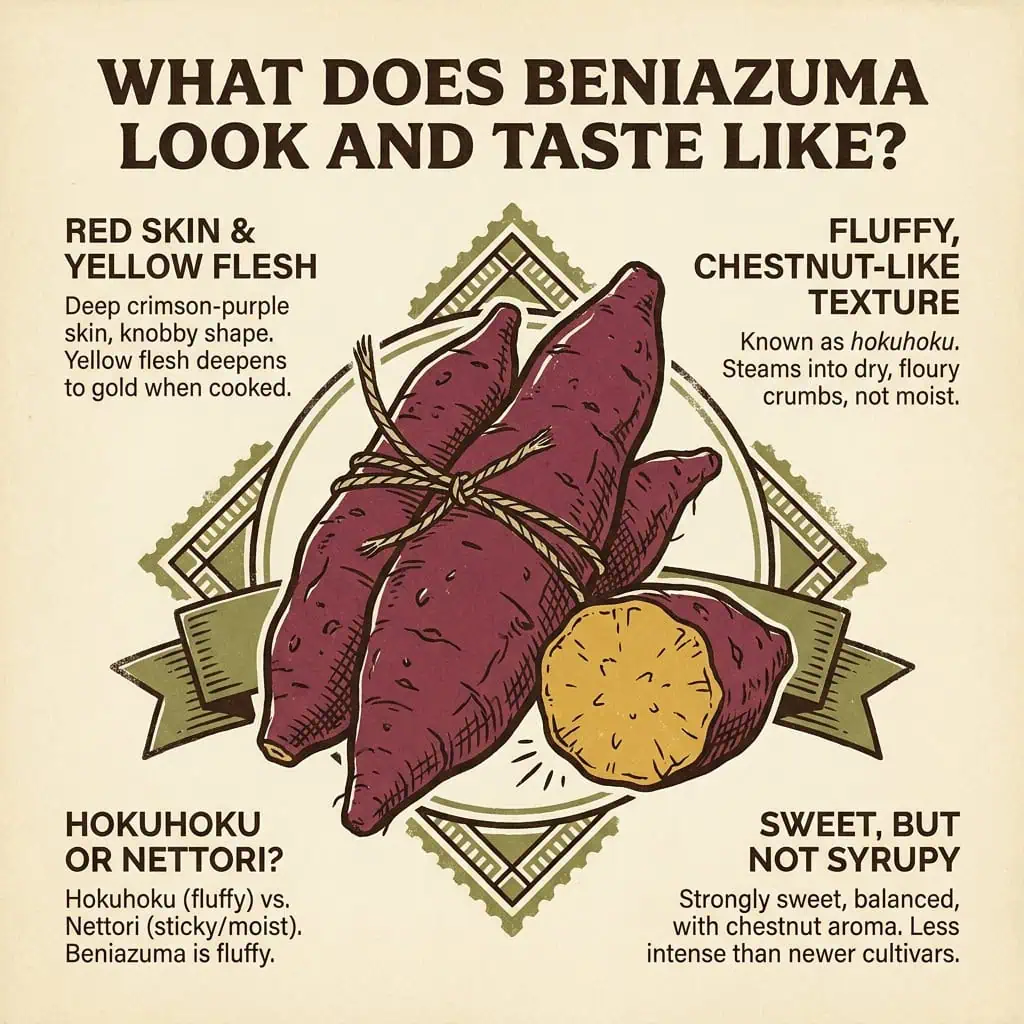
Red Skin and Yellow Flesh
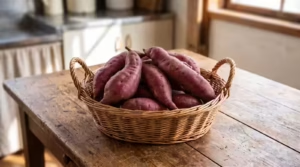
Beniazuma roots grow long and spindle-shaped, narrowing toward each end. The registry lists a red base skin color with purple tones at dark intensity. In person, that reads as a deep crimson-purple. Some roots also look a little knobbly, with shallow grooves and small root scars along the sides.
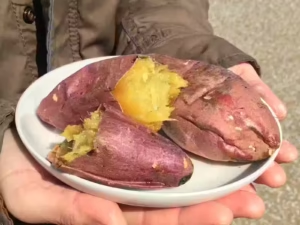
Inside, the registry records yellow flesh. Raw, it tends to look paler, and cooking then deepens it toward gold. That surprises visitors who expect bright orange flesh like many American sweet potatoes. Most well-known Japanese cultivars have yellow or whitish flesh instead, and Beniazuma certainly does.
Fluffy and Chestnut-Like Texture
Official records classify steamed Beniazuma flesh as floury, with little fiber. Japanese cooks call this style hokuhoku. Break a hot one open, and the flesh splits into dry, steaming crumbs rather than clinging to the spoon. A baked russet potato gives you a rough idea of the texture, although the flavor runs far sweeter.
Many people describe the taste as chestnut-like. Producers in Oarai, for example, compare its sweetness and aroma to chestnuts. We treat that as a flavor note rather than a lab finding. With a pinch of salt, though, the resemblance becomes easy to understand, and the comparison has stuck for good reason.
Hokuhoku or nettori?
Japanese shoppers often sort sweet potatoes into two camps. Hokuhoku describes fluffy, floury types such as Beniazuma or Naruto Kintoki. Nettori, by contrast, describes moist, sticky types such as Beniharuka or Anno imo. Neither camp wins outright. Each simply suits different dishes.
How Sweet Is Beniazuma?
Sweet, but not syrupy. Indeed, for its era, the NARO breeding report called Beniazuma strongly sweet. Newer cultivars have since raised the bar, however. Specifically, NARO developed Beniharuka for high sugar content after steaming, and its official profile stresses exactly that point.
Heat changes the result too. For example, slow roasting gives the potato’s own enzymes time to turn starch into maltose. A quick blast in the microwave skips much of that step, so the flesh tastes flatter. Storage matters too, as the season section below explains. We have not quoted a Brix figure here, because we could not trace one to an official Beniazuma trial.
Beniazuma vs Other Japanese Sweet Potatoes
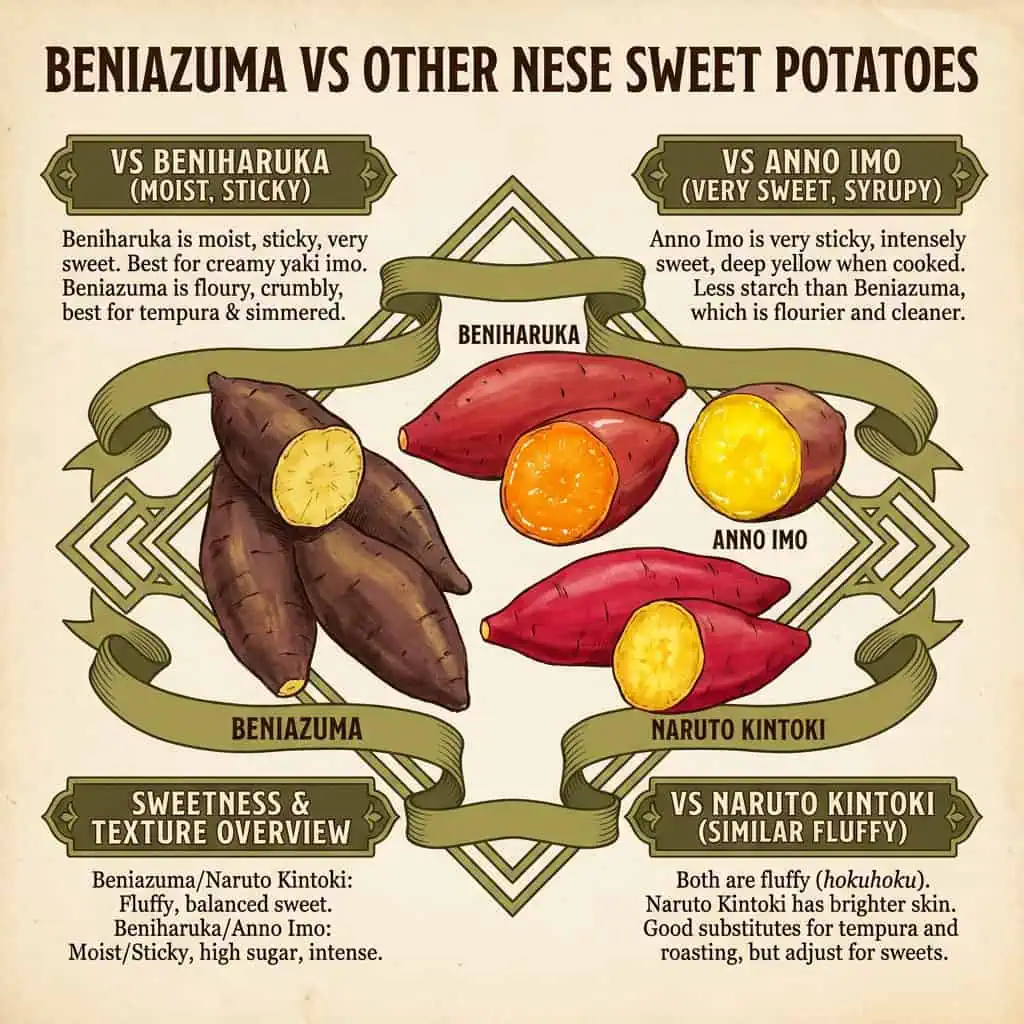
Japan grows dozens of named sweet potatoes, and our guide to Japanese sweet potatoes (satsumaimo) introduces the main ones. Below, we compare Beniazuma with three famous names on four points: sweetness, moistness, flouriness, and best dishes.
Beniazuma vs Beniharuka
This is the comparison many shoppers will want. Beniharuka, sometimes written Beni Haruka, comes from NARO’s research center in Kyushu, Japan’s southwestern main island. Its flesh stays moist and grows stickier during storage, and its sugar content runs high. Beniazuma, by contrast, stays floury and crumbly.
Storage separates them too. NARO rates Beniharuka’s storability as easy, while Beniazuma’s registration rates it as difficult. So which should you buy? For a creamy, dessert-like yaki imo, pick Beniharuka. For tempura, simmered dishes, or a classic fluffy roast, however, Beniazuma usually wins. Our Beniharuka sweet potato guide tells the other side of the story.
Beniazuma vs Anno Imo
Anno imo, also spelled Annou imo, sits even further from Beniazuma. Kagoshima Prefecture, at the southern tip of Kyushu, describes its flesh as sticky and very sweet. With heat, for instance, it turns a vivid deep yellow. In fiscal 1998, the prefecture registered two local selections, Anno Beni and Anno Kogane, as cultivars. MAFF also protects the name Tanegashima Anno Imo as a Geographical Indication tied to three municipalities on Tanegashima, an island in Kagoshima Prefecture.
The GI record adds a revealing detail. Compared with typical table sweet potatoes, Tanegashima Anno Imo contains more sugar and less starch. That helps explain its moist, sticky texture and intense sweetness after cooking. Beniazuma, however, presents a clear sensory contrast, with a flourier, more crumbly texture and a cleaner finish.
Beniazuma vs Naruto Kintoki
Here the two potatoes actually agree on texture, since both belong to the fluffy camp. Naruto Kintoki, though, is a regional brand rather than a separate cultivar. According to ZEN-NOH Tokushima, the name covers Kokei 14 potatoes from designated sandy fields in Naruto, Tokushima City, and Itano District.
Its skin shows a bright crimson, while its flesh cooks to gold. Beniazuma skin, by comparison, looks darker and more purple. In the kitchen, however, both suit tempura, yaki imo, and sweets. In many home recipes, especially tempura and simple roasted dishes, the two can substitute for each other. For confectionery, though, you may need to adjust sugar or moisture.
Quick Comparison Table
The table sums up the differences. All terms are relative. They reflect official or producer descriptions rather than lab Brix readings.
| Point | Beniazuma | Beniharuka | Anno imo | Naruto Kintoki |
|---|---|---|---|---|
| Identity | Registered cultivar (1985) | Registered cultivar (2010) | Local selections; GI name for Tanegashima | Regional brand of Kokei 14 |
| Skin color | Deep red-purple | Red-purple | Varies by selection | Bright crimson |
| Flesh color | Yellow | Yellowish white | Deep yellow when cooked | Golden |
| Texture | Floury, fluffy | Moist, sticky after storage | Sticky, syrupy | Floury, fluffy |
| Sweetness | Moderate to strong | Strong | Very strong | Moderate to strong |
| Best use | Tempura, fluffy yaki imo, wagashi | Moist yaki imo, desserts, hoshiimo | Yaki imo, steamed potatoes | Tempura, yaki imo, sweets |
| Main area | Kanto (Ibaraki, Chiba) | Many regions, including Kanto and Kyushu | Tanegashima, Kagoshima | Naruto area, Tokushima |
When Is Beniazuma in Season?
Harvest Season in Japan
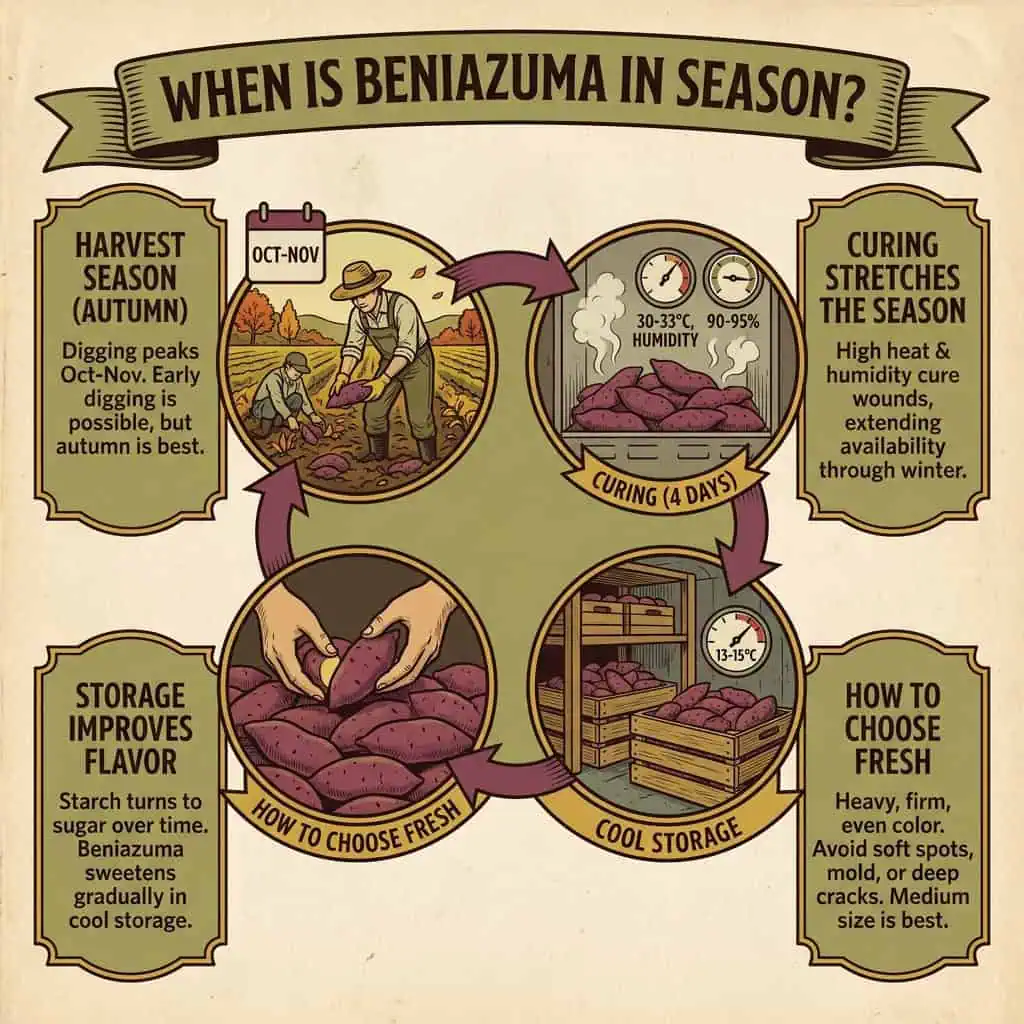
MAFF’s overview of sweet potato farming lays out the basic calendar. Generally, farmers plant slips in April or May and dig most of the crop in October and November. Some dig much earlier, in June or August, to reach the market first. Beniazuma suits that approach, because the registry rates its aptitude for early digging as high.
Curing has stretched the season further. During curing, producers hold fresh roots at about 30 to 33°C and 90 to 95 percent humidity for roughly four days. A corky layer then forms over small wounds, which slows rot and water loss. In Oarai, for instance, growers cure their Beniazuma and then store it at 13 to 15°C, according to JA Group Ibaraki. Autumn and winter therefore give you the best odds of finding it.
Why Storage Can Improve Its Flavor
Here is a fact many visitors miss. Surprisingly, a freshly dug sweet potato is not always at its sweetest. During storage, part of the starch slowly turns into sugar, and the pace differs by cultivar. A NARO technical note for yaki imo suppliers states that Beniharuka sweetens quickly, whereas Beniazuma sweetens gradually over long storage.
Temperature matters too. A study in the journal Horticultural Research (Japan) found that cooler storage raised sucrose faster. At 5°C, however, roots suffered chilling injury and decay. That work mainly used Kokei 14, so we would not apply its exact numbers to Beniazuma. The broad lesson still holds: cool helps, but cold hurts.
How to Choose Fresh Beniazuma
When shopping, choose roots that feel heavy for their size, with firm skin and even color. Avoid soft spots, mold, sour odors, leaking areas, and deeply sunken or discolored patches, which may indicate damage or decay. Small scuffs near the ends are normal, but deep cracks are not. Medium, evenly shaped roots are usually easier to roast consistently than very thin or unusually thick ones.
How to Cook Beniazuma
A floury potato rewards patient, gentle heat. The methods below are home-kitchen guidelines, not official cultivar specifications. Size, shape, and oven behavior all change the timing, so treat each number as a starting point.
How to Make Beniazuma Yaki Imo in the Oven
Oven yaki imo takes little effort, just time. Panasonic’s home cooking guide uses a preheated oven at 160°C (320°F) for about 1 hour 20 minutes, adjusted to the potato’s size. The steps below also follow the same idea.
Oven yaki imo, step by step
Scrub
First, wash the root under running water with a brush. Keep the skin on, since it protects the flesh.
Decide on foil
Wrapping the root in foil generally reduces surface drying and can give softer flesh. Leaving it unwrapped gives the skin a drier, more roasted finish.
Roast low
Bake on a lined tray at 160°C (320°F). As a rough guide, smaller roots may take about an hour, while medium roots often need 70 to 90 minutes.
Test
Push a skewer into the thickest part. It should slide in with no resistance at all.
Rest
Finally, switch off the oven and leave the potato inside for 10 to 15 minutes. The center then finishes gently.
Why so low? Because moderate heat keeps the flesh longer in the range where enzymes convert starch, the potato tastes sweeter. Our yakiimo guide to Japan’s roasted sweet potato tradition explains the stone-roasting culture behind this method.
Steamed or Boiled Beniazuma
Steaming shows off the fluffy texture best. Cut roots into rounds 2 to 3 cm thick. Then soak them in water for about five minutes, and steam for around 20 minutes. The soak rinses off surface starch and helps prevent dark spots. A skewer should pass through easily when they finish.
Boiling also works, although floury flesh tends to crumble at the edges. To limit that, start the pieces in cold water and keep the pot at a gentle simmer. For nimono, the Japanese simmered dish, cook the pieces in dashi stock with a little soy sauce and mirin, a sweet rice wine. Floury potatoes soak up the broth beautifully, although they need a gentle hand.
Beniazuma Tempura
Tempura may be where Beniazuma shines brightest. Its floury flesh stays fluffy under a crisp coat instead of turning gummy. Slice rounds about 1 cm thick, soak them briefly, then pat them completely dry. Fry at roughly 160 to 170°C, a little cooler than for shrimp, so the center softens before the batter darkens. JA Group Ibaraki also recommends tempura and fried potato sticks for Beniazuma.
Popular Beniazuma Dishes
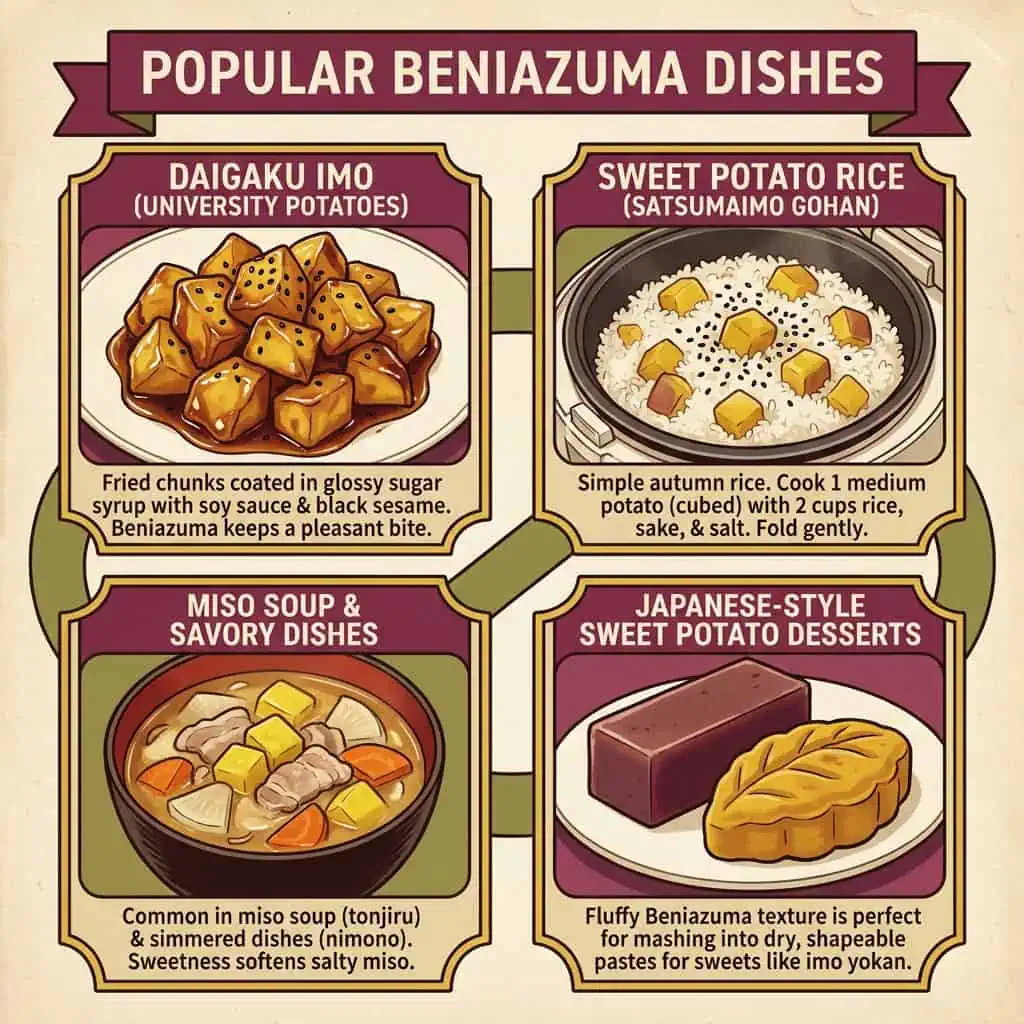
Beniazuma’s firm, floury flesh works equally well in sweet and savory cooking. Here are the dishes where it performs especially well.
Daigaku Imo
Daigaku imo means “university potatoes.” Cooks fry chunks of sweet potato, then coat them in a glossy sugar syrup with a touch of soy sauce and black sesame. Because of its starch, a floury cultivar keeps a pleasant bite under the glaze. Our daigaku imo article covers where the name came from and how to make it.
Sweet Potato Rice
Satsumaimo gohan is a simple autumn rice dish. For two rice-cooker cups of rice, use one medium Beniazuma cut into 1.5 cm cubes. Then add 1 tablespoon of sake and half a teaspoon of salt. Cook as usual, then fold gently and scatter black sesame on top. Cut the cubes evenly and fold the finished rice gently, since floury Beniazuma can break apart if mixed too vigorously.
Miso Soup and Savory Dishes
Sweet potato in miso soup may sound odd at first. In Japanese homes, though, it turns up often, especially in tonjiru, the hearty pork and vegetable miso soup. The potato’s sweetness also softens the salty miso. Beniazuma also works in simmered nimono, and fried batons make a quick side dish for rice.
Japanese-Style Sweet Potato Desserts
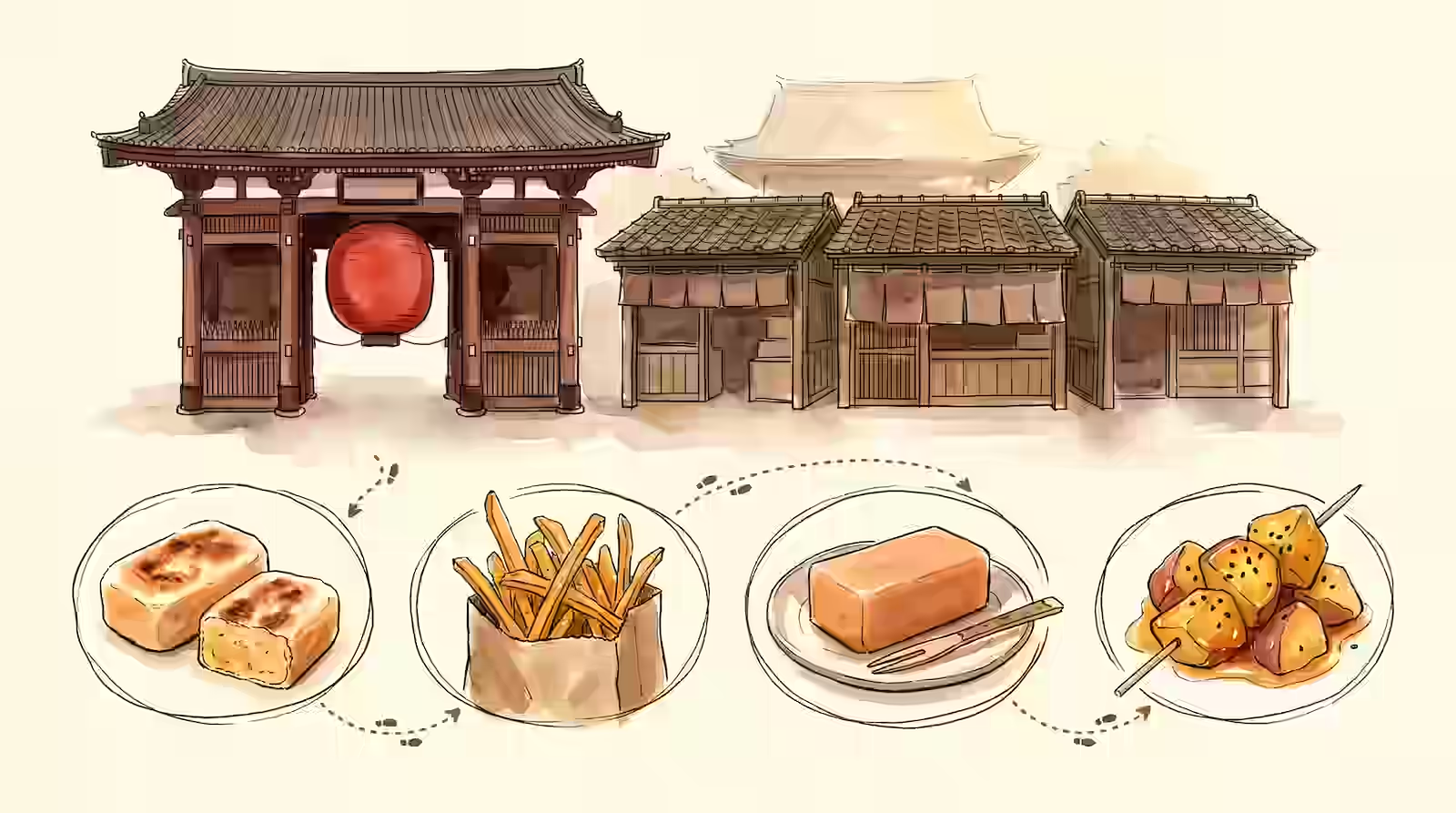
Fluffy cultivars suit Japanese confectionery because they mash into a dry, shapeable paste. That quality especially matters for imo yokan, the pressed sweet potato confection, and for Japanese sweet potato cake. Similarly, sweet potato kinton follows the logic of chestnut kuri kinton. By contrast, the crunchy snack imo kenpi typically uses Koganesengan, according to MAFF.
Beniazuma Nutrition
Calories and Macronutrients
We found no official nutrition analysis for Beniazuma alone. The figures below therefore come from Japan’s Standard Tables of Food Composition, Eighth Revised Edition (2023 supplement), for sweet potato in general. Values cover 100 grams of edible flesh without skin, raw and baked.
| Per 100 g | Raw, peeled | Baked, peeled |
|---|---|---|
| Energy | 126 kcal | 151 kcal |
| Protein | 1.2 g | 1.4 g |
| Fat | 0.2 g | 0.2 g |
| Carbohydrate | 31.9 g | 39.0 g |
| Dietary fiber | 2.2 g | 4.5 g |
| Potassium | 480 mg | 500 mg |
| Vitamin C | 29 mg | 13 mg |
Generic Japanese sweet potato values, not a Beniazuma analysis. Source: MEXT Food Composition Database, items 02006 and 02008.
Why does baked sweet potato show more calories? Roasting drives off water, so the remaining nutrients concentrate. The baked entry lists 58.1 grams of water per 100 grams.
Fiber, Vitamin C and Potassium
Sweet potatoes supply dietary fiber, potassium, and vitamin C along with their carbohydrates. In these tables, the baked entry lists more fiber per 100 grams. That reflects several differences, including substantial water loss during cooking. The baked entry, on the other hand, contains less vitamin C per 100 grams, reflecting heat-related losses and other changes during cooking. Potassium stays fairly steady.
Is Beniazuma Healthy?
Like any sweet potato, Beniazuma can fit well into a balanced diet. It offers filling carbohydrates plus fiber, while a plain roasted root needs no added fat or sugar. Still, portion size and toppings change the picture quickly. For example, butter, syrup, and deep frying add plenty of calories. We make no medical claims here, so anyone managing a health condition should ask a doctor or dietitian.
How to Store Beniazuma
Best Storage Temperature
Sweet potatoes dislike cold. The Japan Tuber Crops Research Association gives an ideal range of 13 to 15°C with 80 to 90 percent humidity. At home, wrap each root in newspaper, then keep it in a cardboard box in a cool spot. Avoid sealing roots in plastic, since trapped moisture encourages rot.
Handle Beniazuma with extra care. Its official registration classifies storability as difficult, so inspect the roots regularly and use any damaged ones first. Storage life at home varies considerably with temperature, humidity, curing, and the condition of the roots.
- Keep whole roots at roughly 13 to 15°C, away from heaters and direct sun.
- Wrap roots individually in paper so they keep moderate humidity.
- Use damaged or cut roots first, because rot spreads.
- Refrigerate only cut or cooked sweet potato.
- Discard roots when they smell sour, turn soft, or show mold.
Should Beniazuma Be Refrigerated?
Whole roots belong outside the refrigerator, because a typical fridge runs well below 10°C. Research shows that such cold can cause chilling injury and decay. Once you cut or cook Beniazuma, however, the fridge becomes the right place. Then wrap cut pieces tightly and use them within a few days.
Can You Freeze Cooked Beniazuma?
Yes. First, mash cooked flesh or slice roasted potatoes. Then pack the portions flat in airtight freezer bags, and follow your local food-safety guidance for storage time. After thawing, use them in soups, mashed fillings, or baking if the texture is no longer ideal for eating plain.
Where to Buy Beniazuma
Buying Beniazuma in Japan
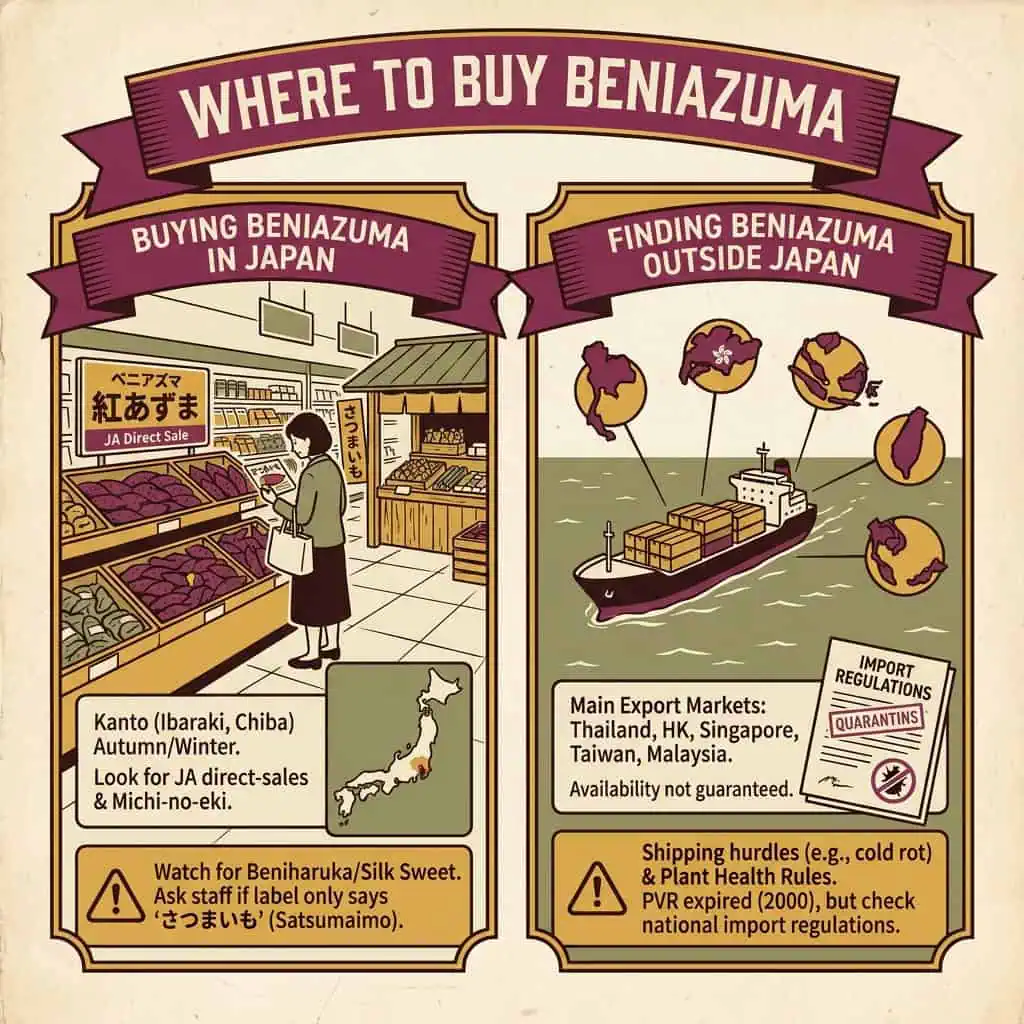
In Kanto, look for Beniazuma from autumn through winter in supermarkets, farm stands, and michi-no-eki, the roadside stations that sell local produce. In particular, direct-sales shops run by JA, the agricultural cooperatives, in Ibaraki and Chiba give you good odds. Some farms also sell boxes online, although such shops typically ship only within Japan.
Be ready for a hunt, however. Beniharuka and Silk Sweet fill much of the shelf space, as MAFF’s 2022 cultivar shares suggest. If a sign reads ベニアズマ or 紅あずま, then you have found it. When the label just says さつまいも, ask the staff which cultivar it is.
Finding Beniazuma Outside Japan
Outside Japan, availability depends on where you live. Japan’s sweet potato exports reached about 3.6 billion yen in 2024, according to MAFF’s summary of trade statistics. The main markets included Thailand, Hong Kong, Singapore, Taiwan, and Malaysia. Those figures cover all cultivars, however, so they do not guarantee Beniazuma on local shelves.
Shipping adds another hurdle. For instance, roots that leave Japan in good condition sometimes rot after meeting low temperatures at sea, MAFF notes. Growing your own, meanwhile, raises separate questions. Beniazuma’s Japanese plant variety rights expired in July 2000, yet fresh roots and planting slips still face plant-health rules in most countries. Check your national import regulations before ordering anything.
What to Look for on the Label
Names that all mean Beniazuma
Be careful, though. A label that only says “Japanese sweet potato” could hold Beniharuka, Silk Sweet, or a Kokei 14 line such as Naruto Kintoki. Look for the cultivar name itself, and check the growing area when the label gives it.
Why Beniazuma Still Has a Place in Japanese Kitchens
Beniazuma no longer rules Kanto’s fields, and the numbers make that plain. Still, its strengths have not changed. It offers fluffy, floury flesh and a clean sweetness that loves salt and soy sauce. It also performs especially well in frying and baking, while gentle handling makes it useful in rice dishes and simmered recipes. Those qualities made it the backbone of Kanto sweet potatoes for decades.
If you only know moist, candy-like yaki imo, try a Beniazuma next autumn. Roast it slowly, split it open, and add a pinch of salt. Then taste it beside a Beniharuka. You may end up loving both, each for a different reason. For more background, read about Benikomachi, the older Chiba cultivar that Beniazuma replaced.
Frequently Asked Questions About Beniazuma
Taste and Cooking
- Is Beniazuma sweeter than Beniharuka?
-
Generally, no. NARO developed Beniharuka for high sugar content, and it grows sweeter and stickier during storage. Beniazuma tastes clearly sweet but stays floury, so its appeal lies more in texture than in sugar. Cooking method and storage time can still shift the result for any single potato.
- Is Beniazuma good for yaki imo?
-
Yes, especially if you like a fluffy, old-style roasted sweet potato. Roast it slowly at around 160°C (320°F), so enzymes have time to build sweetness. Expect crumbly, steaming flesh rather than the syrupy center of Beniharuka. A little salt or butter suits it well.
- What temperature should I use to bake Beniazuma?
-
Start at 160°C (320°F) in a preheated oven. Medium roots usually need 70 to 90 minutes, while slim ones may finish in about an hour. Always test the thickest part with a skewer, since size and oven performance vary.
- Can you eat Beniazuma skin?
-
Yes. Many Japanese cooks leave the skin on for yaki imo, tempura, and sweet potato rice. Scrub it well under running water first, and remove any moldy, deeply damaged, or decayed areas. Discard the root if decay extends below the surface or it smells sour.
Season, Storage and Buying
- When is Beniazuma in season?
-
Farmers mainly harvest Beniazuma in October and November, and some dig early crops from summer. Thanks to curing and controlled storage, it often stays on sale through winter. Because it sweetens gradually in storage, a winter root may taste sweeter than an early autumn one.
- Should I refrigerate Beniazuma?
-
Not while it is whole. Sweet potatoes are vulnerable to chilling injury at refrigerator temperatures, so specialist guidance recommends around 13 to 15°C for whole roots instead. Refrigerate only cut or cooked Beniazuma, and use it within a few days.
- Where can I buy Beniazuma outside Japan?
-
Try Japanese grocery stores and larger Asian markets, especially in autumn and winter. Thailand, Hong Kong, Singapore, Taiwan, and Malaysia are the main markets for Japanese sweet potato exports, although not all of those roots are Beniazuma. Check labels for the cultivar name, and follow local import rules before ordering roots or slips.
References
- MAFF (Ministry of Agriculture, Forestry and Fisheries) Plant Variety Database – Beniazuma, Registration Number 892 (Accessed September 2026)
- Japan Tuber Crops Research Association (Nihon Imorui Kenkyukai) – Cultivar Profile: Beniazuma (Norin 36) (Accessed September 2026)
- MAFF – Characteristics of Major Sweet Potato Cultivars (Accessed September 2026)
- NARO (National Agriculture and Food Research Organization) – Breeding of the New Sweet Potato Cultivar “Beniharuka” (Accessed September 2026)
- MAFF – The Situation Surrounding Sweet Potatoes, May 2025 (Accessed September 2026)
- Imo Shinko Information – Sweet Potato “Himeazuma” for Fresh and Processing Use (Accessed September 2026)
- MAFF Statistics – Sweet Potato Planted Area and Harvest, 2025 Crop (Accessed September 2026)
- Ibaraki Prefectural Agricultural Center – Table Sweet Potato “Benimasari” in Ibaraki (Accessed September 2026)
- JA Group Ibaraki – Beniazuma from Oarai (Accessed September 2026)
- NARO – Cultivar Profile: Beniharuka (Accessed September 2026)
- Japan Finance Corporation – NARO Note on Storing Sweet Potatoes for September Yaki Imo (Accessed September 2026)
- J-STAGE, Horticultural Research (Japan) 6(4) – Low-Temperature Treatment after Harvest and Sweet Potato Sugar Content and Storability (Accessed September 2026)
- Japan Tuber Crops Research Association – How to Store Sweet Potatoes (Accessed September 2026)
- MEXT Food Composition Database – Sweet Potato, Without Skin, Raw (02006) (Accessed September 2026)
- Kagoshima Prefecture – Anno Imo (Accessed September 2026)
- MEXT Food Composition Database – Sweet Potato, Without Skin, Baked (02008) (Accessed September 2026)
- MAFF GI Registry – Tanegashima Anno Imo (Accessed September 2026)
- ZEN-NOH Tokushima – Naruto Kintoki (Accessed September 2026)
- Panasonic UP LIFE – Making Yaki Imo in the Oven (Accessed September 2026)
Related Articles
- Japanese Sweet Potato (Satsumaimo) (Surveyed: September 2026)
- Beniharuka Sweet Potato (紅はるか) (Surveyed: September 2026)
- Benikomachi Sweet Potato (紅小町) (Surveyed: September 2026)
- Yakiimo (焼き芋) (Surveyed: September 2026)
- Hoshiimo (Dried Sweet Potato) (Surveyed: September 2026)
- Daigaku Imo (Surveyed: September 2026)
- Imo Youkan (Surveyed: September 2026)
- Imo Kenpi (Surveyed: September 2026)
- Sweet Potato Cake (Surveyed: September 2026)
- Imo Shochu (Surveyed: September 2026)




Comments