


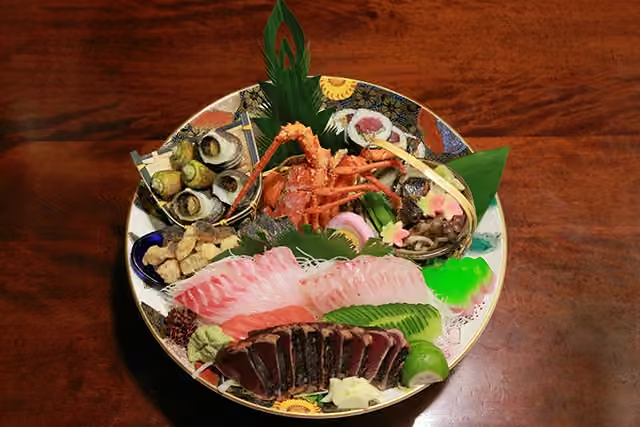

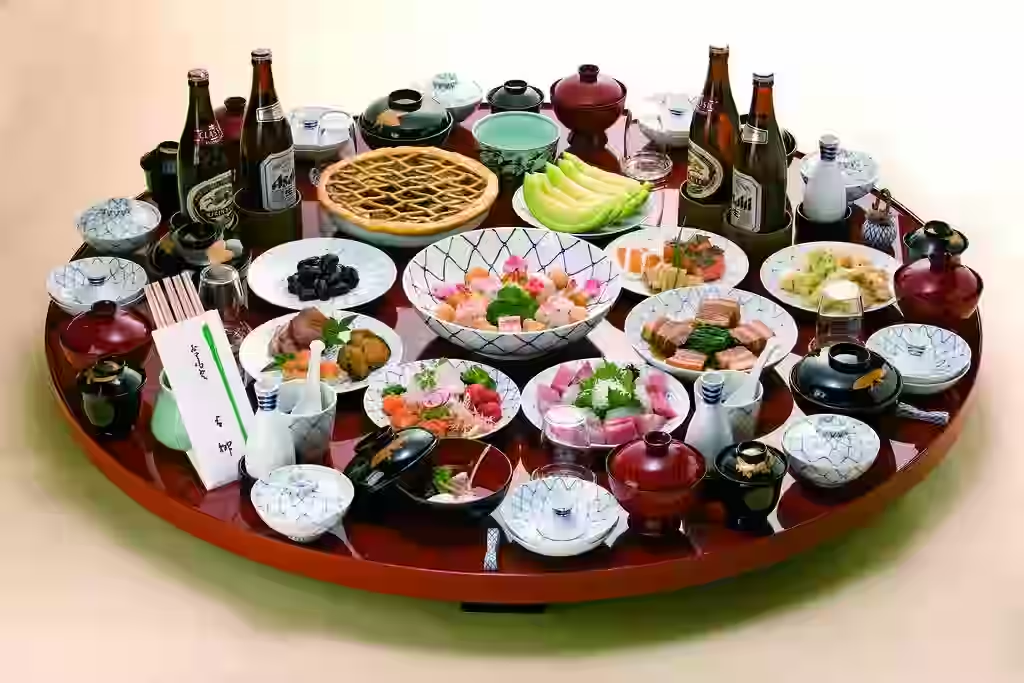
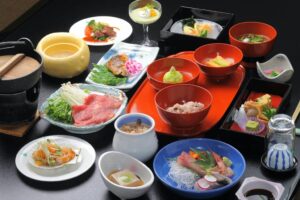
Picture a porcelain platter nearly 40 centimeters wide, packed edge to edge with sashimi, sushi, simmered vegetables, fried fish, fruit and even sweet bean jelly. This is sawachi ryori (皿鉢料理), the traditional banquet style of Kochi Prefecture. Rather than waiting for courses, diners move what they want onto a small plate and keep eating as the conversation flows.
Sawachi is inseparable from okyaku, the local custom of gathering relatives, neighbors and friends for food and drink. Below, you will find the four platter types, the dishes worth recognizing and what to confirm before you order one in Kochi.
What Is Sawachi Ryori?
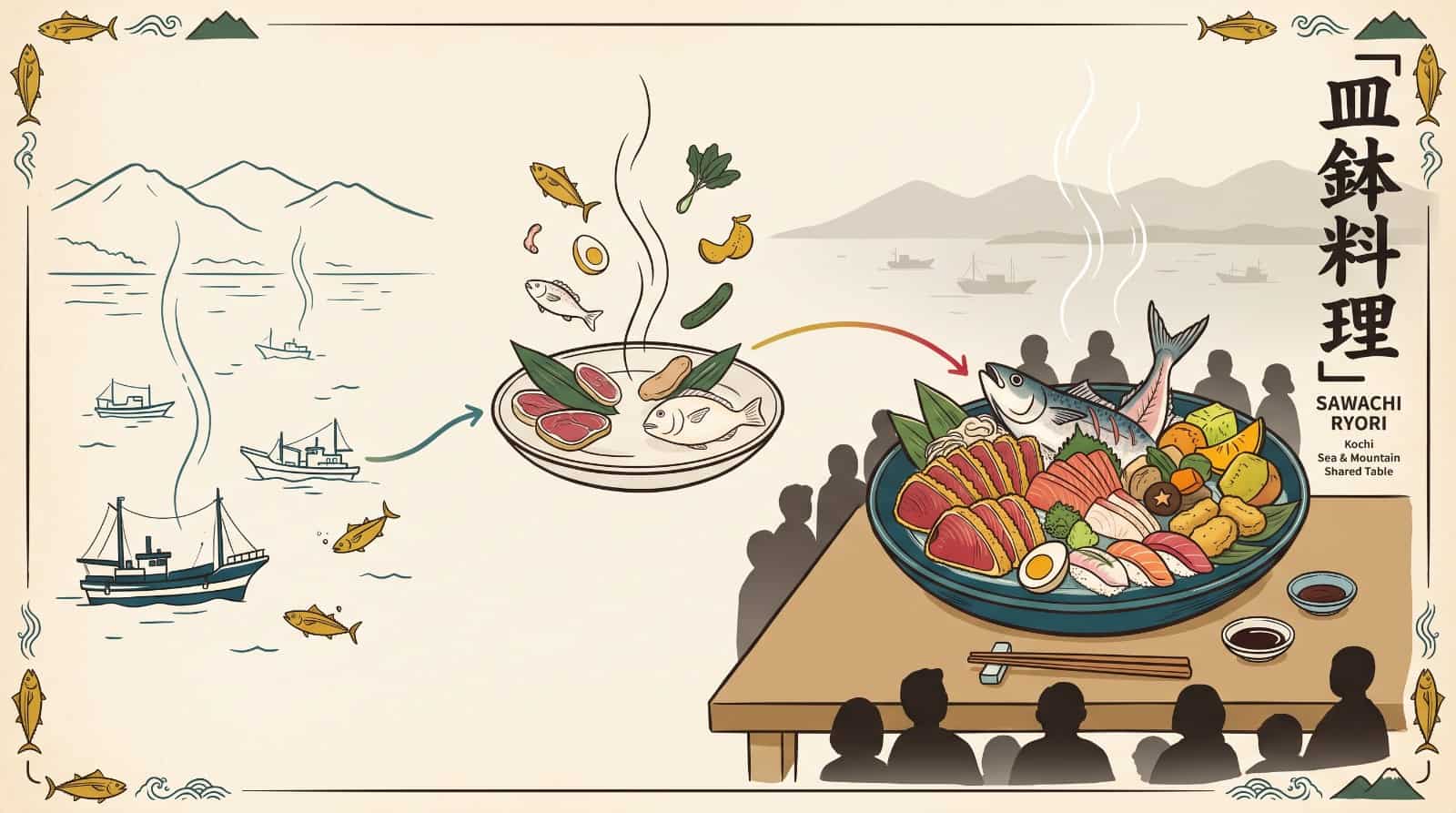
Sawachi ryori is Kochi Prefecture’s banquet style of arranging sashimi, sushi, simmered and fried dishes, sweets and fruit on large shared platters. Japan’s farm ministry (MAFF) stresses that it is not one dish. Instead, it describes a way of serving, using platters about 36 to 39 centimeters wide. Guests then take what they like onto small plates.
Sawachi Ryori at a Glance
- Japanese name
- 皿鉢料理 (sawachi ryōri or sahachi ryōri)
- Home
- Kochi Prefecture, on the Pacific coast of Shikoku, one of Japan’s four main islands
- What it is
- A banquet serving style, not a single recipe
- Platter size
- About 36 to 39 cm (14 to 15 in) across
- Platter types
- Raw seafood, sushi, kumimono (mixed) and single-dish platters
- Portion
- Roughly three portions per traditional platter, per MAFF; a full banquet uses several platters, and restaurant sizes vary
- Occasions
- Weddings, funeral gatherings, celebrations of a birth or 60th birthday, seasonal festivals, housewarmings and other occasions for entertaining guests
- Recognition
- Recognized under the Agency for Cultural Affairs’ 100-Year Food program (fiscal 2021)
Planning a meal in Kochi?
Traditional sawachi is designed for groups and may require a reservation. See how to order sawachi in Kochi for group-size questions, allergy checks and useful Japanese phrases.
At the table, take a modest amount onto your own plate and return for more later. Serving customs differ, so use any shared utensils provided or follow the host’s lead.
Is It “Sawachi” or “Sahachi”?
In short, both readings are correct. MAFF’s own page lists the dish as さわち・さはちりょうり, and its English Kochi story uses both forms as well. MAFF’s English pages use sawachi first, so this guide uses that spelling throughout.
Is There a Sawachi Ryori Recipe?
No single recipe exists, because sawachi describes how a banquet is served rather than one fixed dish. A platter may combine sashimi, sushi, simmered vegetables, fried foods, fish cake, sweets and fruit. The selection then changes with the area, the season, the occasion and the budget.
Does Sawachi Change with the Season?
Yes. Since sawachi has no fixed menu, seasonal change shows most in the fish, fruit and local vegetables. The four broad platter types stay recognizable, but MAFF notes that ingredients differ from area to area across Kochi. When booking, it is worth asking which fish is in season.
Sawachi Ryori vs. Kaiseki
Sawachi ryori and kaiseki differ mainly in timing and portioning. Sawachi presents several foods on shared platters at once, and diners move their choices to small plates. Kaiseki, by contrast, generally serves a planned succession of individual dishes. As a result, sawachi lets diners choose both the order and the amount they eat.
Sawachi Ryori vs. Honzen Ryori
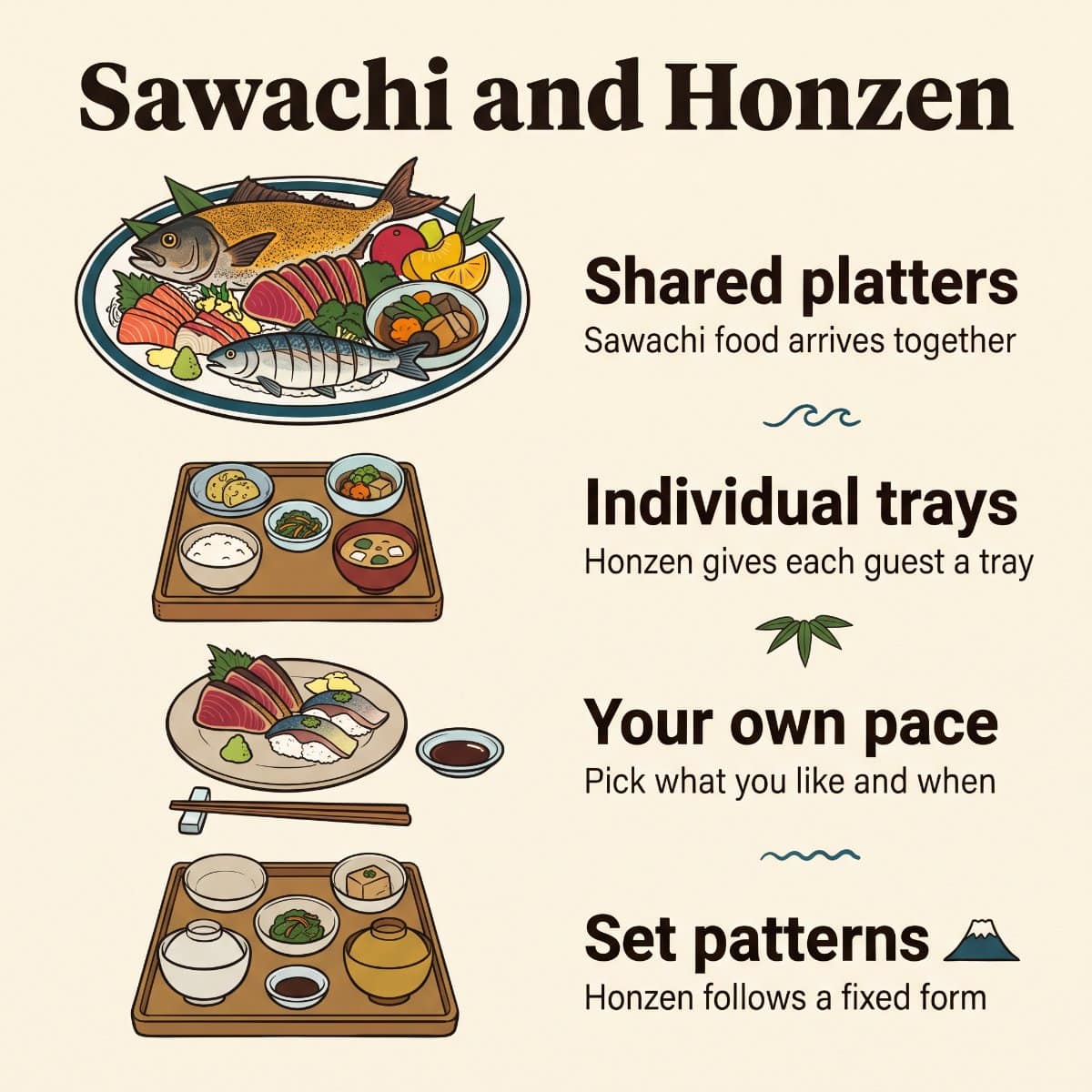
Honzen ryori, the formal tray-based meal, makes a sharper contrast. Each guest receives an individual tray instead of sharing platters.
| Feature | Sawachi ryori | Honzen ryori |
|---|---|---|
| How food arrives | Large shared platters set out for the whole table | Individual trays (zen) for each guest |
| Structure | Seafood, sushi, cooked dishes, sweets and fruit on platters | Set patterns such as one soup and three dishes, or two soups and five |
| How you eat | Pick what you like onto your own small plate | Eat the dishes placed on your tray |
| Typical setting | Okyaku banquets with relatives, friends and neighbors | Formal ceremonial meals |
Sawachi details from MAFF and the University of Kochi; honzen structure from a 2017 Japan Society of Home Economics study.
The Four Broad Types of Sawachi Platter
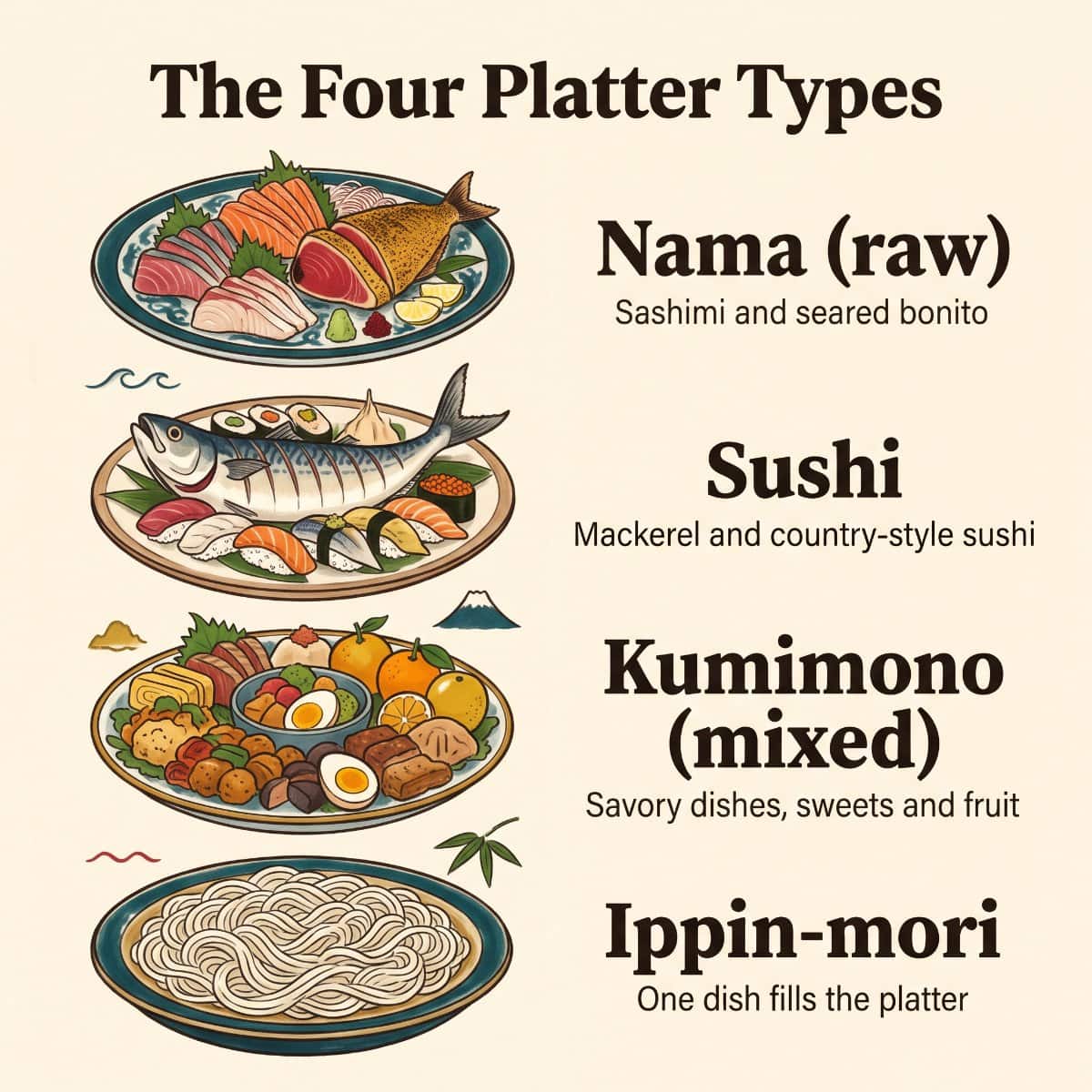
MAFF groups sawachi platters into four broad types: nama for raw seafood, sushi, kumimono combining savory and sweet items, and ippin-mori devoted to one dish. Raw and kumimono platters, it adds, have long formed the core of traditional spreads. A banquet may therefore include several platters from different types.
生Nama (raw)
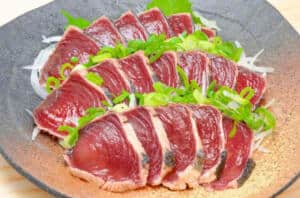
Sashimi and seared bonito, known as katsuo no tataki. This platter shows off Kochi’s seafood.
すしSushi
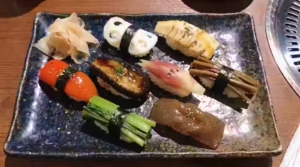
Mackerel sugata-zushi and inaka-zushi, Kochi’s country-style sushi made with mountain vegetables.
組物Kumimono (mixed)
Sushi with simmered, dressed and fried dishes, plus sweets and fruit, all on one platter.
一品盛りIppin-mori (single dish)
One dish filling the platter, such as steamed sea bream, somen noodles or sweet zenzai.
Contents are never fixed, though. MAFF’s Kochi story notes that platters vary by area, reflecting local food cultures. Modern platters may also include roast beef or fried shrimp alongside the classics.
Why Are Sweets on the Same Plate as Sushi?
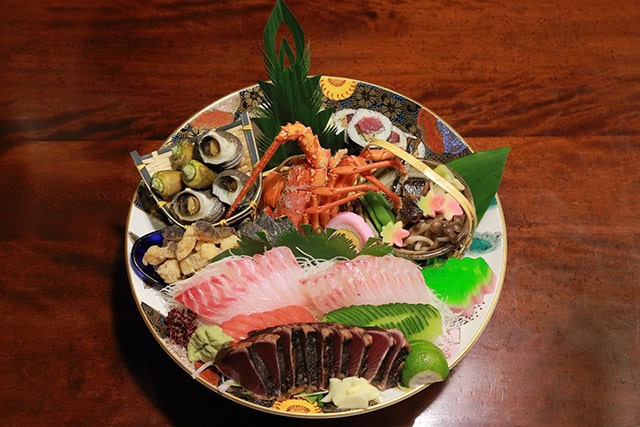
Mixed sawachi platters traditionally combine savory food with sweets and fruit, rather than saving dessert for a later course. A 2016 University of Kochi study likewise describes sweets and fruit as standard additions to traditional sawachi spreads. Because the spread is served together, diners can decide when to eat the sweeter pieces.
Dishes to Look For on a Sawachi Platter
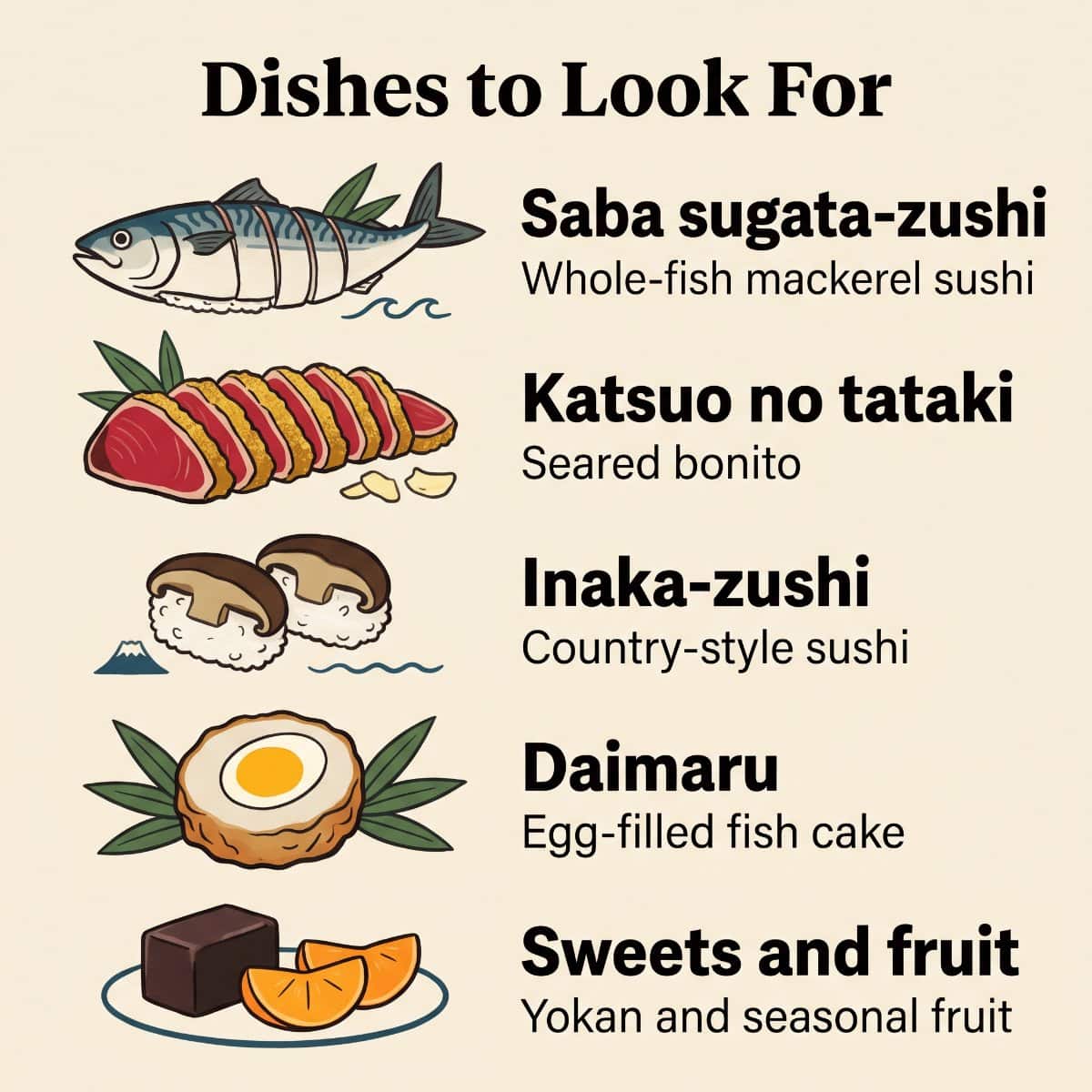
These are the pieces most worth recognizing on a platter.
さばの姿ずしSaba no sugata-zushi
Mackerel sushi in the shape of a whole fish
MAFF identifies it as a standard item in traditional sawachi spreads. Cooks split the fish along the back, cure it with salt and vinegar, and pack it with rice. MAFF describes the traditional presentation as arranging the sliced sushi in the center with the head and tail standing upright.
鰹のたたきKatsuo no tataki
Seared bonito
Bonito is one of Kochi’s best-known seafood specialties. Slices of seared katsuo no tataki often appear on the raw platter.
田舎ずしInaka-zushi
Country-style sushi
Country-style sushi made with mountain vegetables and yuzu-scented rice. Some pieces carry myōga or shiitake on top, while others stuff rice into konjac or hollow bamboo shoots.
大丸Daimaru
Egg-filled fish cake (a springy steamed fish-paste product)
Fish paste rolled around whole boiled eggs, then steamed. Sliced, it shows a pink, white and yellow cross-section.
甘い物・果物Sweets and fruit
The dessert corner
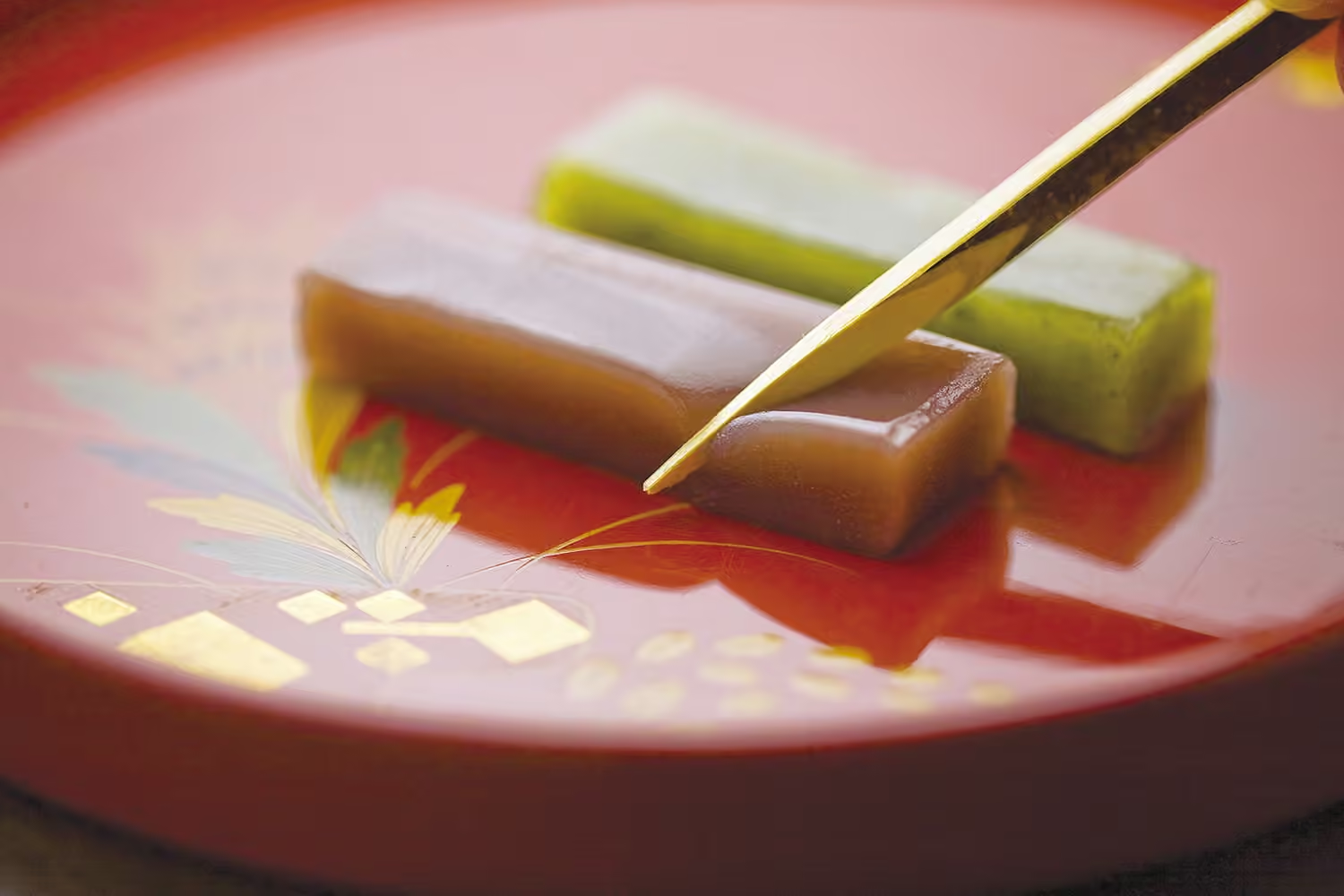
Items such as yōkan bean jelly and seasonal fruit share the platter with savory food.
A Closer Look at Mackerel Sushi and Daimaru
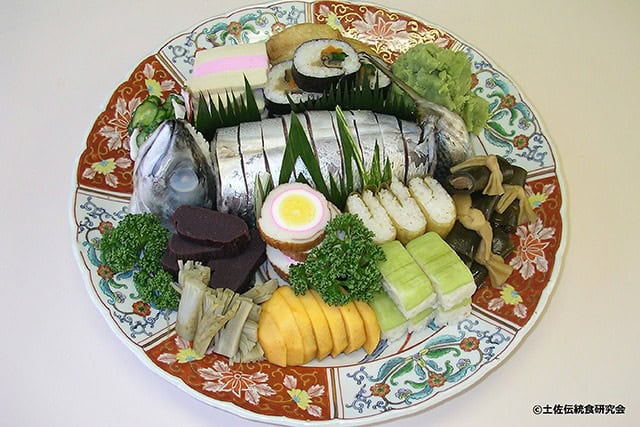
Kochi’s mackerel sushi tastes noticeably sharper than Kyoto’s sweeter saba-zushi. According to MAFF, cooks use yuzu or rice vinegar depending on the area, and the sushi rice for this dish usually includes ginger and sesame. MAFF adds that Kochi uses goma saba, or blue mackerel, which has less fat than the ma-saba used in Kyoto. Daimaru, meanwhile, appears on New Year and wedding tables as well. Its origin is unclear, but MAFF says it was already sold as a New Year product around 1950. Makers still differ in seasoning and in the pattern of the slice.
For the two best-known platter items, see our guides to katsuo no tataki and Tosa inaka sushi. Our katsuo guide covers the fish itself. Meanwhile, the kamaboko and yōkan pages add context for daimaru and the sweets on mixed platters.
Other traditional foods from Kochi include kokera sushi and guruni.
What Does Sawachi Taste Like?
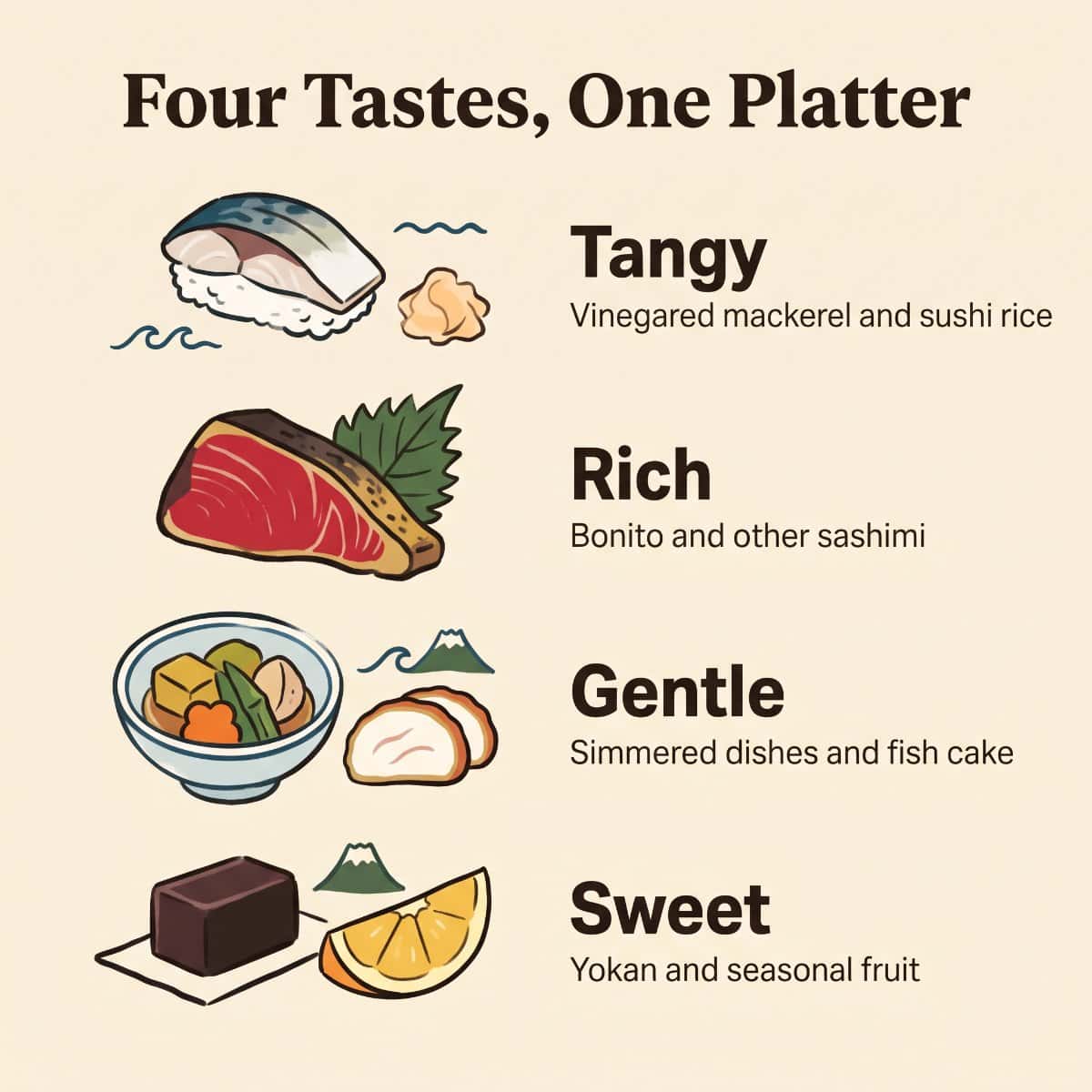
Sawachi has no single flavor profile. Instead, its appeal lies in the quick contrast between vinegared, rich, gently seasoned and sweet foods. One bite might be the sharp, salty tang of mackerel sushi with ginger. The next could be the clean richness of bonito, then a soft slice of fish cake with a mild egg center. Sweet bean jelly sits just a few centimeters away.
TangyVinegared mackerel and sushi rice
RichBonito and other sashimi
GentleSimmered dishes and fish cake
SweetYōkan and seasonal fruit
Texture changes just as quickly: firm vinegared mackerel, tender bonito, springy fish cake, soft simmered vegetables and smooth yōkan. Since you choose every bite yourself, you can keep the sweets for later or skip them entirely. At an okyaku, the meal traditionally goes hand in hand with conversation rather than a fixed order of courses.
Where Sawachi Came From: A Short History
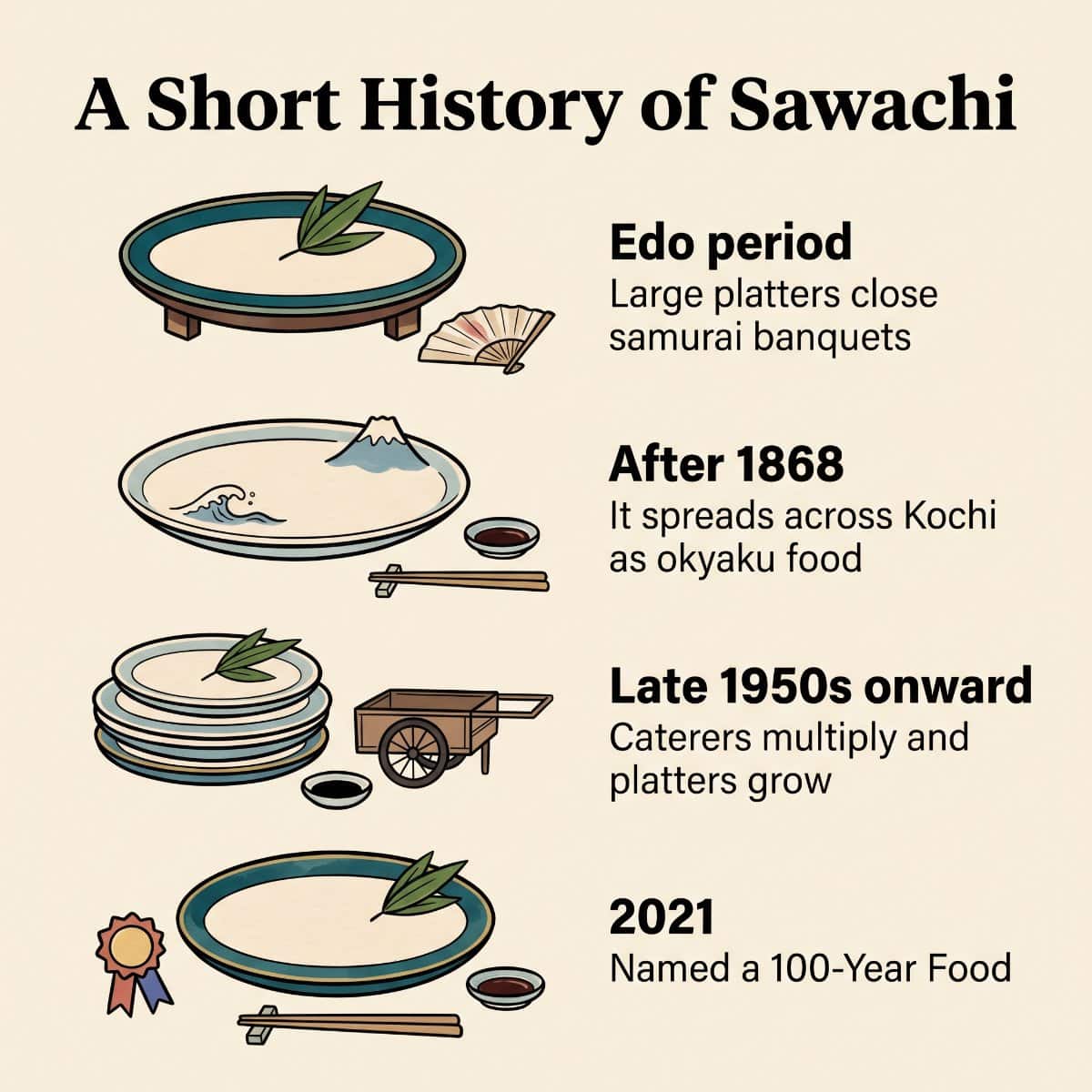
MAFF traces sawachi to the Edo period under the Tosa domain, when large platters closed samurai banquets. After the Meiji era, the style spread across Kochi as okyaku food. The 2016 University of Kochi study adds detail. It says the domain discouraged luxury, so commoners rarely owned such platters. After the class system ended in the Meiji era, wealthy merchants and farmers began buying them.
Meanwhile, the platters themselves were a status symbol. According to MAFF, wealthy households kept expensive Imari, Kutani and Arita porcelain, along with cup stands and lacquer platter stands called monosue. In fact, the number of platters at a banquet showed how big the gathering was.
Who Cooked for an Okyaku?
Before caterers, the village did. Farming communities had work-sharing groups called yui. Within them, a smaller group helped cook, set the table and clean up. MAFF’s Japanese account calls it the shiru-gumi, while its English page renders it as “shiru yui.” In some communities, men cut the fish while women did the simmering, a record of older practice rather than a rule today. Preparation could take two days. Some villages even had a kiyō ryōrinin, a skilled amateur cook who planned and prepared the feast.
The work didn’t end with the party, either. The day after an okyaku, a small thank-you gathering called zan was held for the helpers. MAFF notes that the leftover head and tail of the mackerel sushi were grilled and eaten there.
Okyaku: The Party Around the Platter
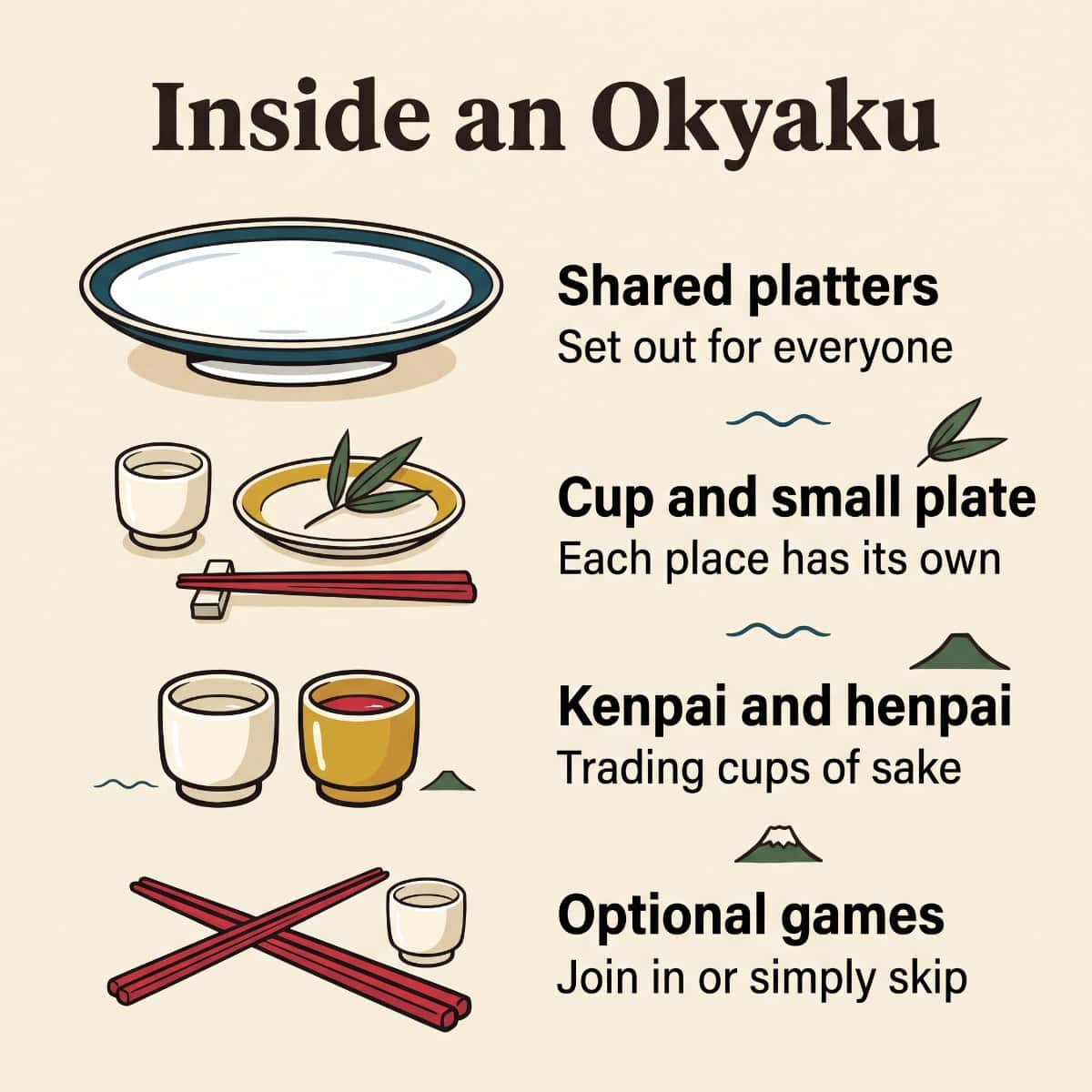
In Kochi, okyaku means a banquet, and sawachi is its centerpiece. Kochi Prefecture describes it as a gathering where relatives, friends and neighbors of all ages share food and drink. The 2016 study adds a telling line: okyaku was a way for hosts, not only guests, to enjoy themselves and strengthen bonds.
Traditionally, guests sat in a U shape before the alcove, with platters resting on monosue stands rather than tables. Each place had a small tray with a cup, a small plate and red chopsticks. Historical descriptions record the host first offering a cup to the guest of honor before everyone helped themselves. Later, people moved seats freely, sang and played games. Present-day seating, serving and drinking customs vary by occasion and host.
献杯・返杯Kenpai and henpai
Trading cups of sake. According to the 2016 study, juniors offered a cup to seniors and received one back.
箸拳Hashiken
Two players hide red chopsticks in their hands and guess the total. In traditional versions, the loser takes a drink.
可杯Bekuhai
Novelty sake cups, some shaped so they cannot be set down until empty. Kochi Prefecture calls them a party staple.
菊の花Kiku no hana
Players guess which upturned cup hides a chrysanthemum, with drinking rules attached.
These customs are cultural context, not instructions for visitors. You can decline alcohol, ask for a soft drink and skip any game or shared cup.
If you are curious about the drinks themselves, our guide to sake is a good place to start.
How to Order Sawachi Ryori in Kochi
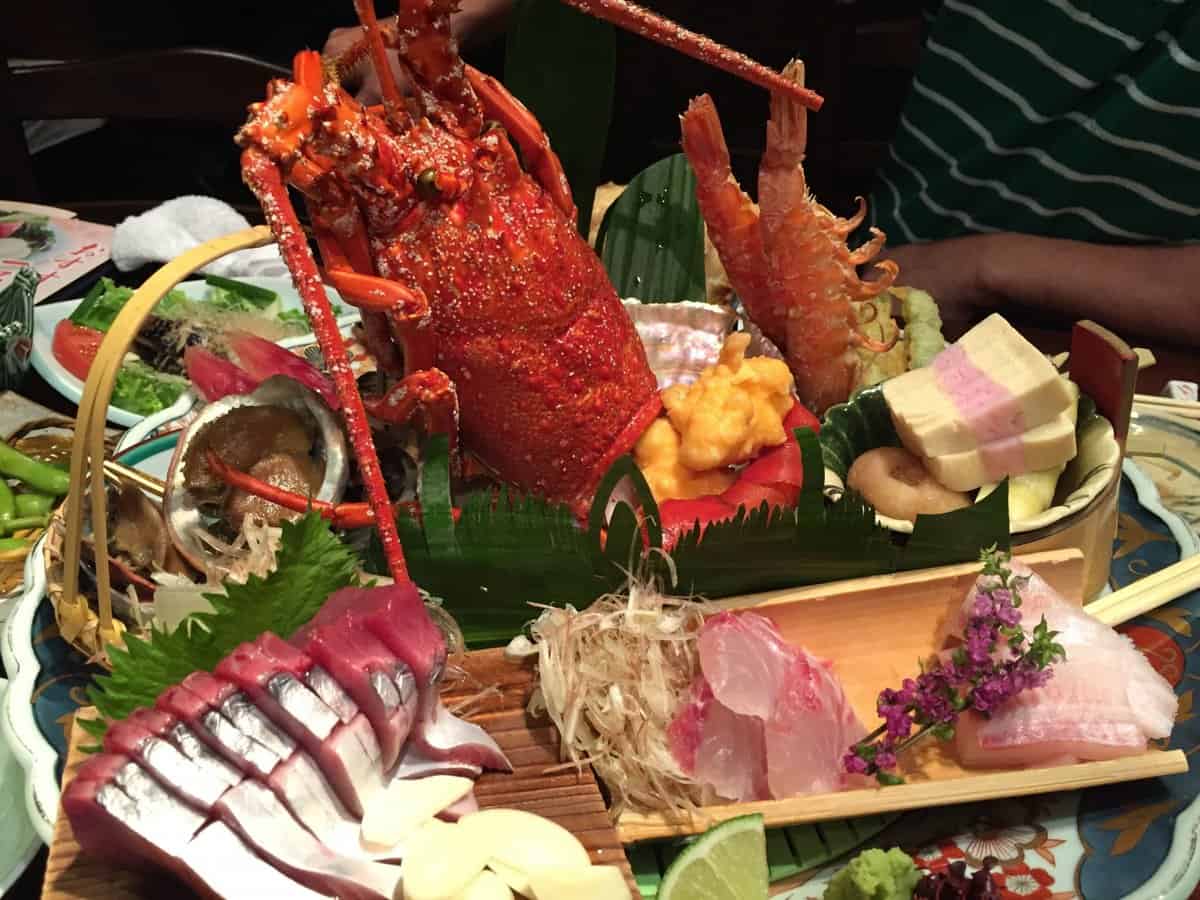
Some restaurants and caterers in Kochi accept sawachi orders, and certain restaurants offer smaller platters, MAFF notes. Before booking, confirm the number of servings, contents, total price, reservation deadline and whether the order is for dining in, delivery or collection. Availability and arrangements vary by business.
It also helps to ask whether sashimi is included, since raw seafood is only one of the platter types.
Questions to Ask Before You Book
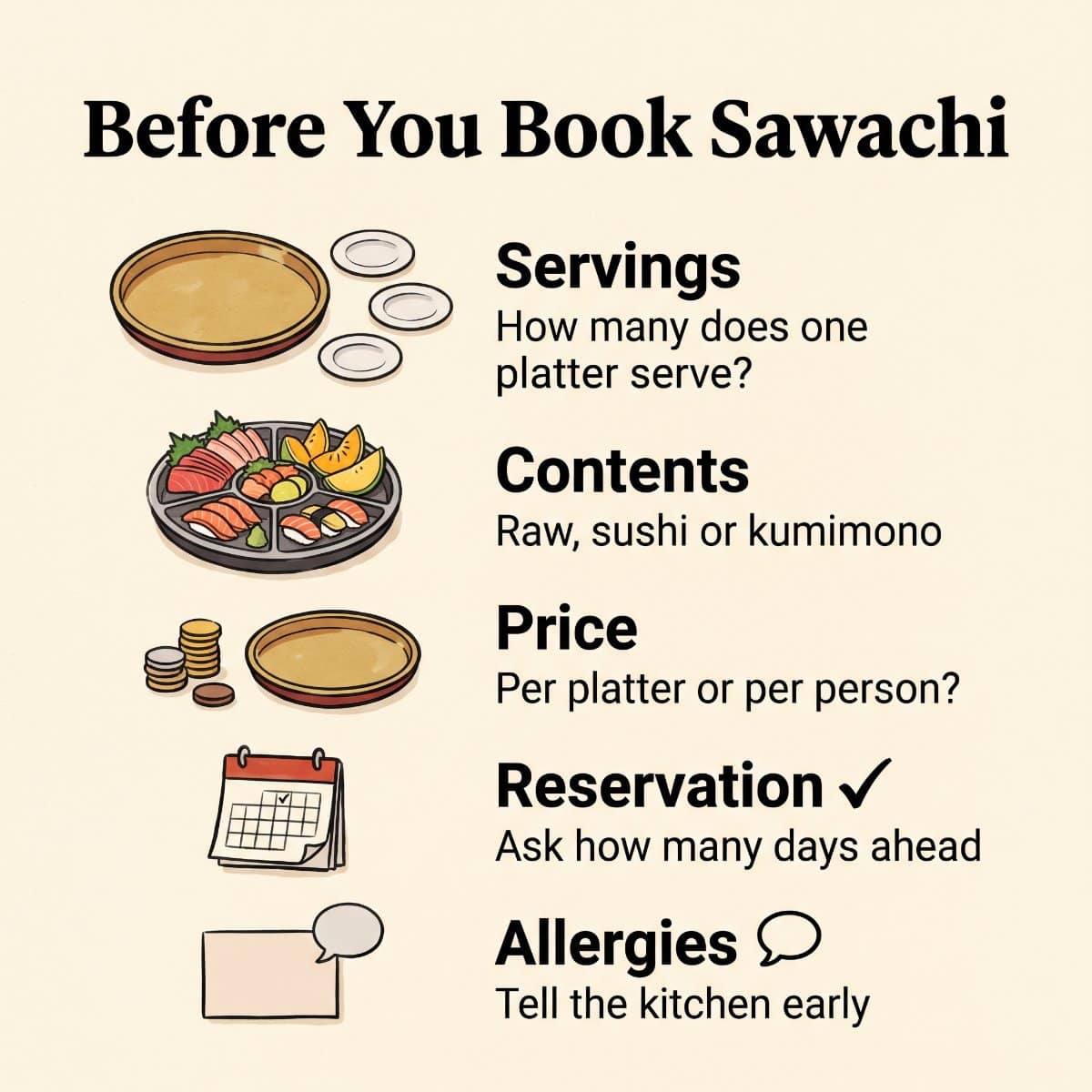
- How many people does one platter serve, and is there a smaller size?
- Which platter types are available: raw, sushi, kumimono or a combination?
- Do you need a reservation, and how many days ahead?
- Is the price per platter or per person, and does it include tax?
- Can the kitchen adjust for allergies or foods you avoid?
Useful phrases when booking
皿鉢料理は二人でも注文できますか?Sawachi ryōri wa futari demo chūmon dekimasu ka?Can two people order sawachi?
一皿は何人前ですか?Hito-sara wa nan-ninmae desu ka?How many people does one platter serve?
料金は一皿単位ですか、それとも一人当たりですか?Ryōkin wa hito-sara tan’i desu ka, soretomo hitori-atari desu ka?Is the price per platter or per person?
Allergies and Serving Temperature
Platter contents vary, so discuss allergies with the kitchen rather than relying on the name sawachi. Fish is common, and daimaru contains fish paste and egg. Some local sushi-rice recipes may also contain sesame; MAFF’s saba no sugata-zushi recipe, for example, includes sesame and ginger.
Ask separately about soy, wheat, shellfish and cross-contact. Serving temperatures also vary, because one spread can combine sashimi, sushi, simmered foods and fried dishes.
A Past Example: The 2025 Nankoku Tosa Sawachi Festival
Past event
Nankoku Tosa Sawachi Festival (南国土佐皿鉢祭)
Kochi City’s March 2025 newsletter listed the 57th festival on March 2, 2025. The venues were Obashi-dori shopping street and the plaza in front of Hirome Market. The newsletter described a display of sawachi alongside ikezukuri sashimi and Western and Chinese dishes. Treat this as a past example rather than a current listing, and check Kochi City’s announcements for future dates.
Hirome Market, a food hall in central Kochi City, gathers local food under one roof. It can be a place to sample individual Kochi dishes. However, do not assume a full sawachi platter is available there without checking the current stalls.
Final Thoughts: A Feast Built for Sharing
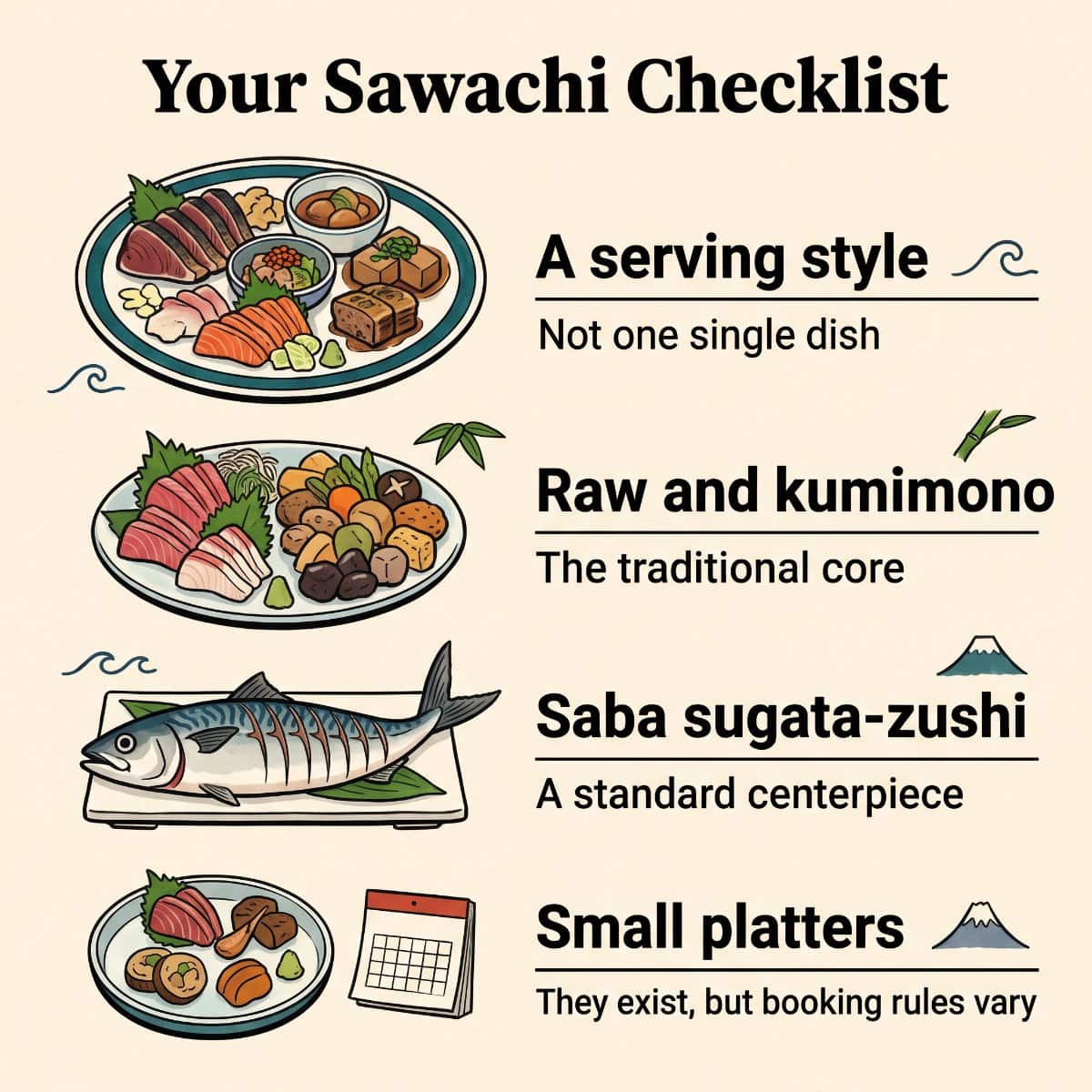
Sawachi ryori is less a recipe than an invitation. A few large platters let everyone eat what they like, at their own pace, while conversation continues around the table. If you are heading to Kochi, ask a restaurant about a small-group platter. Then look for saba no sugata-zushi, its sliced body framed by the upright head and tail, at the center of the spread.
Remember these points
- Sawachi is a serving style, not one dish.
- Raw and kumimono platters form the core.
- Saba no sugata-zushi is a standard centerpiece.
- Small-group platters exist, but booking rules vary.
Frequently Asked Questions About Sawachi Ryori
The Dish and Its Name
- How do you pronounce 皿鉢料理?
-
You can say sawachi ryōri or sahachi ryōri. MAFF lists both readings on its Japanese page, and its English Kochi story uses both as well.
- Does every sawachi platter include raw fish?
-
No. Nama platters focus on sashimi and seared bonito, while sushi, kumimono and ippin-mori are separate categories. Contents vary, so ask whether your order can be made without raw seafood.
Ordering and Eating
- How many people does one platter serve?
-
MAFF describes a traditional platter as about three servings. Restaurant platters, however, come in different sizes. Ask the restaurant how many diners its platter is meant for.
- Is the price per person or per platter?
-
It depends on the restaurant or caterer. Some quote by platter and others by diner, so ask before you order.
- Can solo travelers or couples try sawachi?
-
Some restaurants offer smaller platters for small groups, so couples may have options. A single-person platter is not guaranteed. Solo travelers should ask about a reduced platter or a set with several typical sawachi items.
- Do I have to drink at an okyaku?
-
No. Drinking games such as hashiken and bekuhai are part of the tradition, but joining in is optional. Sawachi platters also include sweets, fruit and plenty of food for non-drinkers.
History and Events
- How old is sawachi ryori?
-
MAFF traces it to large platters served at the end of samurai banquets in the Edo period. It then spread across Kochi after the Meiji era. Its 100-Year Food entry with the Agency for Cultural Affairs calls it a Tosa banquet tradition continuing since the Edo period.
- When is the Nankoku Tosa Sawachi Festival?
-
Kochi City’s March 2025 newsletter listed the 57th festival for March 2, 2025. That date is a past example, not the current schedule, so check the city’s official announcements before traveling.
References
Show all 13 references
- Ministry of Agriculture, Forestry and Fisheries (MAFF) – Our Regional Cuisines: Sawachi Ryori, Kochi Prefecture (Accessed November 2026)
- Ministry of Agriculture, Forestry and Fisheries (MAFF) – Sawachi Ryori, Our Regional Cuisines, English Edition (Accessed November 2026)
- Ministry of Agriculture, Forestry and Fisheries (MAFF) – Our Regional Cuisines: Saba no Sugata-zushi, Kochi Prefecture (Accessed November 2026)
- Ministry of Agriculture, Forestry and Fisheries (MAFF) – Area Stories: Kochi Prefecture (Accessed November 2026)
- Ministry of Agriculture, Forestry and Fisheries (MAFF) – Area Stories: Kochi, Our Regional Cuisines, English Edition (Accessed November 2026)
- Ministry of Agriculture, Forestry and Fisheries (MAFF) – Inakazushi, Our Regional Cuisines, English Edition (Accessed November 2026)
- Ministry of Agriculture, Forestry and Fisheries (MAFF) – Japan’s Traditional Foods: Daimaru (Accessed November 2026)
- Agency for Cultural Affairs – 100-Year Food: Kochi Prefecture Entries (2021) (Accessed November 2026)
- Kochi Prefecture – Okyaku Culture Media Experience Event, Press Release (2025) (Accessed November 2026)
- Kochi City – Kōhō Akaruimachi, March 2025: 57th Nankoku Tosa Sawachi Festival (2025) (Accessed November 2026)
- University of Kochi Repository – Kanosue, F., Mitani, H., & Matsuzaki, A. (2016). Lore of banquet culture of Kochi “Okyaku.” Bulletin of the University of Kochi, Faculty of Health and Nutrition, 66, 11–17 (Accessed November 2026)
- J-STAGE – Nakane, K., Minami, M., Suzaki, T., Morise, K., & Ogawa, N. (2017). Honzen cuisine examined from the perspectives of nutrition and taste. Proceedings of the Annual Meeting of the Japan Society of Home Economics, 69, 172. https://doi.org/10.11402/kasei.69.0_172 (Accessed November 2026)
- Hirome Market – Official Website (Accessed November 2026)
Photo Credits
- Ministry of Agriculture, Forestry and Fisheries (MAFF) – Our Regional Cuisines: Sawachi Ryori, Kochi Prefecture, source of the photograph; image provided by the Tosa Traditional Food Research Society (Accessed November 2026)



Comments