




Shippoku ryori is one of Japan’s oldest fusion cuisines. Born in Nagasaki during centuries of international trade, it blends Japanese, Chinese, and Western influences around one striking object: a large red round table. Unlike kaiseki, where each guest receives a carefully arranged individual tray, shippoku invites everyone to share from the same platters. It is generous, communal, and layered with history. Few Japanese cuisines carry this much cultural weight.
What Is Shippoku Ryori?
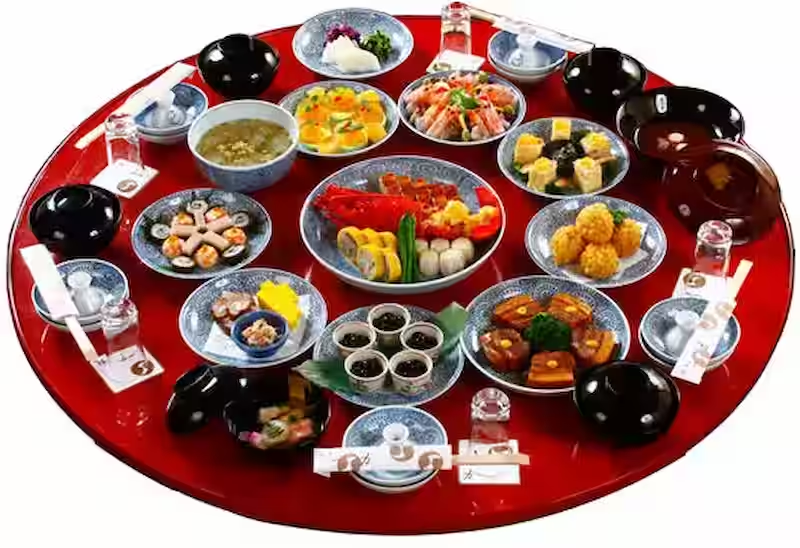
Shippoku ryori (卓袱料理) is a banquet-style cuisine unique to Nagasaki. Locals describe it with the word Wakaran (和華蘭). That single term holds three cultures inside it: Wa (和) for Japan, Ka (華) for China, and Ran (蘭) for Holland and the West.
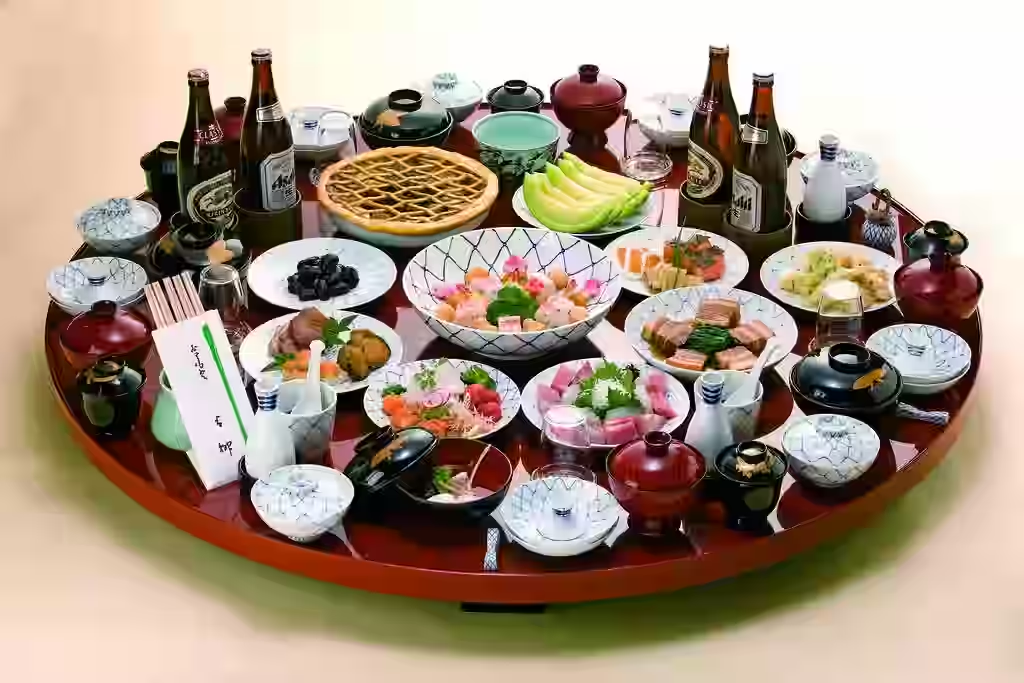
The meal centers on an En-taku (円卓), a wide round table finished in deep red lacquer. Guests sit together and share generous platters placed at the center. In Edo-period Japan, this communal arrangement felt genuinely radical. Most formal meals of the era enforced strict social hierarchy. Shippoku deliberately broke those rules. Everyone at the table was equal.
That equality was not just symbolic. It shaped how people ate, talked, and related to each other across an entire meal. This is the Japanese banquet cuisine that Nagasaki gave the world.
A Taste of History
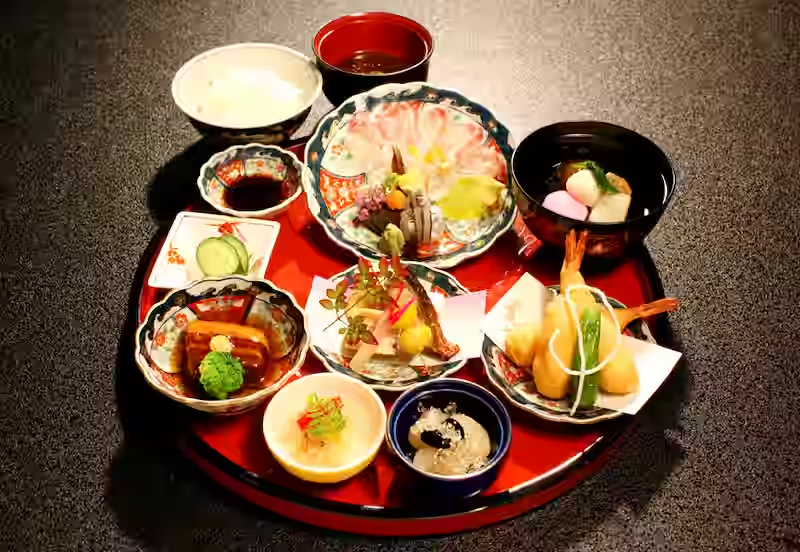
Nagasaki was unlike any other Japanese city during the Edo period (1603–1868). Japan had sealed its borders to most of the world. Yet Nagasaki stayed open. Chinese merchants settled near the harbor. Dutch traders occupied the artificial island of Dejima (出島), the only place in Japan where Western commerce was permitted.
These communities brought ingredients, techniques, and ideas that Japan had never encountered before. Pork braising methods arrived from China. Pastry-making and certain cooking styles came with the Dutch. Japanese chefs absorbed both traditions, then created something entirely their own. That creative negotiation between cultures became shippoku ryori.
Why Shippoku Could Only Exist in Nagasaki
Dejima changed everything. That small fan-shaped island in Nagasaki harbor functioned as Japan’s only legal gateway to the outside world for over 200 years. Dutch merchants traded goods, books, and ideas across its docks. Chinese communities built their own quarter in the city. Christianity, banned throughout the rest of Japan, left quiet cultural traces in Nagasaki’s local life.
This open atmosphere shaped the food in ways that went very deep. Nagasaki chefs did not simply borrow flavors from abroad. They negotiated between cultures at the table itself. The round shape of the En-taku likely reflects Chinese dining customs, where communal sharing symbolizes unity. Japanese hospitality softened the formality. Dutch ingredients added unexpected richness to familiar preparations.
The result was Wa-Ka-Ran cuisine: food that could only grow in a port city where the world came to eat. Historians of multicultural Japanese cuisine often point to Nagasaki as the one place where this convergence was both possible and inevitable. Shippoku is the fullest expression of that meeting.
The Round Table and Its Meaning
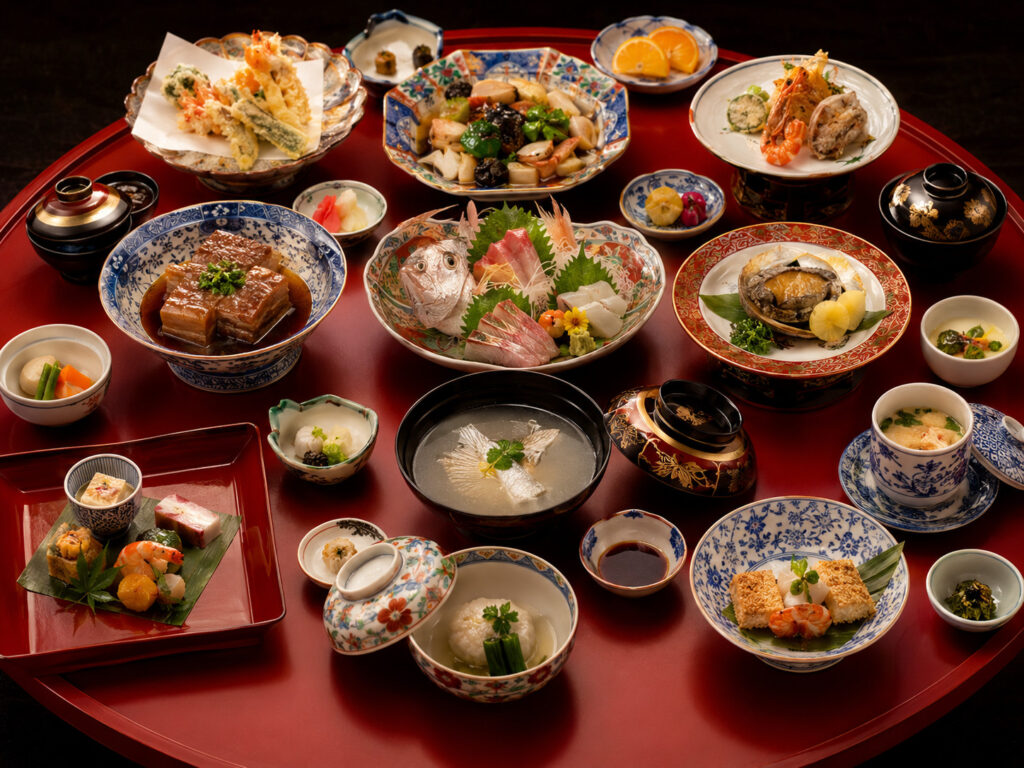
The En-taku is more than furniture. In Japanese culture, corners create hierarchy. A square table has a clear head position. The round table has none, and that absence carries meaning.
Social rank controlled nearly every public interaction in Edo-period Japan. At a shippoku table, a merchant could sit beside a scholar without either performing rituals of deference. The shared dishes reinforced this message: no one received a larger portion than anyone else. Everyone reached, passed, and offered food to their neighbors. That round-table dining style, rare in Japanese cuisine, made shippoku feel radical for its time.
It was a quiet kind of revolution, served with soup.
Typical Dishes in Shippoku Ryori
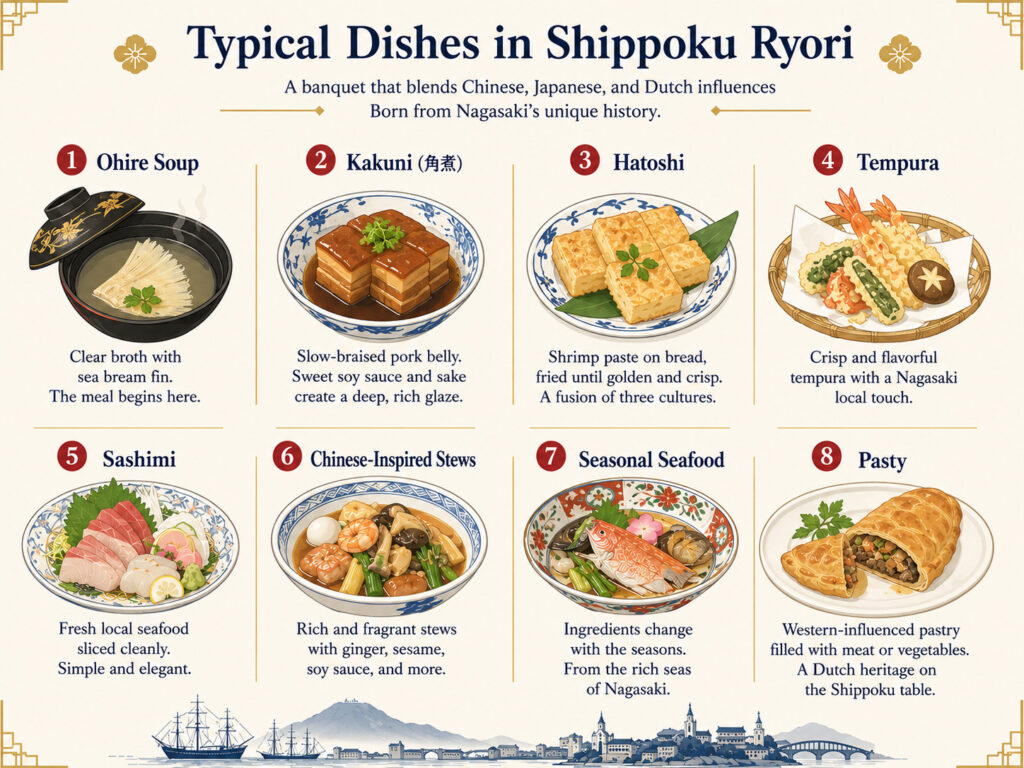
So what actually arrives on that red round table? The spread is generous, and the courses flow at a slow, unhurried pace. Each dish carries a piece of Nagasaki’s history.
Ohire soup opens the meal. It is a clear broth containing a sea bream fin. This single bowl signals quality before anything else has been touched.
Kakuni (角煮) is slow-braised pork belly, tender enough to part with chopsticks alone. The Chinese technique behind this dish is unmistakable. Sweet soy sauce and sake reduce into a deep, glossy glaze that clings to each piece. Our Kakuni guide covers this beloved Nagasaki staple in full detail.
Hatoshi may surprise first-time visitors. Shrimp paste is spread on bread, then fried until golden and crisp. The outside shatters; inside, the shrimp filling is soft and fragrant. One bite contains the whole history of Nagasaki: Chinese preparation, Western bread, and Japanese seasoning working together.
Tempura appears in the spread, though the Nagasaki version can differ from the Tokyo standard. The batter sometimes sits a little thicker, the seasoning adjusted to local taste.
Sashimi offers a lighter counterpoint. Fresh local seafood, sliced cleanly. Nagasaki’s harbor supplies much of this directly, and the freshness shows clearly in every piece.
Chinese-inspired stews fill out the middle courses. These tend to be richer and more fragrant than standard Japanese broths, with ginger, sesame, and soy often appearing together in balanced proportion.
Seasonal seafood dishes shift with the calendar. Nagasaki faces the East China Sea, one of Asia’s richest fishing grounds. What arrives in spring differs from what appears in autumn, so the table always reflects the season.
Pasty, a Western-influenced pastry filled with meat or vegetables, sometimes closes the savory courses. It remains one of the clearest Dutch fingerprints on the shippoku table, and a small reminder of how far those trade winds once reached.
What Does Shippoku Ryori Taste Like?
This question deserves a real answer. Shippoku sits somewhere between Chinese banquet food and Japanese kaiseki in both richness and weight. It is fuller than kaiseki, yet lighter than a full Chinese feast. The flavor profile leans distinctly sweet-savory, a combination that Nagasaki cuisine returns to again and again across many dishes.
Soy sauce appears often. Sugar, sake, and mirin layer in warmth and depth. Together they build a rounded, comforting flavor that feels familiar and somehow unexpected at the same time. Seafood contributes clean umami. Pork adds richness and body. The Chinese-inspired stews introduce aromatic warmth that purely Japanese cooking rarely approaches.
The overall experience feels abundant. Dishes keep arriving. Conversation fills the natural gaps. By the end of a shippoku meal, you feel both satisfied and celebratory in equal measure. That combination is genuinely hard to find anywhere else.
The Meaning of “Ohire wo Douzo”
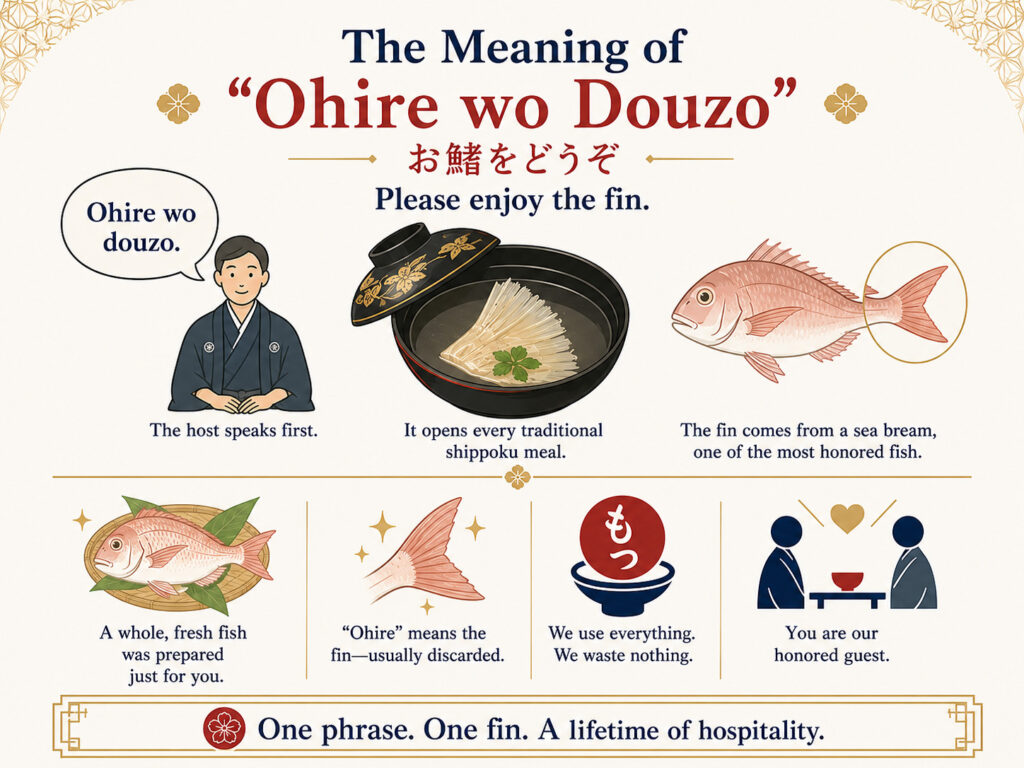
The host speaks first. “Ohire wo douzo” (お鰭をどうぞ). Please enjoy the fin.
This phrase opens every traditional shippoku meal, and it carries real weight. The fin comes from a sea bream, one of the most honored fish in Japanese cuisine. Using the fin in the opening soup sends a deliberate signal: a whole, fresh fish was prepared specifically for this gathering. Nothing came from yesterday. You are worth a whole fish.
In Japanese hospitality, that message is not small. The word “ohire” refers to the tail fin, the outer part of the fish most often discarded in everyday cooking. Offering those parts with pride inverts the usual logic. It says: we use everything, we waste nothing, and you are our honored guest. This single phrase captures what shippoku ryori is really about, at its deepest level.
Why Seafood Matters in Nagasaki Cuisine
Nagasaki is a port city, and that geography shapes everything on the table. The city faces the East China Sea, one of the richest fishing grounds in all of Asia. Fresh fish arrived at the harbor daily for centuries. Trade routes brought curing and preservation knowledge from China. Dutch merchants introduced different cooking and preparation approaches to ingredients the local chefs already knew well.
Seafood in Nagasaki cuisine is not simply an ingredient. It connects the city to its geography, its past, and its identity in ways that are genuinely difficult to separate. The variety runs deep: mackerel, sea bream, squid, abalone, and eel all appear regularly across local dishes. Shippoku showcases this coastal bounty at its most ceremonial and generous. The coastal setting also explains why the flavors stay relatively clean despite their complexity. Heavy sauces appear, yes, but the fish is rarely masked. Nagasaki chefs trust their ingredients.
How Shippoku Differs from Other Japanese Cuisines
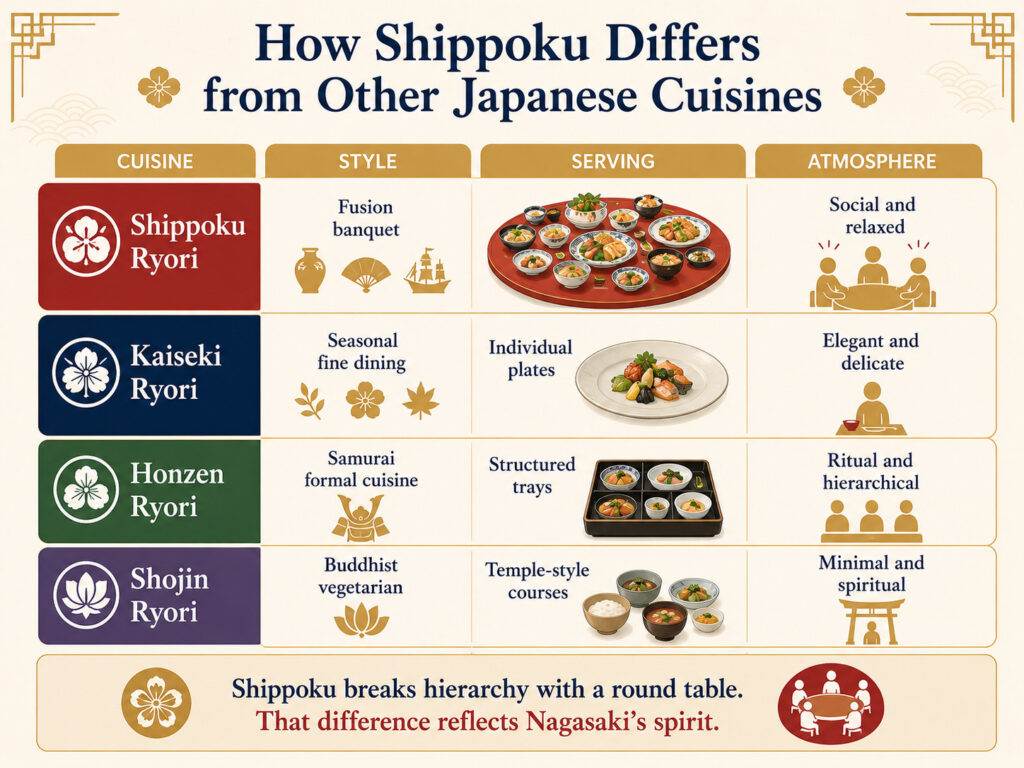
Shippoku occupies a unique position in Japanese banquet cuisine. A quick comparison makes this clear.
| Cuisine | Style | Serving | Atmosphere |
|---|---|---|---|
| Shippoku Ryori | Fusion banquet | Shared round table | Social and relaxed |
| Kaiseki Ryori | Seasonal fine dining | Individual plates | Elegant and delicate |
| Honzen Ryori | Samurai formal cuisine | Structured trays | Ritual and hierarchical |
| Shojin Ryori | Buddhist vegetarian | Temple-style courses | Minimal and spiritual |
The contrast with kaiseki is worth exploring further. Kaiseki is Japan’s most refined dining tradition: a sequence of small, seasonal courses where each dish functions as a careful meditation. Shippoku takes the opposite direction entirely, favoring abundance, sharing, and warmth over technical precision. Neither approach is superior. They simply reflect different values about what a meal should do.
Honzen ryori enforced hierarchy through its tray arrangements and ritual structure. Shippoku dismantled hierarchy with a round table. That single difference tells you almost everything you need to know about Nagasaki’s character.
Conclusion
Shippoku ryori tells the story of Nagasaki itself. Around one red round table, Japanese, Chinese, and Western influences became something uniquely and irreplaceably local. No other city in Japan produced quite this combination. Nagasaki’s centuries of openness, its history of trade, and its willingness to absorb the wider world all show up in a single ceremonial meal.
More than a feast, shippoku is a reminder that food can connect cultures long before politics does. If you ever sit at that En-taku, pass the kakuni, and hear the host say ohire wo douzo, you are not just eating. You are joining a centuries-old conversation that Nagasaki has been quietly hosting for the rest of the world.
Explore more of Nagasaki’s remarkable food culture: try Champon (ちゃんぽん), Nagasaki’s iconic Chinese-influenced noodle soup, or Sara Udon (皿うどん), its crispy noodle cousin. For the story behind shippoku’s most famous ingredient, visit our full Kakuni guide.
References
Hatoshi.com – “Shippoku Ryori Overview” | hatoshi.com/sippoku/ (accessed 2026; cultural background on shippoku cuisine and its Nagasaki origins)
Discover Nagasaki Official Visitors’ Guide – “Shippoku Ryori” | discover-nagasaki.com (accessed 2026; traditional course structure and dish descriptions)
Nagasaki Prefectural Tourism Federation – “Nagasaki Food Culture” | nagasaki-tabinet.com (accessed 2026; historical background on Dejima, Dutch trade, and Chinese influence on local cuisine)



Comments