


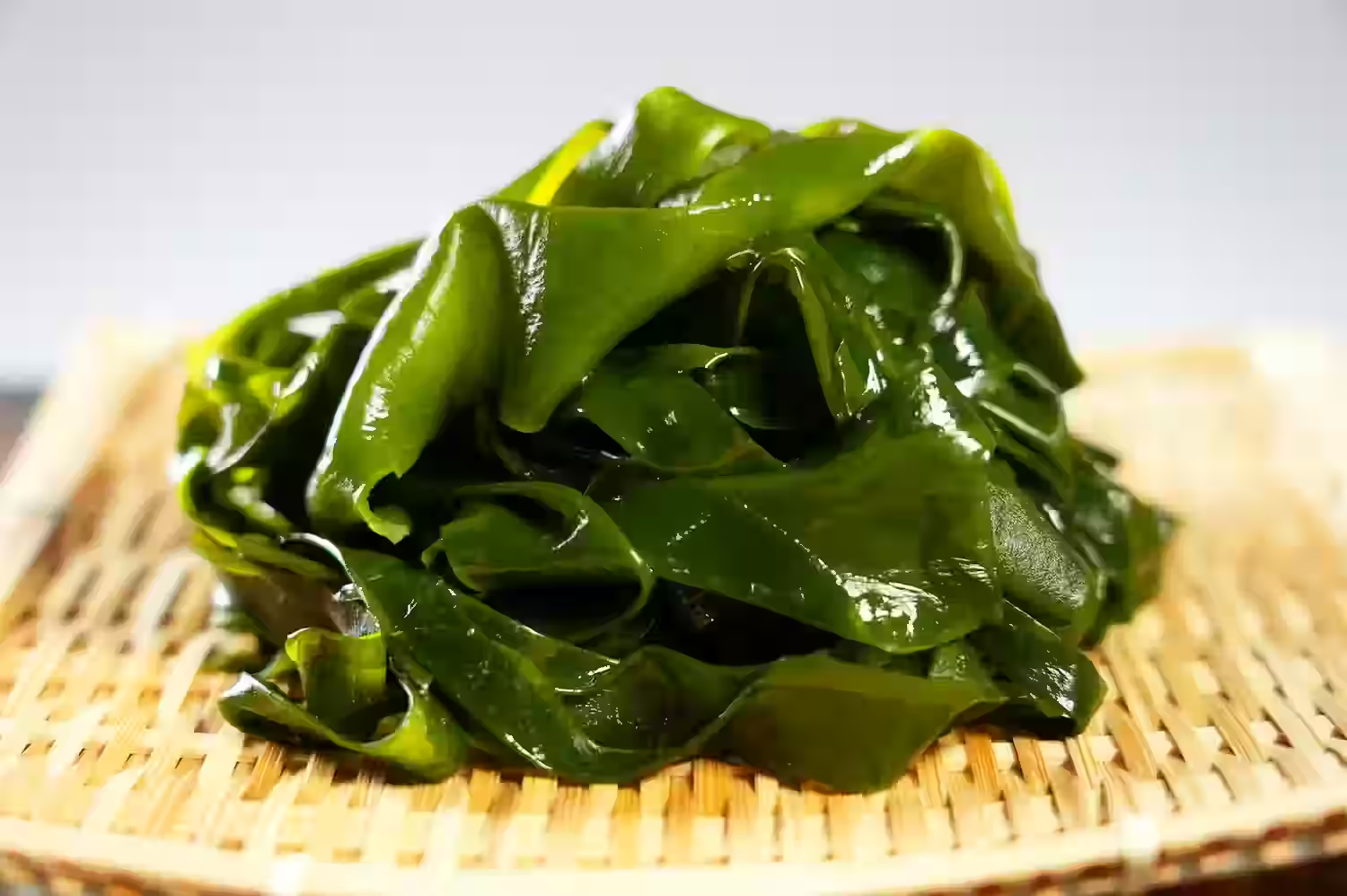

Open a bowl of miso soup in Tokushima and the seaweed inside may not behave the way you expect. It holds its shape and bites back a little. Locally, that seaweed is often Naruto wakame (鳴門わかめ), a Japanese seaweed specialty from the Tokushima coast around the Naruto Strait.
This guide explains what Naruto wakame seaweed is and how it tastes. You will also find its history, harvest season, product types, nutrition, and simple ways to prepare it at home.
What Is Naruto Wakame?
Naruto wakame is wakame (Undaria pinnatifida), a brown seaweed that Tokushima growers farm and gather along their coast. So the species is the same one sold worldwide. What sets it apart is the place, the tidal water, and the way local processors handle it.
Quick Facts: Naruto Wakame
- Japanese name
- 鳴門わかめ (Naruto wakame)
- Species
- Wakame, Undaria pinnatifida (brown algae)
- Region
- Coast of Tokushima Prefecture, Shikoku, around the Naruto Strait
- Typical season
- Late January to late April, with February and March often the main period
- Main forms
- Fresh, blanched and salted, dried and cut, ito wakame (threads)
- Texture
- Valued for a firm, springy bite
- Certification
- Optional Tokushima Prefecture certification mark for approved processors (since 2014)
- Best uses
- Miso soup, sunomono, salads, shabu-shabu, noodles
Where Naruto Wakame Comes From
Tokushima sits on the eastern edge of Shikoku, where its coast meets two marine areas. For its certification program, however, the prefecture draws a precise line.
The certified production area runs along the Harima-nada coast from the Kagawa border to the Naruto Strait. It then continues along the Kii Channel coast from the strait to Cape Gamoda. The wakame must also land at a Tokushima port. That definition covers more than Naruto City, although Naruto remains the heart of production.
One honest caveat applies here. Wakame also grows on the Awaji side of the strait in Hyogo, and the name has a shared history. So “Naruto wakame” in casual use and “Tokushima-certified Naruto wakame” are not always the same thing.
The Connection Between Wakame and the Naruto Strait
The Naruto Strait separates Shikoku from Awaji Island. Twice a day, tides push huge volumes of water through this narrow gap. The famous Naruto whirlpools form there, and the current runs fast enough to look like a river in a hurry.
Local producers and the prefecture link this rough water to the seaweed’s firm bite. During winter, the fronds sway and flex in the current. Still, texture probably depends on several factors, including water temperature, growth stage, and processing. So the current is part of the story, not the whole of it.
What Makes It Different from Regular Wakame
Most dried wakame in overseas stores carries no regional name at all. In fact, it may come from Japan, Korea, or China. Naruto wakame, by contrast, ties the product to a recognized production area. Products with Tokushima’s certification mark also follow documented origin, labeling, and processing-history rules.
Once in the bowl, the difference shows up as body. Well-processed Naruto wakame is valued for staying springy after rehydrating. Local producers and sellers also emphasize its bright, clean green.
What Does Naruto Wakame Taste Like?
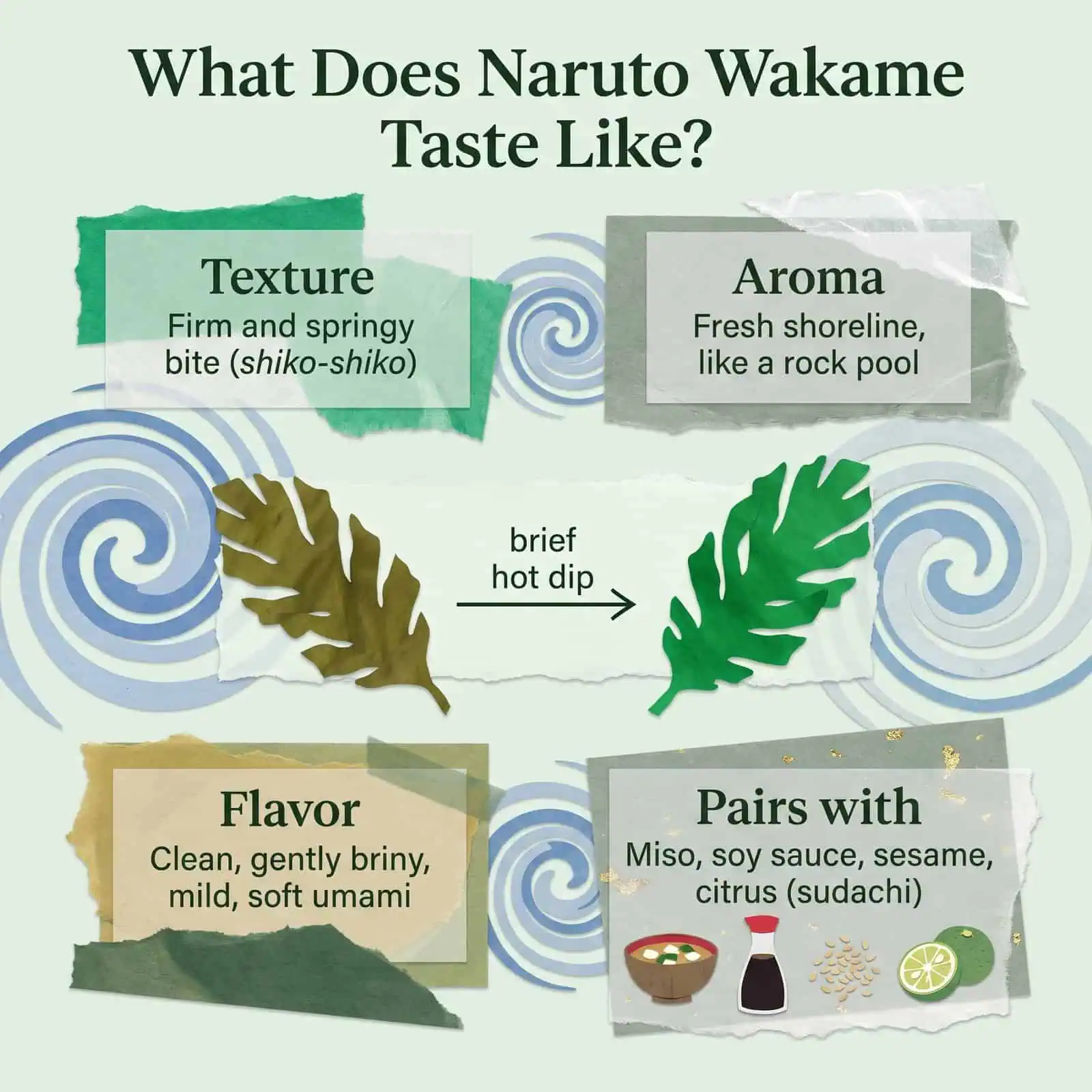
Naruto wakame tastes clean and gently briny, with a quiet savory depth. Its flavor is generally mild rather than strongly fishy. Still, the bigger surprise is how much body it brings to a dish.
Firm and Satisfying Texture
Japanese cooks call the bite shiko-shiko. The word describes something firm and springy that pushes back against your teeth. Think of the snap of a crisp green bean, softened slightly by the sea. When prepared briefly, the blade feels substantial without becoming rubbery.
Honestly, the bite is the main reason to seek it out. After all, flavor differences between good wakame from different regions can feel subtle. The chew, however, is easy to notice in a simple vinegar salad.
Ocean Aroma and Umami Flavor
Open a pack of salted Naruto wakame and you get a fresh smell of the shoreline. It resembles a rock pool at low tide more than a fish market. When rinsed, the flavor turns mild and slightly sweet, with a soft umami finish.
Because the taste stays gentle, it pairs easily with miso, soy sauce, sesame, and citrus. Tokushima’s own sudachi lime works especially well.
Why It Turns Bright Green When Cooked
Here is a question many readers ask. If wakame is a brown seaweed, why does it look green on the plate? Raw wakame does look olive brown when it comes out of the sea.
The answer, in short, lies in its pigments. Wakame contains green chlorophyll as well as brownish fucoxanthin, held in pigment-protein complexes. Brief heating alters those complexes and weakens the brown tone. As a result, the chlorophyll green becomes much more visible. Watching that switch happen in seconds still feels a bit like a magic trick.
The History of Naruto Wakame

Wakame from this coast has a long paper trail. Even so, it helps to separate what the records say from what modern marketing sometimes implies.
Wakame as a Historic Tribute from Awa
Awa was the old name for the Tokushima area. A prefectural guide points to the Engishiki, a code of court rules completed in 927. It lists wakame among the tribute goods from Awa Province.
However, the record describes wakame from Awa, not a brand. In contrast, the modern name and today’s farmed product came much later. So “recorded as tribute from Awa” is fair. Meanwhile, “Naruto wakame since 927” stretches the evidence.
The Development of Wakame Farming
For centuries, people gathered wild wakame from rocks along the shore. Then farming changed everything. According to Tokushima’s fisheries division, the prefectural fisheries station succeeded with wakame culture experiments in 1958.
By around 1963, full-scale farming had taken off, centered on Naruto City. Today, commercial production relies heavily on cultivation. Still, divers also gather some wild wakame along the coast during the season.
Traditional Ash-Dried Wakame
Before refrigeration, Tokushima developed hai-boshi, or ash-dried wakame. Makers coated fresh fronds in plant ash, then dried them. The ash helped the seaweed keep its color and quality during storage.
Afterward, workers washed off the ash and split the leaves into fine threads. The method still survives in small batches, and processors continue to list ash-dried ito wakame among their products. Details of its origin vary between local accounts, so treat precise founding stories with some caution.
How Naruto Wakame Is Grown and Harvested
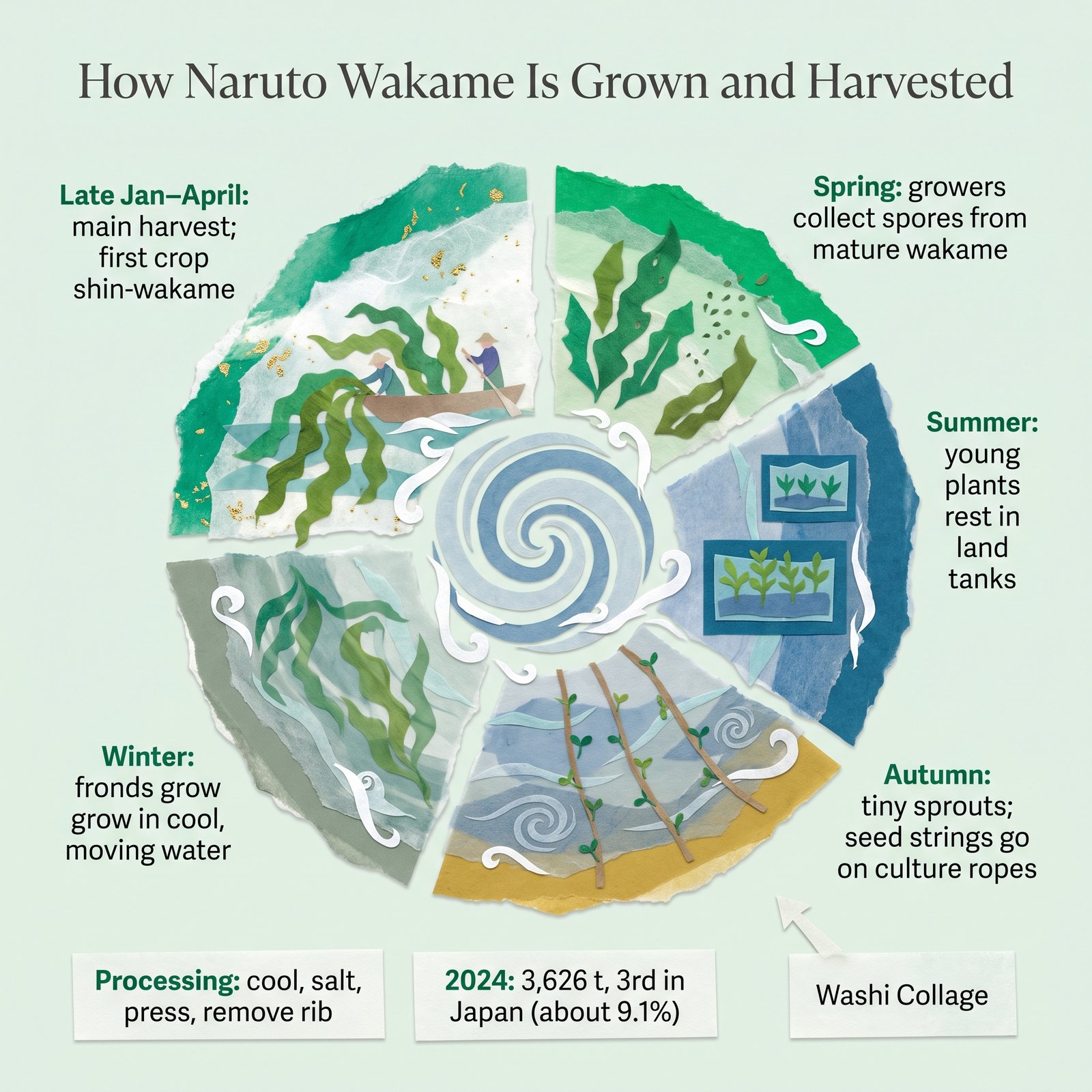
Naruto wakame follows a yearly cycle that starts on land in spring and ends at sea the next spring.
Preparing Wakame Seedlings
First, growers collect spores from mature wakame in spring. The spores settle on seed strings, and the young plants spend the hot summer in land tanks. By autumn, they have become tiny sprouts only a few millimeters long.
Growing Wakame in Strong Tidal Currents
Next, growers attach the seed strings to long culture ropes and set them out at sea in autumn. During the cold months, the fronds grow quickly in the moving water. Wakame prefers cool temperatures, so a warm winter can slow the crop.
That risk is real. For this reason, Tokushima is developing heat-tolerant varieties, according to a Ministry of Agriculture, Forestry and Fisheries (MAFF) overview. Researchers at the prefecture have also tested crosses between Naruto cultivars and southern wild wakame to allow earlier harvests.
Harvest Season and Shin-Wakame
The main harvest generally runs from late January through April, and February and March are often the busiest weeks. Timing can shift with weather and water temperature. Shoppers call the first spring crop shin-wakame, or new wakame. It is prized for its tender texture and fresh aroma.
If you visit Tokushima in early spring, look for fresh, unprocessed fronds at fishing co-op stalls.
From Harvesting to Processing
After harvest, processors work fast. For blanched-and-salted products, they typically cool, salt, and press the fronds. Depending on the product, they may then remove the central rib before packing, drying, or cutting. Traditional ito wakame and ash-dried products may follow different routes.
In 2024, Tokushima’s farmed wakame harvest reached 3,626 tonnes, the third largest in Japan. That equals about 9.1 percent of the national total, so only Miyagi and Iwate grow more. Note that this MAFF figure covers all farmed wakame in Tokushima, not only products sold under the Naruto name.
Types of Naruto Wakame
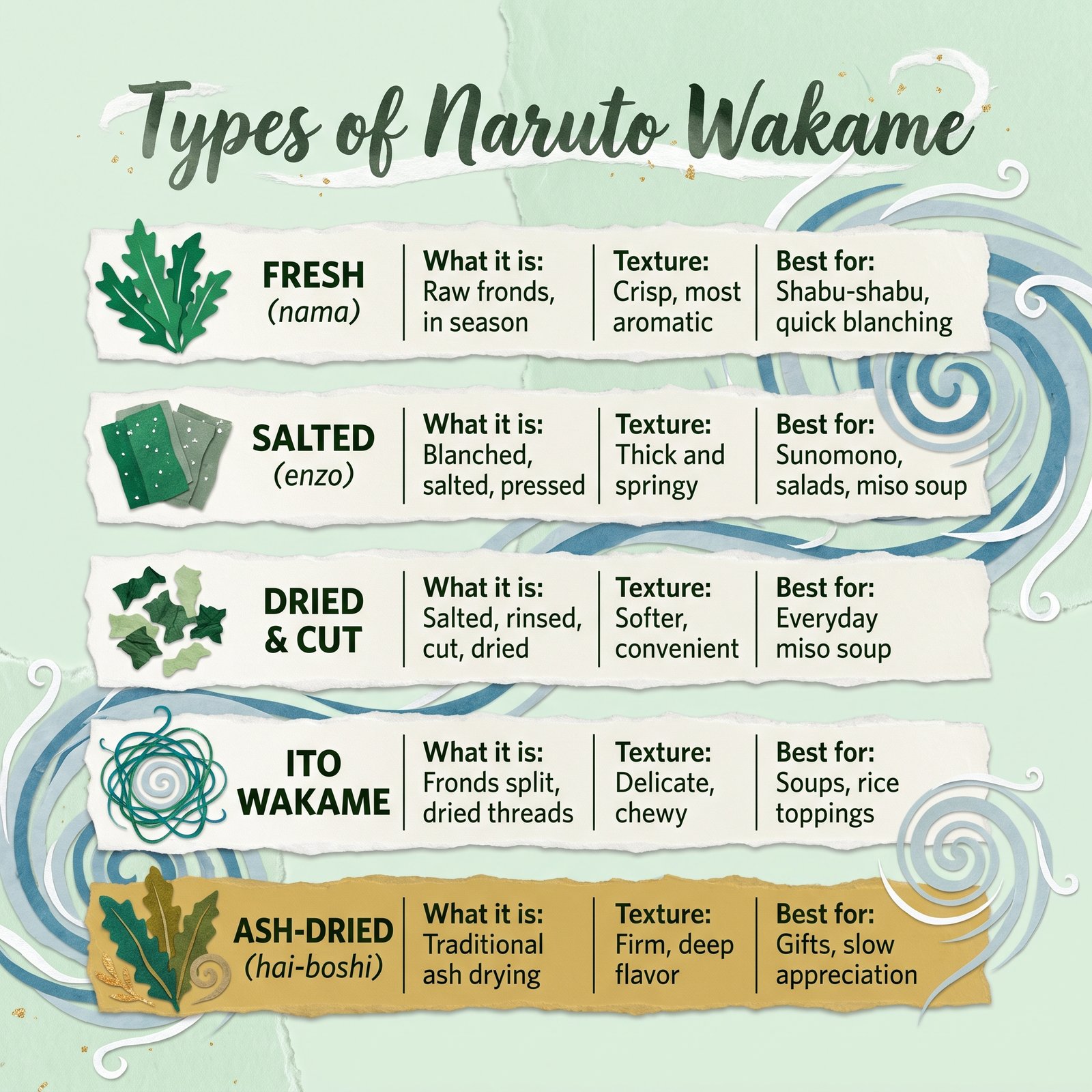
Today you will meet Naruto wakame in several forms. Each suits a slightly different kitchen and storage situation, so the table below may help you choose.
| Form | What it is | Texture | Best for |
|---|---|---|---|
| Fresh (nama) | Raw fronds sold in season | Crisp, most aromatic | Shabu-shabu, quick blanching |
| Salted (enzo) | Blanched, salted, pressed | Thick and springy | Sunomono, salads, miso soup |
| Dried and cut | Salted wakame rinsed, cut, dried | Softer, convenient | Everyday miso soup |
| Ito wakame | Fronds split into fine threads, dried | Delicate, chewy | Soups, rice toppings |
| Ash-dried (hai-boshi) | Traditional plant-ash drying method | Firm, deep flavor | Gifts, slow appreciation |
For overseas readers, however, salted and dried wakame make the most sense. Fresh wakame rarely travels well. Salted packs give you the closest taste to the real thing, while dried cut wakame wins on convenience.
Naruto Wakame Nutrition
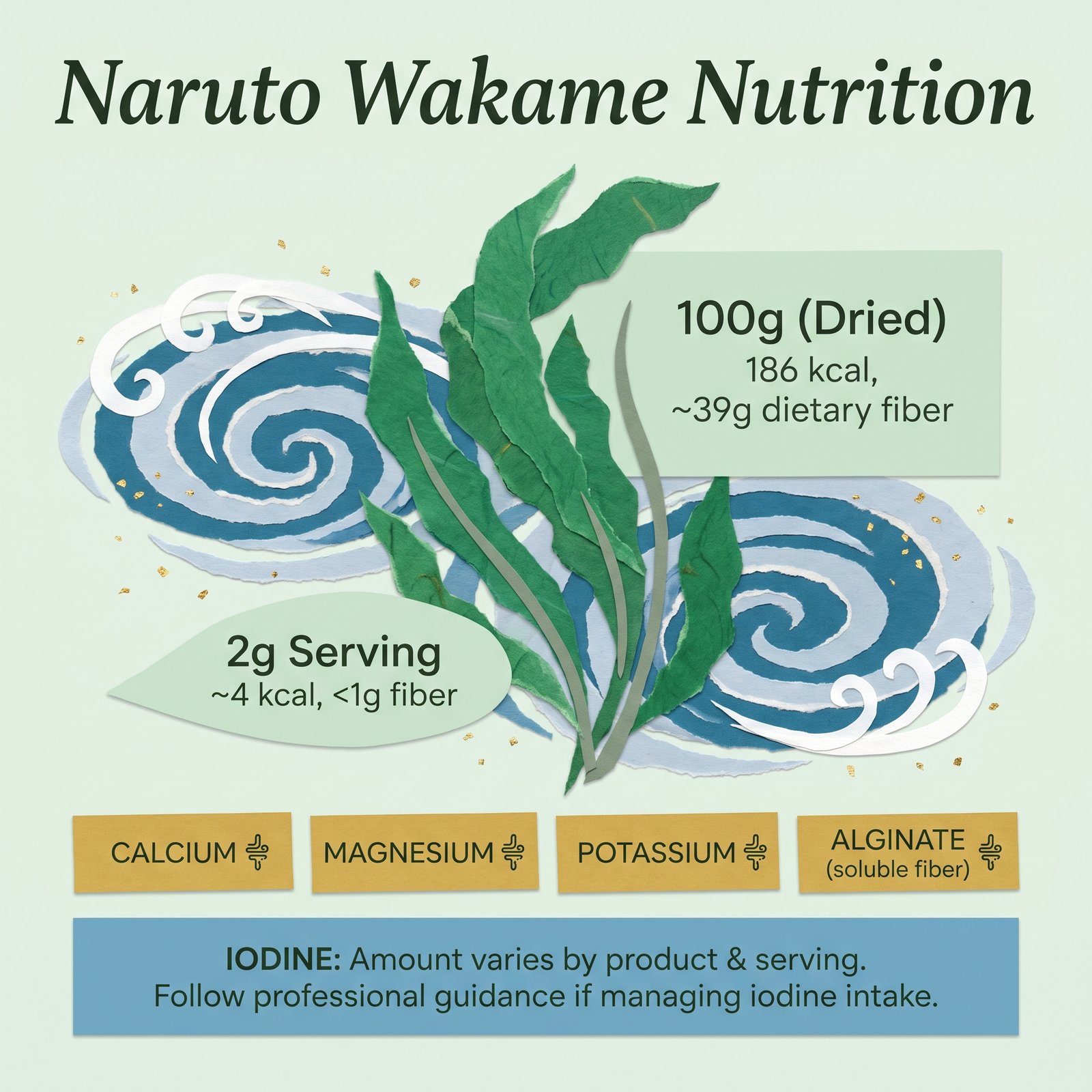
Wakame is low in calories and contributes fiber and several minerals. However, a normal serving supplies far less than the 100-gram figures in food tables suggest.
Dietary Fiber, Minerals, and Calories
Japan’s official food composition tables list cut dried wakame at 186 kcal per 100 grams. The same amount also holds about 39 grams of dietary fiber. Cooks, however, use dried wakame in very small amounts.
For illustration, a 2-gram dry serving would provide about 4 kcal and under 1 gram of fiber. Actual serving sizes vary, so follow the package directions. Wakame also contains calcium, magnesium, and potassium, plus alginate, the soluble fiber behind its slippery feel.
Iodine and Responsible Consumption
Wakame, like most brown seaweeds, contains iodine. The body needs this mineral for thyroid hormones, yet intake can also be too high. The US National Institutes of Health notes that iodine levels in seaweed vary widely between products.
Your intake also depends on the product and the serving size. If a healthcare professional has advised you to manage your iodine intake, follow that guidance. Product labels can help where they list iodine.
How to Prepare Naruto Wakame
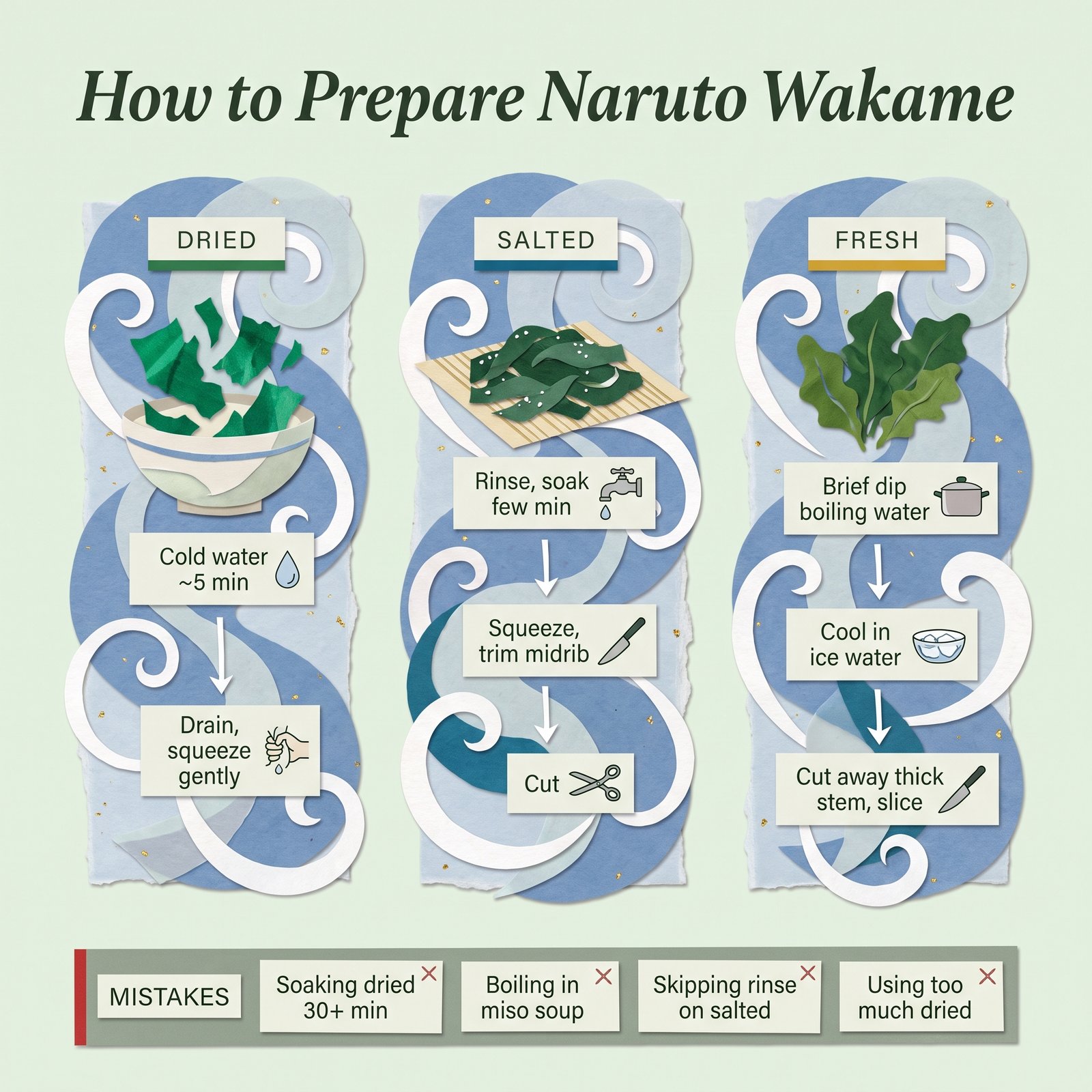
Preparation takes minutes. The main skill is restraint, because most wakame mistakes come from soaking or cooking it too long.
How to Rehydrate Dried Wakame
To start, place dried cut wakame in a bowl of cold water. Most packs suggest about 5 minutes, although some need less. Then drain it and squeeze gently, since it swells to many times its dry size.
How to Desalt Salted Wakame
First, rinse salted wakame under running water to wash off the surface salt. Then soak it in fresh water for a few minutes until it softens and tastes only lightly salty. Squeeze out the water, trim any tough midrib, and cut it into bite-size pieces.
How to Cook Fresh Wakame
Fresh wakame needs only a brief dip in boiling water. Within seconds, the brown fronds turn vivid green. Then lift them out right away and cool them in ice water. Finally, cut away the thick stem and slice the leaves.
Common Preparation Mistakes
- Soaking dried wakame for 30 minutes or more, which leaves it soft and slimy.
- Boiling wakame in miso soup, which dulls its color and texture.
- Skipping the rinse on salted wakame, which makes dishes far too salty.
- Using too much dried wakame, since a small handful swells into a big pile.
Best Ways to Eat Naruto Wakame

Naruto wakame shines in simple dishes. When the seasoning stays light, the texture and sea aroma come forward.
Miso Soup
Wakame and tofu make the classic Japanese miso soup. Even so, one local tip helps a lot. Place the prepared wakame in each bowl first. Then pour the hot soup over it instead of simmering it.
This way, the leaves stay bright and springy. For more on broths, see our complete guide to miso soup and our overview of traditional Japanese soups.
Wakame Sunomono with Vinegar
Sunomono is a small vinegared salad, and it may be the best showcase for Naruto wakame. Cucumber adds crunch, while sweet vinegar lets the seaweed’s bite take center stage.
Naruto Wakame and Cucumber Sunomono
Ingredients
- 40 g salted Naruto wakame (or 4 g dried)
- 1 small Japanese cucumber
- 1/4 tsp salt
- 3 tbsp rice vinegar
- 1 1/2 tbsp sugar
- 1 tsp light soy sauce
- Toasted sesame seeds
- Sudachi or lime, to serve
Instructions
- Desalt or rehydrate the wakame, squeeze it, and cut it into bite-size pieces.
- Slice the cucumber thinly, toss it with salt, and wait 5 minutes.
- Squeeze the cucumber firmly to remove its water.
- Stir the vinegar, sugar, and soy sauce until the sugar dissolves.
- Mix the wakame and cucumber with the dressing, then chill briefly.
- Top with sesame and a squeeze of sudachi before serving.
Wakame Shabu-Shabu, Salads, and Noodles
In spring, Tokushima cooks swish fresh wakame through hot broth for a few seconds, just like shabu-shabu beef. The color flashes green, and then they dip it in ponzu.
Beyond that, wakame works in green salads with a sesame dressing, in udon, and on chilled somen. Try it on Handa somen, Tokushima’s thick hand-stretched noodles. You can also fold chopped wakame into rice with a little salt for an easy onigiri filling.
Naruto Wakame vs Sanriku Wakame
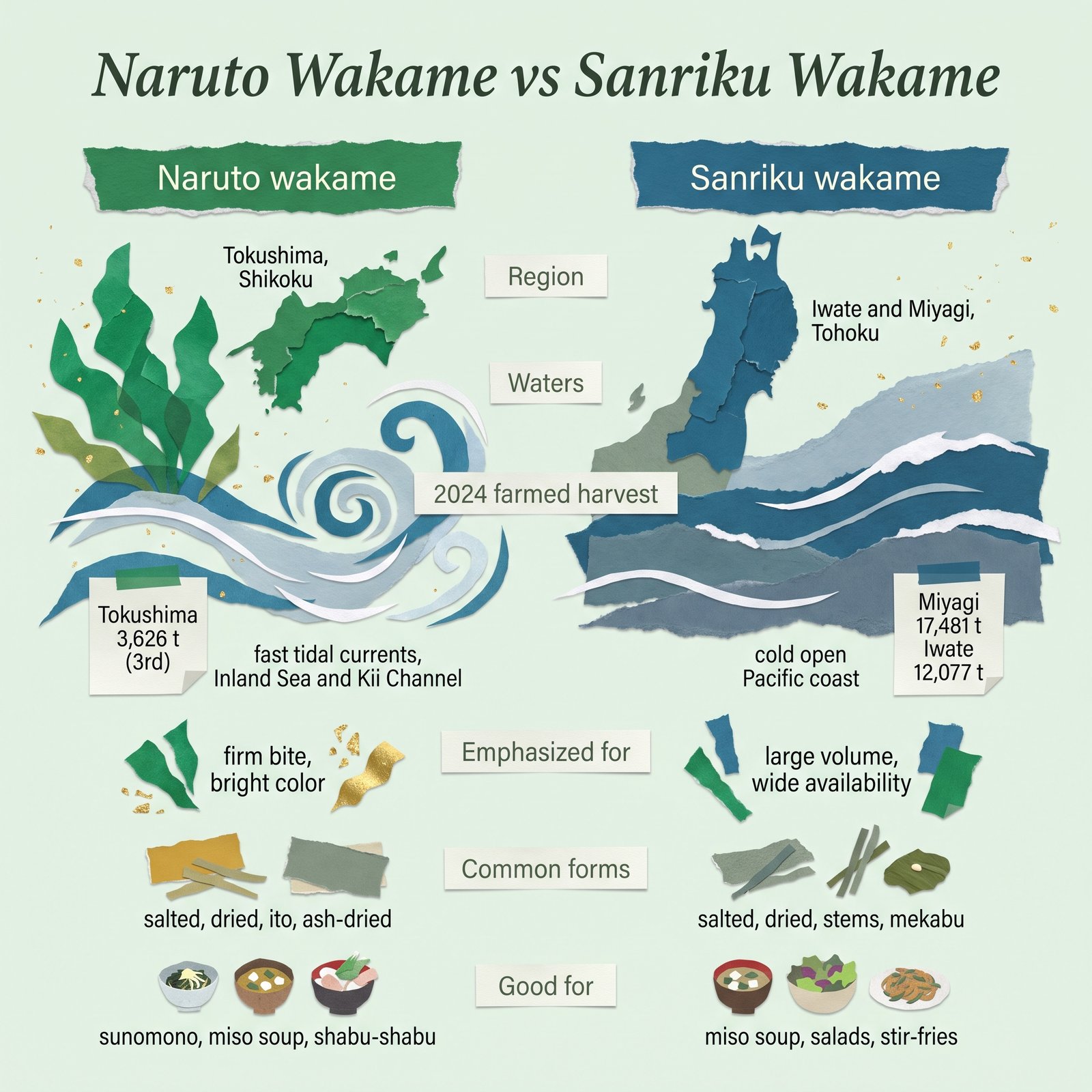
Sanriku wakame is the other big name in Japanese wakame. It comes from the Pacific coast of Iwate and Miyagi in northeastern Japan. Together, those two prefectures grow most of Japan’s farmed wakame. Neither product is simply “better.” The comparison below sticks to what you can check.
| Point | Naruto wakame | Sanriku wakame |
|---|---|---|
| Region | Tokushima, Shikoku | Iwate and Miyagi, Tohoku |
| Waters | Fast tidal currents, Inland Sea and Kii Channel | Cold open Pacific coast |
| 2024 farmed harvest | Tokushima: 3,626 t (3rd) | Miyagi 17,481 t, Iwate 12,077 t |
| Emphasized for | Firm bite, bright color | Large volume, wide availability |
| Common forms | Salted, dried, ito, ash-dried | Salted, dried, stems, mekabu |
| Good for | Sunomono, miso soup, shabu-shabu | Miso soup, salads, stir-fries |
In practice, both regions produce excellent wakame, and side by side they can be hard to tell apart. So rely on the origin label, not on looks. If you want to emphasize texture in a vinegar salad, salted Naruto wakame is a suitable choice.
How to Choose, Store, and Buy Naruto Wakame
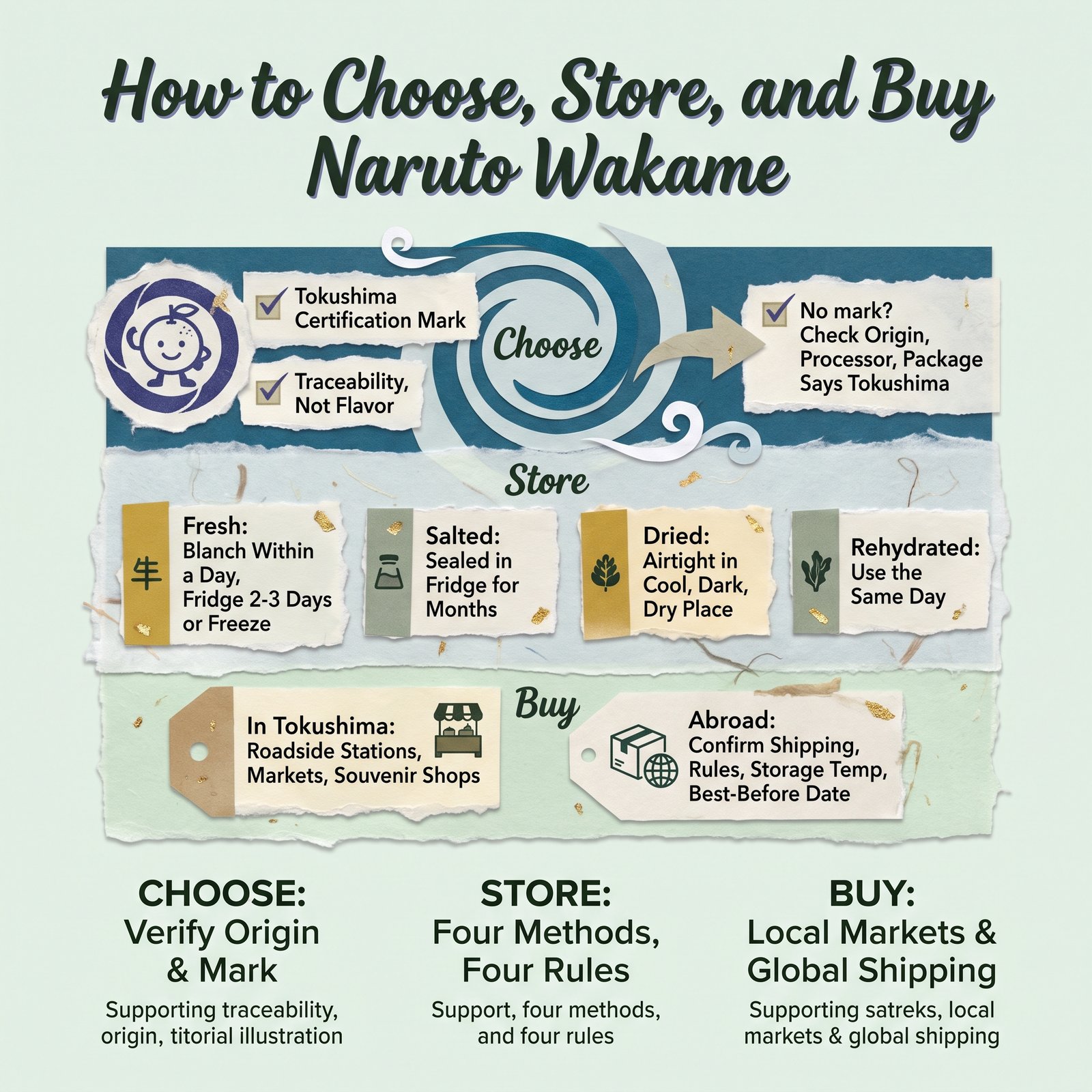
A famous name invites imitation. That is why Tokushima built a system to help shoppers trust the label.
Checking the Label and Certification Mark
In October 2014, Tokushima Prefecture launched the Naruto Wakame Certification System. The prefecture certifies processors that track every batch from raw material to shipment. It also checks their package labels before they can use the mark.
Visually, the mark features Sudachi-kun, the prefectural mascot, on an indigo background. However, the mark certifies traceability and labeling, not flavor grade. Also, not every genuine product carries it. When it is missing, check the origin line on the label, the processor’s address, and whether the package says Tokushima.
Storage Tips for Fresh, Salted, and Dried Wakame
- Fresh wakame: blanch it within a day, then refrigerate for two to three days or freeze in portions.
- Salted wakame: keep it sealed in the refrigerator, where it usually lasts for months. Check the date on the pack.
- Dried wakame: store it airtight in a cool, dark, dry place, away from humidity.
- Rehydrated wakame: use it the same day for the best texture.
Where to Buy Naruto Wakame
In Tokushima, look in Naruto City’s roadside stations, fishing co-op markets, and souvenir shops near the whirlpool viewing areas.
Abroad, Japanese supermarkets sometimes carry it, though generic dried wakame is far more common. Besides that, several Tokushima processors sell online within Japan. International buyers should confirm shipping countries, import rules for seafood, storage temperature, and the best-before date before ordering. Salted wakame usually needs refrigeration, so dried products travel more easily.
While you plan a trip, browse our Shikoku food guide for nearby specialties. In Naruto itself, Naruto Kintoki sweet potatoes make a natural second stop, and southern Tokushima offers grill-it-yourself Kaizoku Ryori seafood.
Why Naruto Wakame Is Worth Trying
Naruto wakame takes an everyday Japanese seaweed and gives it a sense of place. It grows in the fast water around the Naruto Strait, and growers time the harvest to late winter and spring. As a result, you get a firm, bright, gently briny seaweed that holds its own in simple food.
Better still, you do not need special skills to enjoy it. Rinse it, keep the cooking short, and let miso, vinegar, or a squeeze of sudachi do the rest. If you ever reach Tokushima in February or March, try it fresh. Otherwise, a pack of salted Naruto wakame makes an easy first taste at home.
Frequently Asked Questions About Naruto Wakame
Basics and Origin
- What is Naruto wakame?
-
Naruto wakame is wakame seaweed from the Tokushima coast around the Naruto Strait in Shikoku. Growers farm most of it, while divers gather some wild fronds. Cooks prize it for a firm bite and bright green color.
- Is Naruto wakame the same as nori?
-
No, they are different seaweeds. Nori is a red algae that producers press into thin sheets for sushi rolls. Wakame is a brown algae with leafy fronds, and cooks use it mostly in soups and salads.
- Is wakame a type of kelp?
-
Wakame belongs to the brown algae, like kelp, and the two are related. However, it is a different species from kombu, the kelp used for dashi. Also, wakame has thinner leaves and a milder flavor.
- Is Naruto wakame vegan?
-
Plain Naruto wakame is a seaweed, so it suits vegan diets. Salted and dried versions usually contain only wakame and salt. Still, check seasoned products, because some include fish extract.
Season, Iodine, and Buying
- When is Naruto wakame in season?
-
The main harvest generally runs from late January through April. Fresh fronds appear in Tokushima markets only during that period. Salted and dried forms, by contrast, sell all year.
- Does Naruto wakame contain iodine?
-
Yes, like other brown seaweeds, wakame contains iodine. The amount varies by product and serving size. If you have been advised to manage your iodine intake, follow your healthcare professional’s guidance.
- How can you identify genuine Naruto wakame?
-
First, check that the label names Tokushima as the place of harvest. Then look for the Tokushima Prefecture certification mark. The mark confirms documented origin, labeling, and processing records, although not every genuine product carries it.
References
- Tokushima Prefecture – Tokushima Prefecture Naruto Wakame Certification System (Accessed October 2026)
- Tokushima Prefecture – About the Naruto Wakame Certification System, established October 2014 (Accessed October 2026)
- Tokushima Prefecture – Naruto Wakame Certification System Implementation Guidelines, definition of prefectural Naruto wakame (Accessed October 2026)
- Tokushima Prefecture Fisheries Division and Fisheries Research Institute – Naruto Wakame Tora no Maki: history (927, 1958, 1963), production cycle, harvest season (Accessed October 2026)
- Ministry of Agriculture, Forestry and Fisheries (MAFF) – 2024 Fishery and Aquaculture Production Statistics (Accessed October 2026)
- e-Stat, Portal Site of Official Statistics of Japan – 2024 Fishery and Aquaculture Production Statistics, final tables published February 2026: Tokushima 3,626 t (Accessed October 2026)
- Iwate Prefecture – Wakame: 2024 prefectural ranking, Miyagi 17,481 t, Iwate 12,077 t, Tokushima 3,626 t (Accessed October 2026)
- Ministry of Agriculture, Forestry and Fisheries (MAFF) – Overview of Agriculture, Forestry and Fisheries in Tokushima Prefecture, heat-tolerant wakame varieties (Accessed October 2026)
- Pride Fish, JF Zengyoren – Naruto Wakame: season, wild harvest, and color change (Accessed October 2026)
- MEXT Food Composition Database – Standard Tables of Food Composition in Japan (8th Revised Edition, 2023 Addendum): Wakame, cut and dried, 186 kcal and 39.2 g fiber per 100 g (Accessed October 2026)
- National Institutes of Health, Office of Dietary Supplements – Iodine Fact Sheet for Health Professionals (Accessed October 2026)
- J-STAGE – Tanada, N. (2015). Breeding effects of reciprocal crosses between wild Kagoshima wakame and a Naruto cultivar using free-living gametophytes. Algal Resources, 8, 103–112 (Accessed October 2026)
- Naruto City Official Travel Guide – Souvenirs and Local Specialties (Accessed October 2026)
Related Articles
- Shikoku Food Guide: Must-Try Dishes and Culinary Culture (Surveyed: October 2026)
- Naruto Kintoki Sweet Potato (Surveyed: October 2026)
- Handa Somen (半田そうめん) (Surveyed: October 2026)
- The Complete Guide to Miso Soup (Surveyed: October 2026)




Comments