




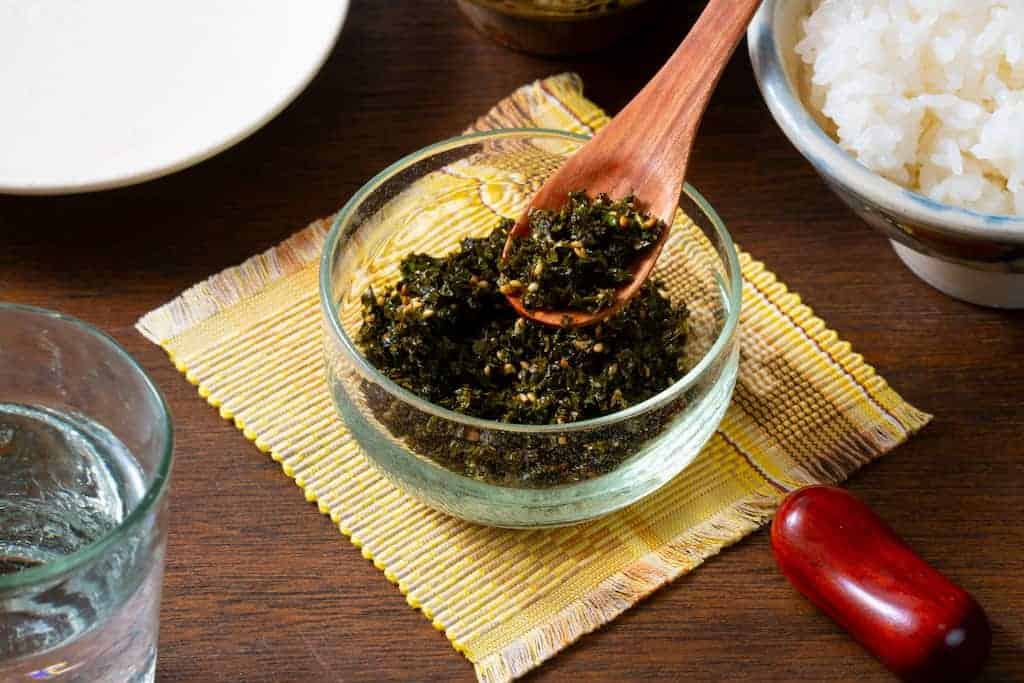
Walk into any Japanese supermarket and you will spot a wall of small, colorful packets. Furikake is a Japanese rice seasoning, and it fills that entire shelf. Usually, cooks shake it over hot rice for instant flavor, color, and crunch. Because the packets are cheap and shelf stable, almost every kitchen keeps one open at all times.
But where did this simple rice topping come from? This guide explains furikake’s history, ingredients, popular brands, and easy ways to enjoy it. Along the way, you will also find prices, storage advice, and label tips for vegan or gluten-free diets.
What Is Furikake?
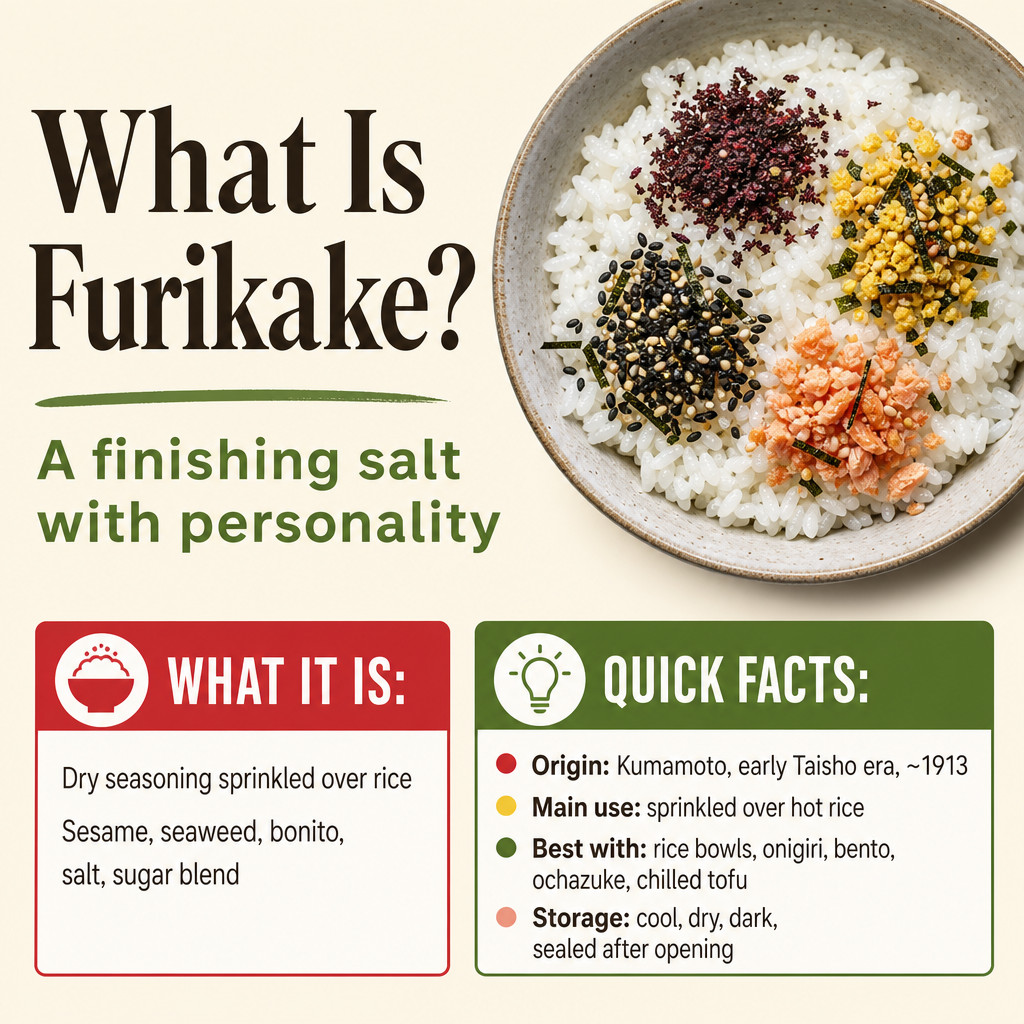
Furikake is a dry Japanese seasoning sprinkled over rice. Makers usually blend sesame seeds, seaweed, bonito flakes, salt, sugar, and other flavorings. Japanese people use it to add umami, color, and texture to simple meals.
In practice, this seasoning behaves like a finishing salt with personality. Generally, blends begin with toasted sesame seeds and shredded toasted nori seaweed. Then producers layer in dried fish, egg granules, shiso, or dried vegetables. Home cooks scatter roughly one teaspoon over a bowl of hot short-grain Japanese rice. A small spoonful can make plain rice taste nutty, salty, savory, or spicy.
Furikake quick facts
- Origin: Kumamoto Prefecture, early Taisho era, around 1913
- Main use: Sprinkled over hot cooked rice
- Common ingredients: Sesame, nori, bonito flakes, egg granules, salt, sugar
- Best dishes: Rice bowls, onigiri, bento, ochazuke, chilled tofu
- Storage: Cool, dry, dark shelf, and always sealed after opening
Shoppers sometimes confuse it with related Japanese products. Ochazuke no moto, for instance, dissolves into hot tea or broth to make a soupy rice dish. Shichimi togarashi, meanwhile, is a chili spice blend rather than a rice topping. This seasoning stays dry on the rice, and that difference matters at the shelf.
What Does Furikake Taste Like?
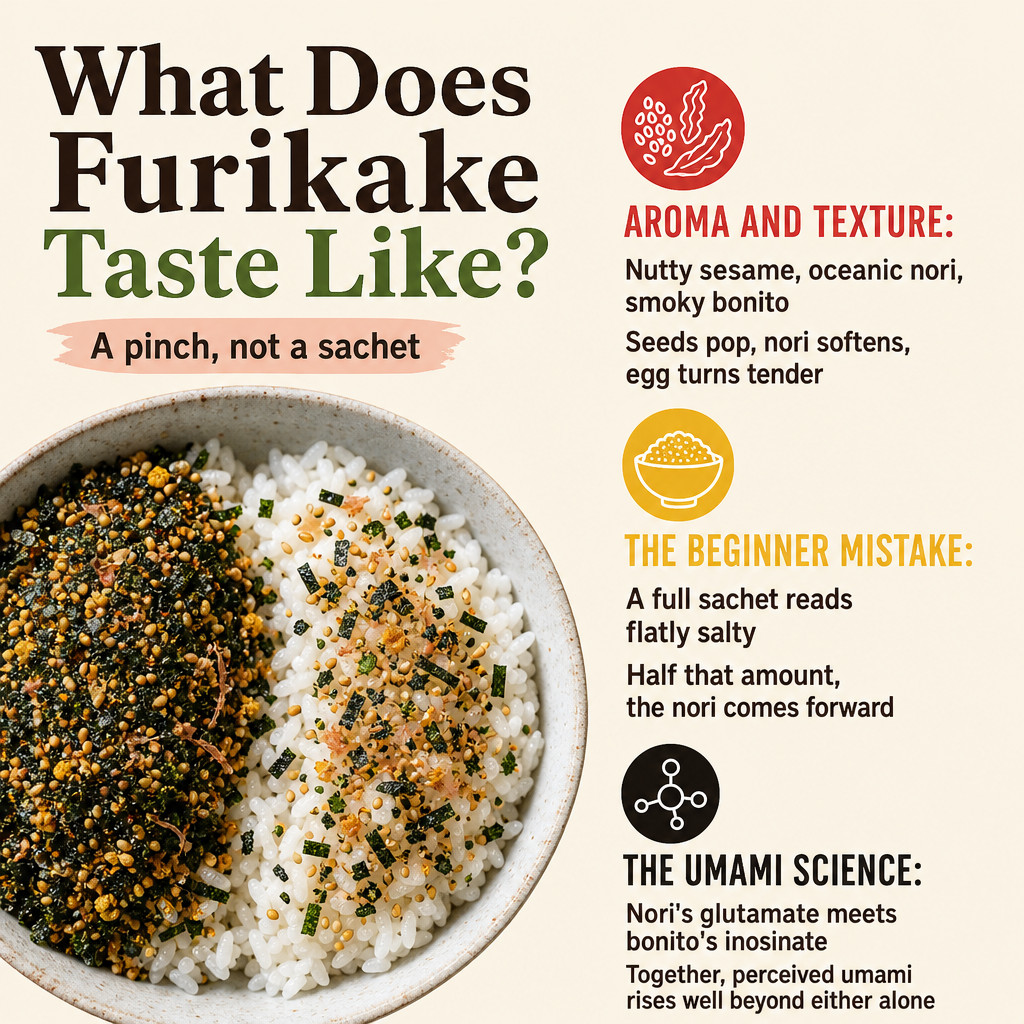
Open a fresh packet and the aroma arrives first. Toasted sesame smells nutty and slightly sweet, while nori smells faintly of the sea. Besides that, bonito adds a smoky note that reads almost like cured meat. Meanwhile, egg based blends smell gentler, closer to a warm breakfast.
On the tongue, the balance leans salty and savory rather than sharp. Sweetness usually stays in the background. Texture matters just as much, though. Sesame seeds pop between the teeth, nori softens against warm rice, and egg granules turn tender within seconds.
One common beginner mistake is emptying a whole sachet onto a single small bowl. The result tastes flatly salty, and the seaweed disappears behind it. With roughly half that amount, the rice tastes rounder and the nori comes forward. So start light, then adjust upward.
There is a scientific reason the flavor feels so deep. Nori carries free glutamate, while katsuobushi bonito flakes carry inosinate. When these two compounds meet, perceived umami rises well beyond either one alone. That synergy explains why a pinch of dry flakes can rescue a plain bowl of rice.
Furikake Ingredients: What Is Actually in the Packet
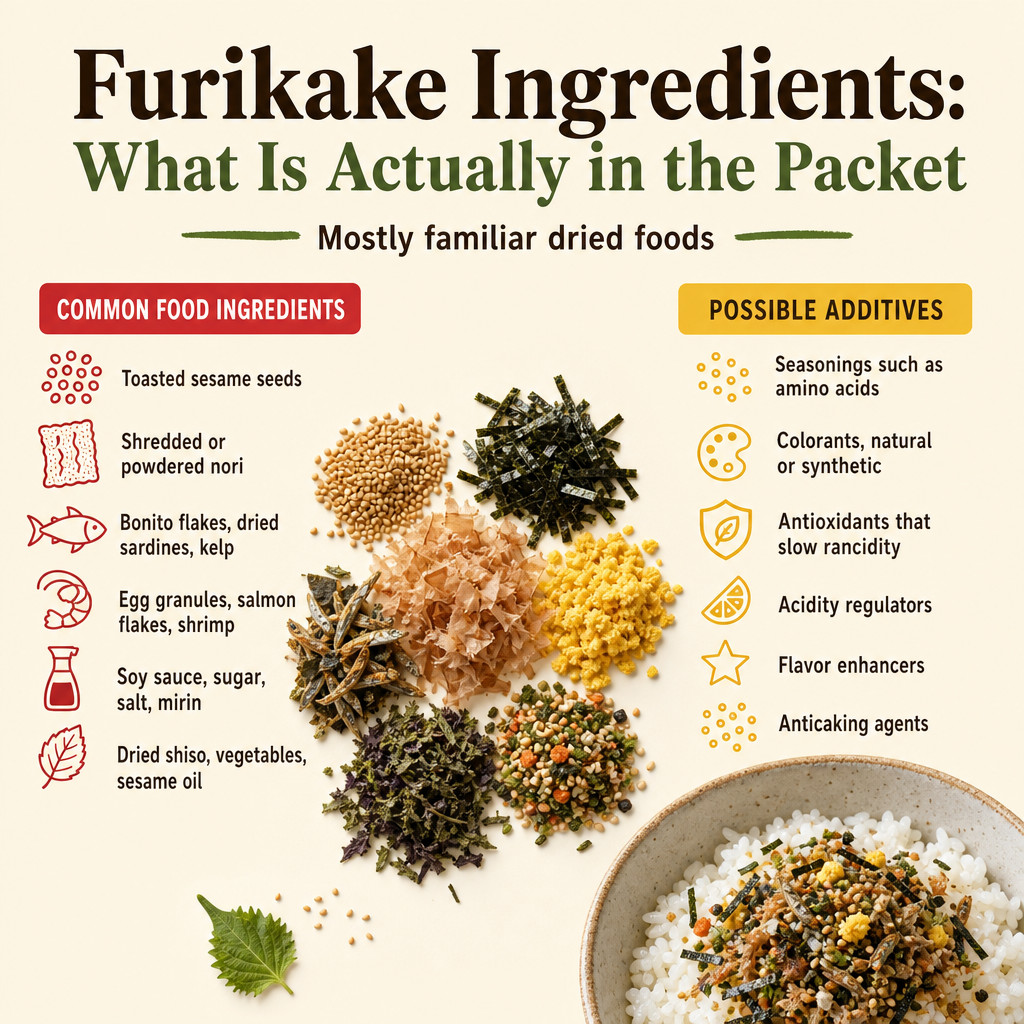
Generally, Japanese labels separate ordinary foods from food additives. Because that line confuses many shoppers, the table below splits the two groups. Most of the packet, in fact, consists of familiar dried foods.
| Common food ingredients | Possible additives |
|---|---|
| Toasted white and black sesame seeds | Seasonings such as amino acids |
| Shredded or powdered nori seaweed | Colorants, natural or synthetic |
| Bonito flakes, dried sardines, kelp | Antioxidants that slow rancidity |
| Egg granules, salmon flakes, shrimp | Acidity regulators |
| Soy sauce, sugar, salt, mirin | Flavor enhancers |
| Dried shiso, vegetables, sesame oil | Anticaking agents |
Confusing Label Terms Explained
Notably, four label terms cause the most confusion. None of them counts as a food additive under Japanese rules. Still, each one deserves a quick look before you buy.
- Hydrolyzed protein. What it is: plant or animal protein broken down by acid or enzymes. Why makers use it: it deepens savory flavor at low cost. What to check: the salt figure on the nutrition panel.
- Seasoning granules. What it is: kelp, bonito, or sardine broth dried into granules. Why makers use it: it rebuilds natural dashi flavor in dry form. What to check: sodium, because broth granules concentrate salt.
- Dextrin. What it is: starch from grains broken into shorter chains. Why makers use it: it carries flavor and keeps powder loose. What to check: whether the brand states the crop origin.
- Yeast extract. What it is: savory compounds drawn out of yeast cells. Why makers use it: it boosts umami without added bonito. What to check: your own tolerance, since heavy use dulls the palate.
Some makers add amino acid seasonings. These seasonings create umami similar to kelp or bonito flakes. Manufacturers also use natural and synthetic colorants to improve appearance and preserve color. Even so, several premium brands now skip colorants entirely, so the choice belongs to you.
The History of Furikake
A Kumamoto Pharmacist and Gohan no Tomo
The best known origin story starts in Kumamoto, on the southwestern island of Kyushu. During the early Taisho era, a pharmacist named Suekichi Yoshimaru worried about calcium shortages in the Japanese diet. He ground small fish into powder, bones included, then seasoned the result. Sesame seeds and nori softened the fishy edge, so even reluctant children ate it happily.
Futaba Co., Ltd. in Kumamoto still sells that product as “Gohan no Tomo,” meaning friend of rice. The company dates its origins to the Taisho era and its incorporation to 1934. Dried sardines, called iriko, account for more than forty percent of the recipe, and Futaba states that it sources them mainly from Nagasaki. Japan’s national furikake trade association recognizes this blend as the original.
Accounts of the period note, however, that similar rice toppings appeared in several regions between the Taisho and early Showa eras. So a single inventor is difficult to prove. What is clear is that Kumamoto claims the title today. The International Furikake Association, based there, set May 6 as Furikake Day, matching Yoshimaru’s birthday in 1887.
Kore wa Umai and the Rise of Marumiya
Seiichiro Kai ran a shop in the public market of Fukushima City, in the Tohoku region of northern Japan. In 1925 he dried white fish, blended it with kelp powder, and simmered the mix in soy sauce. Afterwards, he folded in sesame seeds and toasted seaweed. The product, called “Kore wa Umai,” sold briskly from the start.
Subsequently, Kai expanded to Tokyo, where he set up the Marumiya food research laboratory in Arakawa in 1927. Department stores stocked the bottles, and shoppers treated them as a gift rather than a daily staple. Consequently, only wealthier households ate the seasoning regularly.
Noritama and the Postwar Boom
However, air raids destroyed the laboratory in 1945. Afterward, Suekichi Abe rebuilt the business and established Marumiya Foods Industry in 1951. His team then chased a product that ordinary families could afford. Company accounts describe an early egg version that shoppers rejected, because the granules felt dry and powdery.
Marumiya kept experimenting with hot air drying until the texture softened. “Noritama” reached shops in 1960, and the concept came from ryokan breakfasts. Nori and egg counted as luxuries then, so the packet promised an inn breakfast at home. The blend has stayed in production ever since, and it remains one of the most widely recognized furikake products in Japan.
Otona no Furikake and the Adult Market
By the late 1980s, growth slowed because shoppers viewed the category as children’s food. Nagatanien responded with “Otona no Furikake,” which the company launched in October 1989. Individually sealed sachets protected the nori aroma, while the restrained packaging signaled quality.
Consequently, that launch opened an adult market. Nagatanien now lists flavors such as bonito, salmon, and wasabi within the range. Seasonal and limited editions appear regularly too. Today the series still anchors the premium end of the shelf.
How Furikake Became a Daily Rice Topping in Japan
Three habits turned a novelty into a staple. Firstly, bento culture rewarded anything that stayed tasty at room temperature. Secondly, school lunches introduced small sachets to millions of children each year. Thirdly, single-serve packaging made portions easy to control.
Character tie-ins and multi-flavor packs also kept children interested, since switching flavors mid meal felt like a treat. Modern supermarkets now stock dozens of variations side by side. Convenience stores, meanwhile, sell single sachets next to instant miso soup.
Home cooks treat it as everyday insurance. When the fridge looks empty, a bowl of rice plus one packet still counts as dinner. That quiet reliability, more than any advertising campaign, explains its staying power.
Types of Furikake Flavors
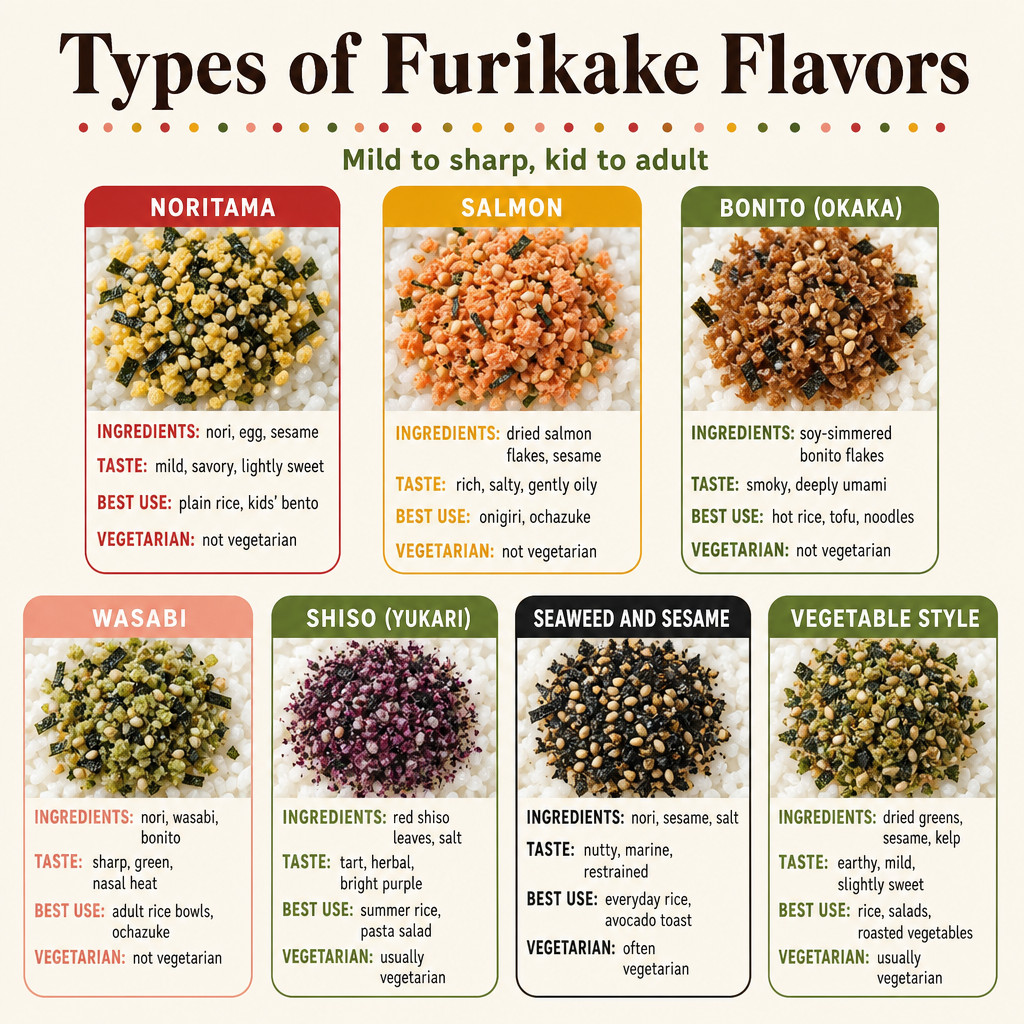
Generally, flavors range from mild and childlike to sharp and adult. The table below compares the seven styles you will meet most often.
| Flavor | Main ingredients | Taste | Best use | Vegetarian friendly |
|---|---|---|---|---|
| Noritama | Nori, egg granules, sesame | Mild, savory, lightly sweet | Plain rice, kids’ bento | No, contains egg and fish |
| Salmon | Dried salmon flakes, sesame | Rich, salty, gently oily | Onigiri, ochazuke | No |
| Bonito, or okaka | Soy simmered bonito flakes | Smoky, deeply umami | Hot rice, tofu, noodles | No |
| Wasabi | Nori, wasabi, bonito | Sharp, green, nasal heat | Adult rice bowls, ochazuke | No |
| Shiso, or yukari | Red shiso leaves, salt | Tart, herbal, bright purple | Summer rice, pasta salad | Usually yes |
| Seaweed and sesame | Nori, sesame, salt | Nutty, marine, restrained | Everyday rice, avocado toast | Often yes |
| Vegetable style | Dried greens, sesame, kelp | Earthy, mild, slightly sweet | Rice, salads, roasted vegetables | Usually yes |
Noritama
Noritama pairs nori with fluffy egg granules, and it remains the reference point for the whole category. Because the salt level stays moderate, families serve it to small children first.
Salmon
Salmon blends use freeze-dried flakes, so they soften instantly on hot rice. Travelers often prefer this one, since the flavor resembles a grilled fish breakfast.
Bonito
Meanwhile, bonito versions, often labeled okaka, taste the most traditional. Producers simmer the flakes in soy sauce, so the finish stays smoky rather than sweet.
Wasabi
By comparison, wasabi blends deliver a short, clean burn that fades quickly. They work best on freshly cooked rice, although the heat can surprise first-time buyers.
Shiso
Shiso styles, sold widely as yukari, rely on salted red perilla leaves. Especially in summer, the tart and lemony flavor suits cold rice dishes.
Seaweed and Sesame
Basically, seaweed and sesame mixes contain the fewest ingredients. As a result, they suit cooks who want seasoning without strong fish flavor.
Vegetarian Style
Finally, vegetable blends combine dried greens, kelp, and sesame for a gentler profile. Check the label carefully, because some brands still slip bonito powder into the mix.
Popular Furikake Brands and Flavors in Japan
Nagatanien Otona no Furikake Wasabi
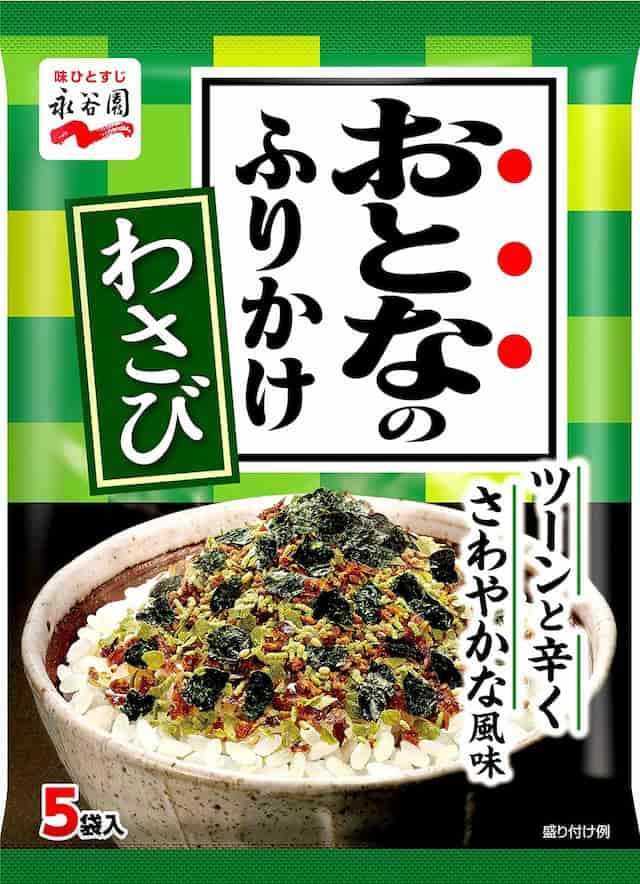
Nagatanien built this range for grown-up palates, and generous nori is the headline. Wasabi supplies a quick sinus tingle, while bonito keeps the base savory. Each box holds individually sealed sachets, so the aroma survives until you open one. Best use: a plain rice bowl, or ochazuke with hot green tea.
Hagoromo Papatto FuriFuri Katsuo
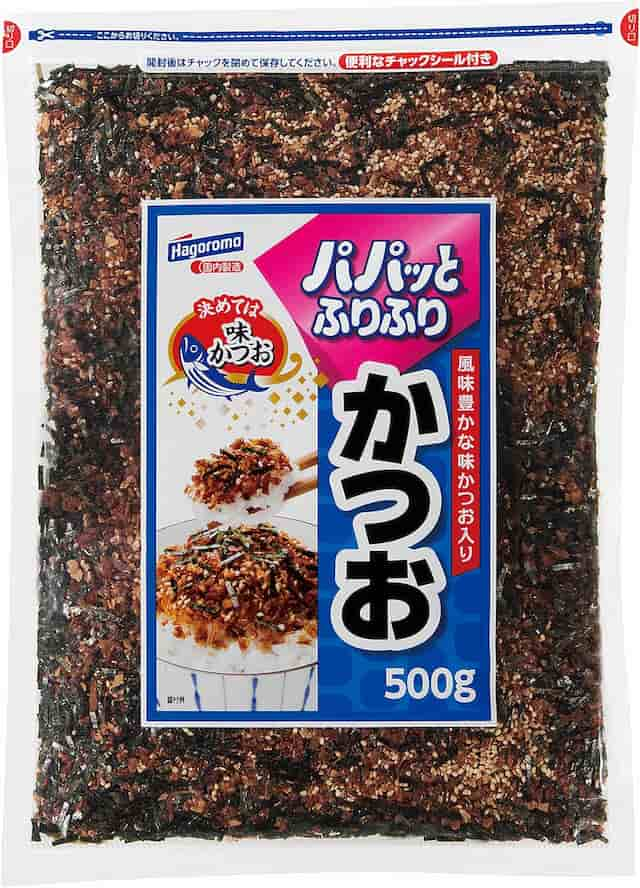
Hagoromo leans hard on seasoned bonito, shredded nori, and sesame. Notably, the crisp texture holds up well against steaming rice. Because the bag reseals and holds 500 grams, it suits households that eat rice daily. Best use: everyday bowls, plus a scattering over cold tofu.
Marumiya Noritama
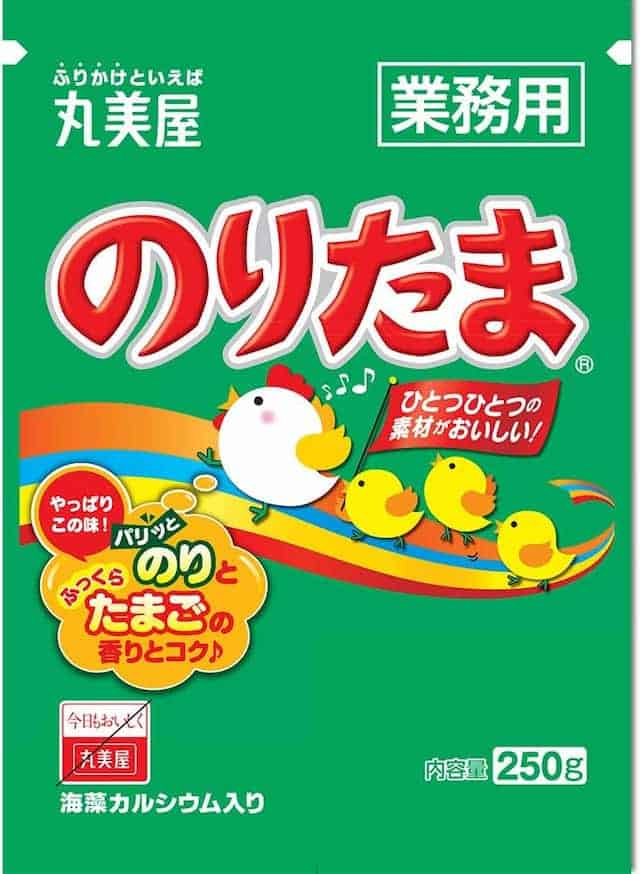
Marumiya has sold this blend since 1960, and it remains a supermarket fixture. Nori and egg sit in careful balance, so nothing overpowers the rice. Nostalgia clearly helps, yet the company has refined the recipe over the decades. Best use: children’s bento, or your very first packet.
Ninben Shittori Soft Furikake Katsuo Okaka
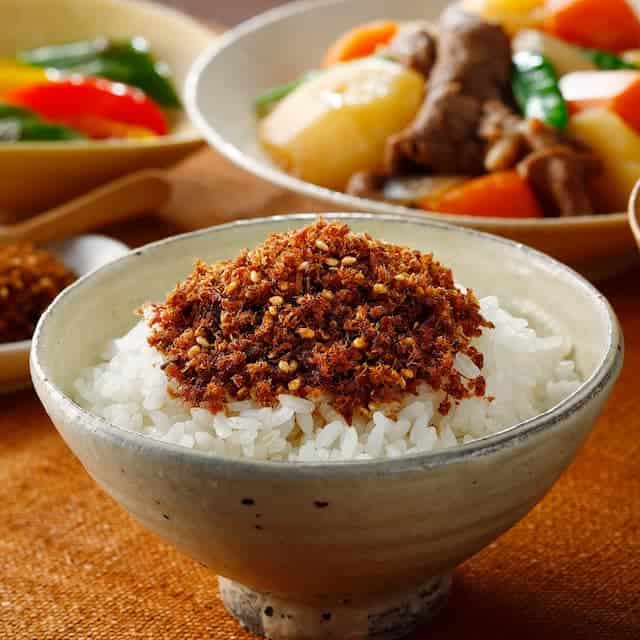
Ninben simmers domestic bonito flakes in sugar and brewed soy sauce. The result stays soft and slightly sweet instead of crunchy. Moreover, there are no preservatives or artificial colors, which appeals to cautious shoppers. Best use: onigiri fillings, since the moist texture binds well with rice.
Ochanokosaisai Kyoto La-Yu Furikake
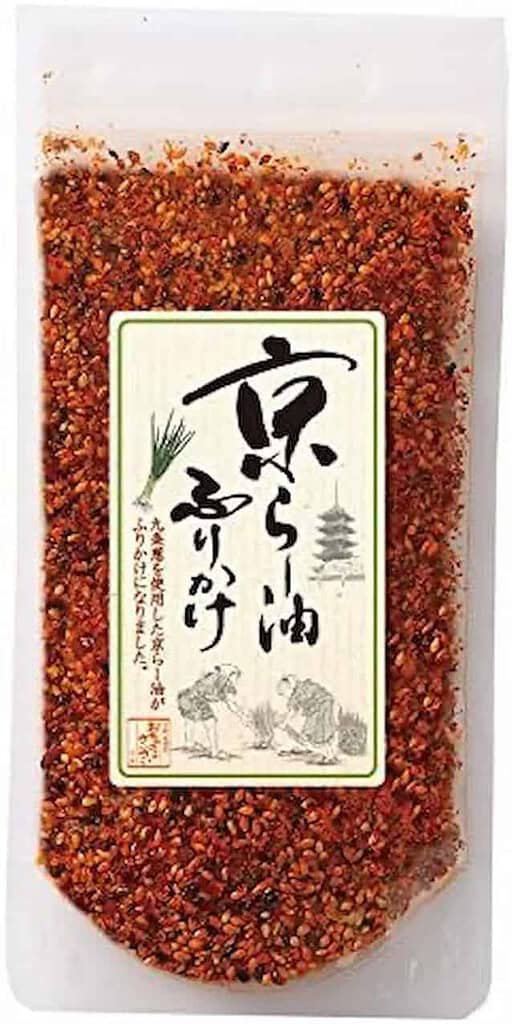
This Kyoto specialty fries sliced Kujo green onion until crisp. Chili heat and garlic ride on sesame oil, so the aroma fills the room. It behaves more like a condiment than a dry seasoning. Best use: rice, cold noodles, and fried eggs.
Product selection reference: osusume.mynavi.jp
How to Use Furikake
The method is simple, although a few details improve the result. Warm rice releases the aroma, while cold rice mutes it. For that reason, timing matters more than quantity.
Cook short-grain rice and let it rest briefly. Serve it hot, because steam carries the aroma upward.
Start with about one teaspoon per bowl. You can always add more, yet you cannot remove salt later.
Leave it on the surface for crunch and color. Alternatively, fold it through the rice for even seasoning.
Close the bag or clip it shut immediately. Humidity softens nori faster than anything else in the kitchen.
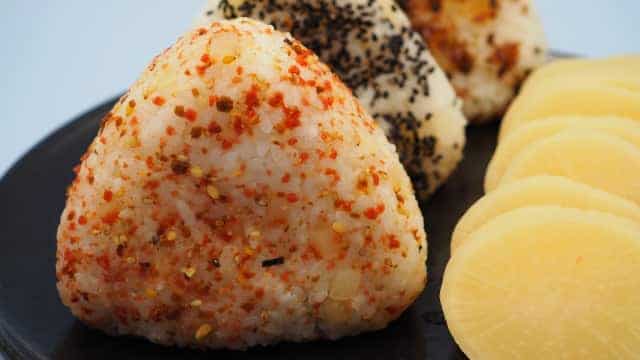
Besides rice, the uses multiply quickly. Mix a spoonful into furikake onigiri before shaping, and the flavor spreads evenly. Similarly, scatter some over a bento to hide dull white rice. Also, toss it through buttered noodles, green salads, or scrambled eggs. Popcorn also works surprisingly well, especially with a seaweed and sesame blend.
Best Foods to Pair with Furikake
- Steamed rice: the classic pairing, and still the best starting point
- Onigiri: mix it into the rice so every bite tastes seasoned
- Ochazuke: add the seasoning first, then pour hot tea over the bowl
- Chilled tofu: a bonito blend replaces both soy sauce and toppings
- Fried eggs: sprinkle after cooking, since heat burns nori quickly
- Udon and soba: useful when the broth tastes slightly flat
- Green salads: sesame heavy blends act like a dry dressing
- Bento boxes: it keeps rice appetizing even after several hours
Easy Homemade Furikake Recipe
Certainly, homemade furikake gives you full control over salt and sugar. This noritama style version takes about fifteen minutes. Moreover, it uses ingredients most kitchens already stock.
Ingredients
| Ingredients | Amount |
| Katsuobushi, or shaved bonito flakes | 30 to 40 g |
| A) Cane sugar | 1 to 2 tsp |
| A) Mentsuyu, triple concentrate, or soy sauce | 1 tbsp |
| Eggs | 2 |
| B) Soy sauce | 1/2 tsp |
| B) Hon-mirin | 1 tsp |
| B) Salt | a pinch |
| Toasted sesame seeds | 1 tbsp |
| Nori, whole sheets or pre-shredded | 1 bag, about 7 sheets |
Method
Place the flakes in a dry frying pan. Roast over low heat for roughly three minutes, then stir in the (A) seasonings. Mix well and set the pan contents aside.
Beat the eggs thoroughly in a bowl. Add the (B) soy sauce, hon-mirin, and salt. Whisk until the mixture looks completely smooth.
Pour the eggs into the same pan, greasing it lightly if needed. Scramble constantly with a whisk or fork. Keep going until the curds look fine and crumbly.
Spread the eggs and bonito on a tray to cool. Add the sesame seeds while everything cools. Cooling first keeps the nori crisp later.
Crush the nori sheets by hand into rough flakes. Fold them through the cooled mixture until evenly distributed. Your homemade furikake is now ready to serve.
Storage and serving: keep the batch in an airtight jar and use it within one week. Refrigerate it if your kitchen runs humid, though the nori will soften slightly. Serve it on rice, onigiri, or buttered toast for a savory breakfast.
Recipe adapted from @ちゃんちー
Is Furikake Healthy?
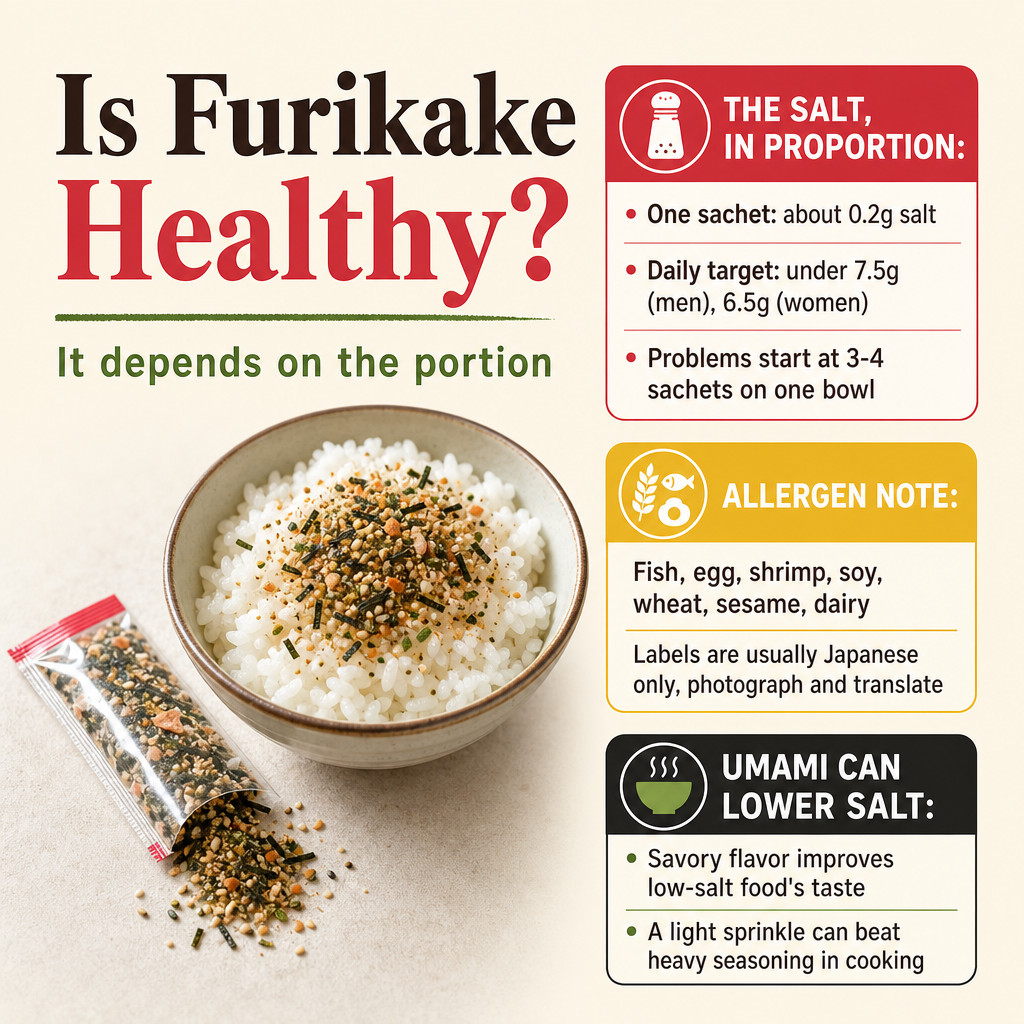
Basically, the honest answer depends on portion size. Japan’s official Standard Tables of Food Composition list egg-style furikake at about 9.2 grams of salt equivalent per 100 grams. That figure sounds alarming, yet single-serve sachets commonly weigh only about 2.5 grams. In other words, one sachet contributes roughly 0.2 grams of salt.
Meanwhile, Japan’s dietary reference intakes set a daily salt target. That limit sits below 7.5 grams for men and 6.5 grams for women. Against that budget, a single serving looks modest. Problems appear, though, when people pour three or four sachets over one bowl. Many people enjoy this seasoning every day. Still, it is best to check sodium levels and additives if you eat it often.
Allergen note: many blends contain fish, egg, shrimp, soy, wheat, sesame, or dairy derivatives. Japanese packaging lists these clearly, although usually in Japanese only. Translation apps handle the allergen line well, so photograph the label before buying.
Interestingly, umami can support lower salt intake rather than raise it. Research on glutamate and saltiness suggests that savory compounds improve the taste of low-salt food. A light sprinkle over lightly salted rice, therefore, may beat heavy seasoning during cooking. Homemade batches give you the clearest control of all.
Is Furikake Vegan?
Generally, mainstream products do not qualify as vegan. Indeed, bonito, dried sardines, egg granules, salmon, and shrimp appear constantly. However, seaweed and sesame blends often qualify, and so do many shiso types. Meanwhile, vegetarian labeled products exist in health food shops and larger supermarkets. Always read the ingredient list, because fish powder hides inside seasoning blends.
Is Furikake Gluten-Free?
Usually not, and the reason is soy sauce. Standard Japanese soy sauce contains wheat, and most blends include it. Some products also list wheat flour as a binder for egg granules. Meanwhile, certified gluten-free versions remain rare in Japanese supermarkets. If you need one, look for tamari based products or simply make your own.
Where to Buy Furikake in Japan
Finding it takes almost no effort. Firstly, supermarkets devote an entire aisle section to rice toppings. Convenience stores also stock bestsellers in small bags, which suits hotel breakfasts. Secondly, department store food floors, known as depachika, carry premium jars and seasonal blends. Souvenir shops near stations sell regional versions, while online stores ship nationwide.
Dedicated fans have one more option. The National Furikake Grand Prix gathers regional products from across Japan, and Kumamoto hosts the event as the claimed birthplace. Dates and venues change each year, so check the organizer’s site first. Shop hours and stock also shift, so confirm the official pages below before you travel.
Shinbashi Tamakiya (新橋 玉木屋 新橋本店)
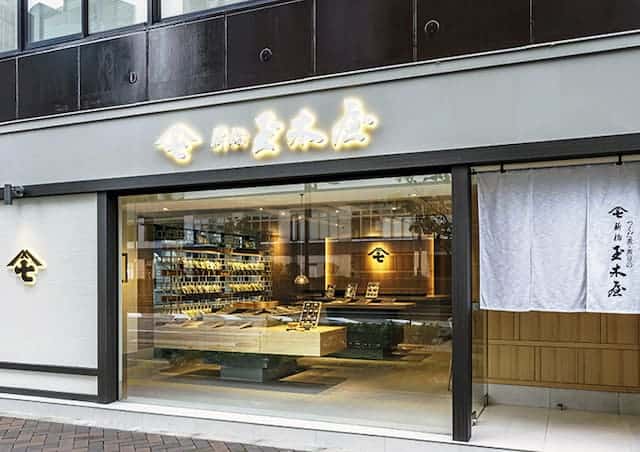
Tamakiya has sold preserved foods since 1782, so the shelves feel like a small museum. Tsukudani remains the specialty, yet the furikake selection deserves attention. Additionally, seasoned beans called zazen mame work as both snack and rice topping. Staff wrap gifts beautifully, which helps if you are shopping for souvenirs.
Marumiya (丸美屋)
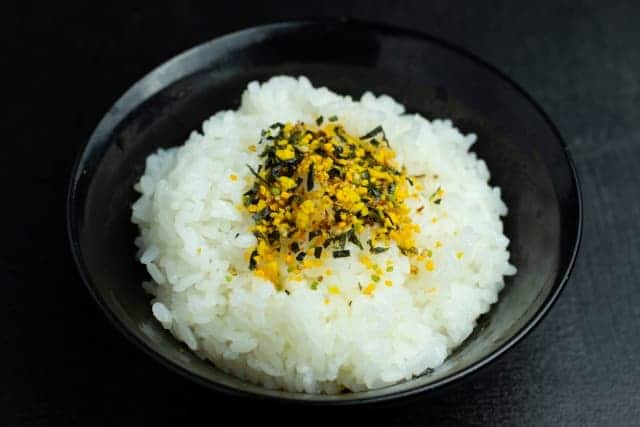
Marumiya products reach almost every shop in Japan, from tiny groceries to major chains alike. Overall, the range covers nori, egg, salmon, sukiyaki, and seasonal characters. Prices stay low, so this brand suits first purchases and bulk souvenirs. Their head office does not run a public store, though the products are everywhere.
Yamamoto Nori (山本海苔店 本店)
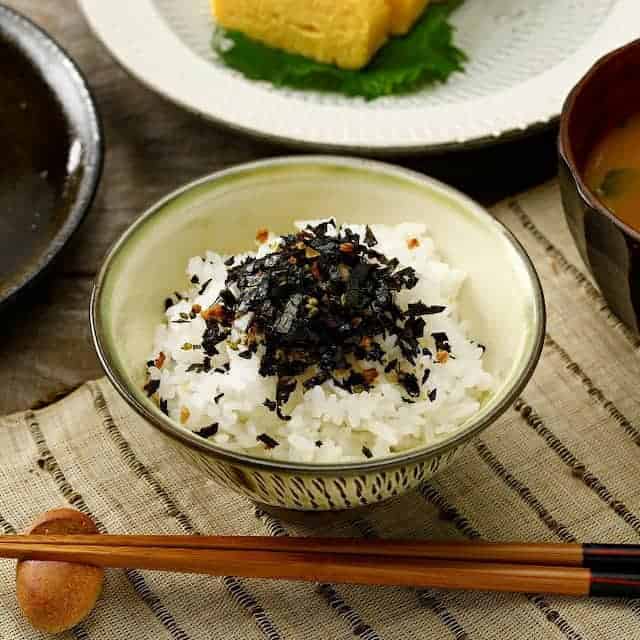
Yamamoto Nori has produced seaweed in Nihonbashi since 1849. Notably, their Nori Kake powder concentrates seaweed flavor into a fine topping. The bonito version, Nori Kake Katsuo Aji, suits rice and noodles equally. Gift boxes here cost more than supermarket packets, but the seaweed quality justifies it.
Buying Online from Overseas
If you live outside Japan, Rakuten Global Express can forward your order. The service gives you a Japanese address, then combines your parcels into one shipment.
Sign up
First, you need a Rakuten ID. If you are already a Rakuten member, you can start using Rakuten Global Express. If you have not registered yet, click here.
Get your personal RGX address
After signing up, you will get a Japanese address: a Rakuten Global Express address.
Shop at stores in Japan
Now that you have a personal RGX address, you can shop online in Japan. Click here to shop for furikake, since the page covers other online stores too.
When you have decided on your items, set the delivery address to your Rakuten Global Express address.
Confirm items
After items reach the RGX address, staff pack them into one parcel. You then receive an email confirming the contents and the payment.
Once the payment clears, your package ships within the period your chosen service allows.
How Much Does Furikake Cost?
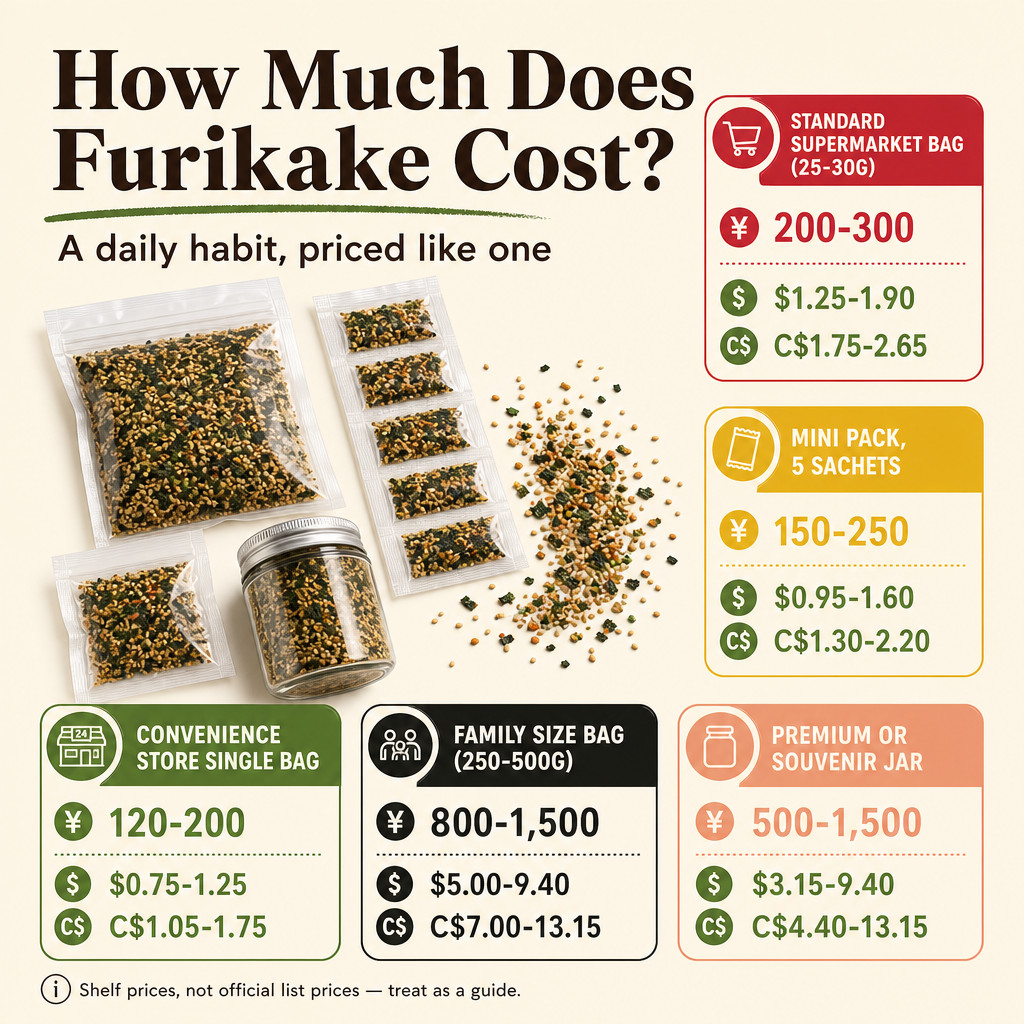
Prices stay low across the board, which explains the daily habit. Regional and gift products cost more, mainly because of packaging and premium seaweed. The ranges below reflect shelf prices rather than official list prices, so treat them as a guide.
| Product type | Approximate price in Japan | Approximate USD / CAD |
|---|---|---|
| Standard supermarket bag, 25 to 30 g | 200 to 300 yen | $1.25 to $1.90 / C$1.75 to C$2.65 |
| Mini pack assortment, 5 sachets | 150 to 250 yen | $0.95 to $1.60 / C$1.30 to C$2.20 |
| Convenience store single bag | 120 to 200 yen | $0.75 to $1.25 / C$1.05 to C$1.75 |
| Family size bag, 250 to 500 g | 800 to 1,500 yen | $5.00 to $9.40 / C$7.00 to C$13.15 |
| Premium or regional souvenir jar | 500 to 1,500 yen | $3.15 to $9.40 / C$4.40 to C$13.15 |
Ranges are approximate shelf prices observed in Japan as of August 2026, and they vary by store, region, and pack size. Conversions use about 159 yen per US dollar and 114 yen per Canadian dollar.
Conclusion
Furikake started as a pharmacist’s answer to calcium shortage, then became a national habit. Today it sits between convenience food and craft seasoning, depending on which packet you choose. A cheap bag suits weekday rice, while a Kyoto jar feels like a small treat.
So where should you begin? Buy noritama first, because it explains the category in one bite. Then try a bonito or wasabi blend once your palate adjusts. Finally, make a small homemade batch and compare. That comparison teaches more than any label ever could.
Furikake FAQ
What does furikake taste like?
Expect a savory, salty flavor with a nutty edge from toasted sesame. Seaweed adds a marine note, while bonito brings smokiness. Egg based blends taste milder and slightly sweet. Texture varies too, since some mixes stay crunchy and others turn soft on hot rice.
How do you use furikake?
Sprinkle about one teaspoon over a bowl of hot rice. You can also mix it into rice balls, bento boxes, or noodles. Many cooks scatter it over fried eggs, tofu, and salads. Because the flavor concentrates quickly, start small and taste before adding more.
Can you make furikake at home?
Yes, and the process takes about fifteen minutes. Roast bonito flakes with soy sauce and sugar, then scramble seasoned eggs until crumbly. Cool both parts, add sesame seeds, and fold in crushed nori. Homemade batches let you cut salt and skip additives entirely.
Does furikake need refrigeration?
Commercial packets do not need the fridge before opening. Store them in a cool, dry cupboard away from sunlight. After opening, seal the bag tightly and finish it within a few weeks. Homemade versions spoil faster, so keep them chilled and use them within one week.
Is furikake vegan or vegetarian?
Many versions contain bonito, egg, fish, or shrimp, so they are not vegan. Seaweed and sesame mixes often qualify, and shiso types usually do as well. Health food shops stock clearly labeled plant-based options. Always read the ingredient list, because fish powder hides inside seasoning blends.
Is furikake gluten-free?
Usually not, since standard Japanese soy sauce contains wheat. Some products also add wheat flour to bind egg granules. Certified gluten-free options remain uncommon in ordinary supermarkets. If you avoid gluten strictly, choose tamari based products or prepare a simple homemade blend.
Is furikake healthy?
One serving weighs only about 2.5 grams, so the salt contribution stays small. Problems arise when people use several sachets at once. Some blends also include colorants and flavor enhancers, which concerns cautious shoppers. Moderate portions and simple ingredient lists solve most of these worries.
Where can travelers buy furikake in Japan?
Supermarkets offer the widest choice and the lowest prices. Convenience stores stock bestsellers in small, luggage-friendly bags. Department store food floors carry premium jars and seasonal editions. Station souvenir shops sell regional blends, which make excellent gifts for cooks back home.
Can I bring furikake home from Japan?
Sealed dry packets travel well, since they are light, compact, and shelf stable. Commercial packaging also survives luggage better than homemade batches. Some countries restrict foods containing fish, meat, or egg, though. Check your destination’s food import rules before buying, especially for blends with dried fish.
References
- Futaba Co., Ltd., Company history and overview of Gohan no Tomo (Surveyed: August 2026)
- Futaba Co., Ltd., Press release on the YOSHIMARU brand and Furikake Day (Surveyed: August 2026)
- Marumiya Foods Industry Co., Ltd., Corporate information (Surveyed: August 2026)
- Marumiya Foods Industry Co., Ltd., Company history (Surveyed: August 2026)
- Suginami Gaku Club, Suginami City, Marumiya Foods Industry Co., Ltd. (Surveyed: August 2026)
- Nagatanien Co., Ltd., Otona no Furikake Wasabi product page (Surveyed: August 2026)
- Nagatanien Co., Ltd., Press release on the Otona no Furikake series (Surveyed: August 2026)
- J-Net21, Organization for Small and Medium Enterprises Japan, Otona no Furikake case study (Surveyed: August 2026)
- International Furikake Association, Official site (Surveyed: August 2026)
- National Furikake Grand Prix, Official event site (Surveyed: August 2026)
- Ministry of Education, Culture, Sports, Science and Technology, Standard Tables of Food Composition in Japan, 2020, Eighth Revised Edition (Surveyed: August 2026)
- Ministry of Health, Labour and Welfare, Sodium, e-Healthnet (Surveyed: August 2026)
- Ministry of Agriculture, Forestry and Fisheries, Be careful of excess salt intake (Surveyed: August 2026)
- Flavour, Mouritsen, O. G. et al., Seaweeds for umami flavour in the New Nordic Cuisine, 2012 (Surveyed: August 2026)
- BioMed Research International, Kurihara, K., Umami the fifth basic taste, 2015 (Surveyed: August 2026)
- Hypertension Research, Hayabuchi, H. et al., Influence of umami on saltiness and palatability of low-salt solutions, 2020 (Surveyed: August 2026)
- Gastronomica, University of California Press, A Katsuobushi Story: Preserving Fish and Preserving Tradition, 2019 (Surveyed: August 2026)
Related Articles
- Japanese Rice (日本の米) (Surveyed: August 2026)
- Onigiri (おにぎり) (Surveyed: August 2026)
- Toasted Seaweed (焼き海苔) (Surveyed: August 2026)
- Katsuobushi (鰹節) (Surveyed: August 2026)
- Ochazuke (お茶漬け) (Surveyed: August 2026)
- Bento (弁当) (Surveyed: August 2026)
- Nori Bento (海苔弁当) (Surveyed: August 2026)
- Tsukemono (漬物) (Surveyed: August 2026)
- Yuzu Kosho (柚子胡椒) (Surveyed: August 2026)
- Shio Koji (塩麹) (Surveyed: August 2026)




Comments