



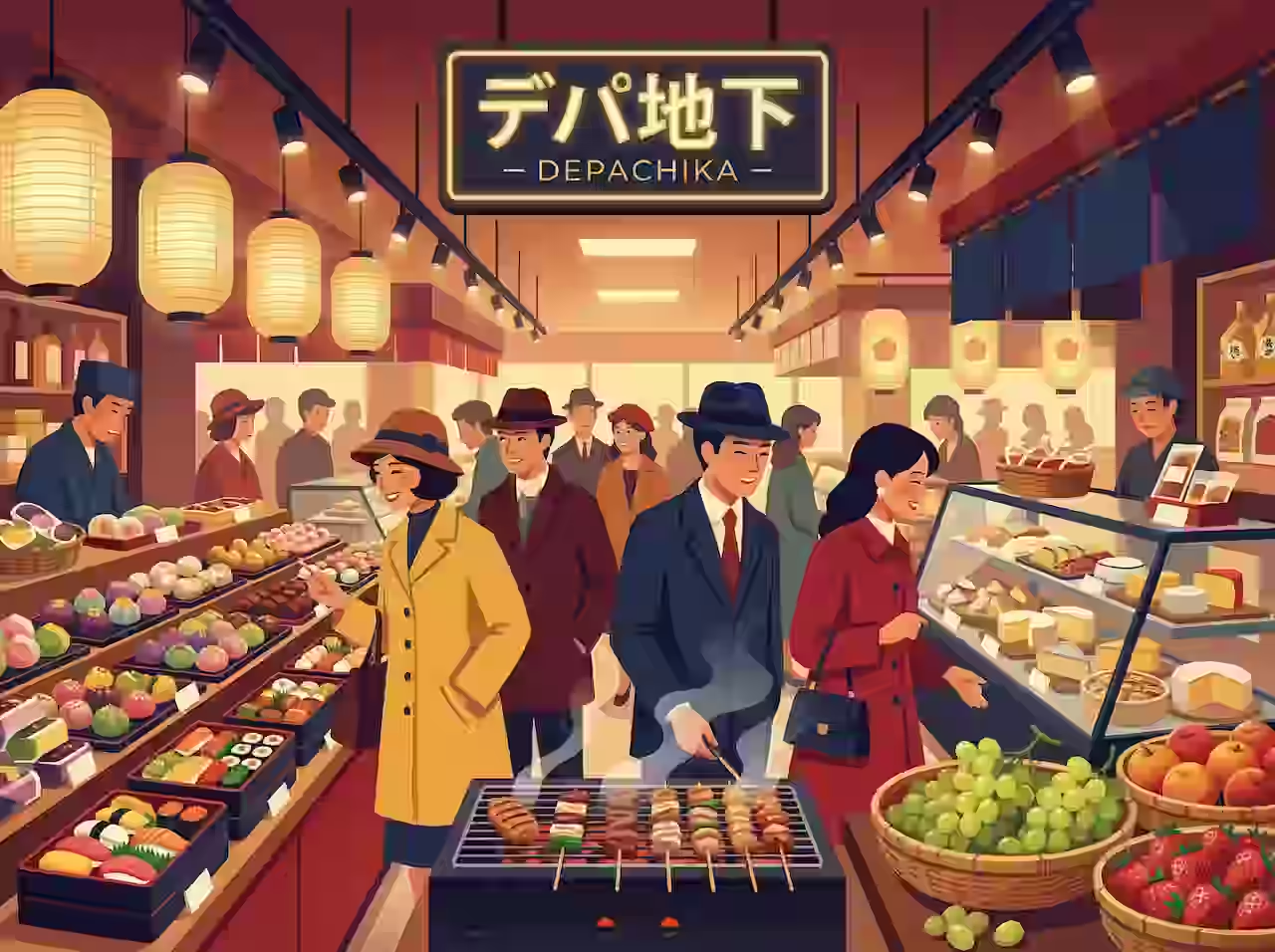
A depachika is a gourmet food hall located in the basement of a Japanese department store. In practice, it sells bento, prepared dishes, sushi, sweets, fruit, drinks, and gifts. Many counters are operated by specialist retailers, restaurants, confectioners, and department-store food brands. Prices range from inexpensive individual items to premium boxed gifts.
This guide explains what depachika are, what to buy, and how to visit Tokyo’s best department store food halls. It also covers evening discounts, etiquette, typical costs, and where you can actually eat what you buy. If you have never shopped in one, start with the ordering steps further down. For a wider view of the city, see our complete Tokyo Food Guide.
What Is a Depachika?
A depachika is the food floor of a Japanese department store, usually on basement level one or two. Dozens of specialist counters sell bento, side dishes, sushi, cakes, wagashi, bread, tea, and boxed gifts. Typically, locals shop there for dinner and for presents. Almost everything travels home in a bag rather than onto a plate.
- Japanese
- デパ地下 (depachika)
- Word origin
- depāto (department store) + chika (basement)
- Usual location
- B1, sometimes B1 and B2
- Main goods
- Bento, sōzai, sushi, wagashi, cakes, fruit, bread, tea, gifts
- Seating
- Rare; some stores add a small eat-in corner
- Typical hours
- Around 10:00 to 20:00, though every store differs
- Payment
- Cash and cards at most counters; IC cards at many
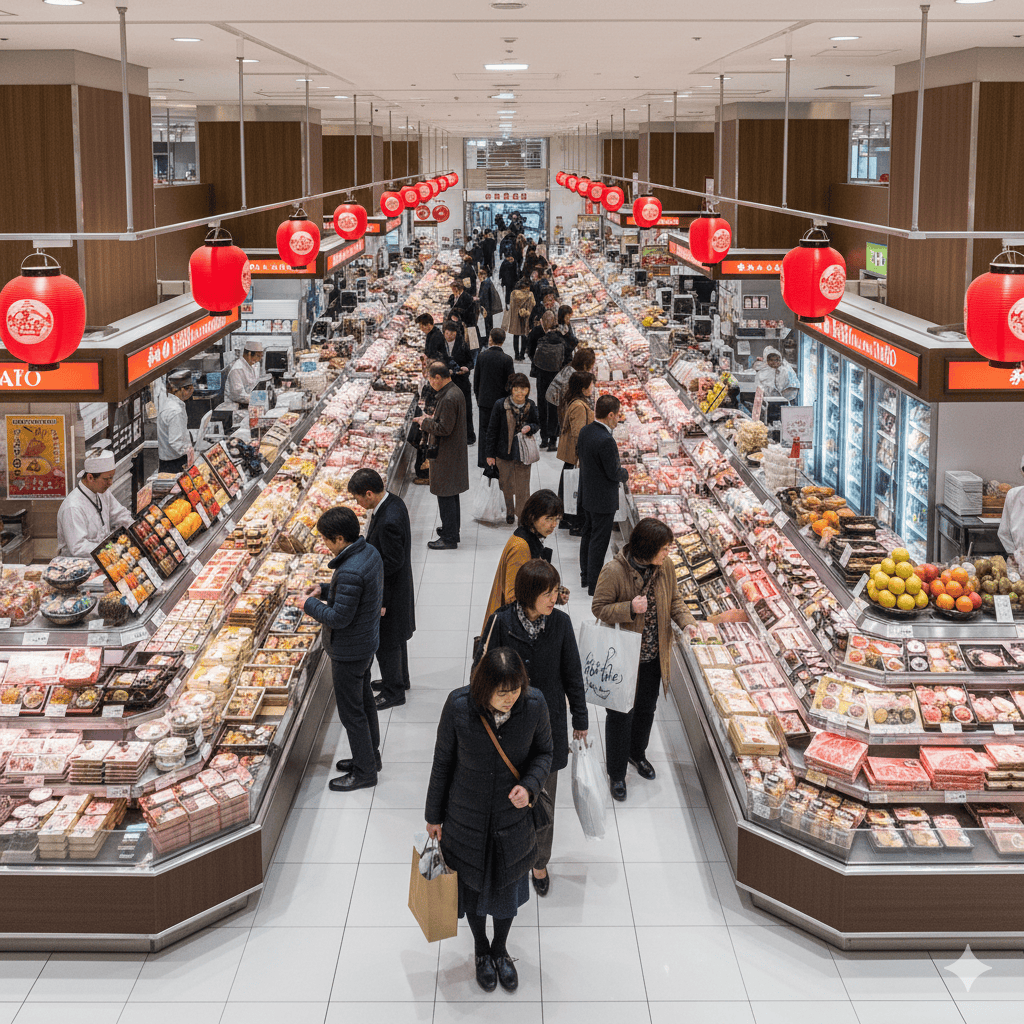
The name itself is a contraction. The word combines depāto and chika, and it now refers widely to department-store basement food floors. Many Japanese department stores use one or more basement floors for food counters, delicatessens, groceries, and gifts.
Why underground? Nikkei asked Takashimaya the same question. Water and gas pipes run more easily below ground, and leaks or cooking smells bother other floors less down there. Takashimaya’s Tokyo store, opened in 1933, put food in the basement from the start.
Lunch, evening, weekend, and holiday periods can be busy. So if you prefer quieter browsing, visit between meal times instead. Mid-afternoon on a weekday is usually calm.
What Should You Buy at a Depachika?
Generally, five categories cover almost every visit:
- Bento for a train ride or a hotel dinner
- Sōzai (prepared side dishes) sold by weight, so you can mix a meal
- Wagashi for light, shelf-stable souvenirs
- Sushi for the day of purchase, following the use-by time on the label
- Seasonal gifts such as fruit, tea, or boxed confectionery
For a first visit, choose one bento for a meal and one shelf-stable box of wagashi or baked sweets as a souvenir. Bento needs no reheating, and the lid keeps everything tidy. Follow the use-by time and storage instructions, and ask staff whether the item needs an ice pack.
Prepared Meals
Bento and Sōzai
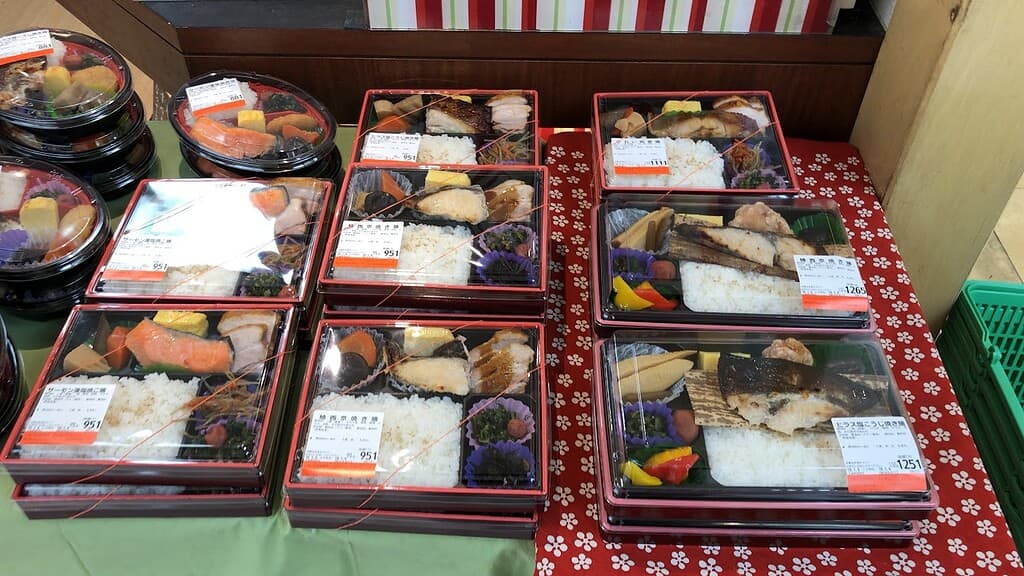
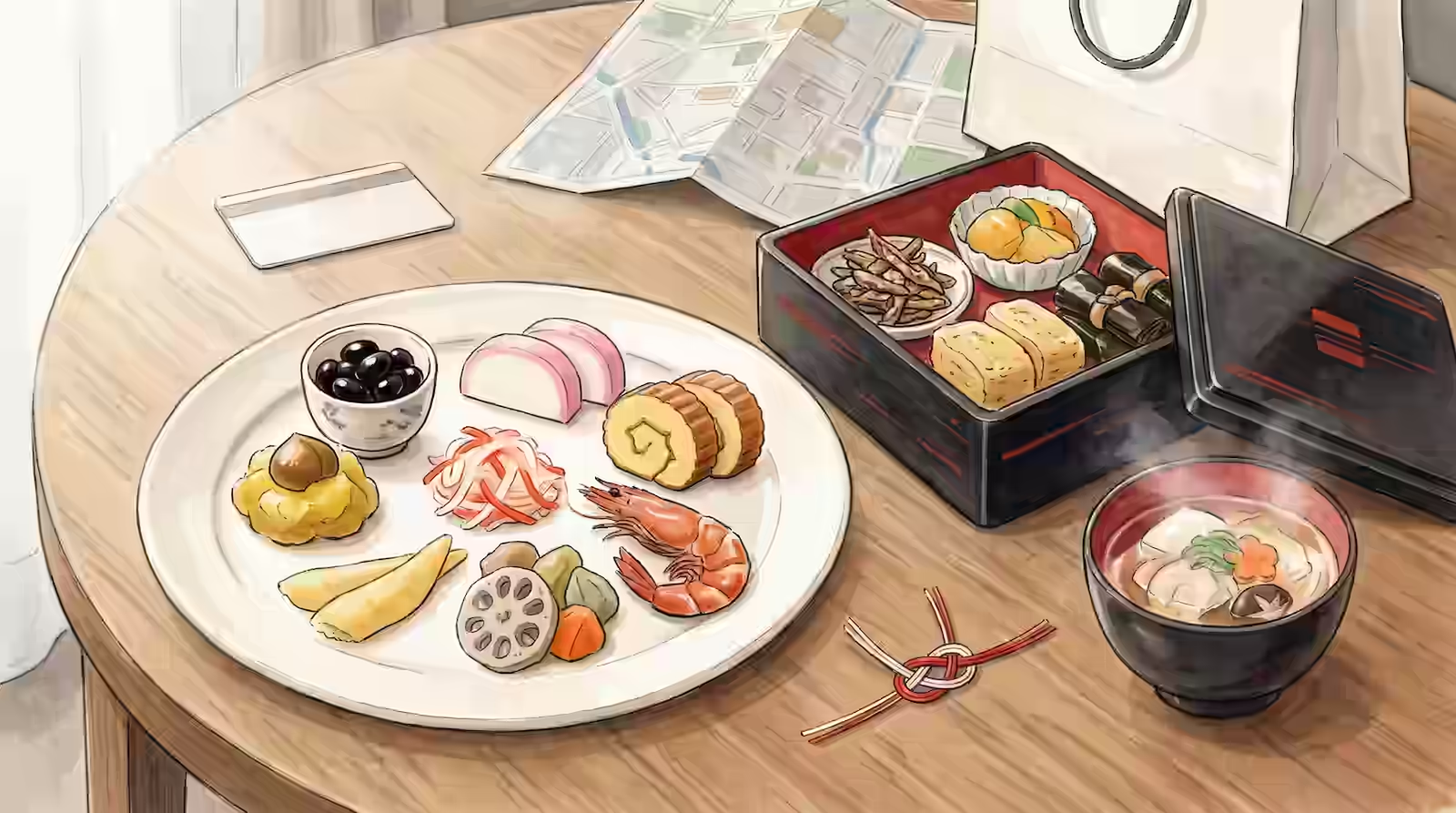
The bento and deli area is often busy. For example, its counters display yakitori, tempura, salads, grilled eel, and seasonal side dishes. Options range from makunouchi bento with rice and side dishes to seasonal and restaurant-branded boxes. Because many counters cook in shifts, the selection at 11:00 differs from the selection at 18:00.
Bento rice is often designed to be eaten at room temperature, although preparation varies by product. Fried coatings soften during transport, so choose these when you plan to eat soon. Common counter items include Japanese karaage and the cutlets covered in our Tokyo tonkatsu guide. In addition, grilled fish, simmered vegetables, and salads fill out most boxes.
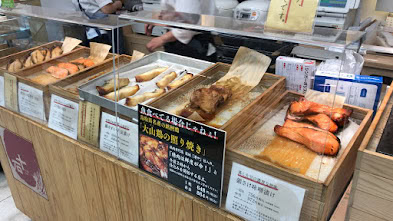
Sōzai counters work differently. Vendors sell these dishes by weight or in ready-to-go containers, which suits solo travelers well. Popular picks include kinpira gobo, tamagoyaki, potato salad, hijiki, and tsukemono. Choose two or three, add rice or bread, and you have dinner. For a fuller comparison with konbini and ekiben boxes, read our Japanese bento guide.
Sweets and Gifts
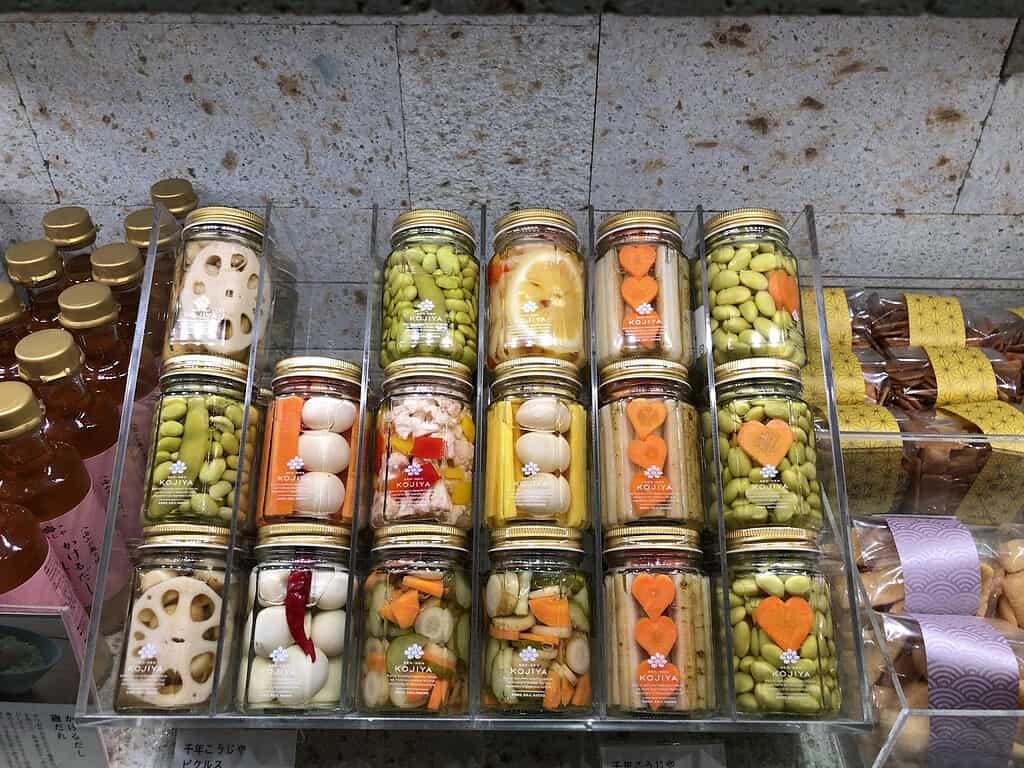
This is where the omiyage shopping happens. Shelf life, weight, and box strength decide most purchases.
Western Confectionery (Yōgashi)
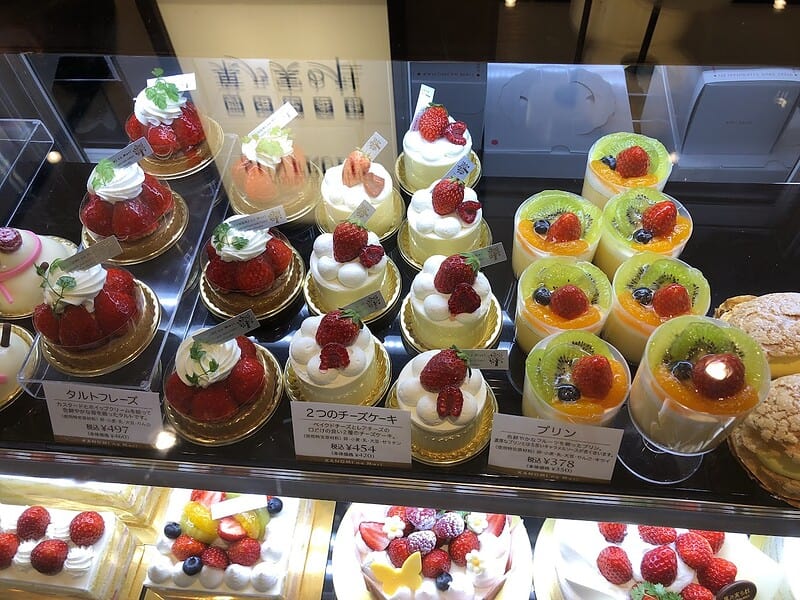
Notably, French and Japanese patisseries sit side by side here. Whole cakes look wonderful, yet they travel badly, so most visitors do better with baked goods. In particular, financiers, madeleines, butter cookies, and chocolate keep for weeks. Matcha and seasonal fruit versions appear constantly, which makes them an easy gift for people back home.
Wagashi
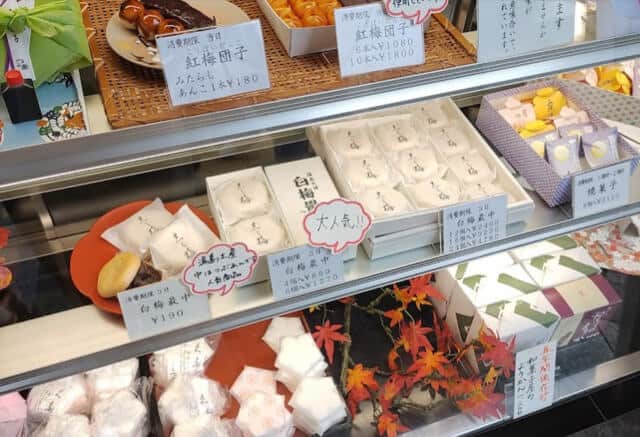
Above all, traditional sweets make the most practical souvenirs. Senbei, yōkan, monaka, and dorayaki all travel well, and individually wrapped pieces divide easily among coworkers. Fresh mochi and daifuku taste better, but they last only a day or two, so ask staff which products keep longest. Our traditional wagashi guide covers the categories in more depth.
Luxury Fruit
A single melon in a ribboned box can cost more than a nice dinner. In Japan, however, premium fruit works as a formal gift rather than a snack. Shine muscat grapes, Amaou strawberries, and Yubari melons all appear in season. Even if you do not buy any, the displays show how fruit functions as a formal seasonal gift here.
Fresh Food and Drinks
Sushi and Seafood
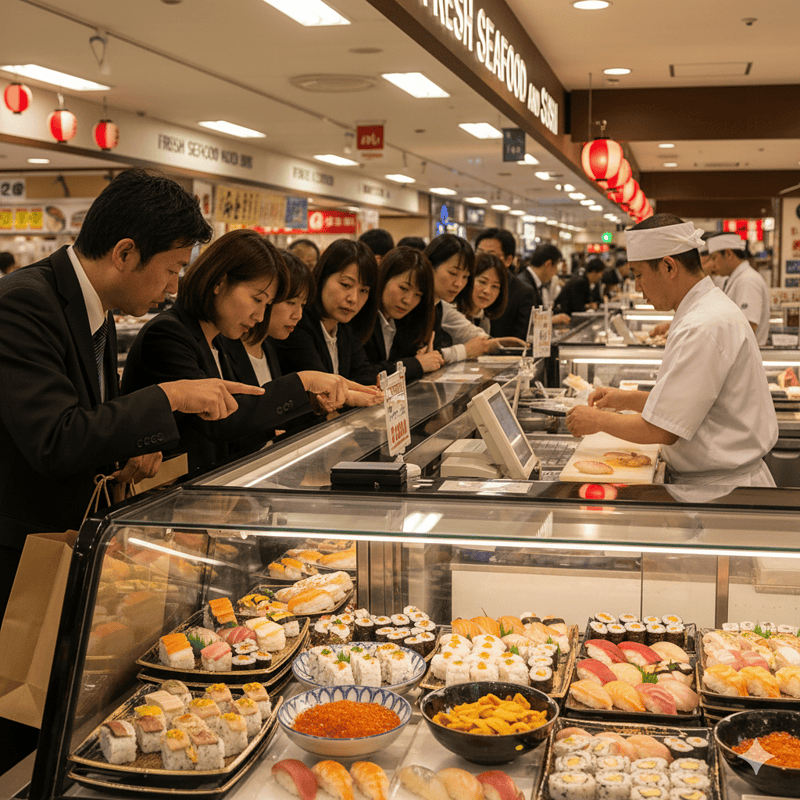
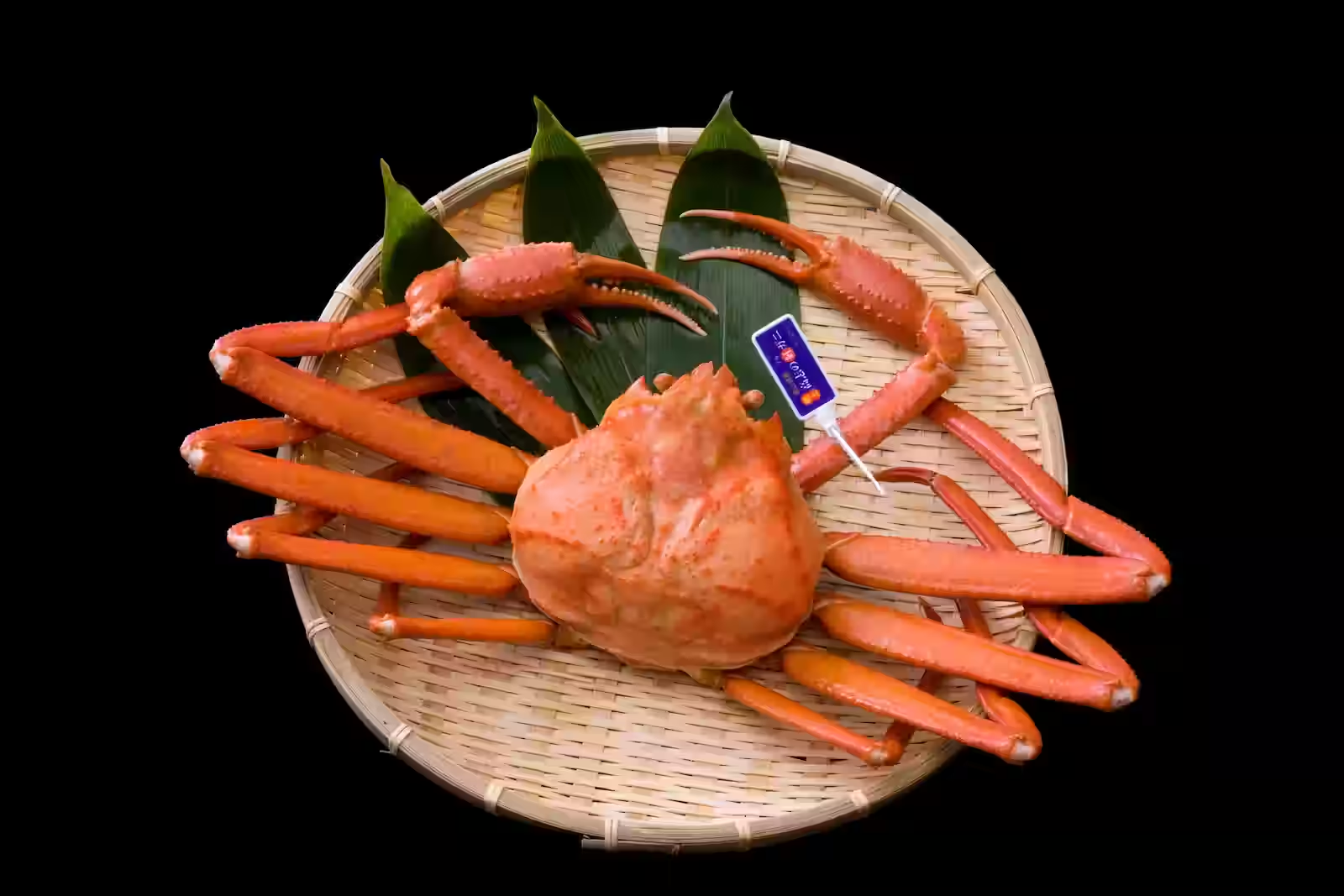
Typically, seafood counters receive fish from wholesale markets and regional suppliers. Sourcing varies by vendor and season, so ask if a particular fish matters to you. Nigiri sets, sashimi platters, hand rolls, and kaisendon all sell in takeaway packs. Follow the use-by time printed on the label, and ask staff how long the pack can travel safely.
Bakery
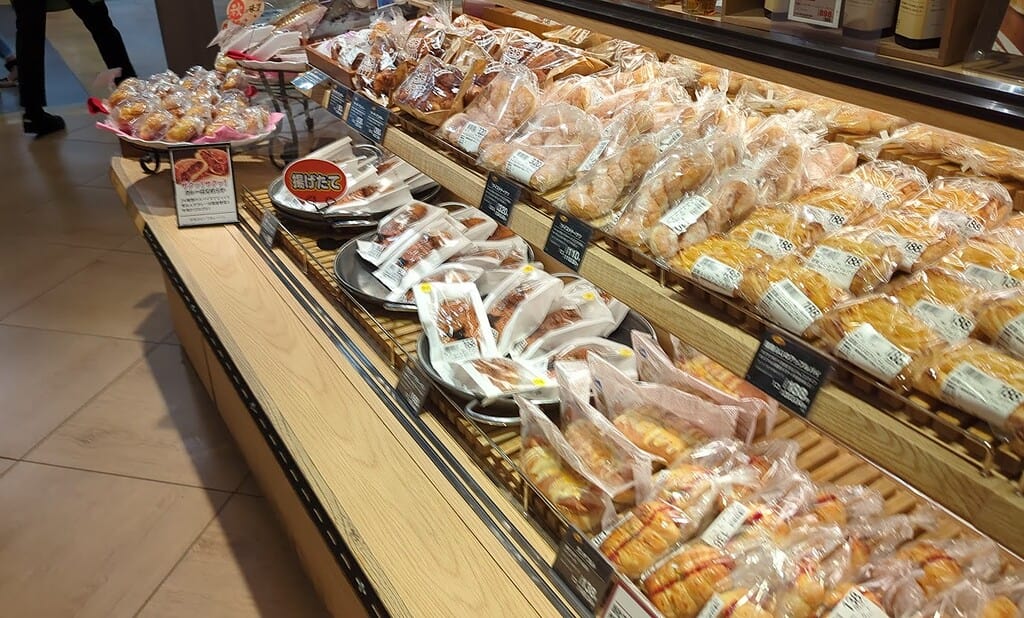
Meanwhile, Japanese bakeries here sell both Western and local styles. Shokupan, melon pan, curry pan, an-pan, and croissants fill the shelves. Bakery counters may prepare bread in several batches, although schedules differ by shop. Shelf-stable bread can work for breakfast the next morning, though you should check storage instructions for filled or chilled products.
Tea and Coffee
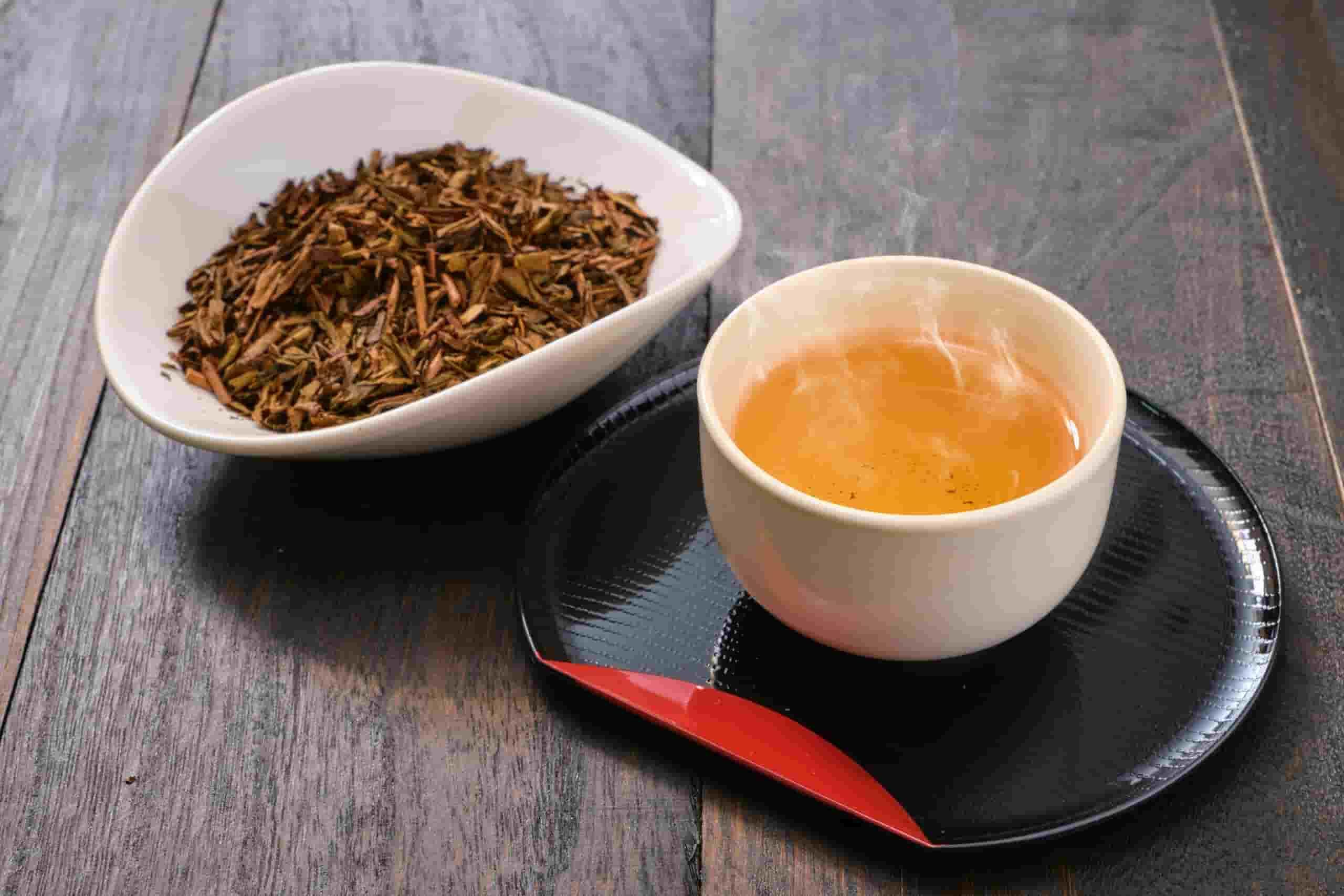
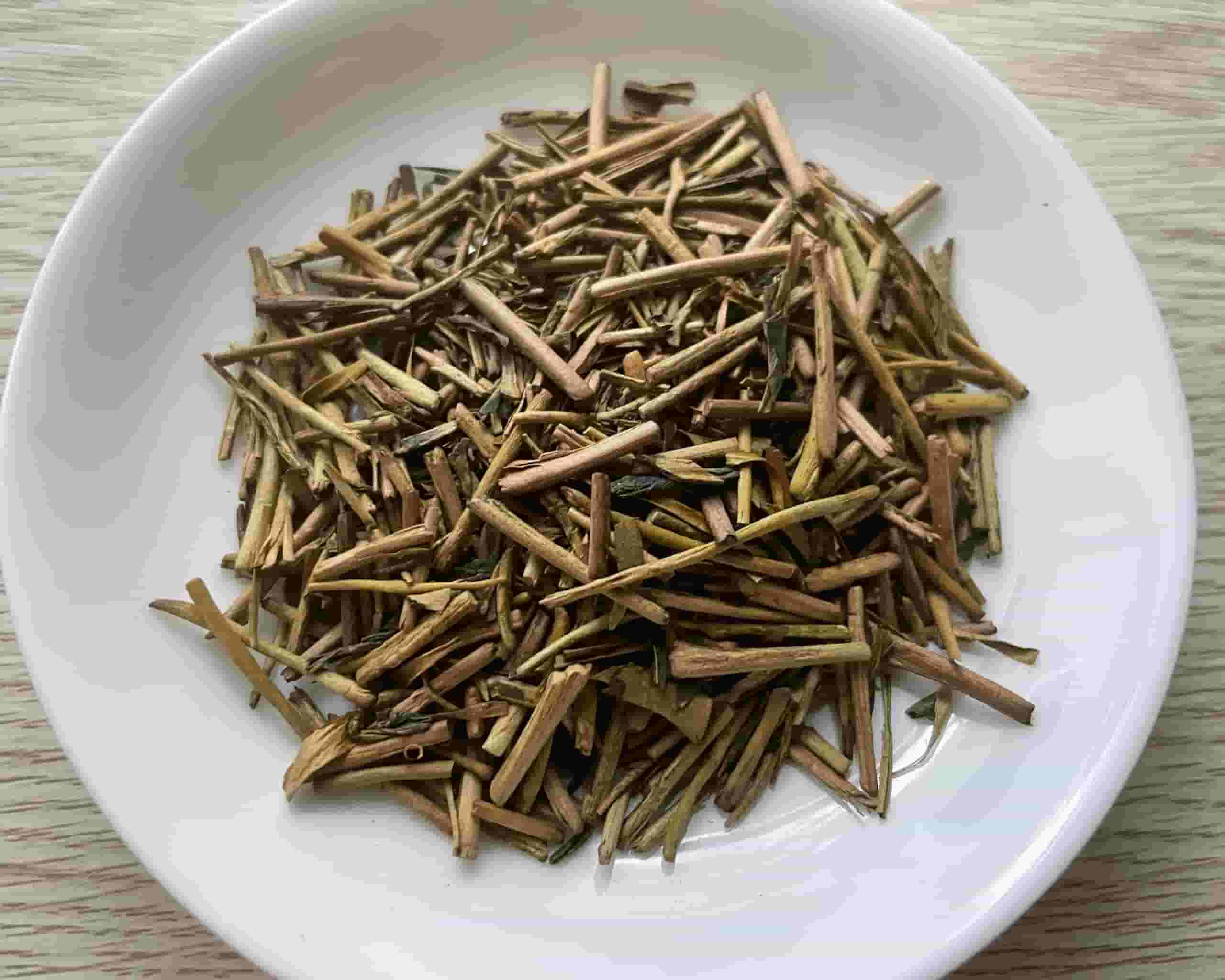
Similarly, tea counters carry matcha, sencha, hojicha, and genmaicha at several grades. Sealed tea packs easily, though you should check your destination country’s customs and agricultural rules. Coffee counters sell whole beans and ground packs.
How Much Does Depachika Food Cost?
In short, costs split neatly into two budgets: what you eat, and what you carry home. Keep them separate when you plan.
| Level | One-person meal | Boxed gift | What you usually get |
|---|---|---|---|
| Budget | ¥600 to ¥1,200 | ¥800 to ¥1,500 | Simple bento, sōzai by weight, senbei, bread |
| Mid-range | ¥1,200 to ¥2,500 | ¥1,500 to ¥4,000 | Branded bento, sushi sets, baked confectionery, tea |
| Premium | ¥2,500 and up | ¥4,000 and up | Eel or wagyu boxes, sashimi platters, gift fruit |
Before You Order: Find the Floor and Compare Counters
First, take the escalator or elevator down to B1 and follow the crowd. Most stores post a floor map near the entrance, and many print an English version. If time allows, scan the floor map or walk through the main zones before choosing. First-time visitors may find it useful to compare several counters before buying. In a hurry, head straight to the zone you need, such as bento, sushi, or confectionery.
Displays do the explaining. Prices sit on small cards, and photographs or samples show portion size. Some counters offer free tastings, though not all of them do.
How to Order: Five Steps
- Point to the item you want. Point to the item while stating the quantity or weight.
- Say how many, or how many grams. Bulk trays need a weight; packed items need a number.
- Tell them how long you will carry it. This decides whether they add cooling.
- Pay at the counter. Each shop takes its own payment, so expect several receipts.
- Ask for an ice pack if you need one. Staff usually add it free for chilled food.
| English | Japanese | Romaji |
|---|---|---|
| One, please. | ひとつ ください。 | Hitotsu kudasai. |
| One hundred grams, please. | 100グラム ください。 | Hyaku guramu kudasai. |
| I will carry it for two hours. | 2時間 持ち歩きます。 | Nijikan mochiarukimasu. |
| Could I have an ice pack? | 保冷剤を お願いします。 | Horeizai o onegaishimasu. |
| Card, please. | カードで お願いします。 | Kādo de onegaishimasu. |
When Do Depachika Discounts Start?
Discount stickers often appear during the final one or two hours before closing, but timing and participation vary by counter. Sushi, sashimi, bento, and bakery goods lead the list, while gift boxes rarely qualify. Actual start times, eligible products, and the size of the markdown differ by sales floor and by stock on the day.
Popular discounted items may sell out quickly. So if the markdown matters to you, arrive early in that window rather than at the very end. Markdowns help counters sell perishable stock before closing, and regular shoppers plan around them.
Where Can You Eat Depachika Food?
Usually not at the food counters, but rules differ by store. Realistic options include:
- A designated eat-in corner, where the store provides one
- Rest areas or benches on upper floors
- A rooftop garden, if the store allows food there
- Your hotel room, provided you can transport and store chilled food as instructed
- Long-distance trains, where eating at your seat is generally accepted
Do not assume every rooftop permits eating, because several do not. Check the signage in the building, ask a staff member, and confirm the rules for your train before you buy. Eating is generally accepted at your seat on many long-distance trains, but follow the operator’s current rules and avoid strong-smelling food. Local commuter lines in particular discourage eating on board.
Which Depachika Is Best in Tokyo?
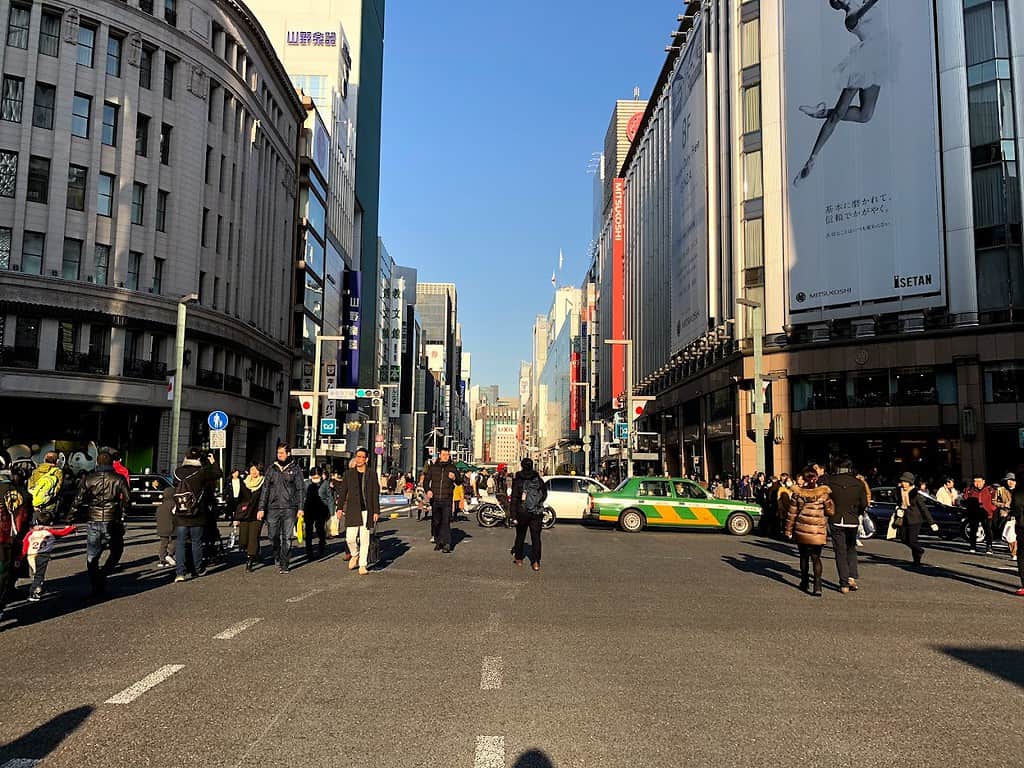
Choose Daimaru Tokyo for train bento, Isetan Shinjuku for variety, Ginza Mitsukoshi for premium gifts, and Nihombashi Takashimaya for traditional confectionery. There is no single winner, so pick by purpose. This depachika Tokyo guide compares the best Tokyo department store food halls by what each one does well. Ginza and Nihombashi in particular suit shoppers comparing Tokyo food souvenirs.
| Store | Best for | Nearest station | Food floor |
|---|---|---|---|
| Daimaru Tokyo | Bento box takeout and omiyage | Tokyo (Yaesu North) | B1 and 1F |
| Isetan Shinjuku | Variety and seasonal counters | Shinjuku-sanchome | B1 |
| Ginza Mitsukoshi | Premium gifts | Ginza | B2 to B3 |
| Nihombashi Takashimaya | Traditional confectionery | Nihombashi | B1 |
| ShinQs Shibuya Hikarie | Contemporary sweets and drinks | Shibuya | B2 to B3 |
| Odakyu Shinjuku (Halc) | Everyday deli and groceries | Shinjuku West | B1 and B2 |
Daimaru Tokyo: A Department Store Food Hall Near Tokyo Station
Daimaru sits inside the Tokyo Station complex, so you can shop and board without stepping outside. Food is sold on B1 and 1F, with the B1 floor particularly useful for bento box takeout before a Shinkansen. Current regular hours run 10:00 to 20:00, checked September 2026. Eating option: no basement seating, so most shoppers eat on the train. Official floor guide
Isetan Shinjuku
Overall, Isetan offers a broad mix of delicatessens, confectionery, groceries, bakeries, and seasonal counters. Limited editions and pop-up counters change often. Direct access from Shinjuku-sanchome; about five minutes on foot from major JR Shinjuku lines. Typical hours run 10:00 to 20:00. Eating option: an upper-floor restaurant level rather than basement seating. Official store page
Ginza Mitsukoshi
Ginza Mitsukoshi leans upmarket, so it is a practical choice for formal gifts. Established confectioners and premium fruit sellers share the basement levels, and packaging quality is the main draw. Typical hours run 10:00 to 20:00. Eating option: an upper-floor terrace garden, subject to store rules. Official store page
Nihombashi Takashimaya
The main building is designated as an Important Cultural Property, adding architectural interest to a food-shopping visit. Its food floor favors long-established Japanese specialists over trend-driven brands. Typical hours run 10:30 to 19:30, shorter than at other stores, so check before an evening visit. Nihombashi Station connects directly, and Tokyo Station is roughly ten minutes on foot. Official hours page
ShinQs, Shibuya Hikarie
ShinQs emphasizes contemporary confectionery, drinks, and deli counters in a station-connected location. Dessert counters, juice stands, and lighter deli options fill two basement levels. Shop hours vary more than at traditional department stores, so check the floor guide. Shibuya Station connects directly. Official site
Odakyu Shinjuku (Shinjuku Nishiguchi Halc)
The old Odakyu main building closed for the Shinjuku west-side redevelopment. The store now operates inside Shinjuku Nishiguchi Halc, with fresh food, deli, bento, and bread on B2 and Japanese and Western confectionery on B1. A separate area, SHINJUKU DELISH PARK, sits in the Odakyu Ace underground arcade. Hours run 10:00 to 20:30, closing at 20:00 on Sundays and national holidays. Older guidebooks still list the previous address, so trust the official page instead. Official hours and access
Depachika vs Food Court vs Supermarket
These three often get confused, yet they solve different problems. A Japanese department store food basement differs from a food court because it focuses mainly on takeaway food and gifts.
| Depachika | Food court | Supermarket | |
|---|---|---|---|
| Location | Department store basement | Mall or station upper floor | Street level or basement |
| Main purpose | Takeaway and gifts | Eating on site | Home cooking |
| Price level | Mid to high | Low to mid | Usually lower |
| Seating | Rare | Usually available | None |
| Specialization | High, one shop per genre | Chain restaurants | General range |
| Gift wrapping | Common at gift counters | Not available | Limited |
| Travel-friendly | Good | Poor | Fair |
How to Choose Food for Travel
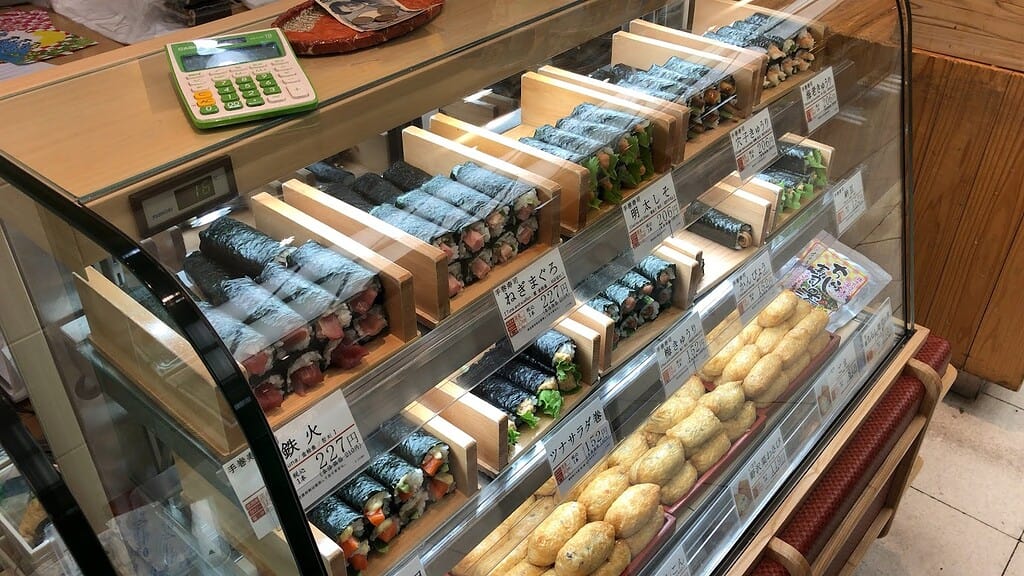
Before you pay, run through a quick mental checklist. Specifically, look at the date label, the storage instruction, and the shape of the container. Sauce-heavy dishes leak, and strongly scented food such as grilled fish bothers neighbors on a train. For travel, choose sealed containers that stay level, resist leaks, and match the permitted storage time.
| Label | Meaning | Buy it when |
|---|---|---|
| 消費期限 (shōhi kigen) | Use-by date for food that spoils quickly | You will eat it today |
| 賞味期限 (shōmi kigen) | Best-before date for stable food | You are taking it home |
Date labels assume an unopened package stored by the stated method, as the Consumer Affairs Agency explains. An ice pack does not replace refrigeration, so ask the counter how long the product can be carried safely. Ask staff to bag hot and chilled items separately, and plan chilled purchases for the end of your outing.
Vegetarian, Vegan, Halal, and Allergy Notes
Reading a Japanese label is harder than it looks. Even when no meat or fish appears on the plate, a dish may still contain dashi made from bonito or sardine. Gelatin turns up in jellies and mousses, and egg or dairy hides in many baked goods. Also, halal certification is uncommon at these counters. Pork-derived ingredients appear in stocks and fillings, alcohol from mirin or cooking sake is common, and utensils are frequently shared. Shared fryers also matter for serious allergies. Staff may be able to check labels or ingredient sheets, but they may not be able to guarantee the absence of cross-contact.
| English | Japanese | Romaji |
|---|---|---|
| Does this contain fish stock? | 魚のだしは 入っていますか。 | Sakana no dashi wa haitte imasu ka. |
| Does this contain pork or alcohol? | 豚肉やアルコールは 入っていますか。 | Butaniku ya arukōru wa haitte imasu ka. |
| Is this halal-certified? | これは ハラル認証を 受けていますか。 | Kore wa harara ninshō o ukete imasu ka. |
| Does this contain gelatin? | ゼラチンは 入っていますか。 | Zerachin wa haitte imasu ka. |
| Are the cooking utensils shared? | 調理器具は 共用ですか。 | Chōri kigu wa kyōyō desu ka. |
Practical Shopping Tips
Payment
Many counters accept major credit cards, and some also take IC cards such as Suica. A few small vendors still prefer cash, so keep coins available. Each shop rings up separately, which surprises first-time visitors.
Tax-free shopping
Under the current system, food counts as a consumable, so conditions apply to purchase amount, packaging, and export intent. Eligibility depends on traveler status, purchase amount, export intent, store participation, and the rules in effect on the purchase date. Ask at the store’s tax-free counter when you buy, and bring your passport.
Tax-free from November 2026
From November 1, 2026, Japan switches to a refund method. You pay the tax-inclusive price at the register, then customs confirms the goods when you leave, and the store refunds the tax afterwards. The National Tax Agency states that confirmation must happen within 90 days of purchase. The separate consumable category, the purchase cap, and sealed export packaging all disappear under the new rules. Details may still change, so check the National Tax Agency or Japan Tourism Agency pages before you travel.
Gift wrapping
Finally, most confectionery counters wrap gifts on request, often at no charge. Say who the gift is for, because formal wrapping differs from casual wrapping. Wrapping takes a few minutes, so avoid the busiest hour if you are in a hurry.
Depachika Etiquette
- Let staff handle the food rather than touching it yourself.
- Join the back of the queue, even when it looks disorganized.
- Take one sample per offering, then move on.
- Eat elsewhere, since the counters are not a dining area.
- Hand unwanted items back to staff instead of reshelving them.
Conclusion
Ultimately, match the purchase to the purpose. Buy a bento or sōzai if you want dinner tonight, and choose sealed wagashi, baked confectionery, or tea if you want something that survives a suitcase. Sushi belongs to the same day only.
Then check three practical points before you commit. Confirm the store’s hours on its official page, ask where you may eat, and tell staff how long you will carry the food. With those settled, a quick basement stop turns into one of the easier good meals in Japan.
Depachika FAQ
What is a depachika?
Specifically, it is the food hall in the basement of a Japanese department store. Specialist counters there sell bento, prepared side dishes, sushi, cakes, traditional sweets, bread, tea, and gift boxes. The name combines depāto and chika, meaning department store and basement. Most stores put it on B1, and some use B2 as well.
Is depachika food expensive?
Not necessarily, because the range is wide. Simple meals may start below ¥1,000, while premium seafood, beef, and gift items cost substantially more. Side dishes sold by weight let you spend very little. If budget matters, shop the deli counters rather than the gift section.
Can you eat inside?
Usually not at the food counters, but rules differ by store. Some buildings provide a small eat-in corner, rest seating, or a rooftop area. Others prohibit eating anywhere on the floor. Check the signage or ask a staff member before you buy, especially if you have nowhere else to go.
What time do discounts start?
Discount stickers often appear during the final one or two hours before closing, but timing and participation vary by counter. Fresh items such as sushi and bento lead the markdowns, while packaged gifts rarely qualify. The size of the reduction also depends on stock that day. Popular items sell out fast, so arrive early in that window.
What food makes the best souvenir?
Sealed, dry, and lightweight items travel best. Senbei, yōkan, monaka, butter cookies, and tins of tea often have longer shelf lives, but check the best-before date on each package. Individually wrapped pieces also divide easily among coworkers. Avoid fresh mochi, cakes, and anything chilled, since those rarely survive a long flight.
Can tourists shop tax-free at these counters?
Sometimes, though the answer depends on the product, the packaging, and current rules. Department stores handle the paperwork at a dedicated tax-free counter rather than at each shop. Also, bring your passport and the receipts from every counter you used. Staff there will confirm whether your particular purchase qualifies.
Is it manageable without Japanese?
Yes, and more easily than many visitors expect. Prices sit on cards, displays show portion sizes, and pointing works everywhere. Of course, a translation app helps with ingredient questions. Staff at major Tokyo stores often handle basic English, so ask rather than guessing at what a dish contains.
References
- Isetan Mitsukoshi, Isetan Shinjuku Store, https://www.mistore.jp/store/shinjuku.html (Accessed September 2026)
- Isetan Mitsukoshi, Isetan Shinjuku Main Building B1 Floor Guide, https://www.mistore.jp/store/shinjuku/shops/mainfloorB1.html (Accessed September 2026)
- Isetan Mitsukoshi, Ginza Mitsukoshi Store Information, https://www.mistore.jp/store/ginza.html (Accessed September 2026)
- Daimaru Matsuzakaya Department Stores, Daimaru Tokyo Floor Guide, https://www.daimaru.co.jp/tokyo/floor/ (Accessed September 2026)
- Takashimaya, Nihombashi Takashimaya Business Hours, https://www.takashimaya.co.jp/nihombashi/departmentstore/businesshours/ (Accessed September 2026)
- Tokyu Department Store, ShinQs Shibuya Hikarie, https://www.tokyu-dept.co.jp/shinqs/ (Accessed September 2026)
- Odakyu Department Store, Shinjuku Store Hours and Access, https://www.odakyu-dept.co.jp/shinjuku/hour_acces/ (Accessed September 2026)
- Odakyu SC Development, Shinjuku Nishiguchi Halc, https://www.odakyu-sc.com/odakyu-halc/ (Accessed September 2026)
- National Tax Agency, Revision of the Export Goods Sales Scheme to a Refund Method, https://www.nta.go.jp/publication/pamph/shohi/menzei/201805/format/002.htm (Accessed September 2026)
- Japan Tourism Agency, Consumption Tax Exemption Shop Site, https://www.mlit.go.jp/kankocho/tax-free/page01_000001_00019.html (Accessed September 2026)
- Consumer Affairs Agency, Information on Food Date Labeling, https://www.caa.go.jp/policies/policy/food_labeling/food_sanitation/expiration_date/ (Accessed September 2026)
- Consumer Affairs Agency, Common Q&A on Processed Food Labeling (Use-by and Best-before Dates), https://www.caa.go.jp/policies/policy/food_labeling/information/qa/common_02/ (Accessed September 2026)
- Nikkei, Why Are Department Store Food Floors Underground?, https://www.nikkei.com/article/DGXDZO27211720S1A420C1W02101/ (Accessed September 2026)
Related Articles
- Bento (Surveyed: September 2026)
- Depachika Bento (Surveyed: September 2026)
- Tokyo Food Guide (Surveyed: September 2026)
- Wagashi (Surveyed: September 2026)
- Karaage (Surveyed: September 2026)
- Tonkatsu (Surveyed: September 2026)





Comments