




Fukuoka uiro is softer, lighter, and more delicate than the better-known Nagoya version. This regional wagashi from northern Kyushu is a steamed sweet made from rice flour and sugar, with a smooth, gently elastic texture that sits somewhere between mochi and yokan. If you have only encountered Nagoya-style uiro before, the Fukuoka version may surprise you with how subtle and clean it tastes.
What Is Uiro?
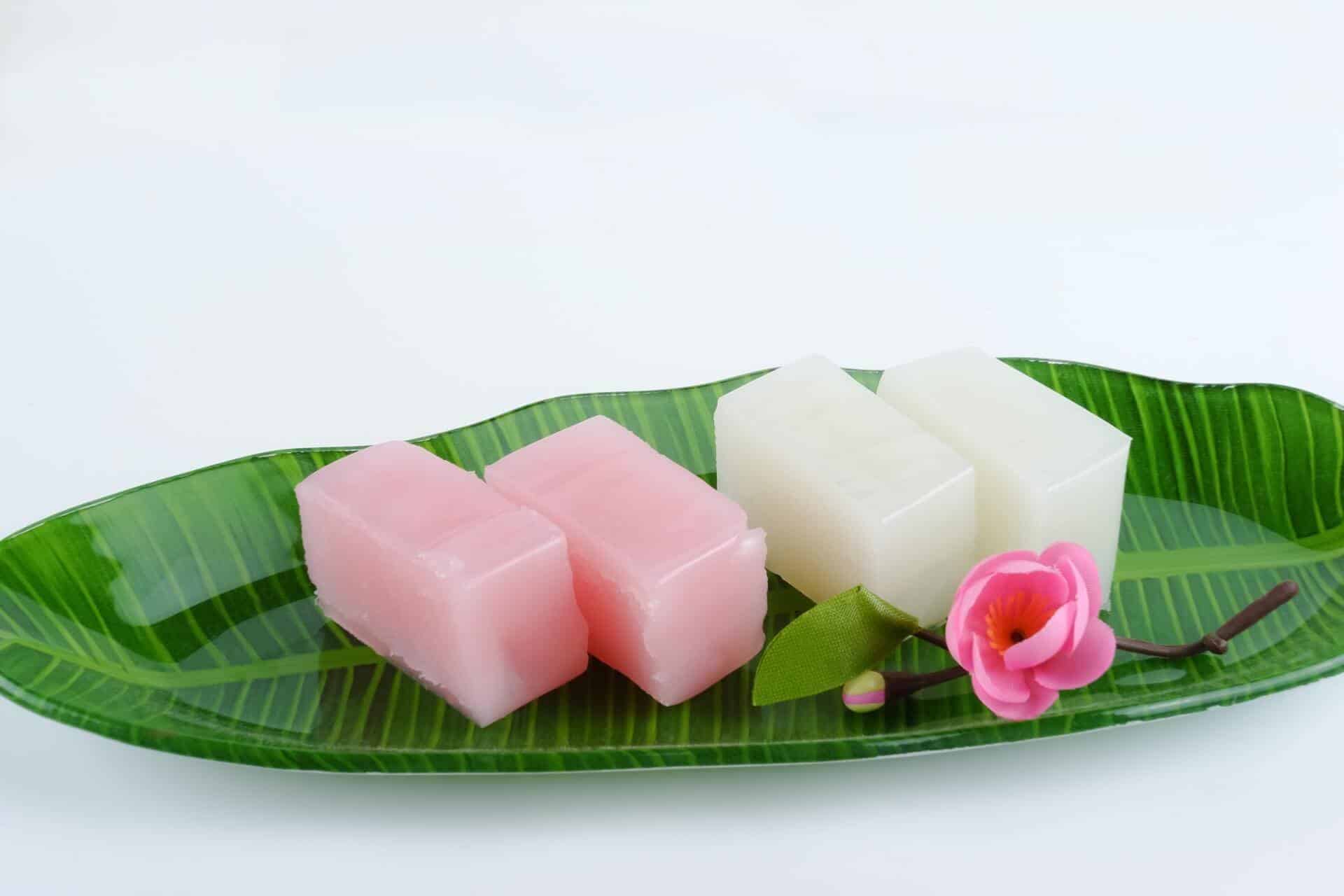
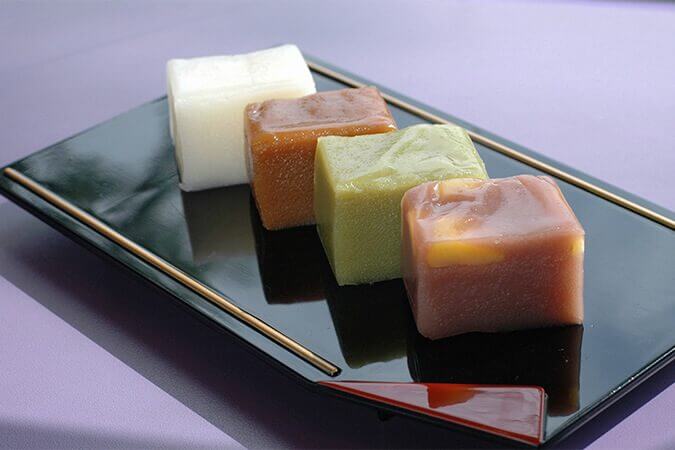
Uiro (ういろう) is a traditional steamed Japanese confection made from rice flour and sugar. Artisans mix the ingredients into a smooth batter, pour it into a mold, and steam it until set. The finished block slices cleanly into small pieces, each with a firm, slightly elastic bite.
Texture is what most people notice first. Uiro is softer than mochi, smoother than yokan, and slightly elastic without feeling sticky. It does not stretch or pull the way glutinous rice sweets do. The cut surface is clean and matte, which gives it a quiet, understated appearance.
The flavor is mild. Good uiro lets the natural sweetness of the sugar and the faint earthiness of the rice flour carry the taste. Stronger flavors like matcha, brown sugar, or red bean paste sometimes appear as regional additions. At its core, though, uiro is a simple sweet designed to complement tea rather than overwhelm it.
Uiro belongs to the namagashi category of wagashi, meaning it is a fresh confection with a short shelf life. The best pieces come from a shop the same day they are steamed.
The Origin and History of Uiro
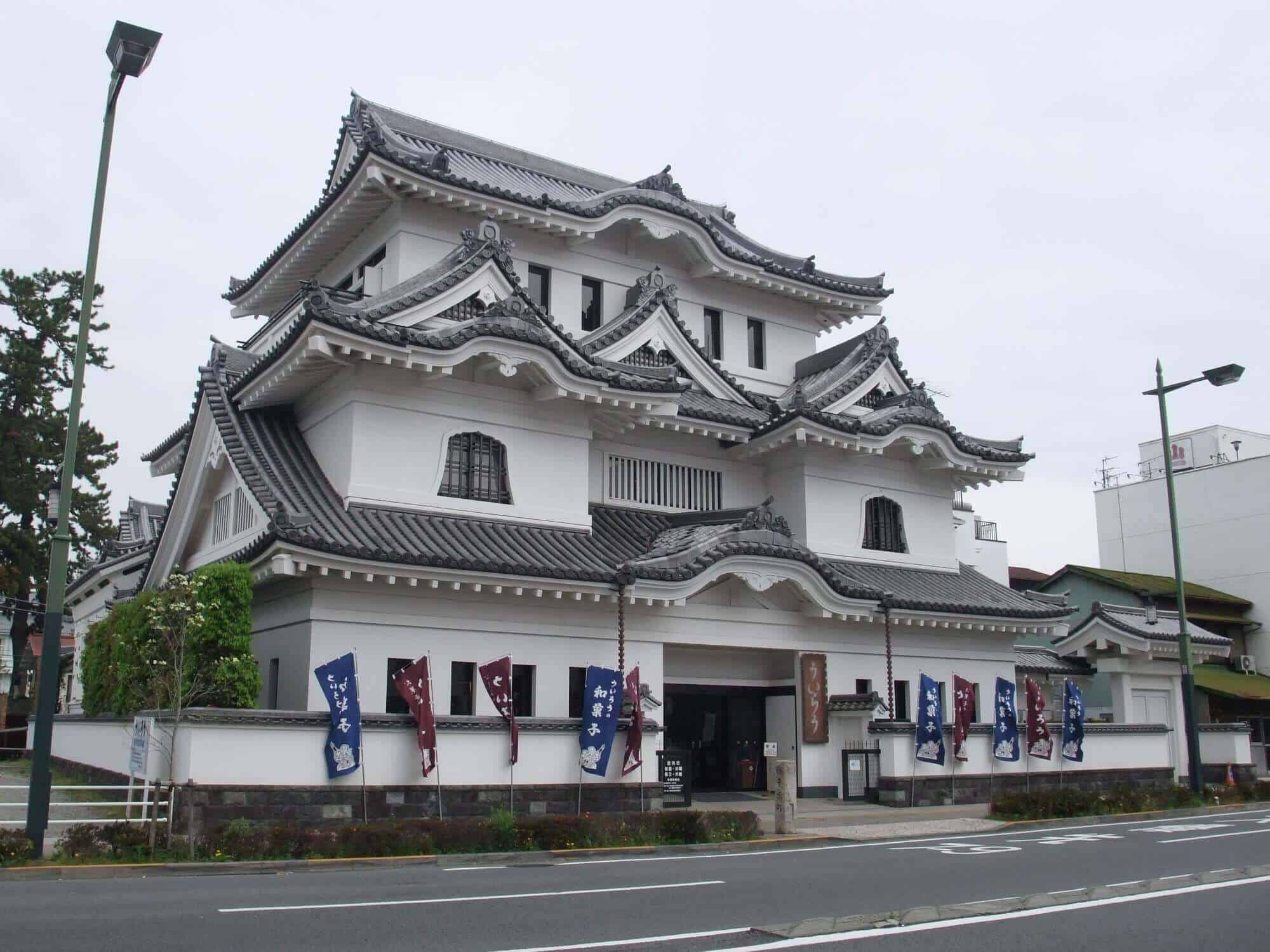
Uiro has a layered and somewhat unusual origin story. The name comes from the Gairo family, a Chinese family of physicians who came to Japan during the Muromachi period. The character Muneyoshi, a descendant of Chinese royalty, brought a medicinal preparation to Japan. His son Muneki established the family in Kyoto under the patronage of the Muromachi shogunate.
The original uiro was a medicine, not a sweet. It was a tablet used for breath freshening and digestion. The cakes we know today developed later, likely as a way to make the bitter preparation more palatable. By the late 17th century, steamed uiro cakes were already available in Kyoto and Odawara.
Odawara’s uiro shop, officially named Uirō, still operates today inside a distinctive castle-like building. This store is one of Japan’s oldest wagashi shops and continues to sell both the medicinal form and the sweet confection.
Nagoya’s connection to uiro grew through the Meiji era. The Aoyagi Sohonke family became the city’s dominant producer when they secured exclusive rights to sell at train stations. That distribution advantage made Nagoya uiro famous across Japan as a travel souvenir.
Why Uiro Took Root in Fukuoka
Fukuoka has a long history as a gateway city. Trade with the continent flowed through Hakata for centuries. With that trade came ingredients, techniques, and food culture from Korea, China, and the rest of Japan.
Steamed sweets suited Fukuoka for several reasons. The city’s merchant class valued foods that traveled well and kept their quality over short distances. Steamed wagashi hold their shape and flavor better than many fresh confections. They also paired naturally with the tea culture that developed alongside Hakata’s trading heritage.
Kyushu’s historical access to sugar also played a role. The island had earlier and more consistent access to imported sugar than many parts of Japan, particularly through trade routes connecting Nagasaki to the wider Asian market. That sugar supply supported a more developed wagashi tradition than other rural regions of similar size.
Fukuoka’s uiro reflects this background. The local version uses brown sugar rather than white sugar in many preparations, giving it a caramel warmth that reads as distinctly regional. This is not just a flavor preference; it is a trace of the ingredients that were historically most available in Kyushu.
Fukuoka Uiro vs Nagoya Uiro: Key Differences
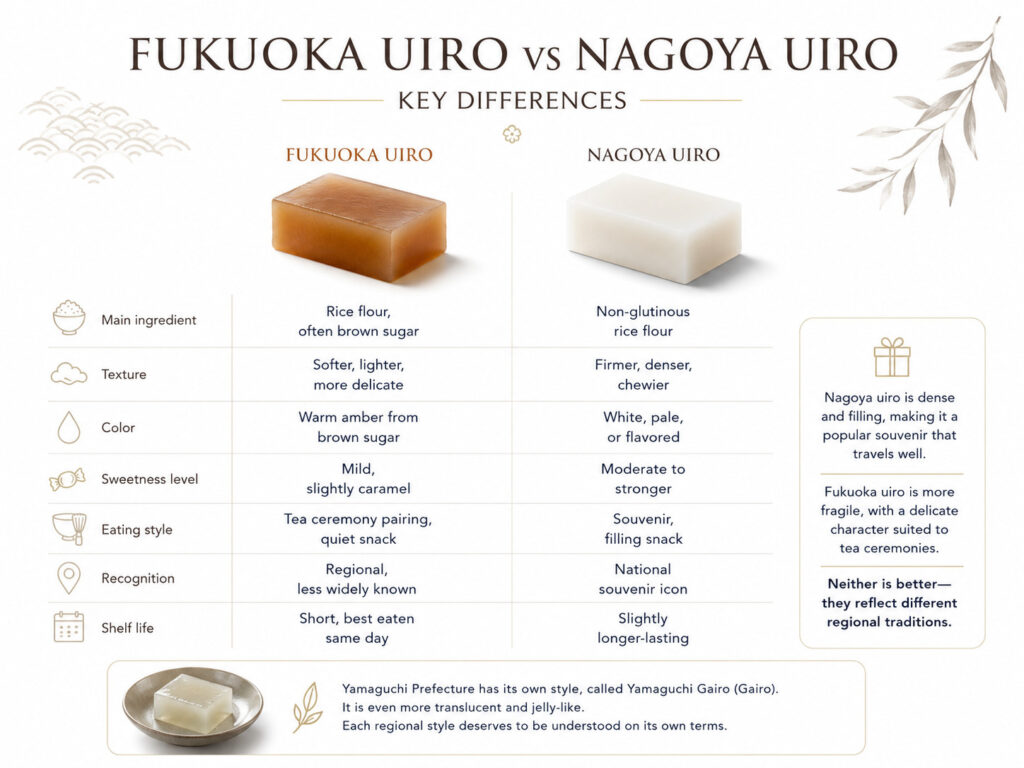
This comparison comes up often, and it matters. The two styles share a name but feel quite different in practice.
| Feature | Fukuoka Uiro | Nagoya Uiro |
| Main ingredient | Rice flour, often brown sugar | Non-glutinous rice flour |
| Texture | Softer, lighter, more delicate | Firmer, denser, chewier |
| Color | Warm amber from brown sugar | White, pale, or flavored |
| Sweetness level | Mild, slightly caramel | Moderate to stronger |
| Eating style | Tea ceremony pairing, quiet snack | Souvenir, filling snack |
| Recognition | Regional, less widely known | National souvenir icon |
| Shelf life | Short, best eaten same day | Slightly longer-lasting |
Nagoya uiro is dense and filling. Many visitors buy it as an omiyage because it packs and travels well. Fukuoka uiro is more fragile. It feels closer to a tea ceremony sweet than a station souvenir. Neither version is better. They simply reflect different regional priorities and different wagashi traditions.
Yamaguchi Prefecture also has its own version, called Yamaguchi Gairo or just Gairo, which is even more translucent and jelly-like. Each regional style deserves to be understood on its own terms rather than measured against Nagoya as a default.
Uiro vs Mochi vs Yokan: Understanding the Texture
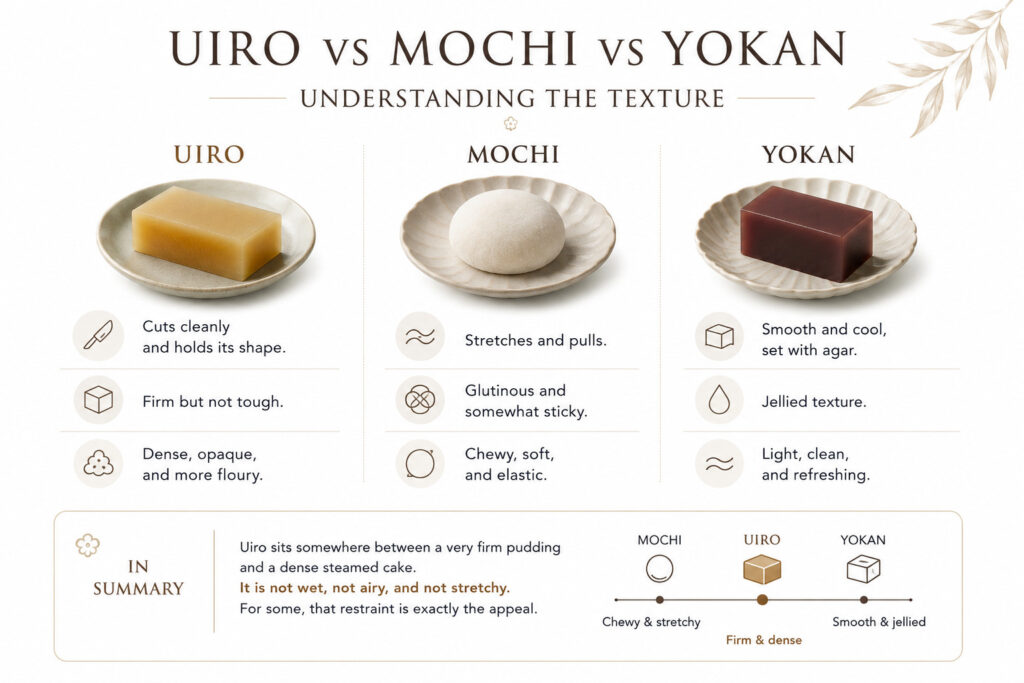
First-time eaters often try to place uiro within a familiar frame of reference. The honest answer is that it sits in its own category.
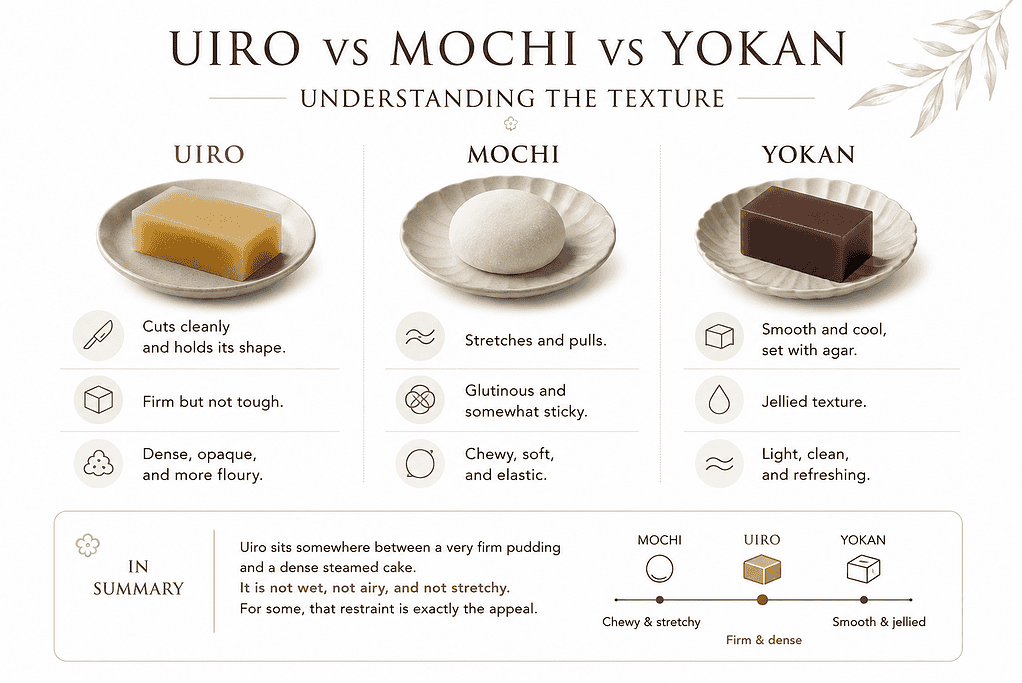
Mochi stretches and pulls. It is glutinous and somewhat sticky. Uiro does not do this. It cuts cleanly and holds its shape. The bite is firm but not tough.
Yokan is a red bean jelly that sets with agar. It is smooth and cool, with a distinctly jellied quality. Uiro is denser and more opaque. The mouthfeel is heavier, more floury, and less refreshing than cold yokan.
Western comparisons are imprecise, but uiro sits somewhere between a very firm pudding and a dense steamed cake. It is not wet, not airy, and not stretchy. For some people that description makes it sound dull. In practice, the restraint is part of the appeal.
Flavors and Regional Varieties
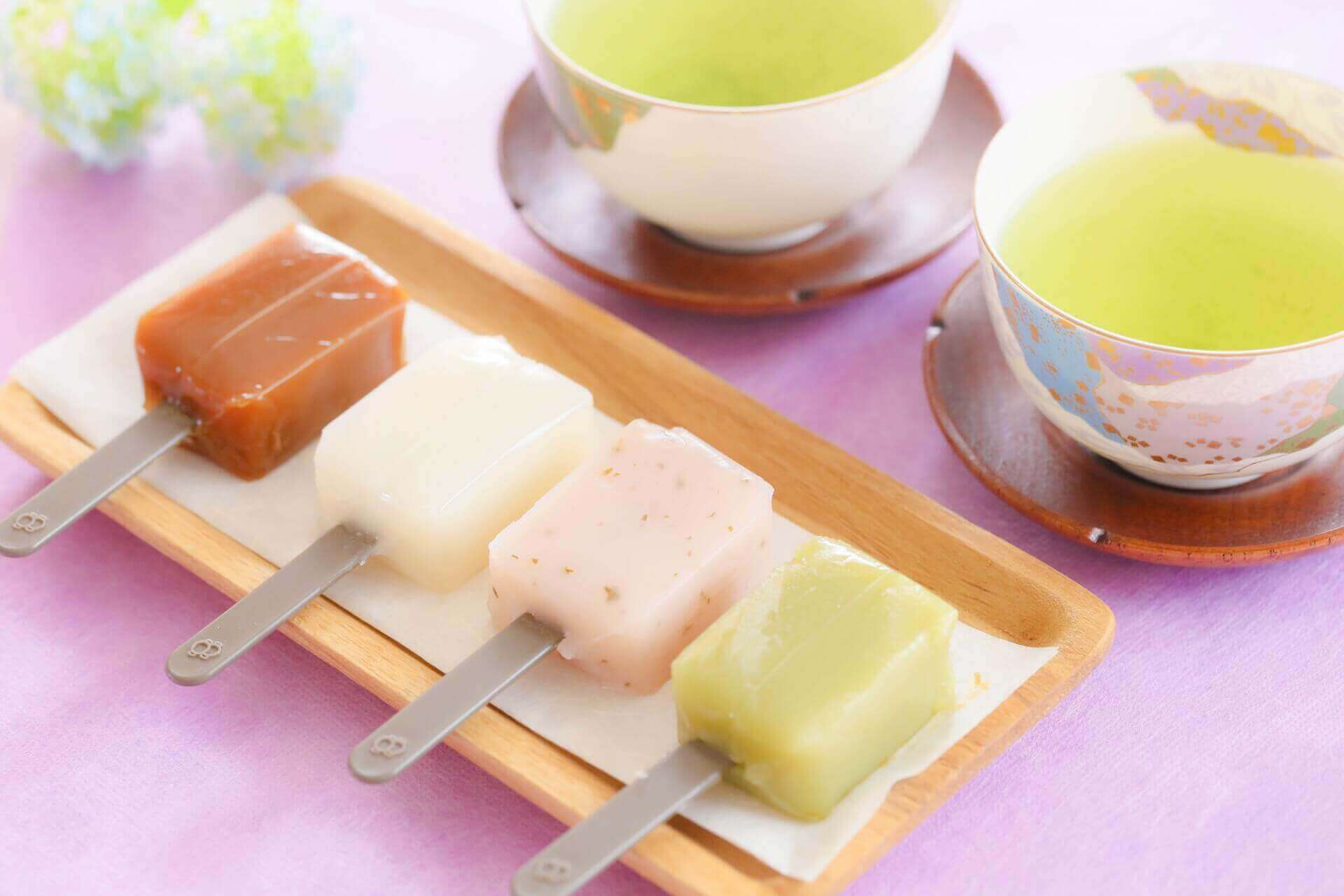
Plain uiro is mild and barely sweet. Most shops offer several flavor variations. Common choices include matcha, red bean paste, sakura, black sesame, and yuzu. Seasonal versions appear in spring and autumn, often tied to local ingredients or festival timing.
Fukuoka’s brown sugar uiro stands out among regional styles. The color shifts from pale white to a warm caramel tone. The taste carries a deeper sweetness with faint molasses notes. Some people find this version more approachable than the plainer white styles, particularly if they are trying uiro for the first time.
Other regions use different base flours. Yamaguchi’s Gairo uses bracken starch, which produces a more translucent, jellied texture quite different from the rice flour versions. That variation alone shows how much a single ingredient choice can shift the entire character of the sweet.
How to Make Uiro at Home
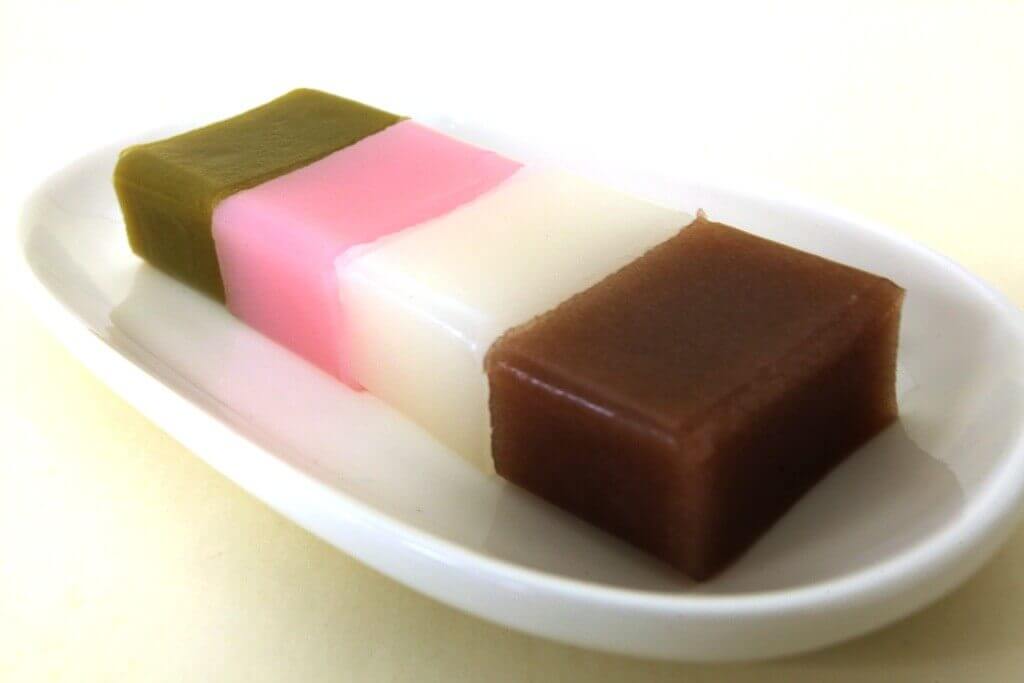
Making basic uiro at home is straightforward. The main ingredients are joshinko (non-glutinous rice flour) and sugar. Brown sugar works well for Fukuoka-style uiro.
Sift joshinko rice flour into a mixing bowl. Add sugar and stir briefly to combine. For brown sugar uiro, swap white sugar for an equal amount of packed brown sugar.
Pour water into the dry mixture slowly while whisking. Keep whisking until the batter is completely smooth with no lumps. Strain through a fine sieve once to ensure a silky texture.
Pour the batter into a microwave-safe container. Cover loosely with plastic wrap. Microwave at 500W for 5 to 7 minutes. When the surface looks set and slightly sticky, remove the wrap and allow it to cool at room temperature.
Rest the uiro at room temperature for 10 minutes, then refrigerate for about 20 minutes to help it firm up. Do not refrigerate for too long. Extended cold hardens rice flour and changes the texture significantly.
Wet the knife blade before slicing to prevent sticking. Cut into small rectangles directly on the serving plate. Serve at room temperature alongside green tea or matcha for the most balanced pairing.
How to Eat and Enjoy Uiro
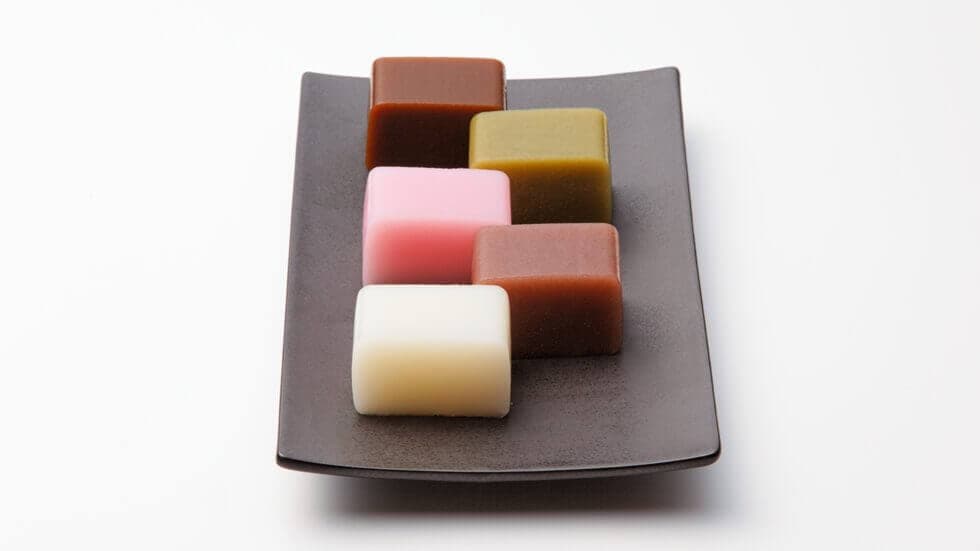
Uiro pairs naturally with unsweetened green tea. The mild sweetness of the confection balances the bitterness of matcha or sencha without competing with it. This is why uiro appears regularly at tea gatherings and traditional tea houses.
Serving at room temperature is the standard approach. Cold uiro straight from the refrigerator is noticeably firmer and loses some of its softness. Leaving it out for 10 minutes before eating makes a real difference.
Small pieces work better than large ones. Uiro is dense and filling, so the traditional bite-sized serving makes sense both practically and aesthetically. Using a small wooden pick called a kuromoji to cut and eat the pieces is the traditional method at formal tea settings.
Uiro also works as an omiyage. Many Fukuoka shops pack it in presentation boxes designed for gifting. The brown sugar variety tends to travel well and holds its texture for a day or two, making it a practical souvenir from the Hakata area. For comparison, Hakata Torimon is Fukuoka’s more famous souvenir sweet, but uiro offers a more traditional wagashi experience for those seeking something older and quieter in character.
Where to Try Fukuoka Uiro and Regional Varieties
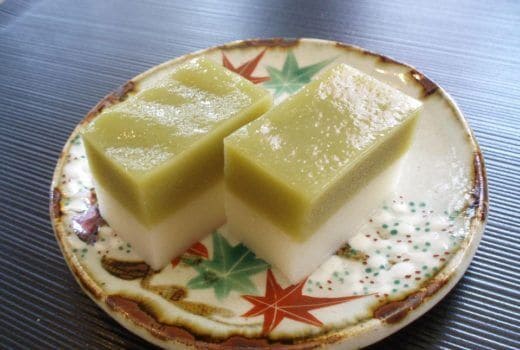
In Fukuoka, the most reliable places to find uiro are traditional wagashi shops in Hakata and the department store basement floors near Hakata Station. Older confectionery shops in the Nakasu and Tenjin areas sometimes carry seasonal brown sugar uiro alongside other regional sweets.
Aoyagi Sohonke Osu Main Store (Nagoya)
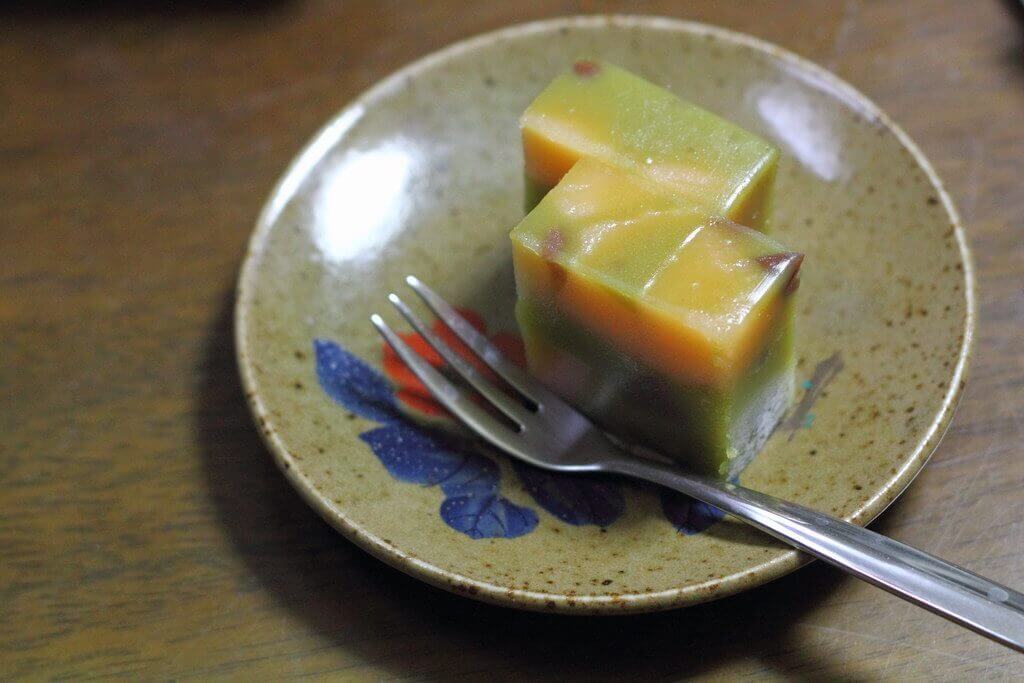
Aoyagi is the oldest and largest uiro producer in Nagoya and the shop most responsible for making uiro famous nationally. Everything is hand-made in bite-sized pieces. Flavors include matcha, black sugar, white, sakura, and an “Uiro for Athletes” version with added salt for energy replenishment. For anyone visiting Nagoya, this shop is the essential starting point for understanding the standard the region built its reputation on.
Mochigen (Nagoya)
A well-regarded Nagoya wagashi shop known for its smooth, kneaded-style uiro. The texture is slightly different from Aoyagi’s version, making it a useful comparison for anyone curious about the range within a single city’s tradition.
Uiro in Odawara City (Kanagawa)
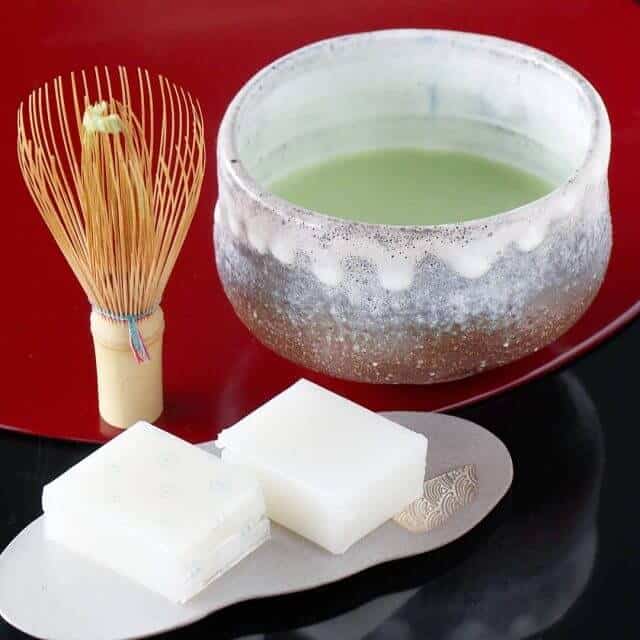
The original uiro shop in Odawara occupies a striking castle-like karahafu building that has become a local landmark. This shop traces its lineage directly to the Gairo family and still sells both the medicinal tablet and the sweet confection. The uiro here has a non-sticky, refreshing quality that differs from both Nagoya and Fukuoka versions, making it worth a separate tasting if you visit the Kanagawa area.
Toraya Uiro – Tobu Department Store Ikebukuro (Tokyo)
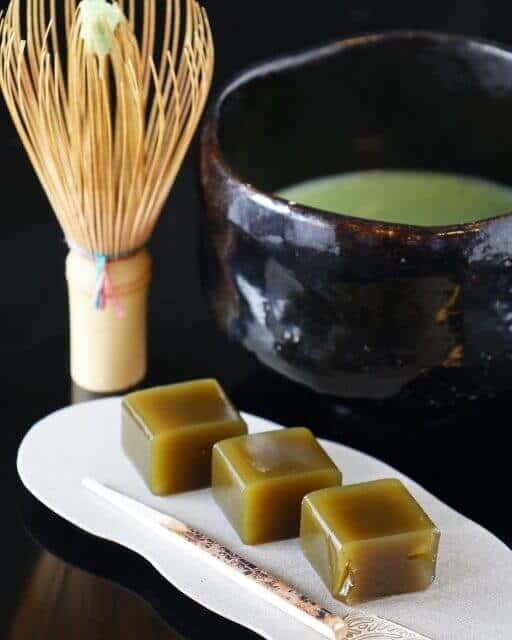
Toraya Uiro is a Tokyo-based wagashi shop with creative seasonal offerings beyond the traditional lineup. Sweet potato uiro appears in autumn, watermelon uiro with vivid colors arrives in summer, and chestnut uiro filled with koshian runs as a popular regular. For anyone in Tokyo wanting to explore the regional variety of uiro in one place, this shop in the Tobu Department Store basement is a convenient stop.
Kikuya (Nagoya)
A local favorite near Chikusa Station in Nagoya with a broad assortment of wagashi. Worth visiting if you are in the area, but call ahead before going as the shop closes irregularly.
References
Aoyagi Sohonke, “History and Products” (2024): https://www.aoyagiuirou.co.jp
Uiro Odawara, “About Uiro” (2023): https://www.uirou.co.jp
Toraya Uiro, “Our Sweets” (2024): https://www.torayauiro.co.jp
Wagashi no Sekai (The World of Wagashi), NHK World (2022): https://www3.nhk.or.jp/nhkworld/en/news/backstories/1889/
Ministry of Agriculture, Forestry and Fisheries Japan, “Traditional Japanese Food Culture” (2021): https://www.maff.go.jp/e/index.html
Food in Japan, Wagashi (2026): https://www.foodinjapan.org/japan/wagashi/
Food in Japan, Mizu Yokan (2025): https://www.foodinjapan.org/chubu/fukui-chubu/mizu-yokan/
Food in Japan, Hakata Torimon (2023): https://www.foodinjapan.org/kyushu/fukuoka-en/hakata-torimon/
Uiro FAQ
What is uiro?
Uiro is a traditional Japanese steamed sweet made from rice flour and sugar. It belongs to the wagashi family of Japanese confections. The texture is firm, slightly elastic, and smooth, without being sticky or stretchy like mochi. It pairs naturally with green tea or matcha.
Is Fukuoka uiro the same as Nagoya uiro?
No. Fukuoka uiro tends to be softer, lighter, and less chewy than the Nagoya version. Fukuoka’s style often uses brown sugar, giving it a warm caramel color and mild depth. Nagoya uiro is firmer, more opaque, and better known nationally as a souvenir sweet.
What does uiro taste like?
Uiro has a mild, gently sweet flavor with a faint earthiness from the rice flour. It is not intensely sweet. The overall impression is clean and restrained, which is why it pairs so well with bitter green tea. Brown sugar versions carry a slight caramel warmth.
Is uiro chewy like mochi?
Not exactly. Uiro is firmer and cuts cleanly, while mochi stretches and pulls. Both contain rice flour, but uiro uses non-glutinous rice flour, which produces a denser, less elastic texture. Think of it as firm and smooth rather than chewy and sticky.
What is the difference between uiro and yokan?
Uiro is a steamed rice flour sweet with a dense, doughy texture. Yokan is a jelly made from red bean paste and agar, with a smooth, cool, gel-like quality. Uiro feels heavier and more floury. Yokan feels lighter and more refreshing, particularly when served cold.
Can uiro be kept at room temperature?
Yes. Uiro should be kept at room temperature and eaten within one to two days of purchase. Refrigerating it for too long causes the rice flour to harden, which noticeably changes the texture. If you do refrigerate it briefly, allow it to return to room temperature before eating.
Is uiro vegan?
Most traditional uiro is completely plant-based. The standard ingredients are rice flour, sugar, and water. No eggs or dairy are involved. Regional versions that add matcha, brown sugar, or red bean paste are also typically vegan.
Is uiro available year-round?
Yes, basic uiro is available throughout the year at traditional wagashi shops. Seasonal varieties appear in spring and autumn, including sakura-flavored versions in March and chestnut or sweet potato versions in autumn.




Comments