


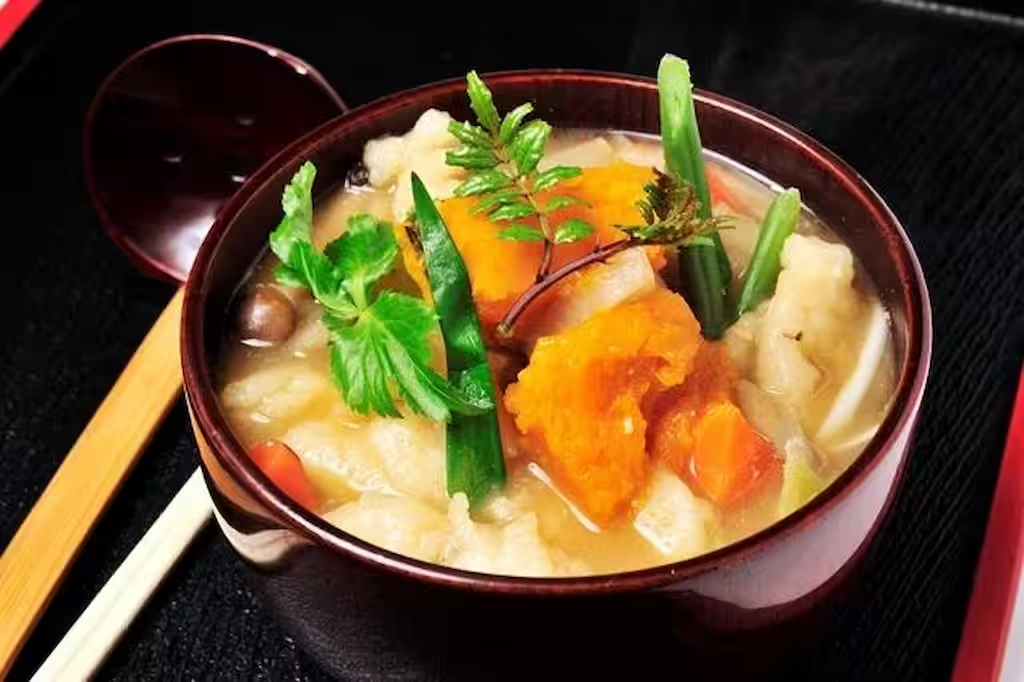

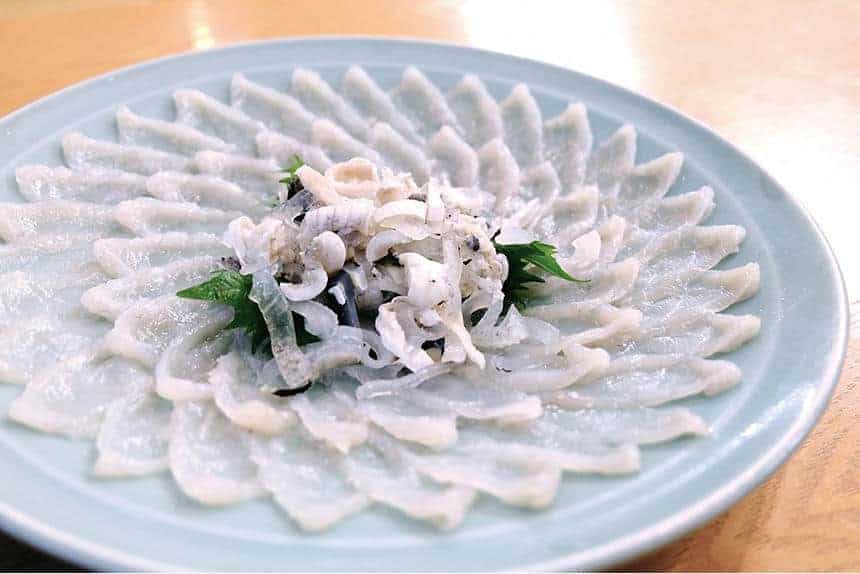
Fugu is the Japanese word for pufferfish, a prized winter delicacy. Yamaguchi Prefecture, and Shimonoseki in particular, is its most famous home. Licensed chefs remove the toxic parts, so diners can enjoy it safely.
What says winter better than a warm hot pot? Beef and shabu-shabu come to mind first. Yet in Yamaguchi, locals reach for pufferfish instead. This guide explains what it is, why Shimonoseki calls it fuku, and where to try it in Yamaguchi.
What Is Fugu?
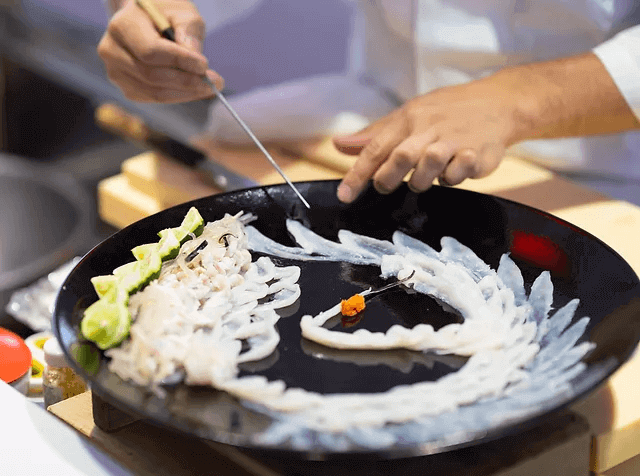
Fugu is a Japanese pufferfish served as a refined seasonal dish. It carries a clean, delicate flavor and a firm, slightly chewy bite. Shimonoseki handles the largest volume of this fish in Japan. There, it is plump, firm, and high in quality.
People prize it most in the cold months. The texture stays light, while the taste feels luxurious. For many, it is the ultimate winter treat. Still, one question always comes first: is it safe?
Is Fugu Safe to Eat?
Yes, when a licensed chef prepares it. The fish contains a natural toxin called tetrodotoxin. Only trained, licensed cooks may remove the dangerous parts. They must pass a strict prefectural exam to qualify.
These chefs know exactly which parts are edible. They discard the toxic organs with great care. So at a proper restaurant, eating it is safe. You can relax and focus on the taste.
How to Eat Fugu in Yamaguchi
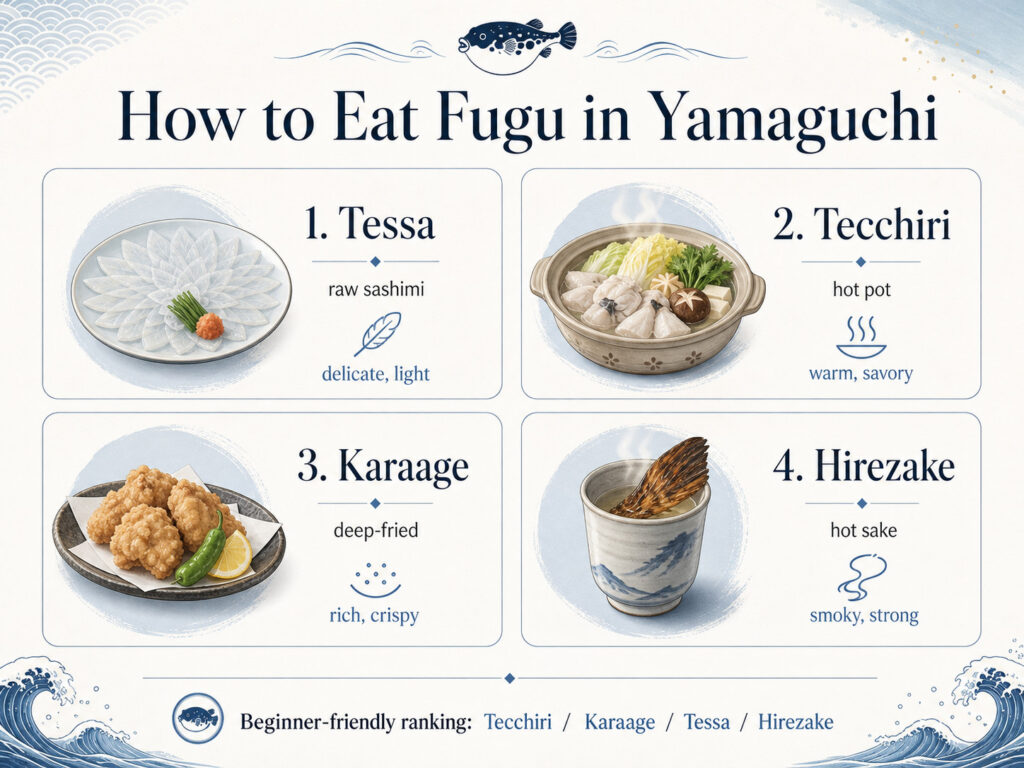
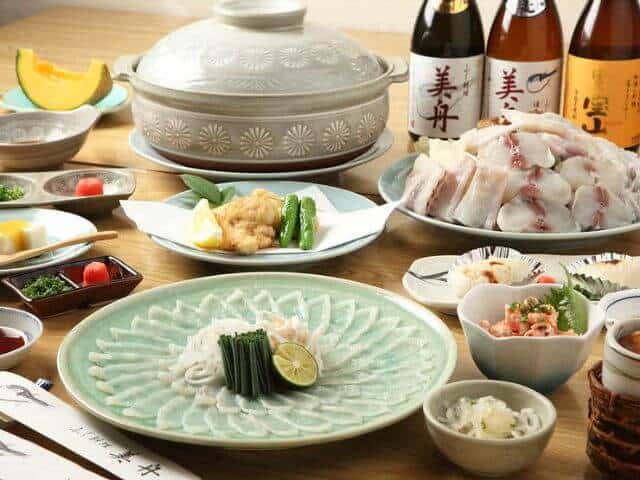
Now for the fun part: how to enjoy it. Yamaguchi offers it in many forms. Each style highlights a different side of the fish. Here are the classics.
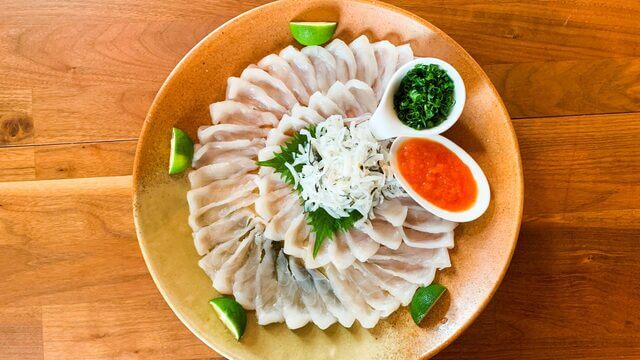
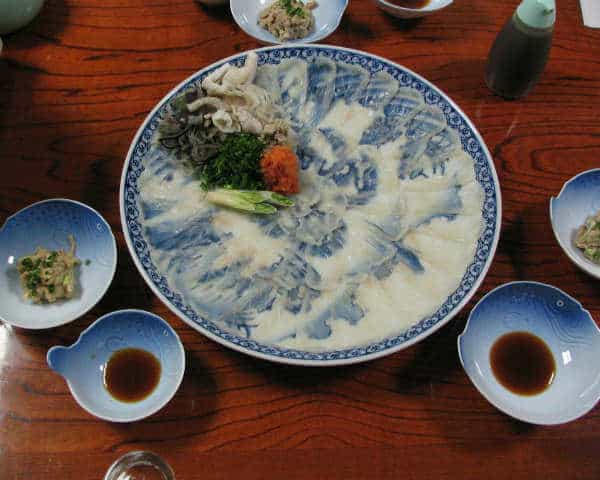
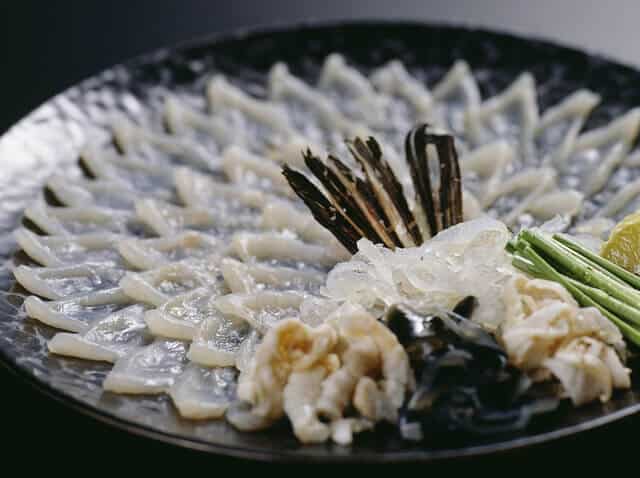
- Tessa (sashimi): paper-thin slices with ponzu and scallions.
- Tecchiri (hot pot): fish and vegetables simmered in kombu broth.
- Karaage: deep-fried pieces, crisp outside and juicy inside.
- Hirezake: warm sake infused with a toasted fin.
- Zosui: rice porridge cooked in the leftover hot pot broth.
Not sure where to start? This quick table ranks each dish for beginners.
| Dish | Style | Taste | Beginner-friendly |
|---|---|---|---|
| Tessa | Raw sashimi | Delicate, light | High |
| Tecchiri | Hot pot | Warm, savory | Very high |
| Karaage | Deep-fried | Rich, crispy | Very high |
| Hirezake | Hot sake | Smoky, strong | Medium |
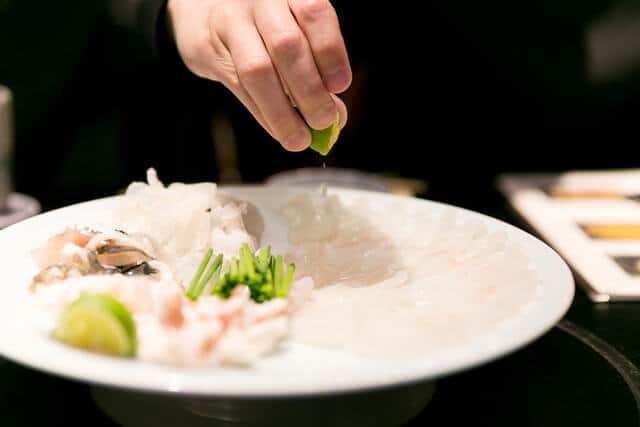
For the purest taste, start with tessa. The thin slices show off the white fish’s clean flavor and crunchy bite. Ponzu suits it better than soy sauce. Wrap a little scallion inside each slice for extra lift. To round out a Yamaguchi food trip, pair it with kawara soba or Iwakuni sushi.
Torafugu vs Mafugu
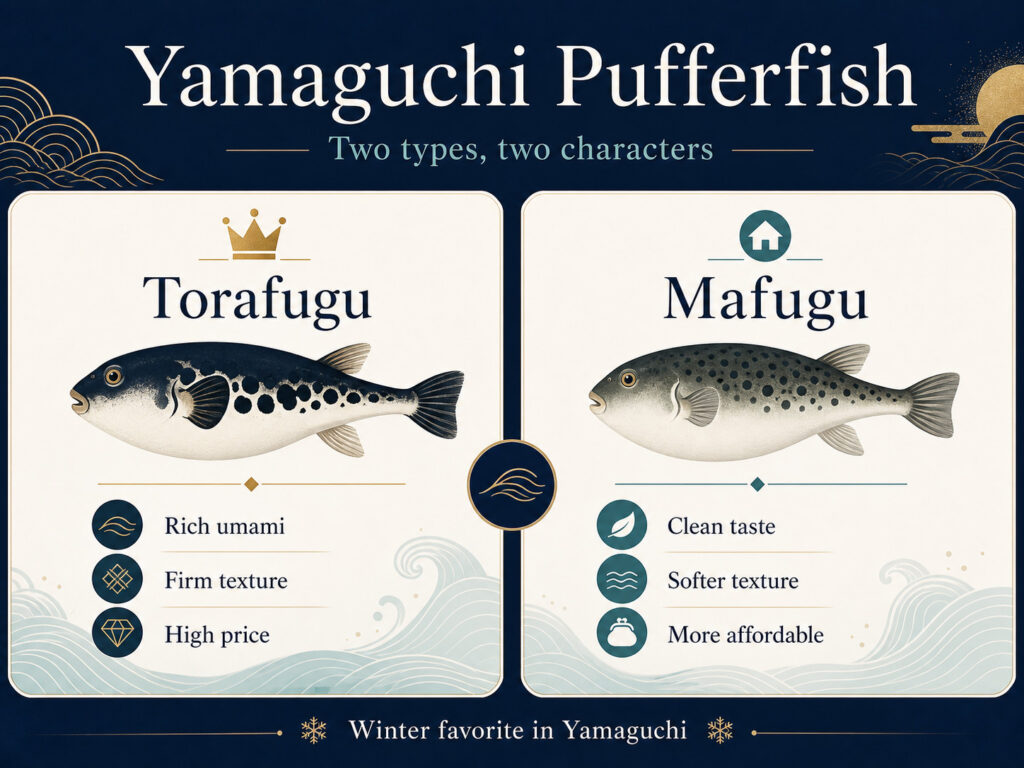
Not all pufferfish are equal. Two types matter most in Yamaguchi. The table below compares them.
| Torafugu (Tiger) | Mafugu | |
|---|---|---|
| Taste | Rich umami, prized | Clean, lighter |
| Texture | Firm, elastic | Softer |
| Price | High, luxury grade | More affordable |
| Notes | Wild and farmed; winter king | Hagi is known for it |
Torafugu, the tiger pufferfish, sits at the top. Locals call it the King of Winter Fish. Its umami and bouncy texture set the standard.
Best Season for Fugu
Winter is the prime time. The peak runs from November to February, when the fish grows fattest. Torafugu shines most in these cold months. Hagi’s mafugu, however, has its own spring season. So fans can enjoy pufferfish across more than one part of the year.
Why Shimonoseki Calls It Fuku
Here is a charming local quirk. Several theories explain why people in Shimonoseki call pufferfish “fuku,” a word linked to good fortune. The sound matches “fuku” (福), meaning luck. Some say it also avoids the unlucky echo of “fugu,” which can suggest misfortune. So the cheerful name stuck in the region.
History of Fugu in Yamaguchi
People and pufferfish go back a very long way. Archaeologists in Shimonoseki unearthed bones from Yayoi-period ruins that date back 2,000 to 2,500 years. Even older Jomon sites, around 6,000 years old, hold such bones too. Clearly, people ate this fish in ancient times.
The Ban Under Hideyoshi
In the Azuchi-Momoyama period, many samurai died after eating it. That tragedy pushed Toyotomi Hideyoshi to ban the dish. He had gathered troops in Kyushu before a campaign to Korea. To stop further deaths, he banned it outright. The rule lasted for centuries, even past the Edo period.
The 1888 Lifting of the Ban
The turning point came in Meiji-era Shimonoseki. Prime Minister Ito Hirobumi stayed at the inn Shunpanro, overlooking the Kanmon Straits. Rough seas left little fresh fish, so the proprietress served it anyway. Ito tasted it and praised its flavor.
Impressed, he urged the Yamaguchi governor to lift the ban. So Yamaguchi became the first prefecture to legalize the dish, around 1888. Shunpanro then earned the first official license. From there, Shimonoseki built its name as the home of pufferfish.
The culture spread fast after that. From the Taisho era into early Showa, this dining style flourished in Shimonoseki. As the taste reached Tokyo, the phrase “fuku means Shimonoseki” took hold.
Why Yamaguchi Became Japan’s Fugu Capital
Yamaguchi did not just legalize it first. It also became the trade hub for the whole country. Boats bring pufferfish from the East China Sea, the Yellow Sea, and the Sea of Japan. Catches from the nearby Seto Inland Sea arrive too.
At the heart sits Haedomari Market in Shimonoseki. It is the country’s main wholesale market for pufferfish. Fish gather here from across Japan, then ship out nationwide. That role cemented the prefecture as the capital of this delicacy.
How Much Does Fugu Cost?
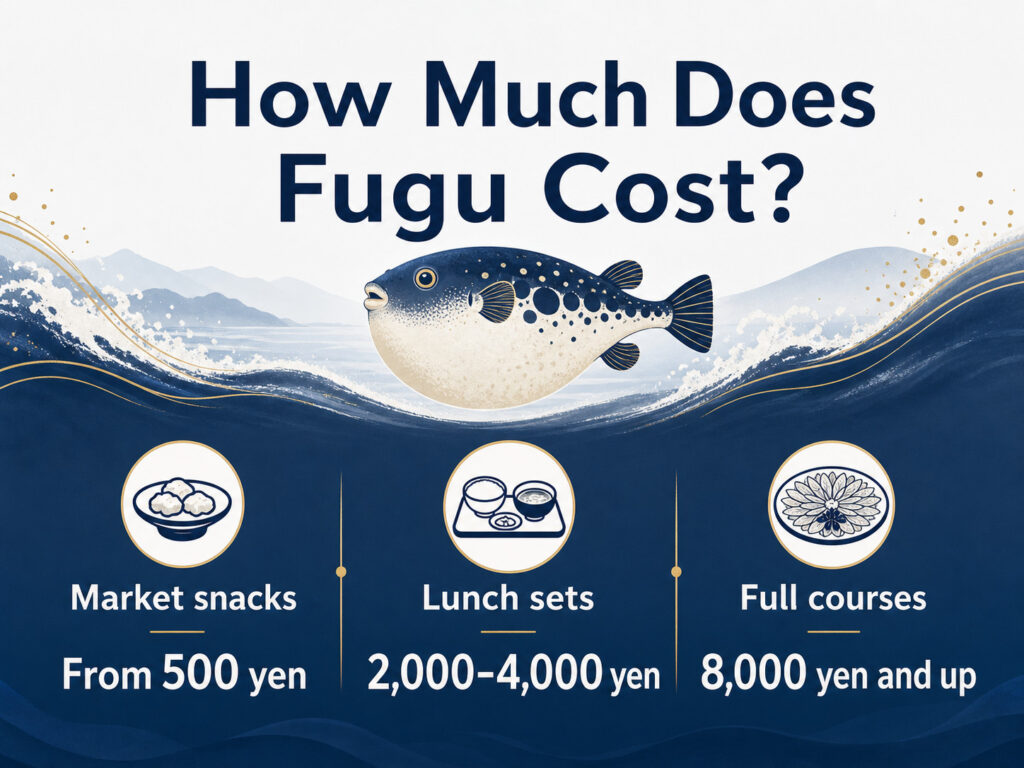
Prices vary widely by setting. Here is a rough guide for planning.
- Market snacks: karaage or skewers from around 500 yen.
- Lunch sets: roughly 2,000 to 4,000 yen.
- Full courses: often 8,000 yen and up at specialty restaurants.
Where to Eat Fugu in Shimonoseki
Shimonoseki rewards a hungry traveler. Start at Karato Market, a lively seafood hall by the water. There you can try karaage, sashimi, and sushi at casual stalls. It pairs well with a stroll along the Kanmon Straits. After that, sit down for a proper course at one of these restaurants.
Shunpanro
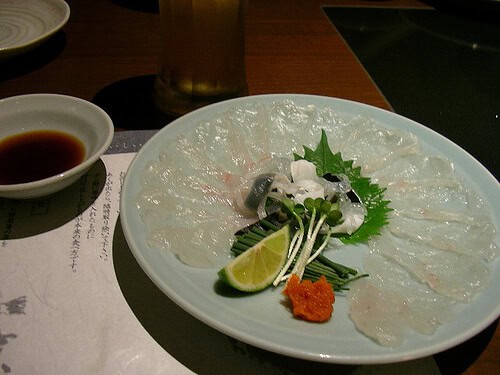
Shunpanro is the historic heart of this cuisine. It holds Japan’s first license and once served Prime Minister Ito. The setting feels grand and steeped in history.
- Known for: historic prestige and refined courses.
- Signature: full traditional course.
- Budget: high-end, special occasion.
- Best for: a once-in-a-trip experience.
Shinoda
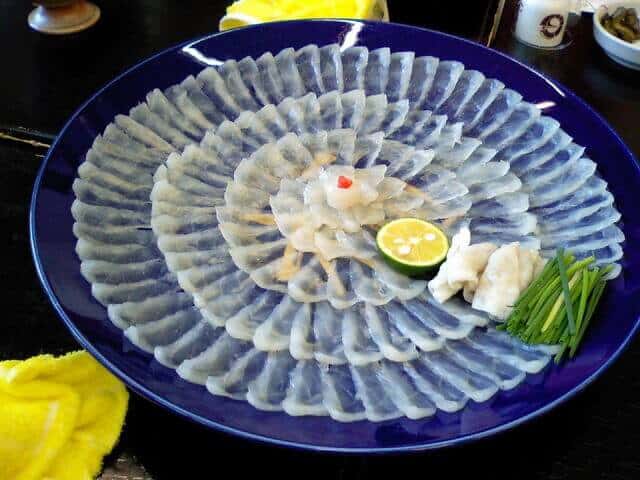
Shinoda sits just five minutes from Shimonoseki Station. It has six private rooms plus a larger banquet hall. The kitchen uses only top-grade fish.
- Known for: easy access and generous courses.
- Signature: thick-cut tessa with firm texture.
- Budget: mid to high.
- Best for: groups and relaxed sit-down meals.
Yabure Kabure
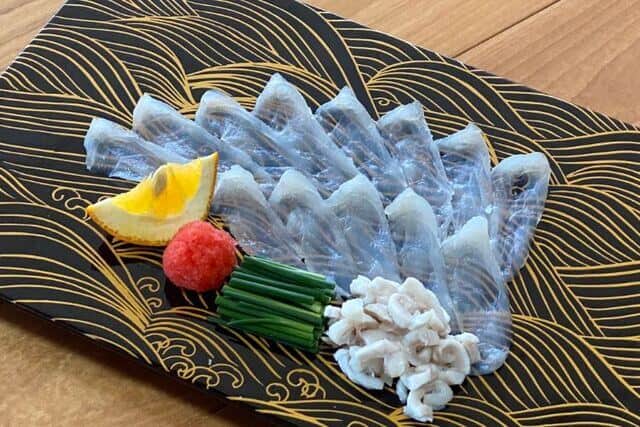
Yabure Kabure offers a rare twist: iron-grilled pufferfish. You lightly cook the slices on a hot plate, then dip them in a yakiniku-style sauce. The bite turns chewy and rich. Even the skin has a pleasant, springy texture.
- Known for: unusual grilled style.
- Signature: iron-grilled pufferfish.
- Budget: mid-range.
- Best for: diners who want something different.
Sakae Fugu
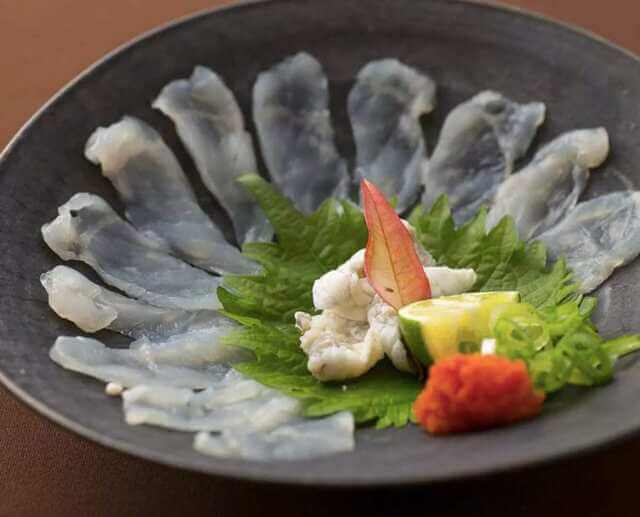
Sakae Fugu lies in Shunan City, away from the Shimonoseki cluster. A long-established wholesaler runs it directly. The fried dish is famously big and generous. The sashimi, hot pot, and fried milt all impress too.
- Known for: big portions from a wholesaler.
- Signature: hearty karaage.
- Budget: mid-range, good value.
- Best for: hungry diners who love fried fish.
Mimosusogawa Annex
Mimosusogawa Annex is a dining inn with a stunning view. It overlooks the Kanmon Straits, yet welcomes meal-only guests. You can dine casually in the restaurant or slowly in a private room.
- Known for: scenic straits views.
- Signature: set course and Kanmon seafood course.
- Budget: mid to high.
- Best for: a meal with a memorable view.
Conclusion
Yamaguchi is the place to taste this delicacy at its best. The prefecture legalized it first and remains the national trade hub. Licensed chefs make every bite safe and refined.
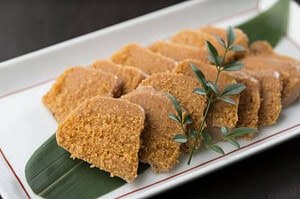
So how should you enjoy it? Begin with tessa to learn the flavor, then warm up with tecchiri. Visit in winter, from November to February, for the very best of it. If you like winter delicacies, try shirako next.
Fugu FAQ
What is fugu?
Fugu is the Japanese word for pufferfish. It is a refined winter delicacy known for its clean taste. People enjoy it as sashimi, hot pot, or deep-fried. Shimonoseki in Yamaguchi is its most famous home.
Is it safe to eat?
Yes, when a licensed chef prepares it. The fish contains a toxin called tetrodotoxin in certain organs. Only trained cooks who pass a strict exam may serve it. At a proper restaurant, it is perfectly safe.
What does it taste like?
It has a clean, subtle flavor and a firm bite. The taste is milder than many people expect. A ponzu dipping sauce brings out its delicate character. The texture, slightly chewy, is part of the appeal.
How is it usually served?
Several styles are popular in Yamaguchi. Tessa is thin sashimi, while tecchiri is a warm hot pot. Karaage offers a crispy fried option. Many courses finish with zosui, a rice porridge in the leftover broth.
Where is it most popular in Japan?
Shimonoseki in Yamaguchi leads the country. It is widely known as Japan’s fugu capital. The city handles most of the national pufferfish trade. Osaka and Tokyo are strong cities for it too.
When is the best season?
Winter is the prime season. The peak runs from November to February. In these months, the fish grows fat and full of flavor. Hagi’s mafugu also has a separate spring season.
Can I eat it outside Japan?
Sometimes, but it is far less common. A few licensed restaurants abroad serve it carefully. Rules vary by country, so availability is limited. Japan remains the best place to enjoy it authentically.
References
- Wikipedia, Fugu, https://en.wikipedia.org/wiki/Fugu (Surveyed: June 2026)
- Yamaguchi Prefecture Tourism, Fuku Guide, https://www.oidemase.or.jp/ (Surveyed: June 2026)
- Shimonoseki City Tourism, Fuku Cuisine, https://shimonoseki.travel/ (Surveyed: June 2026)
Related Articles
- Kawara Soba (瓦そば) (Surveyed: June 2026)
- Iwakuni Sushi (岩国寿司) (Surveyed: June 2026)
- Shirako (白子) (Surveyed: June 2026)



Comments
List of comments (2)
Unquestionably believe that which you stated. Your favorite justification appeared to be on the internet the simplest thing to be aware of. I say to you, I definitely get annoyed while people consider worries that they just don’t know about. You managed to hit the nail upon the top as well as defined out the whole thing without having side-effects , people can take a signal. Will likely be back to get more. Thanks
This is the correct blog for anybody who would like to learn about this topic. You are aware of a lot its virtually challenging to argue on hand (not that I actually would want…HaHa). You actually put the latest spin over a topic thats been revealed for many years. Fantastic stuff, just fantastic!