




Trains from Tokyo reach Otsuki in about an hour. Hikers pour off the platform, and the small restaurants beside the station keep their miso pots warm all day. One dish appears on almost every menu board outside.
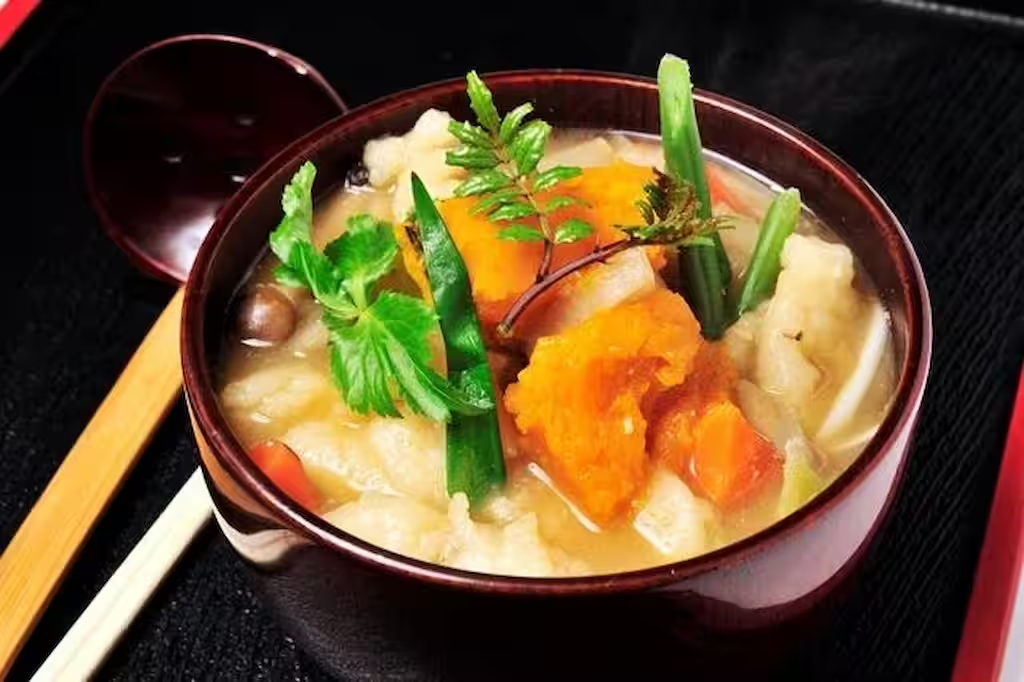
Otsuke Dango is a traditional dumpling soup from Otsuki City in Yamanashi Prefecture. Cooks drop soft wheat flour dumplings into miso broth with pork, root vegetables, mushrooms, and green onions. The bowl tastes warm and rustic, and it stays closely tied to local home cooking. This guide covers the taste, the history, the prefecture’s official recipe, and where to try a bowl.
Otsuke Dango at a Glance
| Region | Otsuki City, Yamanashi Prefecture (Chubu) |
| Main ingredients | Wheat flour dumplings, miso, seasonal vegetables, pork |
| Flavour | Savoury and earthy, with sweetness from root vegetables |
| Best season | Autumn and winter, though shops serve it year-round |
| Similar dishes | Suiton, Houtou, Dago-jiru, Hittsumi, Kenchinjiru |
| Typical price | Set meals around 1,500 yen; single bowls cost less |
| Nearest station | Otsuki Station (JR Chuo Line, Fujikyu Railway) |
What Is Otsuke Dango?
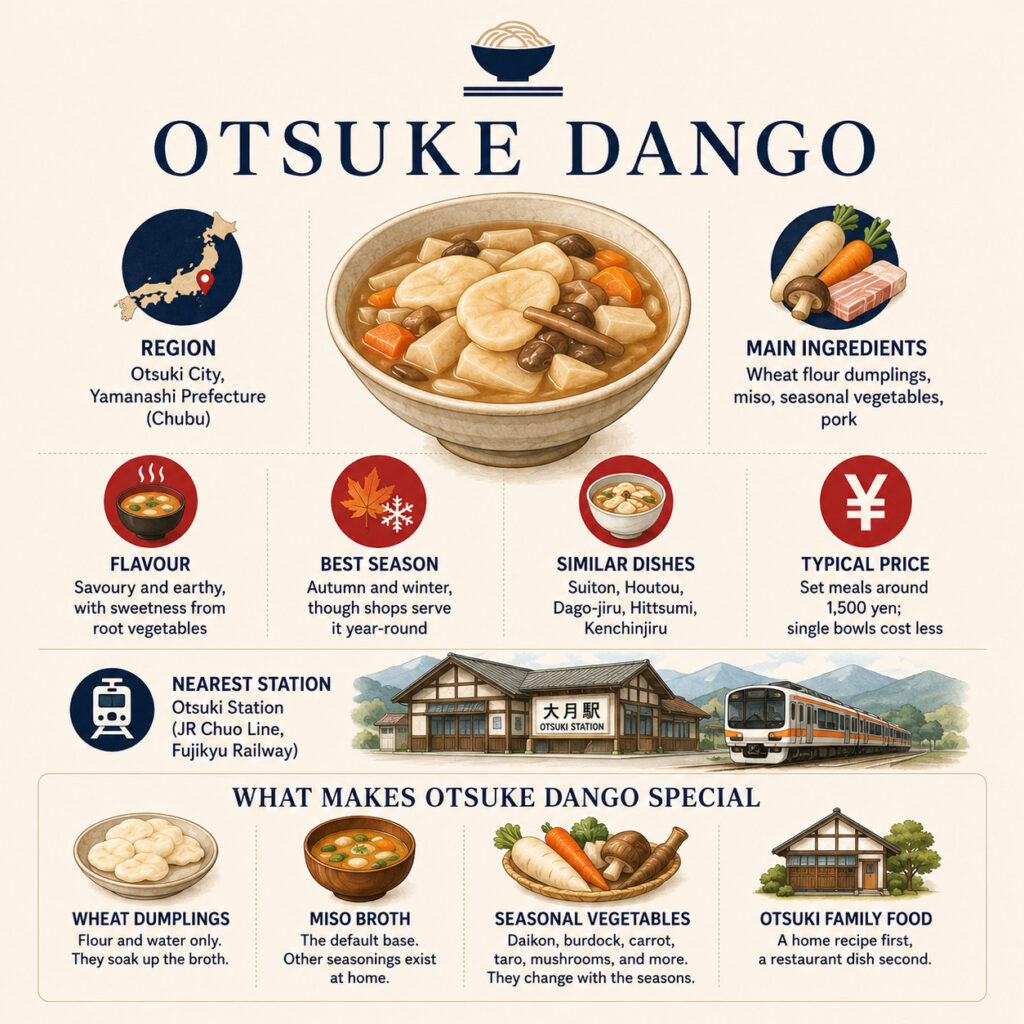
Otsuke Dango is a country soup from Otsuki City in Yamanashi Prefecture. Cooks simmer seasonal vegetables in miso broth, then spoon in dumplings made from wheat flour and water. Families here have eaten it for generations, especially through winter. Every household seasons the pot slightly differently.
One point trips up newcomers immediately. The word “dango” usually means a sweet rice dumpling on a skewer, so people expect dessert. These dumplings contain no sugar and no rice at all. Instead, they arrive soft, slightly flat, and mildly chewy. Because cooks add no salt to the dough either, the texture stays gentle rather than firm.
Local promoters even set three rules for the dish. First, the bowl must hold both dumplings and vegetables. Second, miso forms the base. Third, someone from Otsuki has to make it. Those rules sound playful, yet they capture the spirit of the soup quite well.
What makes Otsuke Dango special
- Wheat dumplings: flour and water only, so they soak up the broth instead of fighting it.
- Miso broth: the default seasoning, although soy sauce, salt, and even curry versions exist at home.
- Seasonal vegetables: daikon, burdock, carrot, taro, and mushrooms change with the calendar.
- Otsuki family food: a home recipe first, a restaurant dish second.
What Does Otsuke Dango Taste Like?
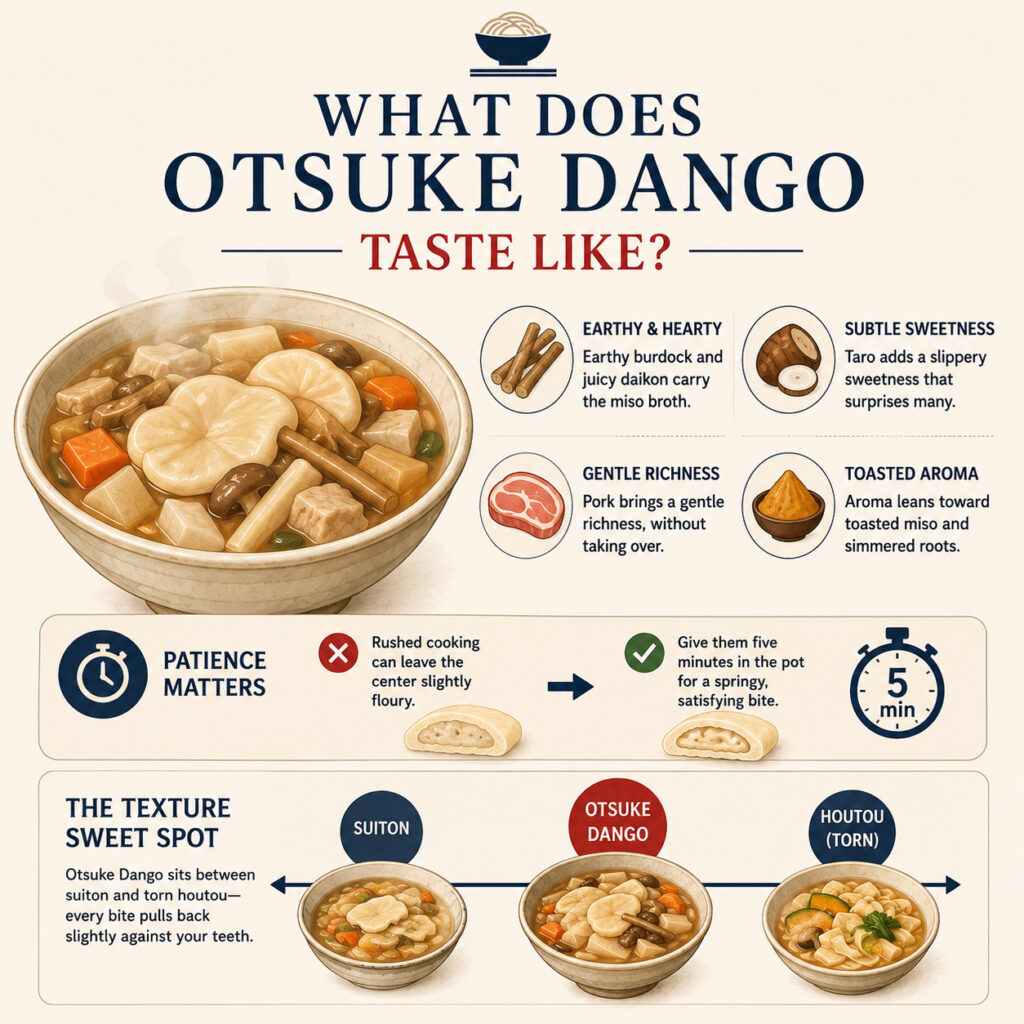
The first spoonful tastes like a countryside miso soup made heartier with soft, chewy dumplings. Earthy burdock and juicy daikon carry the broth. Meanwhile, taro adds a slippery sweetness that surprises plenty of first-timers.
Pork brings a gentle richness, though it never takes over. The aroma leans toward toasted miso and simmered roots, not smoke or spice. Honestly, the appeal takes a moment to land, and the dumplings divide opinion more than the broth does. When a kitchen rushes them, the centre can taste faintly floury. Given a proper five minutes in the pot, however, they turn springy and satisfying.
Texture matters more than seasoning here. Otsuke Dango sits between suiton and torn houtou, so every bite pulls back slightly against your teeth. That middle position is really the whole point of the dish.
Why Otsuke Dango Is Famous in Otsuki City
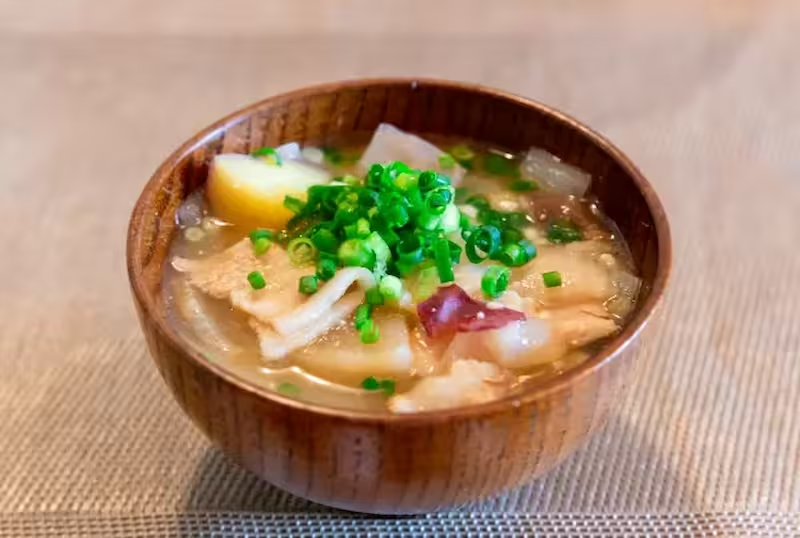
Otsuki has leaned into this soup as a symbol of the town. Residents formed the Otsuki Otsuke Dango Society in the late 2000s to carry the dish beyond the valley. Since then, the group has joined national B-1 Grand Prix food events and created two mascots, Otsutaro and Otsuke-chan.
The society also works at home, and that side matters more. Members visit local elementary schools each spring, and they asked the city to put the soup on school lunch menus. Fewer young families cook it now, so those small efforts add up.
Travellers benefit as well. The local chamber of commerce publishes an Otsuke Dango map, and roughly ten to twenty restaurants across the city serve a version of it, depending on which listing you read. Comparing two or three bowls in one day makes an easy afternoon plan.
The History Behind Otsuke Dango
Silk Farms, Wheat Fields, and Winter Pots
Otsuki once ran on silk. Farming households raised silkworms, planted mulberry for feed, and grew wheat as a second crop between seasons. Rice, by contrast, stayed scarce in these steep valleys, where flat paddy land barely existed.
Because of that, flour became the practical staple across the prefecture. Cooks stretched a small amount of it with vegetables and broth, which fed a large family cheaply. Otsuke Dango belongs to exactly that tradition, and so does Yamanashi’s famous Houtou noodle soup.
Yoshida Udon, another wheat-based Yamanashi specialty, grew from similar conditions near Mount Fuji. Food researchers who recorded Yamanashi home cooking of the 1950s and 1960s found flour dishes on the table almost daily. Otsuki City’s tourism division also links the soup to wartime years, when rice felt precious and flour did the work instead.
Where the Name Comes From
Nobody can prove the origin of the name. One common explanation links it to “Otsuki no dango-jiru”, meaning Otsuki’s dumpling soup, which locals eventually slurred into “Otsuke Dango”. Another traces it to “omiotsuke”, an old polite word for miso soup, giving roughly “the dumpling in the otsuke”.
Local stories add a third possibility. Otsuki keeps its own Momotaro legend, and some residents connect the dumplings to the peach boy’s millet dango. Take that version lightly, of course. Still, it says something about how the town wears the dish.
Otsuke Dango Ingredients
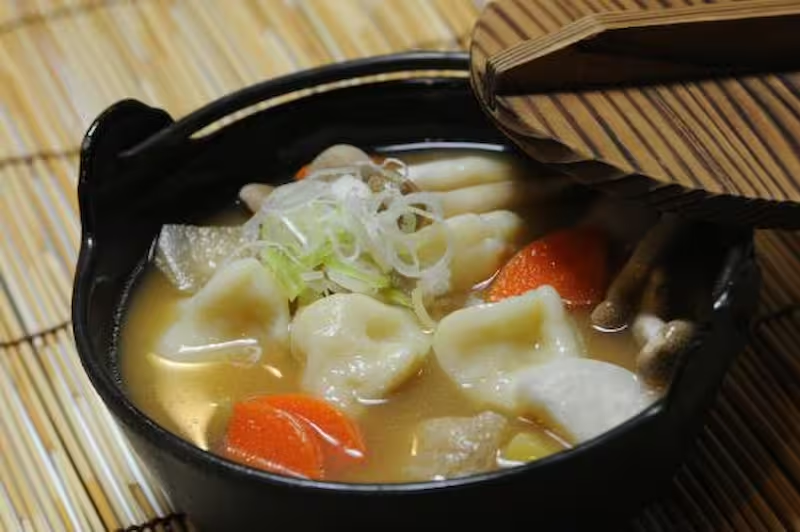
Yamanashi Prefecture publishes an official version of the recipe, so the table below follows that baseline. Quantities serve four people.
| Ingredient | Amount (4 servings) | Role in the bowl |
|---|---|---|
| Wheat flour | 300 g | Forms the dumplings |
| Water | 200 ml | Binds the dough, with no salt added |
| Dashi stock | 800 ml | Usually niboshi, the savoury backbone |
| Miso | 60 g | The base seasoning |
| Taro (satoimo) | 140 g | Slippery sweetness and body |
| Daikon | 100 g | Mild and juicy, softens the miso |
| Burdock (gobo) | 40 g | Earthy aroma and depth |
| Carrot | 40 g | Colour and gentle sweetness |
| Mushrooms | 40 g | Umami and a soft bite |
| Green onion | 40 g | Fresh finish on top |
| Pork | 50 g | Light richness through the broth |
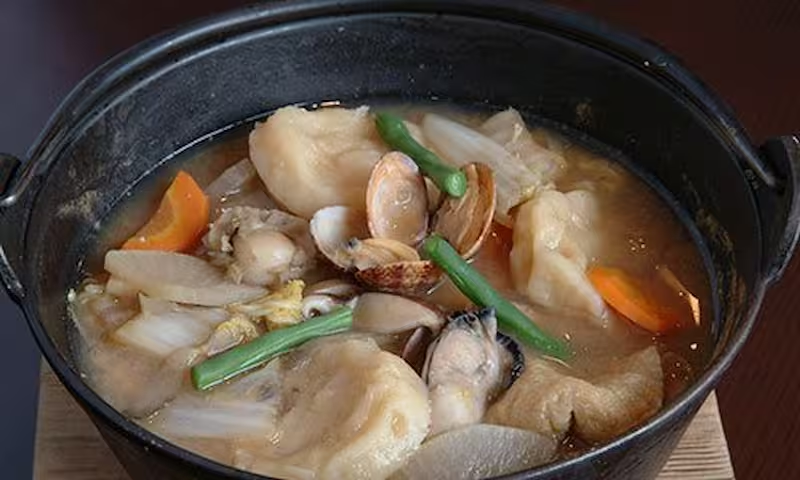
Seasonal swaps are completely normal. In autumn, kabocha and shimeji turn up often. Napa cabbage appears through midwinter, while green beans show up in summer bowls. Some Otsuki restaurants even build a seafood version with oysters and scallops, which locals treat as a modern twist rather than heresy.
The nutritional profile follows the ingredient list closely. Miso brings fermented soybean paste, while daikon, burdock, and carrot add dietary fibre. Taro contributes potassium, and the wheat dumplings supply the carbohydrates. For hikers heading up the trails around Otsuki, that combination works well as a first meal of the day.
How to Make Otsuke Dango at Home
- Simmer dried niboshi in water, then strain the stock. Alternatively, use kombu and dried shiitake for a lighter base.
- Cut carrot and daikon into quarter-rounds about 3 mm thick. Shave the burdock thinly, then soak it in water to draw out bitterness.
- Peel the taro and cut it into bite-size pieces. Rub the pieces with salt, then rinse off the sticky coating.
- Chop the pork into bite-size pieces, pull the mushrooms apart, and slice the green onion thinly.
- Add the vegetables and pork to the dashi. Simmer for roughly 10 minutes, until the taro turns tender.
- Mix the flour with water in a bowl. The dough should feel thick, yet it must still drop from a spoon.
- Scoop the dough and drop it straight into the simmering soup. Cook for about 5 minutes, until the dumplings float and firm up.
- Turn the heat down, then dissolve the miso into the broth. Scatter green onion over the top and serve immediately.
Tips, Storage, and Substitutions
Dough consistency decides almost everything. It should stay soft enough to scoop, yet firm enough to hold its shape in a simmering pot. Add the water one spoonful at a time, because flour absorbs it unevenly.
Leftovers keep in the fridge for a day or two. Reheat them gently over low heat. The dumplings do soften and swell as they sit, so the second bowl feels heavier than the first. Some families actually prefer it that way.
Otsuke Dango vs Houtou vs Yoshida Udon
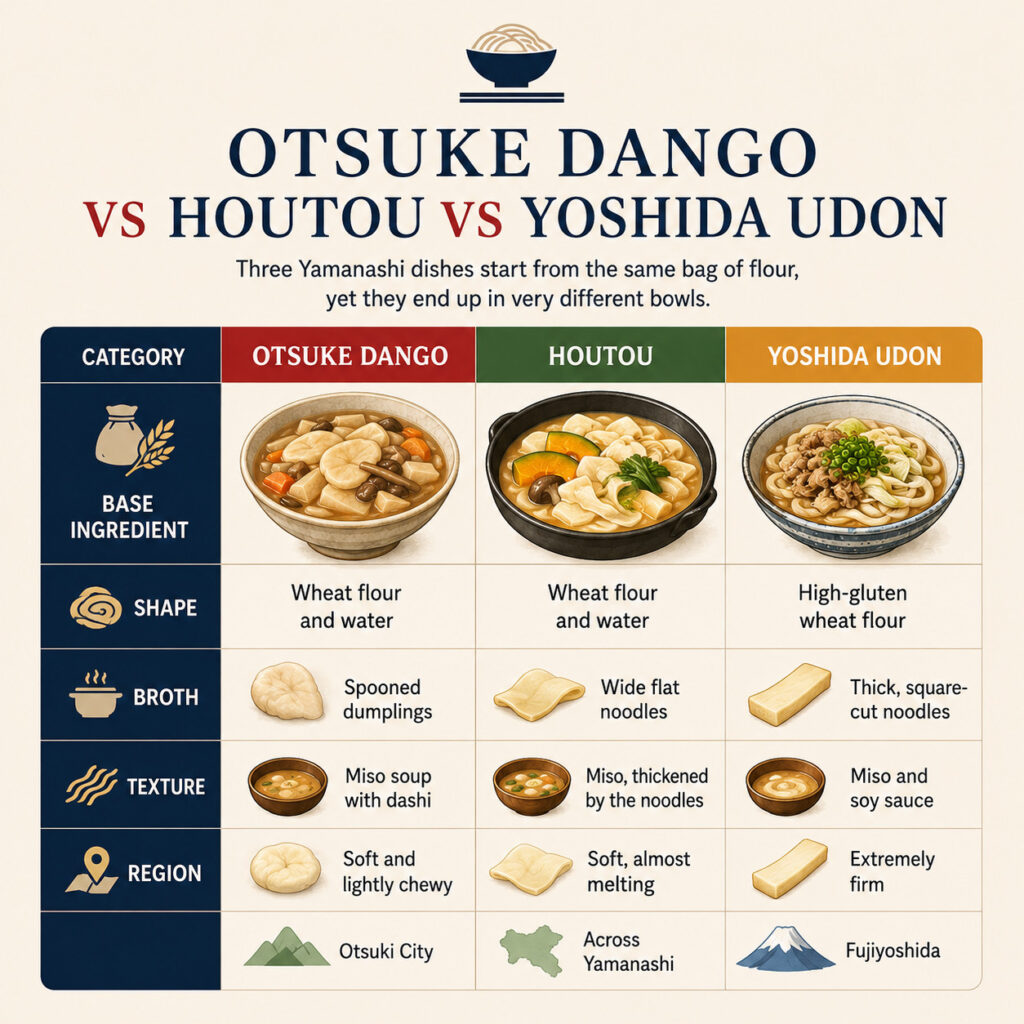
Three Yamanashi dishes start from the same bag of flour, yet they end up in very different bowls. The comparison below sorts them quickly.
| Category | Otsuke Dango | Houtou | Yoshida Udon |
|---|---|---|---|
| Base ingredient | Wheat flour and water | Wheat flour and water | High-gluten wheat flour |
| Shape | Spooned dumplings | Wide flat noodles | Thick, square-cut noodles |
| Broth | Miso soup with dashi | Miso, thickened by the noodles | Miso and soy sauce |
| Texture | Soft and lightly chewy | Soft, almost melting | Extremely firm |
| Region | Otsuki City | Across Yamanashi | Fujiyoshida |
Houtou cooks its noodles straight in the soup, so the starch thickens the broth noticeably. Yoshida Udon runs the opposite direction, with noodles firm enough to startle first-time visitors. Otsuke Dango sits comfortably between them.
Elsewhere in Japan, cooks call this style of soup suiton, and regional names such as dago-jiru, hittsumi, and hatto describe close relatives. Otsuke Dango is essentially the Otsuki branch of that family, with its own local rules attached. If you want the wider picture, our guide to more traditional foods from Yamanashi covers the rest of the prefecture.
Mountain preservation cooking runs alongside all of this. Shoyu no Mi, a Yamanashi fermented soybean food, shows the same instinct: make a little go a long way, and let time do the seasoning.
Where to Eat Otsuke Dango in Yamanashi
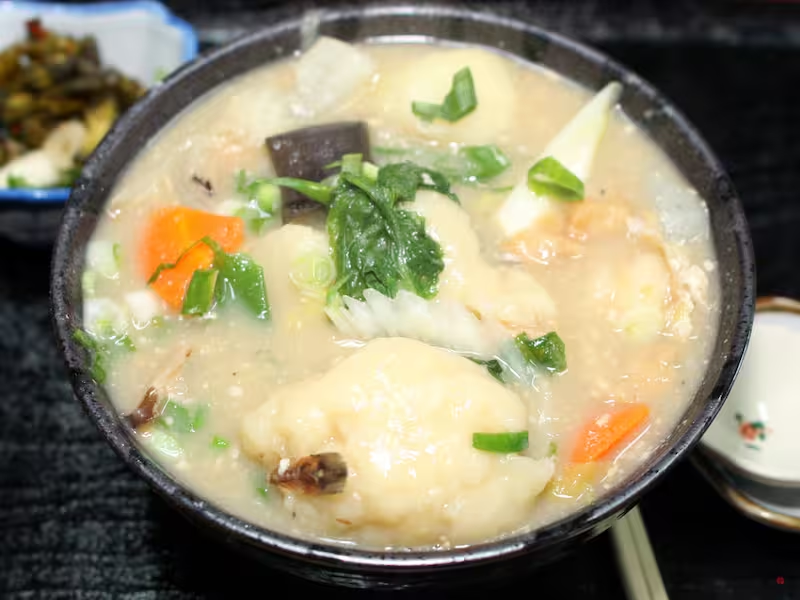
Otsuki Station makes the easiest base for a food stop. Several restaurants within a short walk serve the soup, usually inside a set meal with rice and pickles. If you travel through eastern Yamanashi, look for it near Otsuki Station or at local restaurants that serve regional set meals. Winter menus feature it most often, although several shops keep it available all year.
Kominka Menjo Katsura (古民家麺処 かつら)
A one-minute walk from Otsuki Station brings you to this old-house-style restaurant. The Otsuki Tourism Association lists it as a reliable spot for the local soup. Besides Otsuke Dango, the kitchen serves ramen, Otsuki gyoza, and a rotating range of local sake by the cup.
Hamanoya (濱野屋)
Hamanoya stands directly opposite Otsuki Station and has traded since the Meiji era. The ground-floor dining room covers Yamanashi classics, and its seafood take on Otsuke Dango has become a local talking point. Long opening hours help if your train arrives at an awkward time.
How Much Does Otsuke Dango Cost?
Prices depend on whether you order a bowl or a full set. The Otsuki Tourism Association lists Katsura’s “Tsukitsuki” set at 1,500 yen, which pairs the soup with Otsuki gyoza, seasoned rice, and pickles. A standalone bowl normally costs a good deal less than that.
Visitor reports over the past decade have placed single servings roughly between 550 and 900 yen, while a premium seafood version at Hamanoya was reported near 1,300 yen. Treat those older figures as a rough guide only. Menus shift, so read the board outside before you sit down.
Ordering Tips for Visitors
Menus in Otsuki are usually Japanese only, though pointing works fine. The dish appears as おつけだんご on almost every board. Bring cash, since small family restaurants rarely take cards.
One practical note on diet: ask whether the broth uses pork, niboshi, or another meat stock, because most versions contain at least one of them. The dumplings themselves always contain wheat. Miso adds soy, so travellers avoiding soy should skip this dish entirely.
Conclusion
Otsuke Dango will never headline a Tokyo food tour, and that seems fine. Still, it explains Yamanashi better than several more famous dishes do. Silk farms, thin soil, careful cooking, and one very practical bag of flour all sit in that bowl.
If you plan a hike near Otsuki or a day trip toward Mount Fuji, build lunch around it. Take the JR Chuo Line from Shinjuku, get off at Otsuki, and walk two minutes from the ticket gate. Order a bowl, add rice on the side, and let the dumplings cool for a minute. For anyone chasing Yamanashi comfort food, this one earns the detour.
Otsuke Dango FAQ
Is Otsuke Dango sweet?
No, it is a savoury soup rather than a sweet snack. The name confuses people, because most Japanese dango are sweet rice dumplings on a skewer. These dumplings contain only wheat flour and water. Miso, dashi, and vegetables supply all the flavour.
Is Otsuke Dango the same as Houtou?
They share a family resemblance, yet they differ in shape. Both dishes use unsalted wheat dough and a miso-based soup packed with vegetables. Houtou, however, uses wide flat noodles that thicken the broth as they cook. Otsuke Dango uses spooned dumplings, which keeps the soup looser.
Where is Otsuke Dango from?
It comes from Otsuki City in Yamanashi Prefecture. The city sits in the eastern part of the prefecture, on the JR Chuo Line between Tokyo and Kofu. Farming families in the surrounding valleys ate it long before restaurants adopted it. Today the local community treats it as a town symbol.
Can I make Otsuke Dango without pork?
Yes, and the change is easy. Simply leave out the pork and build the stock from kombu and dried shiitake instead of niboshi. Pescatarians can keep the niboshi dashi and skip the meat only. The vegetables and miso still carry plenty of flavour.
Does Otsuke Dango contain gluten or common allergens?
Yes, the dumplings use wheat flour, so this dish never suits a gluten-free diet. Miso adds soy, and most broths rely on niboshi or pork. Some restaurants also serve a seafood version with shellfish. Always ask staff about the stock before ordering.
When is the best season to eat Otsuke Dango?
Autumn and winter suit it best, since households traditionally cooked it in the cold months. Root vegetables also taste sweeter then. That said, restaurants around Otsuki Station often serve it throughout the year. Summer versions lean on green beans and lighter vegetables instead of taro.
How much does a bowl cost?
Set meals sit around 1,500 yen at restaurants listed by the Otsuki Tourism Association. A single bowl costs noticeably less, and older visitor reports place it between roughly 550 and 900 yen. Seafood versions cost more. Check the posted menu, because prices shift over time.
References
- Yamanashi Prefecture, Otsukedango (Yamanashi no Shoku Database), https://www.pref.yamanashi.jp/shokuhin-st/shokuiku/yamanashinoshoku/otsukedango.html (Surveyed: August 2026)
- Yamanashi Prefecture, Local Specialities and Popular Gourmet, https://www.pref.yamanashi.jp/miryoku/shoku/gourmet/index.html (Surveyed: August 2026)
- Otsuki Tourism Association, Kominka Menjo Katsura, https://otsuki-kanko.info/category/content-page/view/116 (Surveyed: August 2026)
- Otsuki Tourism Association, Hamanoya Suizen Wa DINING, https://otsuki-kanko.info/category/content-page/view/124 (Surveyed: August 2026)
- Ministry of Agriculture, Forestry and Fisheries, Houtou, Yamanashi Prefecture (Our Regional Cuisines), https://www.maff.go.jp/j/keikaku/syokubunka/k_ryouri/search_menu/menu/houtou_yama_nashi.html (Surveyed: August 2026)
- Tsuge, M., & Ogoshi, H. (2015). Home Cooking of Yamanashi Prefecture Passed On to the Next Generation. Proceedings of the Annual Meeting of the Japan Society of Cookery Science, 27, 121. https://doi.org/10.11402/ajscs.27.0_121 (Surveyed: August 2026)
- Yamanashi Prefectural Library, Houtou Research Guide (citing Kageyama, M., 1995, Yamanashi Kenshi Kenkyu, No. 3), https://www.lib.pref.yamanashi.jp/houtou.pdf (Surveyed: August 2026)
Related Articles
- Houtou (ほうとう) (Surveyed: August 2026)
- Yoshida Udon (吉田うどん) (Surveyed: August 2026)
- Suiton (すいとん) (Surveyed: August 2026)
- Kenchinjiru (けんちん汁) (Surveyed: August 2026)
- Shoyu no Mi (しょうゆの実) (Surveyed: August 2026)
- Seida no Tamaji (せいだのたまじ) (Surveyed: August 2026)
- Yamanashi Food and Travel Guide (Surveyed: August 2026)





Comments