


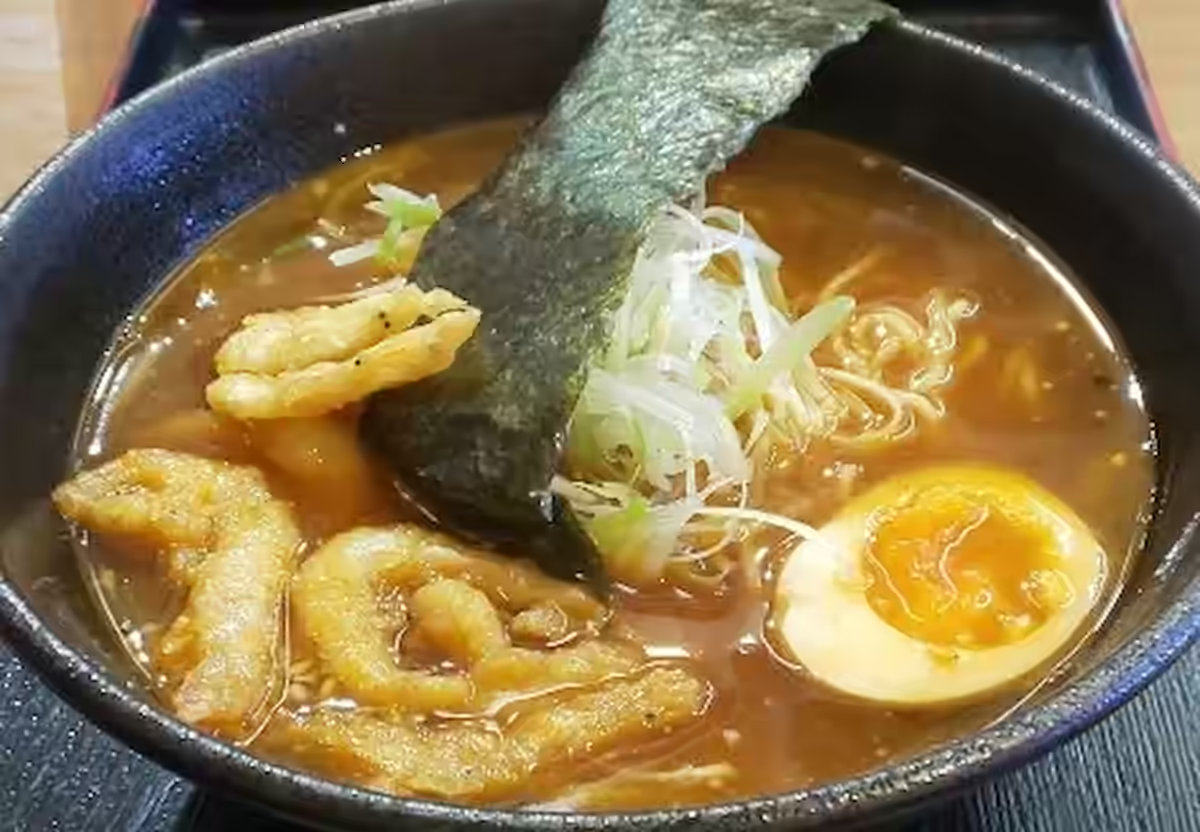

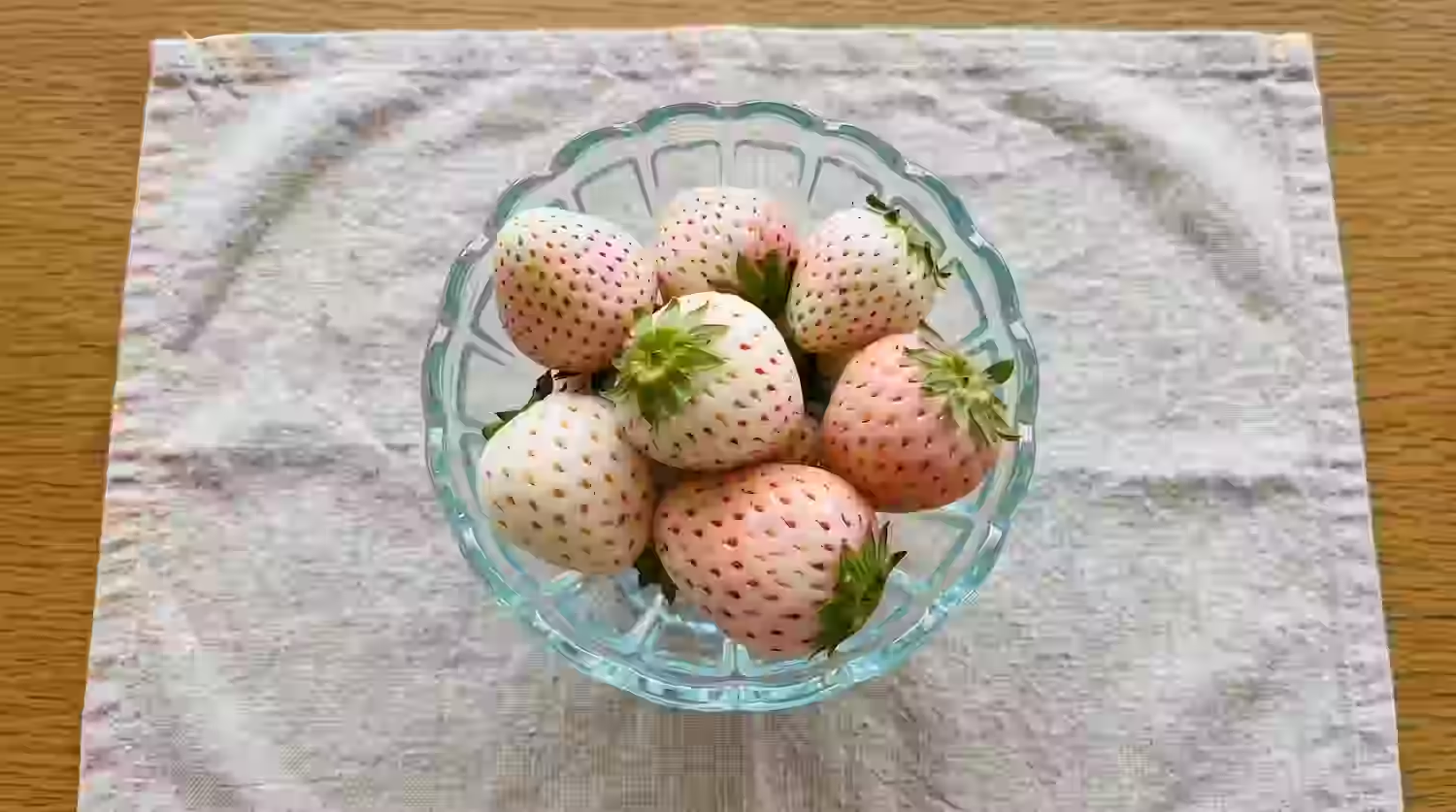
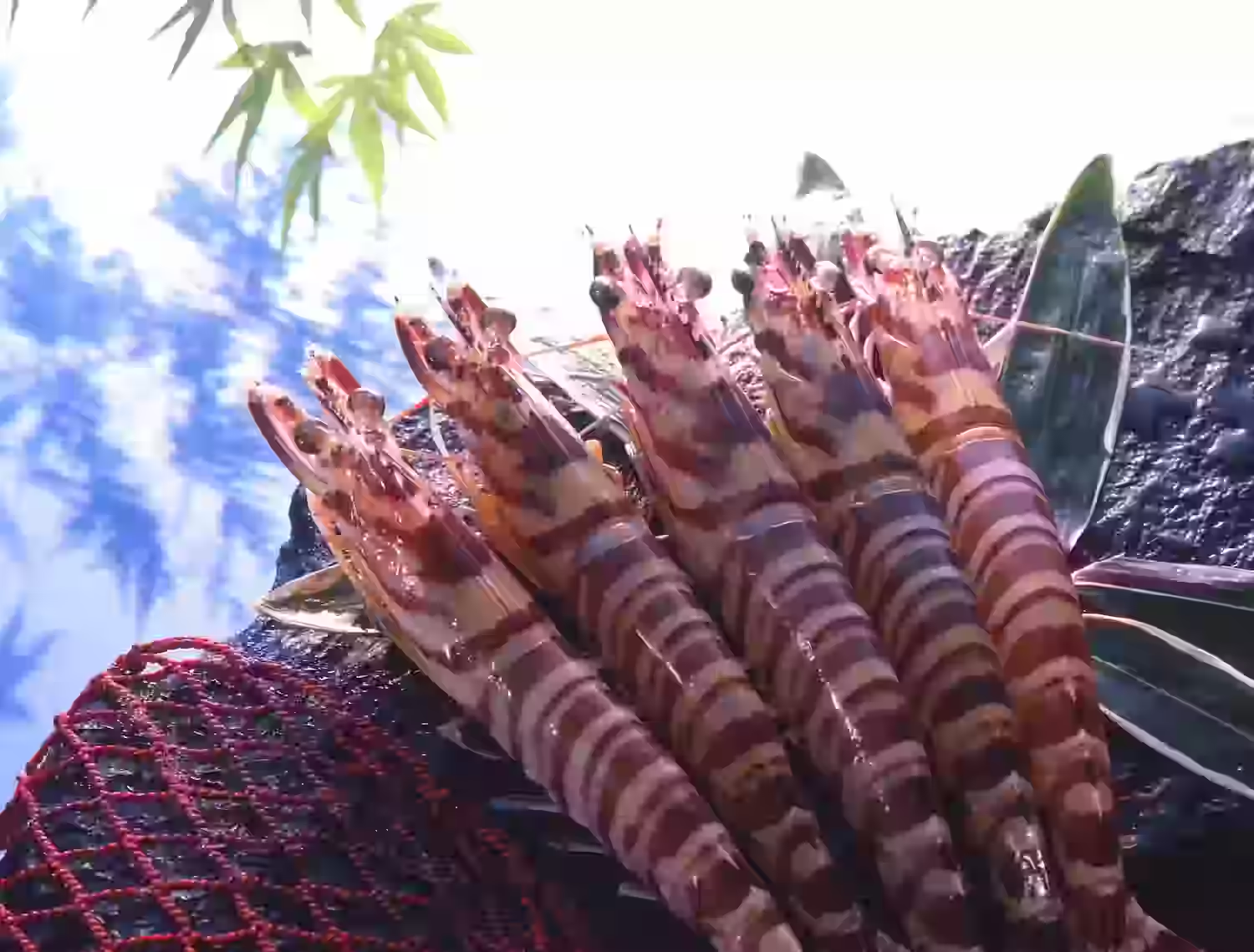

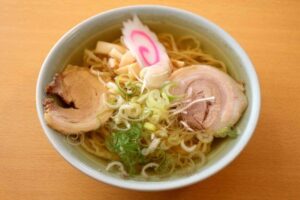
Mention ramen in Toyama, and Toyama Black is usually the first style that comes to mind. Yet Nyuzen, a small town in the prefecture’s east, once answered with a different color. Nyuzen Brown Ramen (入善ブラウンラーメン) is a shrimp miso ramen that the local chamber of commerce youth group developed to promote the town.
Over time, it became a textbook example of Japan’s “B-grade gourmet” boom in the 2010s. This guide covers its origin, flavor, and ingredients, plus what we could confirm about its availability in September 2026.
What Is Nyuzen Brown Ramen?
Japanese speakers call this category B-kyū gurume, or B-grade gourmet. In general, the term means affordable local comfort food, often created or revived to put a town on the map. Nyuzen’s bowl fits that description closely, since its purpose was as much civic as culinary.
Quick Facts
- Japanese name
- 入善ブラウンラーメン (Nyūzen Buraun Rāmen)
- Hometown
- Nyuzen Town, eastern Toyama Prefecture (Hokuriku region)
- Type
- B-grade gourmet ramen developed for town promotion
- Developed by
- Volunteers from the Nyuzen Town Chamber of Commerce Youth Group
- Introduced
- At the group’s 50th-anniversary event, November 2009
- Original recipe
- Nyuzen miso with shrimp extract, plus noodles made with deep ocean water
- Restaurant guideline (2011)
- Use a miso seasoning blended with shrimp extract
- Color
- Reddish brown
- Availability (Sept 2026)
- Not confirmed at any restaurant; listed packaged products marked as discontinued
Can you still eat it today?
We could not confirm any restaurant currently serving Nyuzen Brown Ramen as of September 2026. This guide therefore treats it mainly as a local dish with a well-documented past. Check the restaurant section before planning a trip around it.
Where It Comes From
Nyuzen sits in the northeast corner of Toyama Prefecture, facing the Sea of Japan. Also, it spreads across the Kurobe River’s alluvial fan, where snowmelt from the Northern Alps resurfaces as spring water. The town also pumps deep ocean water from Toyama Bay.
According to Nyuzen Town, that water comes from a cold layer unique to the Sea of Japan and stays near 2°C all year. Meanwhile, several Japanese coastal towns have turned deep ocean water into a regional product, as Takahashi (2022) reviews. Nyuzen used it in the ramen’s noodles.
Why It Is Called “Brown Ramen”
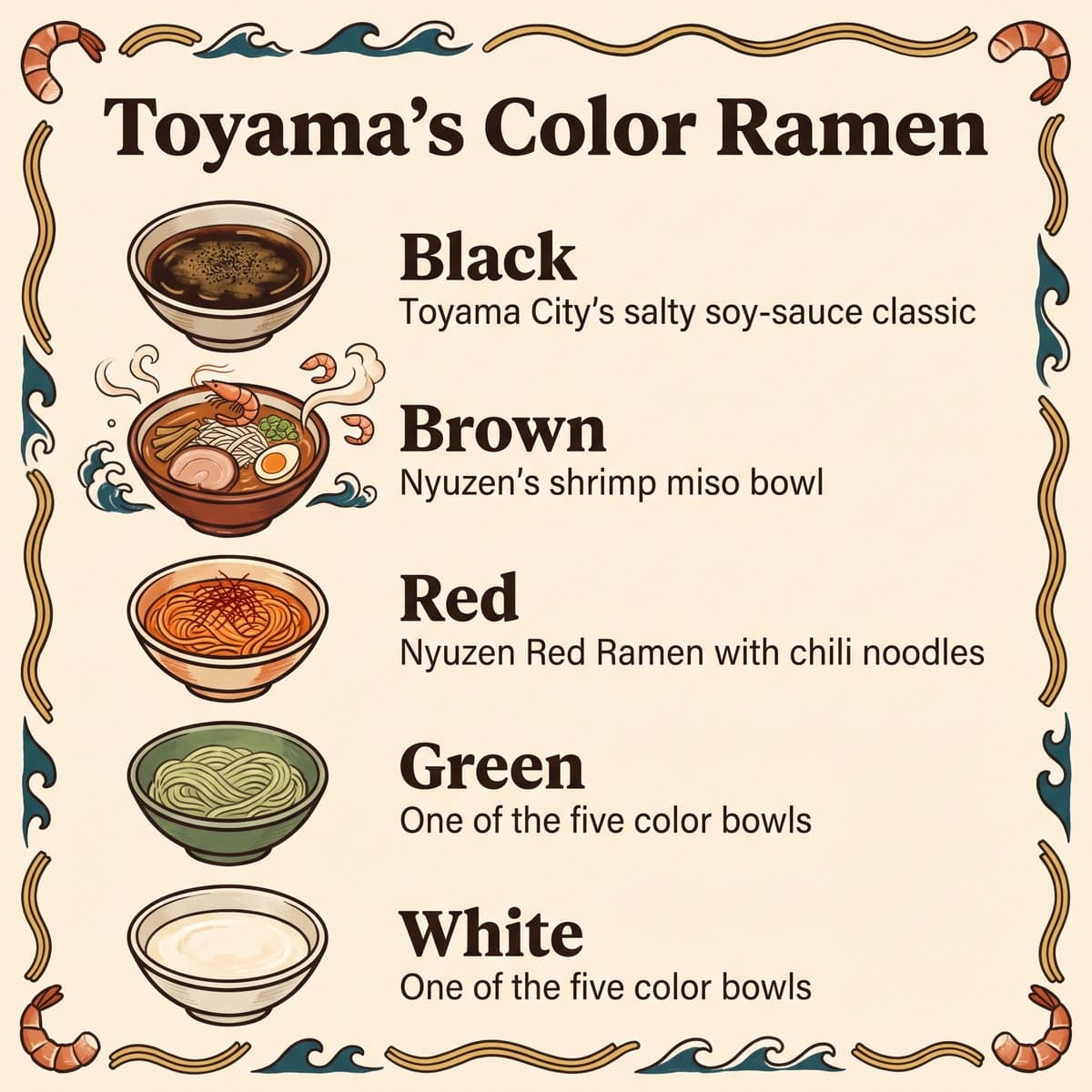
The name also carries a playful local reference. A 2011 interview with the project’s leader, published on the regional site Kurobehan, says the team chose it with Toyama Black Ramen in mind. Toyama already had a famous black bowl, so Nyuzen went with brown.
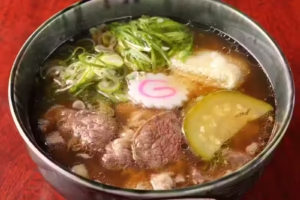
The name reflects the broth’s actual appearance, too. Similarly, Nikkei described the soup in 2015 as slightly reddish brown. Later, Toyama Prefecture included the dish under brown in its “Toyama Color Food” program.
A Loose Guideline for Restaurants
Initially, you could only find the ramen as a souvenir pack or at local events. Soon, though, people kept asking where they could eat it in a restaurant. According to the 2011 interview, organizers then invited local shops to join. Their main condition was simple: use a miso seasoning blended with shrimp extract.
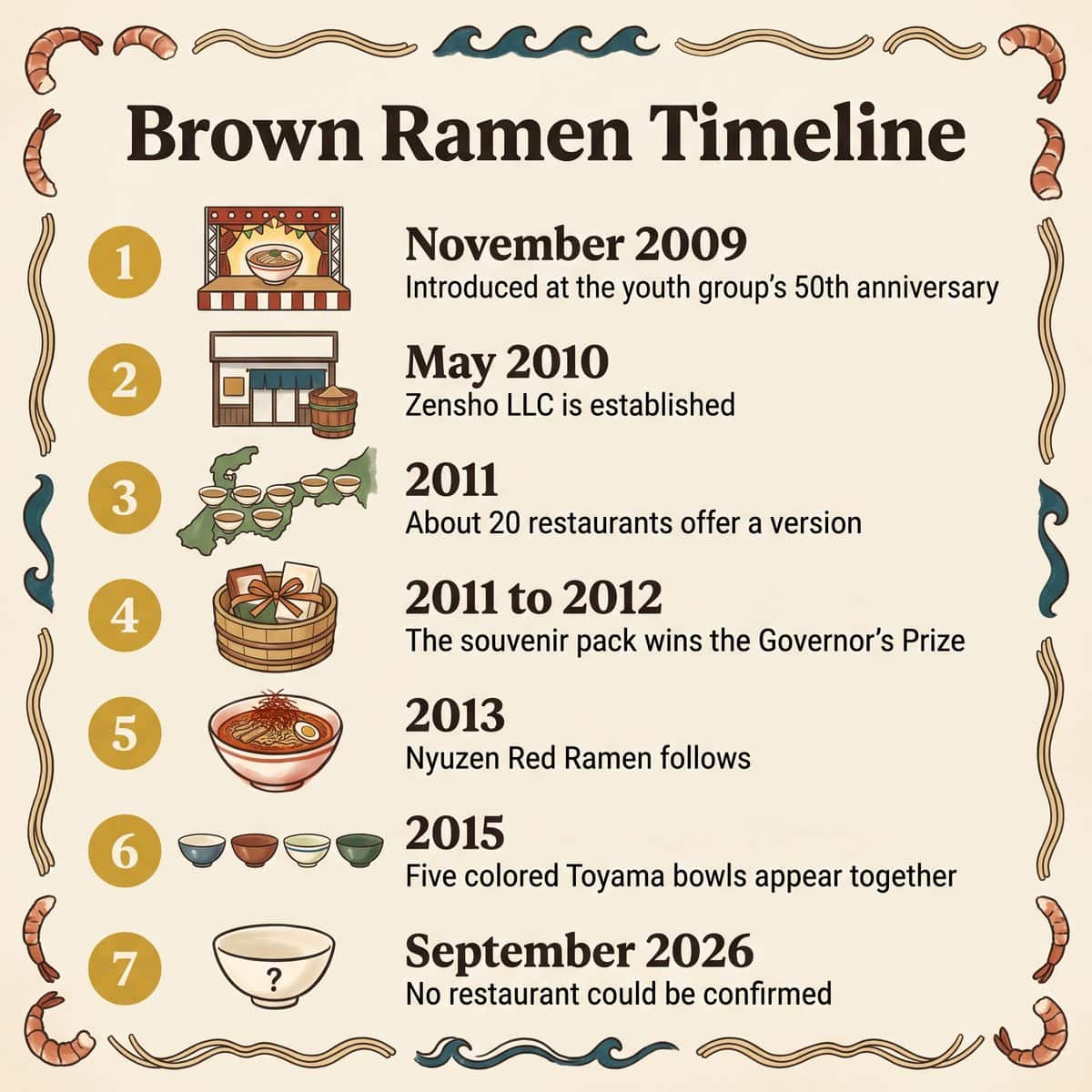
Everything else was left to each cook. As a result, by 2011 about 20 restaurants between Asahi Town and Namerikawa City reportedly offered a version. Some served it as tantanmen or jajamen, while one cooked it in a sizzling stone bowl. Whether that guideline still applies today is unclear.
What Does Nyuzen Brown Ramen Taste Like?
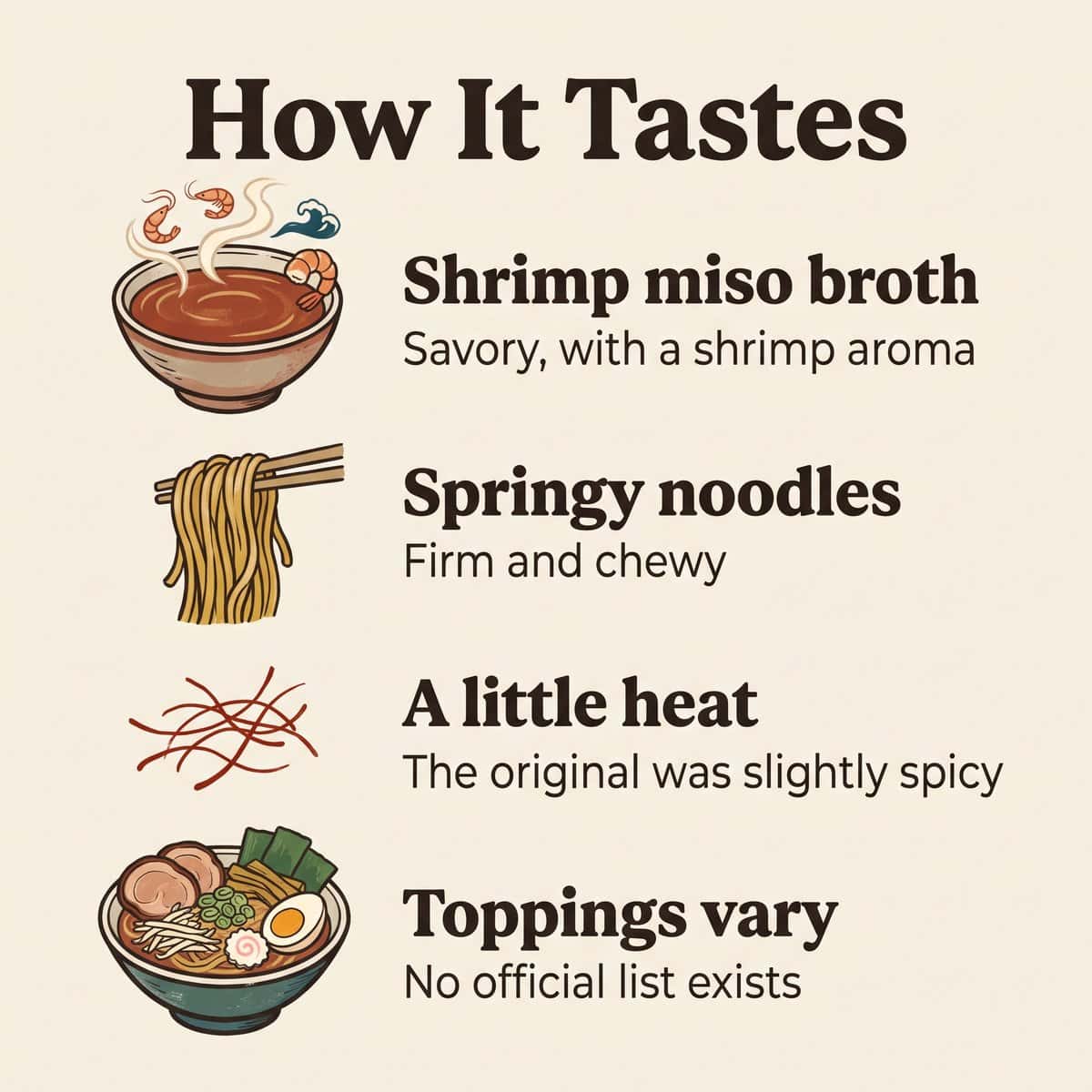
Official descriptions give the clearest picture. The maker, Zensho, describes a rich shrimp miso soup paired with deep-ocean-water noodles. Because restaurant recipes varied, the sweetness, saltiness, and shrimp intensity likely differed from shop to shop.
Broth and Aroma
Toyama’s official tourism site adds that the miso uses prefectural rice and soybeans, plus spring water from the Kurobe River fan. So the base is a miso broth, with shrimp as the distinguishing note. That shrimp aroma is likely to appeal most to diners who enjoy shellfish-based ramen.
Is it spicy? The 2011 interview described the original version as slightly spicy. However, don’t assume that holds for every restaurant version.
Noodles and Texture
Toyama’s tourism site describes the noodles as firm and springy, the texture Japanese speakers call shiko-shiko. That kind of noodle suits a heavy miso broth, since the soup clings to each strand. If you know Sapporo ramen, the basic miso-and-noodle pairing may feel familiar.
Toppings and Restaurant Twists
No official topping list exists. For example, Mynavi News reported in 2013 that one chain seared its chashu with miso and added shrimp powder. Meanwhile, a public bath in Asahi Town served a stone-grilled version, searing the noodles before adding soup.
Admittedly, that variation was part of the dish’s local appeal. Still, it makes the style difficult to define precisely.
What Is Nyuzen Brown Ramen Made From?
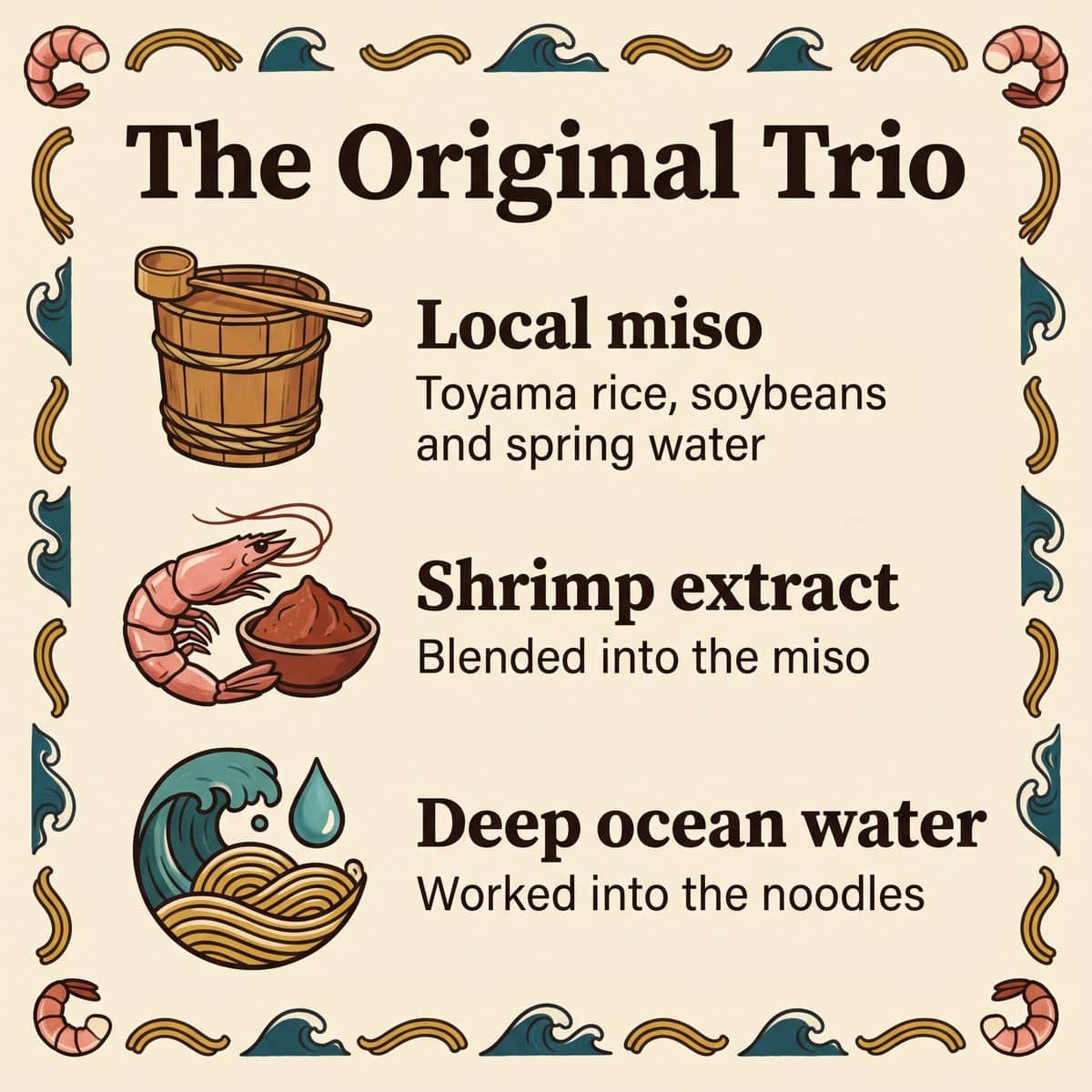
Zensho’s original recipe rests on three local components. Most descriptions still mention them together, even though restaurant versions were more flexible.
The original trio
Local miso
Made in Nyuzen from Toyama rice and soybeans, with spring water from the Kurobe River fan.
Shrimp extract
Blended into the miso. The 2011 restaurant guideline centered on this ingredient.
Deep ocean water
Worked into the noodles. Nikkei also mentions deep-sea salt in the soup.
Sources differ on one small detail. Zensho and Toyama’s tourism site place the deep ocean water in the noodles. However, Nikkei’s 2015 report mentions salt from the same water in the broth.
Stock and Dietary Requirements
Unfortunately, published sources do not identify the stock used by every restaurant. Diners avoiding meat, fish, or other animal-derived ingredients should ask each shop directly.
The historically documented recipe contains shrimp extract. Therefore, it does not suit vegetarians or vegans. Current ingredients may vary, so confirm them with the restaurant.
Allergens
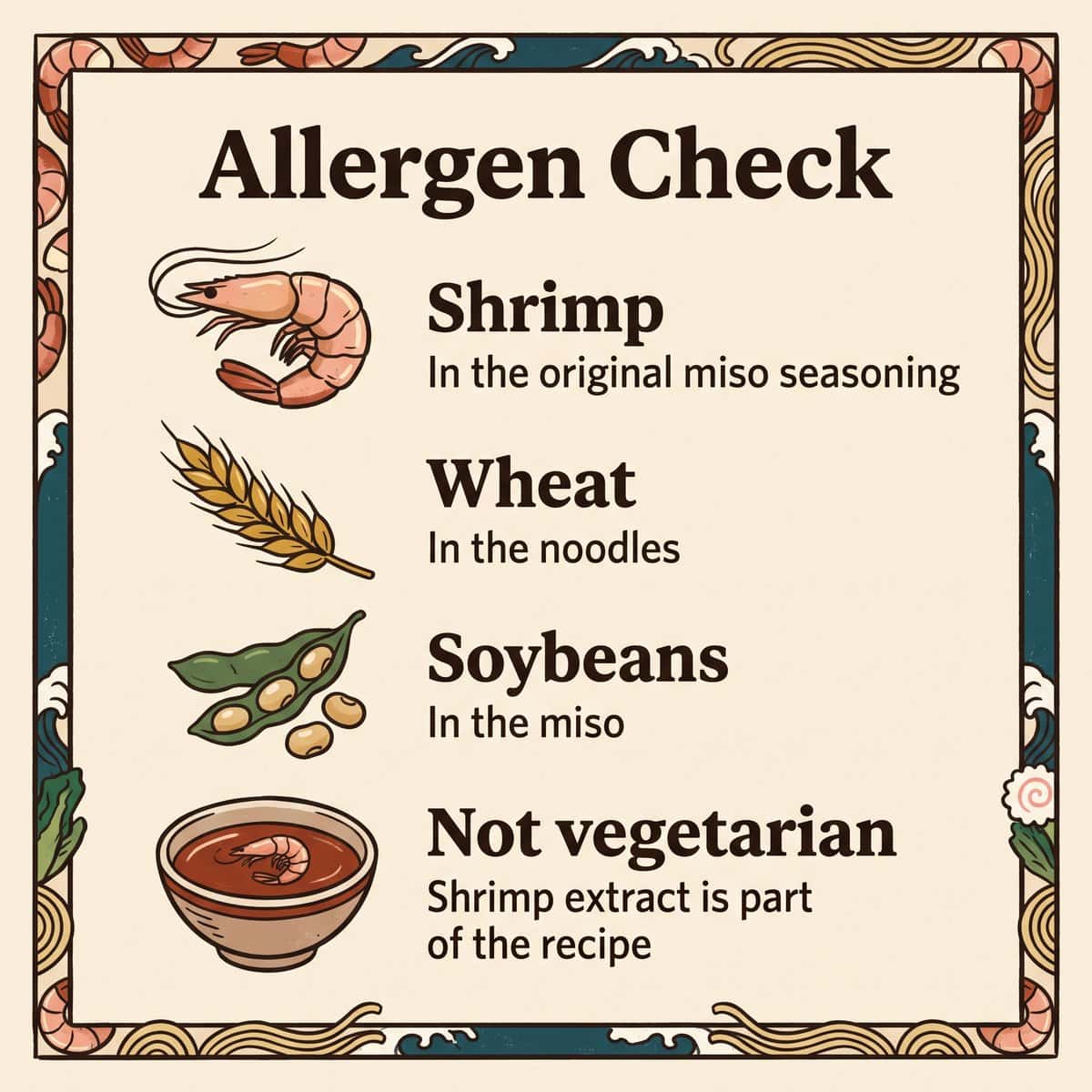
Historical descriptions point to the ingredients below. Even so, they do not replace current allergen information from the restaurant or maker.
- Shrimp: in the original miso seasoning, and sometimes as shrimp powder on top.
- Wheat: in the noodles.
- Soybeans: in the miso.
Anyone with a shellfish allergy should not order the dish without first confirming the ingredients and preparation with the restaurant. If the shop cannot confirm them, then skip it.
The History of Nyuzen Brown Ramen
A 50th-Anniversary Project
The story began with the youth group’s 50th anniversary in 2009. According to Kurobehan, members wanted a project that would still matter ten or twenty years later.
Notably, one member worked at Maruzen Shoyu, a local miso and soy sauce maker, according to Nikkei. He proposed miso ramen, partly because he loved ramen. Surprisingly, he told Kurobehan he had never eaten a miso ramen he truly enjoyed. The shrimp idea began almost as a whim, then went through rounds of testing.
From Event Stall to Souvenir Shelf
The group publicly introduced the ramen at its anniversary ceremony in November 2009. Guests asked for more, so the bowl soon appeared at local events such as the Nyuzen Ramen Festival. Because a volunteer group could not run a business, the organizers later established Zensho LLC in May 2010.
According to Zensho, its name joins 善 (zen) from Nyuzen with 商 (shō) from shōkōkai, the chamber of commerce. Its first product was a three-serving souvenir pack in a reusable miso-barrel tub. Later, that pack won the Governor’s Prize (知事賞) in the processed agricultural and marine products category. The contest was the Toyama Tourism Federation’s “Toyama Souvenir Best Selection 2011–2012” (富山のお土産ベストセレクション2011-2012).
Part of a Wider B-Grade Gourmet Boom
Nyuzen was not alone. Academic research, including Matsunaga (2013), has examined the broader use of B-grade gourmet foods in regional promotion across Japan. Nyuzen Brown Ramen fits neatly within that wider context.
In Toyama, the idea spread by color. Mynavi News reported in 2013 on a follow-up, Nyuzen Red Ramen, which kneads local chili into the noodles. Two years later, Nikkei pictured five colored Toyama bowls side by side: black, brown, red, green, and white.
Nyuzen Brown Ramen Today
The picture looks much quieter now. At the time of our September 2026 review, Zensho’s product page labeled the listed packaged products as discontinued. We could not verify whether any other packaged version remains available elsewhere.
The youth group’s own festival pages also show the same drift. In 2020, the group sold a Brown Ramen chashu bowl at the Nyuzen Ramen Festival. By contrast, the 2024 and 2025 vendor lists no longer include a Brown Ramen stall.
Nyuzen Brown Ramen vs Toyama Black Ramen
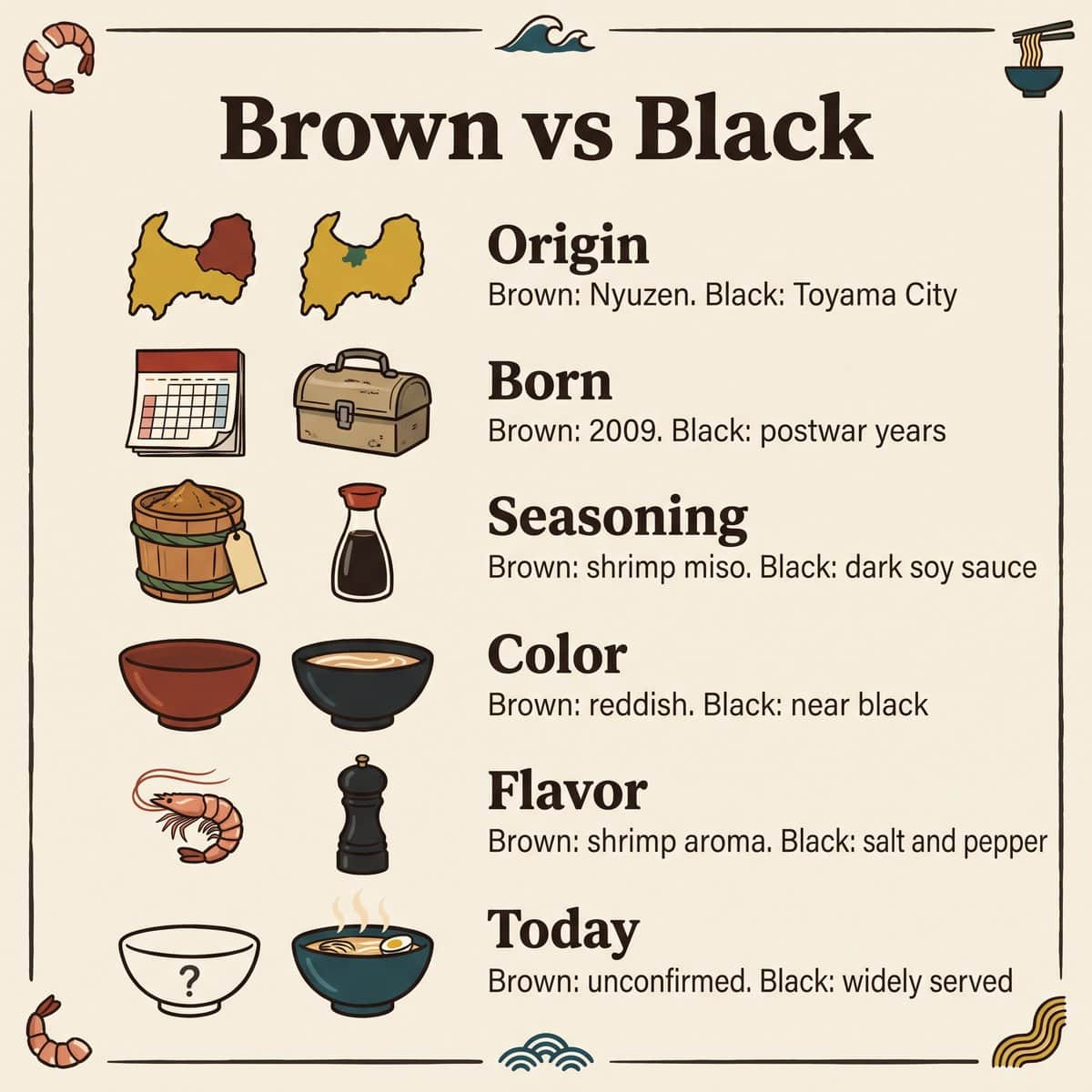
Since the brown bowl exists partly as a reply to the black one, a side-by-side look helps. The two share a prefecture, yet they differ in age, purpose, and flavor.
| Nyuzen Brown Ramen | Toyama Black Ramen | |
|---|---|---|
| Origin | Nyuzen Town, eastern Toyama | Toyama City, central Toyama |
| Born | 2009, as a town promotion project | Postwar years, as a meal for laborers |
| Seasoning base | Miso blended with shrimp extract | Dark soy sauce |
| Color | Reddish brown | Near black |
| Flavor | Savory miso with shrimp aroma | Very salty, with plenty of black pepper |
| Definition | Loose 2011 guideline for restaurants | Varies by shop, but dark soy sauce is typical |
| Availability today | Not confirmed at restaurants (Sept 2026) | Widely served across Toyama |
Visit Toyama explains that Toyama Black began as a salty meal for postwar workers, first served in 1947 at the shop Daiki. By contrast, Nyuzen’s bowl grew out of a civic project six decades later. Read our Toyama Black Ramen guide for the full story.
Which One Should You Try?
In practice, Toyama Black is the one you can easily find today. It hits hard with salt and pepper, so locals often eat it with rice. Nyuzen Brown Ramen, meanwhile, is more of a local story worth knowing than a reliable stop on an itinerary.
Where to Eat Nyuzen Brown Ramen Today
Restaurant availability changes often, so this section separates documented history from what we could verify. In short, we could not confirm any restaurant serving the dish as of September 2026.
The Last Published Restaurant Map
Zensho’s restaurant map from around 2020 listed nine places. In September 2026, we checked each one against official websites and local organization pages.
| Restaurant on the 2020 map | Area | What we found (Sept 2026) |
|---|---|---|
| Sakaba Otojiro (酒場 音次郎) | Near Nyuzen Station | Open per its official site; Brown Ramen not confirmed on the current menu |
| Kissa Cattleya (喫茶カトレア) | Nyuzen | Listed as a partner shop for the 2024 Nyuzen Ramen Festival; menu not confirmed |
| Kyara (伽羅) | Nyuzen | Former tourism listing removed; operation not confirmed |
| Corridor (コリドー) | Nyuzen | A café named De Corridor appears in the 2025 festival partner list; menu not confirmed |
| China House Yuyu (チャイナハウス遊遊) | Cosmo 21 mall | Not listed in the mall’s current floor guide |
| Nana-chan Ramen (ななちゃんラーメン) | Nyuzen | Operation not confirmed |
| Taiyō to Tsuki no Tōrimichi (入善食堂 太陽と月のとおりみち) | Nyuzen | Operation not confirmed |
| Wanfu (王虎), Nyuzen branch | Nyuzen | Operation not confirmed |
| Rakuchino (らくち~の) | Asahi Town | Open per its official site, but closed October to November 2026; Brown Ramen not confirmed |
However, the festival partner lists do not say whether those shops serve Brown Ramen. We therefore use them only as evidence that the business was operating.
Prices and Ordering
Reports from the 2010s listed prices of about ¥600 to ¥780. Treat these figures as history rather than current prices, and check the restaurant’s latest menu. When you do find it, look for 入善ブラウンラーメン or ブラウンラーメン on the menu.
How to Check Before You Go
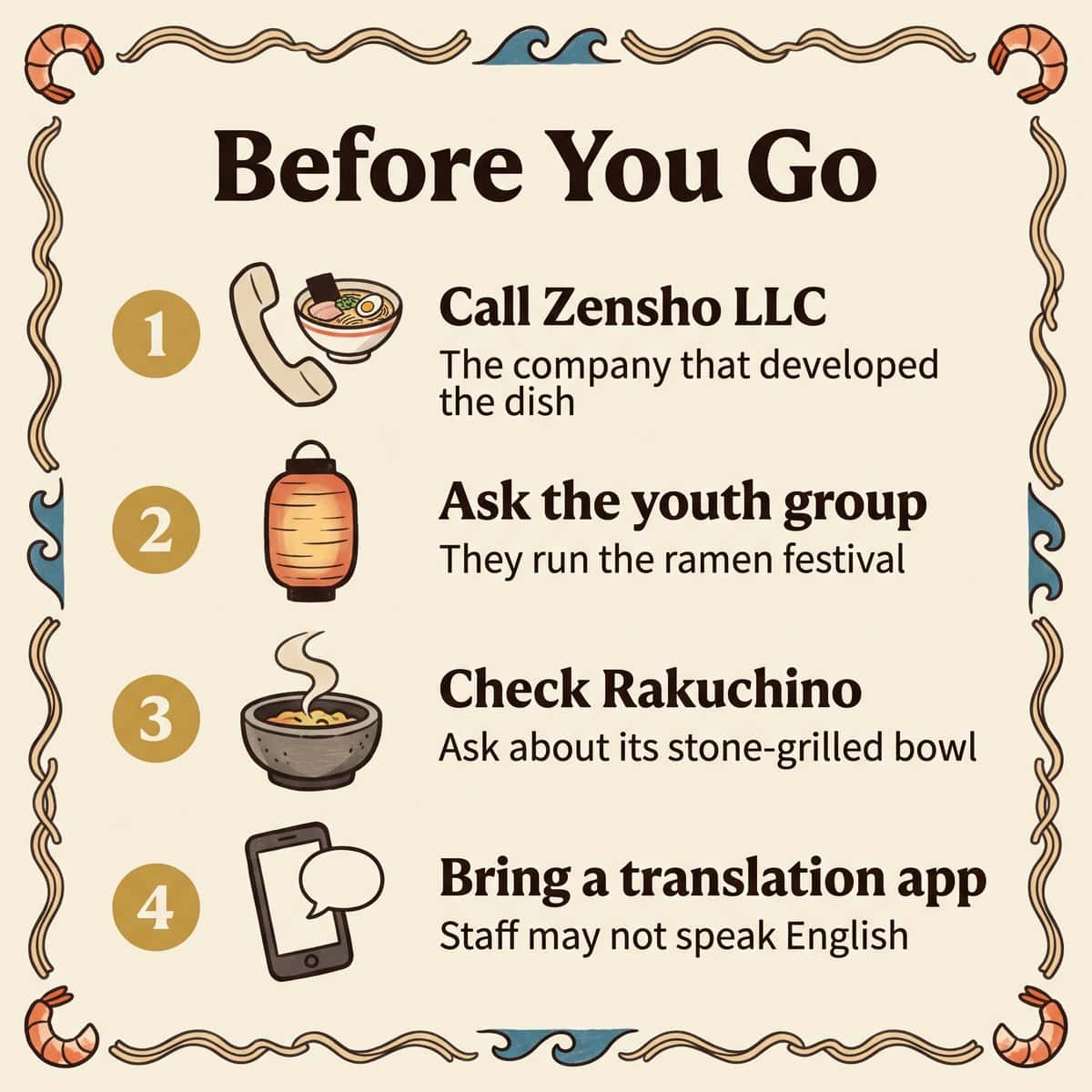
Ask the people who made it
- Call Zensho LLC (0765-72-1988), the company that developed and sold the dish.
- Call the Nyuzen Town Chamber of Commerce Youth Group (0765-72-0163), which runs the ramen festival.
- Ask Rakuchino (0765-82-0990) whether its stone-grilled bowl is still on the menu.
- Use a translation app, since staff may not speak English.
How to Get to Nyuzen
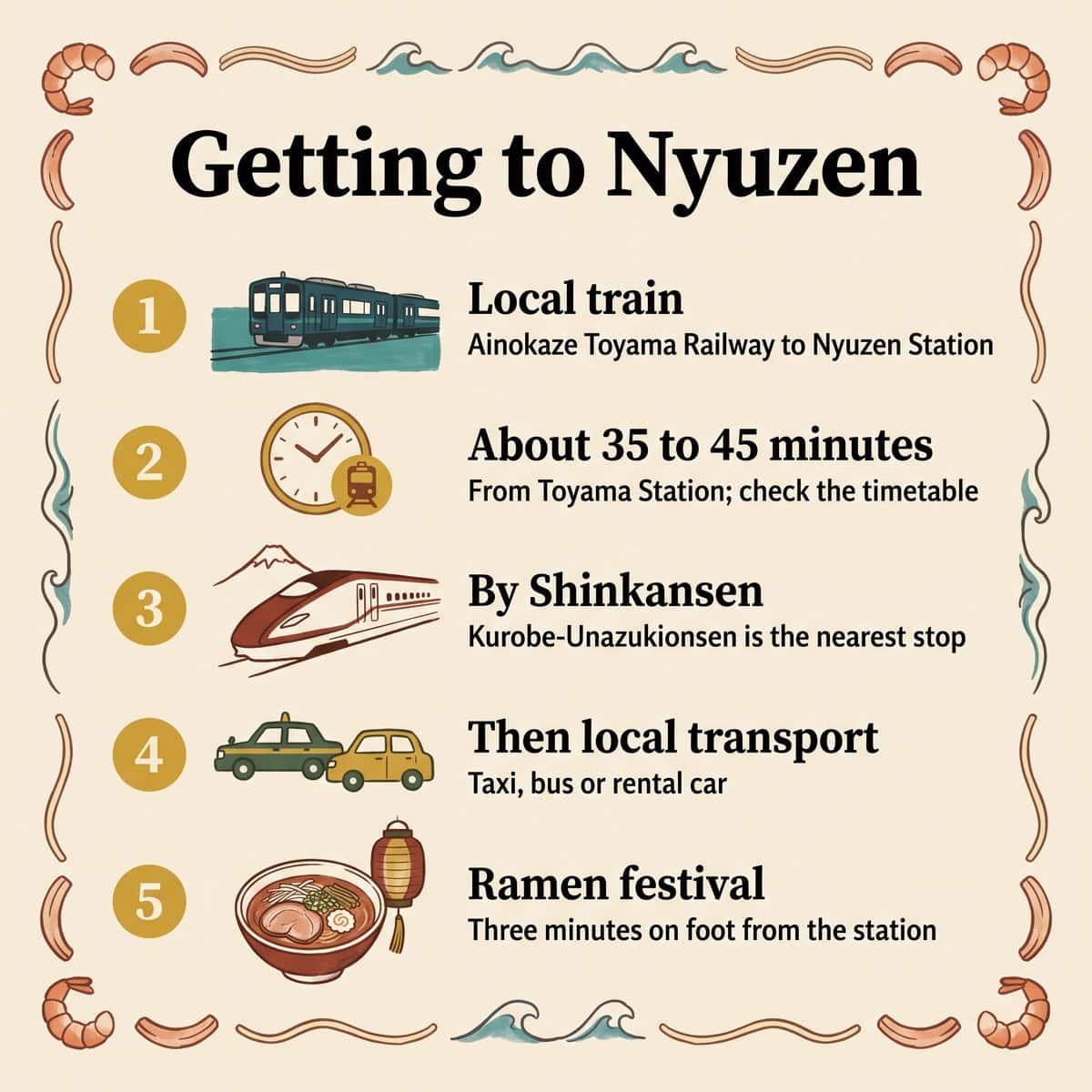
First, Nyuzen Station sits on the Ainokaze Toyama Railway. From Toyama Station, trains generally take about 35 to 45 minutes, depending on the service. Check the current timetable before departure.
Alternatively, Kurobe-Unazukionsen Station is the nearest Hokuriku Shinkansen stop. From there, travelers then continue by local transport, taxi, or rental car. Transfer times vary, so check connections in advance.
The Nyuzen Ramen Festival takes place near the Uruoikan building, about three minutes on foot from Nyuzen Station. Recent editions took place in February, according to the youth group’s website.
Other Foods to Try in Nyuzen
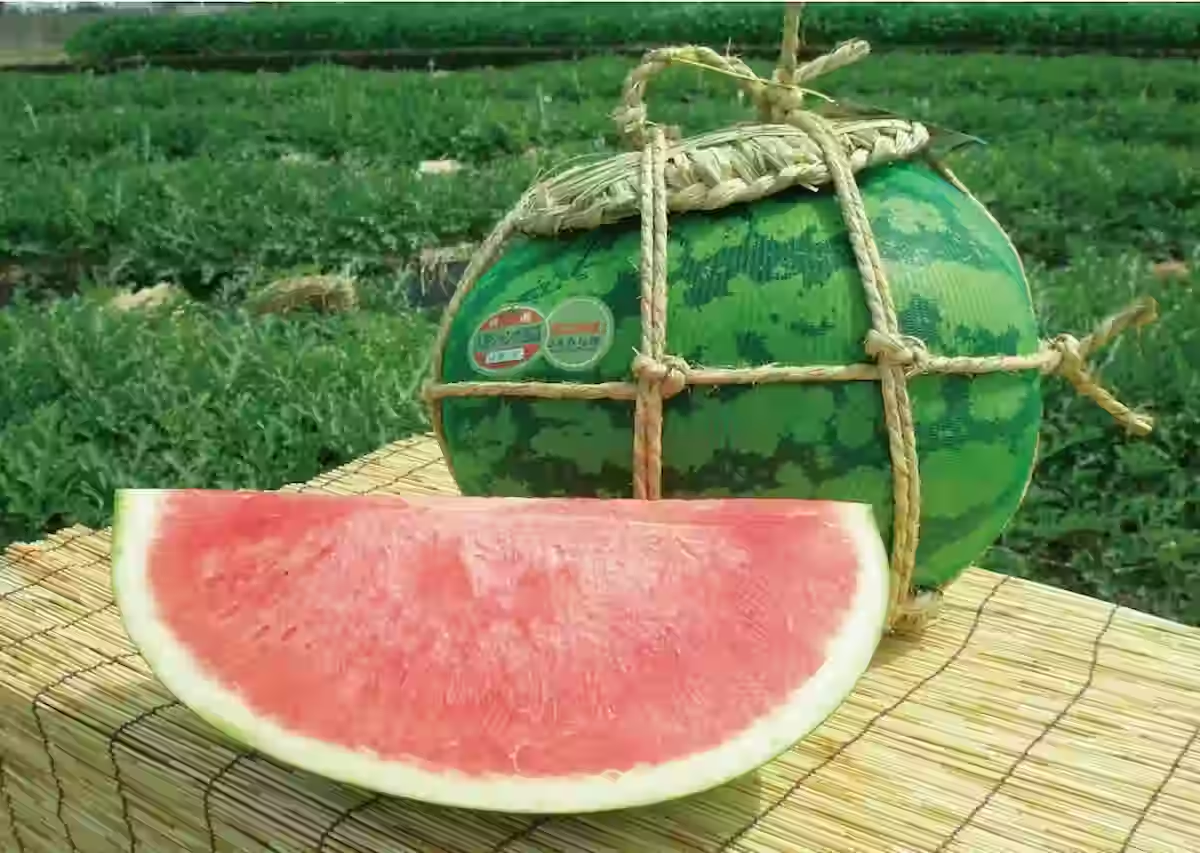
Come in summer, and the Nyuzen Jumbo Watermelon steals the show. Nyuzen Town says these oval giants weigh about 18 kilograms, and farmers pick them from mid-July to early August. In addition, Japan’s agriculture ministry protects the name as a Geographical Indication.
Oysters are another local draw. According to Toyama’s tourism site, Sakaba Otojiro serves oysters purified with Nyuzen deep ocean water, by reservation. Finally, for more of the region, see our Toyama food guide or try a Toyama classic like masu zushi.
Is Nyuzen Brown Ramen Worth Seeking Out?
As a meal, it is hard to plan around right now. As a story, though, it offers a clear window into how small Japanese towns use food to promote themselves. A group of young local business owners turned miso, shrimp, and seawater into a hometown symbol.
If you pass through eastern Toyama, ask around; someone may still point you to a bowl. Meanwhile, Toyama Black Ramen remains easy to find, and our list of 10 must-try Hokuriku foods offers more regional ideas.
Frequently Asked Questions
About the Dish
- What is Nyuzen Brown Ramen?
-
It is a B-grade gourmet ramen from Nyuzen Town in Toyama Prefecture. Members of the local chamber of commerce youth group introduced it in 2009, because they wanted to promote the town. The original recipe pairs shrimp-extract miso with noodles made using deep ocean water.
- What gives Nyuzen Brown Ramen its brown color?
-
The miso and shrimp seasoning gives the soup a reddish brown appearance. A 2011 interview with the organizers also says they chose the name with Toyama Black Ramen in mind. So the color and the name work as a pair.
- How is it different from Toyama Black Ramen?
-
Toyama Black uses a very dark soy sauce base and plenty of black pepper. Nyuzen Brown Ramen uses miso blended with shrimp extract instead. Toyama Black is also far easier to find today.
Ingredients and Diet
- Does Nyuzen Brown Ramen contain shrimp?
-
Historical descriptions specify a miso seasoning blended with shrimp extract. Diners with a shellfish allergy should confirm the current recipe directly with the restaurant. If the shop cannot verify the ingredients, avoid the dish.
- Is Nyuzen Brown Ramen vegetarian?
-
No. The documented recipe includes shrimp extract, so it does not suit vegetarians or vegans. Published sources also do not identify the stock, so ask the restaurant about other animal ingredients.
Availability
- Where can you eat Nyuzen Brown Ramen?
-
We could not confirm any restaurant serving it as of September 2026. Several places on the 2020 map still operate, but their current menus remain unverified. Contact Zensho or the Nyuzen chamber of commerce youth group before you travel.
- Is packaged Nyuzen Brown Ramen still available?
-
When we checked in September 2026, Zensho’s product page labeled its listed packaged products as discontinued. We could not verify whether another packaged version exists elsewhere. Online shop listings can lag behind, so check the seller’s date.
References
Primary and official sources
- Zensyou LLC – Nyuzen Brown Ramen Product Information (Accessed September 2026)
- Zensyou LLC – Nyuzen Brown Ramen Restaurant Map (c. 2020) (Accessed September 2026)
- Nyuzen Town Chamber of Commerce Youth Group – Nyuzen Ramen Festival 2020 (Accessed September 2026)
- Nyuzen Town Chamber of Commerce Youth Group – Nyuzen Ramen Festival 2024 (Accessed September 2026)
- Nyuzen Town Chamber of Commerce Youth Group – Nyuzen Ramen Festival 2025 (Accessed September 2026)
- Nyuzen Town – Nyuzen Deep Ocean Water (Accessed September 2026)
- Nyuzen Town – Nyuzen Jumbo Watermelon (Accessed September 2026)
- Toyama Prefecture – Toyama Color Food (Accessed September 2026)
- Toyama Tourism Navi (Toyama Tourism Organization) – Nyuzen Brown Ramen (Accessed September 2026)
- Toyama Tourism Navi (Toyama Tourism Organization) – Sakaba Otojiro (Accessed September 2026)
- Nyuzen Mania (Nyuzen Town Tourism Association) – Otojiro (Accessed September 2026)
- Sakaba Otojiro – Official Website (Accessed September 2026)
- Rakuchino – Official Website and Closure Notice (Accessed September 2026)
- Rakuchino – Dining Menu (updated August 2026) (Accessed September 2026)
- Cosmo 21 Shopping Center – 1F Floor Guide (Accessed September 2026)
- Ministry of Agriculture, Forestry and Fisheries – GI Registration No. 53: Nyuzen Jumbo Watermelon (Accessed September 2026)
- Visit Toyama (Official Tourism Website) – Toyama Black Ramen and Where to Eat It (Accessed September 2026)
Interviews and contemporary reporting
- Kurobehan – Expert Interview No. 17, Part 1: Zensho LLC (2011) (Accessed September 2026)
- Kurobehan – Expert Interview No. 17, Part 2: Zensho LLC (2011) (Accessed September 2026)
- Nikkei – Toyama Ramen Goes Visual (2015) (Accessed September 2026)
- Mynavi News – Toyama’s Colorful Local Ramen Beyond Black (2013) (Accessed September 2026)
Academic and contextual sources
- J-STAGE – Matsunaga, M. (2013). B-grade gourmet and regional promotion. Hosei Ronso, 49(2) (Accessed September 2026)
- J-STAGE – Takahashi, M. (2022). Current status and prospects of deep ocean water as drinking water. Consumer Co-operative Studies, 562, 39–46 (Accessed September 2026)
Related Articles
- Toyama Black Ramen (富山ブラックラーメン) (Surveyed: September 2026)
- Toyama Food – Seafood Cuisine from Toyama Bay (Surveyed: September 2026)
- Kaga Miso Ramen (加賀味噌ラーメン) (Surveyed: September 2026)
- Sapporo Ramen (札幌ラーメン) (Surveyed: September 2026)
- Shoyu Ramen (Soy Sauce Ramen) (Surveyed: September 2026)
- Masu Zushi (鱒寿司) (Surveyed: September 2026)
- Takaoka Croquette (Surveyed: September 2026)
- 10 Must-Try Hokuriku Foods (Surveyed: September 2026)




Comments