


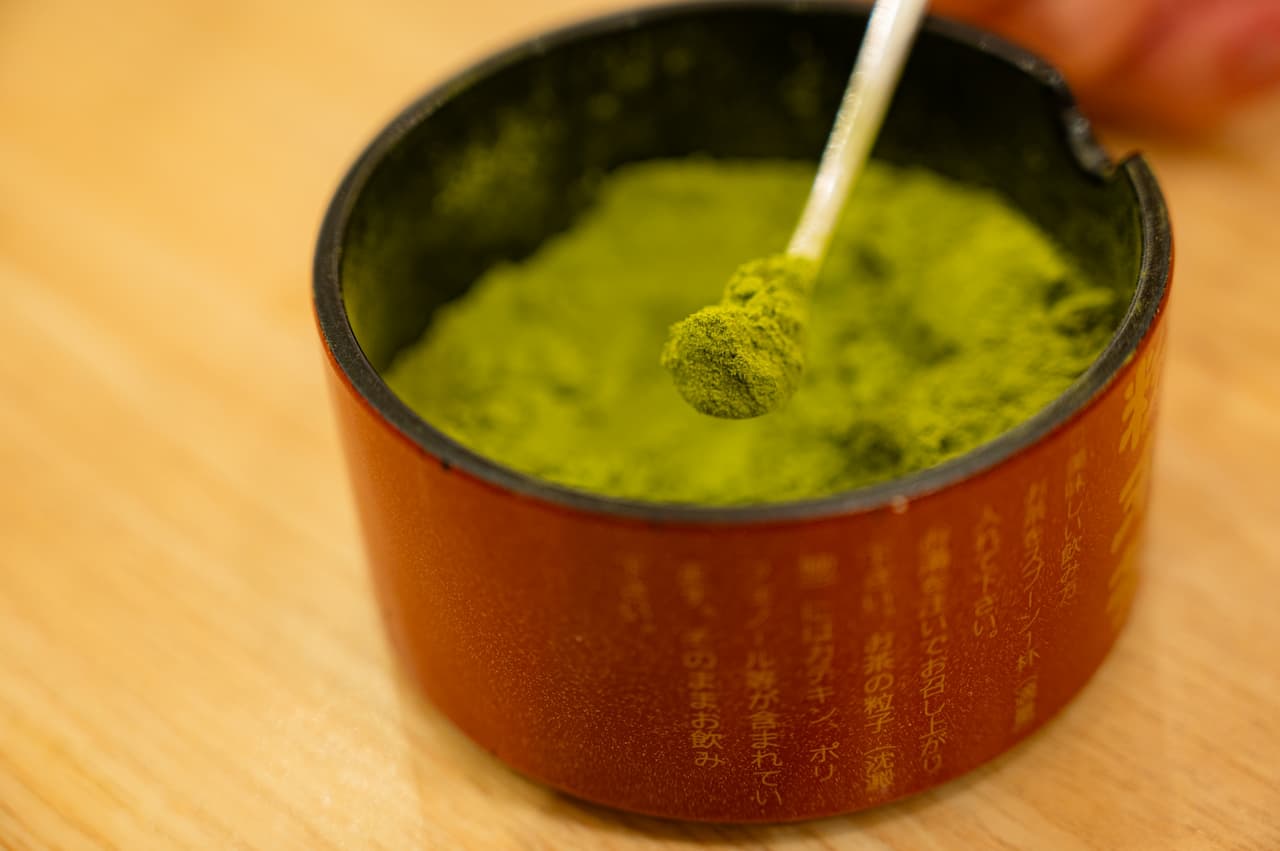


Sit down at a sushi counter in Tokyo, and before you have even opened the menu, a tall, heavy cup lands in front of you. The tea inside is a deep, slightly cloudy green, very hot and pleasantly strong. Most visitors drink it without a second thought. That everyday cup is often konacha.
Konacha (粉茶) is a Japanese green tea made from the tiny leaf particles sifted out while refining sencha and gyokuro. It brews in seconds, costs little and tastes bold, which is exactly why sushi chefs have relied on it for generations. In this guide, you’ll learn how it’s made, how it tastes, why it belongs with sushi and how to brew it well at home.
The short answer
Konacha is “powder tea,” but it isn’t matcha. It’s made of small, sandy leaf fragments that don’t dissolve, so you brew and strain it like loose-leaf tea. Steep it for only 20 to 30 seconds. Any longer, and its strong flavor quickly turns bitter.
What Is Konacha?
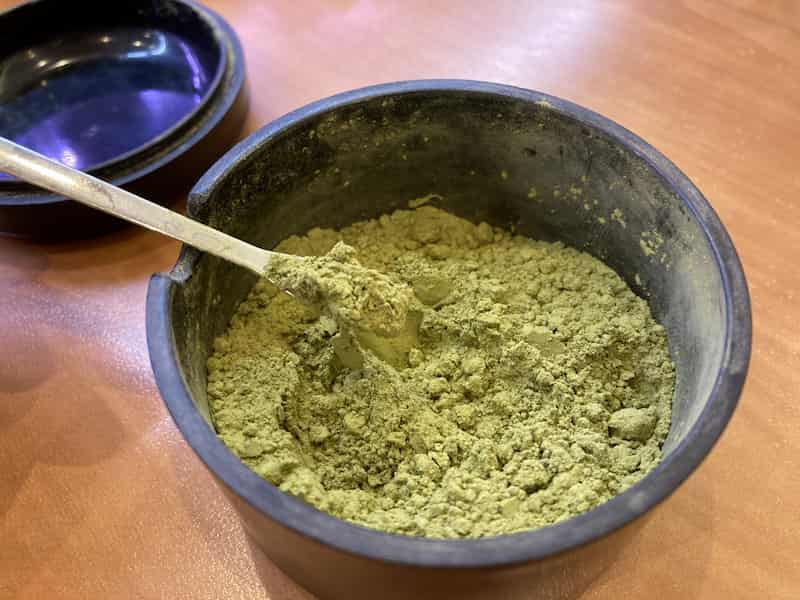
Konacha is a by-product of refining. When finished green tea is sorted, the smallest pieces of leaf, bud and tip fall away from the larger leaves. Instead of being thrown out, those fine particles are collected and sold as their own tea. Japan’s green tea labeling standard defines konacha as the fine, powder-like tea sieved out during finishing, which can include coarse particles and cut leaf.
Konacha Quick Facts
- Japanese name
- 粉茶, read konacha; sometimes written kona-cha
- Type
- Japanese green tea, made from fine leaf particles
- Made from
- Particles sifted from sencha and, less often, gyokuro
- Tea family
- Demono (出物), the by-products of refining, along with mecha and kukicha
- Flavor
- Bold, grassy and astringent, with a pleasant bitterness
- Best known as
- The house tea of many sushi restaurants, called agari
- Brewing
- About 80 to 90°C for 20 to 30 seconds, through a fine filter
What the Name Konacha Means
The name joins two characters: 粉 (kona), meaning powder or flour, and 茶 (cha), meaning tea. Read literally, it means “powder tea.” The name is a little misleading, though. The tea looks more like dark green sand than a silky powder, and it never dissolves in water. You may see a few related words on menus and packages:
- 粉茶the usual spelling
- こなちゃthe reading
- あがりagari, sushi-shop slang for tea
- 玉露粉茶gyokuro konacha
Konacha and the Other “Demono” Teas
In the Japanese tea trade, konacha belongs to a group called demono (出物). These are the teas that come out of refining finished leaf tea such as sencha and gyokuro. Each one is sorted by a different part of the plant.
Mecha
芽茶
Small, tightly rolled buds and leaf tips. Rich and strong, with good body.
Kukicha
茎茶
Stems and stalks. Light, sweet and clean, with little bitterness.
Konacha
粉茶
The finest particles and fragments. Fast to brew, bold and astringent.
If you have read our guides to kukicha and karigane, you already know the stem side of this family. This tea is its opposite: where stem tea is pale and gentle, it’s dark and punchy.
Sencha Konacha vs. Gyokuro Konacha
Most konacha comes from sencha, so the label often names no base tea at all. When the particles come from shaded gyokuro, the tea is called gyokuro konacha. It has a deeper green color, more sweetness and more savory umami. Because the parent tea is more expensive, it also costs a little more.
How Konacha Is Made
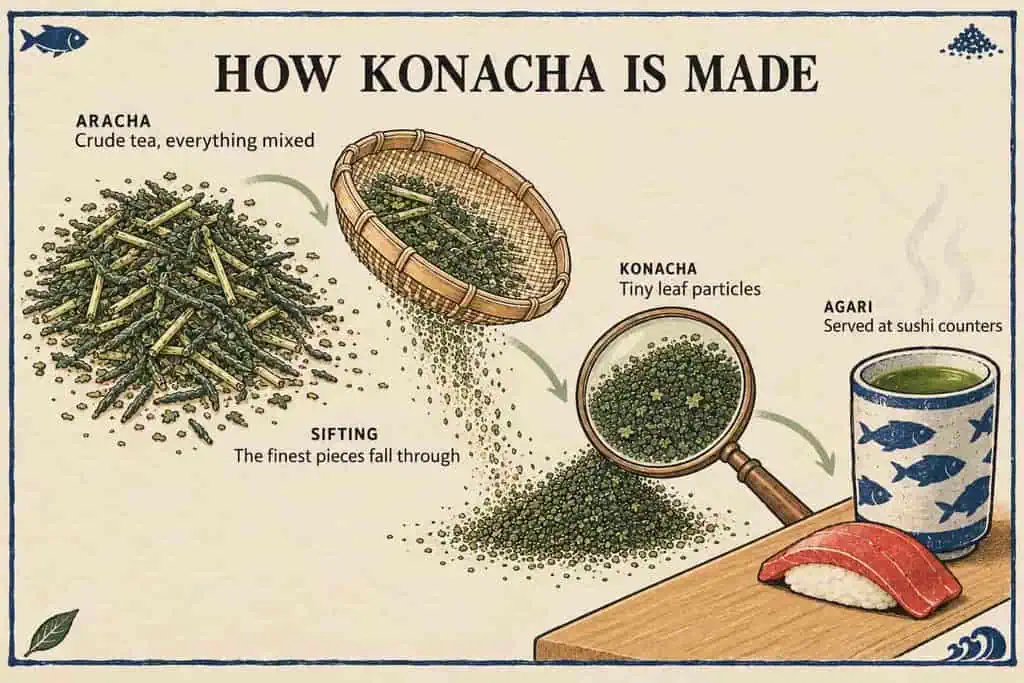
Japanese green tea is made in two stages. First, a factory near the farm steams, rolls and dries the fresh leaves into aracha, or “crude tea.” This rough mix holds everything at once: whole leaves, broken leaves, buds, stems and dust. Our Fukamushi Sencha guide covers that first stage in detail.
The particles appear in the second stage, called shiage (仕上げ), or finishing. Tea wholesalers refine the aracha step by step.
- Sifting: the tea passes over screens with different mesh sizes, and the finest pieces fall through.
- Cutting: long leaves are cut to an even size, which creates more small fragments.
- Sorting: machines and air currents separate stems, buds and fine particles. The fine particles become this tea.
- Final firing: the tea is dried again to bring out aroma and help it keep longer.
The particles collected this way include crumbs of leaf, pieces of tender buds and sometimes the soft white hairs that grow on young tea shoots. Nothing about them is lower quality in itself. They simply come out smaller.
Why Konacha Quality Varies So Much
As a by-product, konacha can only be as good as its parent tea. Particles from a first-flush spring sencha are greener, fresher and sweeter. Particles from later harvests tend to be more bitter and less aromatic.
Worth knowing
Deep-steamed teas have softer leaves that break apart easily during rolling and refining. That’s why many of these teas carry the dark color and full body of deep-steamed sencha.
What Does Konacha Taste Like?
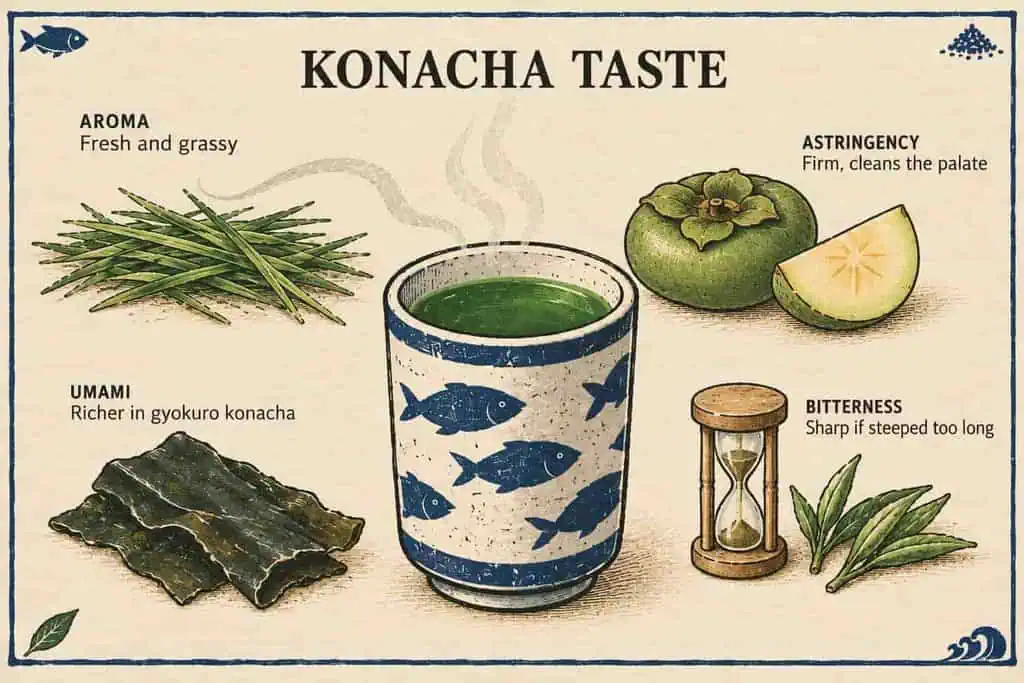
Think of konacha as the espresso of everyday Japanese green tea. It’s strong, quick and full-bodied, and it gets straight to the point.
Color and Appearance
The dry tea looks like fine, dark green grit, with none of the rolled needles you see in sencha. Brewed, it turns a vivid, deep green that’s slightly cloudy. The cloudiness comes from tiny leaf particles that slip through the filter into your cup.
Flavor and Aroma
Small particles have a huge surface area, so they release flavor almost instantly. A good cup has a fresh, grassy aroma and firm astringency that cleans the palate. A pleasant bitterness sits underneath, and gyokuro konacha adds noticeable sweetness and umami.
Why Konacha Is So Easy to Over-Brew
That fast extraction is both its strength and its weakness. In 20 to 30 seconds, it gives you a rich, satisfying cup. Leave it for two minutes, and it turns harsh. Timing matters more here than with almost any other Japanese tea.
Konacha and Sushi: The Story of Agari
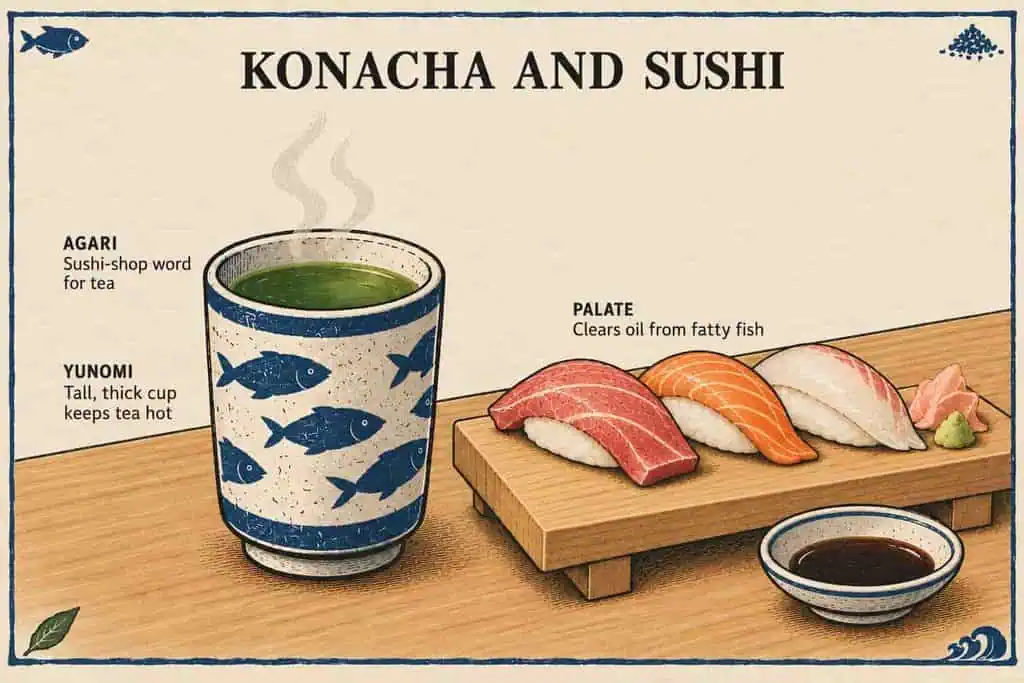
This tea and sushi have been partners for a long time. In many traditional sushi restaurants, it’s the house tea, and the reasons are practical.
- It brews in seconds: a busy counter needs tea fast, and this tea is ready almost as soon as hot water touches it.
- It’s affordable: refills are usually free, so a reasonably priced tea makes good business sense.
- It refreshes the palate: firm astringency cuts through the oil of fatty fish such as tuna belly and salmon.
- It holds its own: soy sauce, wasabi and pickled ginger would overpower a delicate tea, but not this one.
What Does “Agari” Mean?
At a sushi bar, you may hear the staff call the tea agari (あがり). This is shop slang. It is usually explained as a short form of agaribana, a name used in old pleasure quarters and restaurants for freshly brewed tea. The everyday phrase for making tea, ocha o hiku, also meant having no customers, so people there preferred a luckier word. Sushi shops later took up the term.
Here’s a polite tip. Agari is really a word for staff. As a customer, it sounds more natural to ask for ocha (tea) or ocha o kudasai (tea, please).
The Sushi-Shop Cup
Sushi tea usually comes in a tall, thick cup called a yunomi, often printed with the kanji names of dozens of fish. The thick walls keep the tea hot for a long time and protect your fingers from the heat.
Worth knowing
At conveyor-belt sushi (kaiten-zushi) restaurants, you often make your own tea from a hot-water tap and a jar of green powder. That powder is usually not konacha. It’s an instant powdered green tea that dissolves completely, so you stir it in rather than strain it.
Konacha vs. Matcha and Other Japanese Teas
Konacha is easy to confuse with other green teas, especially matcha. The table below shows where it fits.
| Tea | Made from | Form | How you drink it |
|---|---|---|---|
| Konacha (粉茶) | Fine particles sifted from sencha or gyokuro | Sandy fragments | Brewed and strained |
| Matcha (抹茶) | Shade-grown tencha, stone-ground | Silky powder | Whisked and drunk whole |
| Powdered green tea | Ordinary green tea leaves, finely milled | Fine powder | Stirred in and drunk whole |
| Sencha (煎茶) | Whole steamed and rolled leaves | Needle-shaped leaves | Brewed and strained |
| Kukicha (茎茶) | Stems and stalks | Pale sticks | Brewed and strained |
Konacha vs. Matcha
Both teas are green and “powdery,” but that’s where the likeness ends. Matcha is a deliberate product, made by stone-grinding shaded tencha into a powder you whisk into water. Konacha is sorted, not ground, and its particles never dissolve. Whisk it like matcha, and you’ll get a gritty cup full of leaf.
Konacha vs. Sencha
Since konacha usually comes from sencha, the flavor family is the same. The difference is speed. Sencha leaves open slowly and give a balanced, layered taste over several infusions. The particles release nearly everything in the first cup, so it’s stronger but less complex.
How to Brew Konacha
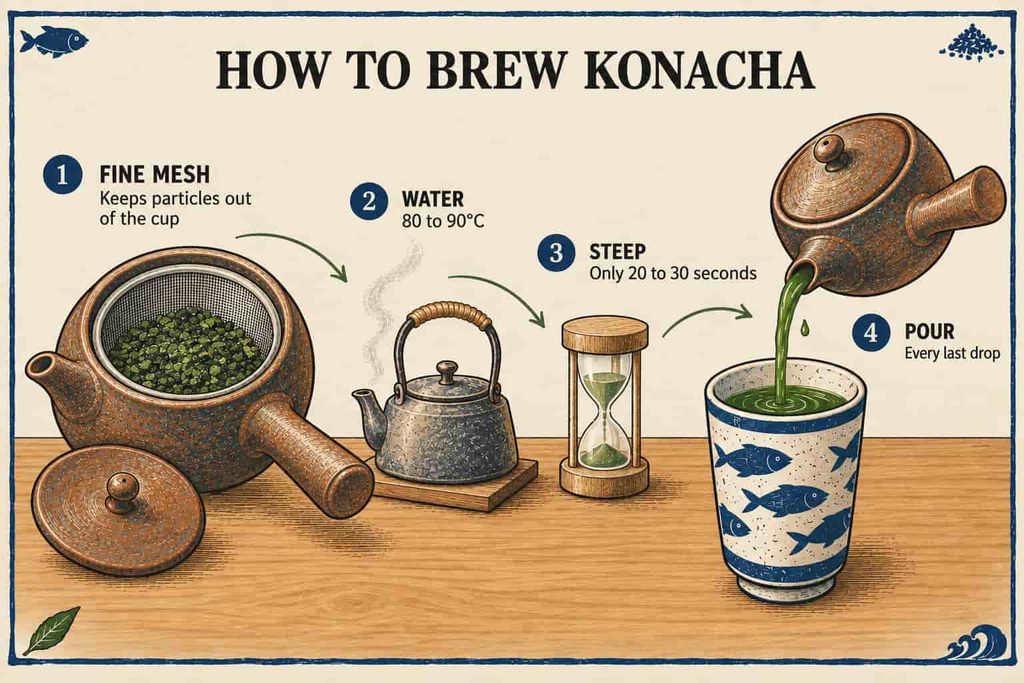
Brewing konacha is simple, but the fine particles need the right filter. A kyusu teapot with a deep stainless steel mesh works best. A disposable tea bag or paper filter also works well, which is one reason fine teas like konacha are common in green tea bags. Choose the style that suits your mood.
Everyday hot
Balanced and smooth
- Tea
- About 2 to 3 g (1 level tsp)
- Water
- 150 ml at 80 to 90°C
- Steep
- 20 to 30 seconds
Sushi-shop style
Strong and astringent
- Tea
- A little more than usual
- Water
- Close to boiling
- Steep
- Very short, 10 to 20 seconds
Cold brew
Sweet and mellow
- Tea
- About 10 g in a filter bag
- Water
- 1 liter, cold
- Steep
- 1 to 2 hours in the fridge
Step by Step
- Warm the pot and cups with hot water, then pour it away.
- Add the konacha to the teapot or tea bag.
- Cool the water. Pour boiling water into your cups first. Each transfer between vessels lowers it by roughly 5 to 10°C.
- Steep for 20 to 30 seconds. Stay close. It extracts very quickly.
- Pour every last drop. Water left in the pot keeps steeping and makes the next cup bitter.
The tea gives most of its flavor in the first cup. A second infusion with hotter water for 10 to 15 seconds is lighter but pleasant. For a third cup, start again with fresh tea.
Common Konacha Brewing Mistakes
- Steeping too long: the number one cause of bitter konacha.
- Using a coarse strainer: your cup fills with sediment.
- Trying to whisk it: it isn’t matcha and won’t dissolve.
Other Ways to Use Konacha
Konacha shines in ochazuke, the comforting dish of rice topped with hot tea. Its bold flavor stands up to salted salmon, pickled plum and nori. For lattes and baking, though, choose matcha, which blends smoothly.
How to Choose and Store Konacha
[IMAGE: konacha_how-to-store.jpg — replace this paragraph with an Image block. Alt: Illustrated guide to choosing and storing konacha: vivid green particles, a first-flush label and an airtight tea canister]
Konacha is one of the most affordable Japanese teas, which makes it easy to try a few. These points help you pick a good bag.
- Look at the color: good konacha is a vivid, deep green. Yellow or brown dust suggests old or low-grade tea.
- Check the base tea: “gyokuro konacha” (玉露粉茶) is sweeter and richer than sencha konacha.
- Look for first flush: konacha from ichibancha (一番茶), the spring harvest, is fresher and less bitter.
- Note the origin: Shizuoka, Kagoshima and Uji in Kyoto all produce it.
- Check the date: freshness matters even more than with whole-leaf tea.
Fine particles expose more surface to air, so the tea fades faster than whole-leaf sencha. Keep it in an airtight, opaque container in a cool, dark place, away from strong smells. Unopened packs can go in the fridge; let a chilled pack reach room temperature before opening so moisture doesn’t form. Try to finish an opened pack within about a month.
Konacha and Caffeine
Like other green teas, konacha contains catechins, L-theanine and caffeine. It often includes young buds and tips, which are naturally higher in caffeine, and its fast extraction makes a strong cup feel energizing. If you’re sensitive to caffeine, brew it lightly or enjoy it earlier in the day.
Why Konacha Is Worth Trying
This humble cup proves that a tea doesn’t need to be rare to be good.
- A real taste of sushi culture: it’s the same cup you’re served at the counter, now at home.
- Fast and affordable: a full-flavored cup in under a minute, at an everyday price.
- A window into tea refining: once you know konacha, mecha and kukicha, the whole demono family makes sense.
Next time a hot cup of green tea appears at a sushi counter, take a moment before you drink. Now you’ll know exactly what’s in it.
Konacha FAQ
About the Tea
What is konacha tea?
Konacha is a Japanese green tea made from the fine leaf particles sifted out while refining sencha and gyokuro. It brews quickly into a strong, deep green cup.
Is konacha the same as matcha?
No. Matcha is stone-ground tencha that you whisk and drink whole. Konacha is made of sorted leaf particles that don’t dissolve, so you brew and strain it.
Why is konacha served at sushi restaurants?
It brews in seconds, costs little and has firm astringency that refreshes the palate between pieces of oily fish. Sushi staff often call it agari.
Is the green powder at conveyor-belt sushi konacha?
Usually not. Conveyor-belt sushi restaurants often provide an instant powdered green tea that dissolves completely in hot water. Konacha is made of fine leaf particles that you brew and strain.
Brewing and Buying
How long should I steep konacha?
About 20 to 30 seconds in water at 80 to 90°C. Konacha extracts very quickly, so longer steeping makes it bitter.
Can I make a latte with konacha?
It isn’t ideal. The particles don’t dissolve, so a latte would feel gritty. Matcha is the better choice for lattes and baking.
Why is konacha so cheap?
It’s a by-product of refining other teas. The low price reflects how it’s sorted, not poor flavor, and a good first-flush bag can taste excellent.
References
- Ministry of Agriculture, Forestry and Fisheries of Japan – How to Brew Tea (お茶の淹れ方), on how much water cools with each transfer between vessels. (Accessed October 2026)
- Wikipedia – Japanese tea, on the main types of Japanese green tea. (Accessed October 2026)
- Japan Tea Central Public Interest Incorporated Association – Green Tea Labeling Standard (緑茶の表示基準), on the definitions of konacha and mecha. (Accessed October 2026)
- Nippon.com – Japan Data, on the origin of the sushi-shop word agari. (Accessed October 2026)



Comments