




Fukuoka is best known as a food city, yet it also brews serious sake. The prefecture sits in northern Kyushu, facing the sea and the Korean Peninsula. People often picture Hakata ramen first, not the local rice wine. That view sells the region short. In truth, Fukuoka Japanese sake ranks among Kyushu’s finest. The style leans rich and mellow, with gentle sweetness. Fukuoka is also one of Japan’s major sake rice regions, which matters a lot. This guide treats Fukuoka local sake as a compact encyclopedia. We cover its water, rice, breweries, flavor, history, and food pairings. Let me walk you through the whole picture.
Quick Summary of Fukuoka Sake
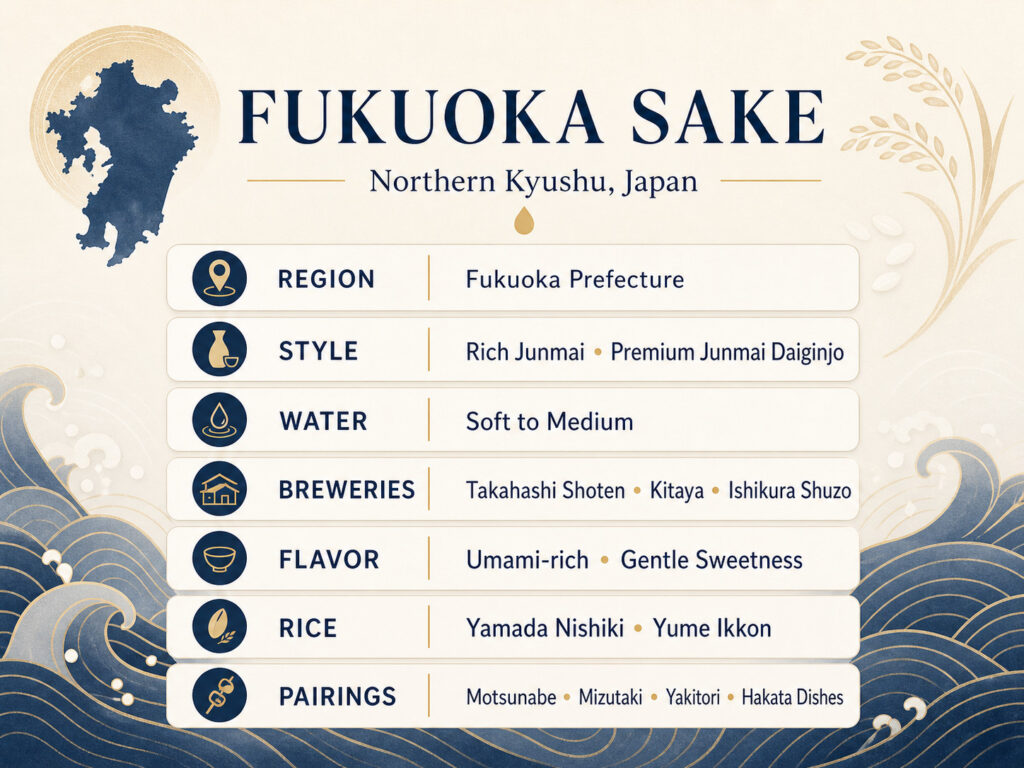
Here is a fast snapshot before the details begin.
| Region | Fukuoka Prefecture, northern Kyushu |
| Famous For | Rich junmai and premium Fukuoka junmai daiginjo |
| Water Type | Soft to medium, from the Chikugo River basin |
| Famous Breweries | Takahashi Shoten (Shigemasu), Kitaya, Ishikura Shuzo |
| Flavor Trend | Umami-rich with gentle sweetness |
| Signature Rice | Yamada Nishiki, Yume Ikkon |
| Best Pairings | Motsunabe, mizutaki, yakitori, Hakata dishes |
What Makes Fukuoka Sake Unique
Several factors shape the character of Kyushu sake from Fukuoka. Water leads the list, yet rice, climate, and people matter too. Food culture also plays a big role. Let me break each one down.
Water From the Chikugo River Basin
Many breweries here draw on the Chikugo River and nearby springs. The water runs soft to medium in mineral content. Because of that, fermentation moves at a gentle pace. As a result, the sake often feels round and smooth. This base supports the region’s signature mellow body. In short, Fukuoka sake brewed with high-quality sake rice and pure water starts with a strong foundation.
A Warm Kyushu Climate
Kyushu sits in the warm south of Japan. Winters here stay milder than in snowy Niigata. So brewers must manage fermentation with extra care. Many work through the cooler months to keep control. This climate nudges the style toward fuller, warmer flavors. Honestly, the southern weather shows up in the glass.
Local Sake Rice: Yamada Nishiki and Yume Ikkon
Rice choice shapes flavor as much as water does. Fukuoka grows large amounts of Yamada Nishiki, the king of sake rice. The prefecture also developed its own variety, called Yume Ikkon. This local grain gives a clean body with soft umami. Because Fukuoka is one of Japan’s major sake rice regions, brewers enjoy easy access to quality grain. That advantage helps explain the rich and mellow Fukuoka junmai sake found here.
Brewers and the Chikugo Tradition
Fukuoka holds a deep brewing history along the Chikugo River. Towns like Yame and Kurume grew into busy sake hubs. Skilled toji passed their methods down through generations. Today some kura blend that heritage with modern tools. Several have won major national and international awards. The mix of old and new keeps the scene lively.
A Food Culture of Bold Hot Pots
Local cuisine pushed the sake toward richness. Fukuoka loves bold dishes like motsunabe and yakitori. Such hearty food needs a sake with body and sweetness. Therefore brewers leaned away from thin, sharp styles. The drink and the table grew up together, side by side.
How Fukuoka Sake Compares to Other Regions
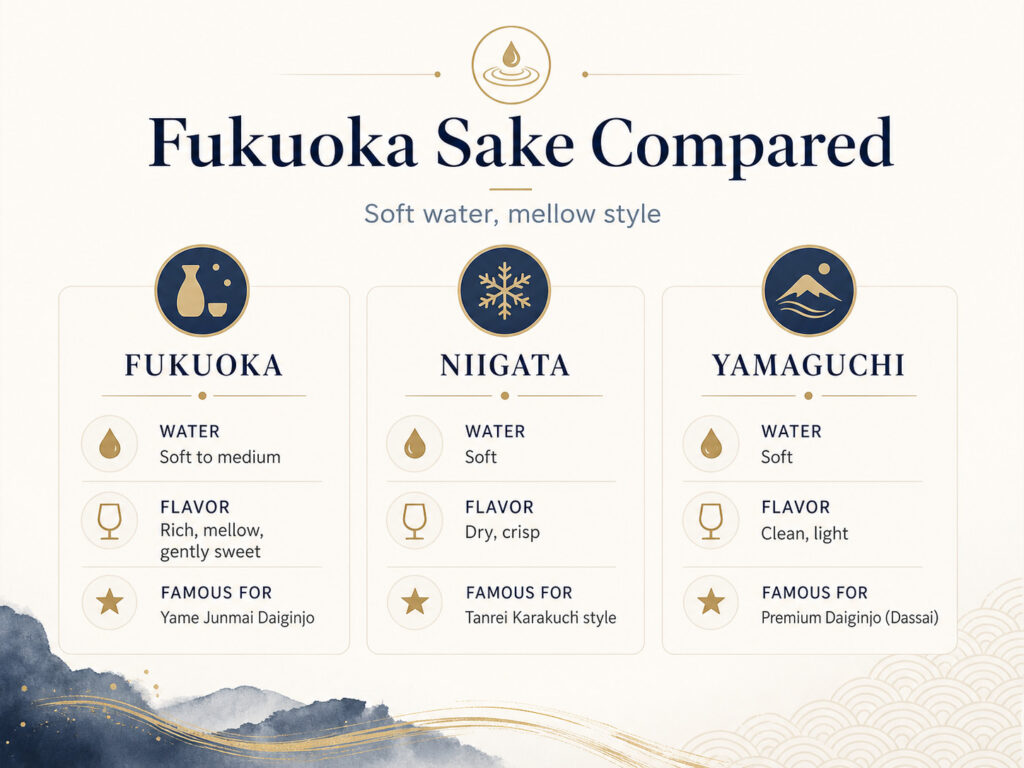
A short comparison helps place this region on the map. The table below sets it next to two famous neighbors.
| Region | Water | Typical Flavor | Famous For |
|---|---|---|---|
| Fukuoka | Soft to medium | Rich, mellow, gently sweet | Yame junmai daiginjo |
| Niigata | Soft | Dry, crisp | Tanrei karakuchi style |
| Yamaguchi | Soft | Clean, light | Premium daiginjo (Dassai) |
Niigata feels drier and sharper than Fukuoka. Yamaguchi leans clean and light by comparison. Fukuoka, meanwhile, offers more body and sweetness. That fuller profile suits the local food perfectly.
Flavor Profile and Characteristics
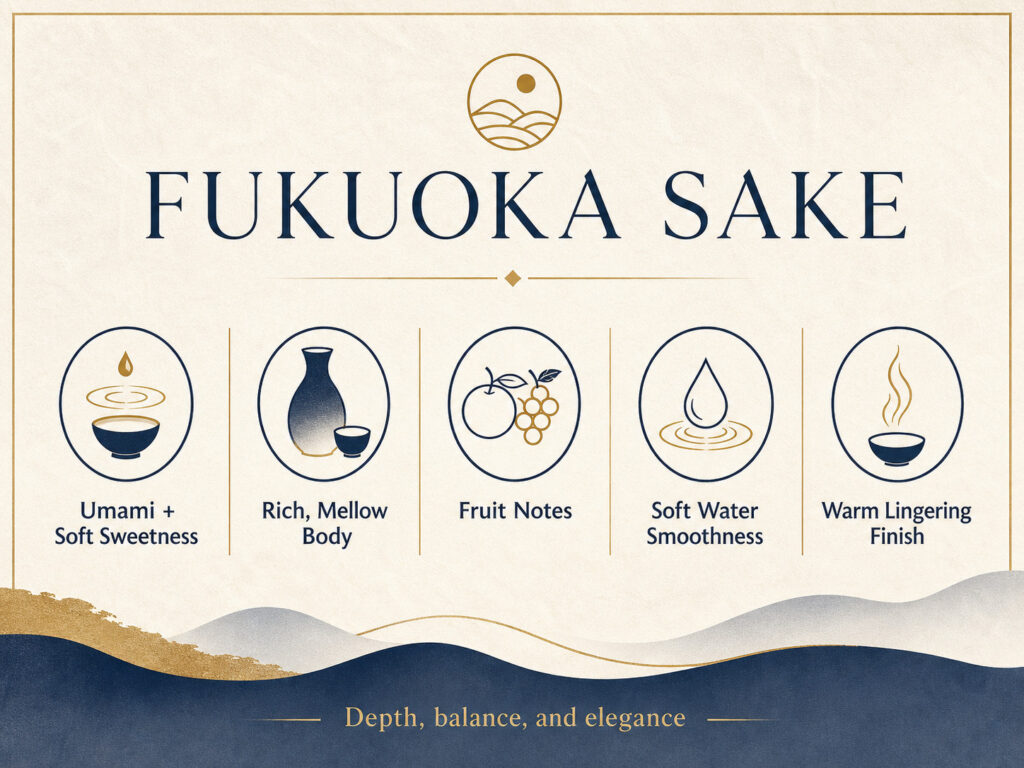
Most Fukuoka sake leans rich, mellow, and rounded. The umami sits forward, balanced by a soft sweetness. Brewers here chase depth more than sharp dryness. Therefore the finish usually feels warm and satisfying. Aromas range from ripe fruit to steamed rice and gentle flowers. Here is what you can generally expect:
- A Fukuoka sake with a balance of umami and sweetness
- A rich, mellow body that suits bold food
- Soft fruit aromas, such as melon, banana, and apple
- A smooth texture from soft local water
- A warm, lingering finish rather than a sharp snap
Of course, styles vary by brewery. A premium Fukuoka junmai daiginjo can feel fragrant and refined. Meanwhile a classic junmai shows more rice depth and warmth. That range keeps the region interesting for curious drinkers. Even longtime fans still find new favorites here.
History of Fukuoka Sake
Edo-Period Roots Along the Chikugo River
Fukuoka has brewed sake for centuries, like most of Japan. During the Edo period, the Chikugo plain offered rice and water in plenty. River transport then moved goods quickly across the region. So brewing grew alongside farming and trade. Towns such as Yame and Kurume became local sake centers. Many breweries trace their roots to this era.
A Major Sake Rice Region
Over time, Fukuoka built a strong reputation for sake rice. Its farms grew large crops of prized Yamada Nishiki. Because good rice stayed close, brewers could experiment freely. That access shaped a confident, full-flavored style. The link between farm and kura runs deep here. In a sense, the rice fields built the sake.
The Modern Scene
Recent decades brought fresh energy to the prefecture. Some breweries won top prizes at national and global contests. One Yame kura even claimed a famous world championship title. As a result, critics now treat Fukuoka craft sake from Japan seriously. Young brewers keep refining both junmai and daiginjo lines. The rise feels steady, built on old foundations.
Famous Breweries and Brands
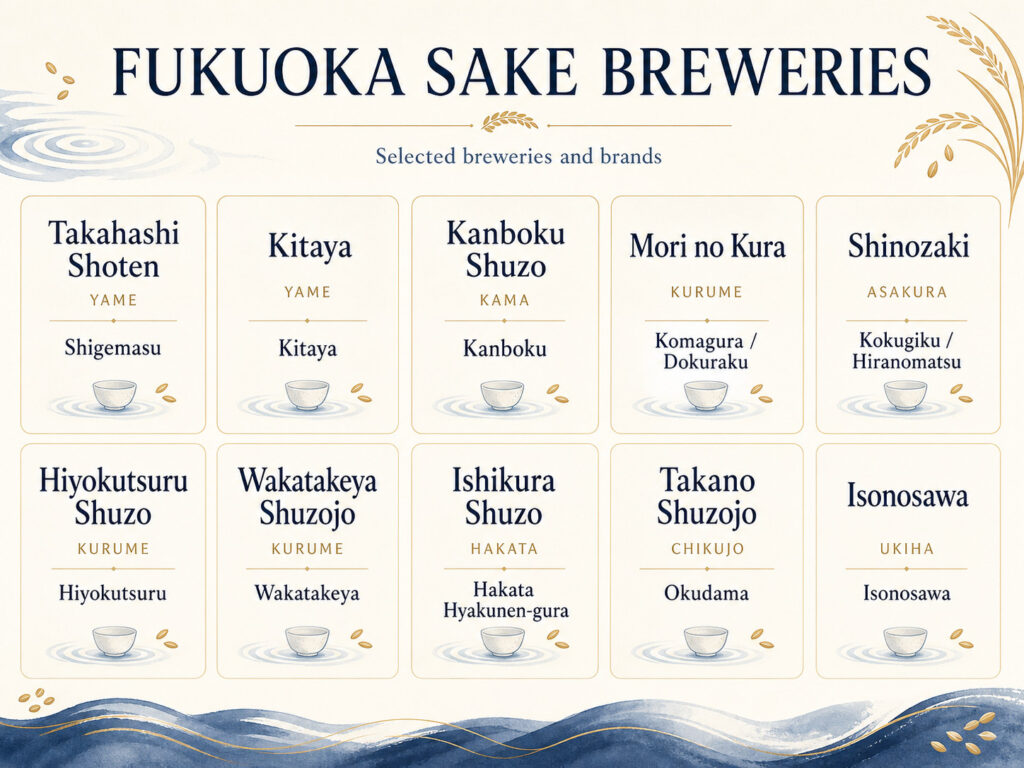
The prefecture holds many respected breweries, especially around Yame and Kurume. The list below is not a ranking. Instead, it maps who makes what, and where.
- Takahashi Shoten, Yame. This kura makes Shigemasu 繁桝. It earns praise for elegant junmai daiginjo from Yame, Fukuoka.
- Kitaya, Yame. This historic brewery makes Kitaya 喜多屋. It won a major international champion sake award and built a global name.
- Kanboku Shuzo, Kama. This long-running house makes Kanboku 寒北斗. The brewery carries centuries of local tradition.
- Mori no Kura, Kurume. This kura in Mizuma makes Komagura and Dokuraku. It focuses on pure, additive-free junmai sake.
- Shinozaki, Asakura. This producer makes Kokugiku 国菊 and Hiranomatsu 比良松. It is also famous for rich amazake and nigori.
- Hiyokutsuru Shuzo, Kurume. This brewery makes Hiyokutsuru 比翼鶴. It keeps a classic, food-friendly Kurume style.
- Wakatakeya Shuzojo, Kurume. This house makes Wakatakeya. Founded in 1699, it ranks among Fukuoka’s oldest kura.
- Ishikura Shuzo, Hakata. This brewery makes sake at the historic Hakata Hyakunen-gura 百年蔵. It welcomes visitors for tours and tasting.
- Takano Shuzojo, Chikujo. This small eastern brewery makes Okudama and other local labels. It serves a loyal regional base.
- Isonosawa, Ukiha. This riverside kura makes Isonosawa. The team draws on clear water near the Chikugo River.
Beyond these names, many smaller labels reward exploration. The Yame and Kurume areas alone hold a dense cluster of kura. Each one adds another layer to the local map.
Famous Local Sake Types
Fukuoka does not invent its own legal categories. Instead, it expresses the standard styles in its own rich way. If you want the full system, start with our guide to the types of Japanese sake. Here are the styles you will meet most often in the region:
- Junmai: pure rice sake with body and warm umami
- Ginjo: fragrant, lighter, and easy to enjoy chilled
- Junmai Ginjo: fruity and refined, a great first premium pour
- Daiginjo and Junmai Daiginjo: highly polished and elegant
- Nigori: cloudy and sweet, a Shinozaki specialty here
The premium end shines brightly. Many fans first try a premium Fukuoka junmai daiginjo from Yame and stay hooked. For broader background, our main sake guide explains how brewers craft each grade.
Best Food Pairings
Fukuoka food runs bold, so the sake must keep up. A rich, mellow pour stands strong beside hearty dishes. Therefore Kyushu food culture and Fukuoka sake pairing works almost by instinct. Try these matches first:
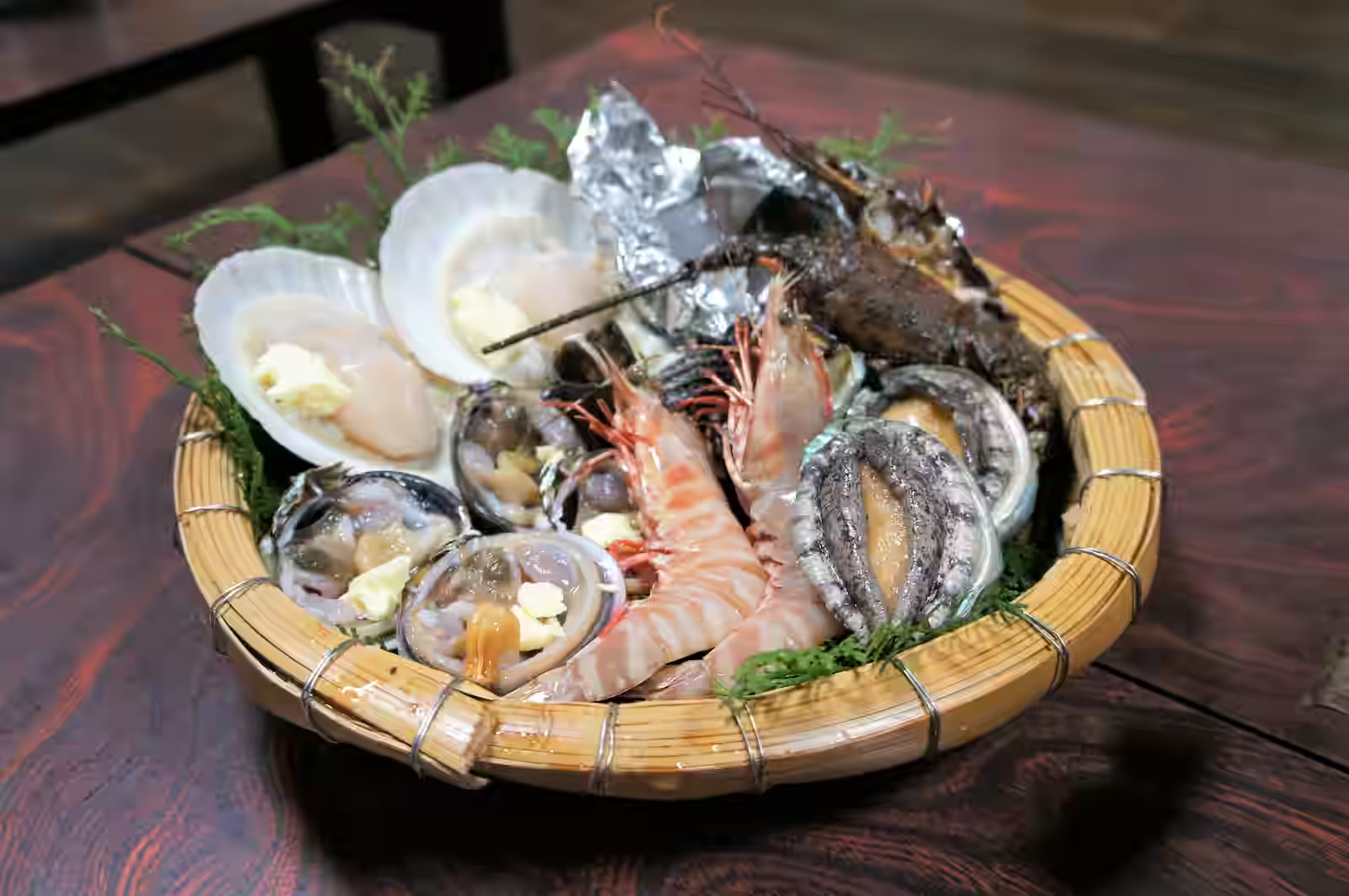
- Motsunabe, the region’s rich offal hot pot
- Mizutaki, an elegant Hakata chicken hot pot
- Hakata ramen, the famous tonkotsu noodle bowl
- Yakitori and other grilled skewers from the yatai stalls
A fuller junmai balances the fat in motsunabe nicely. Meanwhile a clean daiginjo flatters the delicate mizutaki broth. For a wider local view, browse our Fukuoka food guide. It maps the dishes that share a table with these bottles.
Best Places to Experience Fukuoka Sake
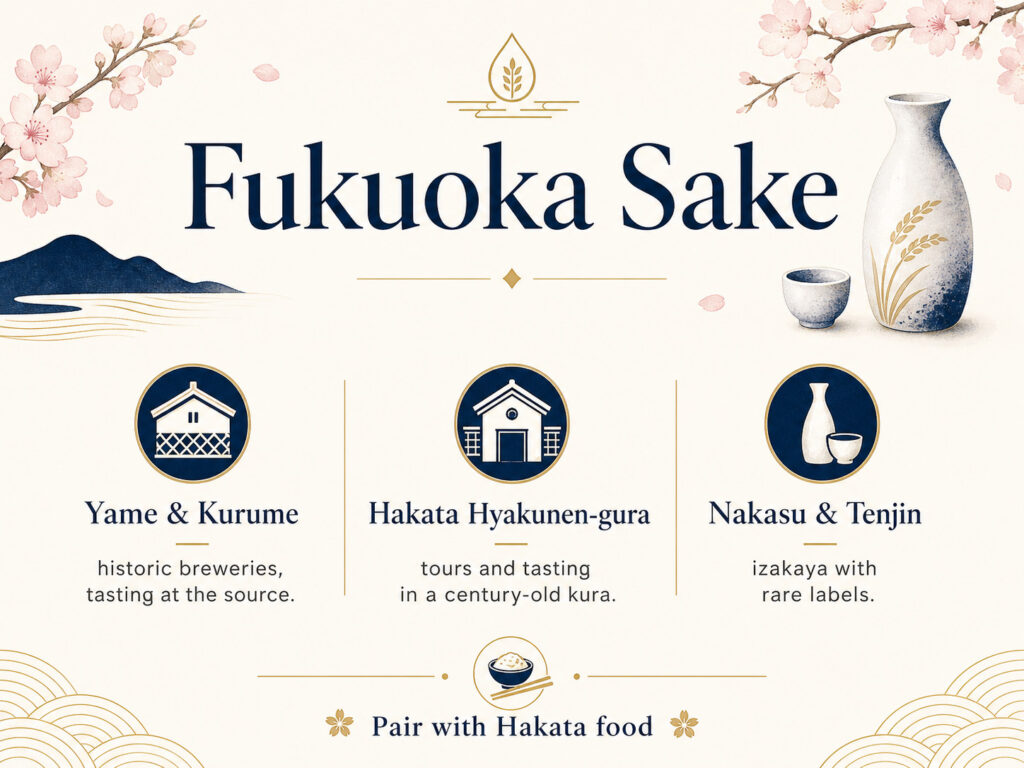
You can taste this sake at the source, which is half the fun. A Fukuoka sake brewery tour in Yame and Kurume makes a natural route. Both towns hold a tight cluster of historic kura. Yame also pairs sake with its famous green tea. So a day trip from Hakata to Fukuoka’s sake breweries feels easy to plan.
Inside the city, one spot stands out for visitors. The Hakata Hyakunen-gura, run by Ishikura Shuzo, offers tours and tasting. There you can sip local pours inside a century-old building. Many izakaya around Nakasu and Tenjin also stock rare labels. If you plan ahead, a simple Fukuoka sake brewery map and guide helps a lot. Honestly, pairing a tasting with fresh Hakata food feels like the real highlight.
Final Thoughts
Fukuoka proves that a food city can also brew great sake. The prefecture blends good water, top rice, and skilled hands. Its sake stays rich and mellow, with a gentle sweet edge. Famous awards opened the door, though many kura deserve attention. If you love bold food, this region rewards a deeper look. Pour a glass beside a hot pot, and the match makes instant sense.
Fukuoka Sake FAQ
What is Fukuoka sake known for?
This Kyushu region produces rich, mellow brews with gentle sweetness. Brewers rely on good water and quality rice. Many bottles balance strong umami with soft fruit notes. The result suits the area’s bold local food.
Which breweries are most famous?
Takahashi Shoten makes Shigemasu in Yame. Kitaya, also in Yame, won a global champion sake title. Ishikura Shuzo runs the historic Hakata Hyakunen-gura. Together they show the region’s range and depth.
Why does the water matter so much?
Soft water shapes the smooth, mellow texture of these brews. It carries fewer minerals, so fermentation moves slowly. As a result, the sake turns round rather than sharp. Many kura draw on the Chikugo River basin.
What rice do brewers use here?
Many producers choose Yamada Nishiki, the celebrated king of sake rice. The prefecture grows large amounts of it locally. Fukuoka also developed its own grain, called Yume Ikkon. These rice types support a full, balanced flavor.
What food pairs best with it?
Bold local dishes match the rich style perfectly. Try motsunabe, mizutaki, or grilled yakitori skewers. A fuller junmai stands up to fatty, savory food. A clean daiginjo suits the lighter chicken hot pot.
Is the sake here sweet or dry?
Most bottles lean toward a gentle sweetness. The umami stays full and rounded. Brewers chase depth rather than sharp dryness. So the finish usually reads warm and mellow.
Where should I take a brewery tour?
Start around Yame and Kurume, which hold many historic kura. Both towns sit a short trip from Hakata. The Hakata Hyakunen-gura offers tours inside the city itself. Planning a route ahead saves time and stress.
What makes this region special for rice?
The prefecture ranks among Japan’s top sake rice producers. Its farms grow large crops of prized Yamada Nishiki. Because good rice stays close, brewers experiment freely. That access shapes a confident, full-flavored style.
Can you visit a brewery from Hakata?
Yes, a day trip from Hakata works easily. Trains and buses reach Yame and Kurume in under two hours. The Hakata Hyakunen-gura even sits within the city. Booking a tour ahead is a smart move.
Can you buy it outside Japan?
Yes, award-winning labels now ship to many countries. Specialty shops and online stores stock the famous brands. Smaller local bottles stay harder to find abroad. A trip to the region remains the surest way.
References
- Fukuoka Sake Brewers Association, http://www.fukuoka-sake.org/ (Surveyed: June 2026)
- Kitaya Official Website, https://www.kitaya.co.jp/ (Surveyed: June 2026)
- Ishikura Shuzo (Hakata Hyakunen-gura) Official Website, https://www.ishikura-shuzou.co.jp/ (Surveyed: June 2026)
- Japan Sake and Shochu Makers Association, https://www.japansake.or.jp/ (Surveyed: June 2026)
Related Articles
- Sake: Types of Japanese Sake, Sake Making (Surveyed: June 2026)
- Junmai Sake (Pure Rice Sake) (Surveyed: June 2026)
- Daiginjo Sake (Surveyed: June 2026)
- Motsunabe (もつ鍋) (Surveyed: June 2026)
- Mizutaki (水炊き) (Surveyed: June 2026)
- Hakata Ramen (博多ラーメン) (Surveyed: June 2026)
- What to Eat in Fukuoka (Surveyed: June 2026)








Comments