





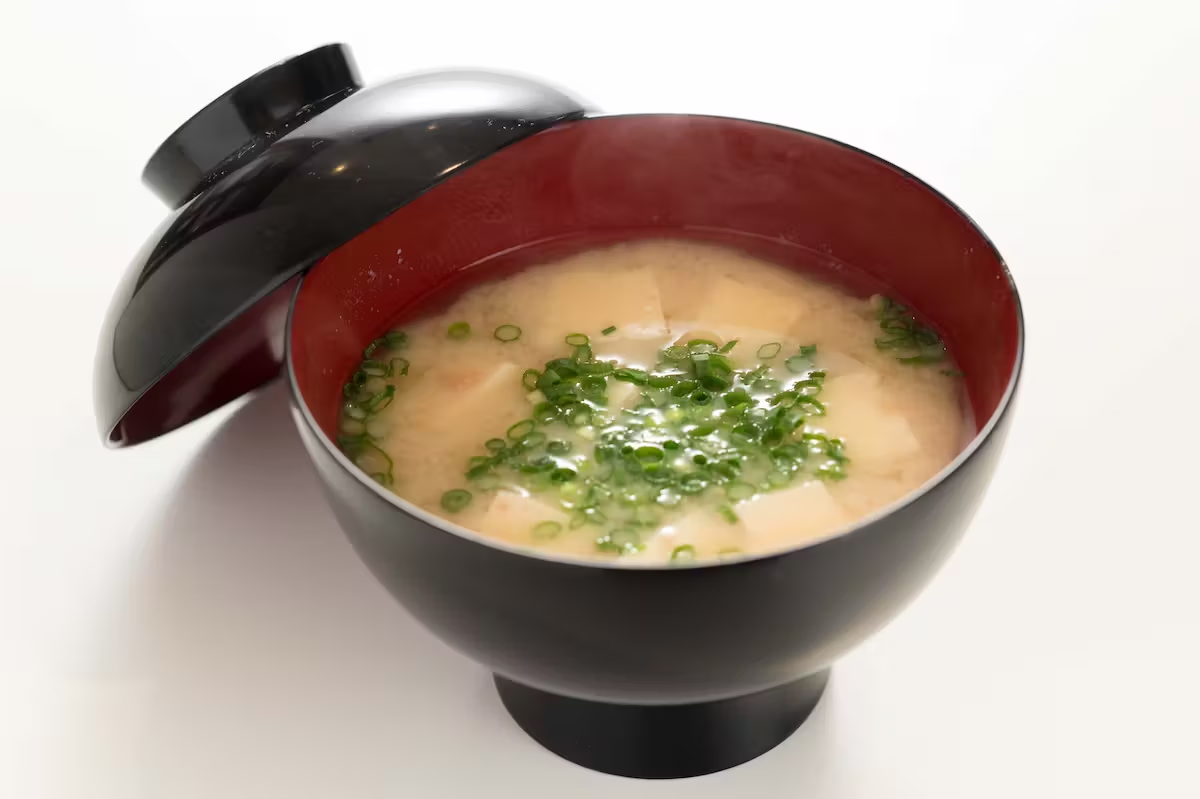
Most miso soup starts with a clear dashi broth. One regional version, however, breaks that rule completely. People in Kagawa make ebi miso soup, a rich shrimp soup. So what is ebi miso soup in Kagawa? It is a creamy miso soup built on whole small shrimp. Cooks grind the shrimp right into the broth. The result is deep, sweet, and packed with umami. Ebi miso soup えびみそ汁 from Kagawa stays a beloved local treasure. Let me introduce this unusual bowl.
What Is Ebi Miso Soup?
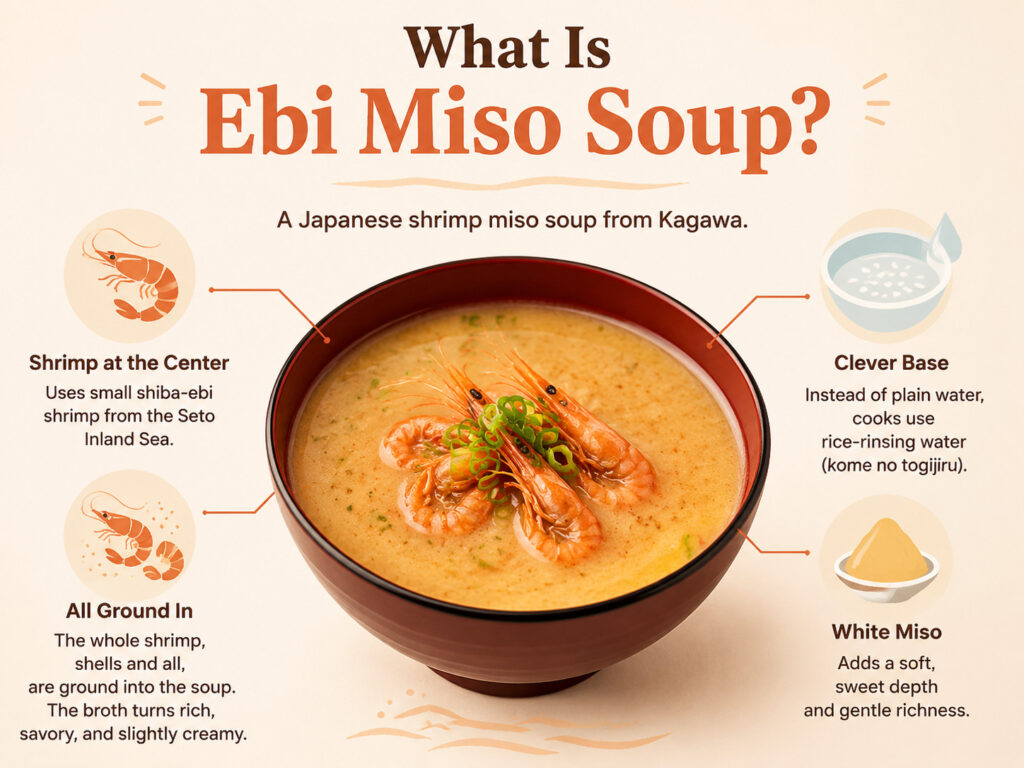
Ebi miso soup is a Japanese shrimp miso soup from Kagawa. The name simply means “shrimp miso soup.” Unlike a normal bowl, it puts shrimp at the center. Cooks use small shiba-ebi shrimp from the Seto Inland Sea. They grind the whole shrimp, shells and all, into the soup. So the broth turns rich, savory, and slightly creamy.
This Sanuki shrimp miso soup also uses a clever base. Instead of plain water, cooks use rice-rinsing water. The Japanese call this kome no togijiru. That starchy liquid gives the soup a smooth, gentle body. White miso then adds a soft, sweet depth. For more on the basics, see our complete guide to miso soup.
The Taste and Features of Ebi Miso Soup
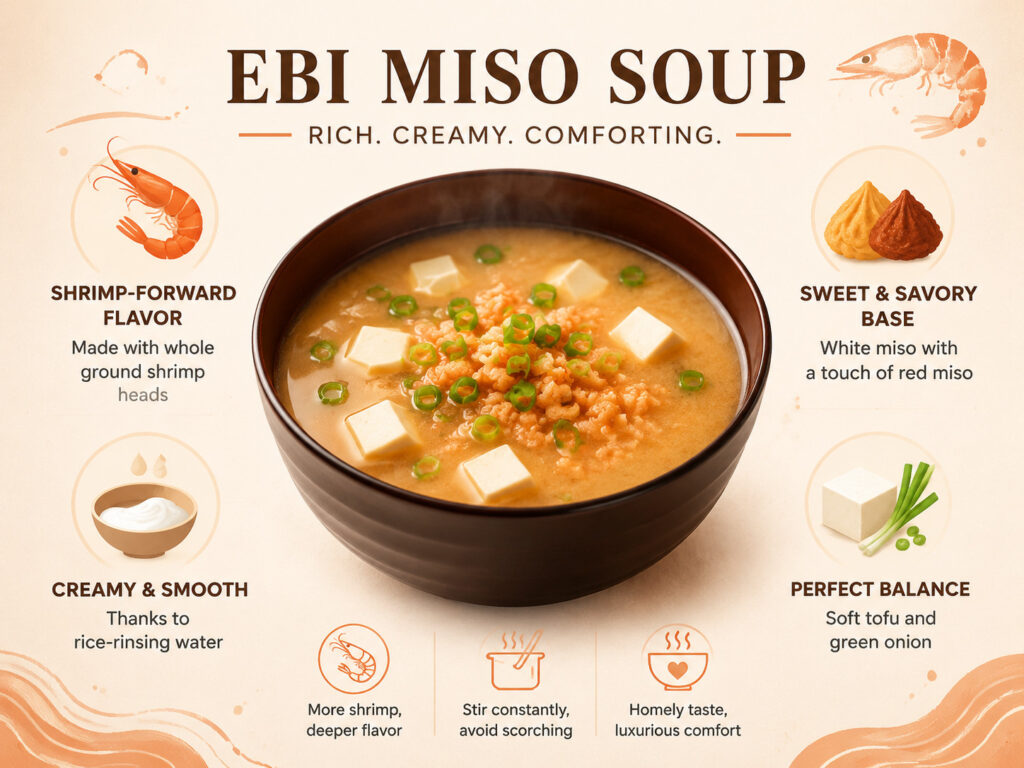
What does this shrimp miso soup taste like? The flavor is far bolder than an everyday bowl. Ground shrimp heads release a deep, sweet umami. The white miso keeps the soup mellow and rounded. Meanwhile, the rice-rinsing water adds a creamy smoothness. So each sip feels rich, warm, and comforting. Here is what defines a good bowl:
- A rich, shrimp-forward flavor from whole ground shiba-ebi
- A creamy, gentle body from the rice-rinsing water
- A sweet, savory base of white miso, sometimes with a little red miso
- Soft cubes of tofu and a scatter of green onion
The shrimp truly drives the whole dish. In fact, more shrimp means a better, deeper flavor. The soup can scorch easily, though, so cooks stir it constantly. Tofu adds softness, while green onion brings a fresh lift. Some cooks add a touch of red miso for extra depth. So the bowl feels homely yet surprisingly luxurious.
How to Make Sanuki-Style Ebi Miso Soup
How do cooks make Sanuki-style ebi miso soup? The method is simple, yet it needs care. Each step builds the rich shrimp flavor. Let us follow it in order.
- Save the rice-rinsing water, using the second, cleaner rinse
- Remove the heads and tails, then wash the shrimp in salt water
- Blend the unpeeled shrimp with some rice-rinsing water until smooth
- Heat the rest of the rice water, then add the ground shrimp
- Stir in white miso and simmer gently for about twenty minutes
- Add diced tofu, stir to avoid scorching, then top with green onion
Grinding whole shrimp in rice-rinsing water is the key trick. It pulls every bit of flavor from the shells and heads. A blender makes the texture smooth, though a knife and mortar work too. Constant stirring keeps the thick soup from burning. So patience really does pay off here.
Ebi Miso Soup vs Regular Miso Soup
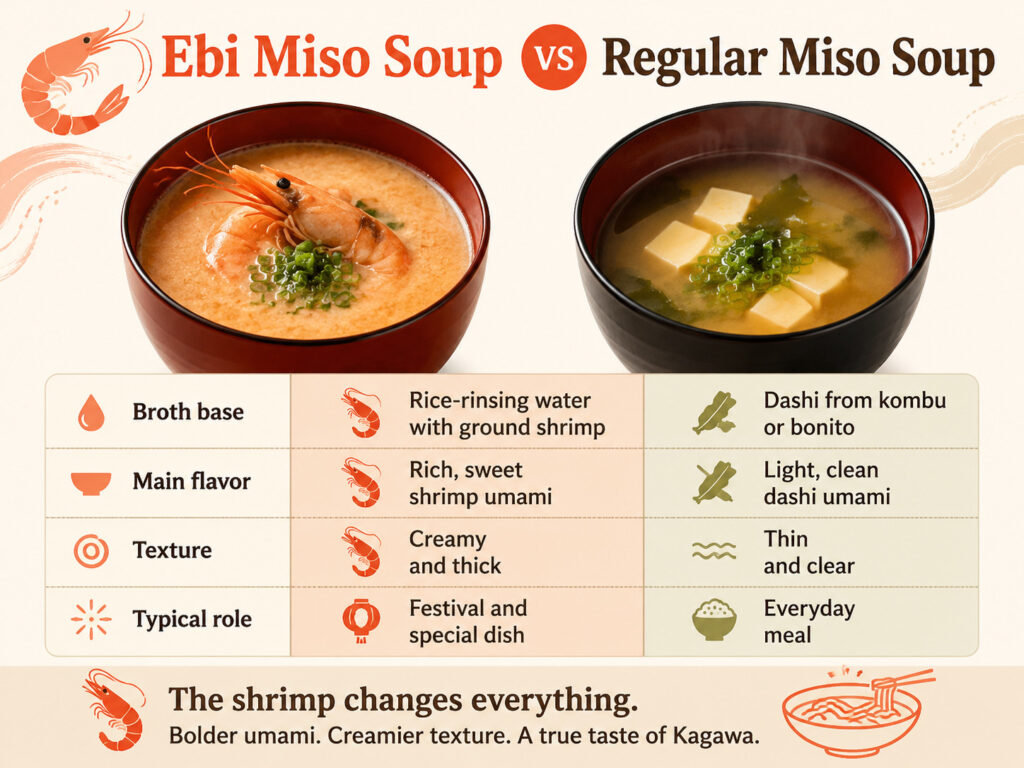
How does it differ from an everyday bowl? The contrast is actually quite striking. A short table makes the differences clear.
| Point | Ebi miso soup | Regular miso soup |
|---|---|---|
| Broth base | Rice-rinsing water with ground shrimp | Dashi from kombu or bonito |
| Main flavor | Rich, sweet shrimp umami | Light, clean dashi umami |
| Texture | Creamy and thick | Thin and clear |
| Typical role | Festival and special dish | Everyday meal |
So the shrimp changes everything about the soup. A normal bowl leans on dashi for its umami. This version, by contrast, draws flavor straight from shellfish. The texture also feels thicker and more filling. Kagawa has other bold local flavors too, like its famous Sanuki udon.
The History and Culture of Ebi Miso Soup
Shrimp from the Seto Inland Sea
The dish grew from the rich Seto Inland Sea. These calm waters teem with many kinds of shrimp. Small shrimp under about ten centimeters are called ko-ebi. The shiba-ebi used here belongs to that group. Because the catch was plentiful, cooks made the most of it. So this Seto Inland Sea shiba-ebi miso soup became a local staple.
A Festival Dish from Mitoyo
The soup has deep ties to a local festival. It appears at the Doburoku Festival in Mitoyo. This autumn event is held at Uga Shrine in Toyonaka. The festival gives thanks for a good harvest. Priests offer doburoku, an unrefined sake, to the gods. Afterward, they serve it to guests with rice, namasu, and ebi miso soup.
The shrine itself holds a rare honor. It has been allowed to brew doburoku for about 300 years. Very few shrines in Japan may legally do so. In fact, Uga Shrine is the only one in Shikoku. So the soup carries real cultural weight at this festival.
Ebi Miso Soup Today
Times have shifted how people enjoy the dish. Once, it was mainly festival fare at the shrine. These days, families make it at home instead. Parents pass the recipe down to their children. So the tradition lives on in local kitchens. It remains a warm taste of Sanuki home cooking.
Final Thoughts
Ebi miso soup shows the clever thrift of Kagawa cooks. It turns small shrimp into a rich, satisfying bowl. The rice-rinsing water adds a smooth, creamy touch. Its festival roots give it a special, festive feel. Yet it still works as honest home cooking. If you visit Kagawa, look beyond the famous udon. A bowl of this shrimp soup tells its own quiet story.
Ebi Miso Soup FAQ
What is ebi miso soup?
It is a rich shrimp miso soup from Kagawa. Cooks grind whole small shrimp into the broth. They also use rice-rinsing water as the base. The result is creamy, sweet, and full of umami.
What shrimp is used?
Cooks use small shiba-ebi from the Seto Inland Sea. These belong to a group called ko-ebi, or small shrimp. They grow to about ten centimeters at most. The whole shrimp goes into the soup, shells and all.
Why use rice-rinsing water?
Rice-rinsing water, or kome no togijiru, adds body. The starch gives the soup a smooth, creamy feel. It also softens the strong shrimp flavor. Cooks usually use the second, cleaner rinse.
How does it taste?
The flavor is rich, sweet, and deeply savory. Ground shrimp heads give a strong umami punch. White miso keeps the soup mellow and gentle. Overall, it feels creamier than a normal bowl.
How is it different from regular miso soup?
Regular miso soup uses kombu or bonito dashi. This version draws its umami from ground shrimp. It also uses rice-rinsing water instead of plain water. As a result, the soup is richer and creamier.
What is in ebi miso soup besides shrimp?
The main extras are tofu and green onion. White miso forms the savory base. Some cooks add a little red miso for depth. Diced tofu brings softness, while green onion adds freshness.
Where can you try it?
It is closely tied to the Doburoku Festival in Mitoyo. There, it is served at Uga Shrine each autumn. These days, families also make it at home. So it is best found in the Sanuki region of Kagawa.
Is ebi miso soup hard to make?
No, but it does need attention. The thick soup scorches easily, so constant stirring helps. Grinding the shrimp smoothly also takes a little effort. Otherwise, the steps are simple and home-friendly.
References
- MAFF Our Regional Cuisines, Ebi Miso Shiru (Kagawa). (Surveyed: June 2026)
- Sanuki no Shoku (Kagawa Food Portal), Ebi Miso Shiru recipe and Uga Shrine tradition. (Surveyed: June 2026)
Related Articles
- The Complete Guide to Miso Soup (Surveyed: June 2026)
- Traditional Japanese Soups and Broths (Surveyed: June 2026)
- Sanuki Udon (讃岐うどん) (Surveyed: June 2026)
- Hishio Don (Shodoshima) (Surveyed: June 2026)
- Chikuwa (ちくわ) (Surveyed: June 2026)




Comments