'/%3E%3Cpath%20fill='%23b2b2b2'%20d='M241%20382q0%2016%2017%2026%2017%2011%2042%2011t42-11q16-11%2017-26V269H241'/%3E%3Cpath%20fill='%239f7e00'%20d='M241%20379q0%2014%208%2023%209%209%2021%209%2014%200%2021-9%209-9%209-23V269h-59'/%3E%3Cpath%20d='M241%20339v-70h59v110q0%2014-9%2023l-6%205v-68h-15v72q-8%200-14-4v-68zm59%2040c0%2022%2015%2032%2029%2032%2021%200%2030-18%2030-32v-40h-59'/%3E%3Cpath%20fill='%239f7e00'%20d='M266%20277v5h2v12h-3v-5h2v-5h-9v5h2v5h-4v9h3v18h-5v10h34v-10h-5v-18h3v-9h-4v-5h2v-5h-9v5h2v5h-3v-12h2v-5zm42%20101q0%2010%206%2017%206%206%2015%207%2010-1%2016-7%206-7%206-17v-29h-43'/%3E%3Ccircle%20fill='%230044ad'%20cx='329.5'%20cy='372'%20r='6'/%3E%3Cellipse%20fill='%230044ad'%20cx='300'%20cy='340'%20rx='16'%20ry='21'/%3E%3C/svg%3E)


'%3E%3Cpath%20stroke='%23000'%20stroke-width='4'%20d='m-35-37-13%2020m5%203%2013-20m5%203-13%2020m63%2042%206-9m1-2%206-9m5%203-6%209m-1%202-6%209m5%203%206-9m1-2%206-9m-96%200%2013%2020m5-3-6-9m-1-2-6-9m5-3%2013%2020m63-42-6-9m-1-2-6-9m5-3%2013%2020m5-3-6-9m-1-2-6-9'/%3E%3Ccircle%20r='24'%20fill='%23cd2e3a'/%3E%3Cpath%20fill='%230047a0'%20d='M0%200a12%2012%200%201%201%2020%2013%2024%2024%200%201%201-40-26A12%2012%200%201%200%200%200'/%3E%3C/g%3E%3C/svg%3E)


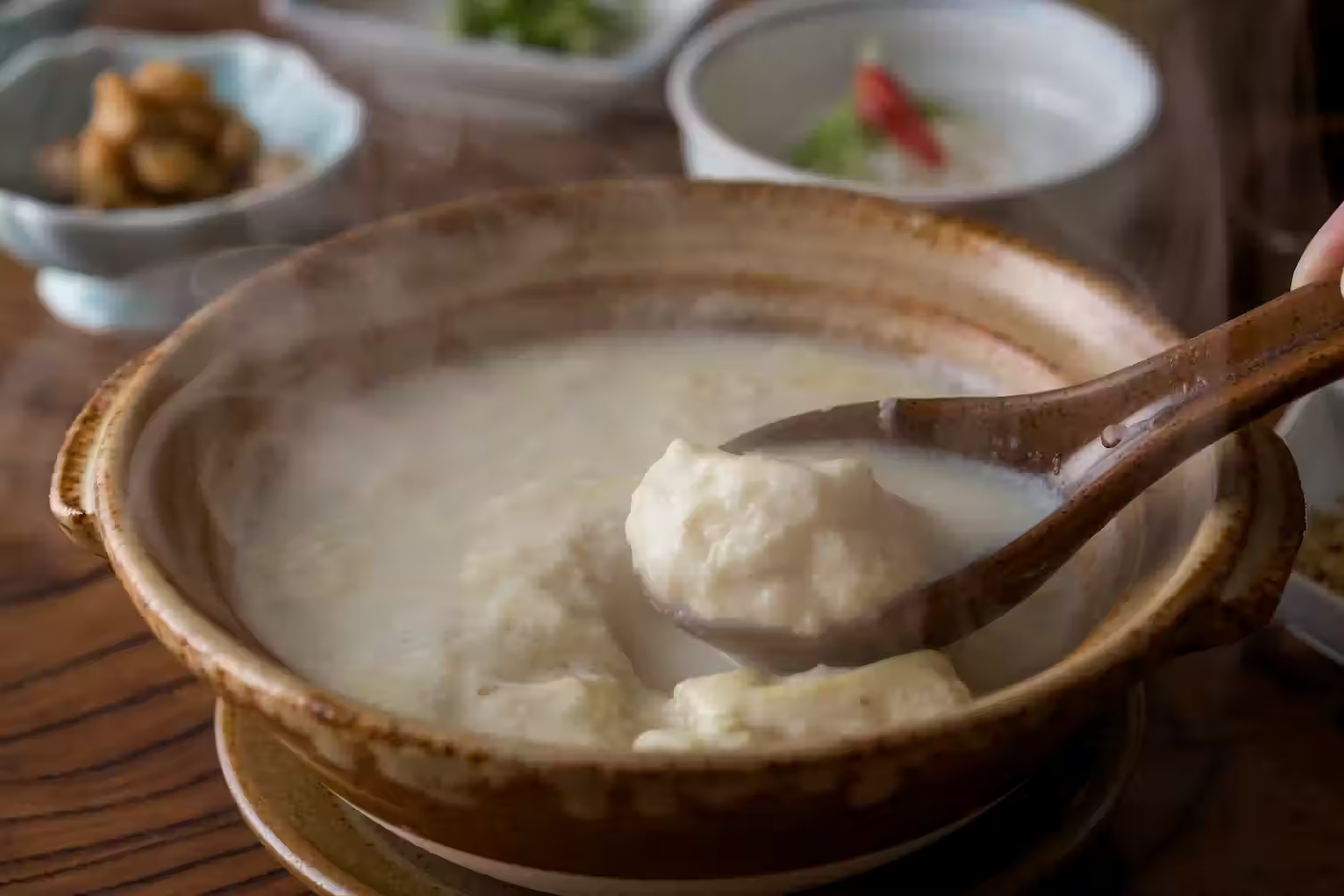
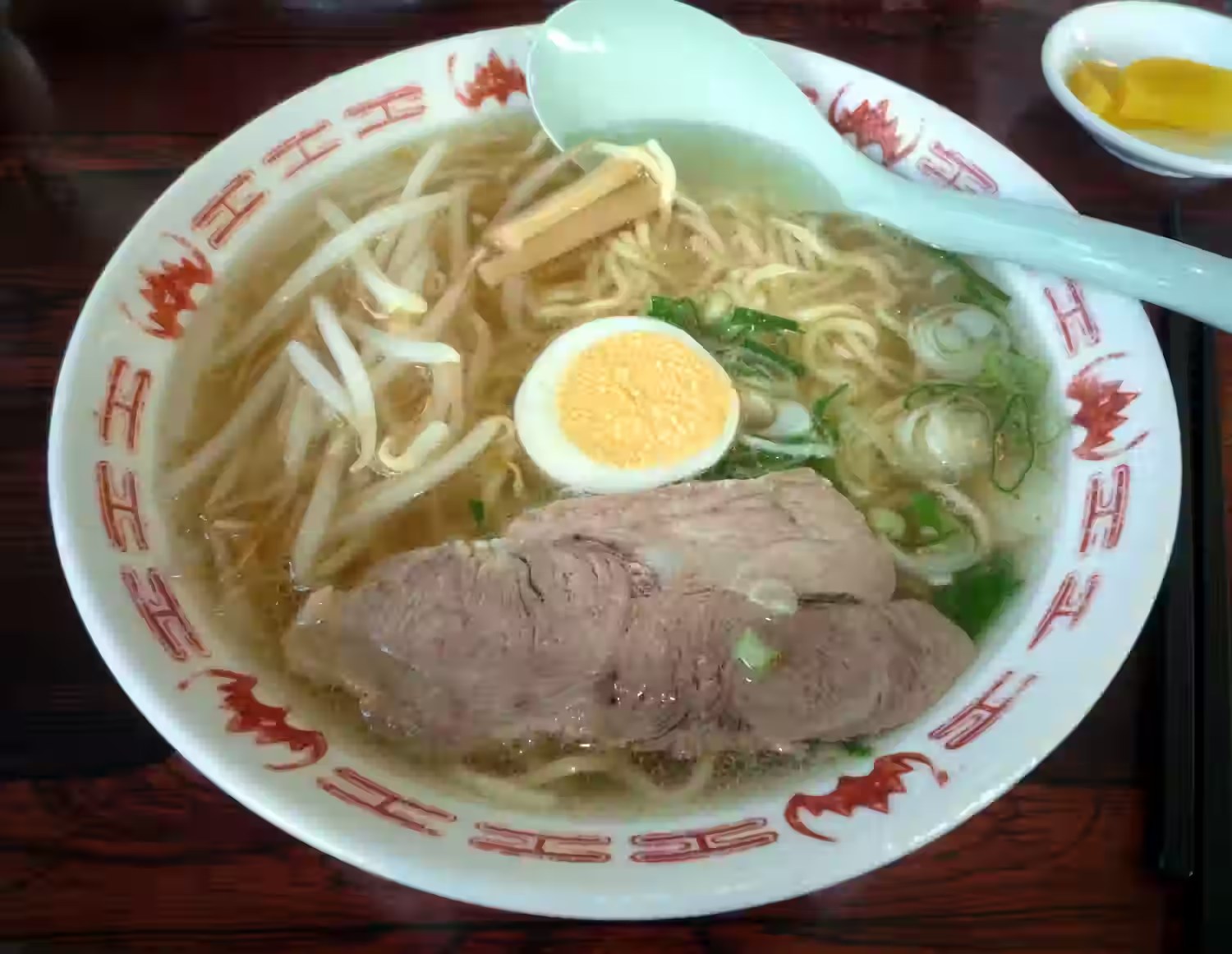



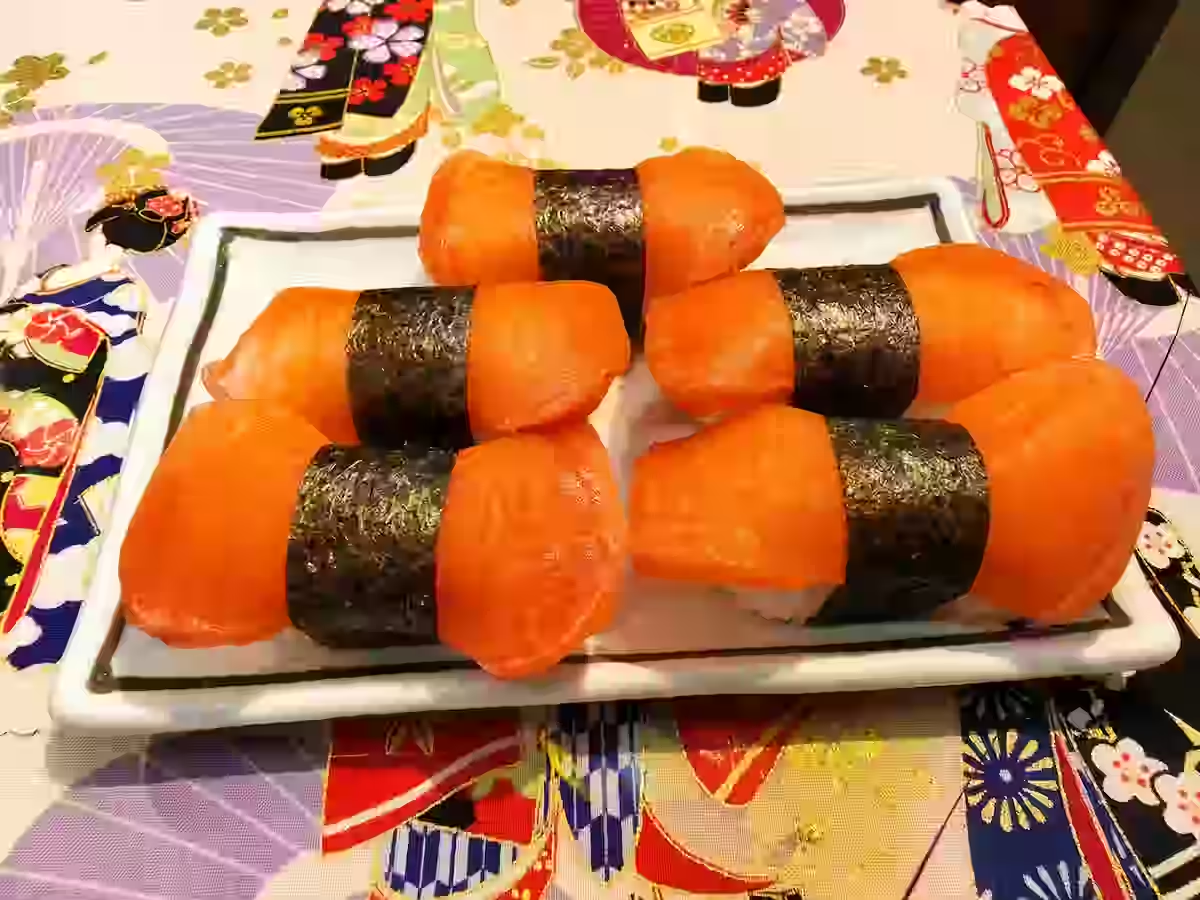
Sushi does not always need fish to shine. In fact, akakabu sushi proves that point beautifully. So what is akakabu sushi? It is nigiri topped with pickled red turnip from Hida. Literally, the Japanese name means red turnip sushi.
Specifically, its topping is a famous pickle from Gifu’s mountains. Indeed, the pickle glows a deep, jewel-like crimson. Moreover, its gentle sourness pairs wonderfully with vinegared rice. Today, the dish belongs to a special local sushi set from Gifu. This guide explains the story behind this unusual nigiri. We will meet the rare turnip and the pickle it becomes.
We will also see how sushi chefs turned it into a star. By the end, you may crave vegetable sushi yourself.
Quick Facts About Akakabu Sushi
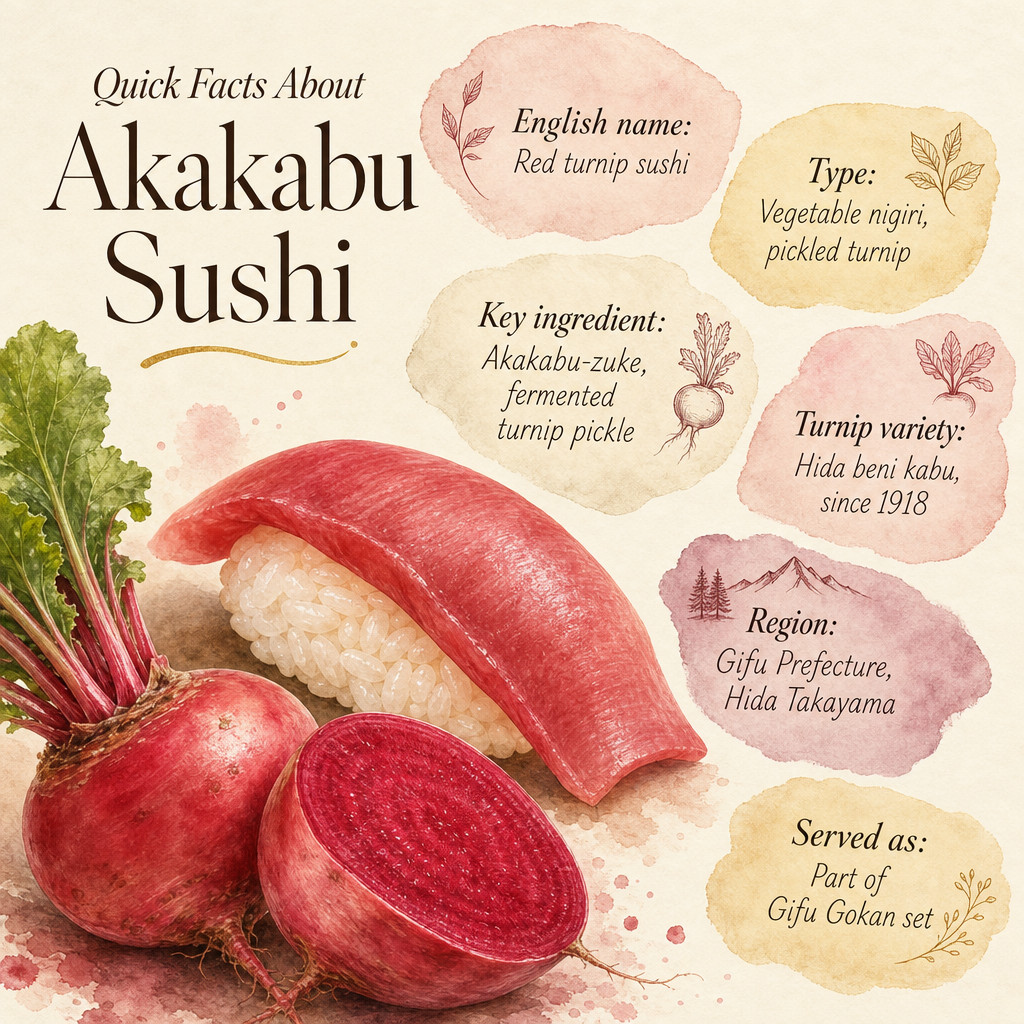
| Japanese Name | 赤かぶ寿司 / 赤かぶにぎり (akakabu sushi) |
| English Name | Red turnip sushi |
| Type | Vegetable nigiri topped with pickled red turnip |
| Key Ingredient | Akakabu-zuke, fermented Hida red turnip pickle |
| Turnip Variety | Hida beni kabu, discovered in 1918 |
| Region | Gifu Prefecture, especially Hida Takayama |
| Served As | Part of the Gifu Gokan (five-piece) sushi set |
Akakabu sushi is a vegetable nigiri from Gifu Prefecture. Specifically, its topping is fermented red turnip pickle from Hida. Historically, the pickle tradition dates back to the Edo period. By contrast, the sushi itself is a modern local creation. Today, Gifu’s sushi association serves it in a five-piece set. Above all, it offers a fresh take on what sushi can be.
What Is Akakabu Sushi?
Akakabu sushi is a form of nigiri sushi topped with pickled red turnip. Specifically, the turnip comes from the Hida region of northern Gifu. Takayama and Hida City form its heartland. There, red turnip pickles are a beloved regional icon. Simply, a thin slice of the pickle rests on vinegared rice. The result is simple, striking, and quietly delicious.
Why put a pickle on sushi? The idea makes real sense. After all, the pickle is tangy, crisp, and lightly salty. Naturally, those qualities suit sushi rice remarkably well. Pickled toppings also feel easy and approachable. So even sushi beginners enjoy this gentle, bright flavor.
Part of a Special Gifu Sushi Set
Interestingly, akakabu sushi rarely appears alone. Instead, it stars in a set called the Gifu Gokan Sushi. The name means five blissful pieces from Gifu. Notably, local sushi masters created the set together. In turn, each piece showcases a proud Gifu ingredient.
- Ayu nigiri: grilled overnight-dried sweetfish from clear rivers.
- Unagi nigiri: rich, savory freshwater eel.
- Akakabu nigiri: pickled Hida red turnip, bright and tangy.
- Hida beef nigiri: roast beef from Gifu’s famous wagyu.
- Jinenjo nigiri: grated wild mountain yam, creamy and healthy.
The Hida Red Turnip Behind the Sushi
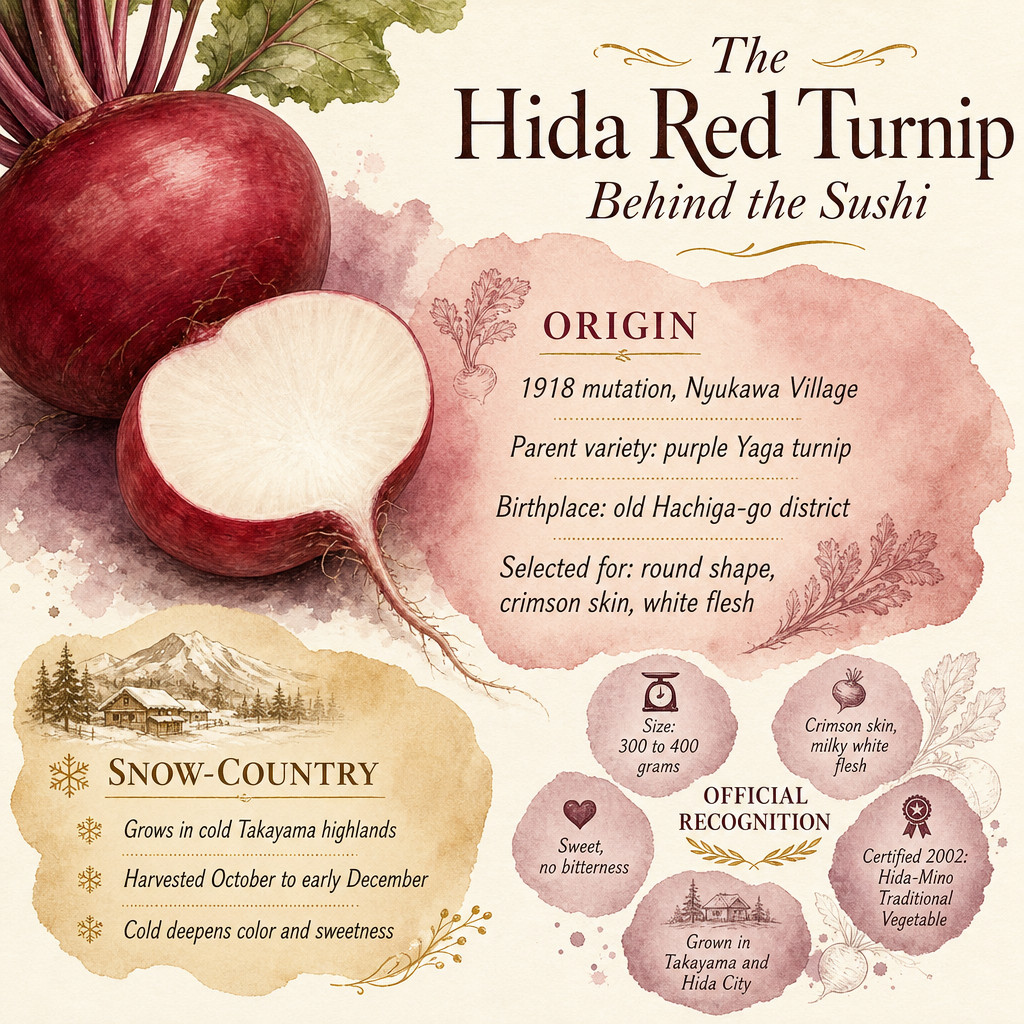
Indeed, the story truly begins with a special vegetable. That vegetable is the Hida beni kabu, or Hida red turnip. It grows in the cold highlands around Takayama. Notably, its skin shines a deep, vivid crimson red.
Remarkably, the variety has a precise birthday. In 1918, farmers spotted a red mutation in a local turnip. Specifically, that local parent was the purple Yaga turnip. The striking red strain was selected and kept. Eventually, it became the treasured Hida beni kabu we know today.
The birthplace adds a lovely layer to the story. The mutation appeared in former Nyukawa Village, now part of Takayama. That area was anciently called Hachiga-go. Its local turnip, the Yaga kabu, took its name from the district. Farmers then selected plants with round shape, bright crimson skin, and white flesh.
A Vegetable Built for Snow Country
Indeed, Hida winters are long, snowy, and harsh. Back then, fresh vegetables vanished for months at a time. Yet the red turnip endures cold and frost well. Typically, farmers harvest it from October to early December. The autumn chill deepens both its color and its sweetness.
An Officially Recognized Traditional Vegetable
The turnip itself is a small beauty. It grows flat and round, weighing 300 to 400 grams. The skin glows crimson while the flesh stays milky white. Its dense, smooth texture carries a gentle sweetness. There is no bitterness or sharpness at all.
Officialdom has honored this vegetable, too. In 2002, Gifu certified it as a Hida-Mino Traditional Vegetable. The program protects the prefecture’s heirloom crops. Growing areas span Takayama and neighboring Hida City. So the little turnip enjoys real protected status.
Akakabu-zuke: The Famous Red Turnip Pickle
Ultimately, the turnip finds its destiny as a pickle. Locals call this pickle akakabu-zuke. In fact, it ranks among Japan’s most loved regional pickles. Its roots reach back to the Edo period.
How the Pickle Is Made
Indeed, the traditional method is beautifully simple. First, whole turnips go into barrels with only salt. Then natural lactic acid bacteria do the work. The pickles ferment slowly through the cold months. Finally, about two months later, they emerge transformed.
The traditional craft holds a few clever tricks. Makers layer the turnips in brine, salting each layer. A drop lid and heavy stones press everything down. After about fifteen days, they flip the contents top to bottom. This step, called tenchi-gae, evens the salt and brightens the color.
Some famous makers still ferment in old wooden barrels. They use no chemical seasonings, coloring, or preservatives. Only turnips, salt, and time enter the tub. That purity is a quiet point of local pride.
Something magical happens inside the barrel. Surprisingly, a fresh red turnip is white inside. During fermentation, however, the skin’s pigment seeps inward. Slowly, the whole flesh turns rosy crimson. No dye or coloring is ever involved.
Born From Mountain Wisdom
Moreover, the pickle carries a story of clever thrift. Historically, salt was scarce and costly in these mountains. So locals developed a method using very little of it. The turnip’s natural sugars fed the friendly bacteria. Necessity, in the end, created a masterpiece.
Naturally, the flavor reflects that gentle process. Akakabu-zuke tastes mildly sour and faintly sweet. Meanwhile, a soft saltiness rounds out each crunchy bite. For generations, it carried families through the winter. Today, it remains a proud symbol of Hida cuisine.
Na-arai: Washing Vegetables in the River
An old custom once marked the pickling season. In November, families washed huge loads of vegetables in the rivers. Locals called this scene na-arai, or vegetable washing. It signaled the true arrival of winter in Hida. Sadly, the sight has become rare today.
How the Pickle Became Sushi
By contrast, the leap from pickle to sushi is recent. Gifu’s sushi shop association led the way. At the time, small sushi shops faced fierce price competition. After all, chain stores made cheap sushi widely available.
So the association sought something unique. First, they asked what only Gifu could offer. Naturally, the answer lay in beloved local ingredients. Together, members developed the five-piece Gokan set. Of course, the famous red turnip pickle earned its place.
Sushi With a Local Mission
Moreover, the project carries a bigger purpose. It celebrates local production for local tables. It also draws food travelers to Gifu’s shops. In fact, the set joined a public support project. That effort helped food businesses recover after the pandemic.
What Does Akakabu Sushi Taste Like?
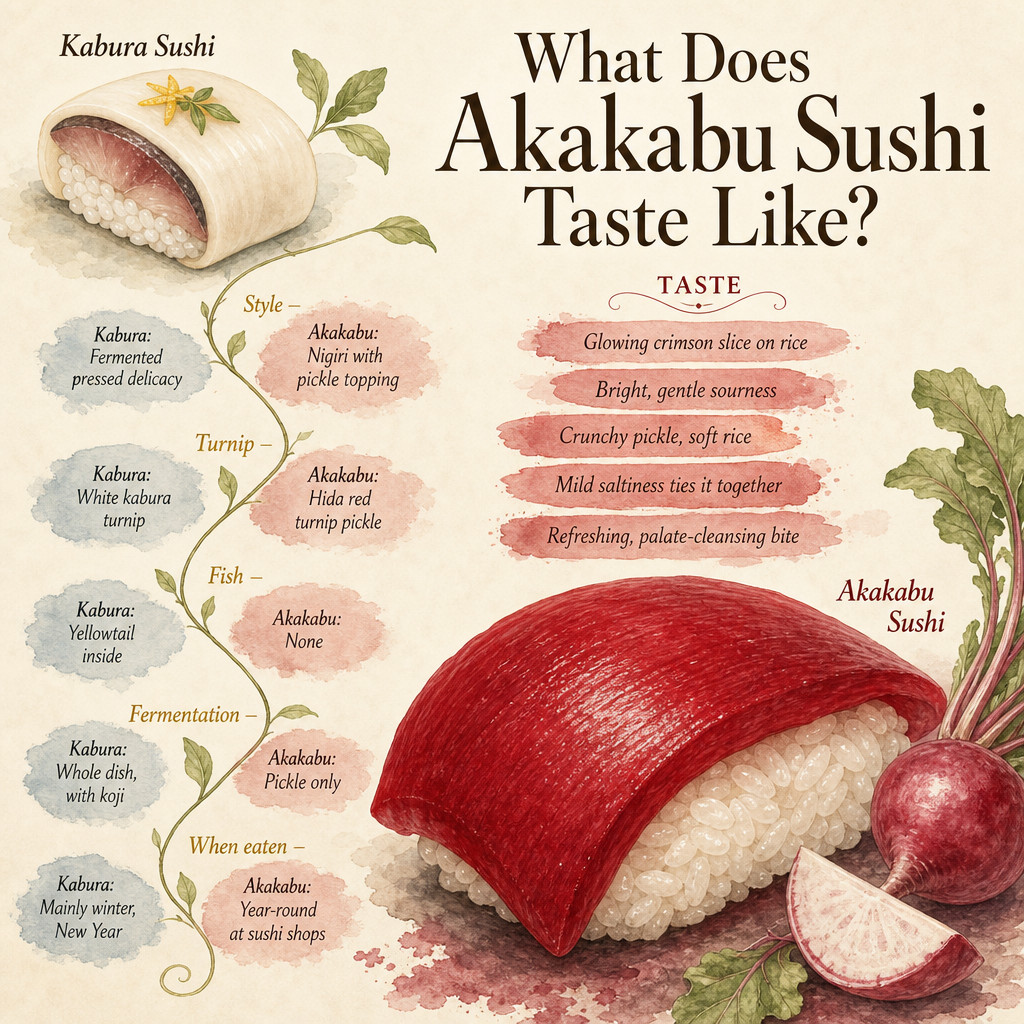
Now for the delicious part. Honestly, the first impression is visual. A slice of glowing crimson sits on white rice. Indeed, few nigiri look this vivid and pretty.
Then comes the taste itself. The pickle offers a bright, gentle sourness. Meanwhile, its crunch contrasts sweetly with the soft rice. A mild saltiness ties the piece together. My first bite surprised me with its refreshing lightness. It cleanses the palate like a well-made pickle should.
How It Compares to Kabura Sushi
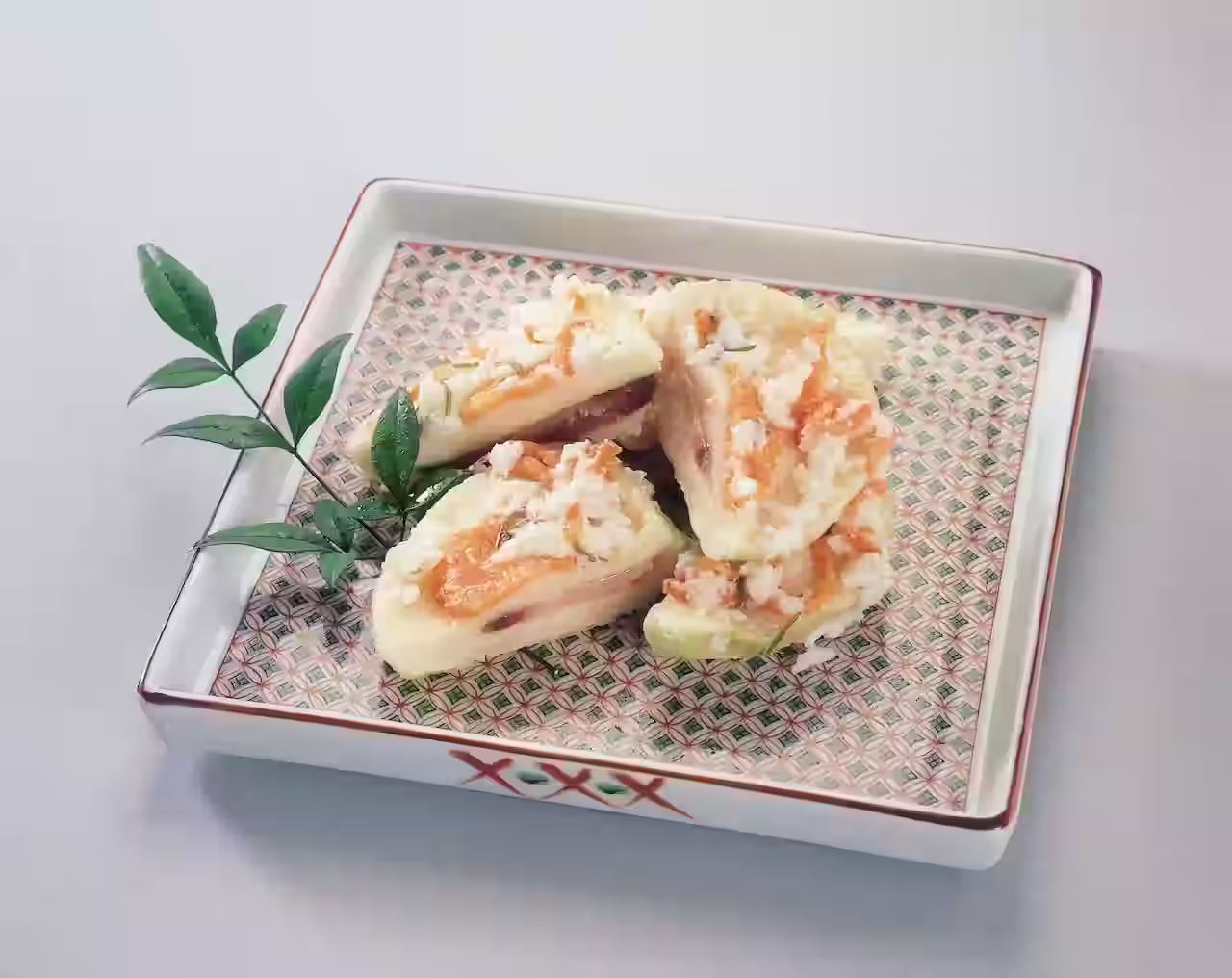
Still, do not confuse this dish with a famous cousin. Ishikawa’s kabura sushi also stars a turnip. Yet that dish is a fermented delicacy with fish inside. Turnip slices there sandwich yellowtail and sweet koji rice. By contrast, akakabu sushi is simpler, a pickle atop nigiri rice. Both, though, honor the humble turnip magnificently.
| Feature | Akakabu Sushi (Gifu) | Kabura Sushi (Ishikawa) |
|---|---|---|
| Style | Nigiri with pickle topping | Fermented pressed delicacy |
| Turnip | Hida red turnip pickle | White kabura turnip |
| Fish | None | Yellowtail (buri) inside |
| Fermentation | In the pickle only | Whole dish, with koji |
| When Eaten | Year-round at sushi shops | Mainly winter and New Year |
Where to Try Akakabu Sushi
Naturally, Gifu Prefecture is the place to start. Member shops of the local sushi association serve the set. For example, city sushi counters offer the freshest experience. Ask for the Gokan sushi when you visit.
Meanwhile, Takayama adds another delicious angle. The old town brims with pickle shops and tastings. There, you can sample akakabu-zuke in many forms. Moreover, buying a pack makes a perfect souvenir. Some visitors even try topping rice at home.
Final Thoughts
Akakabu sushi tells a wonderful layered story. First, a chance mutation gave Hida its ruby turnip. Then mountain wisdom turned it into a beloved pickle. Finally, modern sushi masters lifted it onto rice. Tradition and creativity meet in a single bite.
Indeed, the dish carries a gentle lesson. Great sushi is about more than fish. In truth, local pride can flavor a meal just as deeply. So seek out this crimson nigiri in Gifu. One taste connects you to a whole mountain culture.
Akakabu Sushi FAQ
What is akakabu sushi?
Akakabu sushi is nigiri topped with pickled red turnip. The pickle is a famous specialty of Hida Takayama in Gifu. Its bright sourness pairs well with vinegared rice. The dish is part of a special Gifu sushi set.
What does akakabu mean?
Akakabu simply means red turnip in Japanese. It refers to the crimson-skinned turnips of the Hida region. The famous local variety is called Hida beni kabu. Farmers discovered it as a mutation in 1918.
What is akakabu-zuke?
Akakabu-zuke is the fermented red turnip pickle of Hida. Makers pickle whole turnips with only salt. Natural lactic acid bacteria ferment them for about two months. The result is crunchy, tangy, and rosy red.
Is the red color natural?
Yes, the color is completely natural. A fresh red turnip is white inside at first. During fermentation, pigment from the skin seeps inward. No dye or coloring is ever used.
Does akakabu sushi contain fish?
No, it is a vegetable nigiri. Only the pickled turnip tops the rice. That makes it friendly for many diets. It also offers a light, refreshing bite between richer pieces.
What is the Gifu Gokan sushi?
The Gokan sushi is a five-piece local set from Gifu. It features ayu, eel, red turnip, Hida beef, and wild yam. The prefecture’s sushi association created it together. Each piece celebrates a local Gifu ingredient.
How is akakabu sushi different from kabura sushi?
The two dishes differ greatly despite similar names. Kabura sushi is a fermented Ishikawa delicacy with yellowtail inside. Akakabu sushi is a simple nigiri topped with pickle. Both, however, celebrate the turnip.
What does akakabu sushi taste like?
It tastes bright, tangy, and gently salty. The pickle adds a crisp, refreshing crunch. The vinegared rice softens and rounds the flavor. Many find it a perfect palate cleanser.
Where can I try akakabu sushi?
Sushi shops in Gifu Prefecture serve the Gokan set. Association member shops are the best place to look. Takayama’s pickle shops also sell akakabu-zuke itself. You can even top rice at home with it.
When are Hida red turnips harvested?
Farmers harvest the turnips from October to early December. Pickling begins soon after the harvest. The autumn cold deepens the color and sweetness. Pickling then carries the harvest through winter.
References
- Gifu Prefecture Sushi Merchants Association – on the Gifu Gokan sushi set, the akakabu nigiri, and its local-ingredient mission. (Surveyed: July 2026)
- Ministry of Agriculture, Forestry and Fisheries (MAFF), “Our Regional Cuisines” – on akakabu-zuke, the Hida beni turnip discovered in 1918, and the Edo-period salt-fermentation method. (Surveyed: July 2026)
- Shun Gate (Toppan) – on the Hida beni red turnip and traditional pickle production in the Hida region. (Surveyed: July 2026)
- Gifu Prefecture Green Tourism – on the Hida beni kabu, its 1918 discovery from the Yaga kabu, and its origin in former Nyukawa Village. (Surveyed: July 2026)
- Gifu Local Production Guide (Gifu Chisan-Chisho) – on growing areas across Takayama and Hida City and the October to early December harvest. (Surveyed: July 2026)
- Japan Traditional Vegetables Promotion Association – on the 2002 certification of the Hida beni kabu as a Hida-Mino Traditional Vegetable and its physical traits. (Surveyed: July 2026)
Related Articles
- Sushi (Surveyed: July 2026)
- Kabura Sushi (Surveyed: July 2026)




Comments