


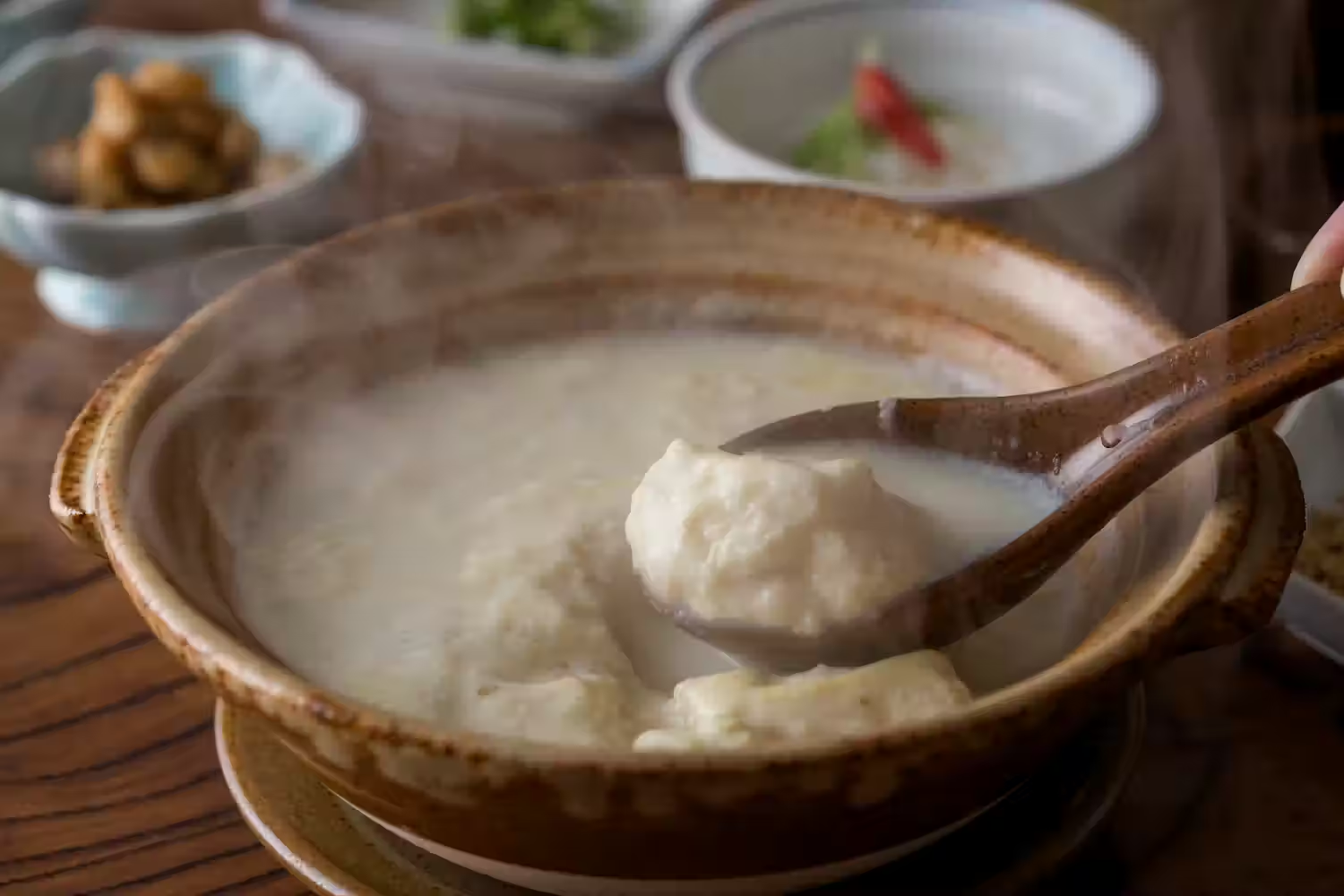




Open a jar of shio koji and it looks like loose rice porridge: pale, creamy and dotted with softened grains. This Japanese fermented seasoning tastes mildly salty, gently sweet and savory. Japanese cooks use it much like an all-purpose marinade, especially for chicken, pork, fish and vegetables.
As a starting point, use about 10 g per 100 g of food, then adjust for the product’s saltiness. Because its natural sugars brown quickly, wipe off excess paste before cooking. Below, you’ll find how it works, how to make it, and how to store it safely.

What Is Shio Koji?
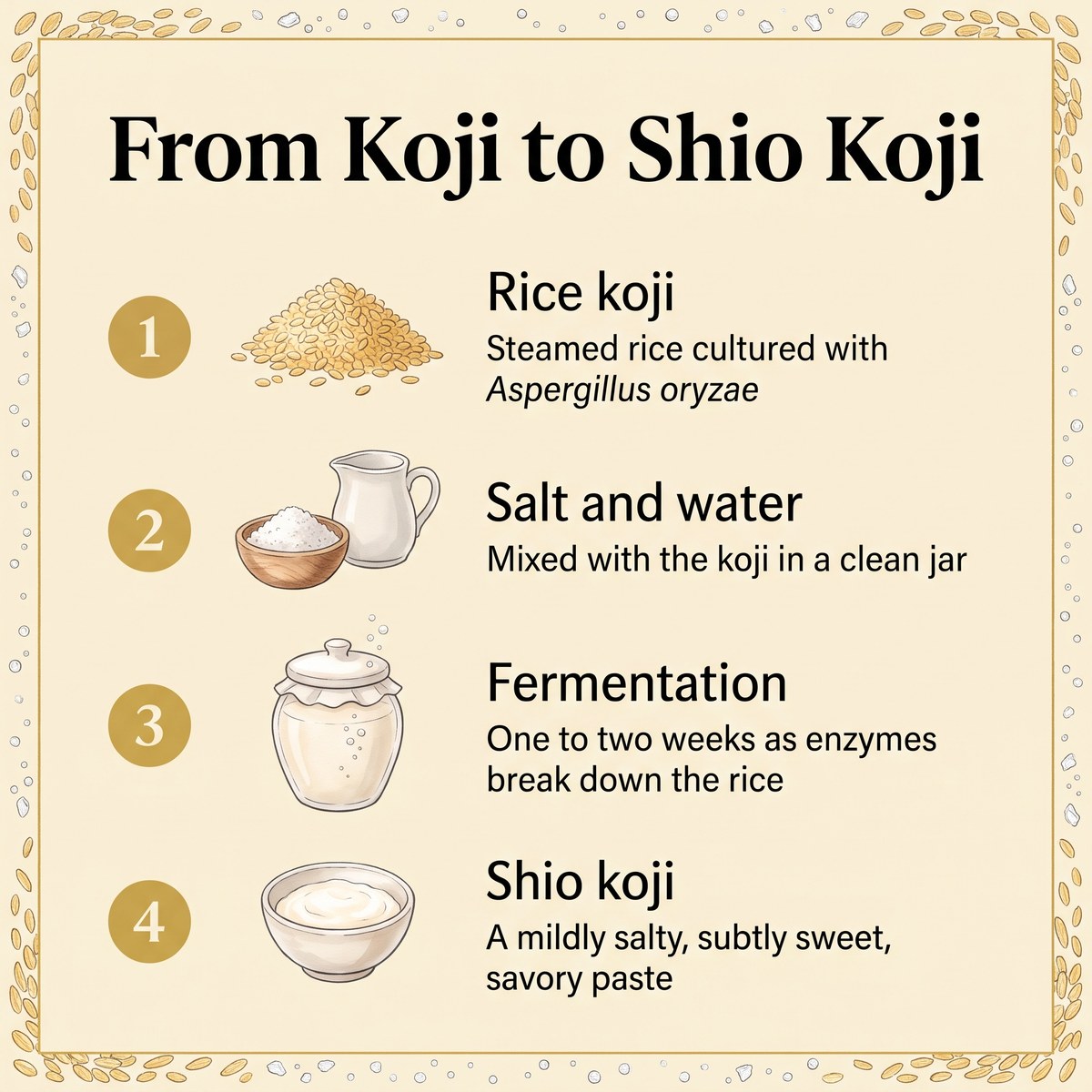
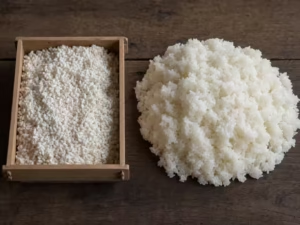
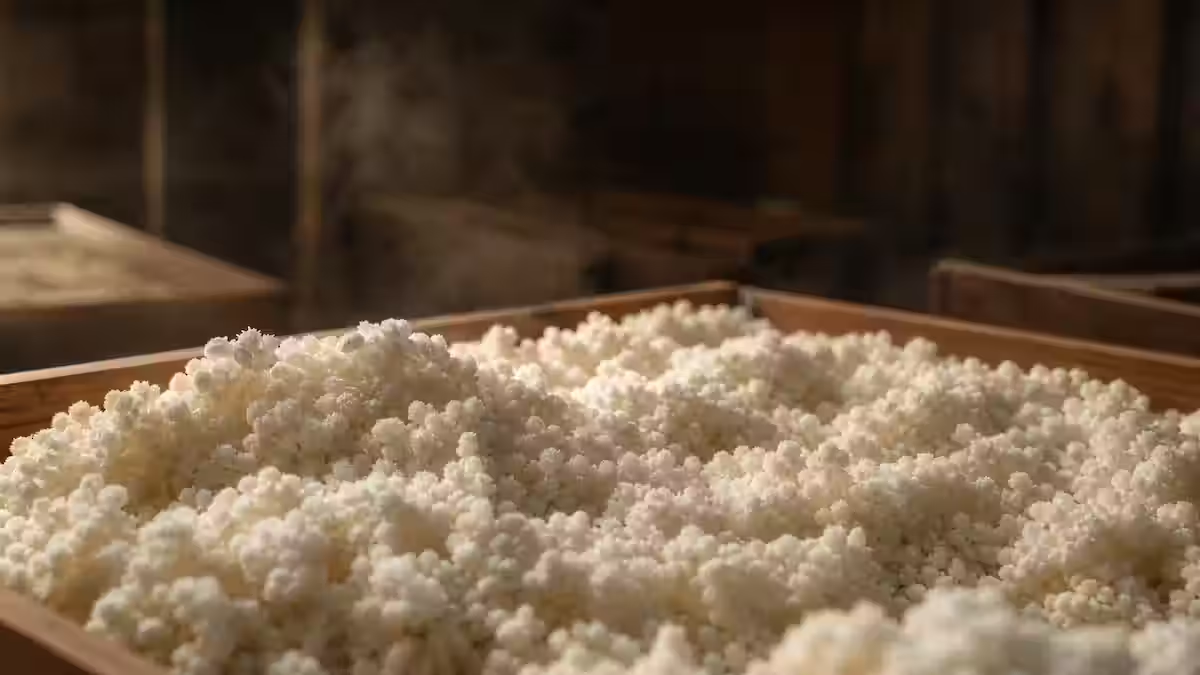
Shio koji is a Japanese fermented seasoning made from rice koji, salt, and water. Rice koji is steamed rice cultured with Aspergillus oryzae, a food-safe mold used in Japanese fermentation. Rice koji itself is not an alcoholic beverage. However, some store-bought shio koji contains added alcohol, so check the label. Then, over one to two weeks, enzymes from the koji break down the rice. The result is a salty, slightly sweet paste rich in savory umami.
Shio Koji at a Glance
- Japanese
- 塩麹 or 塩糀 (both mean the same seasoning)
- Pronunciation
- Roughly “shee-oh KOH-jee”
- Ingredients
- Rice koji, salt and water
- Flavor
- Mildly salty, subtly sweet and savory
- Homemade maturing time
- About 10 to 14 days at room temperature (recipe below)
- Uses
- Marinades, vegetables, soups, dressings and stir-fries
- Storage
- Refrigerate once ready; follow the label for store-bought products
Shio koji is pronounced roughly “shee-oh KOH-jee.” Here, shio simply means salt. You may see the seasoning written as 塩麹 or 塩糀 on labels. However, both forms refer to the same thing, as the FAQ below explains.
Is Shio Koji the Same as Koji?
No. Koji is the cultured grain itself, while shio koji combines rice koji with salt and water. In addition, koji sits behind sake, miso and the sweet rice drink amazake. Our guide to koji in Japanese brewing explains how the mold grows on steamed rice.
Key Takeaways
- A common starting point is about 1 part shio koji to 10 parts food by weight.
- Koji enzymes break starch into sugars and proteins into smaller savory compounds.
- Store-bought products differ in salt, alcohol and enzyme activity.
- Shio koji browns quickly, so wipe off excess and cook over moderate heat.
- Always marinate meat and fish in the refrigerator.
What Does Shio Koji Taste Like?
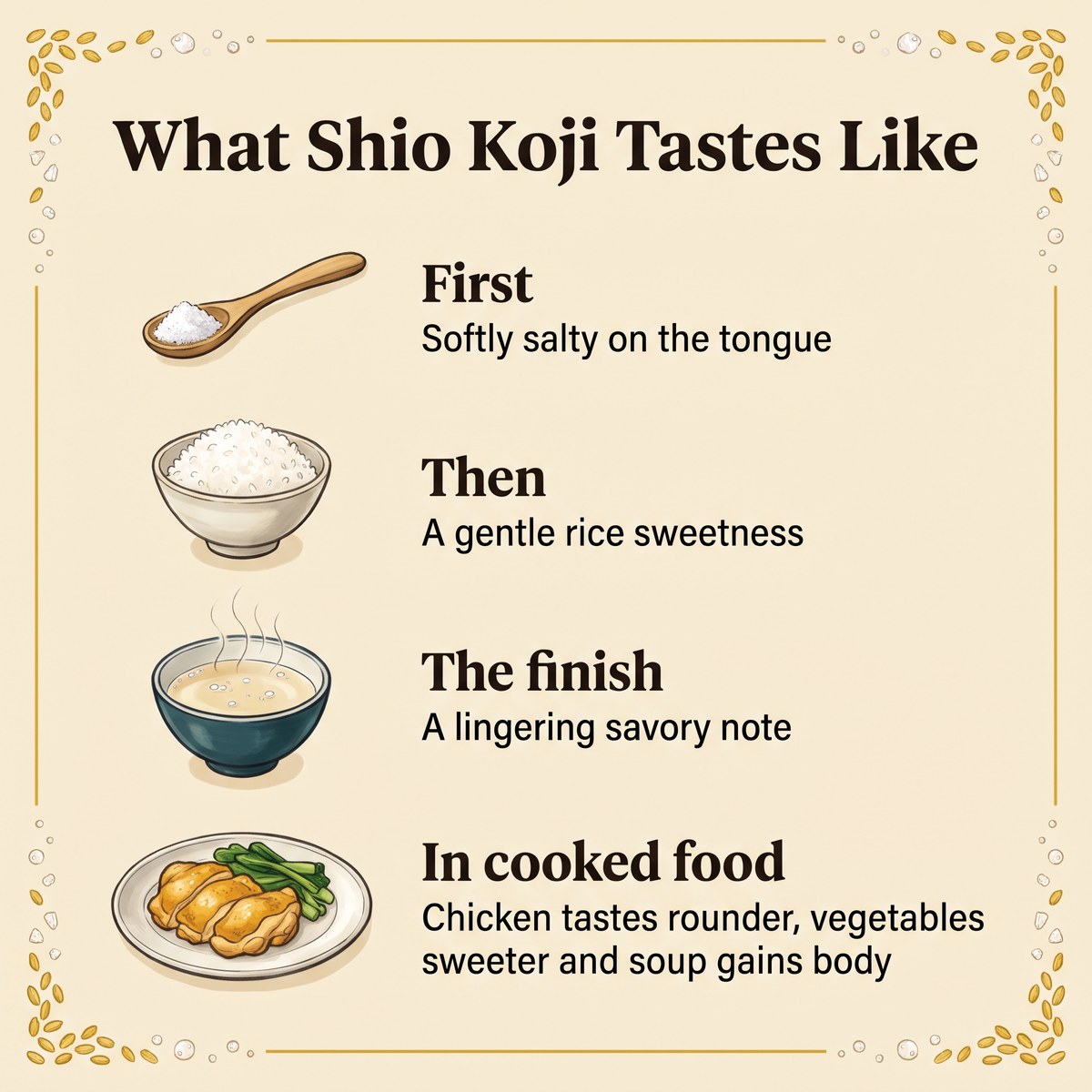
Shio koji tastes mildly salty, subtly sweet, and rich in savory umami. A spoonful tastes softly salty at first, followed by rice sweetness and a lingering savory finish. The aroma, meanwhile, is clean and lightly fermented.
Its flavor can seem restrained when tasted alone, but it becomes more noticeable in cooked food. For example, chicken tastes rounder, vegetables taste sweeter, and a soup gains body without tasting obviously seasoned. The texture runs from a grainy paste to a smooth liquid, depending on the product.
How Shio Koji Works

Shio koji works mainly through enzymes produced while koji mold grows on rice. Amylases break rice starch into sugars, while proteases break proteins into peptides and amino acids. These reactions add sweetness and savory depth, and they may change the texture of meat or fish. The strength of the effect varies by product and processing.
Shio koji is generally classified as a fermented seasoning. Japan’s agriculture ministry, in fact, counts changes caused by microbial enzymes as part of fermentation. Still, many of the changes after mixing come from enzymes the mold made earlier, while growing on the rice. The mold does not need to keep growing for those enzymes to work.
Enzyme strength also varies by product. A 2015 study of 14 commercial shio koji products found large differences in remaining enzyme activity. In some products, the activity was hard to detect at all. Heat treatment during manufacturing is one likely reason.
In short, commercial shio koji is not one standard formula. Salt, added alcohol, texture, heat treatment and enzyme activity all differ among brands. So use each package’s nutrition panel and storage directions, rather than applying one brand’s numbers to every product.
How to Use Shio Koji in Everyday Cooking
Most cooks use shio koji as a marinade for meat or fish. It can also replace some or all of the salt in vegetables and soups, though not always in the same amount. First, start with a measured amount, then adjust. Because products differ in saltiness, taste the dish before adding extra salt.
Quick Ratio
1 : 10
About 10 g of shio koji per 100 g of meat, fish or vegetables. Hanamaruki gives this ratio for its products, and a MAFF karaage recipe uses 10% of the chicken’s weight.
| Food | Starting amount | Marinating time | Cooking idea | Key caution |
|---|---|---|---|---|
| Chicken thigh | 10% of the meat’s weight | About half a day in a MAFF karaage recipe | Deep-fry, grill or pan-fry | Wipe off the marinade before cooking |
| Pork | About 1 part to 10 | Follow your recipe; thin slices need less time | Grill, boil or stir-fry | Keep it refrigerated while marinating |
| Fish | About 1 part to 10 | Follow your recipe; delicate fish changes quickly | Grill or pan-cook | Watch the heat, as it scorches easily |
| Napa cabbage, carrot | Season to taste | Rub until soft, then rest about 10 min | Quick pickle | MAFF suggests eating within 3 to 4 days |
| Tofu, mushrooms | Start small | Follow your recipe | Roast or pan-sear | Check the product’s salt level |
| Soup, dressing | A teaspoon at a time | None | Vegetable soup, salad dressing | Taste before adding salt |
Longer is not always better. Food can turn too salty or develop an undesirable texture. In fact, one study found chicken grew firmer after long shio koji treatment. Therefore, follow the time in the recipe you’re using.
Marinating Safely
Always marinate meat and fish in the refrigerator, not at room temperature. Also, do not reuse marinade that has touched raw meat or fish. The only exception is a recipe that cooks it to a safe temperature. Paste and liquid types are not interchangeable spoon for spoon, either, since their salt levels differ. Check each label and adjust.
Browning warning: Shio koji browns and burns faster than plain salt. Amylase leaves rice sugars on the surface, and they scorch under direct high heat. Wipe off excess grains and cook over moderate heat.
Choose How to Use Shio Koji
Shio Koji Dish Ideas
These Japanese home-cooking ideas start with meat. Karaage is a natural start, since shio koji seasons the chicken before frying. For the classic dish, see our guide to Japanese fried chicken (karaage). The recipes below come from Japanese recipe sites. For fish, brush a fillet lightly before grilling. For vegetables, try the quick napa cabbage and carrot pickle from the table above.


How to Make Shio Koji at Home

This fermented rice seasoning is easy to make, but it takes patience. The recipe follows Marukawa Miso, a miso maker in Fukui. The source gives the koji by weight but does not say whether it is fresh or dried. Because these absorb water differently, 110 ml may not suit every product. If your koji package gives its own shio koji formula, follow that water ratio instead.
Homemade Shio Koji
Ingredients
- Rice koji, 100 g
- Salt, 35 g (35% of the koji’s weight)
- Water, about 110 ml (110 g), enough to just cover the koji
Note: The source does not say whether the koji is fresh or dried. Water needs may differ by product.
Equipment
- Digital kitchen scale
- Clean container with a lid; a clear one lets you watch the progress
- Clean spoon
Instructions
- Mix. Combine the rice koji and salt thoroughly and evenly.
- Add water. Pour in the water so the koji is just submerged, and stir well.
- Rest. Put the lid on to keep out dust, and keep the container at room temperature, away from direct sunlight and unusually hot spots.
- Stir daily. Once a day, stir from the bottom with a clean spoon. Top up with a little water if the grains absorb it and poke out.
- Finish. After about 10 days in summer or 14 in winter, check that it is ready. Then refrigerate.
Above all, weigh the salt and koji rather than using cups, because volume measures are unreliable. Salt makes up about 14% of the starting batch weight (35 g out of about 245 g). Do not reduce it casually. Marukawa Miso stresses this point, because a weaker mixture may spoil or develop off odors.
How Can You Tell When It Is Ready?
Use several signs together rather than relying only on the calendar. The grains should crush easily between your fingers, and the mixture should look thicker. Meanwhile, the sharp saltiness should taste rounder and slightly sweet. The original recipe mentions a sweet aroma like bananas or chestnuts, though noses differ.
Room temperature also varies widely by climate. Cool rooms slow the process, so below 20°C it may take longer than 14 days. If your kitchen stays very warm, use a manufacturer’s temperature-controlled method instead of guessing. In any case, discard the batch if it develops fuzzy growth or a putrid odor.
Troubleshooting
| What you see | Likely reason | What to do |
|---|---|---|
| Grains stick out, look dry | Koji absorbed the water | Add a little water until just covered; stir |
| Mixture looks watery | Koji has not broken down yet | Keep stirring daily and wait |
| Very slow progress | The room is cool | Allow more days; check texture and taste |
| Tastes harsh and salty | Not mature yet | Wait a few more days |
| Turns beige or tan | Normal browning reactions | Judge by smell and texture, not color alone |
| Fuzzy mold or a rotten smell | Spoilage or contamination | Throw the batch away; do not taste it |
Storage and Safety
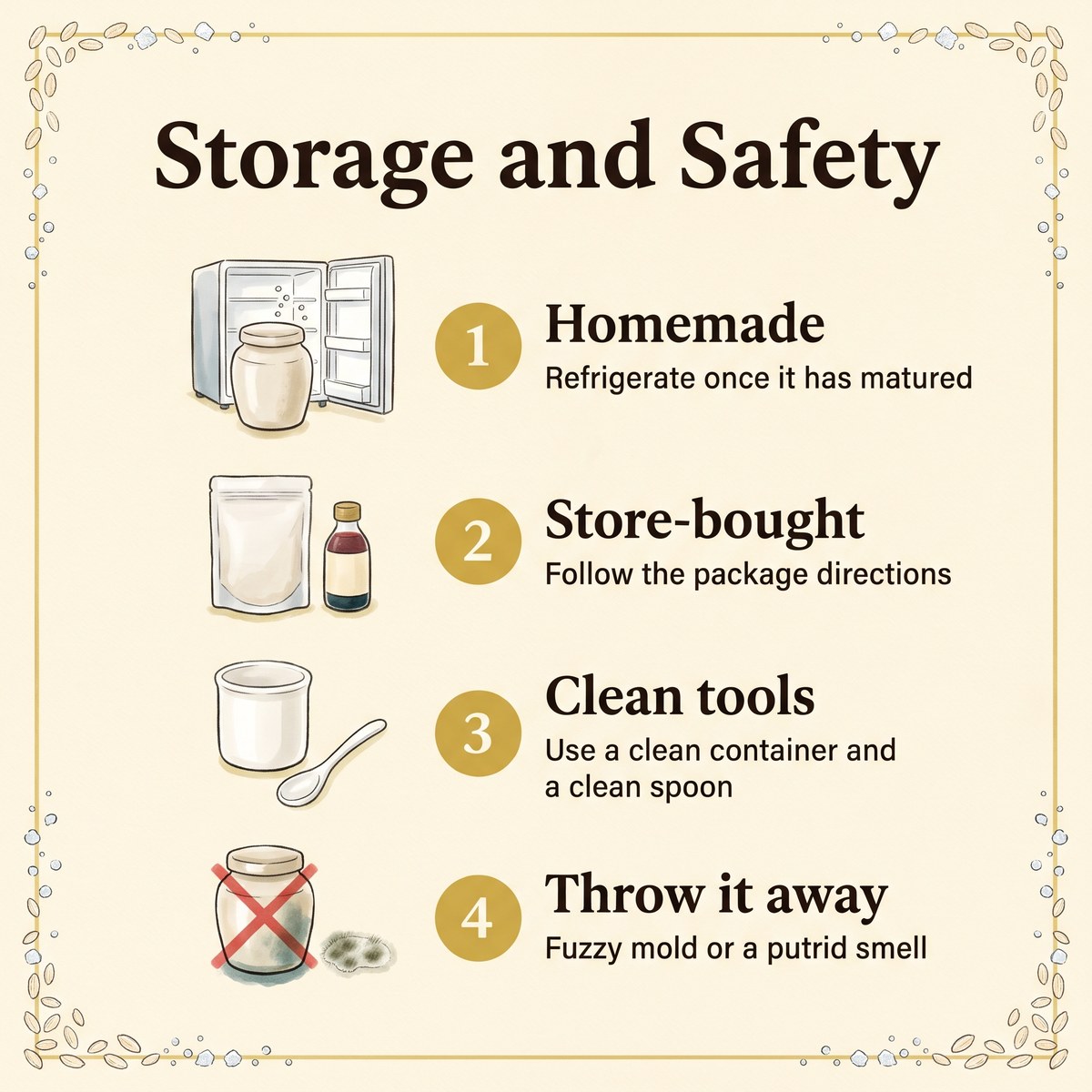
Refrigerate homemade shio koji once it has matured. For store-bought products, follow the package storage directions, since processing differs by brand. There is no universal shelf life for all shio koji. Either way, always use a clean container and clean spoons.
Homemade Shio Koji
The Marukawa Miso recipe gives no storage period. For comparison, a MAFF-published recipe uses a different formula. It gives about six months in the fridge and about a year frozen. That guide applies to its own recipe, so treat it as a rough reference only.
Store-Bought Shio Koji
In general, follow the package directions. Marukome says to use its opened fresh shio koji within about two months, kept clean in the fridge. Hanamaruki recommends refrigerating its products before and after opening. However, some products are sold at room temperature until opened, so read each label.
Can Shio Koji Go Bad?
Yes. In particular, throw it away if you see fuzzy mold, smell something putrid, or notice unusual color changes along with other signs. Similarly, a swollen sealed container is a warning. On the other hand, darkening alone is not always spoilage. For example, the maker Umi no Sei says its brown-rice shio koji darkens naturally. Amino acids and sugars react, much as they do in miso.
Shio Koji vs Miso, Soy Sauce and Salt
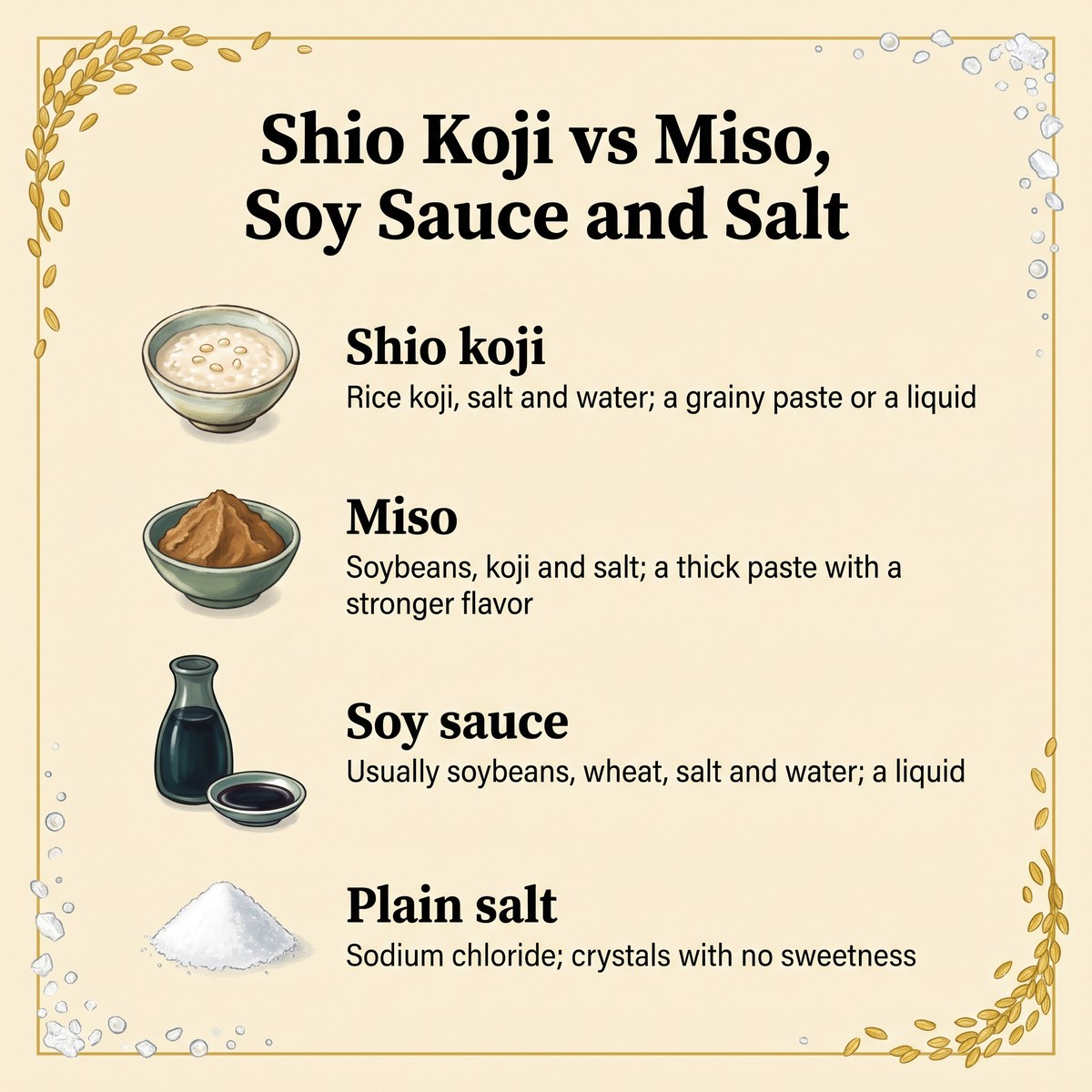
Shio koji is milder and sweeter than miso or soy sauce, with a looser texture than miso. Unlike plain salt, it adds rice sweetness and savory depth. Its salt level varies, though, so don’t swap it for salt, miso or soy sauce in equal amounts. It is also not the same as miso: shio koji usually contains rice koji, salt and water, while miso normally includes fermented soybeans. Here is how four everyday seasonings compare.
| Seasoning | Main ingredients | Texture | Flavor | Best used for | Important difference |
|---|---|---|---|---|---|
| Shio koji | Rice koji, salt, water | Grainy paste or liquid | Salty, mildly sweet, savory | Marinades, vegetables, soups | May contain koji enzymes, depending on processing |
| Miso | Soybeans, koji, salt | Thick paste | Salty, fermented, strongly savory | Soups, glazes, sauces | Usually soybean-based and stronger in flavor |
| Soy sauce | Usually soybeans, wheat, salt, water | Liquid | Salty, strongly savory | Seasoning, dipping | Most standard types contain wheat; tamari and gluten-free products vary |
| Plain salt | Sodium chloride | Crystals | Salty | Direct seasoning | No sweetness or koji flavor |
Shio Koji vs Salt: Sodium
Shio koji is not automatically a healthier salt. After all, its salt content depends on the product, and on how much you use. For instance, one study of nine commercial products found salt levels from 7.4% to 12.2%. Another found an average of 11.0% across fourteen.
Consider a worked example. Japan’s food composition tables list table salt at 99.5% salt equivalent, so 5 g of salt gives about 5.0 g. Hanamaruki’s liquid shio koji lists 2.2 g per tablespoon (15 ml). Umi no Sei’s paste lists 10.7 g per 100 g. For example, 15 g of that paste gives about 1.6 g of salt equivalent. Whether that is one serving depends on the dish and the number of diners. To match 5 g of salt, you would need roughly 47 g. In other words, if you add more shio koji for a stronger taste, the sodium saving shrinks or disappears.
Liquid vs Traditional Shio Koji
Traditionally, shio koji is a paste with visible grains. Liquid shio koji, by contrast, is smooth and pourable. As a result, it mixes easily and leaves fewer grains to burn. Labels also list salt differently. Liquid products often show salt per 15 ml, while pastes show it per 100 g, so compare carefully. Some liquid products also contain alcohol.
Shio Koji Substitutes
For instance, miso adds saltiness and fermented flavor, while salt plus mirin gives a similar salty-sweet balance. Yogurt can add acidity and soften a meat surface. Citrus adds brightness, but it may turn the surface mushy if left too long. Even so, none of these reproduces shio koji’s flavor or its koji enzymes.
Shio Koji Benefits: What the Evidence Supports
Culinary Benefits of Shio Koji
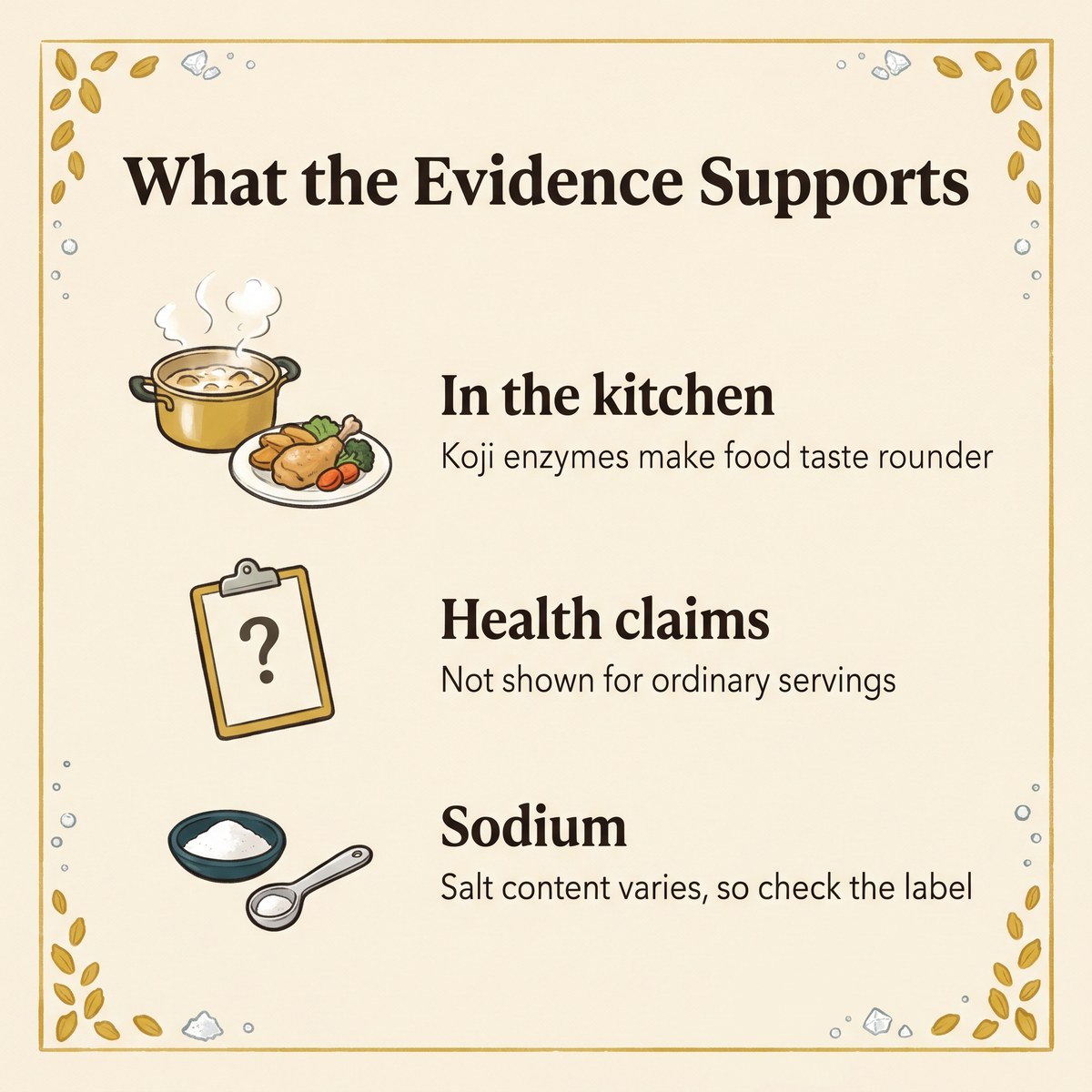
The clearest benefits are culinary. Koji enzymes create sugars and savory compounds, so food tastes rounder with a simple seasoning. Moreover, some studies report changes in meat tenderness and amino acid content. Still, results vary by product, enzyme activity, meat type, time and temperature. So shio koji may alter tenderness, but it does not guarantee it.
Does Shio Koji Have Proven Health Benefits?
Above all, shio koji is a seasoning. Research supports its effects on flavor and some food properties. However, ordinary servings have not been shown to prevent disease or provide reliable probiotic benefits.
Likewise, no evidence on normal servings shows that it improves skin or relieves stress through GABA. Processing differs by product, and cooking heat can inactivate enzymes and microorganisms. So there is no basis for treating shio koji as a probiotic.
Finally, sodium deserves attention. Shio koji contains salt, and using a lot can add as much sodium as regular salt. If you watch your salt intake, measure your portions and check the label’s salt equivalent (食塩相当量). That is where the real numbers are.
A Short History of Shio Koji
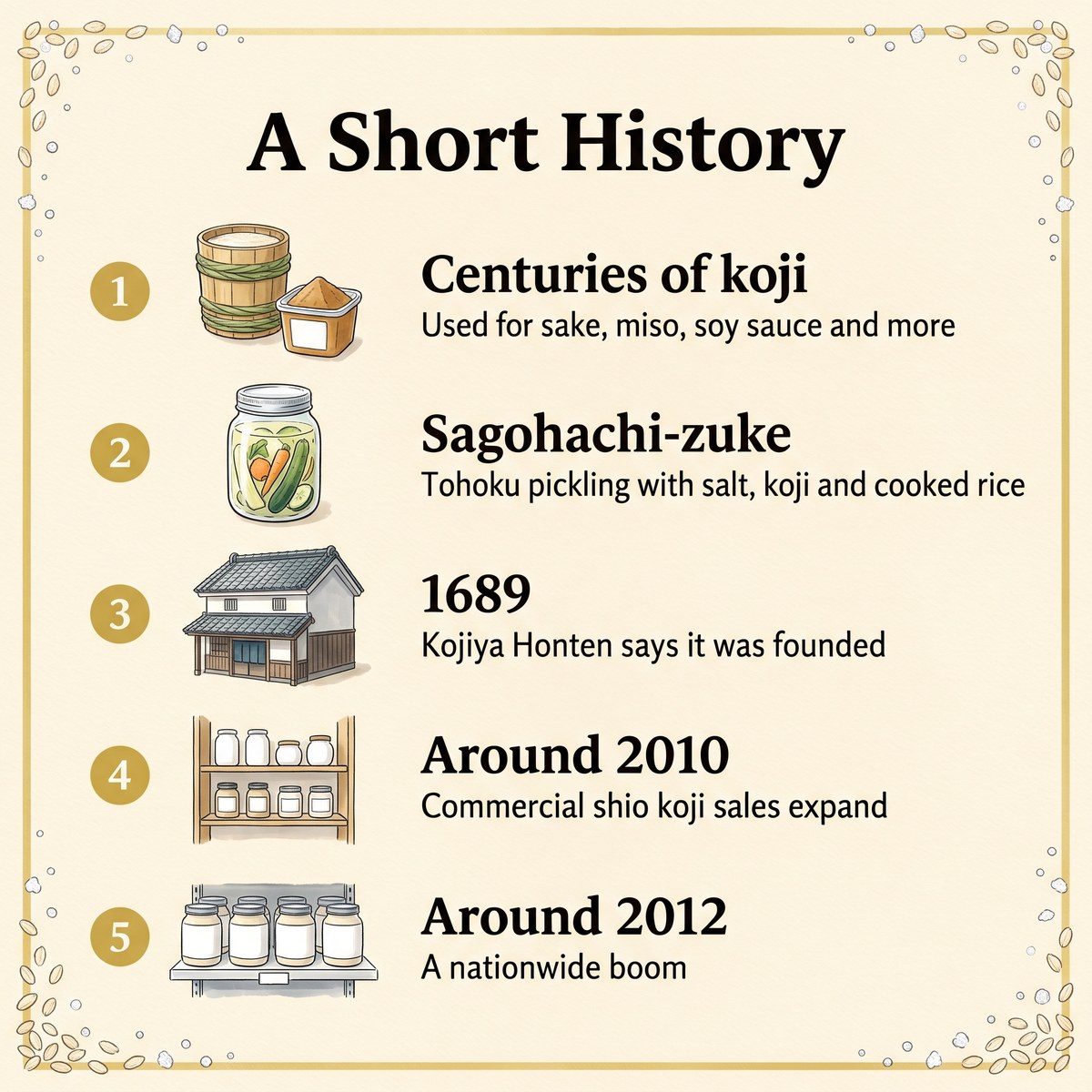
Koji has been used in Japan for centuries to make sake, miso, soy sauce and other fermented foods. Modern shio koji, sold as an all-purpose bottled seasoning, is much newer. Commercial sales expanded around 2010, followed by a nationwide boom around 2012.
Koji drives the brewing of Japanese sake, including cloudy nigori sake, and it also makes miso, mirin and amazake. Koji-based pickling is old as well. In Tohoku, for example, sagohachi-zuke pickles vegetables in a mix of salt, koji and cooked rice.
Kojiya Honten, a koji maker in Saiki, Oita Prefecture, says it was founded in 1689. That date belongs to the company, though, not to modern shio koji. According to the company, its ninth-generation head, Myoho Asari, revived shio koji as a seasoning. She reportedly took the idea from an Edo-period book.
Those dates come from academic sources. A 2016 review in the Brewing Society of Japan’s journal places the start of commercial sales around 2010. A 2015 study, meanwhile, describes the boom peaking around 2012. Since then, the seasoning has become a supermarket staple.
Where to Buy and Eat Shio Koji in Japan
In Japan, shio koji and rice koji are easy to find. Supermarkets usually stock shio koji near the miso or in the refrigerated seasoning section. Koji and fermented-food restaurants may also serve shio koji chicken, fish or vegetables, though menus change often.
In larger supermarkets, shio koji often comes in several brands and styles. Meanwhile, rice koji may be in the dried-goods aisle or the chilled section. Besides that, you can find both at department-store food halls, miso and fermentation shops, and online stores.
How to Read a Shio Koji Label
| Japanese label | Meaning |
|---|---|
| 米麹 / 米こうじ | Rice koji |
| 塩麹 / 塩糀 / 塩こうじ | Shio koji |
| 乾燥麹 | Dried koji |
| 生麹 | Fresh koji |
| 液体塩こうじ | Liquid shio koji |
| 酒精 | Added alcohol |
| 食塩相当量 | Salt equivalent |
Need help in a store? Ask “Shio koji wa doko ni arimasu ka?” (塩麹はどこにありますか). It means “Where is the shio koji?” To find rice koji, ask “Kome koji wa arimasu ka?” (米麹はありますか). That means “Do you have rice koji?”
Koji Ryori Gohan (麹料理ごはん), Tokyo

For a meal, this small koji restaurant sits on the second floor of Jiyugaoka Department Store, right by Jiyugaoka Station. We checked its online food menu on October 24, 2026. It listed tomatoes pickled in shio koji and salmon belly grilled with shio koji. However, the menu changes with the seasons, so items may differ.
- Address
- Jiyugaoka Department Store 2F, 1-28-8 Jiyugaoka, Meguro-ku, Tokyo
- Access
- Next to the main exit of Jiyugaoka Station (Tokyu Toyoko and Oimachi lines)
- Phone
- 03-6421-3772
- Hours
- Lunch 11:30–14:30 (last order 14:15); dinner 17:30–22:00 (last order 21:30)
- Closed
- Wednesdays; the homepage also notes the fourth Thursday evening
- Last verified
- October 24, 2026. Hours may change, so check before visiting.
Final Tips for Using Shio Koji
In short, shio koji is salt with extra sweetness and depth, and it rewards careful measuring. It is also one of several seasonings made with rice koji.
To see how the same ingredient creates sweetness rather than saltiness, read our guide to amazake, the sweet fermented rice drink.
Shio Koji FAQ
Ingredients and Diets
- What is shio koji made from?
-
Shio koji is made from rice koji, salt and water. Rice koji is steamed rice cultured with Aspergillus oryzae. Some commercial products also contain alcohol or other ingredients, so check the label.
- What is the difference between 麹 and 糀?
-
Both characters read “koji.” 麹 is the standard character. It covers koji made from rice, barley or soybeans. 糀 is a character created in Japan and is mostly used for rice koji. So 塩麹 and 塩糀 name the same seasoning.
- Is shio koji gluten-free?
-
Shio koji made only from rice koji, salt and water has no gluten-containing ingredients. However, products made with barley koji are not gluten-free, and cross-contact may occur in factories. People with celiac disease should choose a product labeled or certified gluten-free.
- Is shio koji vegan?
-
Plain shio koji made from rice koji, salt and water is ordinarily vegan. However, flavored or blended products may contain animal ingredients. If cross-contact matters, check the maker’s facility information.
- Does shio koji contain alcohol?
-
Homemade shio koji made from rice koji, salt and water needs no added alcohol. Some commercial products, however, add alcohol, listed as 酒精. For example, Hanamaruki’s FAQ gives about 5% for its shio koji and liquid shio koji. Marukome’s gives about 3% for Plus Koji Nama Shio Koji. Cooking may not remove it all, so check the ingredient list for 酒精.
Cooking and Storage
- Can I substitute liquid shio koji for shio koji paste?
-
Not in equal spoonfuls without checking the label. Liquid and paste products may differ in salt concentration, water content and enzyme activity. Compare the salt equivalent per serving, and start with the maker’s recommended amount.
- How much shio koji should I use for chicken?
-
Start with about 10 g of shio koji per 100 g of chicken. A MAFF karaage recipe uses this 10% ratio, and Hanamaruki suggests the same 1 to 10 balance. Then adjust for the product’s saltiness and any other seasonings.
- How long should food marinate in shio koji?
-
It depends on the food, the cut and the recipe. A MAFF karaage recipe marinates chicken for about half a day, while quick vegetable pickles need only minutes. Longer is not always better, since food can become too salty or change texture.
- Can you freeze shio koji?
-
Some recipes allow it. A MAFF-published homemade recipe gives about one year in the freezer and suggests freezing it in small portions. For store-bought products, follow the package instructions, as processing methods differ.
- How long does shio koji last?
-
There is no single answer. Marukome gives about two months after opening for its fresh shio koji. Homemade batches depend on the recipe, so watch for mold or a putrid smell and discard if either appears.
References
- Ministry of Agriculture, Forestry and Fisheries – The Wonders of Fermentation (aff, November 2022) (Accessed October 2026)
- Ministry of Agriculture, Forestry and Fisheries – Japanese Fermented Foods (にっぽんの発酵食品) (Accessed October 2026)
- Ministry of Agriculture, Forestry and Fisheries – Quick Cooking with Koji (ぱぱっと調理の麹活用術) (Accessed October 2026)
- MEXT Food Composition Database – Salt (Food No. 17012) (Accessed October 2026)
- Consumer Affairs Agency – Food Allergy Labeling (Accessed October 2026)
- J-STAGE – Maebashi, K. (2016). Characteristics of Shio-koji, a New Brewed Seasoning. Journal of the Brewing Society of Japan, 111(2), 71–78 (Accessed October 2026)
- J-STAGE – Maebashi, K. et al. (2015). Effect of Aging Temperature on Residual Enzyme Activity in Shio-koji Production. Nippon Shokuhin Kagaku Kogaku Kaishi, 62(6), 290–296 (Accessed October 2026)
- J-STAGE – Abe, M. and Akita, O. (2019). Effects of Koji Enzymes and Salt in Shio-koji on Meat Cooking. Journal of the Brewing Society of Japan, 114(5), 258–267 (Accessed October 2026)
- Aichi Center for Industry and Science Technology – Hasegawa, S. and Funakoshi, G. (2016). Effects of Salt and Temperature on Shio-koji Quality (Accessed October 2026)
- Marukawa Miso – How to Make Shio Koji (Accessed October 2026)
- Hanamaruki – How to Use Liquid Shio Koji (Accessed October 2026)
- Hanamaruki – Liquid Shio Koji Product Information (Accessed October 2026)
- Hanamaruki – Shio Koji FAQ (Accessed October 2026)
- Marukome – Shio Koji FAQ (Plus Koji Nama Shio Koji) (Accessed October 2026)
- Umi no Sei – Organic Shio Koji (Accessed October 2026)
- Kojiya Honten – About Myoho Asari (Accessed October 2026)
- Koji Ryori Gohan – Official Website (Accessed October 2026)
Related Articles
- Koji (麹) (Surveyed: October 2026)
- Japanese Miso (Surveyed: October 2026)
- Karaage (Surveyed: October 2026)
- Tsukemono (Surveyed: October 2026)
- Amazake (甘酒) (Surveyed: October 2026)
- Sagohachi Duke (Surveyed: October 2026)
- Japanese Seasonings and Pantry (Surveyed: October 2026)
- Japanese Sake Guide (Surveyed: October 2026)
- Nigori Sake (Surveyed: October 2026)




Comments