




Kabusecha (かぶせ茶) is a Japanese green tea made from tea plants shaded for a relatively short period before harvest, commonly around one week. Shading gives the leaves a deeper green appearance, a sweeter and more umami-rich taste, and a distinctive aroma known as ooika.
Compared with Sencha, Kabusecha is generally softer and more savory. Compared with Gyokuro, it usually retains more freshness and a lighter finish. This balance makes it one of Japan’s most versatile shaded green teas.
The name comes from the Japanese verb kabuseru, meaning “to cover,” referring to the practice of covering the tea plants before harvest. Unlike tea categories defined mainly by steaming or roasting, Kabusecha begins in the field.
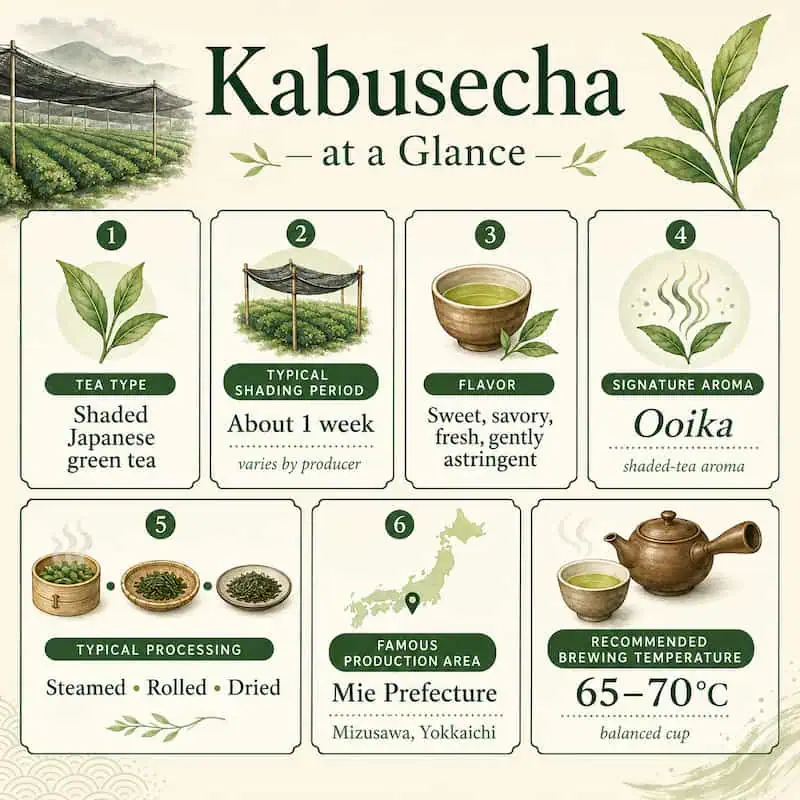
What Is Kabusecha?
Kabusecha comes from tea plants that farmers shade shortly before harvest. Japan’s Ministry of Agriculture, Forestry and Fisheries commonly describes Kabusecha as tea grown under shade for approximately one week, although actual practices vary by region and producer. In Mie, for example, farmers may cover the tea plants for roughly one to two weeks.
The term Kabusecha primarily describes the cultivation method farmers use before harvest. It does not refer to a cultivar, a regional designation, or a specific steaming style. After harvest, producers generally steam, roll, and dry the leaves in a process similar to Sencha.
Climate, cultivar, harvest timing, leaf condition, and the producer’s intended style all influence the exact shading period and intensity. Producers may also use light, normal, or deeper steaming when processing Kabusecha.
Rather than viewing Kabusecha simply as “half-Gyokuro,” it is better to recognize it as a distinct shaded-tea style with its own characteristics.
How Shading Changes Kabusecha
What Happens Under the Shade?
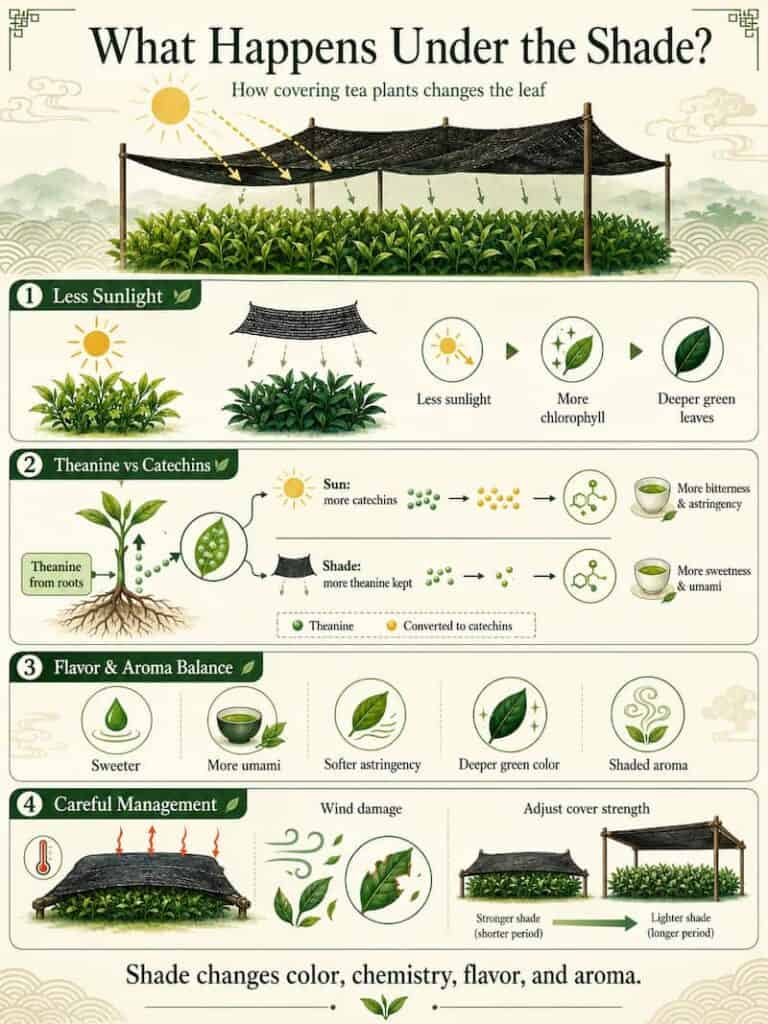
Shading changes the environment in which the young shoots develop. Shaded leaves generally develop or retain a higher concentration of chlorophyll, contributing to Kabusecha’s deeper green appearance.
However, leaf and liquor color also depend on cultivar, steaming level, harvest timing, and processing, so color alone cannot identify Kabusecha or determine its quality.
Reduced sunlight also changes the chemical balance of the leaves. Shading suppresses some of the metabolic processes associated with catechin formation while helping the leaves retain more of their amino-acid-rich character, including theanine. As a result, shaded tea generally tastes sweeter and more savory, with less pronounced bitterness and astringency.
Managing the covering requires care. Material placed directly over the bushes can raise the temperature around the leaves, while strong wind may cause abrasion or other damage. Longer or more intensive shading may therefore require different structures or gradual adjustments in shading strength.
The Signature Ooika Aroma
One of Kabusecha’s most distinctive characteristics is ooika (覆い香), the aroma associated with tea grown under shade.
Ooika may recall fresh nori, young bamboo, steamed greens, sweet grass, or a clean sea-breeze-like aroma. In well-made Kabusecha, it should smell fresh and savory rather than stale, fishy, or excessively heavy.
Research on shaded teas identifies dimethyl sulfide as one of the important aroma compounds associated with ooika. Its intensity also varies according to shading duration, cultivar, steaming, firing, and storage.
How Kabusecha Is Made
The processing stages resemble those of Sencha, but the defining work begins before the leaves reach the factory.
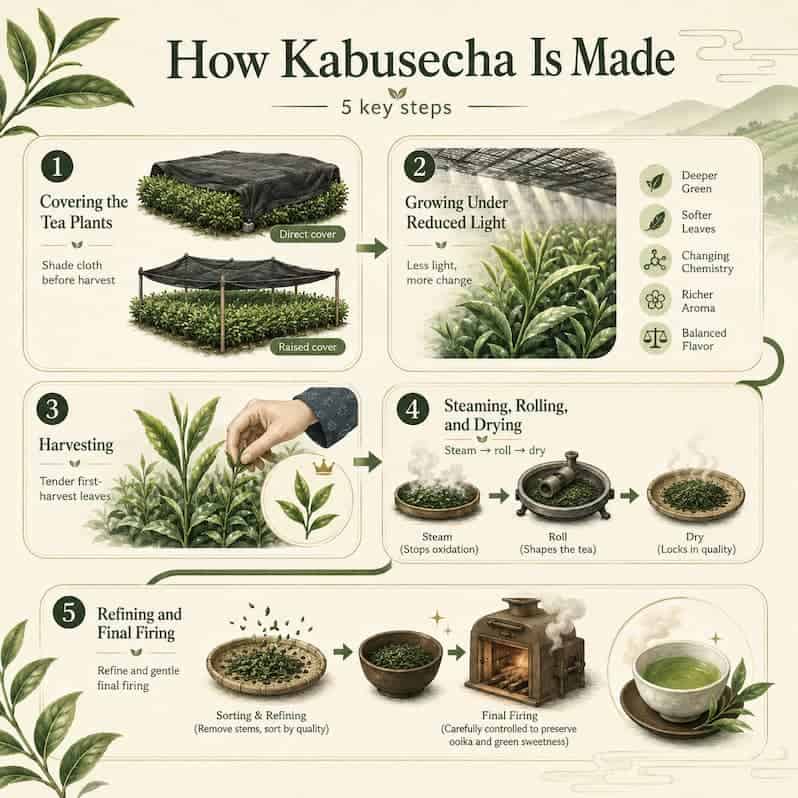
Before harvest, farmers cover the tea bushes with black synthetic fabric or another shading material. The cover may sit directly over the bushes or be supported above them, depending on the farm and intended shading method.
The shoots continue developing in the shaded environment. During this period, their color, softness, aroma, and flavor balance gradually change.
The leaves are harvested when they reach the desired tenderness and maturity. High-grade Kabusecha is often made from first-harvest leaves, which are valued for their tenderness, fresh aroma, and amino-acid-rich character.
The harvested leaves are steamed to stop oxidation, then rolled and dried. Unlike Tencha, which is dried without rolling, Kabusecha is normally shaped through rolling in a process similar to Sencha and Gyokuro.
The crude tea is sorted and refined before final firing. Producers control the firing carefully because overly strong roasted notes can hide Kabusecha’s natural ooika and fresh green sweetness.
What Does Kabusecha Taste Like?
Taste
Kabusecha commonly combines sweetness and umami with a fresh, gently astringent finish. Depending on the tea, flavors may suggest sweet peas, steamed vegetables, young greens, or fresh grass.
Aroma
Its most distinctive aromatic feature is ooika, which may resemble fresh nori, sweet grass, steamed green vegetables, or another cool and savory green aroma.
Appearance
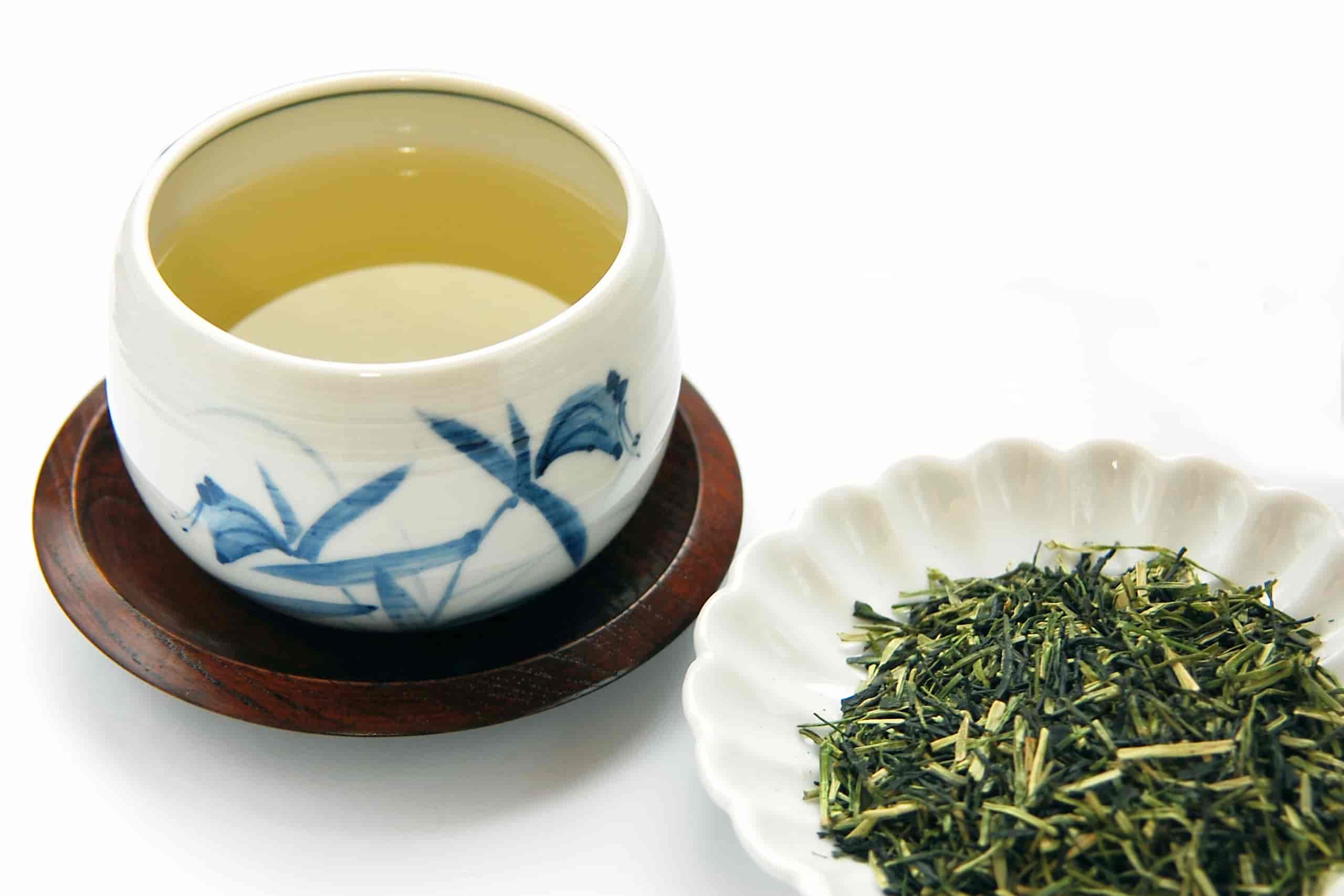
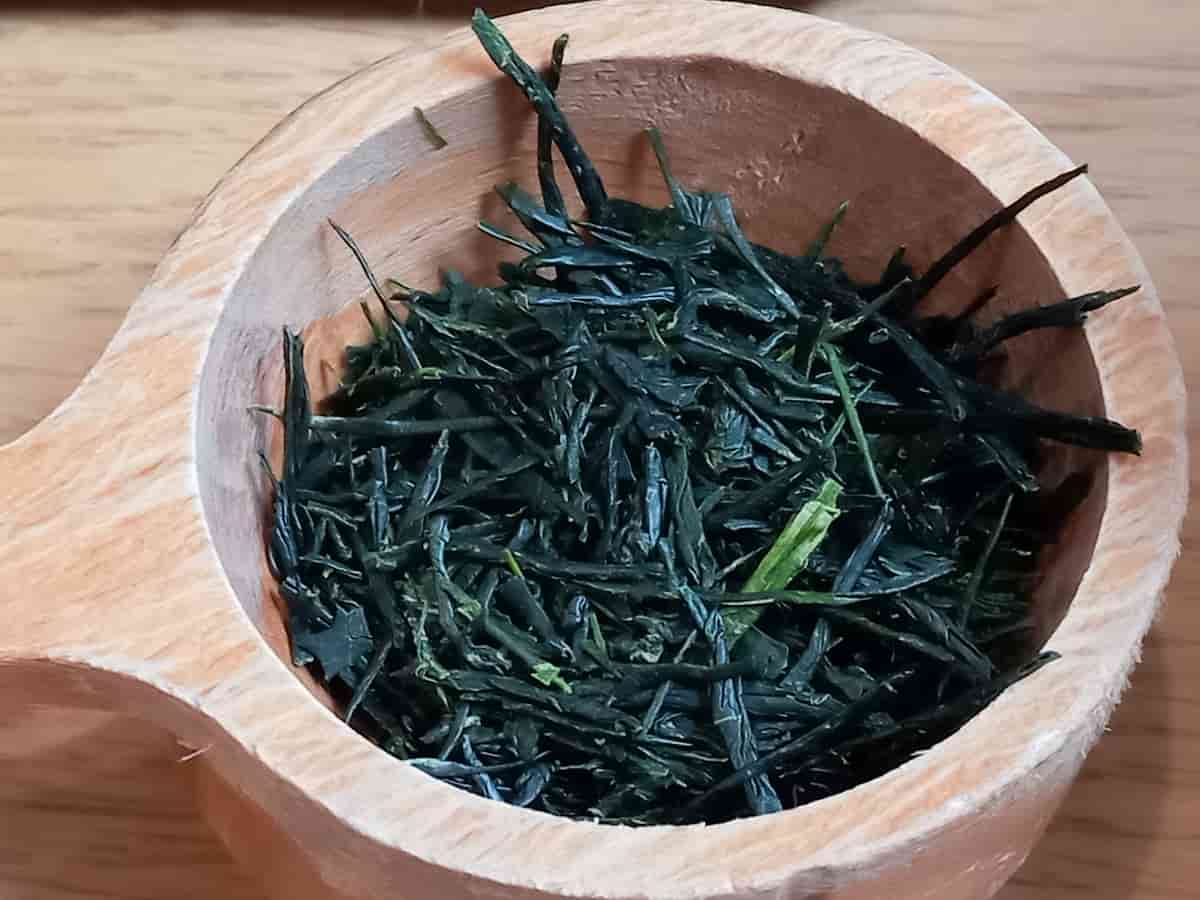
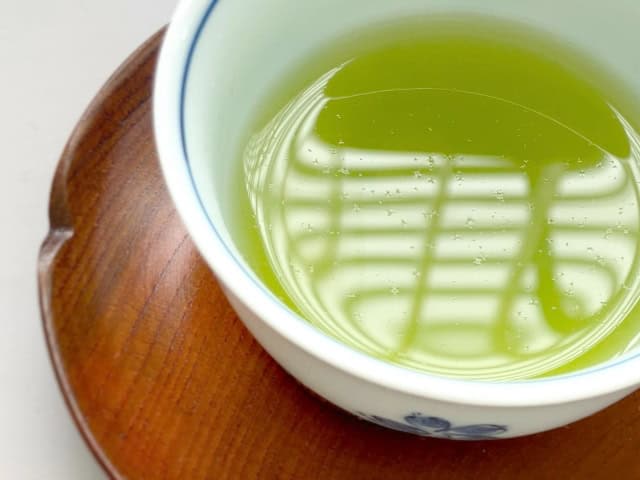
The dry leaves are often dark, glossy, and deep green. The brewed tea may range from clear yellow-green to vivid green depending on the steaming level and amount of fine leaf material.
Texture
Lightly steamed Kabusecha may feel clean and elegant, while deeper-steamed tea can produce a denser texture and release flavor more quickly.
Shading defines the raw material, while processing determines how that shaded character appears in the cup.
Kabusecha vs Sencha, Gyokuro, and Tencha
The four teas can share similar cultivars, but differences in shading and processing create noticeably different drinking experiences.
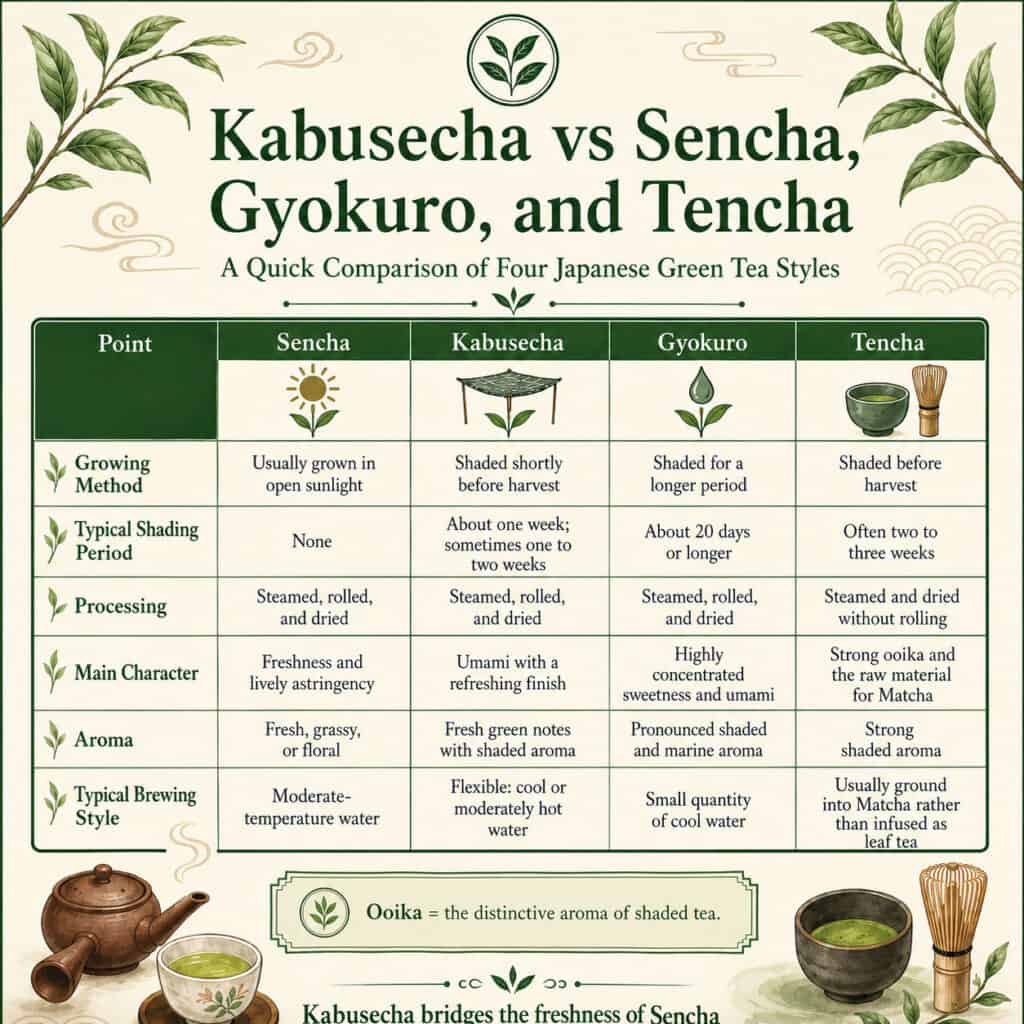
| Tea | Shading | Processing | Typical Character | Common Use |
|---|---|---|---|---|
| Sencha | Usually grown without shading | Steamed, rolled, and dried | Fresh, grassy, brisk, and balanced | Everyday drinking |
| Kabusecha | Shaded for a relatively short period | Steamed, rolled, and dried | Sweet, umami-rich, fresh, and gently astringent | Daily drinking and low-temperature tasting |
| Gyokuro | Usually shaded longer and more intensively | Steamed, rolled, and dried | Dense umami, pronounced ooika, and soft astringency | Concentrated low-temperature brewing |
| Tencha | Shaded before harvest | Steamed and dried without rolling | Soft, sweet, aromatic, and low in astringency | Primarily processed into Matcha |
In the cup, Kabusecha generally offers more shaded sweetness and umami than typical Sencha while retaining more freshness and everyday versatility than many Gyokuro products.
Where Is Kabusecha Produced?
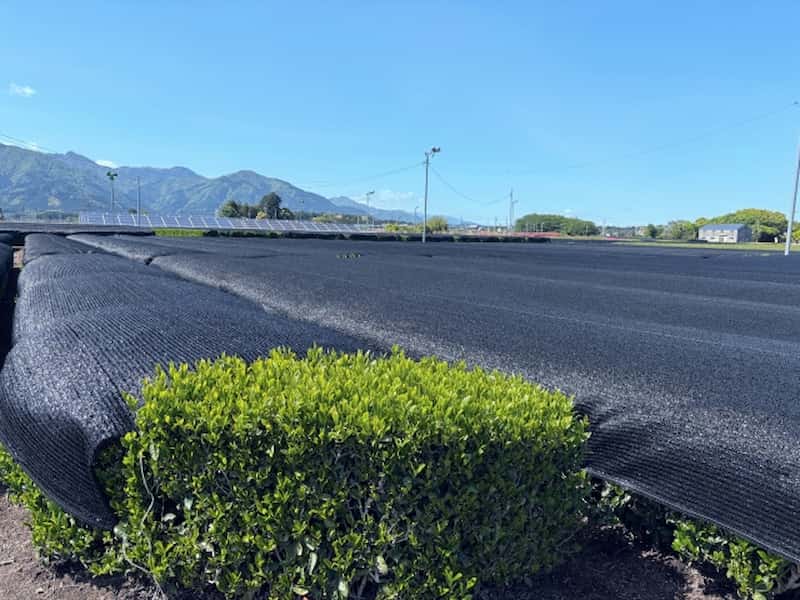
Mie Prefecture is the Japanese region most closely associated with Kabusecha. Northern Mie, particularly the Mizusawa district of Yokkaichi City, is one of the country’s best-known production areas.
Mie Prefecture
Kabusecha forms an important part of Mie’s broader Isecha tea tradition. Producers in the prefecture have developed shaded cultivation as a regional specialty, with tea bushes commonly covered shortly before harvest.
Yokkaichi and the Mizusawa District
Yokkaichi is located in northern Mie, and its Mizusawa district is especially associated with Kabusecha. Shortly before harvest, black shading covers spread across the tea fields, creating a distinctive seasonal landscape.
The area also promotes Kabusecha through local producers, tea shops, cafés, tourism, and regional campaigns, making Mizusawa an important place for experiencing the tea’s production culture.
Other Producing Regions
Kabusecha is also produced in several other Japanese tea-growing regions. Its flavor varies according to cultivar, climate, harvest timing, shading method, steaming, and final firing.
How to Brew Kabusecha
Kabusecha responds clearly to changes in water temperature. Cooler water limits the extraction of bitter and astringent compounds, allowing sweetness, umami, and ooika to stand out more clearly. Hotter water produces a brighter aroma, firmer structure, and a more refreshing Sencha-like finish.
Standard Brewing Method
For your first cup, start with this simple recipe:
| Tea Leaves | Water | Temperature | Time |
|---|---|---|---|
| 5g | 150ml | 65–70°C | 60–90 sec |
Place the leaves in a kyusu, add the cooled water, and allow them to infuse. Pour evenly between the cups and drain the teapot completely.
Second and Third Infusions
Use the same 5g of leaves for all three infusions.
| Infusion | Water | Temperature | Time |
|---|---|---|---|
| First | 150ml | 65–70°C | 60–90 sec |
| Second | 150ml | 75–80°C | 15–20 sec |
| Third | 150ml | 80–85°C | 30–40 sec |
Because the leaves have already opened during the first infusion, the second infusion requires only a short steeping time.
Adjusting Kabusecha to Your Taste
| Style | Tea Leaves | Water | Temperature | Time | Character |
|---|---|---|---|---|---|
| Umami-Focused | 5–6g | 80–100ml | 50–60°C | 90–120 sec | Dense sweetness, concentrated umami, and pronounced ooika |
| Refreshing | 5g | 180–200ml | 75–80°C | 45–60 sec | Brighter aroma, lighter body, and more noticeable astringency |
The umami-focused method is especially suitable for high-grade first-harvest Kabusecha, while the refreshing method works well for everyday drinking and meals. Neither style is universally better; each highlights a different side of the tea.
Cold Brew Method
- Add 8–10g of Kabusecha to 500ml of cold, soft water.
- Refrigerate for two to four hours, gently turning the bottle once or twice.
- Taste the tea and remove the leaves when the sweetness and umami feel balanced.
Keep the finished tea refrigerated and drink it the same day.
Ice-Brewed Kabusecha
For a more concentrated experience, place 5–6g of leaves beneath several ice cubes in a small kyusu and allow the ice to melt slowly. This method produces only a small amount of tea but can reveal intense sweetness, umami, and ooika.
How to Choose and Store Kabusecha
How to Choose Good Kabusecha
- Origin: Look for a clearly named prefecture, town, farm, or producer.
- Harvest: First-harvest tea generally offers a softer texture and more concentrated sweetness and umami.
- Cultivar: Single-cultivar teas emphasize individual characteristics, while blends generally aim for balance and consistency.
- Shading and processing: Information about shading, steaming, and finishing can help predict the tea’s style.
- Freshness: Look for a clear production or packaging date when available.
- Packaging: Choose airtight, light-resistant packaging from a reliable producer or retailer.
When buying tea in person, look for a fresh green appearance and a clean, sweet, nori-like aroma. However, color and needle-like shape alone do not determine quality, since these features also depend on cultivar and steaming style.
Darker leaves and longer shading do not automatically indicate higher quality. The producer must balance shading intensity and duration with cultivar, weather, shoot condition, harvest timing, steaming, and final firing.
How to Store Kabusecha
- Store Kabusecha in a cool, dark, dry place away from strong odors.
- Refrigeration can be useful for longer unopened storage, provided the package is airtight.
- Allow refrigerated tea to return to room temperature before opening to reduce condensation.
- After opening, remove excess air and seal the package tightly.
- Avoid repeatedly moving opened tea between the refrigerator and room temperature.
- For the freshest aroma, aim to finish the tea within about one month after opening.
The one-month guideline is not an expiration date. It is simply a practical target for enjoying Kabusecha while its fresh green aroma and ooika remain at their clearest.
How to Enjoy Kabusecha
Food Pairings
Kabusecha works especially well with foods that complement its savory sweetness without hiding its shaded aroma.
Japanese Dishes
Sashimi, sushi, chilled tofu, steamed fish, dashi-based soup, and chawanmushi.
Vegetables and Savory Foods
Mushrooms, seaweed, edamame, and lightly seasoned vegetables.
Sweets
Wagashi, castella, white chocolate, milk-based desserts, sweet bean paste, and lightly salted cookies.
A cool, concentrated infusion works well with delicate dishes and small sweets, while a warmer, lighter infusion is better suited to a full meal. Very spicy or heavily seasoned foods may overwhelm a delicate low-temperature brew.
Can You Eat the Brewed Leaves?
Tender first-harvest Kabusecha leaves may remain soft enough to eat after several gentle, low-temperature infusions. Drain them well and season lightly with ponzu, soy sauce, salt, sesame seeds, or bonito flakes.
Use freshly brewed leaves, follow any handling guidance provided by the producer, and avoid eating leaves that have been left at room temperature for an extended period.
Final Thoughts
Kabusecha is a distinctive Japanese green tea shaped by a relatively short period of shading before harvest. This cultivation method gives it deeper color, gentle astringency, concentrated umami, and the characteristic shaded aroma known as ooika.
Its greatest strength is versatility. Brew it cool and concentrated for sweetness and savory depth, or use warmer water for a brighter, more refreshing cup. Rather than treating Kabusecha as a lesser version of Gyokuro or a richer form of Sencha, it is best understood as a tea style with its own regional, seasonal, and producer-specific character.
Kabusecha FAQ
What is the difference between Kabusecha and Gyokuro?
Both are shaded Japanese green teas, but Gyokuro is generally shaded for a longer period and often has denser umami and a more pronounced ooika aroma. Kabusecha is usually lighter, fresher, and easier to brew for everyday drinking. However, shading periods and production standards vary by region and producer.
Is Kabusecha the same as Sencha?
No. Kabusecha is usually processed in a way similar to Sencha, but the tea plants are shaded before harvest. This gives Kabusecha a sweeter, more umami-rich taste and a distinctive shaded aroma.
How long is Kabusecha shaded?
It is commonly shaded for approximately one week, although some regional practices may use roughly one to two weeks. The exact period varies by producer and growing conditions.
What temperature is best for Kabusecha?
Around 65–70°C is a practical starting point. Lower temperatures emphasize sweetness, umami, and ooika, while higher temperatures produce a brighter, more refreshing cup with greater astringency.
Can Kabusecha be cold-brewed?
Yes. Cold brewing highlights sweetness and umami while keeping bitterness and astringency low. A useful starting point is 8–10g of tea in 500ml of cold water for two to four hours.
Does Kabusecha contain caffeine?
Yes. Like other Japanese green teas, Kabusecha naturally contains caffeine. The amount in the cup varies according to the tea, leaf quantity, water temperature, and infusion time.
Where is Kabusecha produced?
Kabusecha is produced in several Japanese tea-growing regions, but it is especially associated with Mie Prefecture. The Mizusawa district of Yokkaichi City is one of its best-known production areas.
Can you eat brewed Kabusecha leaves?
Tender first-harvest leaves may be eaten after several gentle infusions. They can be seasoned with ponzu, soy sauce, salt, or sesame seeds, provided they are fresh and handled hygienically.
To explore more Japanese tea culture, read these related guides:
.jpg)
References
- Ministry of Agriculture, Forestry and Fisheries of Japan – Japanese Tea Varieties, on Kabusecha’s approximate seven-day shading period, principal producing regions, and how brewing temperature can emphasize either its sweetness or its refreshing character.
- Ministry of Agriculture, Forestry and Fisheries of Japan – Green Tea Categories, on the cultivation and processing distinctions among Kabusecha, Gyokuro, Sencha, and Tencha, including their typical shading periods.
- Ministry of Agriculture, Forestry and Fisheries of Japan – Uji Tea, on the relationship between sunlight, amino acids, catechins, shaded cultivation, and flavor differences between shaded and open-field teas.
- Ministry of Agriculture, Forestry and Fisheries of Japan – Ise Cha, on Mie’s Kabusecha tradition, its covering period, deeper green color, amino-acid character, and distinctive ooika aroma.
- Mie Prefectural Government – First-Harvest Shading, on the effects of shading on tea composition, chlorophyll, aroma, leaf softness, heat buildup, wind abrasion, and shading techniques.
- Yokkaichi City – Tea Industry and Kabusecha, on Yokkaichi’s tea-growing history and the local practice of covering tea bushes with black shading nets before harvest.
- Mie Prefecture – How to Brew Isecha, on Kabusecha as one of Mie’s principal tea styles and on adjusting brewing according to tea type and desired taste.
- Kyoto Prefectural Tea Research Institute – Changes in Aroma Compounds During Shaded Tea Processing, on aroma compounds in shaded teas and dimethyl sulfide as an important component of ooika.




Comments