




Have you ever tasted a fruit that feels like pure magic? Aizu Mishirazu is a sweet Japanese persimmon that is essentially seedless and known for its smooth, tender texture. Historically, this rare delicacy was highly valued, even being presented to the Imperial Family. Some people may wonder whether it really tastes that good. Honestly, it absolutely does.
Fukushima Prefecture has a very unique climate. Winters in the Aizu region bring heavy snow, while summers become hot and humid. These dramatic seasonal changes create ideal growing conditions for local produce. If you love seasonal sweets, this Aizu regional fruit from Fukushima is well worth trying. To explore more fruit traditions in Japan, see Japanese fruits.
What is Aizu Mishirazu Persimmon?
First, let me explain the basics carefully. People often search for “what is Aizu Mishirazu persimmon” online. Simply put, it is a specialty Japanese persimmon grown mainly in Aizu.
Raw fruits contain active tannins at harvest time, which make them extremely bitter. Nobody can eat them straight from the tree. You would definitely regret taking a bite.
How do farmers fix this astringent issue? Producers treat the fruit with alcohol or carbon dioxide. This traditional method removes the bitter tannins completely. After treatment, the fruit becomes sweet and ready to enjoy. Aizu Mishirazu can be eaten fresh, dried, or used in sweets. Workers pack the fruits in sealed boxes carefully, and the sweetening process happens slowly in the dark. Soon, they become incredibly delicious.
Aizu Mishirazu Persimmon Taste and Texture
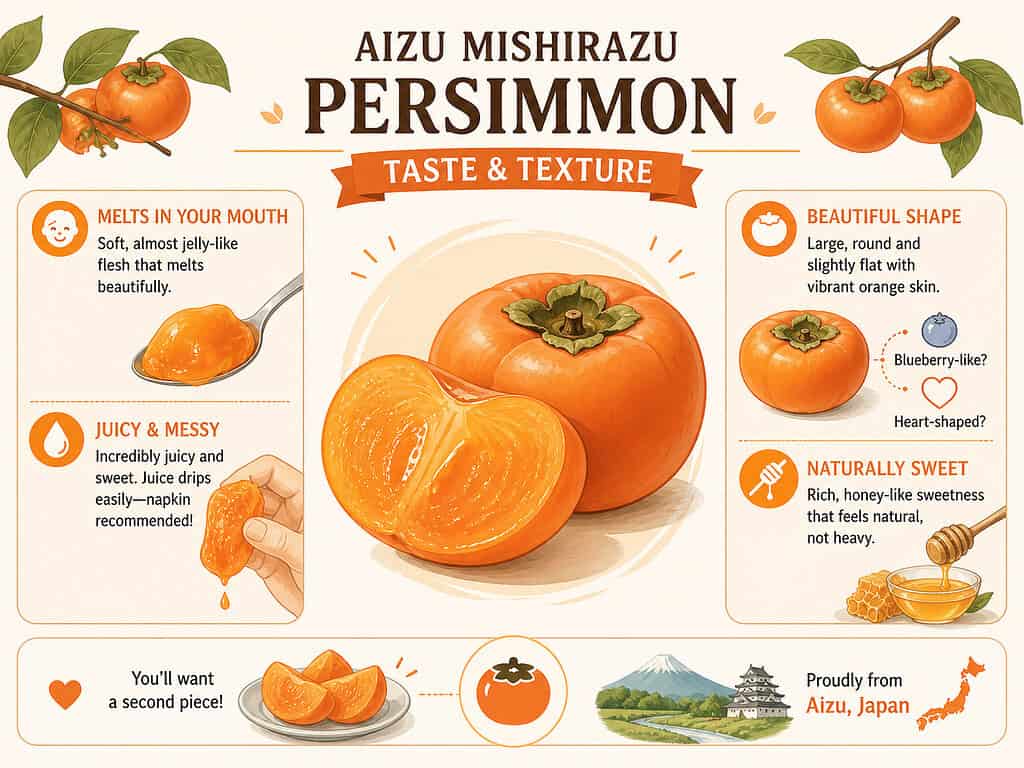
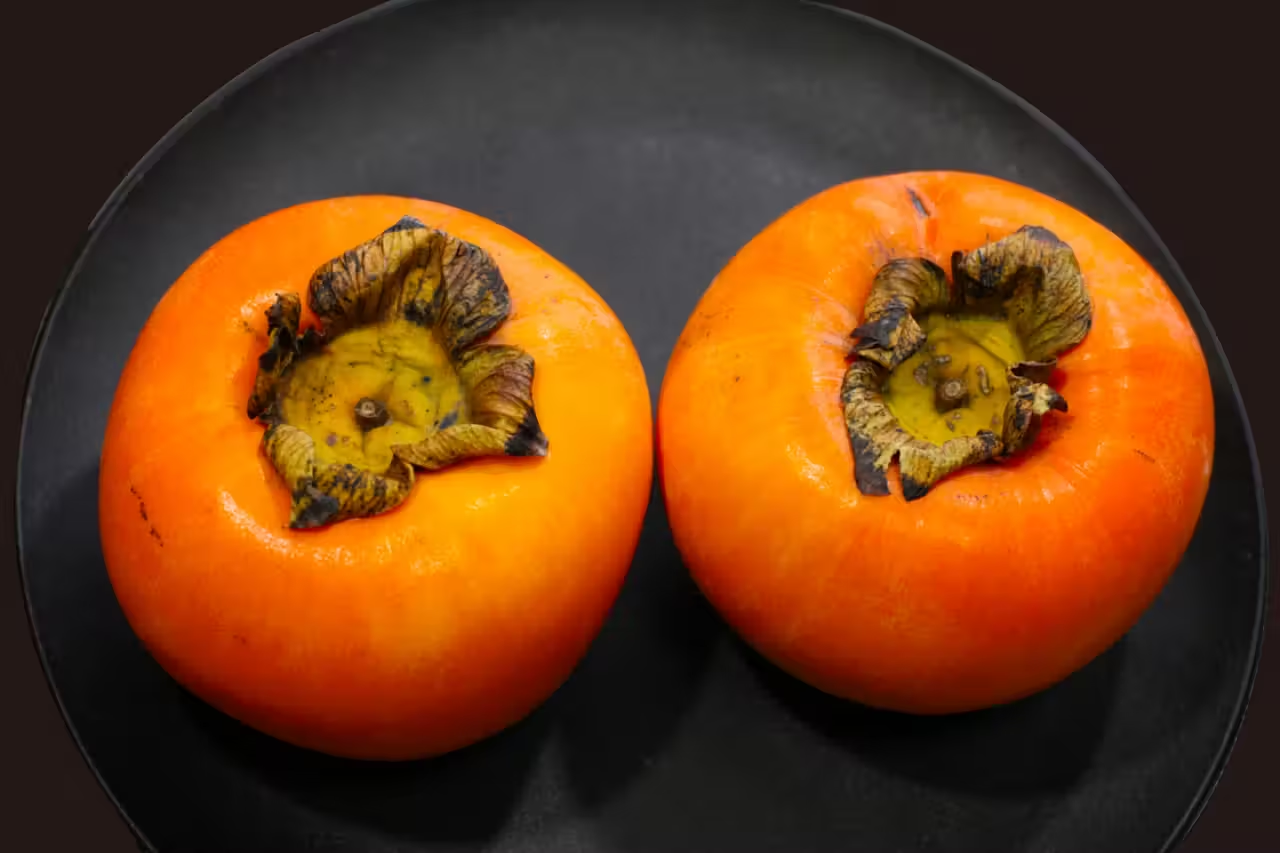
Readers might ask about the Aizu Mishirazu persimmon taste and texture. Biting into the flesh feels almost like soft jelly. Every sweet Japanese persimmon from Aizu melts in your mouth quickly. Juice drips down your fingers effortlessly, so a napkin is always a good idea.
Does the shape look strange to foreigners? Some people online describe it as blueberry-like or heart-shaped, but the fruit is usually large, round, and slightly flat. Its bright orange skin makes it visually stunning.
The sweetness never feels heavy or artificial. It tastes naturally rich, almost like honey. You will probably want a second piece right away.
How to Eat Aizu Mishirazu Persimmon
Knowing how to eat Aizu Mishirazu persimmon is very easy. Simply peel the skin and eat it raw. Fresh slices also pair beautifully with soft cheese. I once tried it with fresh mozzarella at home, and the sweet-savory contrast was excellent.
Families also make Aizu Mishirazu persimmon into candied or dried fruit. Drying concentrates the natural sugars even more, creating a deeper and richer flavor. For anyone discovering Japanese sweets for the first time, this Aizu persimmon specialty is a very approachable place to start.
Comparing Aizu Mishirazu with Other Persimmons
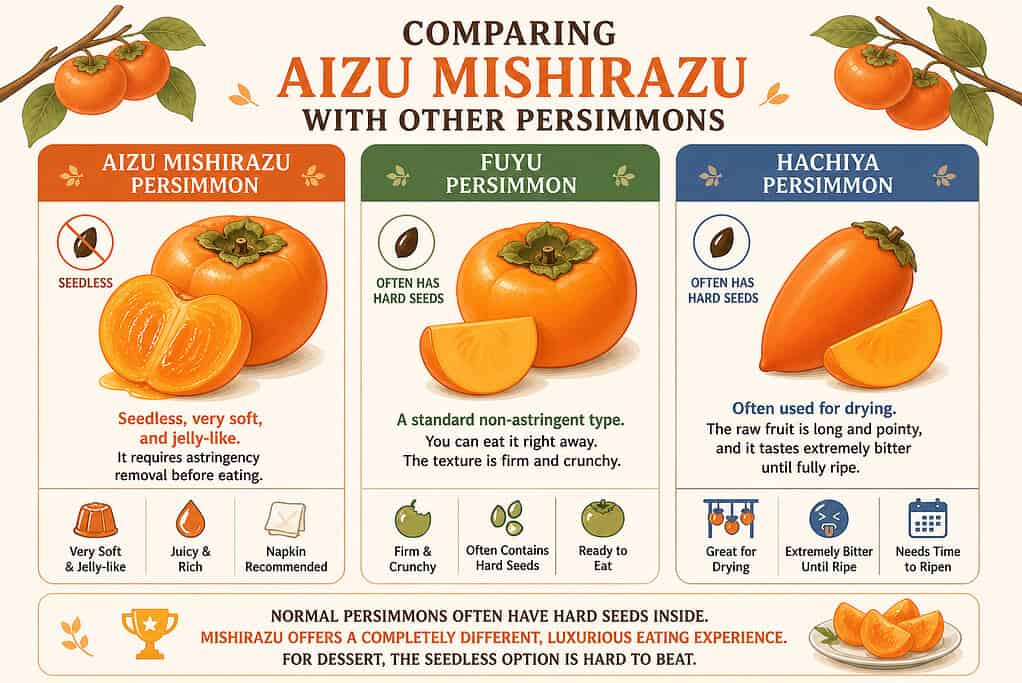
You might wonder how this fruit compares to other popular varieties. Here is a simple comparison:
Aizu Mishirazu Persimmon: Seedless, very soft, and jelly-like. It requires astringency removal before eating.
Fuyu Persimmon: A standard non-astringent type. You can eat it right away. The texture is firm and crunchy, and it often contains hard seeds.
Hachiya Persimmon: Often used for drying. The raw fruit is long and pointy, and it tastes extremely bitter until fully ripe.
Normal persimmons often have hard seeds inside. Mishirazu offers a completely different, luxurious eating experience. For dessert, the seedless option is hard to beat.
Aizu Mishirazu History and Origin
The history and origin of Aizu Mishirazu is fascinating. Locals tell several stories about its unusual name. The name roughly translates to “knowing no bounds” or “unaware of oneself.”
One story says the tree produces an excessive amount of fruit, so heavy branches often break under the weight. Another says the flavor is so tempting that people forget their own stomach limits. A third tale says a farmer once offered it to a shogun, who praised the taste and said he had never known such deliciousness before.
Old tales also mention a connection with a white Buddhist temple and ancient persimmon trees grown in sacred gardens. These stories add a mystical layer to the history and meaning of Aizu Mishirazu persimmon.
Exploring Other Japanese Fruits and Regional Delicacies
Japan produces many incredible seasonal fruits. If you are curious about other kinds, take a moment to explore delicious Japanese fruits. You will find strawberries, melons, peaches, and more.
Are you also interested in local dishes from the same region? Fukushima has many beloved specialties. You can explore Fukushima food including ramen and traditional dishes to discover Kitakata Ramen, Cream Box bread, Namie Yakisoba, and other regional favorites.
Best Time to Eat Aizu Persimmon in Japan
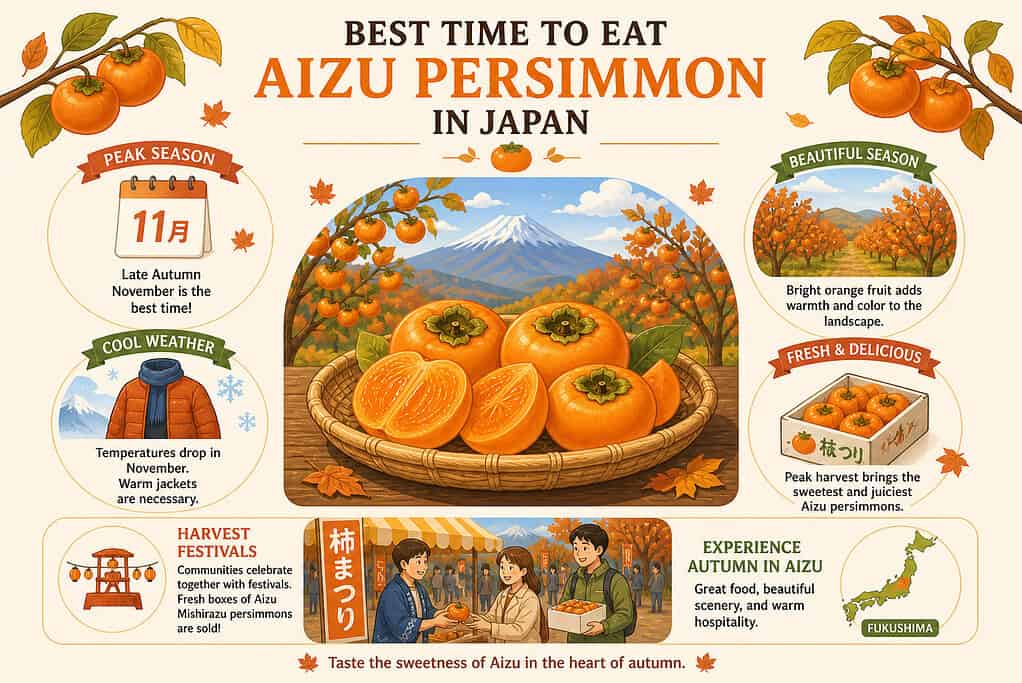
The best time to eat Aizu persimmon in Japan is in late autumn. November is usually the peak season.
Temperatures drop significantly in November, so warm jackets are necessary for travelers. At the same time, the bright orange fruit adds warmth and color to the landscape. The orchards are especially beautiful during harvest season.
Many communities celebrate the harvest together. Visitors may even come across Aizu Mishirazu persimmon festivals in Fukushima, where vendors sell fresh boxes of fruit. The festive atmosphere makes the fruit taste even sweeter.
For more seasonal inspiration, you can also browse Japanese autumn foods.
Where to Buy Aizu Mishirazu Persimmon
Wondering where to buy Aizu Mishirazu persimmon today? Supermarkets across Japan begin selling it in November. High-end department stores may offer it in elegant gift boxes, making it a thoughtful souvenir.
Social media is another good place to look. Many young farmers share their orchard work on Instagram and Facebook, posting photos of the harvest regularly. Some producers also ship directly to customers, so a quick message may be enough to order.
If you see Aizu Mishirazu in season, it is absolutely worth trying. It brings a little autumn joy to any table.
Aizu Mishirazu Persimmon FAQ
What is Aizu Mishirazu Persimmon?
It is a premium autumn fruit from Fukushima Prefecture. Farmers treat these astringent persimmons with Japanese liquor (shochu) to remove their bitterness. Food lovers know this delicacy for its incredible sweetness and melt-in-your-mouth texture.
Where does Aizu Mishirazu Persimmon come from?
This renowned fruit originates from the Aizu region in Fukushima Prefecture. Local farmers have grown this specific variety proudly since the Muromachi period.
What does Aizu Mishirazu Persimmon taste like?
It delivers a rich, honey-like, and deeply sweet flavor. The texture feels incredibly smooth, soft, and juicy. Diners often compare it to eating a natural, fruit-based custard.
Where can I eat Aizu Mishirazu Persimmon in Japan?
You will find the best ones right in Fukushima Prefecture during late autumn. Famous areas include the historic Aizu-Wakamatsu City. High-end fruit parlors and luxury department stores in Tokyo also sell them as premium gifts.
How much does Aizu Mishirazu Persimmon cost?
A premium gift box typically costs between 3,000 and 10,000 yen. Prices vary greatly depending on the fruit size and the beautiful packaging.
Is Aizu Mishirazu Persimmon vegetarian or vegan friendly?
This natural crop contains absolutely no animal products. Vegans and vegetarians can safely enjoy this 100% plant-based luxury fruit anywhere.
What are the main ingredients in Aizu Mishirazu Persimmon treats?
The main ingredients include just the fresh fruit and a touch of Japanese shochu for the curing process. The special shochu-curing process gives the fruit its distinctive mellow sweetness.
Can I eat Aizu Mishirazu Persimmon at home?
Yes, you can easily enjoy it at home. Japanese grocery stores and online farms sell them ready-to-eat during November and December. Diners simply peel the soft skin and slice the sweet flesh effortlessly.
What is the difference between Aizu Mishirazu Persimmon and Fuyu Persimmon?
The main difference involves the natural sweetness and the curing process. This Aizu specialty requires a special alcohol treatment to remove astringency and soften the flesh, while Fuyu persimmons grow naturally sweet and maintain a crisp, apple-like crunch.
Is Aizu Mishirazu Persimmon popular outside Japan?
It remains relatively rare outside Japan. You will rarely find this specific branded fruit at supermarkets in North America or Europe. This historic imperial offering successfully maintains its exclusive status entirely within the Japanese domestic market.




Comments