





Imagine biting into a sweet, ripe strawberry in the middle of a Japanese summer. For years, that was almost impossible here. Winter ruled strawberry season, and summer berries tasted sour and dull. Saika strawberry is part of how that changed. This guide explains what Saika is, how it tastes, where it grows, and why it matters. If you love Japanese fruit, this summer berry rewards a closer look.
Here is the key point first. Saika (彩夏, read “Ayaka”) is a premium brand of a Japanese summer strawberry. The berry itself is the cultivar Shindai BS8-9, bred at Shinshu University. One Nagano farm grows and sells it under the Saika name. So Saika is not a separate variety, but a branded version of a genuinely sweet summer strawberry. That small distinction matters, and we will return to it.
Quick Facts
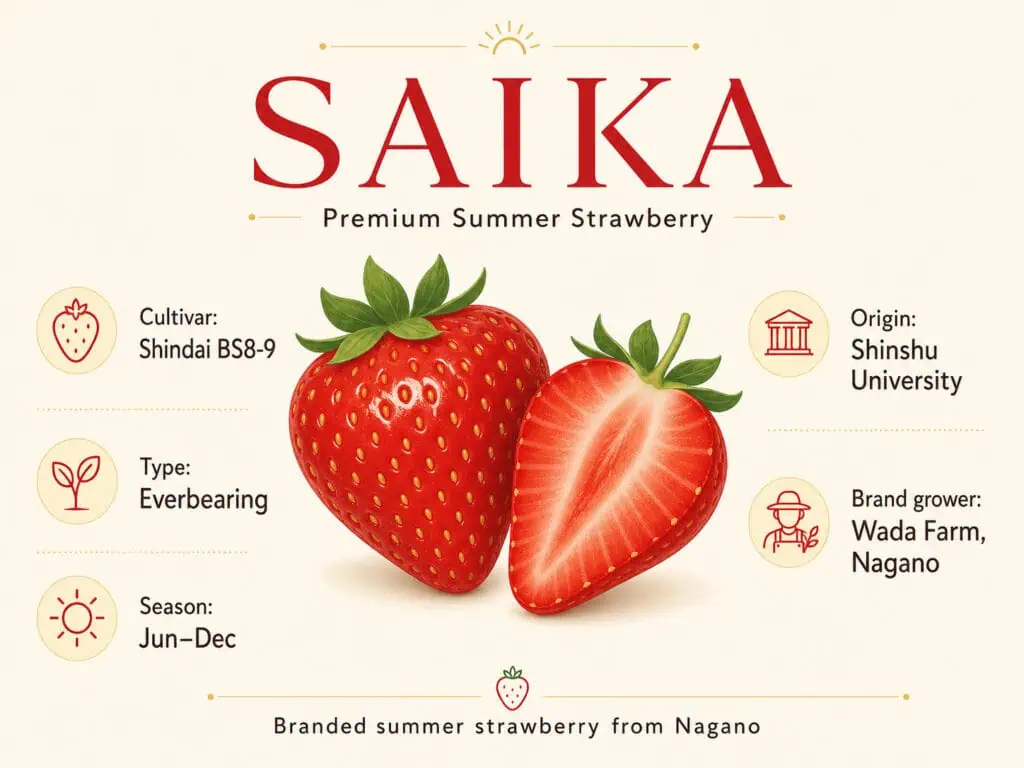
- Japanese Name: 彩夏 (read “Ayaka,” also romanized Saika)
- What It Is: A premium brand of the summer strawberry cultivar Shindai BS8-9
- Cultivar Type: Everbearing (four-season), harvested in summer and autumn
- Bred By: Professor Michio Oi, Shinshu University, Nagano
- Variety Registered: July 2011, registration number 20845
- Saika Grower: Wada Farm (South Dog Co.), Matsumoto City, Nagano
- Season: Roughly June to December, with a summer peak
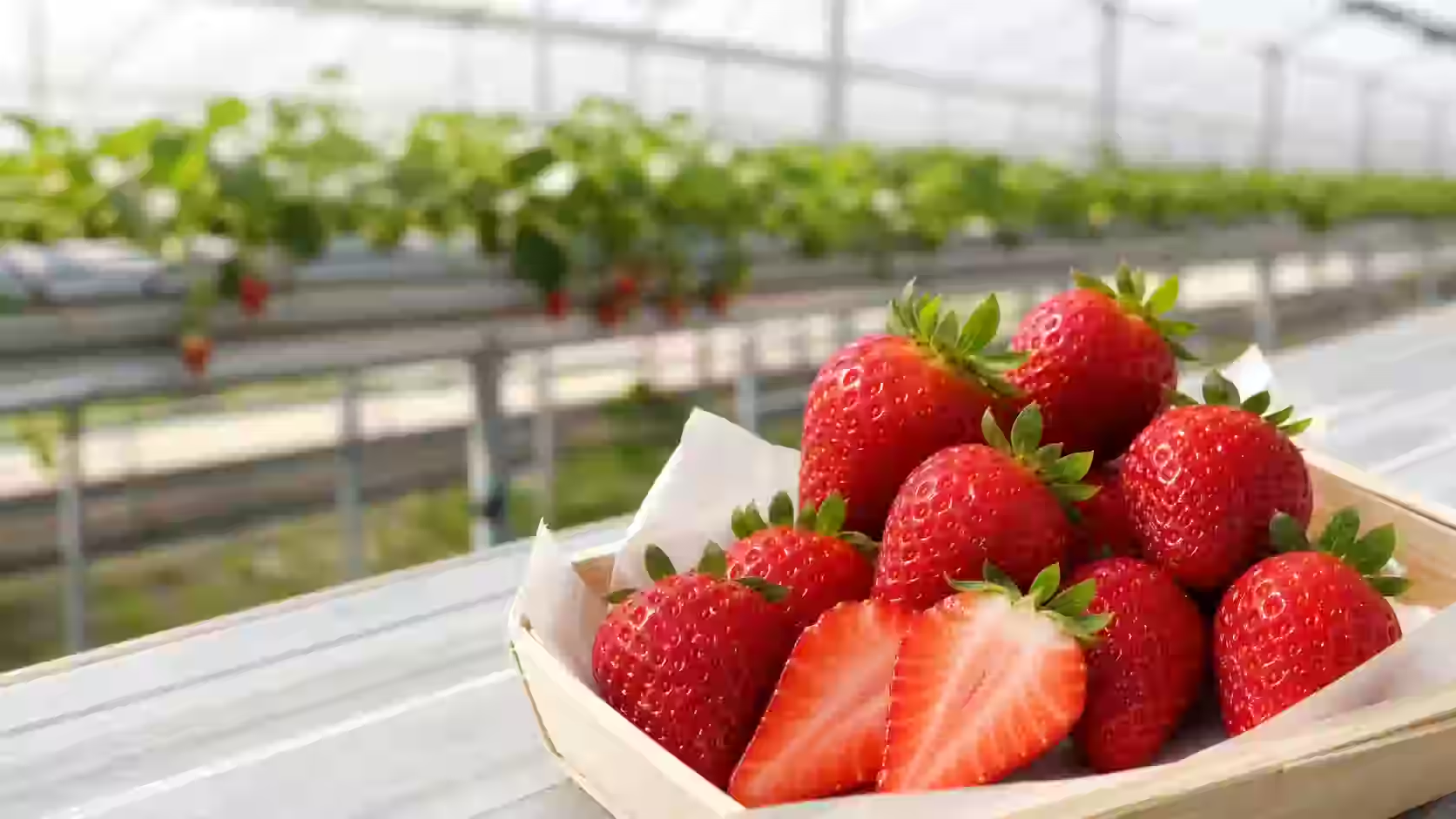
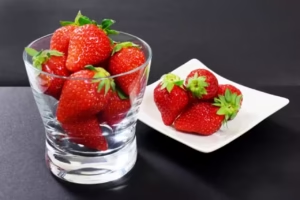
- Official Fruit Traits: Slightly large, conical, deep red skin, glossy, pale red flesh and core
What Is Saika Strawberry?
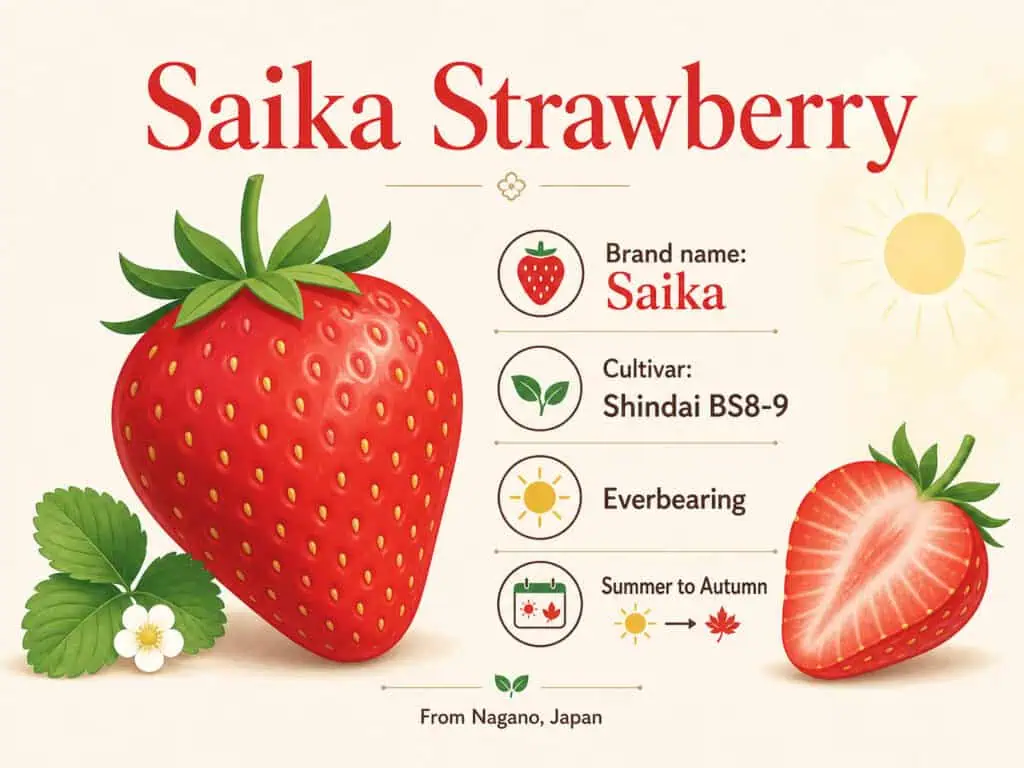
Saika is a brand name for the everbearing strawberry cultivar Shindai BS8-9. The Saika brand comes from Wada Farm in Matsumoto City, Nagano Prefecture. The farm sits at the foot of the Northern Alps and uses the mountains’ subsoil water. So the name Saika points to one grower’s product, while the cultivar underneath is Shindai BS8-9.
This is where many readers get confused, understandably. The reading trips people up too. Written 彩夏, the brand is officially read “Ayaka,” though “Saika” also appears in English. Both refer to the same berry. Keep the underlying cultivar in mind, and the picture stays clear.
Why It Is Unique Among Japanese Strawberries
Most famous Japanese strawberries are winter fruit. Amaou, Tochiotome, and Benihoppe all ripen from roughly December into spring. These belong to the single-season, or June-bearing, group. Research on Japanese strawberry production notes that June-bearing types account for more than 95 percent of the domestic market. Saika breaks that pattern completely. Because its cultivar fruits in summer and autumn, it fills a gap the winter stars cannot.
History and Origin of Shindai BS8-9
The story starts at Shinshu University, in Nagano. There, Professor Michio Oi set out to breed a better summer strawberry. He gathered roughly 60 existing varieties and tested about 6,000 crossing combinations. The work took around six years. Shinshu University applied for registration in October 2009, and the cultivar was registered in July 2011. So Saika traces back to a patient academic breeding project.
Why It Was Bred
The motivation was refreshingly down to earth. Professor Oi wanted to support Nagano farmers’ summer income. Their summer vegetable business had weakened as new competing regions emerged. Meanwhile, imports covered 80 to 90 percent of Japan’s summer strawberry market. Those imports served as cake decoration rather than fruit to enjoy. Honestly, many tasted flat. So the goal became a summer berry that could rival winter ones.
Professor Oi aimed high on the details. He wanted high sugar, a good sweet-acid balance, and a red interior. He also targeted a neat conical shape and a chef-friendly size, roughly 12 to 24 grams per berry. Actual fruit size varies by farm and season, so treat that figure as a breeding target. The official registration record compares the cultivar with Summer Princess, and one grower describes Summer Princess and Nyoho as its ancestry.
Regions Associated With Saika
Nagano is the heartland of this berry. Saika itself comes from Matsumoto, and the university sits in the same prefecture. Still, the cultivar has spread nationwide. As of 2024, growers raised about 86,000 plants at roughly 60 sites. Those farms reach from Sarufutsu in Hokkaido to Yomitan in Okinawa. So the cultivar now grows across almost the entire country.
One Strawberry, Many Names
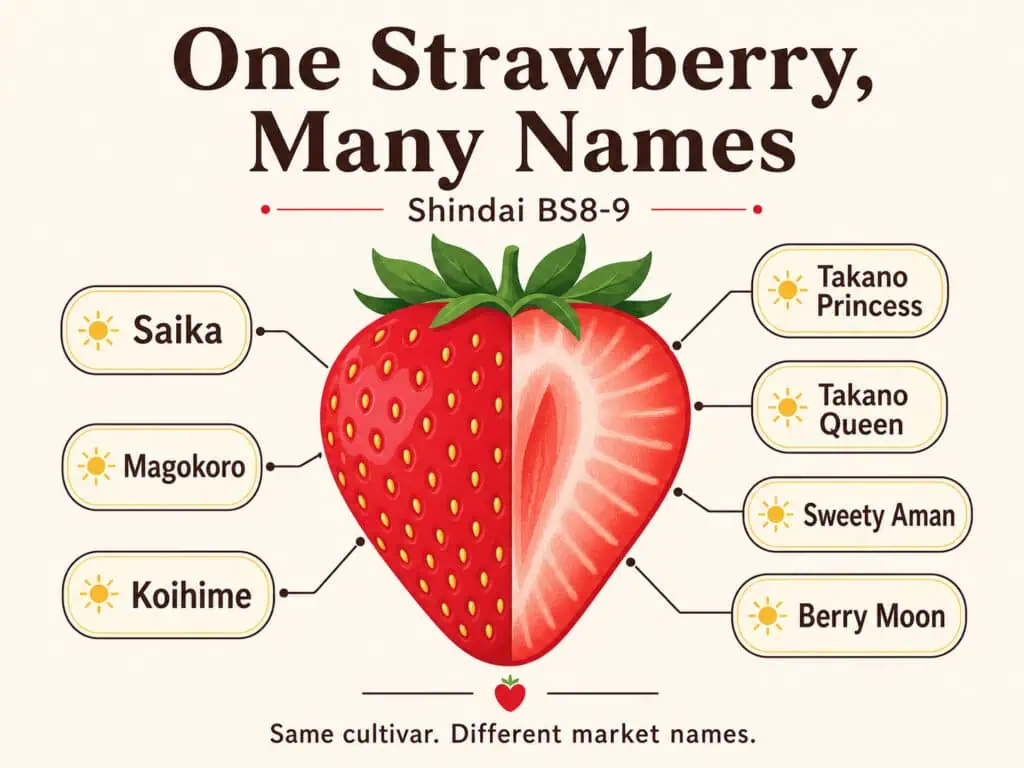
Here is a genuinely unusual feature. The breeder chose to let growers name the cultivar freely. Instead of one fixed brand, Shindai BS8-9 carries many own-names. Each farm can market it under a label of its choice. As a result, the same berry appears under strikingly different names.
- Saika (彩夏): Wada Farm, Matsumoto, Nagano
- Magokoro (真心): Morimoto Farm, Ina, Nagano
- Koihime (恋姫): Nokaya, Ina, Nagano
- Takano Princess and Takano Queen: Natural Farm Taniguchi, Shobara, Hiroshima
- Sweety Aman: Ashoro Nukumori Farm, Ashoro, Hokkaido
- Berry Moon: a grower in Yomitan, Okinawa
So Saika and Magokoro are, at heart, the same cultivar. The breeder felt growers would care more for a berry they named themselves. Frankly, it is a charming idea for a public university project. Growers may also propagate their own plants under a license-free arrangement. That flexibility explains why online listings can look so confusing. When comparing brands, always check for Shindai BS8-9 underneath.
What Does Saika Strawberry Taste Like?
This is the part that surprised me most. Summer strawberries have a reputation for sourness. Saika pushes back against that expectation. The brand describes the cultivar as holding a high sugar level even in summer heat. Growers commonly report a Brix reading somewhere around 10 to 12 in midsummer. A gentle acidity sits behind the sweetness, keeping the flavor lively rather than cloying.
Aroma is one of its stated strengths, and it shapes the whole tasting experience. The interior is worth a note too. Many strawberries have white flesh inside, but the official registration lists both the flesh and core as pale red. So a cut berry looks appealing rather than washed out, which is exactly why pastry chefs like it. I will admit one honest hesitation, though. In peak heat, quality can vary between farms and batches. Buying from a trusted grower genuinely matters.
Appearance and Fruit Size
The official record describes the fruit as slightly large and conical. Skin color is deep red, with strong gloss. Growers add that the berries hold up reasonably well in transport, which matters for summer shipping. Because the color stays vivid, the fruit photographs beautifully on cakes. That visual appeal partly explains its popularity in pastry shops.
How Saika Strawberries Are Grown
Growing strawberries in summer is genuinely difficult, and science backs that up. Studies on everbearing cultivars show that high temperatures suppress flower bud development. Fruit set rates drop as well. One comparison across regions found flowering strongly suppressed in warm areas during hot months. So cool highland sites, such as parts of Nagano, give plants a real advantage.
Water plays a starring role for the Saika brand. Wada Farm draws on subsoil water from the Northern Alps. Meanwhile, most production happens inside greenhouses or tunnels. These structures shield the fruit from rain, pests, and harsh sun. The cultivar also resists common problems like powdery mildew and anthracnose. That resistance, bred in deliberately, makes summer growing more stable.
The harvest window runs roughly from June to December. It peaks during the summer months, when demand for fresh berries climbs. Picking happens by hand, berry by berry, at the right ripeness. Some fruit goes to fresh markets, while much heads to confectionery makers. Because the berries bruise, careful handling stays essential throughout.
Nutritional Benefits of Saika Strawberry
Like other strawberries, Saika packs useful nutrition into a small fruit. Reviews of strawberry composition describe the fruit as a notable source of vitamin C and folate. Strawberries also supply dietary fiber, potassium, and a range of phenolic compounds. The red pigments include anthocyanins, which researchers study for antioxidant activity. So a bowl of these berries offers more than sweetness alone.
A quick note on balance seems fair here. Strawberries are naturally low in calories, which many people welcome. However, no single fruit works as a magic health food. Nutrient levels also shift with cultivar, growing conditions, and storage. Enjoy Saika as a tasty part of a varied diet, and check a food composition database for precise figures.
How to Eat Saika Strawberry
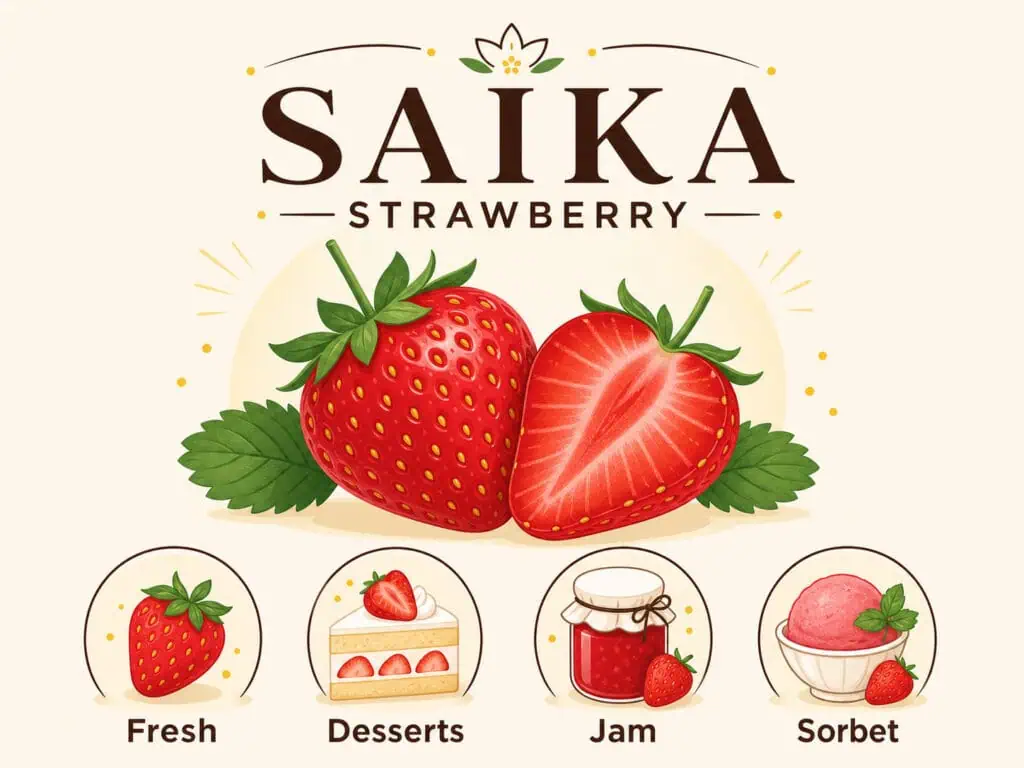
The simplest way is also the most rewarding. Eat Saika fresh, lightly chilled, straight from the punnet. Because the flavor is sweet and clean, it needs no dressing up. The cultivar was bred for eating, not merely for decoration. That alone marks how far summer strawberries have come.
Beyond fresh eating, the uses run wide. Consider these popular options:
- Parfaits and shortcakes: summer strawberry desserts once impossible now shine.
- Cakes and tarts: the conical shape and red core suit half-cut toppings.
- Jam and preserves: some farms make jam with a very high fruit ratio.
- Gelato and sorbet: a natural fit for summer frozen treats.
This versatility is exactly what chefs wanted. A good summer strawberry unlocks a whole season of desserts. So the cultivar behind Saika quietly expanded what Japanese pastry shops can offer.
Saika vs Other Japanese Strawberry Varieties
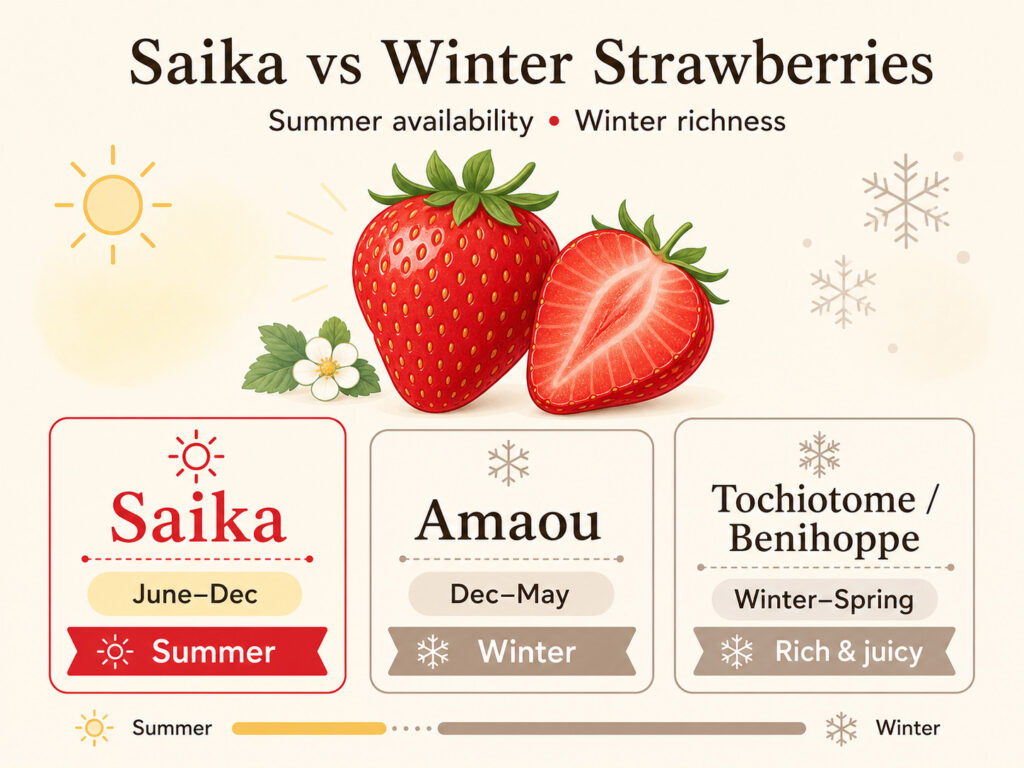
Comparing Saika with the winter stars highlights its niche. The famous varieties win on winter size and richness. Saika offers something they cannot, which is summer availability. The table below sums up the main differences.
| Variety | Type | Main Season | Origin | Flavor Note |
|---|---|---|---|---|
| Saika (Shindai BS8-9) | Everbearing (summer-autumn) | June to December | Shinshu University, Nagano | Sweet for a summer berry, balanced acidity |
| Amaou | Single-season (winter) | December to May | Fukuoka | Large, very sweet, rich |
| Tochiotome | Single-season (winter) | Winter to spring | Tochigi | Sweet-tart, juicy, classic |
| Benihoppe | Single-season (winter) | Winter to spring | Shizuoka | Sweet with pronounced acidity |
So the comparison is not really a contest. Amaou and Tochiotome dominate winter, and deservedly so. Saika instead owns the summer months. For a closer look at the winter king, see our guide to the Amaou strawberry. Another premium regional berry worth knowing is Echigo hime from Niigata. Each variety simply serves a different moment on the calendar.
Where to Buy Saika Strawberry
Finding Saika takes a little more effort than finding winter berries. Much of the cultivar’s demand comes from the confectionery trade. Still, several routes exist for curious shoppers and travelers.
The Saika brand sells directly through its grower in Matsumoto, Nagano. Farm stands and roadside markets in growing regions are another good bet. Some specialty fruit shops and department store food halls stock premium summer strawberries too. Elsewhere, the same cultivar appears under local brand names, so watch for those. Because prices shift with season and grade, compare a few sellers first.
One honest caveat for overseas readers. Fresh Japanese strawberries rarely travel abroad well. They bruise fast and have a short shelf life. So most visitors enjoy Saika inside Japan, ideally near where it grows. For more seasonal picks, browse our overview of Japanese fruit.
Why Saika Represents Japan’s Summer Fruit Culture
Saika means more than one tasty berry. It marks a real shift in Japanese agriculture. Roughly 90 percent of Japan’s strawberries are still harvested between December and May. Before this cultivar, high-quality summer fruit barely existed here. Now, thanks to university breeding, it does. That progress reduced the confectionery sector’s reliance on imports.
Recognition has grown quickly too. Fruit of this cultivar, grown by a Hiroshima farm, was served at a dinner during the 2023 G7 Hiroshima Summit. Its economic ripple also reaches many rural areas. Farms from Hokkaido to Okinawa can now grow a premium summer crop. A dedicated industry association now supports growers, and some have begun pursuing exports to Southeast Asia and North America.
Challenges remain, of course. Rising summer temperatures make everbearing cultivation harder each year. Even so, summer strawberries seem set to keep growing in Japan. So a July strawberry parfait, once a fantasy, has become a small everyday joy.
Saika Strawberry FAQ
What is Saika strawberry?
Saika is a premium brand of a Japanese summer strawberry. The berry is the cultivar Shindai BS8-9, bred at Shinshu University. A farm in Matsumoto, Nagano, grows and sells it as Saika. Unlike most summer strawberries, it tastes notably sweet.
Is Saika read “Saika” or “Ayaka”?
The Japanese name 彩夏 is officially read “Ayaka.” In English, some sources also romanize it as “Saika.” Both point to the same branded strawberry. The official grower’s site uses the Ayaka reading.
What does Saika strawberry taste like?
Saika is sweet, with a strong aroma and gentle acidity. Its cultivar holds high sugar even under summer heat, and growers report Brix around 10 to 12. The flesh and core are pale red rather than white. For a summer berry, the sweetness clearly stands out.
When is Saika strawberry in season?
The cultivar is everbearing, so it fruits in summer and autumn. Harvest runs roughly from June to December. Demand and picking peak during the summer months. So it fills the gap when winter varieties disappear.
Where does Saika come from?
The cultivar was bred at Shinshu University in Nagano. Professor Michio Oi developed it over about six years. It gained variety registration in July 2011. The Saika brand specifically comes from a farm in Matsumoto, Nagano.
Why is the same berry sold under different names?
The breeder let growers name the cultivar freely. So Shindai BS8-9 appears under many own-names. Saika, Magokoro, Koihime, and Berry Moon are all examples. The genetic variety underneath stays the same.
Why is it hard to grow strawberries in summer?
Heat is the main obstacle. Studies show high temperatures suppress flower bud development in everbearing strawberries. Fruit set rates fall as well. That is why cool highland areas suit summer strawberry farming best.
How does Saika compare with Amaou?
They serve different seasons and roles. Amaou is a large, very sweet winter strawberry from Fukuoka. Saika is a summer-autumn berry from Nagano’s university breeding. Amaou wins on winter richness, while Saika wins on summer availability.
Is Saika strawberry healthy?
Strawberries are a recognized source of vitamin C, folate, and fiber. They also contain phenolic compounds and anthocyanins, studied for antioxidant activity. Saika shares these general benefits and stays low in calories. Still, nutrient levels vary, so treat it as one part of a balanced diet.
Where can travelers buy Saika strawberries?
Look in Nagano, especially around Matsumoto, during summer. Farm stands, specialty fruit shops, and department store food halls may carry them. The same cultivar also sells under other brand names elsewhere. Prices vary with grade and time of year.
Are Japanese summer strawberries available overseas?
Fresh ones remain hard to find abroad. Japanese strawberries bruise easily and spoil quickly. However, some growers have started pursuing exports to Asia and North America. For now, most people enjoy Saika inside Japan.
References
- Ayaka Summer Strawberry Official Site (Wada Farm / South Dog Co.), Top page and About Summer-Autumn Strawberries, https://ayaka-ichigo.jp/ (Surveyed: July 2026)
- Agriculture & Livestock Industries Corporation (ALIC), Shinshu-born “Shindai BS8-9” summer-autumn strawberry spreads nationwide, Vegetable Information, July 2025, https://vegetable.alic.go.jp/yasaijoho/wadai/2507_wadai1.html (Surveyed: July 2026)
- Ministry of Agriculture, Forestry and Fisheries (MAFF), Plant Variety Registration Database, Shindai BS8-9, Registration No. 20845, registered 4 July 2011, https://www.hinshu2.maff.go.jp/vips/cmm/apCMM112.aspx?TOUROKU_NO=20845 (Surveyed: July 2026)
- Shinshu University, The appeal of Shinshu-born summer-autumn strawberry “Shindai BS8-9”, Shindai NOW No. 89, 2014, https://www.shinshu-u.ac.jp/zukan/communication/bs8-9.html (Surveyed: July 2026)
- Shinshu University, Shinshu-born summer-autumn strawberry spreads nationwide, Shindai NOW No. 137, 2023, https://www.shinshu-u.ac.jp/zukan/cooperation/post-47.html (Surveyed: July 2026)
- Shinshu TLO, Summer-autumn strawberry “Shindai BS8-9”, https://shinshu-tlo.co.jp/shindai-bs8-9/ (Surveyed: July 2026)
- Yoshida, Y., Strawberry Production in Japan: History and Progress in Production Technology and Cultivar Development, International Journal of Fruit Science, 2013, Vol. 13, No. 1-2, pp. 103-113, https://www.tandfonline.com/doi/full/10.1080/15538362.2012.697027 (Surveyed: July 2026)
- Yamasaki, A. et al., Evaluation of Flowering and Runnering Characteristics of Everbearing Strawberry, and Selection of Its Suitable Cultivar in Warm-region Cultivation from Winter to Spring in Japan, The Horticulture Journal, 2019, Vol. 18, No. 3, pp. 215-224, https://www.jstage.jst.go.jp/article/hrj/18/3/18_215/_article (Surveyed: July 2026)
- Effects of high temperature on the fruit development and sugar concentration in everbearing strawberry cultivars, Advances in Horticultural Science, 2025, Vol. 39, No. 4, pp. 261-268, https://oaj.fupress.net/index.php/ahs/article/view/18310 (Surveyed: July 2026)
- Aomura, N. et al., Dark Septate Endophytic Fungi Improve Dry Matter Production and Fruit Yield in Ever-Bearing Strawberry (Fragaria x ananassa Duch.) Under High Temperatures, Plants, 2026, Vol. 15, No. 1, Article 129, https://www.ncbi.nlm.nih.gov/pmc/articles/PMC12788151/ (Surveyed: July 2026)
- Golba, M. et al., Bioactive Ingredients with Health-Promoting Properties of Strawberry Fruit (Fragaria x ananassa Duchesne), Molecules, 2023, Vol. 28, No. 6, Article 2711, https://doi.org/10.3390/molecules28062711 (Surveyed: July 2026)
- Giampieri, F. et al., The strawberry: Composition, nutritional quality, and impact on human health, Nutrition, 2012, Vol. 28, No. 1, pp. 9-19, https://www.sciencedirect.com/science/article/abs/pii/S0899900711003066 (Surveyed: July 2026)
Related Articles
- Amaou Strawberry (あまおう) (Surveyed: July 2026)
- Tochiotome Strawberry (とちおとめ) (Surveyed: July 2026)
- Echigo hime Strawberry (越後姫) (Surveyed: July 2026)
- Japanese Fruit: Seasonal and Regional Varieties (Surveyed: July 2026)




Comments