




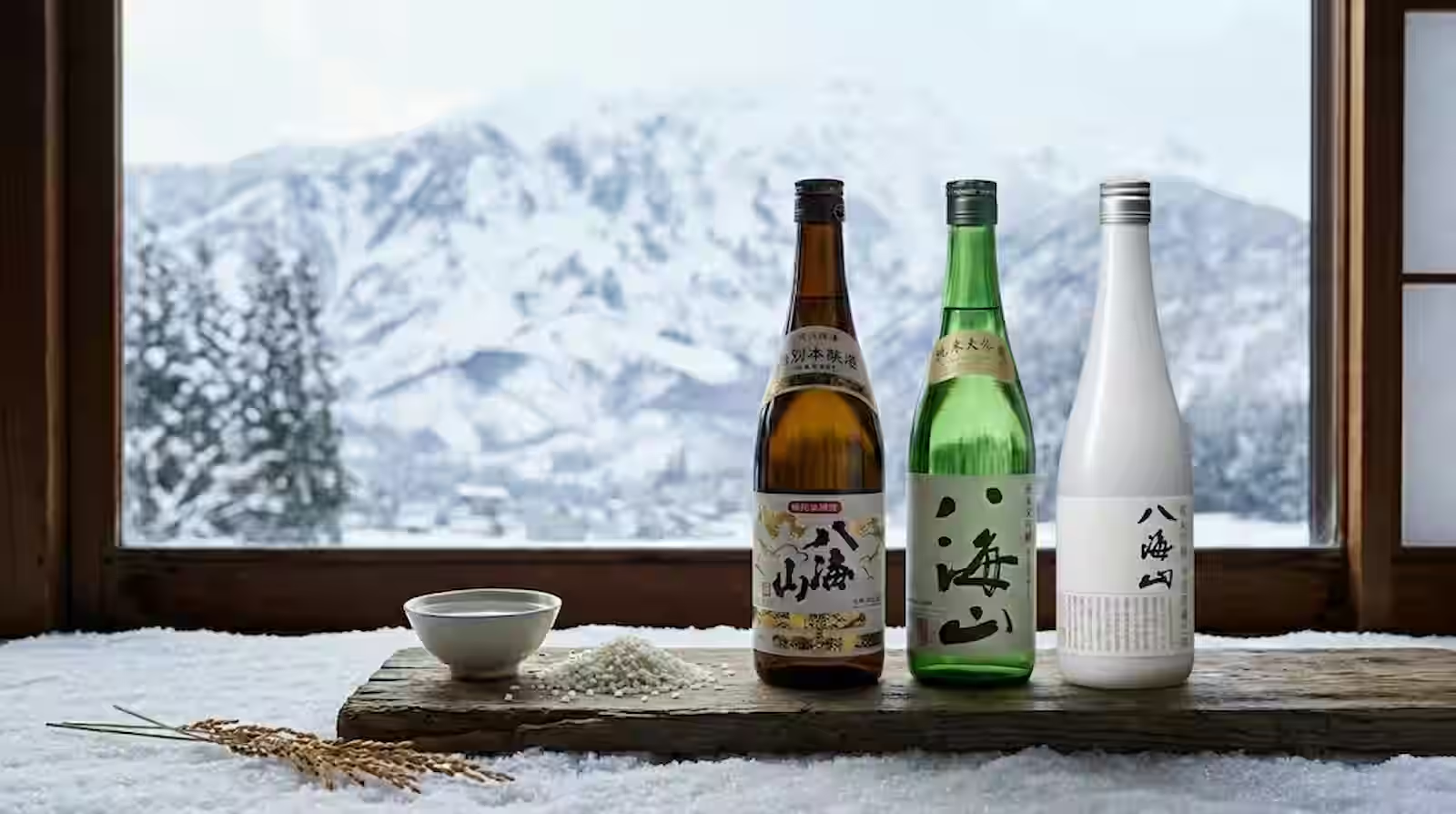

Kyoto sake is known for smooth texture, fragrant sake aroma, and an elegant finish. The center of this regional sake culture is Fushimi, a historical brewery district in southern Kyoto. Soft water, Kyoto brewing tradition, and the city’s refined food culture shaped this classic sake region.
However, Kyoto does not produce only one flavor. The best-known image is gentle, aromatic, and balanced. In particular, Fushimi sake often feels softer than powerful hard-water sake from other regions. As a result, Kyoto sake pairs easily with delicate dishes.
For a broader foundation, see the Japanese sake guide. For regional cuisine context, see Kyoto Food.
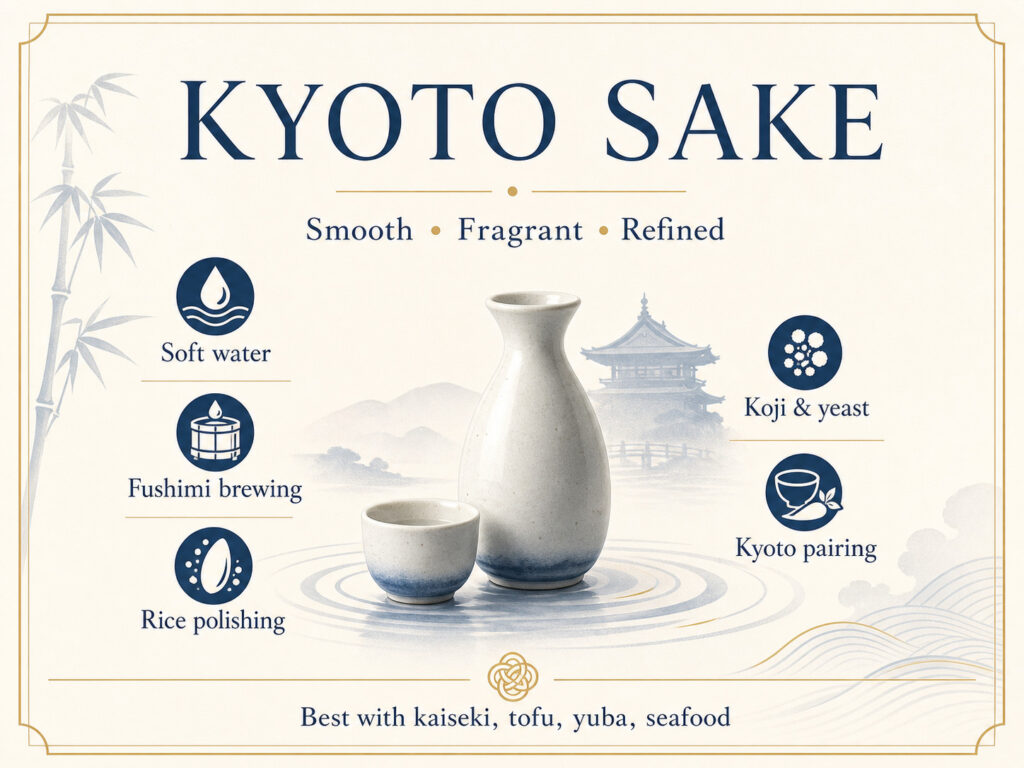
Quick Summary of Kyoto Sake
| Item | Summary |
| Region | Kyoto Prefecture, especially Fushimi |
| Famous for | Smooth, aromatic, and elegant sake |
| Water type | Soft Fushimi water, often called Fushimizu |
| Brewing center | Fushimi, a historic sake district |
| Cultural background | Imperial capital, temple town, and merchant town culture |
| Flavor trend | Fragrant, smooth, balanced, and refined |
| Key techniques | Koji fermentation, yeast control, and rice polishing |
| Best pairings | Kyoto cuisine, kaiseki, yuba, tofu, matcha sweets, and light seafood |
This summary answers what is Kyoto sake in simple terms. It is Japanese sake shaped by soft water, history, and cuisine. Therefore, the regional identity favors grace, fragrance, and balance.
What Makes Kyoto Sake Unique?

Kyoto sake is unique because water, history, and food culture overlap strongly. Fushimi water is especially important. The area has long had abundant groundwater, and that water supports smooth fermentation.
Soft water brewing usually produces gentle sake. Since soft water has fewer minerals, yeast fermentation tends to move slowly. As a result, brewers can create a smooth texture and refined aroma.
Kyoto’s history also matters. The city served as Japan’s imperial capital for centuries. Meanwhile, court culture, temple districts, merchant town life, and classical aesthetics influenced local sake culture.
Food provides another layer. Kyoto cuisine often uses delicate seasoning. Therefore, Kyoto sake must support flavor without overpowering it. This explains why smooth, fragrant sake fits the city so well.
For brewing background, read how sake is made.
What Is Fushimi Water?
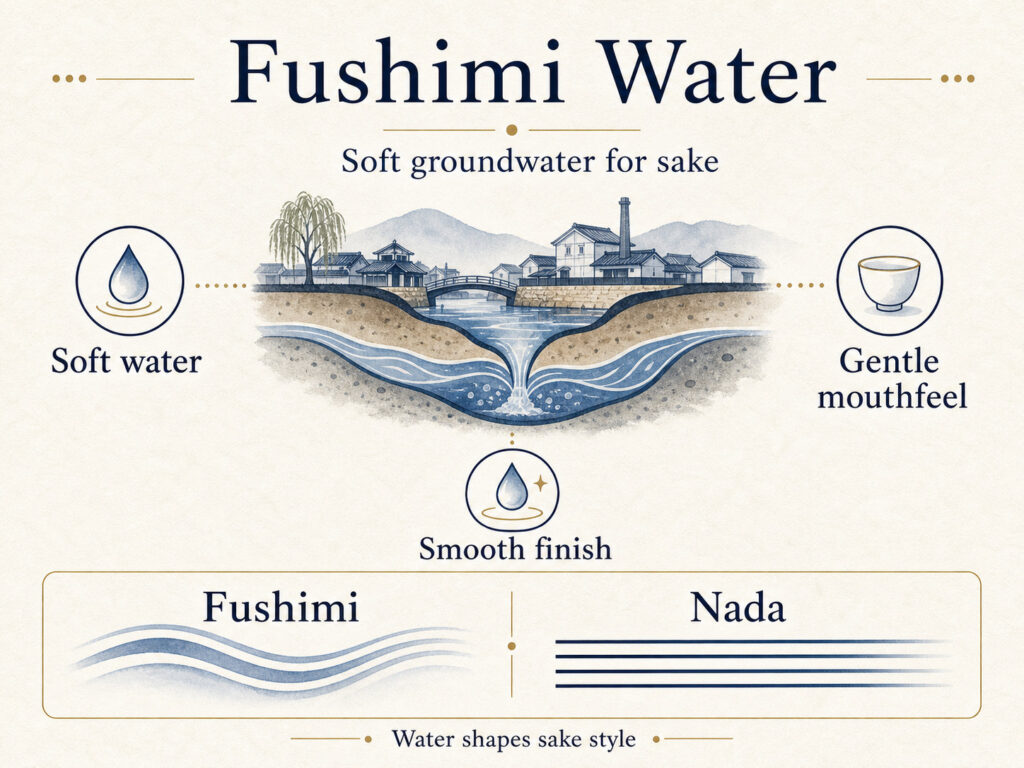
Fushimi water refers to the soft groundwater that supports sake brewing in Fushimi. The old name Fushimizu means hidden water. That name reflects the area’s reputation for underground springs.
Water is not a neutral ingredient in sake. It affects yeast fermentation, texture, aroma, and finish. In Fushimi, soft water helps create sake with a gentle mouthfeel and smooth finish.
However, this does not mean every Kyoto sake tastes the same. Rice, koji mold, yeast strains, and brewery technique still matter. Still, local water gives Fushimi sake a recognizable foundation.
A useful comparison is Nada. Nada’s harder water often creates firmer sake. By contrast, Fushimi water supports softer, more elegant sake.
For another major brewing region, see Nada Gogo sake.
Kyoto Sake Flavor Profile and Characteristics
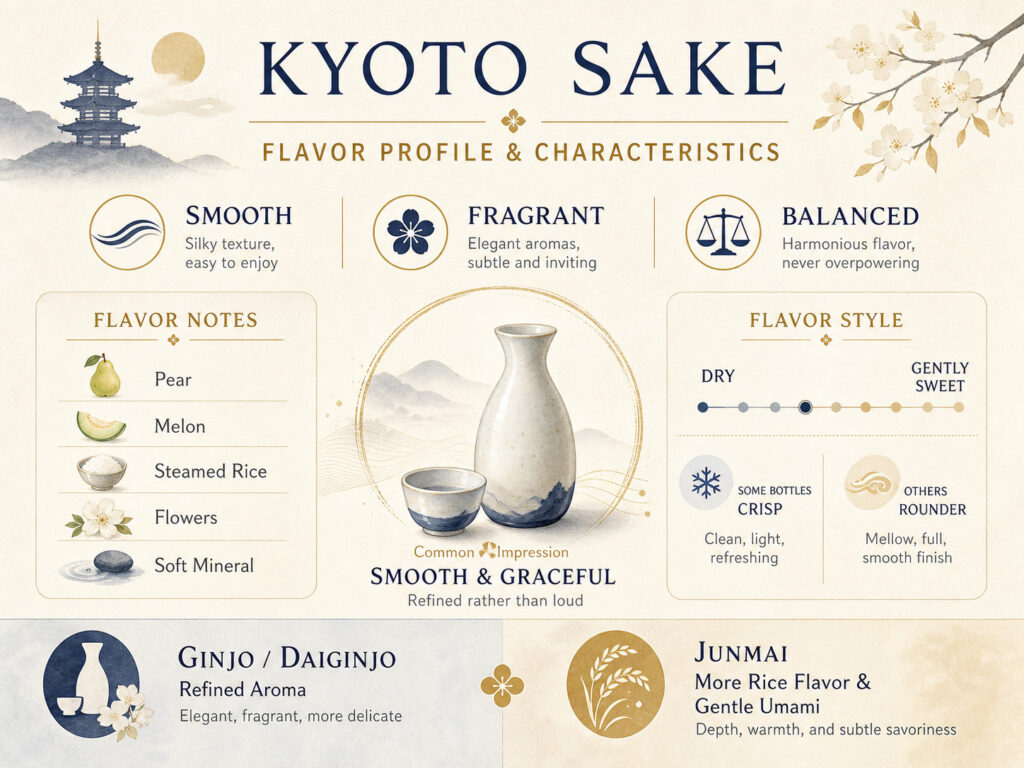
Kyoto sake flavor profile usually leans smooth, fragrant, and balanced. Many bottles show pear, melon, steamed rice, flowers, or soft mineral notes. In general, aromas feel refined rather than loud.
The taste often sits between dry and gently sweet. Some bottles finish crisp, while others feel rounder. Still, the common impression is smoothness. This is why Kyoto sake is often called graceful.
Rice polishing can increase aromatic clarity. In Ginjo and Daiginjo styles, polished rice often brings refined aroma. Meanwhile, Junmai can show more rice flavor and gentle umami.
| Character | Typical Kyoto expression |
| Sweetness | Dry to gently sweet |
| Body | Light to medium body |
| Aroma | Fragrant, floral, fruity, or rice-like |
| Texture | Smooth and rounded |
| Finish | Elegant, clean, and balanced |
| Food role | Strong with refined cuisine |
This profile suits drinkers who prefer smooth sake. It also helps beginners understand why Kyoto is known for fragrant sake.
How Kyoto Climate Affects Sake
Kyoto climate affects sake through temperature, basin geography, and water movement. The Kyoto Basin has hot summers and cold winters. Therefore, brewers traditionally use cold months for fermentation.
Winter brewing helps control fermentation. Cooler conditions reduce unwanted changes and support clean aroma. In Fushimi, soft water and winter fermentation work together.
The surrounding hills also matter. Rainwater moves through local ground layers and supports underground water sources. As a result, landscape and sake character remain closely connected.
Kyoto sake does not depend on climate alone. However, climate gives brewers a framework. Within that framework, they guide rice, koji, and yeast toward a refined style.
Rice, Koji, and Yeast in Kyoto Brewing
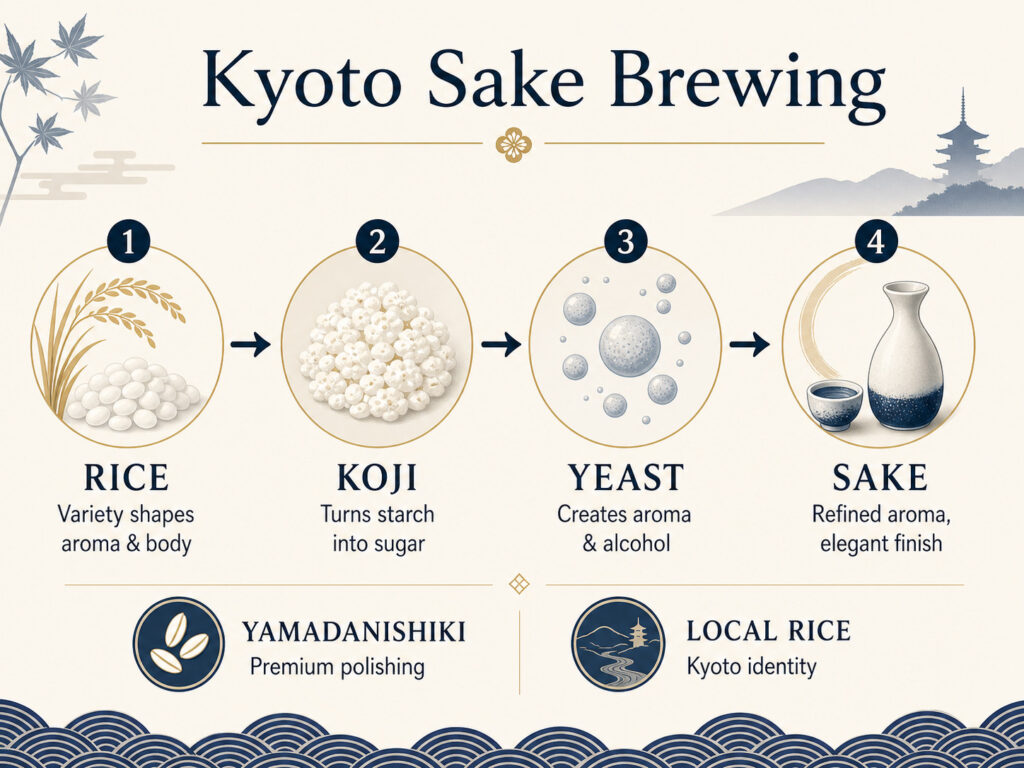
Kyoto sake begins with rice, water, koji, and yeast. Sake rice may include Yamadanishiki, Gohyakumangoku, Iwai, and other varieties. Each rice type changes aroma, body, and texture.
Yamadanishiki is famous for premium sake because it handles polishing well. It can support elegant Daiginjo and Junmai Daiginjo styles. Meanwhile, local and regional rice can express Kyoto’s own identity.
Koji fermentation is central. Koji mold converts rice starch into sugar. Then yeast fermentation transforms sugar into alcohol and aroma.
Yeast strains also shape Kyoto sake. Some yeasts emphasize fragrance. Others create cleaner or more restrained profiles. Because Kyoto sake often values refined aroma, yeast selection matters greatly.
For classification details, see Types of Japanese Sake.
Kyoto Sake History
Kyoto sake history connects closely to the city’s role as an imperial capital. Sake appeared in court rituals, offerings, and banquets. Over time, brewing knowledge developed around temples, merchants, and court culture.
Fushimi became especially important from the late 16th century onward. Toyotomi Hideyoshi built Fushimi Castle, and the area grew as a castle town and port. In addition, river transport helped connect Fushimi with Osaka and other markets.
During the Edo period, Fushimi expanded as a brewing city. Access to good water, transport routes, and urban demand supported growth. Consequently, many breweries established long histories during this period.
Modern Kyoto sake still reflects this background. Large breweries introduced scientific brewing, while smaller producers maintained local identity. As a result, the region combines classical Japan with modern sake production.
Famous Breweries and Brands
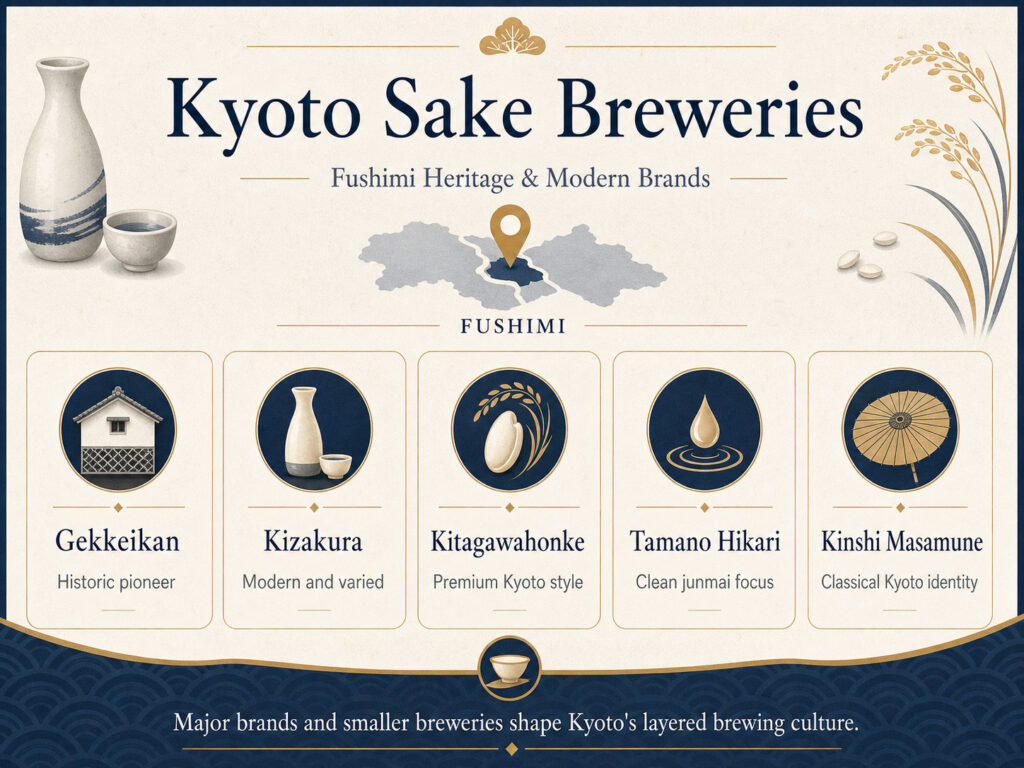
Kyoto has many breweries, especially in Fushimi. This section is not a ranking. Instead, it gives a reference map for understanding the region.
| Brewery or brand | Founded or background | General style |
| Gekkeikan | Founded in Fushimi in 1637 | Large historic producer with broad range |
| Kizakura | Fushimi brewery with sake and beer production | Accessible, modern, and varied |
| Kitagawahonke | Long-established Fushimi brewery | Traditional Kyoto style with premium releases |
| Tamano Hikari | Kyoto brewery known for junmai focus | Clean, rice-forward, and food-friendly |
| Kinshi Masamune | Historic Kyoto producer | Classical brand with Kyoto identity |
In particular, Gekkeikan is important for Kyoto sake history. The company helped modernize sake production while preserving Fushimi identity. Kizakura also shows how the region adapts to contemporary tastes.
However, smaller breweries remain important. They show how local sake culture survives beyond major brands. Together, they create a layered brewing city.
Famous Local Sake Types
Kyoto sake appears across many categories. Junmai shows rice depth and smooth texture. Meanwhile, Ginjo emphasizes refined aroma and careful polishing.
Daiginjo and Junmai Daiginjo often highlight Kyoto’s elegant side. These styles can show fruit, flowers, and a polished finish. Therefore, they pair well with refined dishes.
Seasonal styles also matter. Namazake brings freshness and lively aroma. Genshu gives more strength when breweries skip dilution. Nigori shows a softer, cloudier profile.
Kyoto breweries also produce fragrant sake for modern drinkers. Yet the local center remains balance. Even expressive bottles often keep a graceful finish.
Best Food Pairings
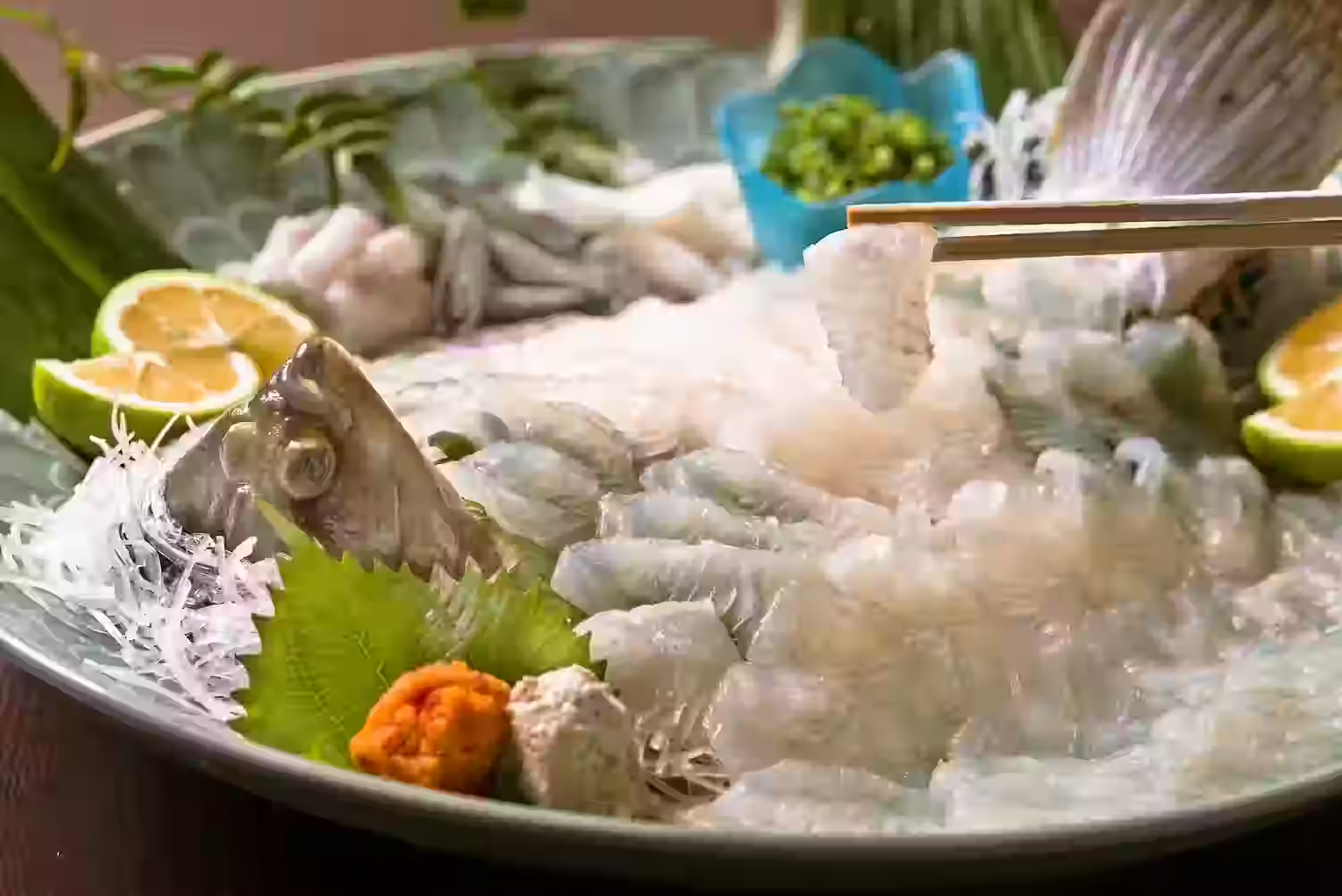
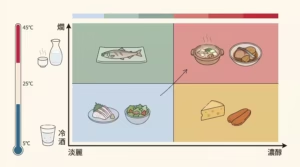
Kyoto sake pairs well with delicate food because it has smooth texture and restrained aroma. The sake supports dishes rather than dominating them. This is important in Kyoto cuisine.
Strong pairings include these.
- Kyoto cuisine
- Kaiseki with seasonal vegetables
- Yuba and tofu dishes
- Grilled river fish
- Light sashimi
- White miso dishes
- Pickled vegetables
- Matcha sweets
- Clear soups
Yuba and tofu are especially useful pairings. Their mild flavors need sake with softness and clarity. Meanwhile, kaiseki benefits from sake that changes gently across courses.
Kyoto sake also works with matcha sweets. The smooth texture can soften bitterness, while a clean finish keeps the pairing balanced.
Best Places to Experience Kyoto Sake
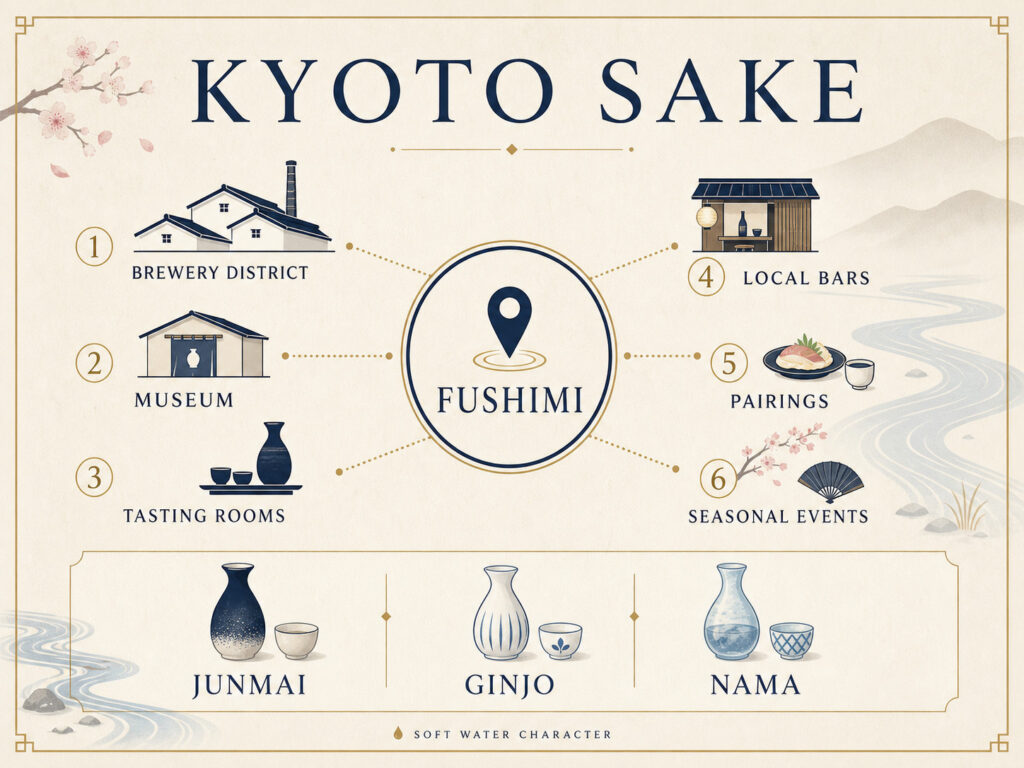
Kyoto sake is best understood through Fushimi. The area has breweries, museums, tasting rooms, and preserved brewery streets. However, the purpose is not only sightseeing. The district works as a living reference for regional sake culture.
Useful places include these.
- Fushimi brewery district
- Gekkeikan Okura Sake Museum
- Kizakura facilities in Fushimi
- Local sake bars in central Kyoto
- Restaurants serving Kyoto cuisine with sake pairings
- Seasonal sake events and brewery days
Tasting several types side by side is helpful. Compare a junmai, a ginjo, and a nama sake. Then notice how the soft water character appears across different styles.
Final Thoughts
Kyoto sake is a graceful expression of Japanese tradition. Fushimi water, Kyoto brewing tradition, and local cuisine shape its character. The result is sake known for fragrance, smoothness, and balance.
The region also shows how sake reflects cultural identity. Kyoto’s temple districts, merchant history, and imperial heritage all remain part of the story. For sake lovers, Kyoto offers one of Japan’s classic regional brewing cultures.
Kyoto Sake FAQ
What is Kyoto sake?
This premium rice wine represents a historic beverage from Japan’s ancient capital region, particularly the southern brewing district. Brewers craft the liquid to deliver a remarkably smooth texture, refined aroma, and elegant finish. Pristine local groundwater plays a central role in shaping this gentle, delicate style. The city’s centuries of history and refined traditional cuisine also deeply influence its overall identity.
Why is Kyoto sake famous?
This regional specialty enjoys immense fame because the southern district boasts exceptionally high-quality soft water and a rich history. The area grew rapidly into a major production hub thanks to convenient water transport, high urban demand, and excellent natural resources. Globally recognized breweries significantly strengthened its historic reputation over the decades. Today, the ancient capital remains one of Japan’s most prestigious and classic brewing regions.
What makes Fushimi sake unique?
These elegant brews gain their unique character because soft local groundwater supports exceptionally gentle, slow fermentation. This high-quality mineral water helps craftsmen create an incredibly smooth texture and a refined, subtle aroma. The historic brewing district also preserves centuries of specialized skills and traditional knowledge. Together, this pristine water and deep-rooted heritage give the final product its distinctive, gentle identity.
How does Kyoto sake taste?
It typically delivers a smooth, fragrant, and beautifully balanced flavor profile. Drinkers frequently notice elegant aromas of fresh pear, sweet melon, spring flowers, and steamed rice. The final sip offers a refined, gentle finish rather than an aggressive alcoholic burn. While some contemporary brewers craft richer, heavier profiles, flawless balance always remains the core of this traditional style.
Why is Kyoto sake often smooth?
These brews exhibit an incredibly smooth profile because the local water lacks harsh, heavy mineral influences. This soft spring water slows down the yeast activity, supporting a gentler and more delicate flavor development. Skilled brewmasters also implement rigorous koji fermentation techniques and strict yeast temperature controls. These meticulous practices help creators achieve an exceptionally rounded, silky texture on the palate.
What food pairs well with Kyoto sake?
This elegant drink pairs beautifully with traditional kaiseki banquets, fresh tofu, delicate yuba (tofu skin), and light sashimi. The exceptionally smooth texture easily supports subtle culinary flavors without overpowering them. Meanwhile, the clean finish keeps your palate refreshed and perfectly balanced throughout the multi-course meal. It serves as the ultimate companion for the city’s highly refined, seasonal delicacies.
How much does Kyoto sake cost?
A standard 720ml bottle of this premium rice wine typically costs between 1,200 and 3,000 yen. Prices vary depending on the specific brewery, the rice-polishing ratio, and the overall premium category. High-end, award-winning Daiginjo varieties can command prices exceeding 8,000 yen at specialty liquor stores. It still offers fantastic value for those seeking a highly sophisticated and elegant drinking experience.
Is Kyoto sake vegetarian or vegan friendly?
This traditional Japanese beverage contains absolutely no animal products. Master brewers craft the liquid using only premium rice, pure water, yeast, and natural koji mold. Vegans and vegetarians can safely consume this 100% plant-based drink with any seasonal meal.
Can I make Kyoto sake at home?
You cannot legally brew this alcoholic beverage at home in Japan due to strict government licensing laws. However, local bottle shops and supermarkets stock these premium brands everywhere. Home cooks easily serve it chilled or gently warmed to recreate an authentic Japanese dining experience.
Is Kyoto sake popular outside Japan?
It enjoys massive popularity among wine enthusiasts and premium diners globally. High-end Japanese restaurants in North America, Europe, and Asia proudly feature these elegant bottles on their curated beverage menus. Global diners love its smooth, gentle profile because it pairs effortlessly with Western seafood and lighter cuisines.
References
- KYOTO FUSHIMI Sake Guide – checked in 2026; Fushimi sake culture and Kyoto sake promotion.
- Highlighting Japan – Fushimi Sake and Water – checked in 2026; Fushimi water, history, and Gekkeikan interview.
- Kyoto Travel Guide – Kyoto Sake – checked in 2026; Kyoto sake history, Fushimi water, and tasting spots.
- Gekkeikan Okura Sake Museum – checked in 2026; Fushimi groundwater, museum information, and brewery history.
- Gekkeikan – KYOTO FUSHIMI Sake Guide – checked in 2026; Gekkeikan founding and innovation history.
- Kizakura Fushimi Brewery – checked in 2026; Fushimi brewery facility and brewing information.
- Japanese sake guide – checked in 2026; internal sake overview.
- How sake is made – checked in 2026; brewing, koji, rice, and fermentation context.
- Types of Japanese Sake – checked in 2026; sake categories and label terms.
- Kyoto Food – checked in 2026; Kyoto cuisine and food pairing context.






Comments