



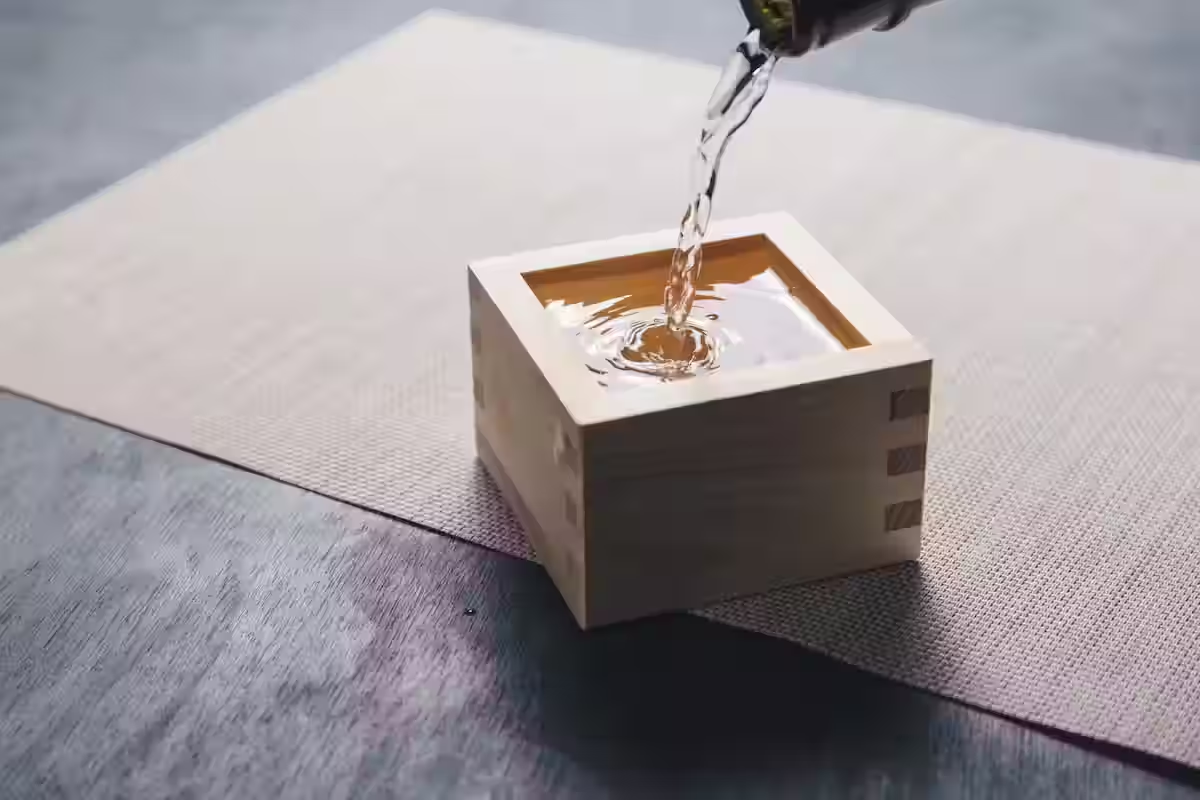
Genshu (原酒) is undiluted sake with a bold, concentrated flavor. Most sake gets watered down before bottling. Genshu skips that step entirely. What you get is pure, raw brewing liquid — nothing added, nothing taken away.
If you’ve been curious about high-alcohol sake, or just want something richer than the average bottle, genshu is worth knowing.
What Does “Genshu” Actually Mean?
The word breaks down simply. “Gen” (原) means “original” or “source.” “Shu” (酒) means sake. Put together, genshu means something like original sake, or sake in its natural state.
Standard sake is typically diluted with water after fermentation. This brings the alcohol level down to around 15–16% ABV. It also softens the flavor profile. Genshu receives no dilution. The alcohol stays higher — usually 18–20% ABV. The flavor stays concentrated.
It’s a small difference in process. The impact on taste, though, is surprisingly significant.
Why Genshu Tastes Different
Most sake drinkers notice the weight first. Genshu feels fuller in the mouth. There’s more presence, more texture. The rice sweetness comes through more clearly. Umami hits harder. The finish tends to linger.
Some people find it almost syrupy. Others describe it as rich and full-bodied sake with a clean, warming finish. Both descriptions can be accurate — it depends heavily on the specific brewery and rice variety used.
The higher alcohol also brings more aroma. Flavor compounds that might otherwise get diluted stay intact. That means a bottle of genshu sake often smells more expressive than its watered-down counterpart.
Is it stronger? Yes, technically. Does that mean it’s harsh? Not necessarily. Good genshu is smooth despite the extra kick.
Genshu vs. Regular Sake: Key Differences
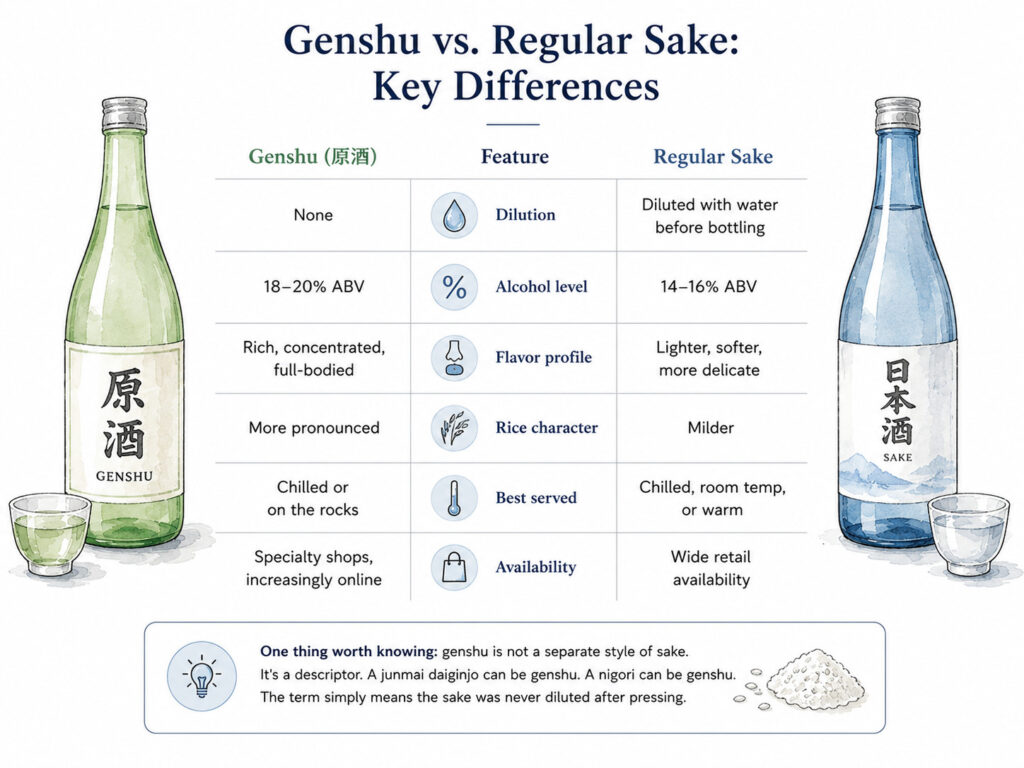
| Feature | Genshu (原酒) | Regular Sake |
|---|---|---|
| Dilution | None | Diluted with water before bottling |
| Alcohol level | 18–20% ABV | 14–16% ABV |
| Flavor profile | Rich, concentrated, full-bodied | Lighter, softer, more delicate |
| Rice character | More pronounced | Milder |
| Best served | Chilled or on the rocks | Chilled, room temp, or warm |
| Availability | Specialty shops, increasingly online | Wide retail availability |
One thing worth knowing: genshu is not a separate style of sake. It’s a descriptor. A junmai daiginjo can be genshu. A nigori can be genshu. The term simply means the sake was never diluted after pressing.
A Brief History of Genshu
For most of sake’s history, genshu was simply how sake existed before bottling. The practice of diluting sake before shipping became common during the Edo period (1603–1868). Brewers discovered that adding water made transportation easier, extended shelf life, and helped balance sharp or uneven flavors.
Dilution became the industry standard. Genshu, in its commercial form, largely disappeared from everyday drinking.
The modern revival began quietly in the mid-20th century. As sake culture diversified and drinkers began seeking more expressive styles, genshu found a new audience. Craft breweries started bottling their undiluted sake intentionally, not just as a step in the process but as the final product.
Today, genshu has a strong following among sake enthusiasts in Japan and abroad. American sake drinkers in particular seem drawn to it. Bold flavors and higher ABV fit naturally alongside the craft spirits and natural wine movements that have reshaped how Americans think about drinking.
How to Drink Genshu Sake
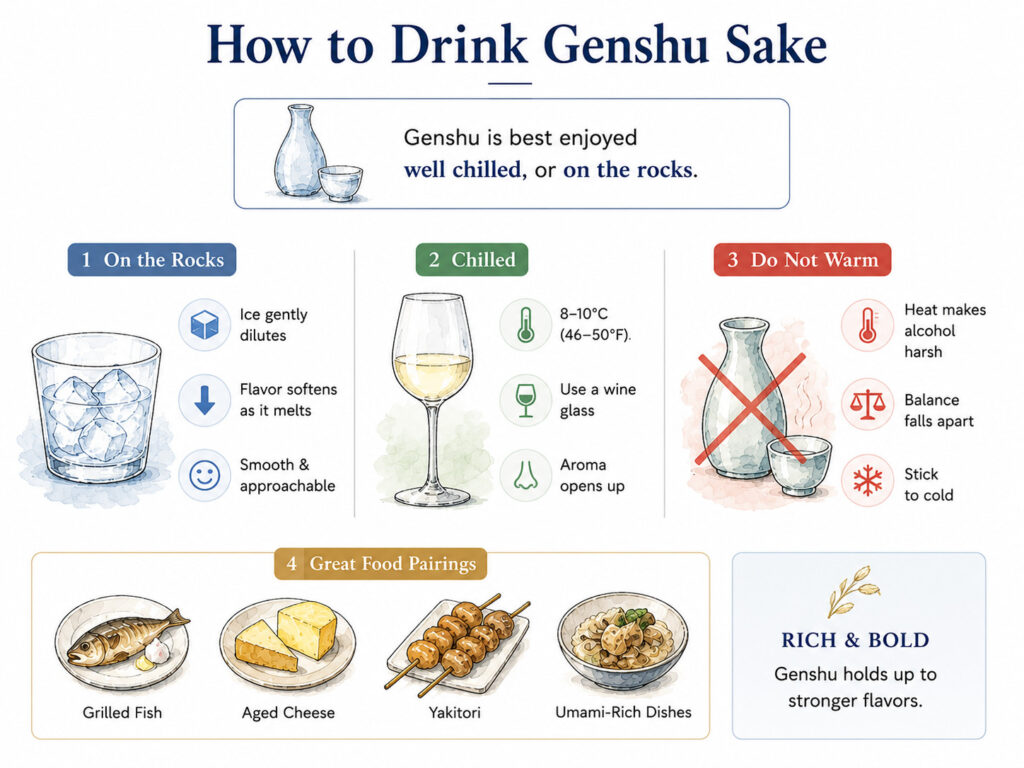
Genshu is most often served two ways: well chilled, or on the rocks.
Genshu on the rocks is a genuinely enjoyable way to drink it. The ice dilutes the sake slightly as it melts, which mimics — in reverse — the traditional dilution process. The flavor softens gradually in the glass. Some people find this more approachable than drinking it straight.
Genshu chilled, around 8–10°C (46–50°F), keeps the full character intact. A wine glass works well. The wider opening lets the aroma develop.
Warming genshu is generally not recommended. The higher alcohol becomes more noticeable with heat, and the balance can fall apart. Stick to cold.
Food pairings worth trying include grilled fish, aged cheese, yakitori, and anything with umami-forward seasoning. The richness of genshu holds up to stronger flavors better than lighter sake styles.
Genshu vs. Namazake: Are They the Same?
This question comes up often, and it’s worth clearing up. Genshu and namazake are different things, though a sake can be both at once.
Genshu refers to dilution — or the absence of it. Namazake refers to pasteurization — or the absence of it. A sake labeled both genshu and namazake has been neither diluted nor heat-treated. These sakes tend to be the most intense, the most alive in the glass, and the most demanding in terms of storage.
If you see both terms on a label, keep it cold and drink it soon.
Yamanashi Prefecture, known for its distinctive regional food and drink culture, produces some excellent undiluted sake worth seeking out if you want to explore the regional side of genshu.
Where to Drink Genshu in Japan
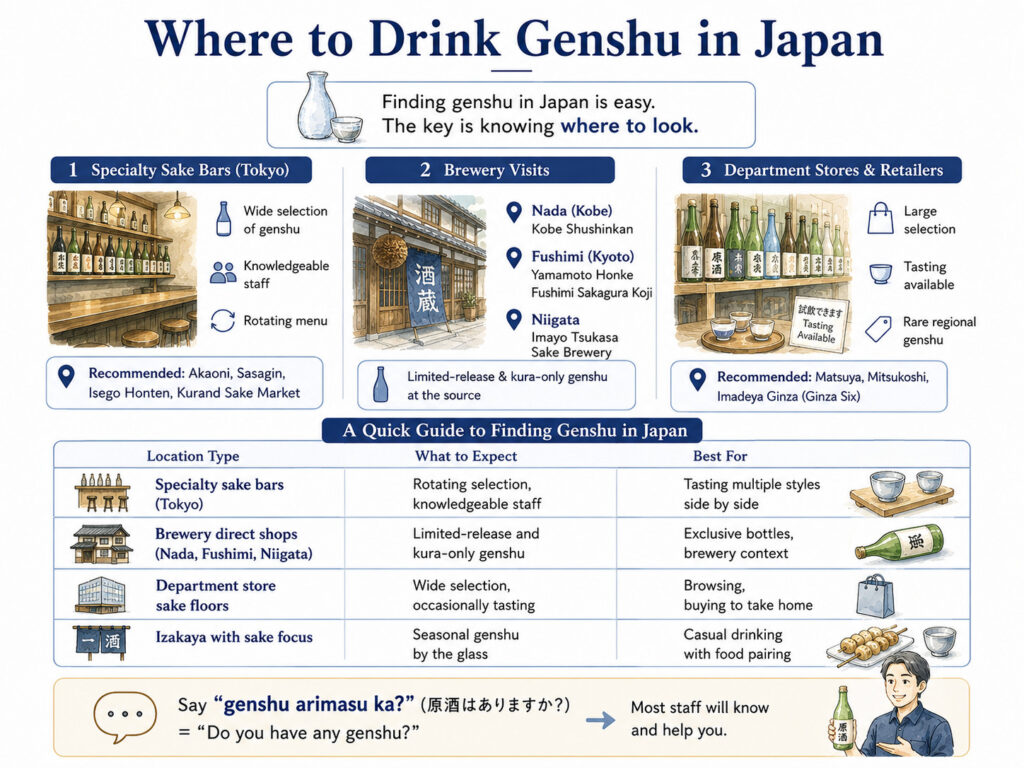
Finding genshu in Japan is not difficult. The challenge is knowing where to look.
The most reliable places fall into three categories: specialty sake bars, brewery direct shops, and izakaya with curated sake menus. Each offers a different experience.
Specialty Sake Bars in Tokyo
Tokyo has the widest selection of genshu by far. Akaoni in Sangenjaya is one of the most well-regarded sake bars in the city, offering over 100 different sakes carefully selected from across Japan. Staff take the selection seriously, and genshu bottles appear regularly on the rotating menu.
Sasagin in Yoyogi-Uehara is another strong option. It offers a well-chosen selection of nihonshu with English-language drink menus, making it more accessible for visitors unfamiliar with Japanese. On a recent visit, staff recommended an unpasteurized namazake from Aichi — the kind of place where asking about genshu will get you a thoughtful answer.
Isego Honten, with a history going back to 1706, stocks between 300 and 400 kinds of sake at its Naka-Meguro branch. The range includes many undiluted and unfiltered options that serious genshu hunters will appreciate.
For a more self-guided experience, Kurand Sake Market lets you serve yourself directly from over 100 bottles of sake pulled from the refrigerator. Genshu labels appear regularly in that selection.
Brewery Visits: Nada, Fushimi, and Niigata
Drinking genshu at the source is a different experience entirely. Three regions stand out.
Nada (Kobe, Hyogo) is Japan’s largest sake-producing district by volume. The Kobe Shushinkan museum offers a tasting room where visitors can sample their genshu honjozo — one of the few brewery museums in Nada that offers an undiluted sake specifically for tasting. Admission is free and no reservation is needed.
Fushimi (Kyoto) is the other great sake district, known for its soft spring water. Yamamoto Honke in Fushimi sells limited-edition nama genshu products that are only available at the brewery store, including junmai ginjo genshu that can be purchased to take home. Fushimi also has an indoor sake bar complex called Fushimi Sakagura Koji, where you can sample sake from about 20 local restaurants and sake bars in one visit.
Niigata is where genshu enthusiasts often end up eventually. With roughly 90 sake breweries — the most of any prefecture in Japan — Niigata offers sake varieties not typically sold outside the region. Imayo Tsukasa Sake Brewery near Niigata Station offers guided tours and premium tasting sessions featuring over ten varieties of sake, including genshu options during certain seasons. English-language tours run on weekdays. Notably, Imayo Tsukasa historically gained its reputation in part by not diluting its sake with water during an era when that practice was common. Genshu is part of their identity.
Department Stores and Specialty Retailers
Not every genshu encounter requires a bar or brewery. Department stores like Matsuya and Mitsukoshi in Ginza carry a large selection of sake, and many offer samples at their basement food halls. Sake shops attached to department stores often stock genshu from regional breweries not easy to find elsewhere.
Imadeya Ginza in the Ginza Six complex is worth a dedicated stop. The store boasts an impressive range of around 400 types of sake, including high-quality limited-release brands. Staff can help you identify genshu labels among the selection.
A Quick Guide to Finding Genshu in Japan
| Location Type | What to Expect | Best For |
|---|---|---|
| Specialty sake bars (Tokyo) | Rotating selection, knowledgeable staff | Tasting multiple styles side by side |
| Brewery direct shops (Nada, Fushimi, Niigata) | Limited-release and kura-only genshu | Exclusive bottles, brewery context |
| Department store sake floors | Wide selection, occasional tasting | Browsing, buying to take home |
| Izakaya with sake focus | Seasonal genshu by the glass | Casual drinking with food pairing |
One practical tip: when you enter any sake bar or specialty shop in Japan, simply say “genshu arimasu ka?” (原酒はありますか?) — “Do you have any genshu?” Most staff will know exactly what you mean and point you in the right direction.
Where to Buy Genshu Sake in the USA
Genshu used to be nearly impossible to find outside Japan. That’s changed. Specialty Japanese sake retailers in major cities often carry at least a few bottles. Online importers with cold-shipping options have made it more accessible as well.
What to look for: check the label for 原酒 (the kanji for genshu), or look for “undiluted sake” in the English description. The ABV should be 18% or higher. Anything significantly lower has probably been diluted.
For beginners, a junmai genshu is a good entry point. It tends to be more forgiving than daiginjo styles, and the flavor is easier to place.
References
- John Gauntner’s Sake World, “Genshu: Undiluted Sake” (2022): https://sake-world.com/html/whatsake.html
- The Japanese Bar, “Genshu Sake: What It Is, Flavor Profile & How to Drink It” (2023): https://thejapanesebar.com/learn-sake/genshu/
- NRIB (National Research Institute of Brewing), Sake Brewing Technology Overview (2019): https://www.nrib.go.jp/english/




Comments