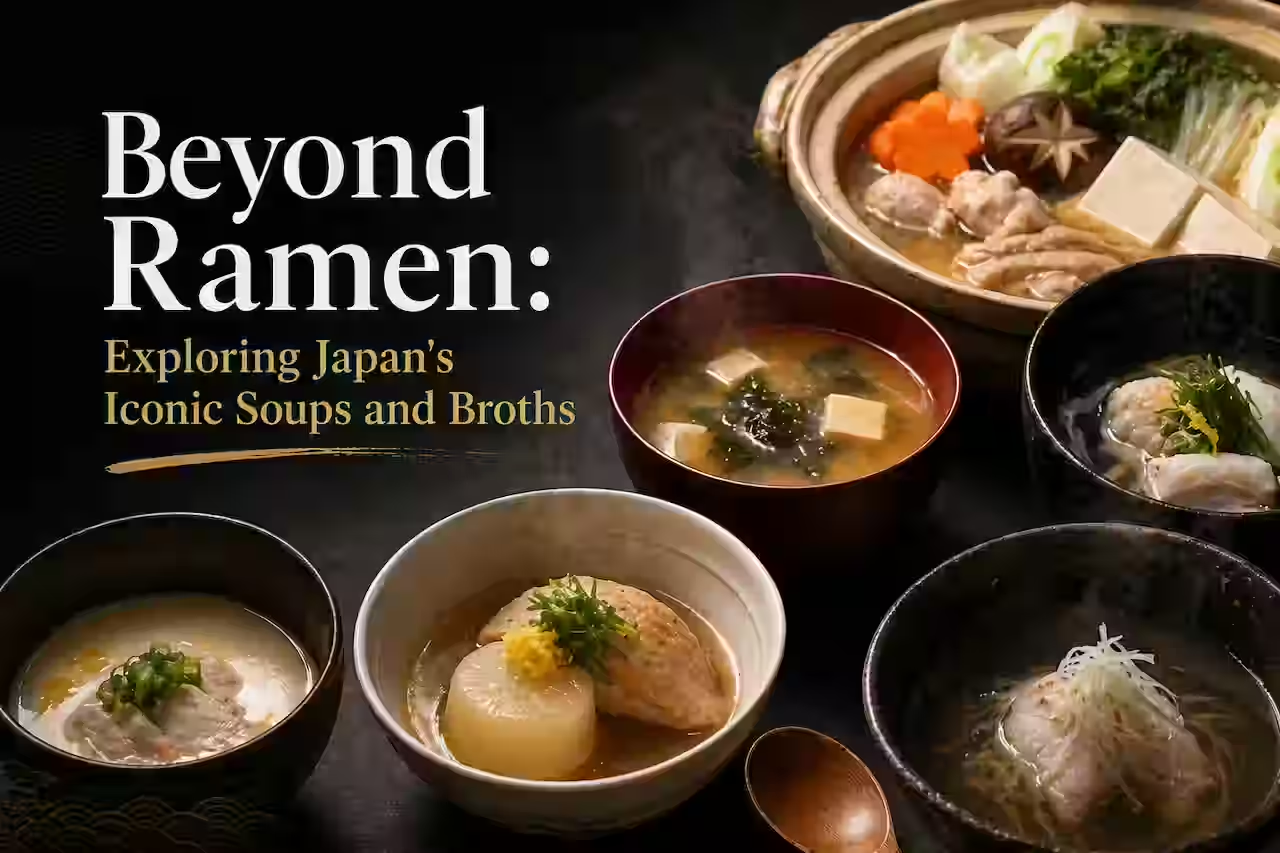
Traditional Japanese soups are everywhere in Japan. Morning, noon, and night. They appear at breakfast tables, school canteens, izakayas, and Michelin-starred restaurants alike. Ramen gets most of the international attention, understandably. But it’s just one piece of a much larger picture.
Japan’s soup culture runs deep. It’s tied to the seasons, to regional identity, and to the quiet rhythms of everyday life. This guide explores the full range of traditional Japanese soups — from the simplest bowl of miso soup to the theatrical communal nabe hot pot.
TOC
Miso Soup: Japan’s Staple Broth
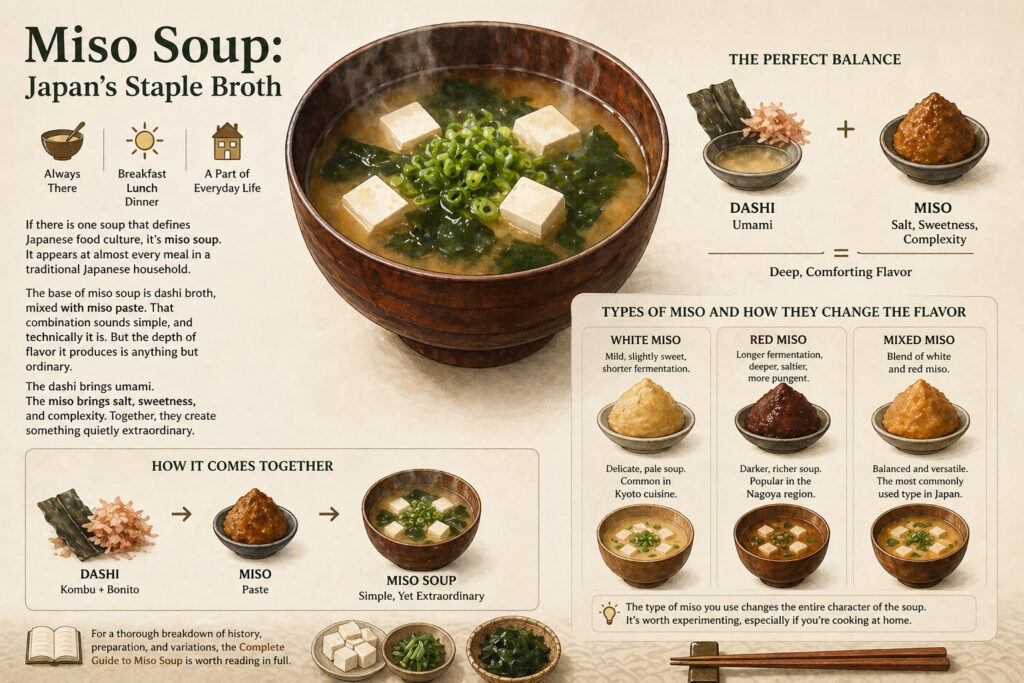
If there is one soup that defines Japanese food culture, it’s miso soup. It appears at almost every meal in a traditional Japanese household. Breakfast, lunch, and dinner. It’s not a special occasion dish. It’s simply always there.
The base of miso soup is dashi broth, mixed with miso paste. That combination sounds simple, and technically it is. But the depth of flavor it produces is anything but ordinary. The dashi brings umami. The miso brings salt, sweetness, and complexity. Together, they create something quietly extraordinary.
For a thorough breakdown of history, preparation, and variations, the Complete Guide to Miso Soup is worth reading in full.
Types of Miso and How They Change the Flavor
Miso paste is not one single thing. There are dozens of regional varieties, but three main types shape most Japanese cooking.
White miso (shiro miso) is mild, slightly sweet, and fermented for a shorter period. It makes for a delicate, pale soup. Kyoto cuisine uses it frequently.
Red miso (aka miso) is fermented longer and has a deeper, saltier, more pungent flavor. It produces a darker, richer soup. It’s popular in the Nagoya region, where red miso defines local cooking.
Mixed miso (awase miso) blends white and red varieties. It’s the most commonly used type across Japan. Balanced and versatile, it works in almost any preparation.
The type of miso you use changes the entire character of the soup. It’s worth experimenting, especially if you’re cooking at home.
Common Add-ins
The ingredients inside miso soup shift with the season, the region, and the cook’s preference. That’s part of what keeps it interesting even when eaten daily.
Silken tofu is perhaps the most classic addition. It absorbs the broth and adds a soft, protein-rich element. Wakame seaweed is equally common — it rehydrates quickly in the hot broth and adds a subtle oceanic note. Sliced scallions are almost universal, added at the end for freshness and mild bite.
Other popular add-ins include nameko mushrooms, clams, daikon radish, potato, and aburaage (fried tofu pouches). There’s no single correct version. The best bowl of miso soup is often the one made with whatever is fresh and available that day.
Serving Occasions
In a traditional balanced washoku diet, miso soup is the essential liquid component of the meal. The classic ichiju sansai structure — one soup, three sides — places miso soup at the center of every meal.
It’s served alongside steamed rice at breakfast. It appears at lunch in bento culture and at dinner in home cooking. Even at upscale kaiseki restaurants, a refined bowl of miso soup often closes the meal. Its presence is so consistent that many Japanese people describe the smell of miso soup as genuinely comforting — almost nostalgic.
Noodle Soups: Ramen, Udon, and Soba
Japan’s noodle soups could fill several books on their own. Each style has its own broth philosophy, regional variations, and devoted following. Here’s an overview of the main types.
Ramen and Its Many Broths
Japanese ramen is one of the most diverse noodle traditions in the world. The broth alone can take days to prepare. The toppings are carefully chosen. Even the noodle thickness is calibrated to the soup.
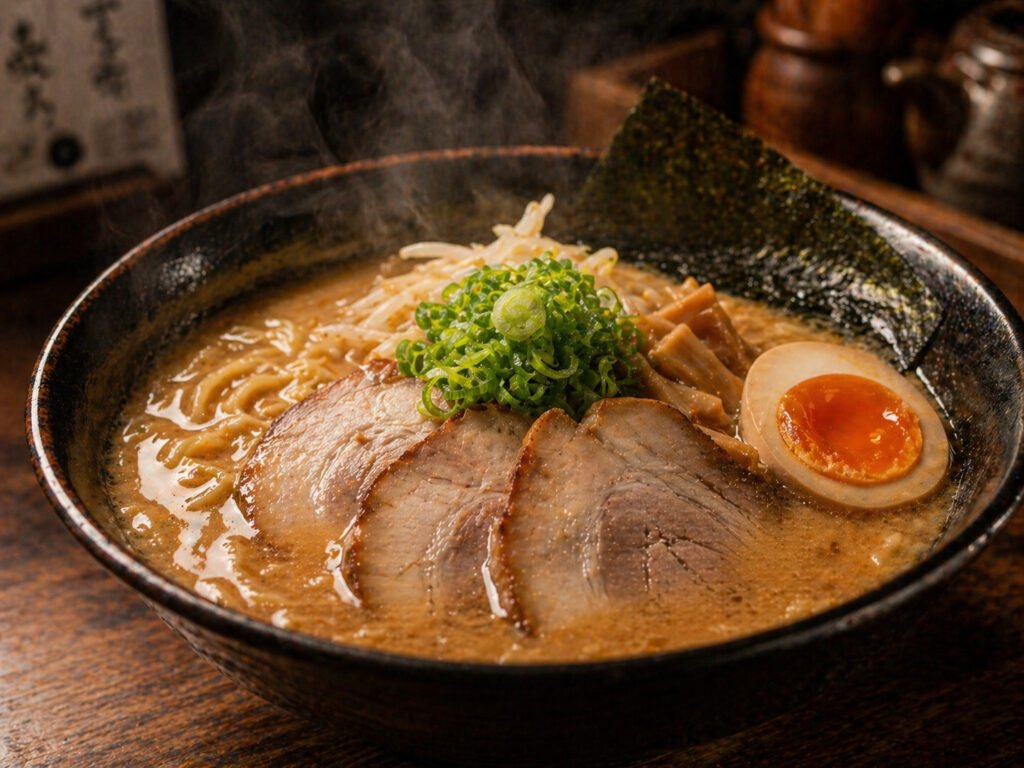
The four main broth styles are shoyu (soy sauce-based, clear and savory), shio (salt-based, light and delicate), miso (rich and deeply flavored), and tonkotsu (creamy pork bone broth, originating in Fukuoka). Each has sub-regional variations that local ramen shops guard fiercely.
Sapporo is famous for its miso ramen, developed to stand up to Hokkaido winters. Hakata-style tonkotsu from Fukuoka is rich, milky, and intensely porky. Tokyo shoyu ramen tends to be cleaner and more restrained.
What makes ramen endlessly interesting is that no two shops are identical. Even within the same broth style, the balance of fat, salt, and umami varies dramatically from kitchen to kitchen.
Udon and Soba: Quieter but Just as Complex
Udon and soba don’t generate the same hype as ramen internationally, but in Japan they’re deeply embedded in daily life. Both are considered traditional Japanese soups in their own right.
Udon noodles are thick, chewy, and made from wheat flour. The broth is typically lighter — a dashi-based stock seasoned with soy sauce and mirin. Kitsune udon, topped with sweet fried tofu (aburaage), is one of the most beloved versions. Tanuki udon adds crunchy tempura flakes for texture.
Regional udon styles vary significantly. Sanuki udon from Kagawa Prefecture is firm and springy, eaten in a very simple broth. Kishimen from Nagoya is flat and wide, served in a dark soy-heavy soup.
Soba noodles, made from buckwheat, have a nuttier, earthier character. The dashi broth for soba (tsuyu) tends to be more assertive than udon broth. Hot soba in winter and cold zarusoba in summer are both deeply popular. Tororo soba, topped with grated mountain yam, is a classic cold-weather option.
A Special Mention: Soup Yakisoba
Soup yakisoba is a lesser-known but genuinely satisfying variation. Unlike standard yakisoba, which is stir-fried, this version places the same wheat noodles into a savory broth. The result sits somewhere between ramen and yakisoba in flavor. It’s a regional specialty found mainly in parts of Hokkaido and Tohoku — not famous internationally, but worth ordering if you spot it on a menu.
Hearty Hot Pots: The World of Nabe
As temperatures drop in Japan, nabe (hot pot) season begins. Few things are more communal or more comforting than a bubbling pot of broth at the center of the table, surrounded by people adding ingredients and sharing the results.
Japanese hot pot (nabe) is as much about the experience as the food itself. The act of cooking together, dipping ingredients into the broth, and eating at a shared pace is central to its appeal.
Sukiyaki and Shabu-Shabu
These two hot pots both feature thinly sliced beef, but they are quite different in approach.
Sukiyaki uses a sweet soy-based broth — almost a sauce — that simmers alongside tofu, scallions, mushrooms, and glass noodles. The cooked ingredients are dipped in raw beaten egg before eating. It sounds unusual. It tastes incredible. The egg softens the sweetness of the broth and adds richness.
Shabu-shabu takes the opposite approach. The broth is a clean kombu dashi, nearly flavorless on its own. You swish thin slices of beef or pork through the hot broth for just a few seconds — the name “shabu-shabu” mimics this swishing sound. The lightly cooked meat is then dipped in either ponzu or a sesame-based sauce. The contrast between the pure broth and the rich dipping sauces is what makes it work.
Oden: Japan’s Ultimate Winter Stew
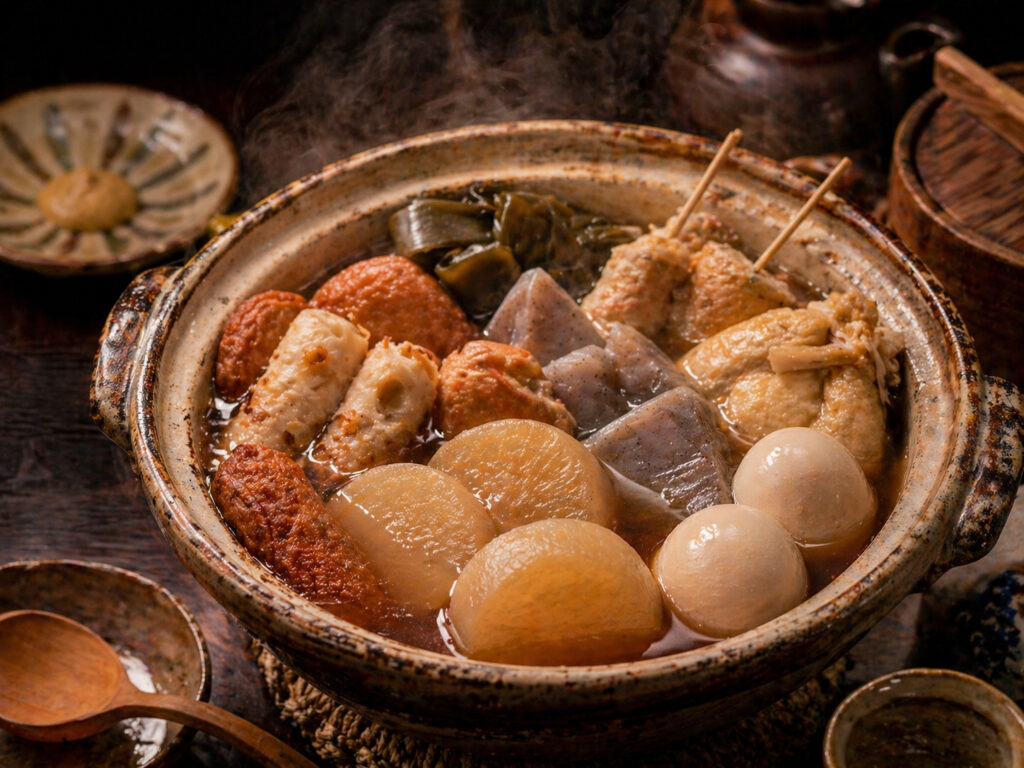
Oden is a slow-simmered winter stew built around a light dashi-soy broth. Into this broth goes an array of ingredients: boiled eggs, daikon radish, konnyaku (konjac jelly), fish cakes (chikuwa, hanpen), tofu, and more. Everything cooks together slowly until the broth permeates each ingredient entirely.
The flavor is subtle and deeply savory. Oden is comfort food in the truest sense. It’s sold at convenience stores from October onward, simmering in heated display cases. At izakayas, it’s served by the piece alongside sake or beer. At dedicated oden restaurants, the broth itself is the focus — refined, complex, and built over many hours.
Mizutaki: Chicken Hot Pot from Fukuoka
Mizutaki is Fukuoka’s signature nabe. Chicken pieces — bone in — are simmered in a rich chicken broth with vegetables, tofu, and glass noodles. The broth becomes deeply flavored from the long cooking of the bones.
The traditional way to eat mizutaki is in stages. First, a cup of the clear broth on its own. Then the solid ingredients with dipping sauce. Finally, leftover broth is used to cook zosui (rice porridge) or ramen noodles. Nothing is wasted. Everything builds.
Regional Soups and Stews Worth Knowing
Japan’s regional food culture produces soups that rarely appear outside their home prefecture. These are worth seeking out specifically.
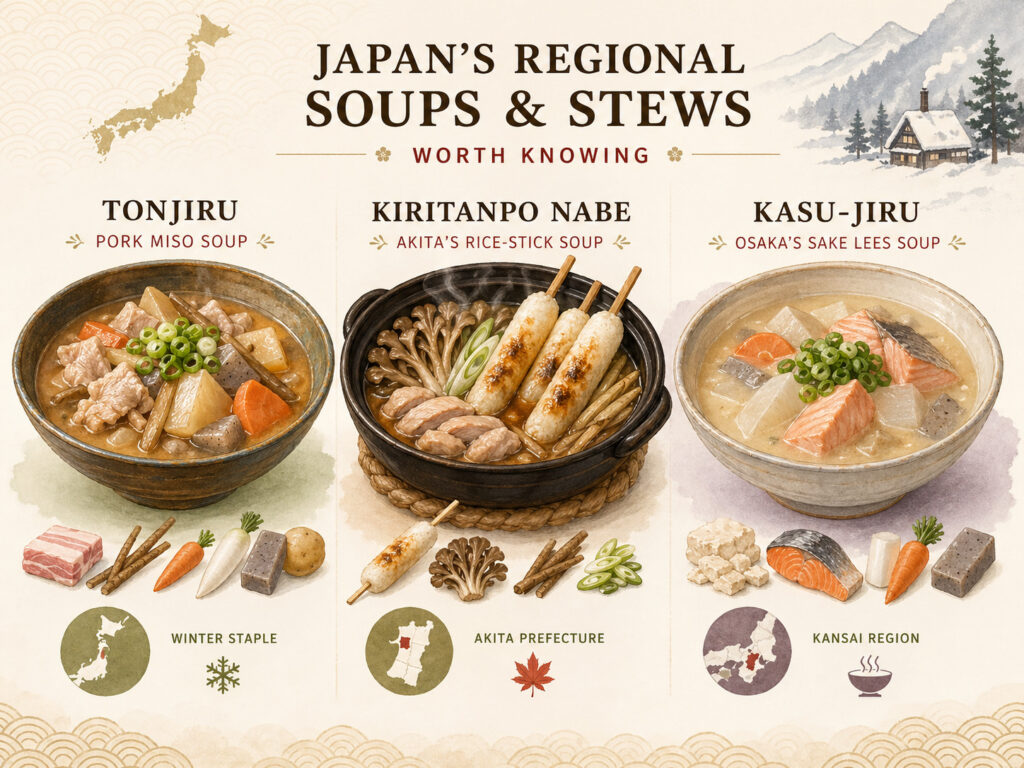
Tonjiru: Pork Miso Soup
Tonjiru is what happens when miso soup becomes a meal. It’s a thick, hearty soup built on the standard miso base, but loaded with pork belly, burdock root, carrot, daikon, konjac, and potato. The pork fat enriches the broth. The root vegetables give it body.
In Japanese households, tonjiru is a winter staple. It’s warming in a deeply physical way. It also reheats beautifully, which makes it a popular batch-cooking dish. Some families make a large pot on Sunday and eat from it through the week.
Kiritanpo Nabe: Akita’s Rice-Stick Soup
Kiritanpo is one of Japan’s most distinctive regional dishes. It comes from Akita Prefecture in the Tohoku region. Cooked rice is pounded, shaped around cedar skewers, and grilled until lightly charred. The rice sticks — called kiritanpo — are then added to a rich chicken broth along with maitake mushrooms, burdock root, and scallions.
The kiritanpo absorbs the broth and softens slightly while retaining a pleasant chew. The dish is deeply tied to Akita’s agricultural and forest culture. It’s served at local restaurants throughout Akita in autumn and winter. Finding it elsewhere in Japan requires some effort, which makes eating it there feel genuinely special.
Kasu-jiru: Osaka’s Sake Lees Soup
Kasu-jiru is a winter soup from the Kansai region, particularly associated with Osaka’s local food culture. The defining ingredient is sake kasu — the solid byproduct left after pressing sake. It’s stirred into a miso or salt-based broth along with salmon, daikon, carrot, and konjac.
The sake kasu adds a distinctive, slightly alcoholic warmth to the soup. It’s not boozy in the way you might expect. More earthy, complex, and deeply savory. It also warms the body from the inside out, which is why it’s considered a cold-weather dish specifically.
Kasu-jiru is one of those soups that surprises most visitors. If you’re in Osaka between November and March, it’s worth looking for on traditional restaurant menus.
The Heart of It All: Dashi Broth
Almost everything in this article comes back to dashi. Understanding dashi means understanding Japanese soups at their core. It’s the invisible foundation that most Japanese broth-based dishes are built on.
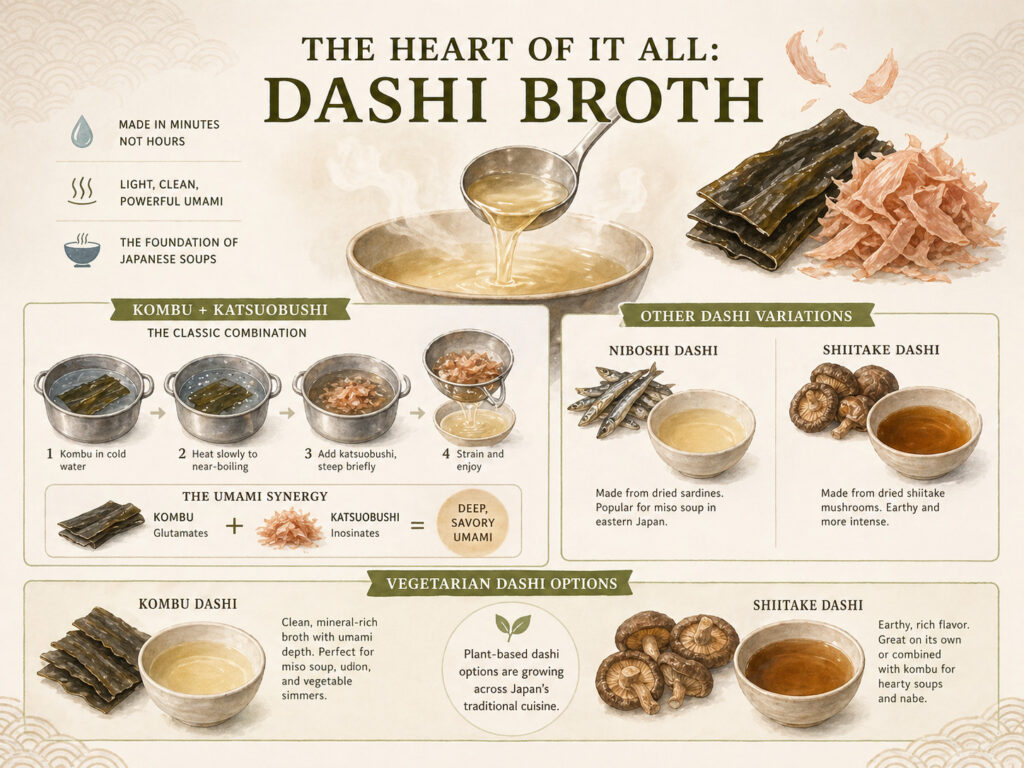
Dashi is a light stock made by steeping ingredients in hot water for a short time. Unlike Western stocks, which simmer for hours, dashi is made in minutes. The result is a pale, clean broth with a powerful, complex umami flavor.
Kombu and Katsuobushi: The Classic Combination
The most fundamental dashi uses two ingredients: kombu (dried kelp) and katsuobushi (dried, smoked bonito flakes). Kombu is steeped in cold water and brought slowly to near-boiling. The kombu is removed, then katsuobushi is added and steeped briefly before being strained out.
This process extracts glutamates from the kombu and inosinates from the katsuobushi. The combination produces a uniquely deep, savory umami that neither ingredient achieves alone. It’s one of the great flavor discoveries in culinary history.
Other dashi variations include niboshi dashi (made from small dried sardines, popular for miso soup in eastern Japan) and shiitake dashi (made from dried shiitake mushrooms, with an earthier, more intense flavor).
Vegetarian Dashi Options
For vegetarians and vegans, kombu dashi alone is the most practical and widely available option. Kombu — cold-steeped or briefly heated — produces a clean, mineral-rich broth with genuine umami depth. It lacks the smokiness of katsuobushi, but it works beautifully in miso soup, udon broth, and vegetable simmers.
Shiitake dashi is another strong vegetarian option. Used alone or combined with kombu, it produces a darker, earthier broth suitable for heartier soups and nabe dishes. As plant-based cooking grows across Japan, these vegetarian dashi options are becoming more common even in traditional restaurants.
Japan’s soup culture rewards patience and curiosity in equal measure. You could spend years working through the regional variations alone and still find something new.
Start with miso soup — make it at home, try different miso types, experiment with add-ins. Then explore ramen beyond the styles you already know. Seek out oden in winter. Book a nabe dinner and share it properly. Order tonjiru on a cold day and understand why it’s been a Japanese household staple for generations.
Every bowl tells you something about where it came from. That’s what makes Japanese soups worth exploring so seriously.
Which Japanese soup are you planning to try next? Share your answer in the comments, or tell us your favorite broth-based recipe. We’d love to hear what’s simmering in your kitchen.
Dashi serves as the fundamental soup stock in Japanese cuisine. Chefs create it by briefly steeping dried kelp (kombu) and bonito flakes (katsuobushi) in hot water. This umami-rich liquid builds the essential flavor base for miso soup, noodle broths, and hot pots.
What are the different types of miso used in soup?
Cooks primarily use three types of miso. White miso delivers a mild, sweet flavor. Red miso packs a saltier, deeper punch. Mixed miso blends both for a balanced taste. Regional brewers also create unique variations, like Nagoya’s deeply aged Hatcho miso.
How do ramen, udon, and soba broths differ?
Ramen chefs boil pork or chicken bones for hours to extract rich, complex flavors. Udon cooks mix light dashi, soy sauce, and mirin to complement the thick wheat noodles gently. Soba masters brew a darker, stronger soy sauce broth to match the earthy flavor of buckwheat.
What is the etiquette for eating hot pot (nabe) in Japan?
Diners share a single communal pot. You must use designated serving chopsticks to move food onto your personal plate. You should let the host manage the heat and cooking times. Finally, everyone adds rice or noodles to the leftover broth to finish the meal perfectly.
What is Tonjiru?
Tonjiru represents a hearty pork and vegetable soup. Home cooks simmer pork belly, root vegetables, and konjac in a rich miso broth. Food lovers enjoy it during winter to quickly warm their bodies.
Can vegans drink standard Japanese soups?
Traditional Japanese soups almost always contain fish broth (dashi). Vegans and vegetarians must ask the restaurant staff if they use pure kelp (kombu) or mushroom (shiitake) stock instead of fish.
Is it polite to drink soup directly from the bowl in Japan?
Yes, Japanese dining etiquette encourages you to lift small bowls and drink the soup directly. You simply hold the bowl with both hands and sip the warm broth quietly.
What is Osuimono?
Osuimono is a clear, elegant soup. High-end restaurants serve it to showcase the pure, delicate taste of premium dashi. Chefs usually add a single piece of seasonal seafood and a fresh herb garnish to complete the dish.
Why do Japanese people eat Miso soup every day?
Japanese people value miso soup for its strong nutritional benefits. The fermented soybean paste provides essential vitamins, probiotics, and comforting hydration alongside a traditional rice meal.
What is Chawanmushi?
Chawanmushi is a savory steamed egg custard. Chefs mix beaten eggs with rich dashi broth, add chicken and shrimp, and steam the mixture in a small cup. Diners eat this soup-like dish smoothly with a spoon.
Ryo Iwa is the founder and editor of foodinjapan.org. Born and raised in Japan, he writes from regional travel, market visits, and Japanese-language primary sources that rarely reach English readers, including brewing institute publications and industry glossaries. Where a figure cannot be traced to a source, the article says so.
He has been a Google Maps Local Guide for over 10 years, with more than 1,800 reviews and over 41,000 photos viewed hundreds of millions of times. He previously spent two decades as an IT consultant in Japan, the US, and the UK.
















Comments