





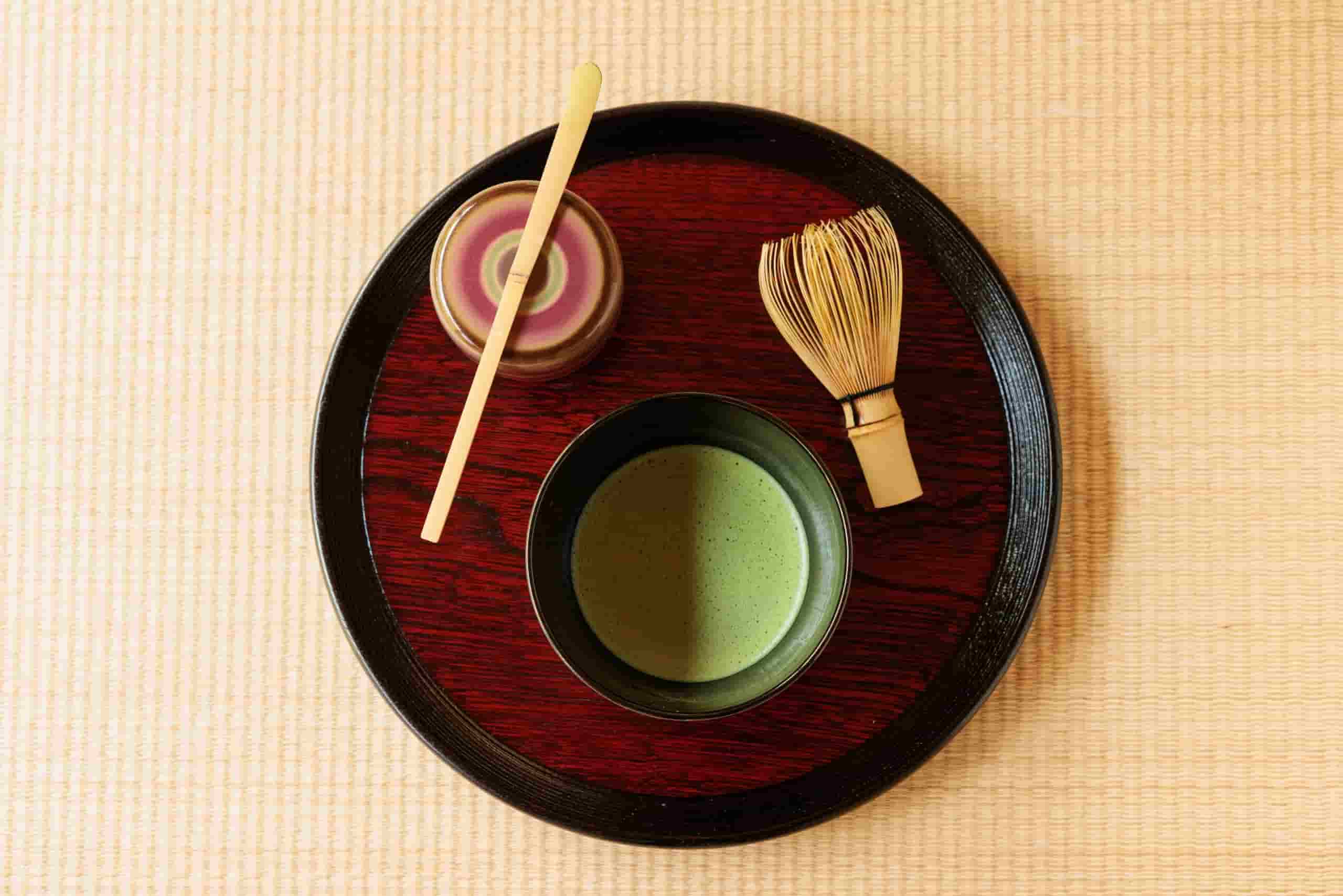
Usucha (薄茶), or “thin tea,” is the light, faintly foamy bowl of whisked matcha. It’s what most people picture when they imagine Japanese tea. You whisk it briskly with a bamboo chasen until the surface turns pale green and lightly frothy. Then you drink it straight from the bowl.
Usucha sits at one end of a pair of traditional matcha preparations. The other is koicha, or thick tea: a dense, syrup-like style for formal occasions. Usucha isn’t just koicha with extra water, and it isn’t simply “matcha before you add milk.” It is its own preparation, with its own ratio, its own tools, and its own etiquette.
This guide covers what usucha is and how it compares with koicha. It also explains the traditional tools, how to make a good bowl at home, and the basic etiquette for drinking it. For the general history of matcha, tencha production, and Japan’s major growing regions, see the complete Matcha guide. For advice on choosing matcha to drink straight or to cook with, see the Ceremonial Matcha and Culinary Matcha guides.
What Is Usucha?
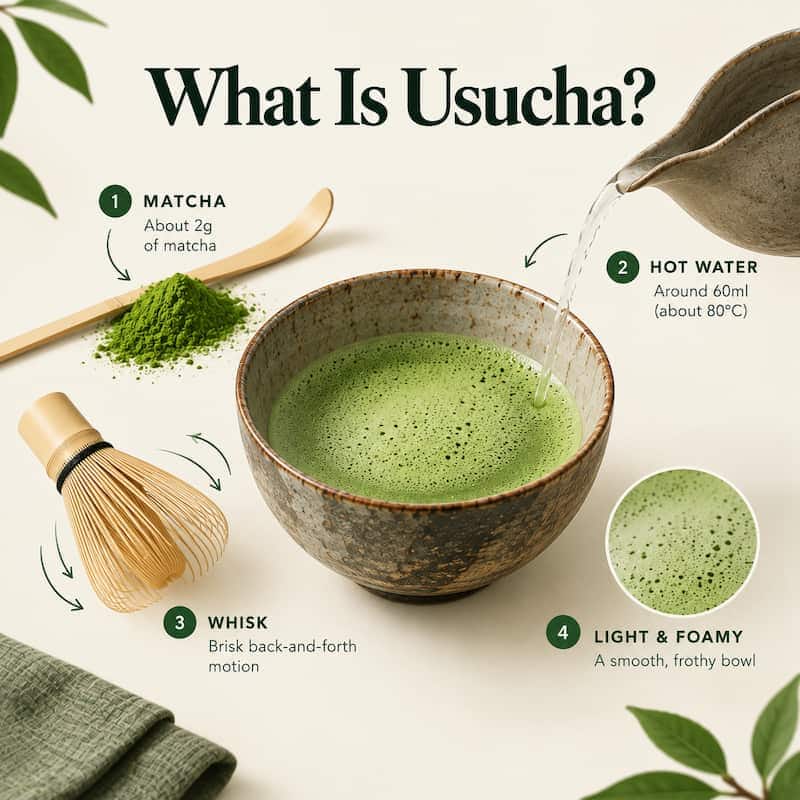
To make usucha, you whisk matcha with a relatively large amount of water compared to the amount of powder. This produces a light-bodied bowl with a thin layer of foam across the surface.
A common starting ratio is about 2g of matcha to around 60ml of hot water. That’s roughly one and a half to two chashaku (tea scoop) measures. The exact amount varies somewhat by school, producer, and personal taste.
You whisk the tea briskly, typically in a fast back-and-forth “W” or zigzag motion, until small, even bubbles cover the surface. Koicha, by contrast, requires slow kneading into a smooth paste. Usucha works differently: whisking folds air into the liquid, lightening both its texture and its flavor.
Usucha vs. Koicha
People often introduce usucha and koicha together because they answer the same basic question: how do you prepare matcha? The table below summarizes the main points of contrast. The sections that follow explain the reasoning behind several of them.
| Point | Usucha | Koicha |
|---|---|---|
| Typical ratio | 2g matcha to 60ml water | 4g matcha to 30ml water |
| Preparation | Whisked briskly until foamy | Kneaded slowly into a smooth paste |
| Texture | Light, frothy, pale green | Dense, glossy, deep green |
| Serving | One bowl per guest | One bowl shared among guests |
| Tea caddy | Natsume (lacquered wood) | Chaire (ceramic, in a silk pouch) |
| Chasen tines | Higher count, thinner tines | Lower count, thicker tines |
| Typical setting | Everyday drinking; the second tea in a formal chaji | The formal centerpiece of a chaji |
Usucha uses roughly half the matcha and about twice the water of koicha. The finished drink turns out far less concentrated as a result. That difference in strength is also why the two preparations call for different tools and, often, different matcha. The sections below cover both.
Usucha’s Place in the Tea Ceremony

In the most formal tea gathering, a chaji, the host serves guests a full-course meal (kaiseki), a sweet, and then tea. Koicha comes first; usucha follows next. Despite being the lighter of the two, usucha is not a leftover afterthought. It closes the gathering, offering a brighter, more refreshing contrast after koicha’s intensity.
Most tea drinking outside a full chaji, however, is usucha only. A chakai, a shorter and less formal gathering, typically serves usucha alongside a sweet. It skips the meal and the extended procedure that surrounds koicha. Students also learn to prepare this tea first. They start with simplified procedures such as bonryaku temae before moving on to more advanced forms.
Because of this, usucha serves two roles at once. It’s an introductory practice for tea ceremony students. It’s also the everyday form of matcha most people drink at home or order at a café. They are two very different contexts that share one basic preparation.
Tools Traditionally Used for Usucha
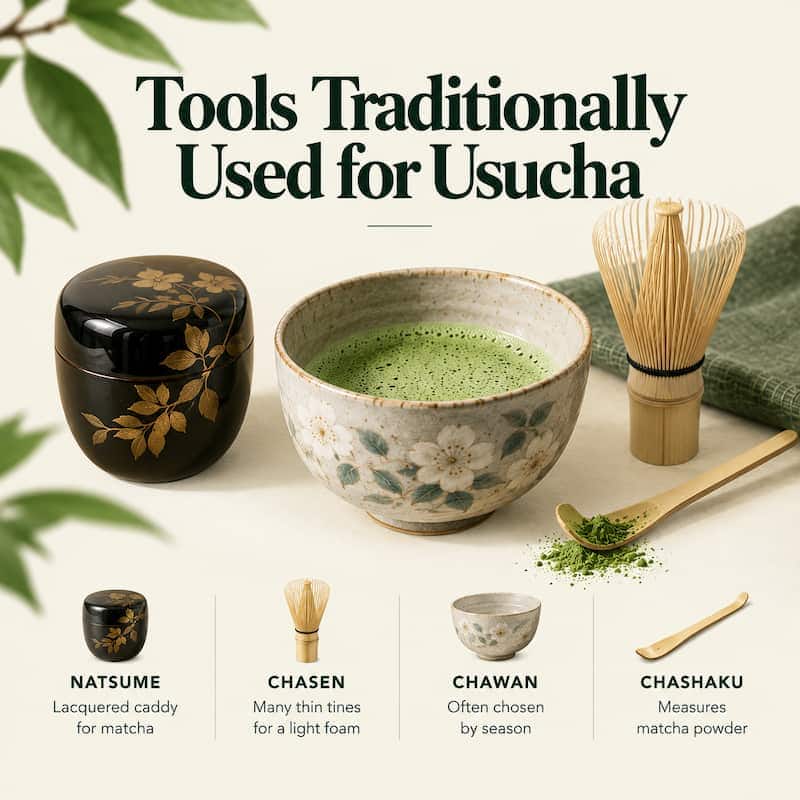
Usucha calls for lighter, less formal versions of the same tools a full tea ceremony uses. Each one suits the tea’s lower concentration and its everyday, more frequent use.
Natsume (棗)
The natsume is a lacquered wooden tea caddy. Makers often decorate it with maki-e, a gold or silver lacquer painting. It holds matcha powder before you scoop it into the bowl. Its name comes from its resemblance to a jujube fruit. The natsume became closely associated with usucha after Sen no Rikyu popularized it. Rikyu, the 16th-century tea master, favored simpler, more understated tea equipment as part of the wabi-cha aesthetic. At home, any small, well-sealed container that keeps light and air away from the matcha works as a substitute.
Chasen (茶筅)
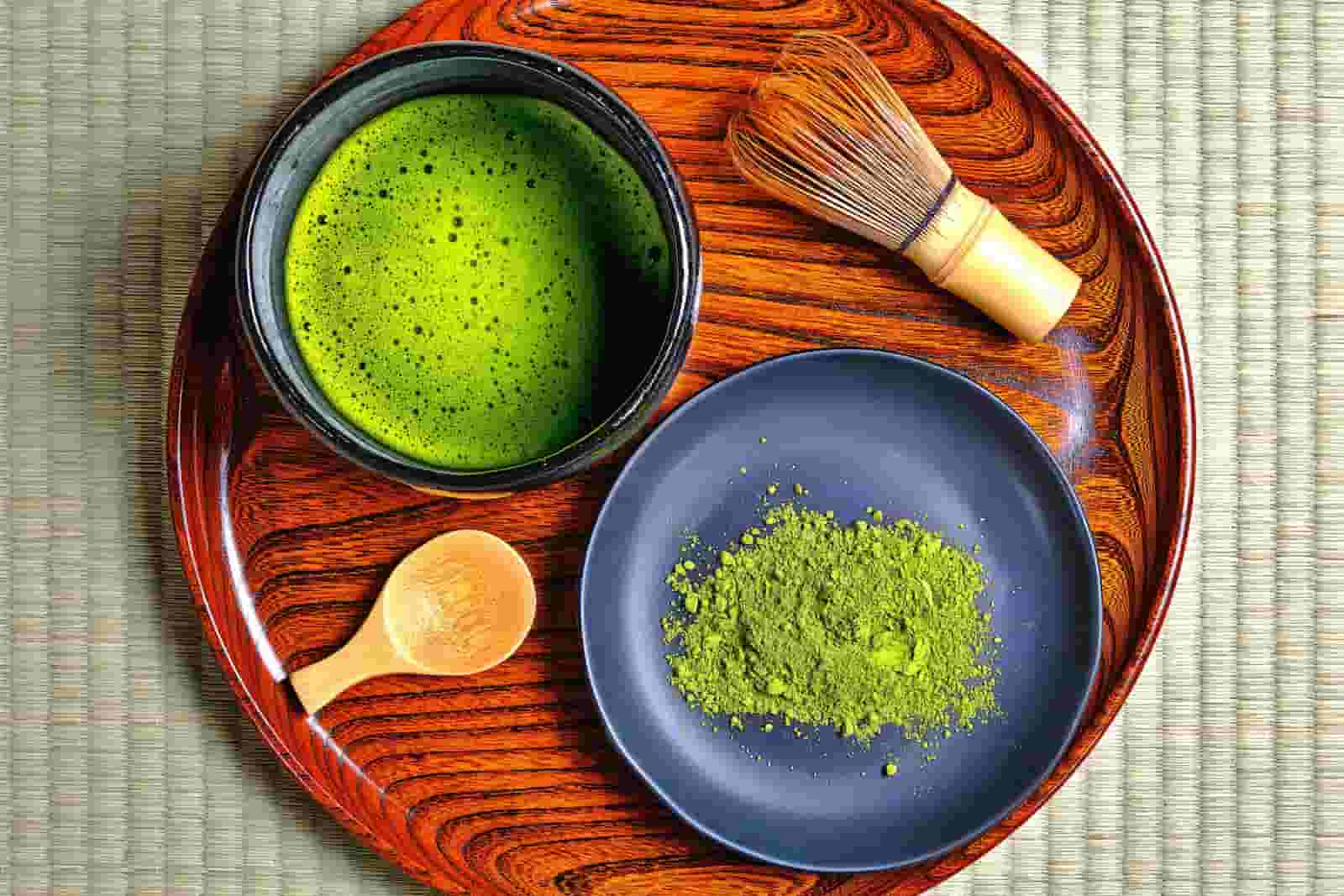
The bamboo whisk for usucha typically has a higher tine count, often in the 64- to 120-tine range. Craftspeople carve these tines thin and flexible. More, thinner tines fold air into the tea more easily, which produces usucha’s characteristic foam. A koicha whisk uses fewer, thicker tines that suit kneading a dense paste rather than frothing a light one.
Chawan (茶碗)
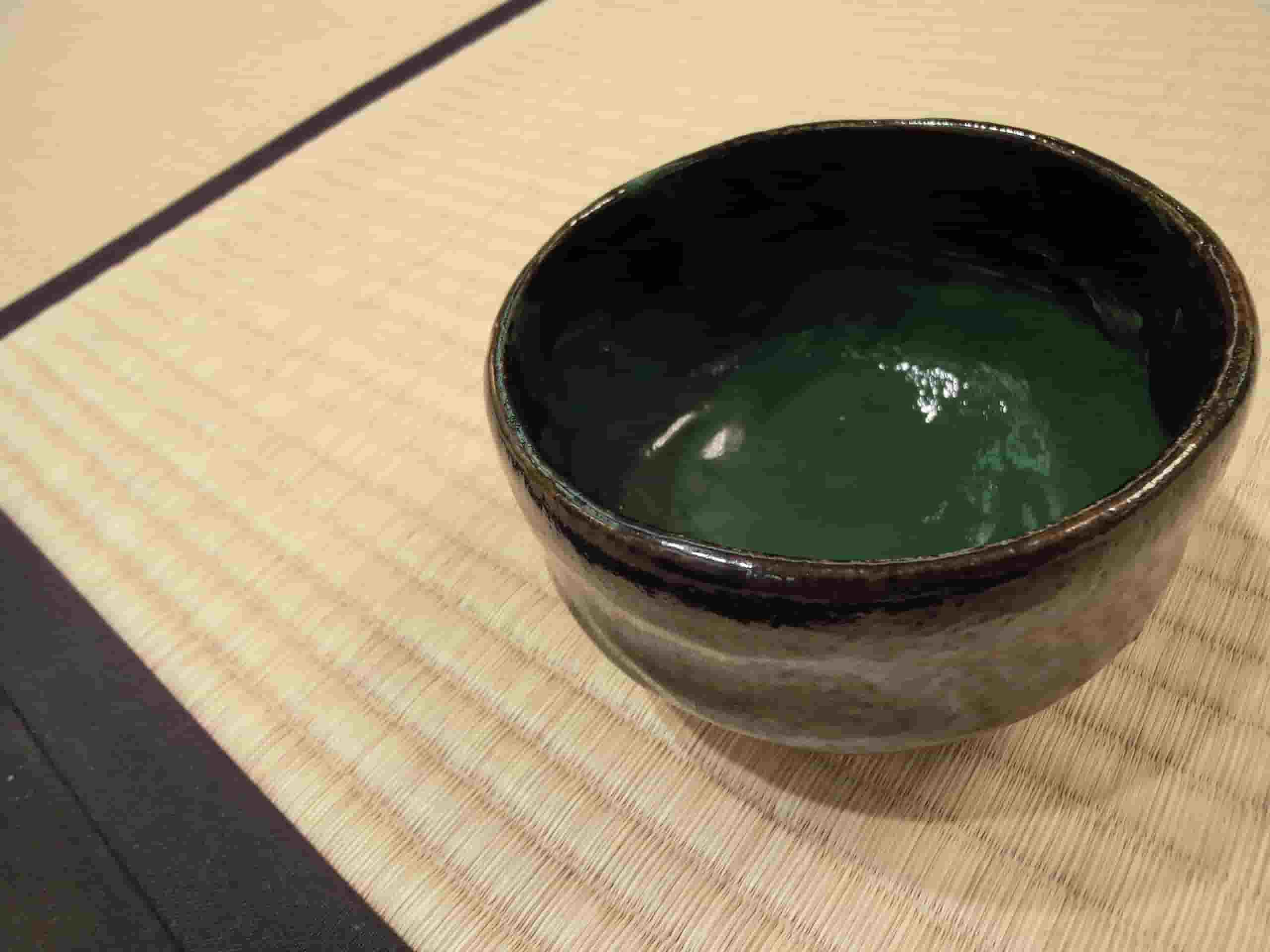
Hosts traditionally choose the chawan for usucha partly by season. Wide, shallow bowls let tea cool quickly, so people favor them in summer. Taller, narrower bowls hold heat better and suit winter instead. Kyoyaki ware, often bright and playfully decorated, is a common choice for usucha. Darker, more subdued Raku or Hagi ware, by contrast, more often goes toward koicha.
Chashaku (茶杓)
A slim bamboo scoop measures matcha from the natsume into the bowl. One level scoop holds roughly 1g of matcha, though the amount varies with scoop size and technique. Most usucha recipes call for one and a half to two scoops per bowl. A kitchen teaspoon holds noticeably more than a chashaku. A scale gives a more consistent result if you don’t have one.
Choosing Matcha for Usucha
Usucha uses more water than koicha, so it tolerates matcha that’s slightly less refined. That doesn’t mean any matcha will do, though. A gritty, dull, or stale powder still stands out in a light, foamy bowl with nothing to mask it.
Sellers who divide their range by intended use often recommend specific products for usucha, rather than relying on a single grade name. Marukyu Koyamaen, for example, positions its Aoarashi matcha for usucha and notes that it also works well with milk. Ippodo names several matcha for both usucha and koicha and rates them on tasting scales for strength, taste, and fragrance. The Ceremonial Matcha guide explains that the word “ceremonial” is just a marketing term, without one fixed Japanese standard. A specific usucha recommendation from the producer is more useful than the grade name on the front of the tin.
A matcha that tastes too bold or astringent for usucha isn’t necessarily a bad buy. It may still work well as culinary matcha, once you mix it with milk, sugar, or batter. That same boldness helps the flavor come through in the finished drink.
How to Prepare Usucha at Home
A consistent method matters more than any single ingredient. The steps below produce a standard bowl; adjust water and matcha slightly once you know your own preference.

Rinse the chawan with hot water and dry it. A warmed bowl helps the tea whisk more smoothly and stay hot a little longer.
Sift about 2g of matcha into the bowl. That’s roughly one and a half to two chashaku scoops. Sifting first breaks up clumps before you add water.
Add about 60ml of hot water, ideally around 80°C rather than freshly boiled. Water that’s too hot can scorch the tea and sharpen its bitterness.
Hold the chasen loosely and whisk quickly in a back-and-forth “W” motion. Keep the tip near the bottom of the bowl at first. Then lift it slightly toward the end to build a fine foam.
Lift the chasen straight up out of the center of the bowl to leave a smooth surface. Then serve right away, while the foam is still fresh.
Getting a Good Foam: Troubleshooting Tips
- 🍃Sift every time. Clumped matcha resists dissolving no matter how vigorously you whisk, and leaves small green flecks floating on the surface.
- 🍃Use enough water. Too little water pushes the tea toward koicha’s concentration and makes a light foam harder to build.
- 🍃Whisk from the wrist, not the arm. A loose, fast wrist motion builds fine, even foam without splashing water out of the bowl.
- 🍃Match the water temperature to the tea. Around 80°C is a reasonable default; cooler water softens bitterness, while hotter water tends to sharpen it.
- 🍃Do not chase a perfect foam. Some schools and drinkers prefer little to no foam. A thin, even layer of bubbles is a reasonable everyday target, not a strict requirement.
Usucha Etiquette
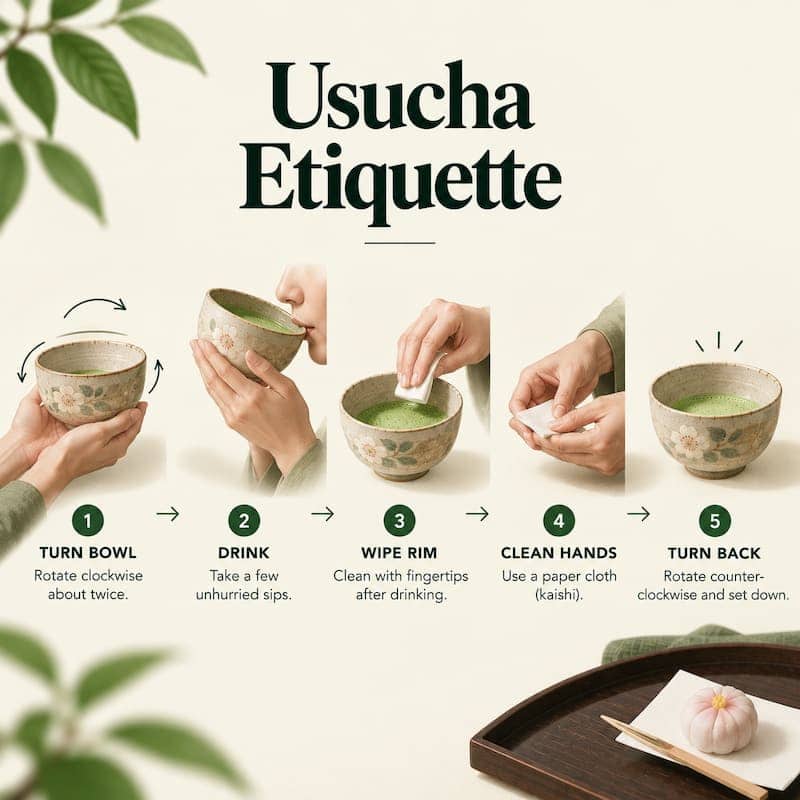
Hosts normally serve usucha to each guest in an individual bowl, unlike koicha’s shared bowl. Even so, a few points of etiquette carry over from the formal tea ceremony into more casual settings.
In a formal setting, a guest turns the bowl roughly twice with the right hand, rotating it clockwise, before drinking. This moves the bowl’s decorated “front” away from the drinker’s mouth. Tea practitioners consider that side the bowl’s most attractive view. It should face outward, toward the host, while the guest drinks. After finishing, the guest wipes the rim clean with the fingertips of the right hand. The guest then cleans the fingers with a small paper cloth called kaishi. Last, the guest turns the bowl back counterclockwise to its original position and sets it down.
At home, this level of formality is optional. Keep it simple instead. Hold the bowl with both hands, drink in a few unhurried sips rather than gulping, and finish the bowl reasonably promptly. Enjoy usucha while it is fresh and still lightly foamed, rather than letting it sit until it goes flat.
Caffeine, Strength, and Who Should Try Usucha
Matcha comes from whole, ground tea leaves. Regular green tea uses leaves that brewers steep and then discard. Because you consume the whole leaf in matcha, a bowl delivers more of the leaf’s compounds than a similar amount of brewed green tea. Caffeine is one of those compounds. Laboratory analysis of matcha powder has measured caffeine content at roughly 2 grams per kilogram. The exact figure varies with cultivar, harvest timing, and growing conditions. Commercial sources often cite a wider range, depending on grade and preparation method.
Usucha uses less matcha per bowl than koicha, so a single serving generally contains less caffeine. The tea itself tastes lighter, though, rather than simply “weaker.” Anyone sensitive to caffeine, pregnant, or serving tea to children should treat usucha like any caffeinated tea. Keep amounts moderate, and avoid it too late in the day.
Usucha is the more approachable starting point for anyone new to matcha. Its lighter body and generally gentler flavor make it easier to enjoy without practice. It also uses less matcha per bowl than koicha. That makes usucha a more economical way to explore matcha before buying a higher grade for koicha.
Storing Matcha for Usucha
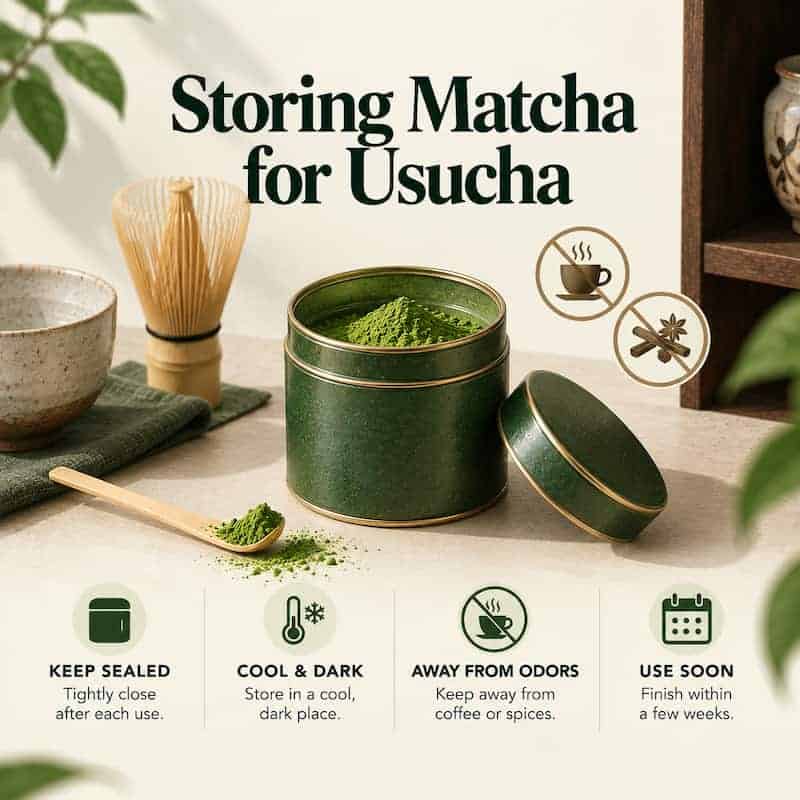
Matcha loses freshness quickly once you open it, no matter which preparation you plan to use it for. Keep it tightly sealed, in a cool, dark place, away from strong odors such as coffee or spices. If you refrigerated an unopened tin, let it return to room temperature before opening it, so condensation doesn’t form inside. Use a clean, dry scoop, and reseal the package immediately after each use. Aim to finish an opened tin within a few weeks for the best flavor.
Common Usucha Myths
“Usucha is just watered-down koicha.”
→ No. It is a distinct preparation with its own ratio, whisking technique, tools, and often its own matcha recommendation. Adding more water to leftover koicha does not reproduce a properly whisked bowl of usucha.
“More foam always means better matcha or better technique.”
→ Foam depends on several things: the chasen’s tine count, the whisking motion, the water ratio, and how well you sifted the matcha. The quality of the tea alone doesn’t decide it. A well-made bowl with only a thin layer of foam can still taste excellent.
“Any matcha works fine for usucha.”
→ Usucha is more forgiving than koicha. Still, a coarse or stale powder stands out once you whisk it with a relatively small amount of water. Matcha meant mainly for cooking will usually taste harsher as usucha than matcha meant for drinking straight.
“Usucha has to be made with full ceremony to taste right.”
→ No. The formal temae exists to teach precision and hospitality. It doesn’t exist because a casual, at-home bowl tastes worse. Fresh matcha, the right ratio, and brisk whisking matter far more than the surrounding ritual.
Final Thoughts
Usucha is not a simple version of koicha, and it is not merely “matcha before it gets concentrated.” It is the everyday form of matcha: lighter, faster to prepare, and more forgiving of the powder you use. One person finishes it in one sitting.
Getting a good bowl comes down to a few fundamentals. Choose fresh, well-chosen matcha, and use a ratio near 2g to 60ml. Whisk briskly rather than stirring, and drink it while the foam is still fresh. Everything else, the natsume, the seasonal chawan, the precise hand movements of a formal temae, builds on that foundation. It doesn’t replace it.
The most useful next step is simple: whisk a bowl, taste it plain, and adjust the ratio or whisking speed from there. A tea practitioner refines a temae the same way, over years of practice.
To explore more Japanese tea culture, read these related guides:
Usucha FAQ
What is the difference between usucha and koicha?
Usucha uses less matcha and more water, and you whisk it into a light foam. Koicha uses roughly twice the matcha and about half the water. You knead koicha into a smooth, dense paste, and people traditionally share it from one bowl.
How much matcha and water do I need for usucha?
A common starting point is about 2g of matcha to roughly 60ml of hot water around 80°C. Schools and producers vary this slightly.
Do I need special tools to make usucha at home?
No. A bamboo chasen and a wide bowl are enough to start. A natsume, chashaku, and seasonal chawan are traditional, but you don’t need them for a good bowl at home.
Does usucha have less caffeine than koicha?
Usually, yes. Usucha uses less matcha per bowl than koicha, so a single serving generally contains less caffeine. Both come from the same tea.
Can I use culinary matcha for usucha?
You can, but it often tastes bolder or more astringent when whisked with only water. Matcha recommended specifically for drinking straight generally produces a smoother, more balanced bowl.
Why does my usucha taste bitter or gritty?
Likely causes include unsifted matcha, water that’s too hot, or too little water for the amount of matcha you used. A matcha that doesn’t suit straight drinking can also taste off.
Can I make usucha without a chasen?
You can whisk with a small kitchen whisk or shake it in a sealed jar, but neither produces the same fine, even foam as a bamboo chasen. The chasen’s flexible tines are designed specifically for folding air into matcha.
References
- Global Japanese Tea Association, How to Prepare Matcha, on the usucha ratio, water temperature, and whisking technique.
- Global Japanese Tea Association, Koicha, on the ratio and technique used for koicha compared with usucha.
- Global Japanese Tea Association, Japanese Teaware, on chasen construction, chawan shapes, and the natsume and chaire tea caddies.
- Chano-yu.com, Types of Tea Caddies, on the history of the natsume and its association with Sen no Rikyu and usucha.
- Tezumi, A Guide to Chasen, on tine counts and why usucha and koicha call for different whisks.
- Wikipedia, Wabi-cha, on Sen no Rikyu and the wabi-cha aesthetic that shaped tea ceremony equipment.
- SAKURA Japanese Culture Experience Class Kyoto, How to Have Usucha, on guest etiquette for receiving, turning, and drinking usucha.
- ROUJIYA, Understanding Differences Between Chakai and Chaji, on where usucha and koicha fit within different types of tea gatherings.
- Marukyu Koyamaen, Aoarashi, an example of matcha specifically recommended for usucha.
- Foods (MDPI), Matcha Green Tea: Chemical Composition, Phenolic Acids, Caffeine and Fatty Acid Profile, on measured caffeine content in matcha powder.



Comments