





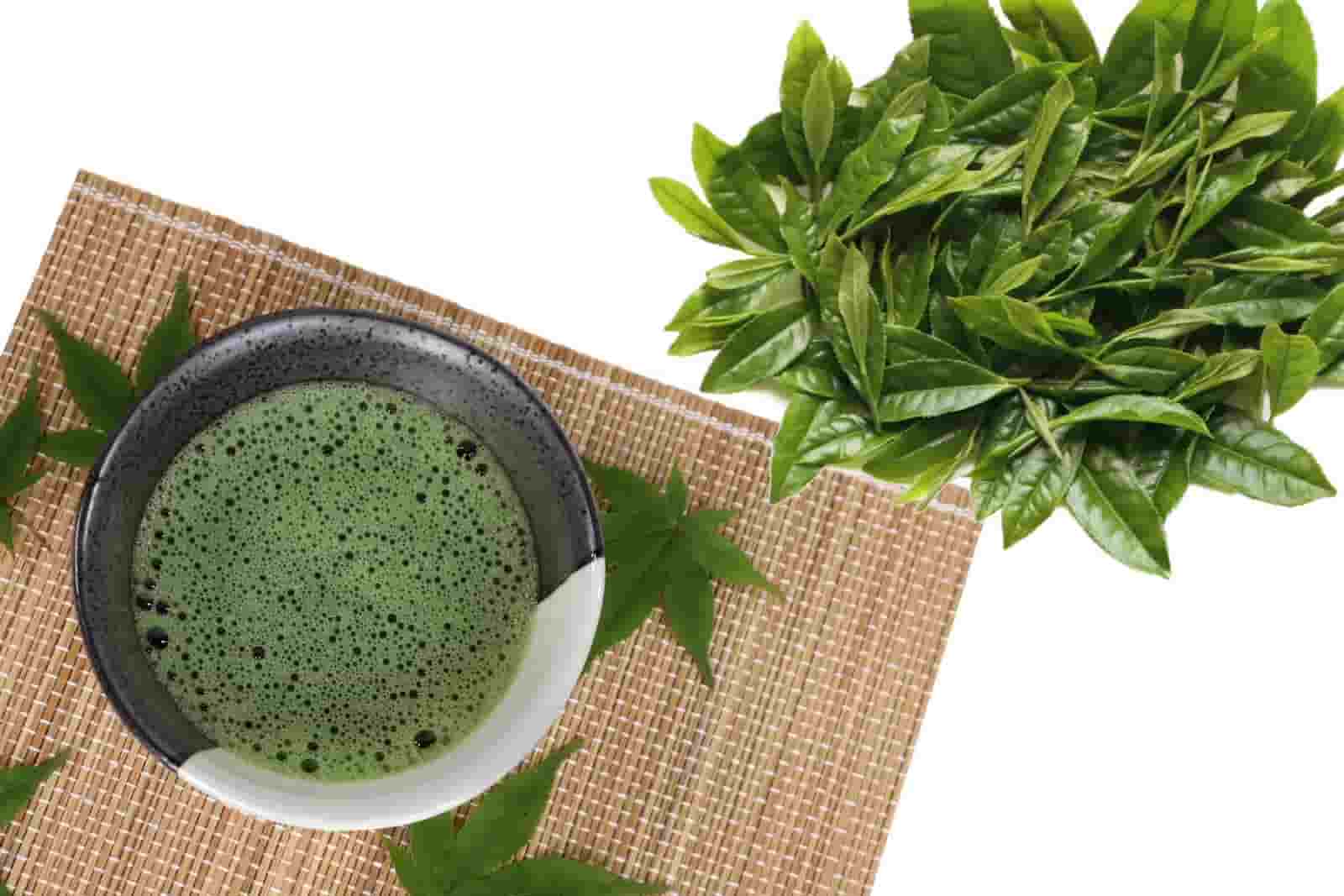
Culinary Matcha is a commercial term. Sellers use it for matcha they process and price for recipes, not for drinking straight with water. The label usually points to a bolder, more assertive flavor. That boldness lets it hold its own against milk, sugar, flour, and other ingredients. Like ceremonial grade, though, it does not refer to one official Japanese standard.
This distinction matters for a practical reason beyond flavor: the culinary segment is also where imitation products are most common. Buyers here expect a lower price and a bolder taste. That expectation makes it easier for imitation green tea powder to pass unnoticed than in the ceremonial category. To choose well, look beyond the word “culinary” on the front of the package. Check the production method, origin, intended use, and price instead.
This guide focuses specifically on culinary matcha. It covers what the label means and how culinary matcha typically differs from matcha marketed for straight drinking. It also covers how to avoid imitation products, and how to use culinary matcha in lattes, baking, and cooking. For grading language aimed at drinking matcha straight, see the companion Ceremonial Matcha guide. For the history of matcha, tencha production, major growing areas, and health information, see the complete Matcha guide.
What Does “Culinary Matcha” Mean?
In English-language retail, “culinary matcha” generally means matcha meant for recipes, not for a bowl of plain whisked tea. Sellers also market it under names like cooking-grade, baking-grade, or ingredient-grade matcha. Whatever the name, the expectation stays the same. The tea should still taste like matcha after you dilute it with liquid, fat, sugar, or flour.
The phrase describes an intended role rather than a fixed recipe or quality tier. Culinary matcha is typically bolder and somewhat more astringent than tea sold for straight drinking. That boldness is exactly what lets its flavor “cut through” milk or batter instead of disappearing. A tea that tastes perfectly balanced on its own can taste faint once you mix it into a latte. The same happens when you bake it into a cake.
A culinary label does not automatically mean the leaves are inferior or that the producer took shortcuts. It means the producer optimized the tea for a different job. The real quality question is not whether a matcha is “only” culinary grade. It is whether the tea is genuine shade-grown matcha in the first place. It is also whether that matcha suits the recipe you plan to use it in.
Is Culinary Grade an Official Category?
There’s no universal regulation defining “culinary grade,” the same way none defines “ceremonial grade.” ISO/TR 21380 outlines matcha’s general characteristics and production background, but it stops short of setting a global culinary-versus-ceremonial grading system. NARO, one of the organizations behind that report, has pointed out that the international matcha market still lacks shared definitions or formal rules.
In practice, sellers place a tea into the culinary tier for very different reasons. It might be a genuinely later-harvest, coarser tencha with the stems left in. It might be the same tencha used for a “premium” line, sold under a plainer name at a lower price. Or, at the lower end of the market, it might be a green tea powder that was never true shade-grown matcha at all. Sellers simply package and market it as one. The word culinary on its own does not tell you which of these you are holding.
This does not make the term meaningless. It works best within one producer’s own range. If a tea house sells both, its culinary option is very likely bolder and more astringent than its own ceremonial tea. That contrast is the whole point of the distinction. Comparing culinary labels across unrelated companies is far less reliable. Each seller sets its own thresholds and sources its leaf differently.
How Culinary and Ceremonial Matcha Typically Differ
Because there is no fixed rulebook, the table below describes common commercial patterns rather than guarantees. A specific product can and often does break from one or more of these tendencies.
| Point | Culinary Matcha (Typical Pattern) | Ceremonial Matcha (Typical Pattern) |
|---|---|---|
| Harvest timing | Often later or second/third-flush leaf | Usually first (spring) harvest |
| Leaf position | May include more mature, lower leaves | Prioritizes the youngest top leaves |
| Stems and veins | Sometimes left in to reduce cost | Usually removed for a finer, smoother powder |
| Texture | Can be slightly coarser | Very fine and silky |
| Flavor | Bold and more astringent, built to cut through milk or batter | Mild and balanced, built for drinking straight |
| Typical price | Lower per gram | Higher per gram |
| Best-matched use | Lattes, smoothies, baking, cooking | Usucha, koicha, straight drinking |
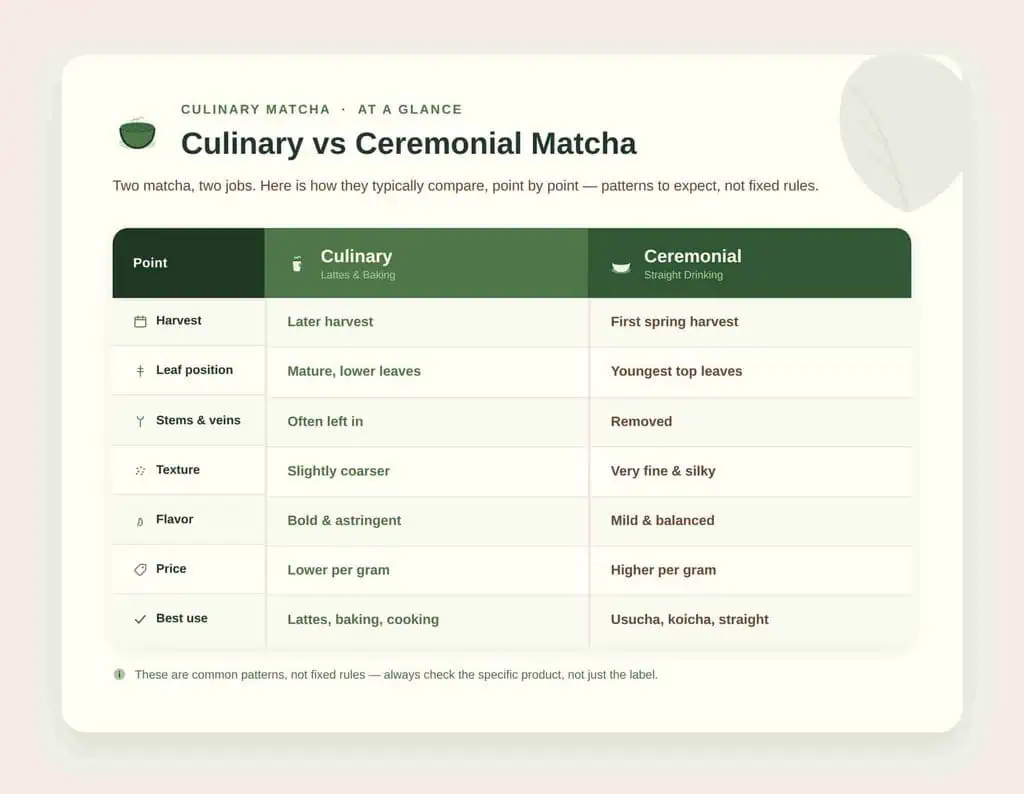
None of these rows is an absolute rule. A single-origin culinary matcha from a reputable tea house can still outshine an unlabeled “premium” powder from an unknown source. Always read the specific product description rather than assuming quality or origin from the word culinary alone.
Real Matcha vs. “Matcha-Style” Green Tea Powder
Buyers purchase culinary matcha in larger quantities, and sellers price it to compete. That combination makes it the segment where imitation is most common. Understanding the difference protects both your recipes and your budget.
Shading and Cultivation
True matcha, whether culinary or ceremonial, comes from tencha. Growers shade the tea bushes for roughly the last few weeks before harvest. This step boosts chlorophyll and amino acids and softens bitterness. Producers sometimes simply grind unshaded, sencha-type leaves into powder instead. That product is green tea powder, not matcha, even when the front label uses the word “matcha.”
Grinding
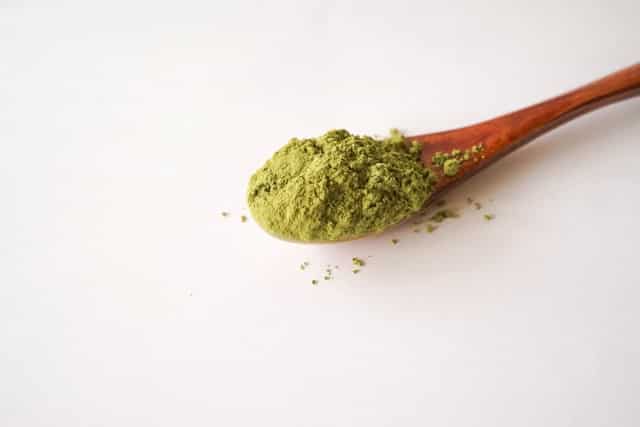
Producers grind genuine matcha, including culinary tiers, fine enough to stay suspended in liquid. It should not settle as visible sand at the bottom of a cup or batter. Very coarse, gritty powder that never fully blends in is a warning sign. It more often points to green tea powder or poor milling, not simply a “lower grade” of real matcha.
Color and Aroma
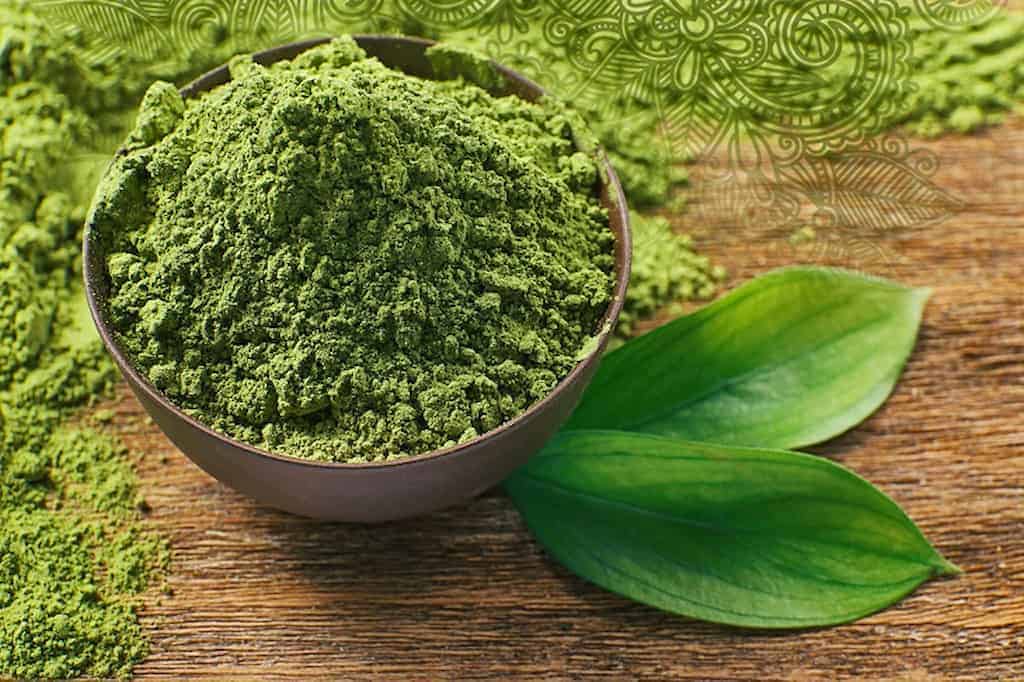
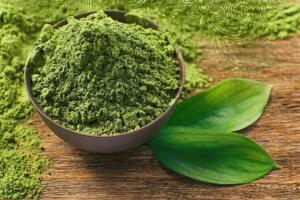
Genuine culinary matcha still comes from shaded leaf, so it should show a green color. It can look less vivid than a bright ceremonial tea, though. Dull brown, gray, or distinctly yellow-green powder is a warning sign. The dry aroma should feel grassy and slightly sweet rather than musty, hay-like, or absent.
Labeling Clues
- Wording: Says “matcha,” not “green tea powder,” “matcha flavor,” or “matcha blend.”
- Origin: States a Japanese origin, ideally a prefecture; vague “Asian green tea powder” sourcing is a caution flag.
- Use: Recommends a specific use, such as latte or baking, rather than relying only on superlatives.
- Price: Sits in a plausible range for real tea cultivation and stone or fine-machine grinding, not a bulk price that undercuts the basic cost of producing tea.
Matcha Lattes: Ratios and Method
The matcha latte is the most common use of culinary matcha. It sits between the traditional usucha (thin tea) and koicha (thick tea) ratios and a fully milk-based drink. The matcha amount is high enough to stay noticeable once you add the milk.
| Latte | Matcha | Hot Water (to make paste) | Milk |
|---|---|---|---|
| Hot latte (about 200ml) | 4g | 40ml at about 80°C | 160ml, warmed |
| Iced latte (about 300ml) | 6g | 60ml at about 80°C | 240ml cold, poured over ice |
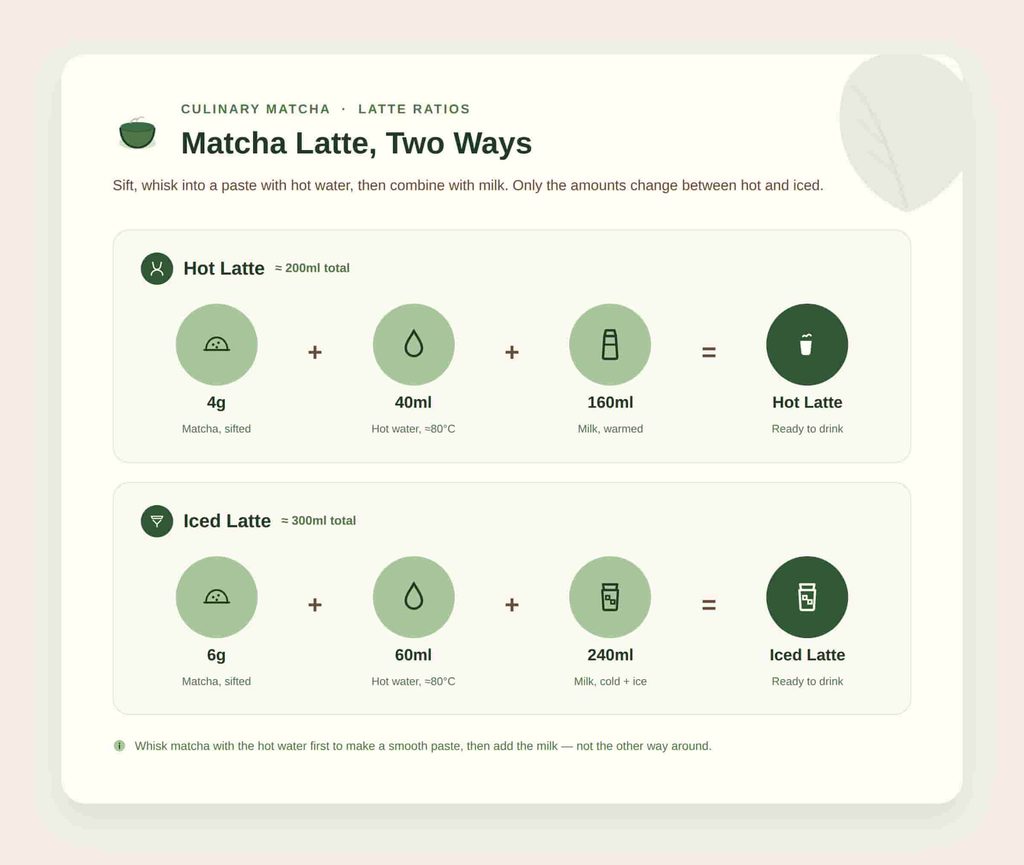
Sift the matcha into a bowl or cup to break up clumps before adding any liquid.
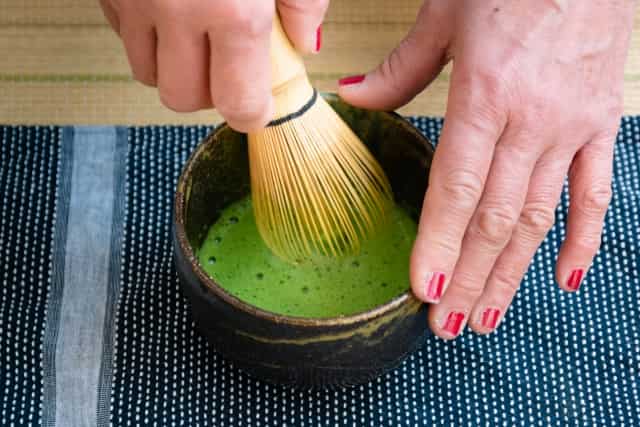
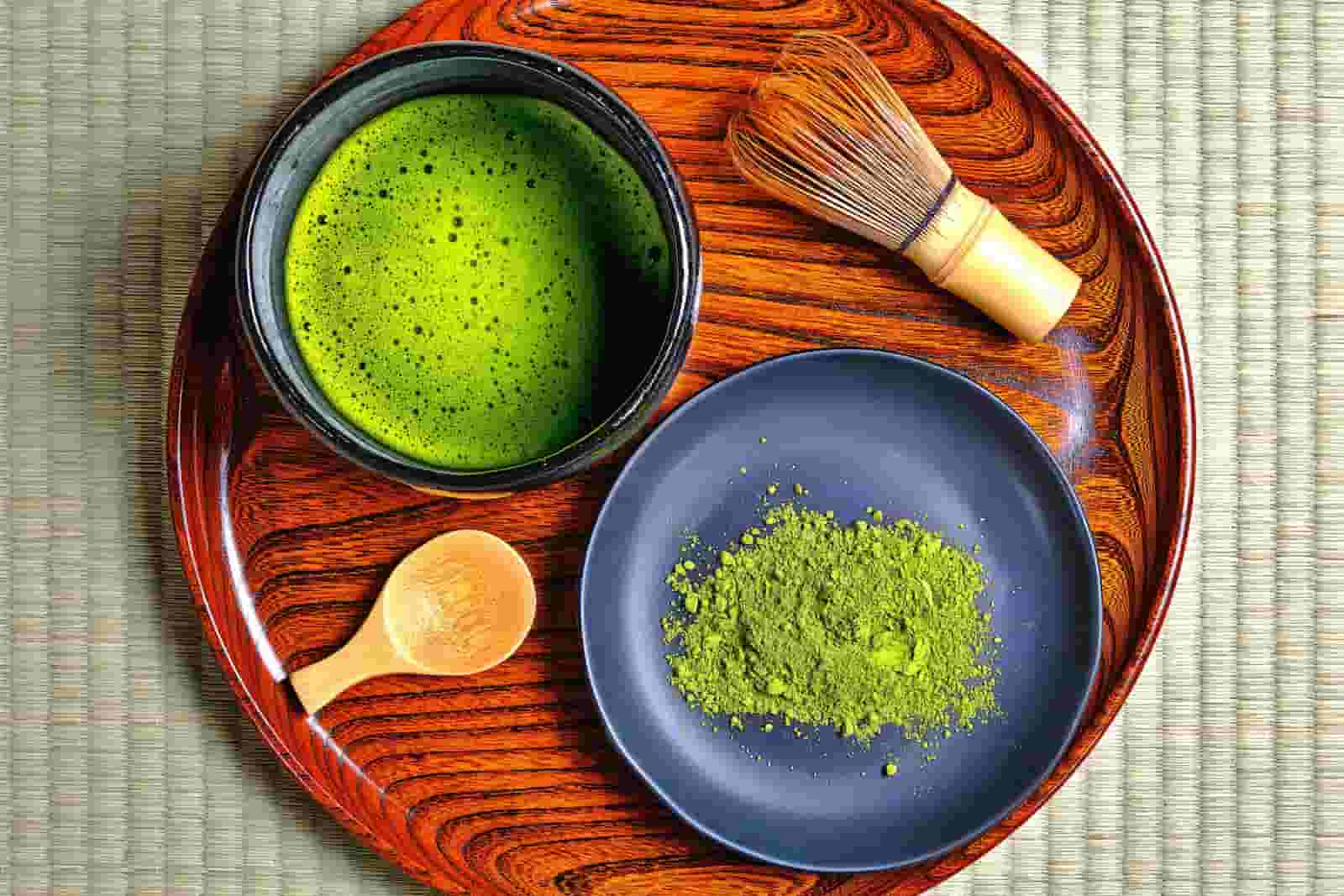
Add the hot water and whisk briskly until smooth and lightly foamy. This concentrated paste is what carries the matcha flavor through the milk.
Warm or chill the milk separately. Then combine it with the matcha paste, rather than whisking matcha powder directly into a full cup of milk.
Finally, stir or pour to combine, and sweeten if desired.
Any milk works. Options with a little fat or protein, such as whole dairy milk, oat milk, or soy milk, tend to blend more smoothly. They also taste creamier than very thin milks.
Baking and Cooking With Matcha
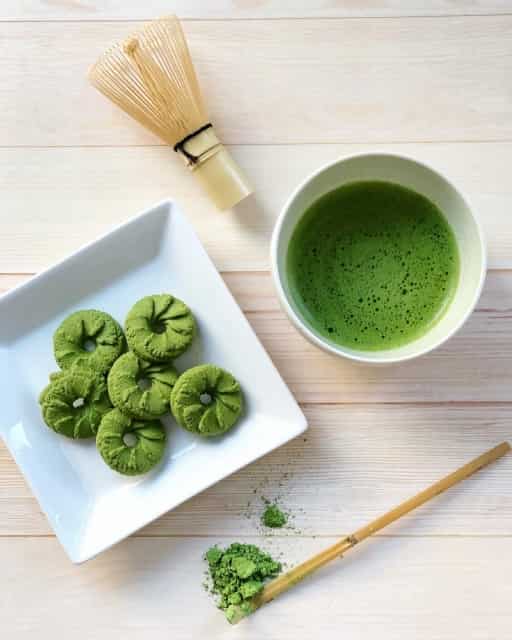
Culinary matcha’s bold, slightly astringent profile is what makes it useful in the kitchen. It survives sugar, flour, and fat diluting it, where a milder ceremonial tea would mostly disappear. A few habits help it perform at its best.
- Sift before mixing. Matcha clumps easily. Sifting it together with flour or sugar prevents green flecks and streaks in the finished product.
- Make a paste for wet batters. Dissolve the matcha in a small amount of milk, cream, or water first. Then fold it into the larger batter to avoid clumping.
- Use moderate oven temperatures. Matcha’s brightest color and most delicate aroma fade with prolonged high heat. Baking within typical ranges for cookies and cakes, and avoiding unnecessarily long bakes, helps preserve both.
- Watch acidity. Strongly acidic ingredients, such as a large amount of lemon juice or vinegar, can push matcha’s green color toward khaki. A mildly acidic ingredient like buttermilk or yogurt is usually fine.
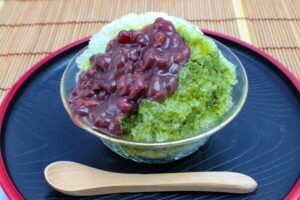
- Pair it thoughtfully. Matcha works well with white chocolate, red bean, coconut, vanilla, and a little citrus zest. These flavors soften its astringency without hiding it.
- Start with less than you think. Culinary matcha is potent and can turn bitter in excess. Many recipes call for roughly one to two tablespoons, about 6 to 12g, per standard batch of cookies or a loaf cake. Adjust to taste.
Beyond sweets, culinary matcha also works in savory contexts. Whisk it into salad dressings, toss it with soba noodles, blend it into a seasoning salt, or dust it over rice. Anywhere a grassy, slightly bitter accent would complement the dish is a reasonable place to try it.
Does Heat Change Matcha’s Flavor and Nutrients?
Heat and time both act on matcha’s compounds. Research on green tea catechins has found that high extraction temperatures, held for longer periods, gradually degrade catechins. Heat also converts some catechins into different chemical forms, a process called epimerization. This research focuses mainly on brewing, though, rather than baking. Separate research on green tea powder has examined how catechin degradation follows a pattern tied to temperature and humidity. Warmer or more humid storage and processing conditions can reduce potency gradually over time, independent of any single cooking step.
For a home cook, the more noticeable effect is usually visual and aromatic rather than nutritional. Prolonged high heat and low pH accelerate the same chlorophyll breakdown that dulls the color of any cooked green vegetable. Baked matcha treats commonly look more olive than a freshly whisked bowl of matcha. This is mainly a matter of appearance and flavor, not safety. Baked matcha remains a legitimate way to enjoy the tea, just a different one from drinking it fresh.
Do you care more about a bright green color, or preserving the tea’s original character, than about convenience? Try unbaked applications instead, such as ice cream, frosting, or a whisked matcha cream. These keep more of that color and aroma than a long bake at high heat.
How to Choose Good Culinary Matcha
- Confirms it is matcha, not green tea powder, and preferably names a Japanese origin.
- States its intended use, such as latte, baking, or cooking, rather than relying only on the word “grade.”
- Shows a green color in the package, not brown or a dull, dusty yellow-green.
- Blends into liquid without leaving persistent grit at the bottom of the cup.
- Comes in resealable packaging sized for how much you will realistically use before it goes stale.
- Costs a reasonable amount for real matcha production, even at the more affordable culinary tier.
Common Culinary Matcha Myths
“Culinary matcha is just low-quality ceremonial matcha.”
→ Not necessarily. Producers make and select genuine culinary matcha for a different job: mixing into drinks and food. It is not that the tea failed some quality bar set for ceremonial matcha. The real quality risk in this category is the chance that a product isn’t matcha at all. It is not that the tea is automatically inferior.
“Any green powder marked matcha will taste the same in a latte or a bake.”
→ Imitation green tea powder often tastes flat, hay-like, or harshly bitter compared with genuine culinary matcha. Its color also tends to fade faster under heat. The brand and production method still matter, even for an everyday cooking ingredient.
“You should always buy the cheapest matcha for cooking to save money.”
→ Choosing an affordable culinary tier over a ceremonial one is reasonable. But a price far below the real cost of growing, shading, and grinding tea usually signals imitation, not a bargain.
“Ceremonial matcha always makes better baked goods than culinary matcha.”
→ Sugar, flour, and fat usually mask ceremonial matcha’s delicate qualities. A well-made culinary matcha often produces a more noticeable flavor in the dish, at a lower cost per recipe.
Is It Worth Buying Culinary Matcha Separately?
Do you regularly make lattes, smoothies, or baked goods with matcha? A dedicated culinary product is usually worth buying, rather than reaching for a ceremonial tin. It costs less per gram. It also saves your ceremonial tea’s delicate, expensive qualities for a use where you can actually taste them, rather than have milk or sugar mask them.
Do you only occasionally add matcha to a recipe? A small culinary tin still tends to go further and cost less per gram than repurposing a ceremonial one. Its bolder flavor is also more likely to come through in the finished dish.
How to Keep It Fresh
Culinary matcha is sensitive to oxygen, heat, moisture, light, and surrounding odors, the same as any other matcha. Home cooks often buy culinary matcha in larger packages. Portion out what you expect to use within a few weeks into a small airtight container for daily use. Keep the rest of the package tightly sealed, cool, dark, and away from strong odors like coffee or spices. If you refrigerated an unopened package, let it reach room temperature before opening. This keeps moisture from condensing inside.
Final Thoughts
Culinary matcha is not a single official grade. It is a broad promise that a seller picked and priced this matcha for mixing into drinks and food, not for drinking straight. The reliability of that promise depends on the seller and the production behind it. More than with ceremonial matcha, it also depends on whether the product is genuine shade-grown matcha at all.
Instead of chasing the lowest possible price, look for a named Japanese origin and a clear recommended use. Also check for a green, not dull or brown, color, and packaging sized for how quickly you will use it. Then match the matcha’s boldness to your recipe: bigger doses of milk, sugar, or flour call for a bolder tea.
The most useful question is not “Is this culinary grade?” but “Is this real matcha, and is it bold enough to still taste like matcha once it’s in my cup or my batter?”
To explore more Japanese tea culture, read these related guides:
Culinary Matcha FAQ
What is culinary matcha?
It is a commercial term. Sellers select and price this matcha for mixing into drinks and food, such as lattes, smoothies, and baked goods. It is not meant for drinking straight with only water.
Is culinary grade matcha an official standard?
No. There is no universal regulation defining culinary grade, just as none defines ceremonial grade. Each seller sets its own thresholds for what counts as culinary.
Is culinary matcha the same as green tea powder?
Not necessarily, but the two are often confused. Genuine culinary matcha still comes from shaded tencha leaf. Green tea powder made from unshaded leaf is a different, usually cheaper product. Sellers sometimes market it using the word matcha anyway.
Can I drink culinary matcha straight, with just water?
Yes, but it will usually taste bolder and more astringent than a matcha marketed for straight drinking. Sellers chose it to remain noticeable once you dilute it with milk, sugar, or flour.
Can I use ceremonial matcha for baking instead?
Yes, but sugar, flour, and fat usually mask its delicate qualities. A bolder culinary matcha often produces a more noticeable matcha flavor in the finished dish, at a lower cost.
How much matcha should I use in a latte?
A common starting point for a hot latte is about 4g of matcha. Whisk it with 40ml of hot water into a paste, then combine it with 160ml of milk. For an iced version, use roughly 6g of matcha, 60ml of hot water, and 240ml of cold milk poured over ice.
Does heat destroy matcha’s antioxidants?
Research shows that high heat, held for longer periods, gradually degrades and converts some catechins. This does not mean baked matcha loses all of its benefits or flavor, though. The most noticeable effect for home cooks is usually a duller color rather than a nutritional loss.
Why does baked matcha turn a duller green?
Prolonged heat and acidity break down chlorophyll, the same reaction that dulls the color of any cooked green vegetable. Unbaked applications like ice cream or frosting keep a brighter color than a long, hot bake.
How can I tell if culinary matcha is genuine?
Check that the label says matcha, not green tea powder, and that it names a Japanese origin. The color should look green, not brown or dull yellow, and it should blend into liquid without leaving heavy grit. The price should also sit in a range consistent with real tea production.
Is culinary matcha cheaper than ceremonial matcha?
Usually, yes. Culinary matcha commonly costs less per gram than tea marketed as ceremonial, reflecting differences in harvest timing, leaf selection, and processing.
References
- National Agriculture and Food Research Organization (NARO), on ISO/TR 21380, the definition and production background of matcha, and the lack of consensus in the international market.
- Matcha.com, The Rise of Fake Matcha, on distinguishing genuine shade-grown, stone-ground matcha from imitation green tea powder sold under the matcha name.
- Best Matcha, Culinary Grade glossary entry, on typical harvest, leaf selection, texture, and pricing differences for culinary-grade matcha.
- Matchaeologist, Ceremonial vs Culinary Matcha, on flavor and production differences between the two commercial categories.
- Marukyu Koyamaen, Wakatake, an example of a matcha marketed specifically as culinary grade for lattes, baking, and desserts.
- Maison Koko, Matcha to Water Ratio Guide, on typical gram measurements for hot and iced matcha lattes compared with usucha and koicha.
- PMC, research on green tea catechin extraction and heat, on how extraction temperature and time affect catechin content and epimerization.
- Journal of Agricultural and Food Chemistry, Degradation Kinetics of Catechins in Green Tea Powder, on how temperature and relative humidity affect catechin stability in green tea powder over time.




Comments