




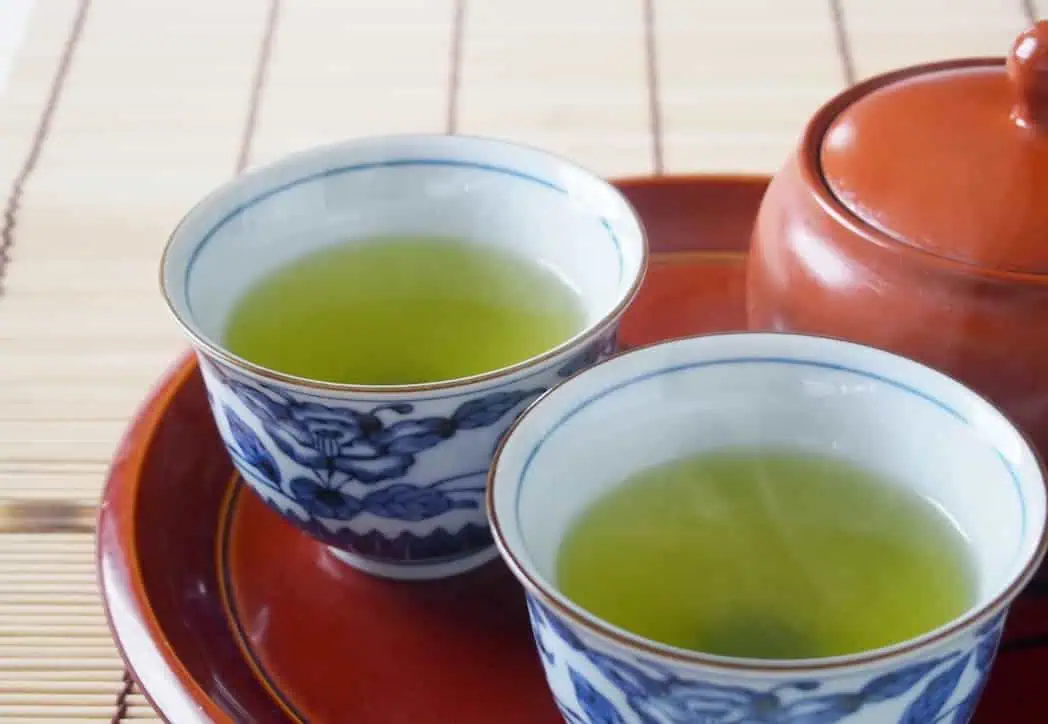
Fukamushi Sencha (深蒸し煎茶) is a deep-steamed Japanese green tea known for its cloudy green color, mellow umami, soft bitterness, and full-bodied taste. The word fukamushi means “deep steamed,” and this longer steaming process gives the tea its distinctive texture and rich appearance.
While regular sencha often has a clearer liquor and brisker finish, this style produces a thicker cup that feels smooth and generous. Therefore, it suits people who want a flavorful Japanese green tea that is easy to enjoy every day.
What Is Fukamushi Sencha?
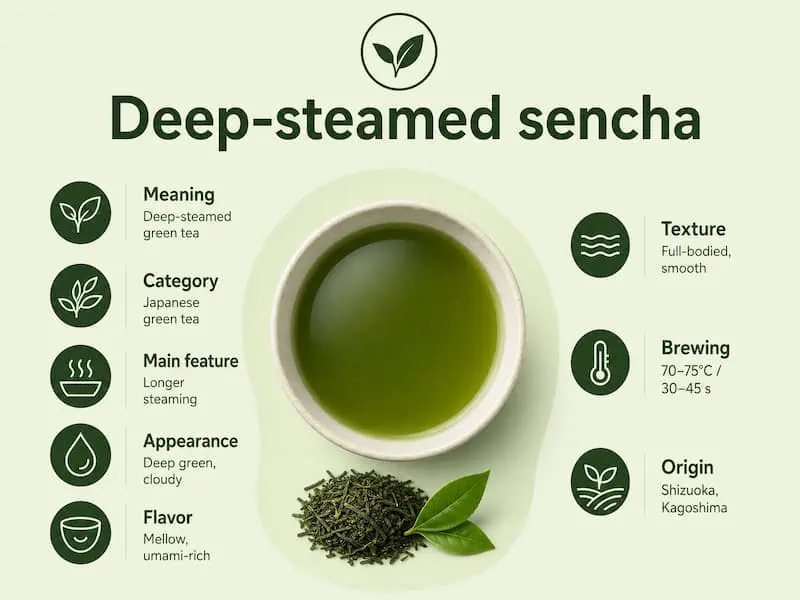
Fukamushi Sencha is a style of steamed Japanese green tea. Producers make it from tea leaves that go through a longer steaming stage than standard sencha. This extra steaming softens the leaves, breaks their structure more easily, and creates many fine particles during processing.
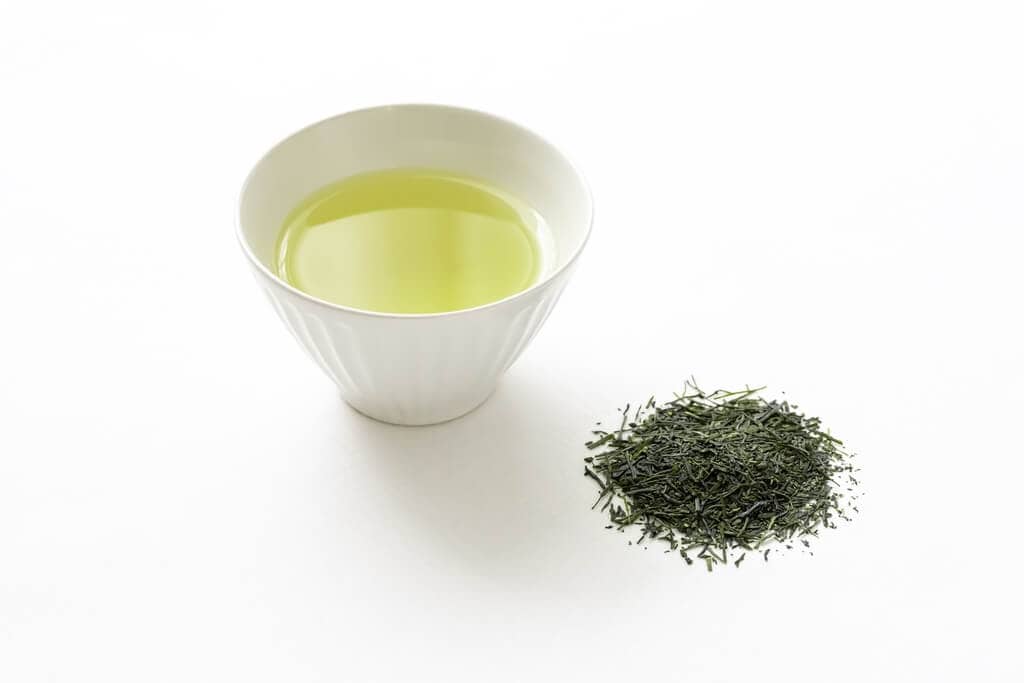
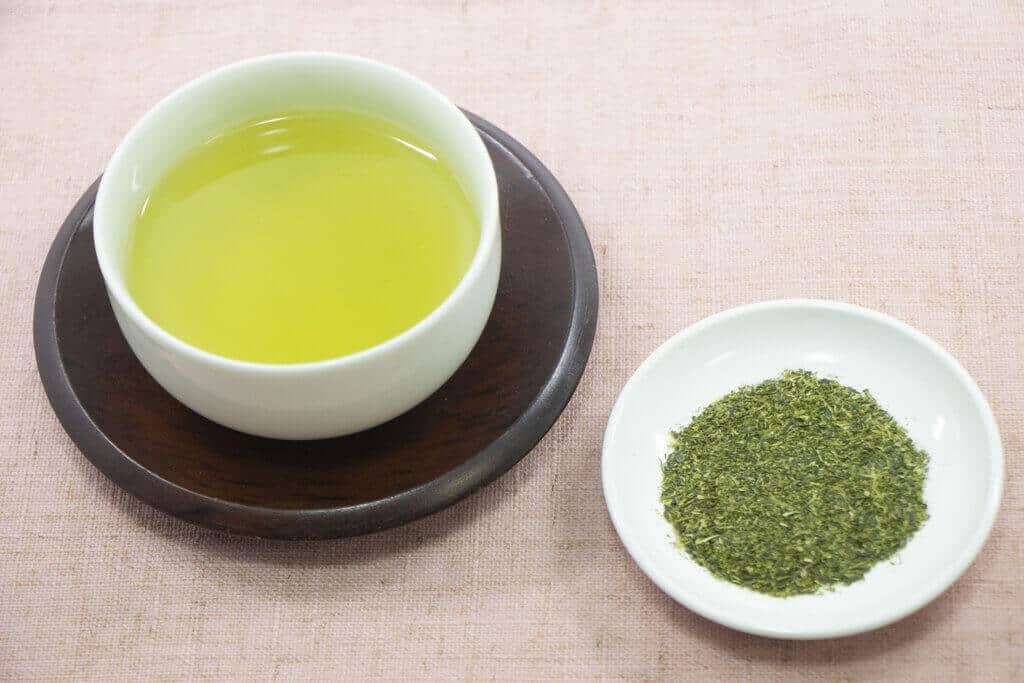
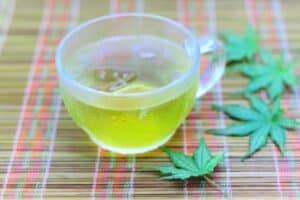
Because of these fine particles, the brewed tea often looks cloudy rather than transparent. This appearance is not a defect. Instead, it is one of the key signs of deep-steamed tea. The small leaf particles bring color, body, and flavor into the cup quickly.
As a result, this tea usually tastes less sharp than lightly steamed styles. It still has green, grassy notes, but the bitterness feels rounder and the umami feels more concentrated. For beginners, that mellow character can make it easier to enjoy than a very delicate or highly astringent tea.
Why Deep Steaming Matters
The steaming step defines this tea more than any other process. In Japanese green tea production, steaming stops oxidation and helps preserve a fresh green aroma. However, deep steaming goes beyond simple oxidation control. It changes the leaf texture and the way flavor extracts into water.
Longer steaming makes the leaves softer and more fragile. During rolling and drying, the leaves break into smaller pieces than regular sencha. Therefore, when hot water touches the leaves, flavor compounds enter the cup faster. This is why deep-steamed tea usually needs a shorter brewing time.
The method also reduces the impression of harshness. Astringency does not disappear completely, but it often feels softer because the tea has more body and sweetness. In other words, deep steaming creates a cup that feels dense, green, and gentle at the same time.
How Fukamushi Sencha Is Made
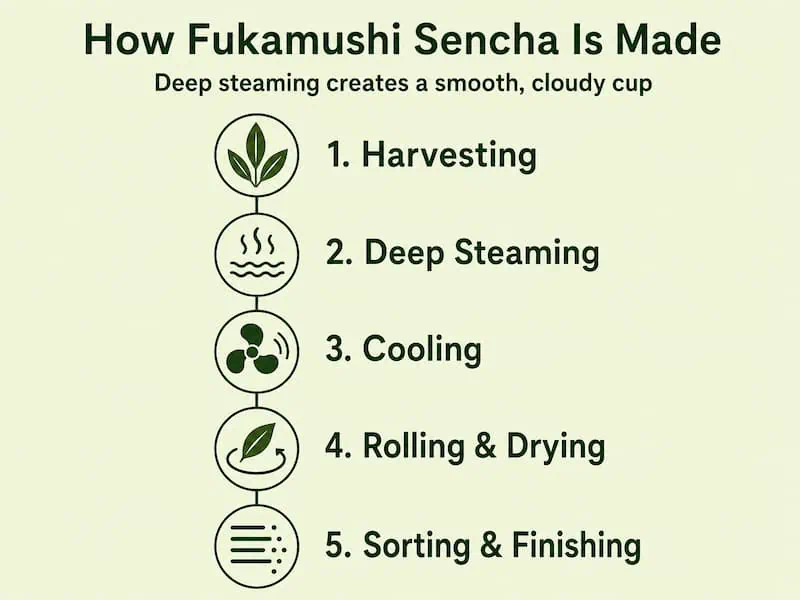
The basic production flow resembles other Japanese green teas, but the key point is the longer steaming stage. Below is a simple overview focused on what affects deep-steamed tea.
Farmers pick young tea leaves when they reach the right stage. First-harvest leaves often create a sweeter and more aromatic cup, while later harvests can produce reliable everyday tea.
The leaves are steamed longer than regular sencha. This step stops oxidation, softens the leaves, and creates the foundation for the tea’s cloudy color and smooth body.
After steaming, producers cool the leaves quickly. This prevents overcooking and prepares the softened leaves for rolling.
The leaves go through rolling and drying. Since deep-steamed leaves are fragile, they often break into smaller pieces. These fine pieces later create a vivid and thick-looking infusion.
Finally, producers sort, refine, and sometimes fire the tea lightly to adjust aroma and moisture. This finishing stage helps make the flavor cleaner and more stable.
Flavor, Aroma, and Texture
The flavor is usually mellow, rich, and deeply green. Common tasting notes include steamed spinach, young greens, seaweed, fresh grass, sweet corn, and marine umami. Some cups also show a soft nutty or chestnut-like finish.
Compared with lightly steamed tea, the aroma may feel less floral. However, the body becomes stronger, and the taste spreads quickly across the mouth. The finish often feels smooth rather than sharply bitter.
The texture is just as important as the flavor. Tiny leaf particles enter the infusion and create a thick, almost powdery feeling. Because of this, the tea can look much richer than regular sencha even when you brew it for a short time.
Fukamushi Sencha vs Regular Sencha
The two teas share the same general category, but they behave differently in the cup. The table below shows the practical differences that drinkers notice most.
| Point | Regular Sencha | Deep-Steamed Style |
|---|---|---|
| Steaming Time | Shorter to medium | Longer |
| Leaf Shape | More intact and needle-like | More broken and fine |
| Color | Clear yellow-green to green | Cloudy deep green |
| Texture | Clean and light | Full-bodied and thick |
| Flavor | Fresh, brisk, balanced | Mellow, vegetal, umami-rich |
| Brewing Time | Often around 60 seconds | Usually around 30–45 seconds |
| Best For | People who like clarity and aroma | People who like body and softness |
Main Producing Areas
Deep-steamed tea appears in several parts of Japan, but Shizuoka has the strongest image for this style. Areas such as Kakegawa, Kikugawa, Makinohara, and nearby districts developed a reputation for producing rich green cups with mellow taste.
Kakegawa is especially well known for deep-steamed tea. Many producers there use longer steaming to create a mild flavor, strong color, and rounded body. This makes Kakegawa tea approachable for both beginners and daily green tea drinkers.
Kikugawa is also important. The regional product Fukamushi Kikugawacha has official recognition under Japan’s Geographical Indication system, which shows the area’s close connection with this tea style.
Kagoshima also produces deep green, full-bodied Japanese teas. Its warm climate supports early harvests and cultivars that can create bright color and rich taste. Therefore, Kagoshima is another good region to explore when comparing deep-steamed tea.
How to Brew Fukamushi Sencha
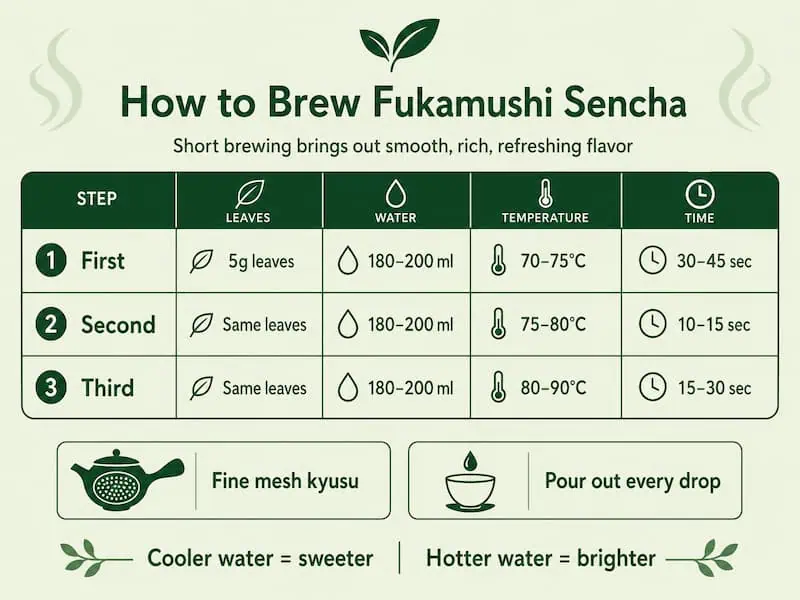
This tea extracts quickly, so shorter brewing works better than long steeping. If you use boiling water or wait too long, the cup can become overly thick or bitter. However, with the right timing, it becomes smooth, rich, and refreshing.
| Infusion | Tea Leaves | Water | Temperature | Time |
|---|---|---|---|---|
| First | 5g | 180–200ml | 70–75°C | 30–45 sec |
| Second | Same leaves | 180–200ml | 75–80°C | 10–15 sec |
| Third | Same leaves | 180–200ml | 80–90°C | 15–30 sec |
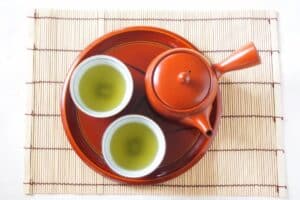
A kyusu teapot with a fine mesh filter works best because the leaves are small and fragile. Also, pour out every drop after each infusion. If liquid remains in the teapot, the leaves continue to extract and the next cup may taste too strong.
For a sweeter cup, use cooler water and slightly more leaves. For a brighter cup, use slightly hotter water and a shorter time. After that, adjust by taste, since each producer’s tea behaves a little differently.
Cold Brew Method
Cold brewing makes deep-steamed tea even smoother. Since cold water extracts fewer bitter compounds, the drink tastes sweet, green, and soft.
- Add 6–8g of leaves to 500ml of cold water.
- Place the bottle in the refrigerator for 2–4 hours.
- Shake gently once or turn the bottle over.
- Strain the leaves and serve chilled.
Because the leaves are fine, the tea may become cloudy even in cold water. That is normal. In fact, the cloudy appearance often gives cold brew a deeper color and stronger green tea flavor.
How to Choose Good Fukamushi Sencha
When buying this tea, look for freshness, color, aroma, and clear labeling. Good leaves often look deep green and may include fine pieces because of the deep steaming process. They should smell fresh, vegetal, and clean rather than stale or flat.
If you are new to this style, start with a reliable Shizuoka or Kagoshima tea. Then compare Kakegawa and Kikugawa products to notice how region and producer style change the cup.
Food Pairings
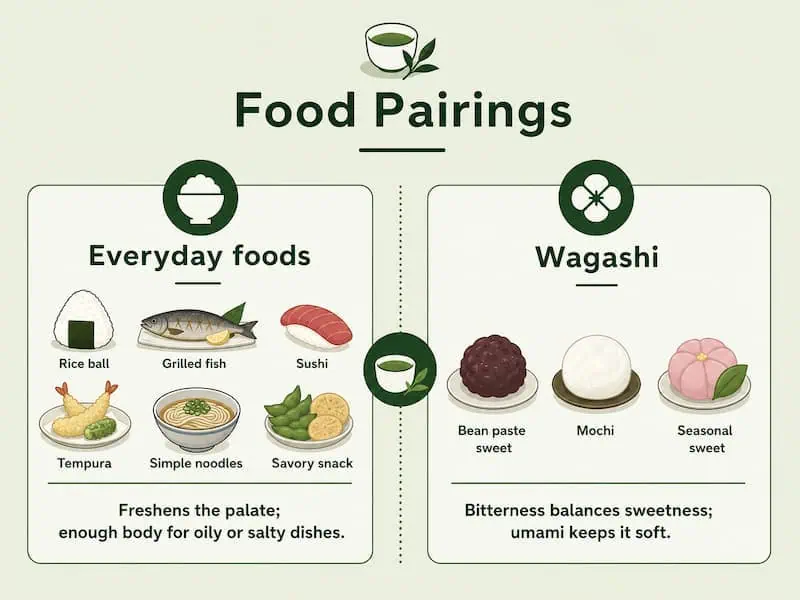
The mellow bitterness and thick texture pair well with everyday Japanese food. Try it with rice balls, grilled fish, sushi, tempura, simple noodle dishes, or savory snacks. The tea refreshes the mouth while still holding enough body to match oily or salty foods.
It also works with wagashi. The tea’s green bitterness balances sweet bean paste, mochi, and seasonal sweets. Meanwhile, its umami makes the pairing feel soft rather than sharp.
How to Store It
Deep-steamed tea has many small leaf particles, so it can lose aroma quickly after opening. Store it away from heat, light, oxygen, and moisture. Also, keep it away from coffee, spices, and other strong-smelling foods.
- Keep unopened tea in a cool, dark place.
- After opening, seal the package tightly or use an airtight container.
- Use opened tea within one to two months for the best aroma.
- If storing unopened tea in the refrigerator, let it return to room temperature before opening.
Final Thoughts
Fukamushi Sencha is a rich and approachable style of Japanese green tea. Its longer steaming process creates a cloudy green color, mellow umami, soft bitterness, and satisfying body. More importantly, it brews quickly and works well for both hot tea and cold brew.
If regular sencha tastes too sharp or light for you, this deep-steamed style may be a better choice. Start with a short infusion, use moderate water temperature, and enjoy how much flavor the leaves can release in less than a minute.
To explore more Japanese tea culture, read these related guides:
Fukamushi Sencha FAQ
What is Fukamushi Sencha?
Fukamushi Sencha is a deep-steamed Japanese green tea. It has a rich green color, mellow umami, and a fuller body than regular sencha.
How is Fukamushi Sencha different from regular sencha?
The main difference is the steaming time. Fukamushi is steamed longer, so the leaves become softer and the tea tastes smoother and less astringent.
What does Fukamushi Sencha taste like?
It tastes rich, vegetal, mellow, and umami-forward. Common notes include steamed greens, seaweed, spinach, and sweet corn.
Why does Fukamushi Sencha look cloudy?
The tea looks cloudy because deep steaming breaks the leaves into smaller particles. These fine particles enter the cup and create a thick, deep green infusion.
How do you brew Fukamushi Sencha?
Use 70°C water and steep for about 30–45 seconds for the first infusion. Since the leaves extract quickly, avoid steeping it for too long.
Can Fukamushi Sencha be cold brewed?
Yes, it works very well as cold brew. Cold water brings out its sweetness and reduces bitterness.
Does Fukamushi Sencha contain caffeine?
Yes, it contains a medium amount of caffeine. If you are sensitive to caffeine, it is better to drink it earlier in the day.
Is Fukamushi Sencha good for beginners?
Yes, it is easy to enjoy because it tastes smooth, rich, and less sharp than some lightly steamed teas. Just be careful not to over-brew it.
References
- Ministry of Agriculture, Forestry and Fisheries of Japan (MAFF) – Traditional Foods in Japan: Beverages
- JETRO – Japanese Green Tea Brochure
- MAFF – Geographical Indication: Fukamushi Kikugawacha
- National Agriculture and Food Research Organization (NARO) – Green Tea Cultivar Research
References
- Ministry of Agriculture, Forestry and Fisheries of Japan (MAFF), Traditional Foods in Japan: Beverages, on Japanese green tea production, including steaming, cooling, rolling, drying, and how sencha is made through the refining process. (Surveyed: July 2026)
- JETRO, Japanese Green Tea Brochure, for an overview of Japanese green tea categories, production methods, taste profiles, and information intended for international readers. (Surveyed: July 2026)
- National Agriculture and Food Research Organization (NARO), on Japanese green tea cultivar research, including cultivar development related to quality, yield, and suitability for shaded tea production. (Surveyed: July 2026)
- Ujitawara Kyoto Tourism, on Soen Nagatani, his birthplace, and the historical development of Aosei Sencha Seiho, a tea-making method closely connected to modern sencha. (Surveyed: July 2026)
-300x200.jpg "Sencha(煎茶)")



Comments