



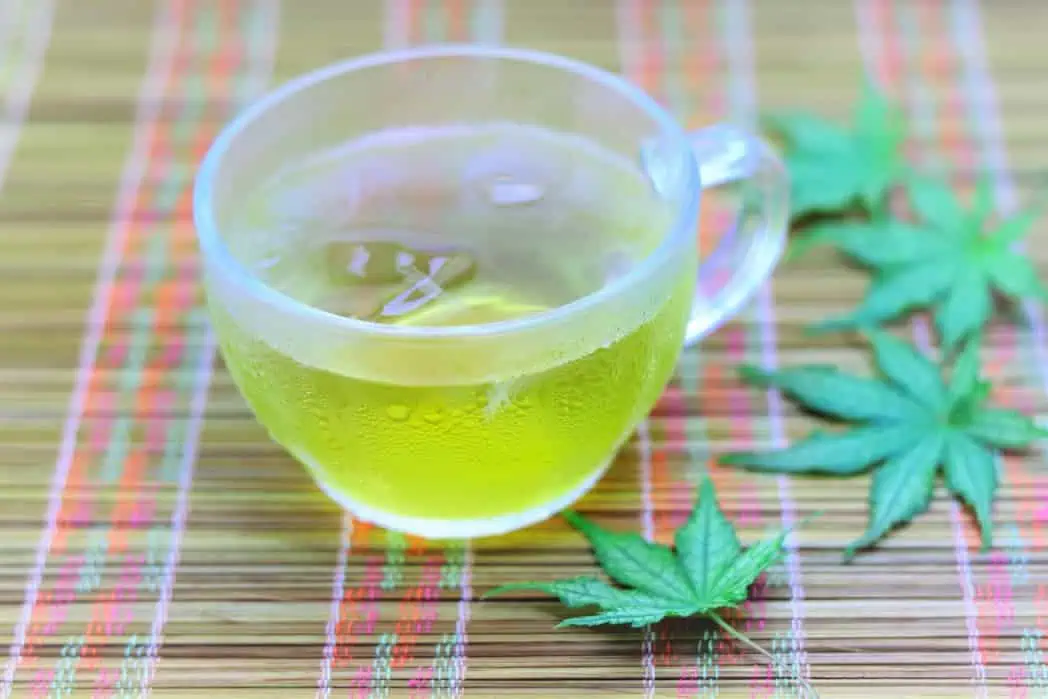
Chumushi Sencha (中蒸し煎茶) is a medium-steamed type of Japanese sencha green tea. It sits between Asamushi, lightly steamed sencha, and Fukamushi, deeply steamed sencha, offering a balanced cup with fresh aroma, gentle umami, moderate astringency, and a clear yellow-green liquor. The word chumushi means “medium steamed,” placing this tea between lightly steamed asamushi and deeply steamed fukamushi sencha.
Rather than emphasizing one extreme quality, Chumushi Sencha brings several elements together. Its leaves retain more shape and fragrance than deep-steamed tea, while the infusion generally has more body and softness than lightly steamed sencha. This balanced character makes it a useful starting point for anyone who wants to understand the classic taste of Japanese sencha.
Key Facts
| Tea type | Japanese sencha green tea |
| Processing style | Medium steamed |
| Japanese name | 中蒸し煎茶 |
| Typical steaming time | About 30–50 seconds |
| Flavor | Balanced, fresh, lightly sweet, umami-rich, mildly astringent |
| Liquor color | Clear yellow-green to bright green |
| Best brewing temperature | 75–80°C |
| Best for | Drinkers who want a balanced sencha between Asamushi and Fukamushi |
What Is Chumushi Sencha?
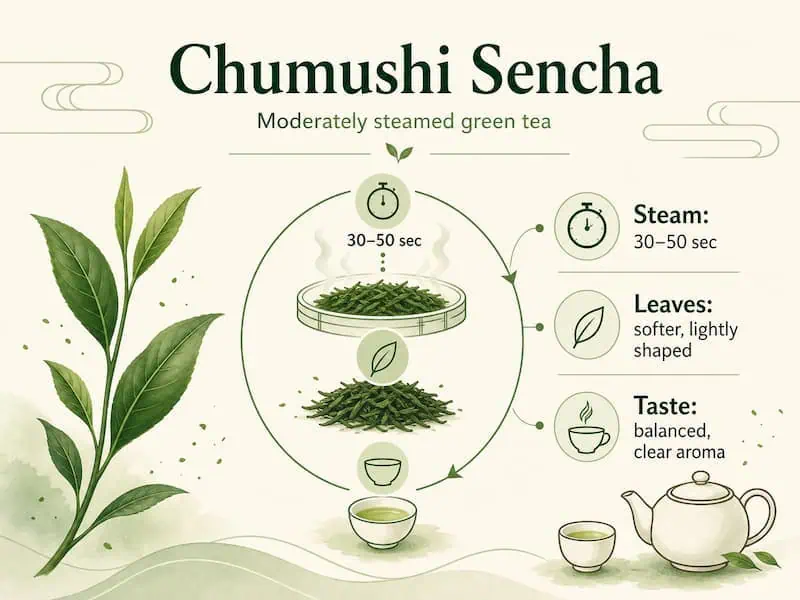
Chumushi Sencha is sencha made with a moderate steaming process. Freshly harvested tea leaves are exposed to steam soon after picking to stop oxidation. Producers then cool, roll, shape, and dry the leaves.
The exact boundary of “medium steamed” is not identical among all producers. It commonly refers to steaming for approximately 30 to 50 seconds, although the timing changes according to leaf thickness, harvest conditions, machinery, and the style a producer wants to create. Some sellers also group this tea with futsumushi, meaning normally or conventionally steamed sencha.
Therefore, this type of sencha should be understood as a position on a spectrum rather than a strictly standardized category. The producer steams the leaves enough to soften their structure, but not so deeply that they lose most of their shape and aromatic clarity.
Why Medium Steaming Matters
Steaming time affects the physical structure of tea leaves. A short steaming process keeps the leaves firm and intact, while prolonged steaming makes them softer and more likely to break during rolling. Chumushi processing aims for a middle point: the leaves become flexible enough for flavor to extract easily, but they still preserve much of their needle-like appearance.
This moderate treatment also influences the drinking experience. The infusion usually has more clarity than Fukamushi Sencha because fewer tiny leaf particles enter the cup. At the same time, it can feel rounder and fuller than very lightly steamed tea.
A producer may adjust steaming by only a few seconds to suit the harvested leaves. Thick or mature leaves may need more steaming, while delicate young shoots may need less. For this reason, the goal is not simply to reach a fixed number of seconds. It is to reveal the desired balance of aroma, umami, freshness, and astringency.
How Chumushi Sencha Is Made
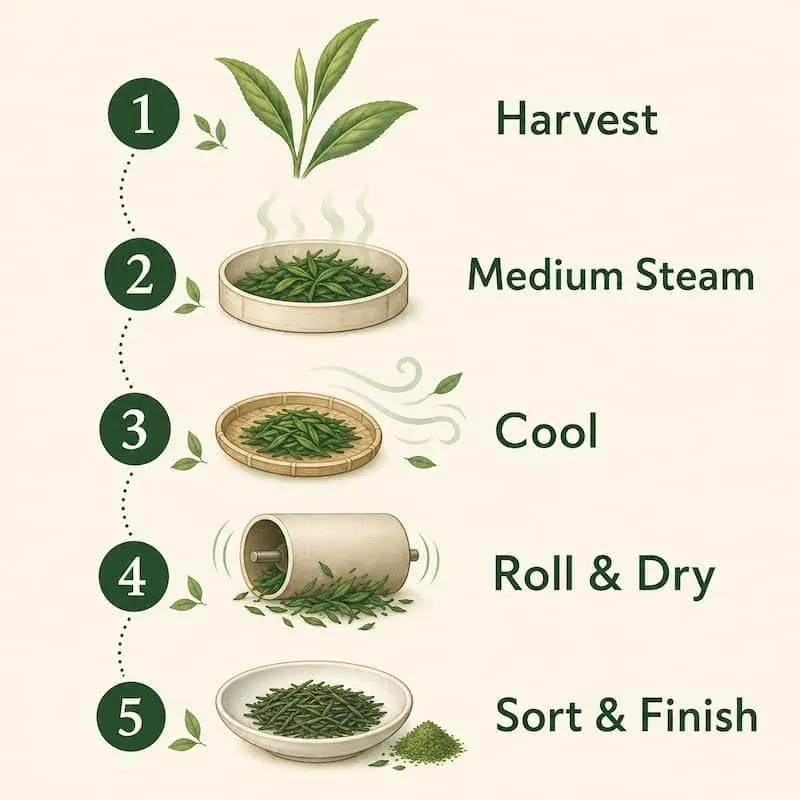
The general production method follows the standard process for steamed Japanese sencha. However, careful control during the steaming stage gives Chumushi Sencha its characteristic balance.
Farmers harvest the shoots when their size, softness, and maturity suit the intended tea. First-harvest leaves often produce a refined aroma and more noticeable sweetness, while later harvests can create a firmer and more refreshing everyday sencha.
The fresh leaves are steamed to stop oxidation. For Chumushi Sencha, the producer uses a moderate steaming period, often around 30 to 50 seconds, while judging the moisture, thickness, and condition of the leaves.
After steaming, the leaves are cooled quickly. This removes surface moisture, prevents residual heat from continuing to cook the leaves, and prepares them for rolling.
The leaves pass through several rolling and drying stages. Rolling distributes moisture, releases tea juices across the leaf surfaces, and gradually forms the narrow shape associated with sencha. Chumushi leaves normally remain more intact than deeply steamed leaves.
The resulting crude tea, or aracha, is sorted to remove excess stems, powder, and uneven pieces. Producers may blend different lots and apply a final firing to stabilize the tea and develop its aroma.
Flavor, Aroma, and Appearance
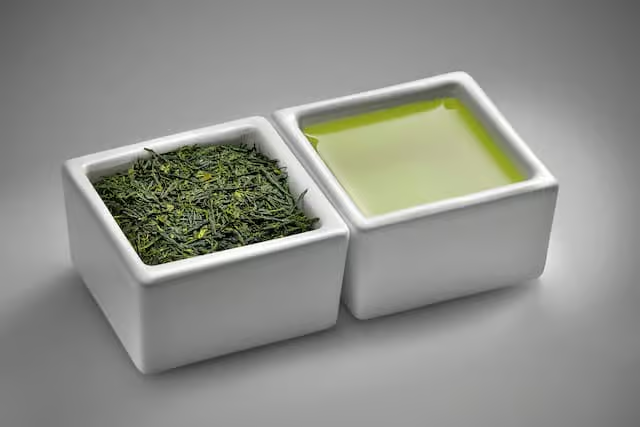
Chumushi Sencha is known for balance rather than heaviness. Its flavor often combines green freshness, mild sweetness, savory umami, and a clean but noticeable astringency. Depending on its cultivar and origin, the tea may suggest fresh herbs, young leaves, steamed vegetables, citrus peel, seaweed, sweet grass, or lightly toasted nuts.
The aroma is usually more noticeable than in heavily steamed tea. It may feel leafy, refreshing, floral, or slightly marine without becoming intensely grassy. A light final firing can also add a warm or gently roasted note.
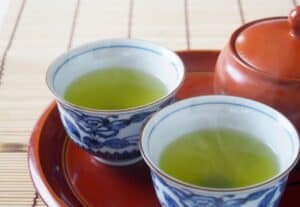
When brewed, the liquor is commonly clear yellow-green or bright green. It may contain a few small leaf particles, but it is generally more transparent than Fukamushi Sencha. The texture sits between the light precision of Asamushi and the dense body of deep-steamed tea.
Chumushi vs Asamushi vs Fukamushi Sencha
All three teas are steamed sencha. Their differences come mainly from the degree of steaming and how that treatment changes the leaves.
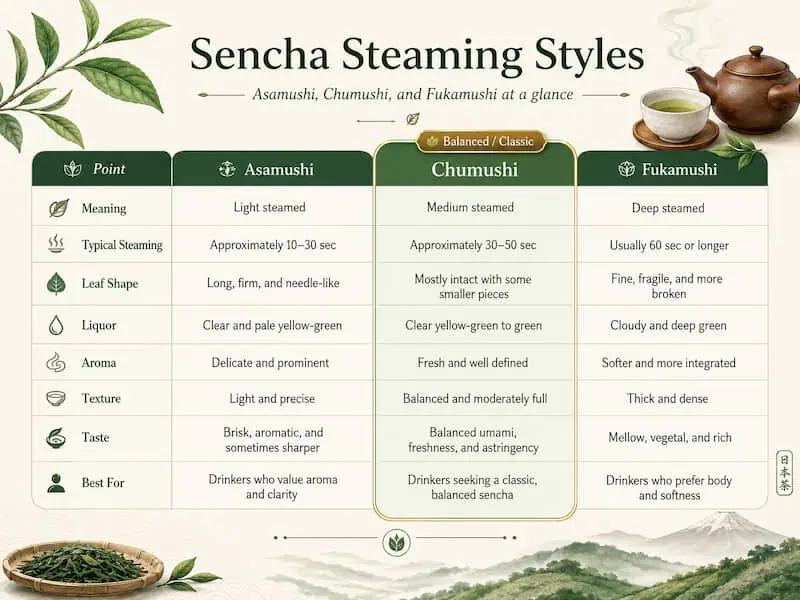
These ranges are practical guidelines rather than universal regulations. A tea sold as Chumushi by one producer may be close to what another producer calls normal-steamed or moderately deep-steamed sencha.
Where Chumushi Sencha Is Produced
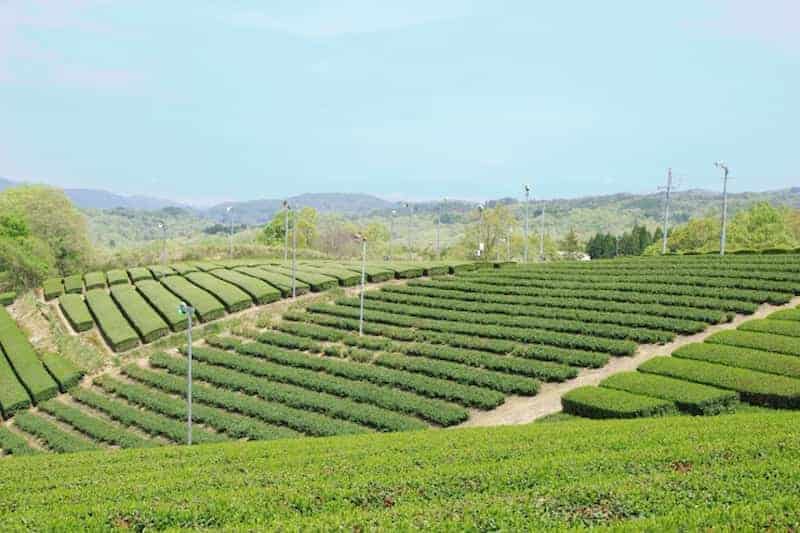
Chumushi Sencha is not connected to one exclusive geographical area. Because the term describes steaming intensity, tea makers can use the method in any region where sencha is produced.
It is especially useful when producers want to preserve the aroma and individual character of their leaves while creating more body than a lightly steamed tea would provide. Some Shizuoka growers, for example, use medium steaming to express leaves grown between mountainous and flatter tea-producing areas.
Shizuoka, Kagoshima, and Miyazaki are among Japan’s principal sencha-producing prefectures. However, medium-steamed products may also come from smaller tea regions. When choosing a tea, the cultivar, harvest, elevation, finishing method, and individual producer may reveal more about its flavor than the word Chumushi alone.
How to Brew Chumushi Sencha
Chumushi Sencha is forgiving, but it still benefits from controlled water temperature. A medium temperature brings out its umami without hiding the fresh aroma beneath excessive bitterness.
| Infusion | Tea Leaves | Water | Temperature | Time |
|---|---|---|---|---|
| First | 5g | 180–200ml | 75–80°C | 45–60 sec |
| Second | Same leaves | 180–200ml | 80–85°C | 10–15 sec |
| Third | Same leaves | 180–200ml | 85–90°C | 20–30 sec |
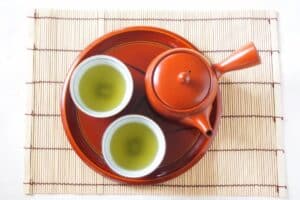
Place the leaves in a kyusu or small teapot. Cool freshly boiled water to the desired temperature, pour it over the leaves, and wait until they begin to open. Pour the tea evenly between cups and empty the teapot completely. Leaving water inside allows the leaves to continue extracting and may make the following infusion too strong.
A medium-mesh filter is usually suitable. The leaves are more intact than Fukamushi leaves, so an extremely fine filter is not always necessary. However, avoid a very coarse filter if the tea contains many small pieces.
For a sweeter and more umami-forward cup, lower the water temperature to around 70°C and extend the infusion slightly. To emphasize aroma and briskness, use water closer to 85°C and shorten the brewing time. Official Japanese brewing guides generally recommend approximately 70–80°C and 30 seconds to one minute for balancing sencha’s umami and astringency.
Cold Brew Method
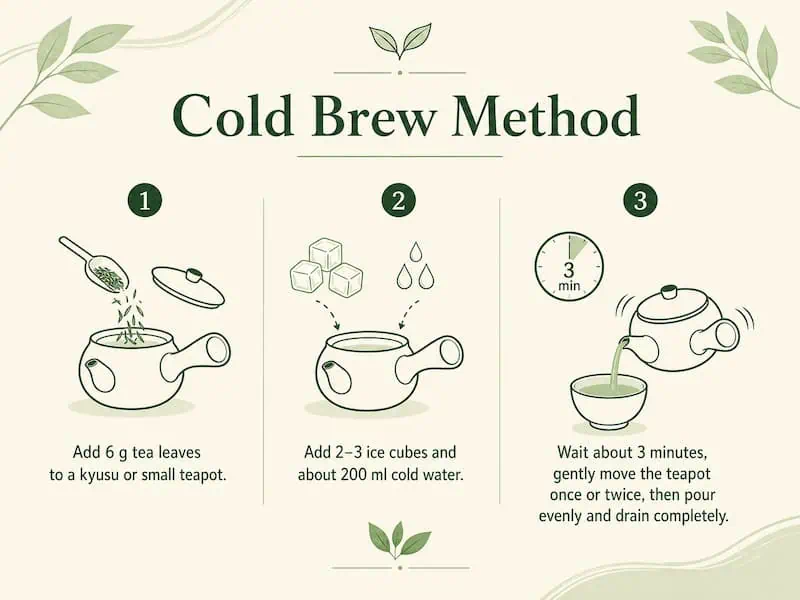
Cold water highlights the softer side of Chumushi Sencha. It reduces the impression of bitterness while preserving the tea’s fresh aroma and gentle savory taste.
- Add 6g of tea leaves to a kyusu or small teapot.
- Add two or three ice cubes and approximately 200ml of cold water.
- Wait about three minutes, gently moving the teapot once or twice.
- Pour evenly and drain the teapot completely.
For a refrigerator bottle, use approximately 8–10g of leaves for 750ml of water. Taste the tea after one to three hours and strain it when the strength feels right. Larger, more intact Chumushi leaves may need slightly more time than finely broken Fukamushi leaves.
Cold brewing with ice and water can suppress astringency and emphasize umami. A standard Japanese cold-brew guide uses 6g of leaves, 200ml of water, and a three-minute extraction in a teapot.
How to Choose Good Chumushi Sencha
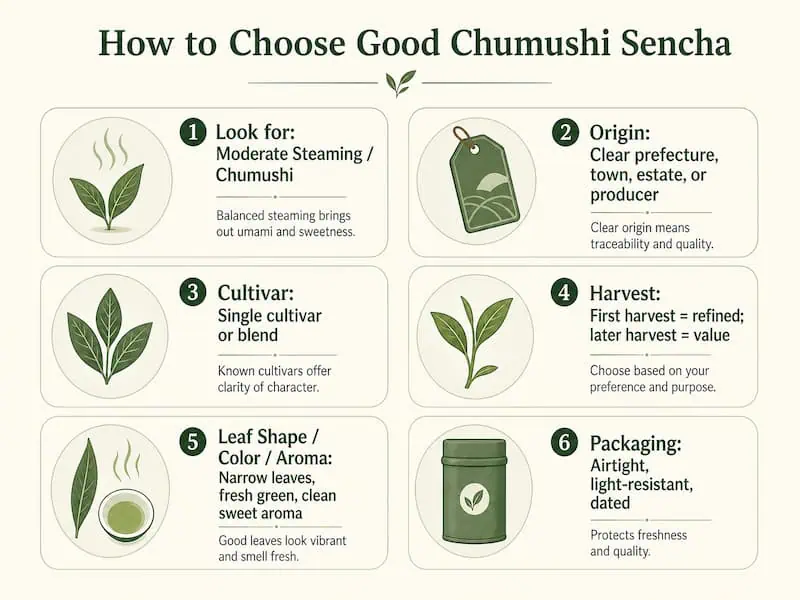
When buying Chumushi Sencha, check more than the name. Since “Chumushi” describes steaming level rather than cultivar or region, the final taste depends on several factors.
Look for:
- Harvest season: First-harvest tea usually has more sweetness and umami.
- Cultivar: Yabukita often gives a classic balanced flavor, while Saemidori may taste sweeter and greener.
- Origin: Shizuoka, Kagoshima, Miyazaki, and other tea regions can produce different styles.
- Leaf appearance: Good sencha usually has a fresh green color, clean aroma, and relatively even leaf shape.
- Packaging: Choose airtight, light-resistant packaging and check the packing date when available.
Food Pairings
The balanced character of Chumushi Sencha makes it one of the most versatile Japanese teas for food. Its astringency refreshes the mouth, its umami complements savory ingredients, and its aroma remains clear enough to accompany delicate dishes.
Try it with grilled fish, onigiri, tamagoyaki, soba, tofu, sushi, steamed vegetables, or lightly seasoned chicken. It also works well with moderately rich foods because the clean finish prevents the pairing from feeling heavy.
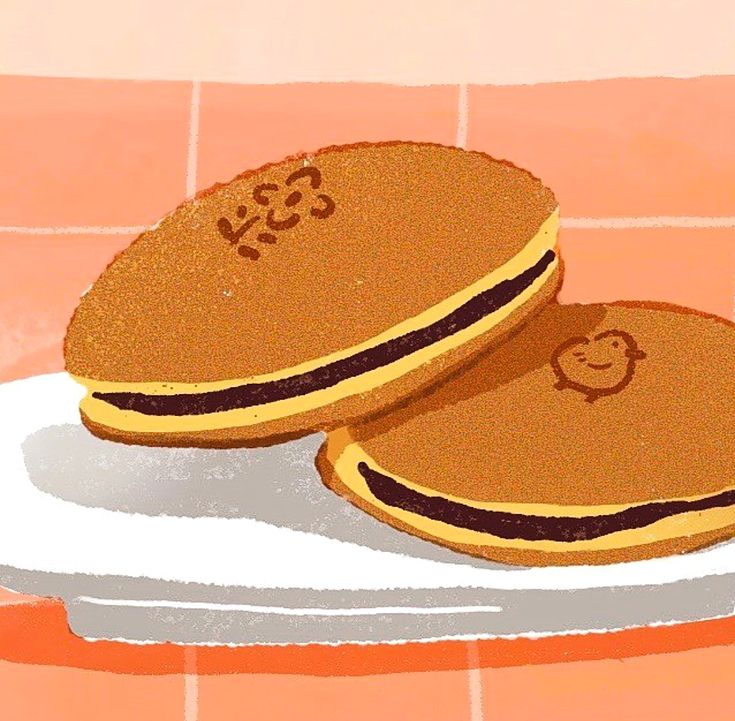
For sweets, pair it with dorayaki, yokan, monaka, mochi, castella, or lightly sweetened biscuits. The tea’s mild bitterness balances sugar, while its fresh aroma keeps the combination lively.
How to Store It
Chumushi Sencha is sensitive to oxygen, heat, moisture, light, and surrounding odors. Poor storage can flatten its aroma and change the fresh green color of the leaves.
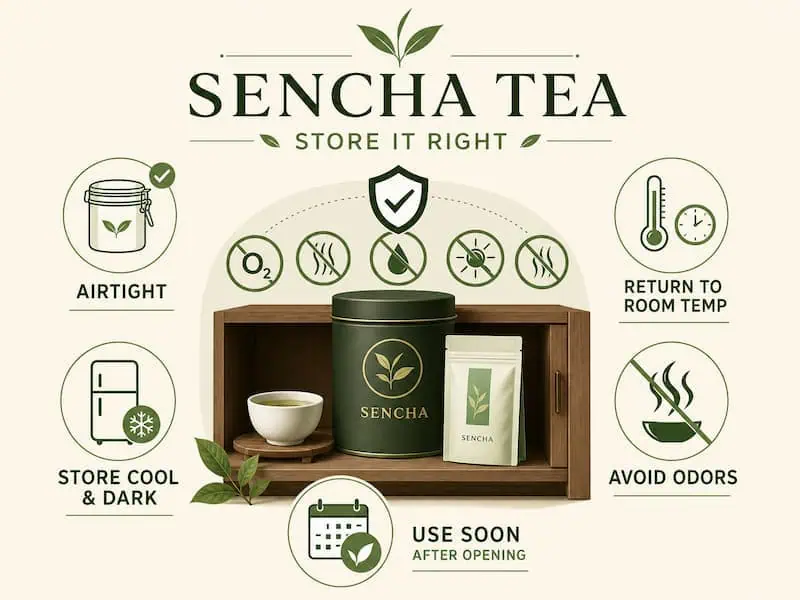
- Store unopened packages in a cool, dark place or refrigerator.
- Let refrigerated tea return to room temperature before opening it to prevent condensation.
- After opening, press excess air from the package and seal it tightly.
- Keep opened tea in a dark cupboard rather than repeatedly moving it in and out of the refrigerator.
- Keep it away from coffee, spices, perfume, and other strongly scented products.
- For the freshest aroma, purchase small packages and use opened tea within approximately one month.
Tea absorbs moisture and odors easily, while oxygen, light, and high temperatures gradually damage its color and flavor. Japanese storage guidance therefore recommends airtight, light-resistant storage and buying quantities that can be consumed relatively quickly.
Final Thoughts
Chumushi Sencha represents the middle ground of steamed sencha. Its moderate processing preserves a clear aroma and recognizable leaf shape while adding enough softness and body to create a satisfying cup.
It is especially suitable for drinkers who find Asamushi too delicate or sharp but consider Fukamushi too thick or vegetal. Begin with water at 75–80°C, brew for around 45–60 seconds, and then adjust the temperature and time according to the tea in front of you.
More than a compromise between two styles, a well-made Chumushi Sencha shows how careful steaming can bring aroma, umami, astringency, and texture into harmony.
To explore more Japanese tea culture, read these related guides:
.jpg)
Chumushi Sencha FAQ
What is Chumushi Sencha?
Chumushi Sencha is medium-steamed sencha. It generally offers a balance of fresh aroma, umami, moderate astringency, and a clean but satisfying body.
How long is Chumushi Sencha steamed?
It is commonly steamed for approximately 30 to 50 seconds. However, there is no single timing used by every producer, and some products overlap with the category of normally steamed sencha.
Is Chumushi the same as Futsumushi?
Sometimes. Both terms can describe tea near the conventional middle range of steaming. Individual producers may distinguish them, use them interchangeably, or avoid the term Chumushi entirely.
What does Chumushi Sencha taste like?
It usually tastes fresh, balanced, mildly sweet, savory, and pleasantly astringent. Its flavor is generally lighter and clearer than Fukamushi but fuller than very lightly steamed sencha.
What color is Chumushi Sencha?
The brewed tea is normally clear yellow-green or bright green. It may contain a small amount of leaf sediment, but it is usually less cloudy than Fukamushi Sencha.
How should you brew Chumushi Sencha?
Start with 5g of leaves, 180–200ml of water at 75–80°C, and an infusion of approximately 45–60 seconds. Use shorter infusions for the second and third cups.
Can Chumushi Sencha be cold brewed?
Yes. Cold brewing emphasizes its gentle sweetness and umami while reducing the impression of bitterness and astringency.
Does Chumushi Sencha contain caffeine?
Yes. Like other sencha, it naturally contains caffeine. The amount in a cup varies according to the leaves, harvest, quantity, water temperature, and brewing time.
Is Chumushi Sencha suitable for beginners?
Yes. Its balanced flavor makes it a useful introduction to Japanese leaf tea, especially for people who want more aroma than Fukamushi and more body than Asamushi.
Who Should Try Chumushi Sencha?
This type of sencha is suitable for people who want a balanced Japanese green tea. It is a good choice if Asamushi feels too sharp or delicate, but Fukamushi feels too thick, cloudy, or vegetal. Beginners may also find it easier to enjoy because it offers aroma, umami, and freshness without leaning too strongly in one direction.
References
- Ministry of Agriculture, Forestry and Fisheries of Japan (MAFF), on Japanese green tea types, steaming categories, sencha production, and standard brewing temperatures.
- Shizuoka Prefectural Government, guidance on brewing sencha and deep-steamed tea, including water temperature and infusion time.
- Ocha Encyclopedia by ITO EN, guidance on brewing sencha, preparing cold-brewed green tea, and storing Japanese tea.
- Senchado Tokyo, Dictionary of Tea Terminology, on approximate steaming ranges for Asamushi, Chumushi, and Fukamushi tea.
-300x200.jpg "Sencha(煎茶)")



Comments