




Most people who are new to Japanese sake face the same problem. There are too many categories, too many unfamiliar terms, and very little guidance on where to start. Honjozo sake is, for many people, exactly the right answer to that problem.
It’s smooth. It’s affordable. And it’s genuinely easy to enjoy, even if you’ve never tasted Japanese sake before.
So what is honjozo sake, exactly? And why does it deserve more attention than it usually gets?
What Is Honjozo Sake?
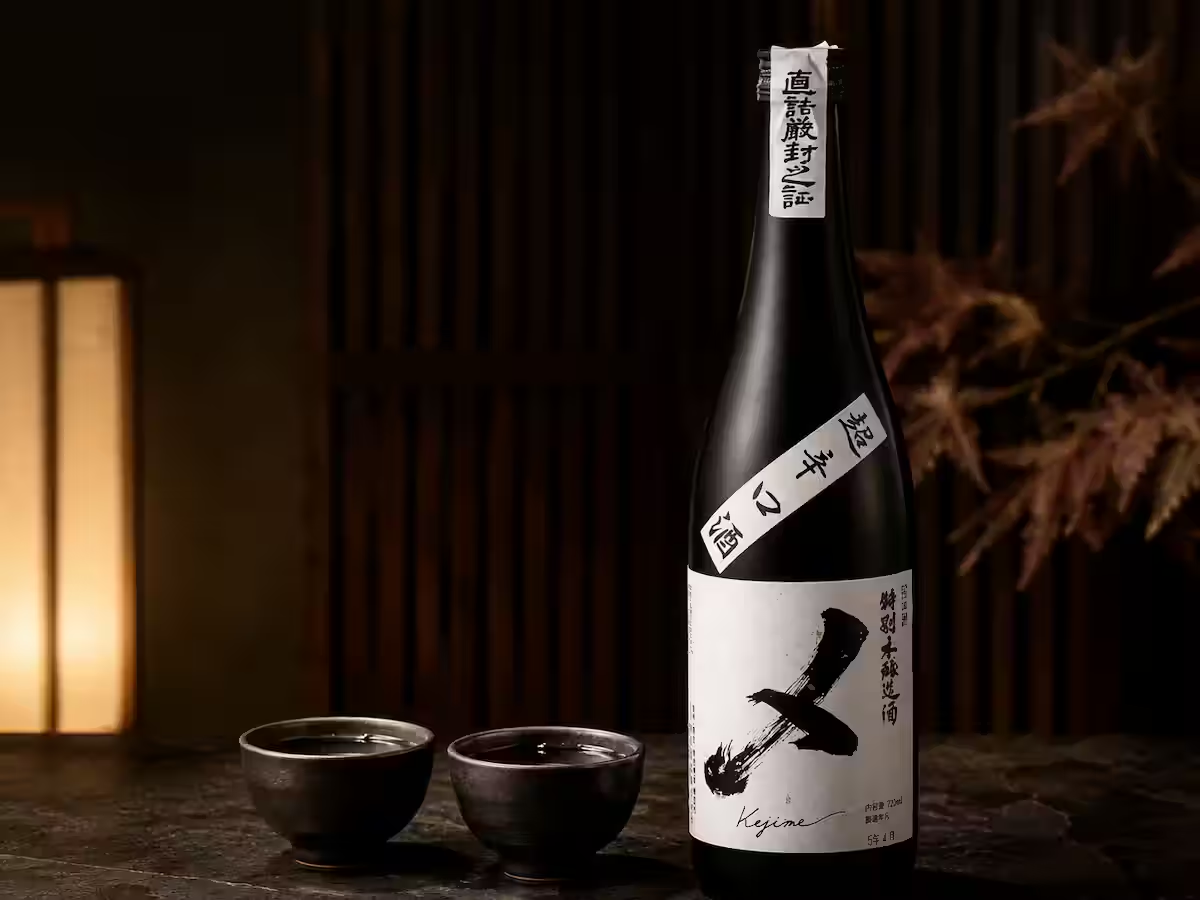
Honjozo (本醸造酒) is a legally defined category of Japanese rice wine. To qualify as honjozo, the sake must meet three main requirements under Japan’s National Tax Agency standards.
First, the brewer must polish the rice to at least 70% of its original size. That means removing 30% or more of the outer grain. Second, the ingredients are limited to rice, rice koji (the mold that converts starches to sugars), water, and a small addition of brewer’s alcohol, known as jozo alcohol. Third, the amount of added alcohol is capped at 10% or less of the total weight of rice used in brewing.
That last point surprises people. Adding alcohol to sake sounds like a shortcut, or worse, a sign of lower quality. In reality, it’s the opposite. A small addition of distilled alcohol at the right moment in fermentation pulls out aromatic compounds from the mash. The result is a sake that’s lighter, crisper, and more aromatic than it would be without it.
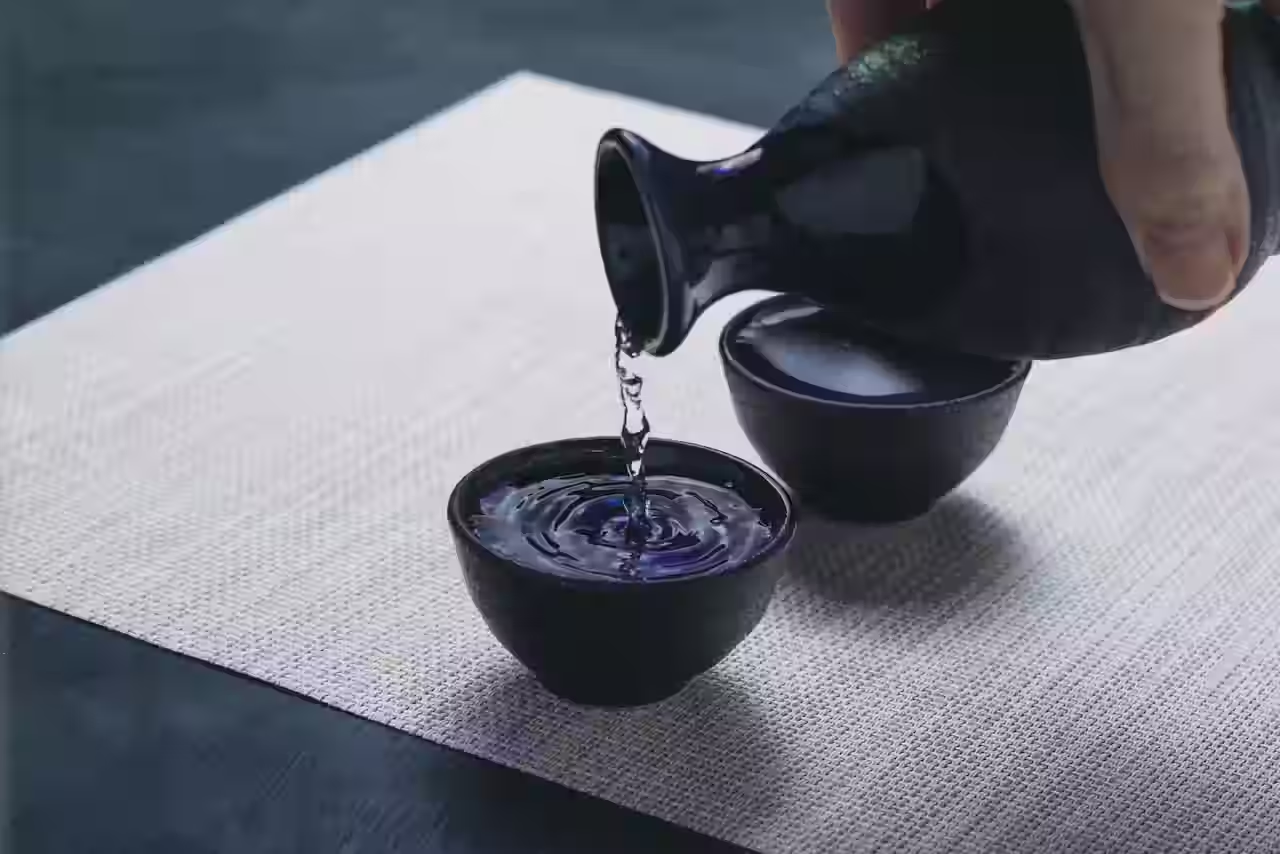
In other words, honjozo sake is a smooth, easy-drinking Japanese rice wine that uses added distilled alcohol to make it cleaner and more refreshing. It’s less heavy than junmai sake but more flavorful than basic table sake.
Honjozo vs Other Sake Categories: A Quick Comparison
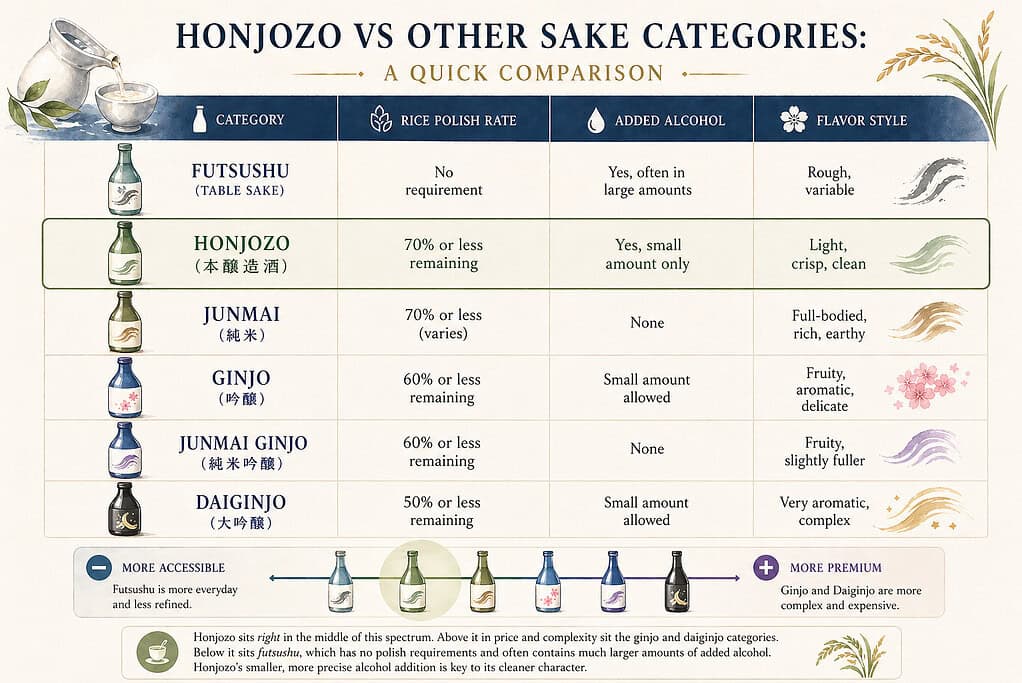
Understanding where honjozo fits helps clarify what makes it special.
| Category | Rice Polish Rate | Added Alcohol | Flavor Style |
|---|---|---|---|
| Futsushu (table sake) | No requirement | Yes, often in large amounts | Rough, variable |
| Honjozo (本醸造酒) | 70% or less remaining | Yes, small amount only | Light, crisp, clean |
| Junmai (純米) | 70% or less (varies) | None | Full-bodied, rich, earthy |
| Ginjo (吟醸) | 60% or less remaining | Small amount allowed | Fruity, aromatic, delicate |
| Junmai Ginjo | 60% or less remaining | None | Fruity, slightly fuller |
| Daiginjo (大吟醸) | 50% or less remaining | Small amount allowed | Very aromatic, complex |
Honjozo sits right in the middle of this spectrum. Above it in price and complexity sit the ginjo and daiginjo categories. Below it sits futsushu, which has no polish requirements and often contains much larger amounts of added alcohol. Honjozo’s smaller, more precise alcohol addition is key to its cleaner character.
What Does Honjozo Sake Taste Like?
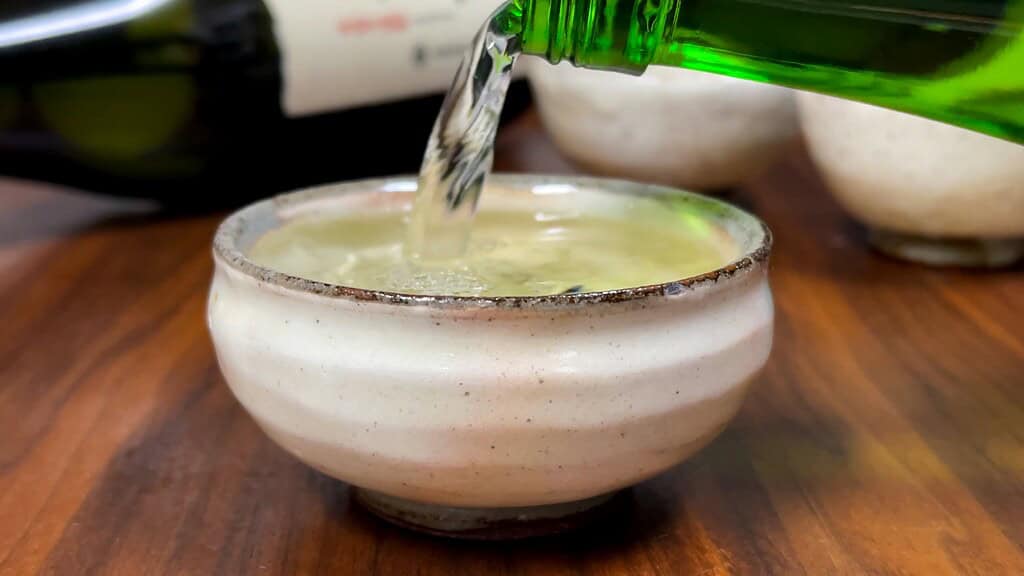
Honjozo has a flavor profile that’s easier to describe than most. Clean is usually the first word people reach for.
It’s dry more often than sweet. The finish tends to be short and refreshing rather than lingering. There’s a lightness to it that works particularly well chilled or at room temperature. Some honjozo also warm beautifully, developing a rounder, slightly richer character when gently heated to around 45°C (113°F).
Is it fruity? Occasionally, but not as consistently as ginjo. Is it rich and earthy? Not typically. Honjozo sits in a pleasantly neutral range that makes it extremely food-friendly. It doesn’t compete with whatever you’re eating. Instead, it complements.
For anyone who finds junmai sake too full-bodied or too chewy, honjozo is worth trying first. For people who find ginjo sake too floral or aromatic, honjozo again offers a comfortable middle ground.
Honjozo and Food: What to Pair It With
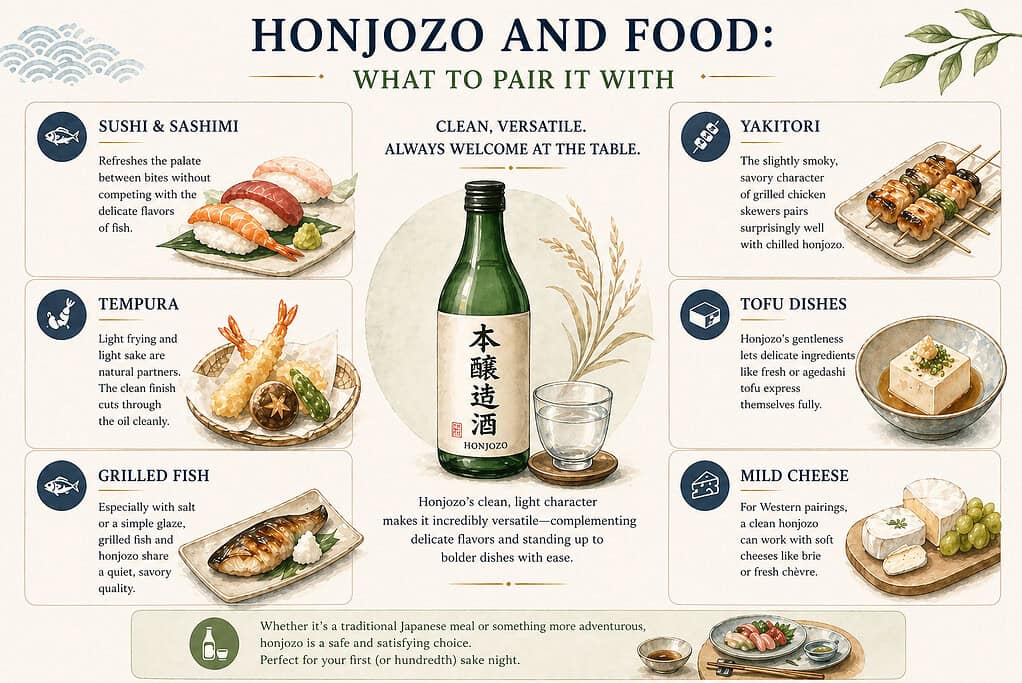
This is where honjozo really earns its place at the table.
Because honjozo is clean and relatively light, it works across a wide range of Japanese dishes without overwhelming them. It also holds up well alongside more robust flavors, which makes it unusually versatile.
Reliable pairings include:
- Sushi and sashimi: Honjozo’s crispness refreshes the palate between bites without competing with fish flavors.
- Tempura: Light frying and light sake are natural partners. The clean finish cuts through the oil cleanly.
- Grilled fish: Especially when served with salt or a simple glaze, grilled fish and honjozo share a quiet, savory quality.
- Yakitori: The slightly smoky, savory character of grilled chicken skewers pairs surprisingly well with a chilled honjozo.
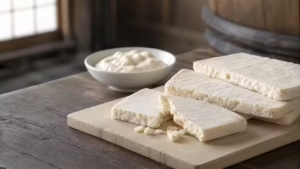
- Tofu dishes: Honjozo’s gentleness lets delicate ingredients like fresh or agedashi tofu express themselves fully.
- Mild cheese: For Western pairings, a clean honjozo can work with soft cheeses like brie or fresh chèvre.
If you’re sitting down to your first serious sushi night and wondering which sake to order, honjozo is a genuinely safe and satisfying choice.
The History of Honjozo Sake
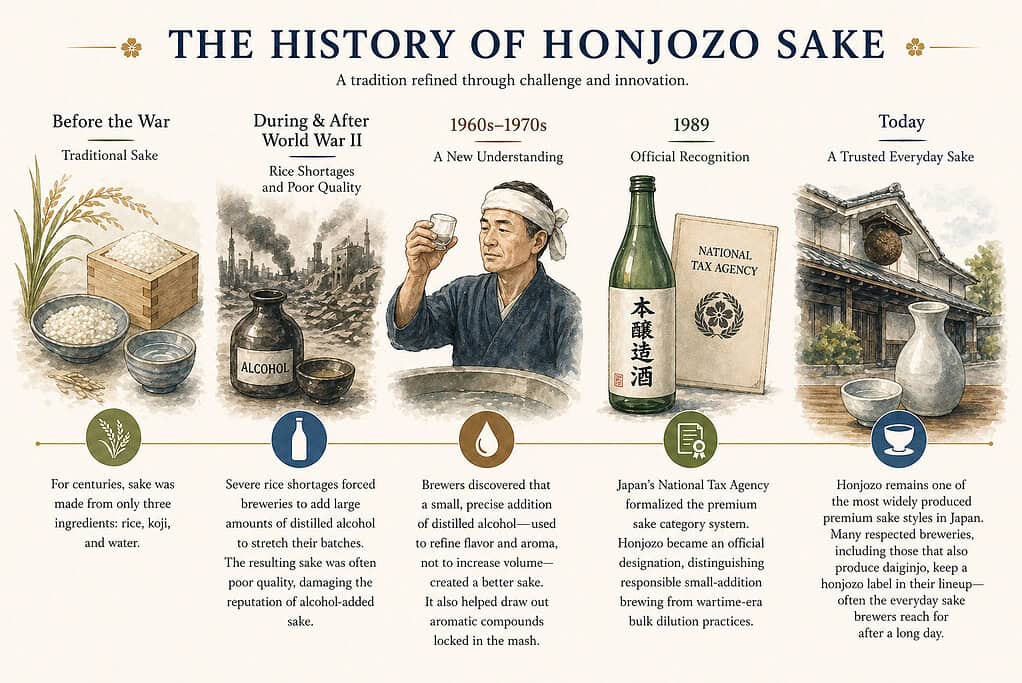
The story behind honjozo is closely tied to one of the more controversial chapters in Japanese sake history.
For centuries, sake in Japan was made from only three ingredients: rice, koji, and water. That was the tradition. Then, during and after World War II, severe rice shortages forced breweries to stretch their batches by adding large amounts of distilled alcohol. The resulting sake was often poor quality, and the practice left a bad reputation for alcohol-added sake that lingered long after the war ended.
By the 1960s and 1970s, however, a more nuanced conversation had begun. Brewers recognized that a small, carefully calibrated addition of distilled alcohol, used not to inflate volume but to refine flavor and aroma, produced a genuinely better product in certain styles. Moreover, the technique allowed brewers to draw out volatile aromatic compounds that would otherwise remain locked in the fermentation mash.
In 1989, Japan’s National Tax Agency formalized the premium sake category system. Honjozo became an official designation, clearly distinguishing responsible small-addition brewing from the wartime-era bulk dilution practices. From that point forward, consumers had a clearer framework for understanding what they were buying.
Today, honjozo remains one of the most widely produced premium sake styles in Japan. Many respected breweries, including those that also produce daiginjo, maintain a honjozo label in their lineup. It’s often the everyday drinking sake at a brewery, the bottle that brewers themselves reach for after a long day.
Why Honjozo Is a Smart Starting Point
For Americans discovering Japanese sake for the first time, honjozo serves as an excellent gateway. It costs less than ginjo or daiginjo. It’s widely available at Japanese restaurants and specialty retailers across the United States. And its clean, approachable flavor profile doesn’t require any prior sake experience to appreciate.
You might find that after a few bottles of honjozo, you’re curious to compare it with a junmai from the same brewery. Or perhaps a ginjo starts sounding interesting. That progression is exactly what makes honjozo valuable: it opens the door without making you feel overwhelmed.
If you want to explore Japanese sake culture more broadly, or learn about other regional food traditions across Japan, honjozo is as good a starting point as any. It’s honest, it’s affordable, and it tastes genuinely good.
That, in the end, is the best argument for it.
References
- Japan Sake and Shochu Makers Association, “Sake Classification” (2023): https://www.japansake.or.jp/sake/english/know/classification.html
- Sake World (John Gauntner), “Honjozo: Japan’s Most Accessible Premium Sake” (2019): https://sake-world.com/html/flash/honjozo.html






Comments