





Taiwan mazesoba is Nagoya’s spicy soup-less ramen, not a Taiwanese dish. This guide explains its origin, toppings, taste, eating style, and how it differs from ramen, abura soba, and Taiwan ramen. At first glance, the name can feel confusing. It sounds Taiwanese, looks close to ramen, and includes the word soba. Yet this bold noodle bowl was born in Nagoya, Aichi Prefecture, and it now stands as one of the city’s most exciting modern foods.
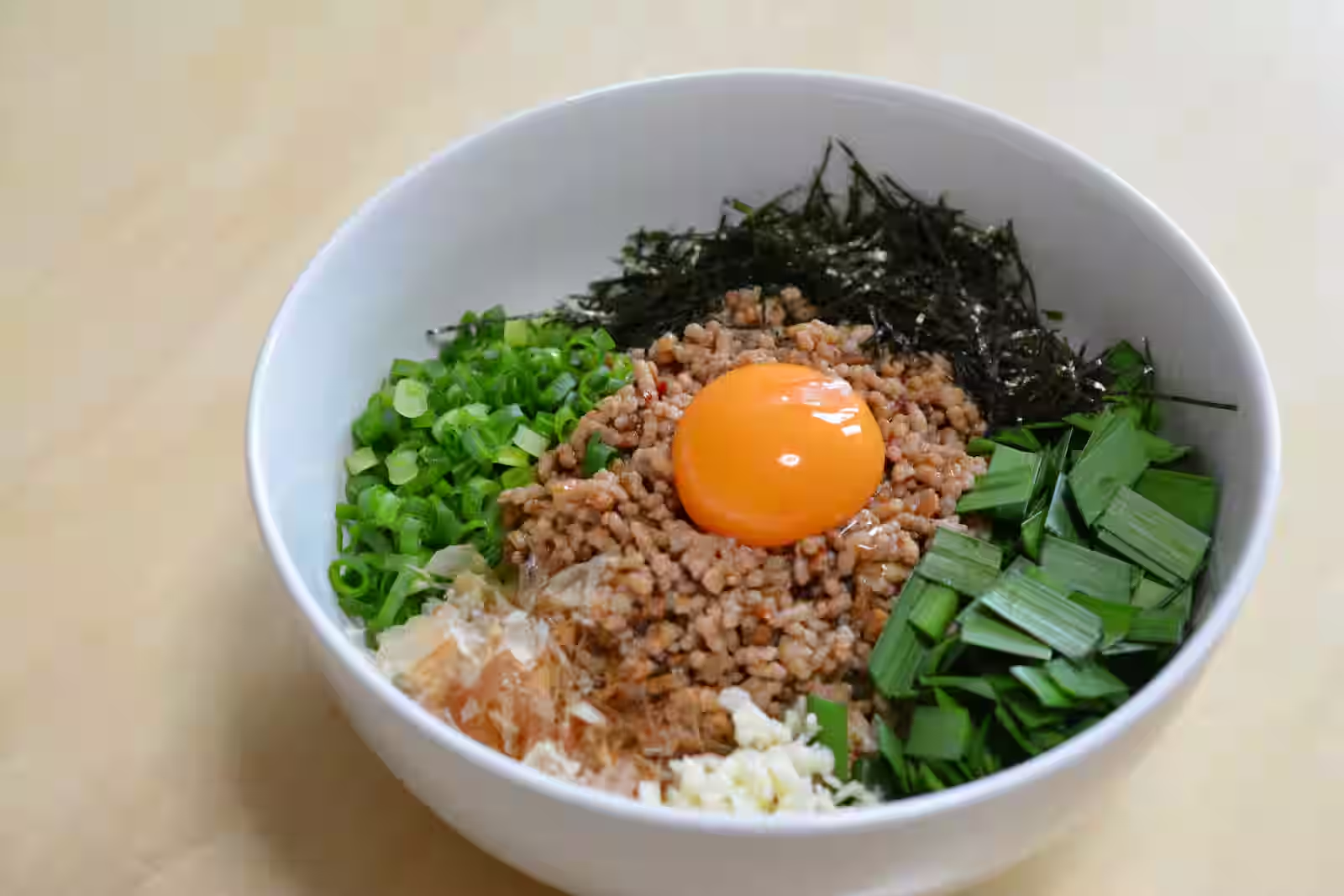
The structure is simple, but the flavor is not. Thick wheat noodles sit under spicy minced pork, egg yolk, garlic chives, scallions, fish powder, nori, and often fresh garlic. Then everything gets mixed until the sauce coats every strand. Unlike regular ramen, there is no soup to soften the impact. Instead, pork, chili, garlic, soy sauce, fish powder, and egg yolk form a rich coating that tastes spicy, savory, sticky, and deeply satisfying.
Quick Facts About Taiwan Mazesoba
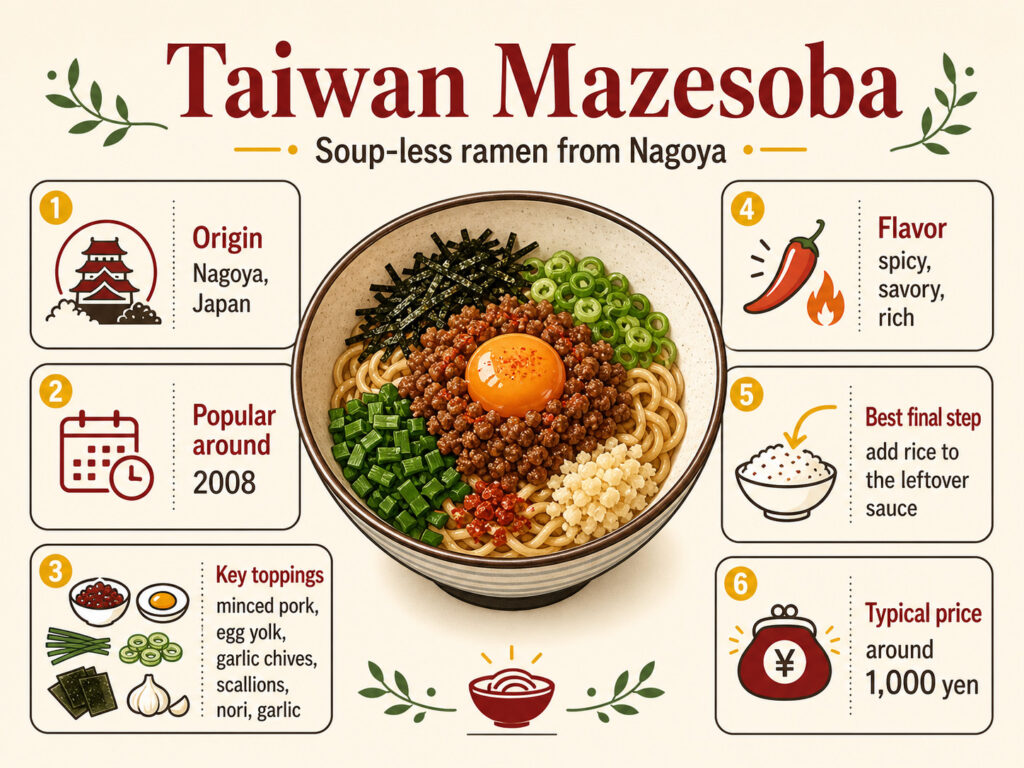
| Japanese Name | 台湾まぜそば |
| Romanized Name | Taiwan mazesoba |
| Common English Names | Taiwanese mazesoba, Nagoya mazesoba, mazemen |
| Food Type | Soup-less ramen and Japanese mixed noodles |
| Origin | Nagoya, Aichi Prefecture, Japan |
| Known Birthplace | Menya Hanabi |
| Popularized Around | 2008 |
| Main Toppings | Spicy minced pork, egg yolk, garlic chives, scallions, fish powder, nori, garlic |
| Best Final Step | Add small rice to the leftover sauce |
| Typical Price | Often around the lower 1,000 yen range, depending on shop and toppings |
This Japanese noodle dish has a clear Nagoya identity. Although the name includes “Taiwan,” it does not come from Taiwan. The word refers to spicy minced pork related to Nagoya’s Taiwan ramen. In Japanese, “maze” means to mix, so mazesoba means mixed noodles. In the United States and other countries, some shops use the word mazemen for similar brothless noodle bowls.
What Is Taiwan Mazesoba? Nagoya Soup-less Ramen
Taiwan mazesoba is a Nagoya-style soup-less ramen made with thick noodles, spicy minced pork, raw aromatics, fish powder, and egg yolk. It is one of the best-known forms of mazesoba, or Japanese mixed noodles. The dish does not rely on broth. Instead, its flavor comes from tare, pork fat, chili, garlic, and toppings. Because of that, each bite feels concentrated, and a small amount of sauce can taste stronger than a full bowl of ramen soup.
A classic bowl usually places spicy minced pork in the center. Around it sit chopped garlic chives, scallions, nori, fish powder, and fresh garlic. A bright egg yolk often waits on top, ready to be broken. Before eating, you mix everything from the bottom. This step matters because the real pleasure comes when noodles carry spice, fat, umami, egg, and herbs together. In one sentence, this is Japanese dry ramen with minced pork, born in Nagoya, finished by mixing thick noodles with spicy toppings and egg yolk.
Is This Nagoya Noodle Dish From Taiwan or Japan?
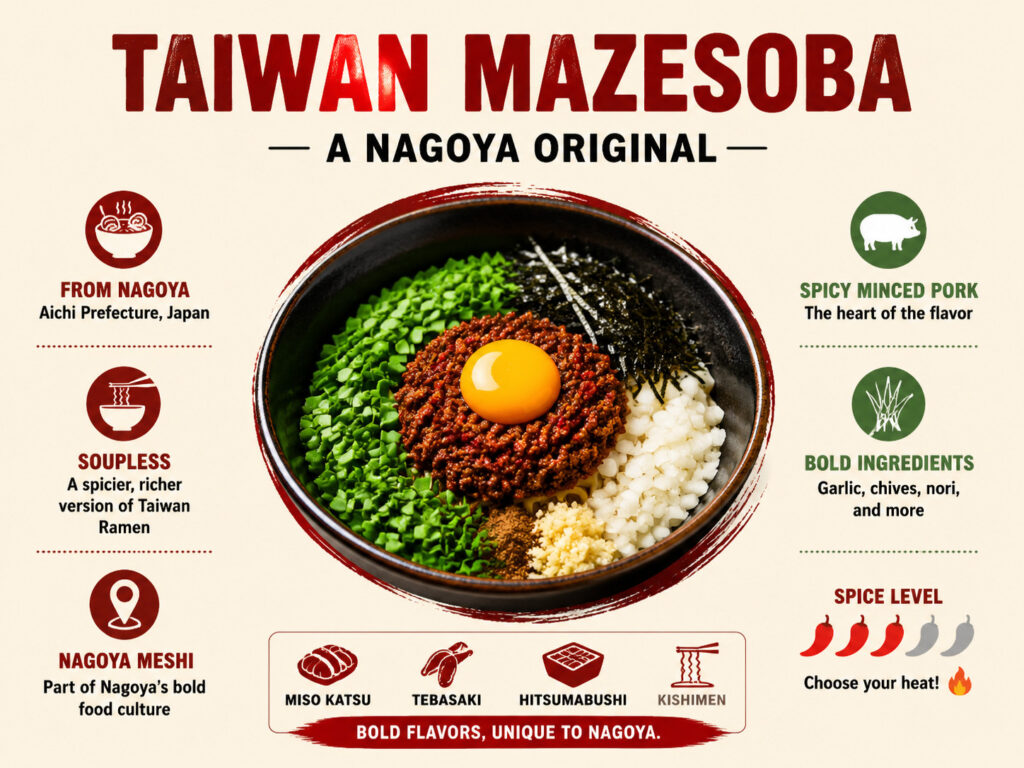
The dish is from Japan. More specifically, it comes from Nagoya in Aichi Prefecture. The “Taiwan” in the name points to the spicy minced pork style linked to Nagoya’s Taiwan Ramen. This point is easy to misunderstand. Some readers expect Taiwanese dry noodles or a dish imported from Taiwan. However, this bowl grew from Nagoya’s local ramen culture and belongs to Nagoya meshi, the city’s bold regional food tradition.
The connection with Taiwan ramen is important. Taiwan ramen is a spicy Nagoya noodle soup with minced meat, chili, and garlic. This newer mixed-noodle style took that pork idea and removed the soup. As a result, the flavor became thicker and more direct. Nagoya food often has a strong personality, and dishes like miso katsu, tebasaki, hitsumabushi, and kishimen show the city’s love for rich, memorable flavors. This spicy noodle bowl fits that pattern well, even though it is much younger than many local classics.
The History of Nagoya Mazesoba and Menya Hanabi
The modern history of this dish is closely tied to Menya Hanabi. The shop is widely known as its birthplace. Around 2008, owner Naoto Niiyama was developing a menu using spicy minced pork inspired by Taiwan ramen. According to the well-known origin story, the pork topping did not match the soup he had planned. It was almost discarded. Then a staff member suggested serving it on noodles without soup. That simple idea became the start of Menya Hanabi’s signature bowl.
The story feels believable because many local foods begin with practical decisions. In this case, the problem was balance. The pork was too strong for one soup, but it worked beautifully on dry noodles. From there, the Nagoya-style version spread through ramen fans, media coverage, branch shops, and similar restaurants. It later moved beyond Nagoya and appeared in Tokyo, other Japanese cities, and overseas markets. Even today, the bowl keeps its hometown image because that clear origin separates it from general mazemen or other soup-less ramen styles.
What Makes This Soup-less Ramen Taste Different?
This dish tastes different because it concentrates flavor without broth. The spicy minced pork gives heat and richness. Garlic adds a sharp aroma. Soy-based sauce brings salt and depth. Fish powder adds a dried seafood note. The fish powder is easy to overlook, but it matters. In ramen, broth carries body and umami. In this bowl, dry fish powder does part of that work. It clings to the noodles and gives a deep savory finish.
Garlic chives add another layer. They taste sharper than ordinary green onions. Because the dish is oily and rich, that raw green bite helps keep the bowl lively. Then the egg yolk changes everything. Once mixed into thick noodles, it becomes glossy and smooth. The yolk softens the chili, rounds the garlic, and helps the sauce grip every strand. The flavor is not delicate, but that is part of its charm. A good bowl feels like comfort food with an edge.
Classic Toppings for Japanese Mixed Noodles
The toppings are not just decoration. They create the whole flavor structure. The most important ones are chives, scallions, fish powder, garlic, spicy pork, nori, and egg yolk. Each topping has a job, and the dish feels weaker when too many are missing.
- Thick wheat noodles: chewy noodles that hold sauce well.
- Taiwan minchi: spicy minced pork seasoned with chili, garlic, and soy sauce.
- Egg yolk: a rich binder that makes the noodles glossy.
- Garlic chives: raw green flavor with a strong aroma.
- Scallions: freshness, crunch, and a familiar ramen note.
- Fish powder: dried seafood depth, often from bonito or sardine.
- Nori: seaweed aroma and a light bitter edge.
- Fresh garlic: optional in some shops, but loved by many fans.
Some shops add cheese, mayonnaise, curry powder, extra egg, or butter. These versions can be fun, especially if you enjoy heavier flavors. However, the classic style needs no heavy decoration. Spicy pork, egg, chives, fish powder, and garlic already create enough movement.
Mazesoba vs Abura Soba, Mazemen, and Taiwan Ramen
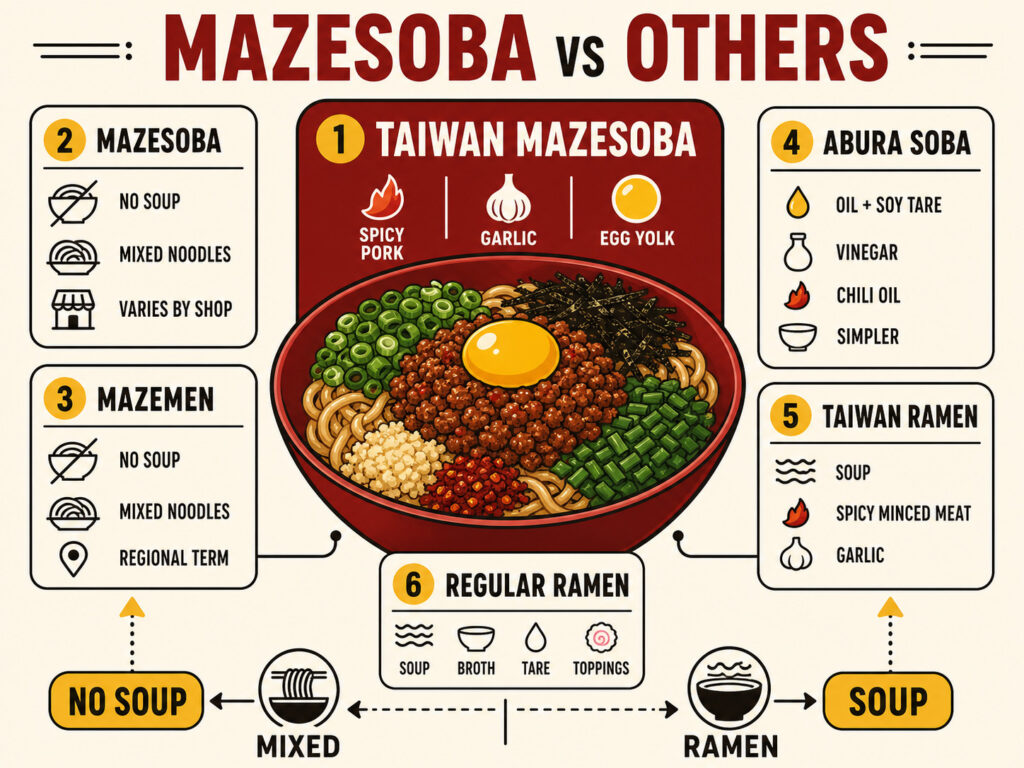
This Nagoya bowl sits near several Japanese noodle dishes. It overlaps with mazesoba, mazemen, abura soba, Taiwan ramen, and regular ramen. Still, each one offers a different experience, and the differences are easier to understand when compared side by side.
| Dish | Soup | Main Flavor | Key Difference |
|---|---|---|---|
| Taiwan mazesoba | No | Spicy pork, garlic, fish powder, egg yolk | Nagoya-style soup-less ramen with Taiwan minchi |
| Mazesoba | No | Varies by shop | General category of Japanese mixed noodles |
| Mazemen | No | Varies by region | Another term for mixed noodles, common overseas |
| Abura soba | No | Oil, soy tare, vinegar, chili oil | Simpler and usually less topping-heavy |
| Taiwan ramen | Yes | Spicy minced meat and garlic | Soup ramen that inspired this mixed style |
| Regular ramen | Yes | Broth, tare, noodles, toppings | Flavor depends heavily on soup |
Compared with Abura Soba, this Nagoya specialty feels more layered. Abura soba often focuses on oil, soy tare, vinegar, and chili oil. The Nagoya version adds spicy pork, raw aromatics, fish powder, and egg yolk. Compared with Taiwan ramen, the difference is even clearer. Taiwan ramen is spicy noodle soup, while the mixed version removes the broth and keeps the pork, chili, and garlic. Because of that, the texture becomes thicker and more concentrated.
Regular Japanese Ramen depends heavily on broth. This soup-less style has no broth to hide weak seasoning. If the sauce lacks depth, the bowl falls flat. If the toppings work, every bite feels charged.
How to Eat Nagoya-Style Mazesoba Properly
To eat this dish properly, break the egg yolk first. Then mix the noodles, pork, sauce, garlic, chives, scallions, fish powder, and nori from the bottom of the bowl. Mix more than you think you should. The noodles need time to catch the sauce and toppings. If the bowl still looks neat, keep going. Good mazesoba should look fully combined before you start eating.
After a few bites, adjust the flavor if condiments are available. A little vinegar can brighten the bowl. Extra chili oil increases heat. More garlic makes it stronger, but it may not be wise before a meeting. The last step is oimeshi, or small leftover rice. When only sauce, pork bits, and oil remain, add the rice and mix again. That final rice often becomes the most memorable bite because it catches every drop of spicy garlic pork sauce.
Home Cooking Guide for Taiwan Mazesoba
A Taiwan mazesoba recipe is easier than soup ramen because you do not need to make broth. However, noodles and pork matter a lot. Thin noodles do not give the same chewy texture. For a basic spicy garlic pork mazesoba recipe, cook minced pork with garlic, ginger, chili bean paste, soy sauce, sesame oil, and a little sugar. Some home cooks add oyster sauce, miso, or doubanjiang for extra depth.
Next, prepare a simple tare in the bowl. Use soy sauce, sesame oil, a little vinegar, and a spoon of hot noodle water. Boil thick ramen noodles until chewy. Drain them lightly, but do not make them completely dry. Place the noodles over the tare, then add the spicy minced pork in the center. Arrange chopped garlic chives, scallions, nori, fish powder, and garlic around it. Finally, add an egg yolk or onsen egg.
This is the basic answer to how to make the dish at home. Aim for five things: heat, chew, garlic, umami, and a creamy finish. If those appear, the bowl will taste close to the Nagoya-style idea. Use fresh, food-safe eggs if serving raw yolk. If raw egg is not suitable, use an onsen egg or soft-boiled egg instead. The texture changes slightly, but the dish remains satisfying.
Where to Try Nagoya Mazesoba in Japan
For a Nagoya restaurant guide, start with Menya Hanabi. Its Takabata roots make it the symbolic first stop. The shop’s style shaped what many diners now expect from this Nagoya-style mixed noodle bowl. That said, Nagoya has many other options. Shops around Nagoya Station, Sakae, Osu, and local neighborhoods serve their own versions. Some bowls are hotter. Others taste sweeter, fishier, or more garlic-heavy.
Many casual shops price the dish around the lower 1,000 yen range, depending on toppings and location. However, prices, opening hours, and rice service change. Always check the latest shop information before visiting. If you are planning a broader Nagoya food trip, pair this bowl with other local dishes. Try Miso Katsu, Hitsumabushi, and Tebasaki. Together, they show why Nagoya food tastes so bold.
You can also read Food in Japan’s broader guide to What to Eat in Nagoya. This spicy mixed noodle dish is younger than many classics, but it already feels like part of the city.
Traveler Tips Before Ordering
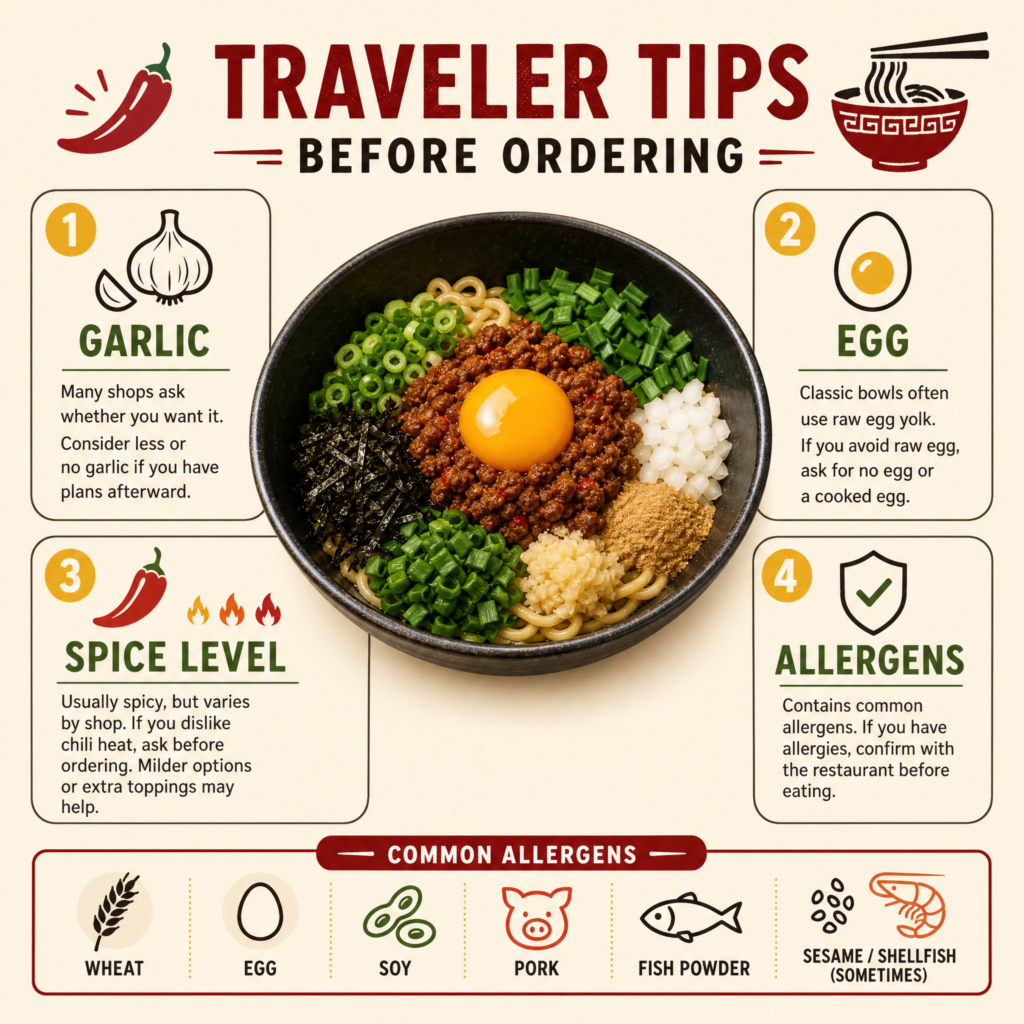
This is casual food, but a few details help first-time visitors. First, expect garlic. Many shops ask whether you want it. If you have plans afterward, consider ordering less garlic or no garlic. Second, check the egg. Classic bowls often use raw egg yolk. If you avoid raw egg, ask whether the shop can remove it or replace it with a cooked egg.
Third, think about spice. The dish is usually spicy, though the level varies by shop. If you dislike chili heat, ask before ordering. Some restaurants offer milder versions or extra toppings to soften the flavor. Finally, note the common allergens. The bowl often contains wheat, egg, soy, pork, fish powder, and sometimes sesame or shellfish-based seasonings. If you have allergies, confirm with the restaurant before eating.
Why This Soup-less Ramen Became So Popular
This dish became popular because it is easy to understand after one bite. The appearance is dramatic. The flavor is direct. The mixing ritual feels fun. Also, the final rice makes the meal feel complete. It also arrived at the right time. Japanese ramen culture kept expanding, and diners wanted richer bowls, stronger toppings, and new formats. Soup-less ramen fit that moment very well.
Social media helped too. A bowl with golden egg yolk, green chives, red pork, and black nori photographs beautifully. After mixing, it becomes less pretty but more tempting. That contrast works well online. Another reason is flexibility. Shops can adjust spice, garlic, noodles, and toppings without breaking the concept. Home cooks can do the same. Because of that, this style travels better than some delicate ramen bowls.
Still, balance matters. If it becomes too mild, it loses its edge. If it becomes only spicy, it gets tiring. The best bowls stay between comfort and attack.
Final Thoughts
Taiwan mazesoba is a young dish, but it already feels important. It shows how Japanese noodle culture keeps changing. It also shows how one local shop idea can become a recognizable Nagoya specialty. At its best, this is not polite food. It asks you to mix, slurp, adjust, and finish with rice. That hands-on rhythm makes the bowl memorable. You do not just eat it. You build each bite yourself.
If you like spicy Japanese mixed noodles, put this Nagoya-style dish high on your list. Try it first at a specialist shop if possible. Then make it at home when the craving returns. It probably will. Few bowls make garlic, chili, pork, egg yolk, fish powder, and thick noodles feel this complete.
Taiwan Mazesoba FAQ
What is Taiwan mazesoba?
It is a Nagoya-born soup-less ramen. The bowl uses thick noodles, spicy minced pork, egg yolk, chives, scallions, fish powder, nori, and garlic. You mix everything before eating.
Is this dish from Taiwan?
No, it is from Nagoya, Japan. The name comes from Taiwan ramen, another Nagoya specialty. It is not a traditional Taiwanese noodle dish.
Is it spicy?
Yes, it is usually spicy. The heat comes from chili-seasoned minced pork and garlic. Spice levels vary by shop, so ask before ordering if you prefer mild food.
How do you eat it?
Break the egg yolk and mix everything well from the bottom. After eating the noodles, add small rice to the leftover sauce and mix again.
How much does it cost?
Many casual shops serve it around the lower 1,000 yen range. Prices vary by location, toppings, and shop policy, so check the latest menu before visiting.
Does it contain raw egg?
Classic bowls often use raw egg yolk. If you avoid raw egg, ask for no egg or check whether a cooked egg option is available.
What allergens are common?
Common allergens include wheat, egg, soy, pork, fish powder, and sometimes sesame or shellfish-based sauces. Always confirm with the restaurant if you have food allergies.
Can you make it at home?
Yes, it is easier than soup ramen at home. You need thick ramen noodles, spicy minced pork, soy-based tare, egg yolk, chives, scallions, fish powder, nori, and garlic.
References
- Menya Hanabi – official information on the birthplace, shop background, and spread of Taiwan mazesoba. Key date: 2008. (Surveyed: July 2026)
- Menya Hanabi Taiwan Mazesoba Guide – official description of Taiwan minchi, toppings, noodles, garlic, and eating style. Key toppings: minced pork, chives, scallions, fish powder, egg yolk. (Surveyed: July 2026)
- npj Science of Food – peer-reviewed article on glutamate, umami, kokumi, and palatability mechanisms. Key year: 2023. (Surveyed: July 2026)
- BioMed Research International – academic review on umami as the fifth basic taste and glutamate-nucleotide synergy. Key year: 2015. (Surveyed: July 2026)
- LWT – Food Science and Technology – study on capsaicin, aroma perception, and saliva response in flavored solutions. Key finding: aroma perception increased by 45 percent in the study condition. (Surveyed: July 2026)
Related Articles
- Taiwan Ramen (Surveyed: July 2026)
- Abura Soba (Surveyed: July 2026)
- Japanese Ramen (Surveyed: July 2026)
- What to Eat in Nagoya (Surveyed: July 2026)
- Miso Katsu (Surveyed: July 2026)
- Hitsumabushi (Surveyed: July 2026)
- Tebasaki (Surveyed: July 2026)




Comments