




You sit down at a small Chinese restaurant in Tokyo, scan the menu, and spot “tenshinhan.” The name sounds unfamiliar, maybe even foreign. So you order it, expecting something straight from Tianjin. What arrives instead is a soft, golden crab omelette sitting on rice, drenched in a glossy sauce. It looks nothing like what the name suggests, and that is exactly the point.
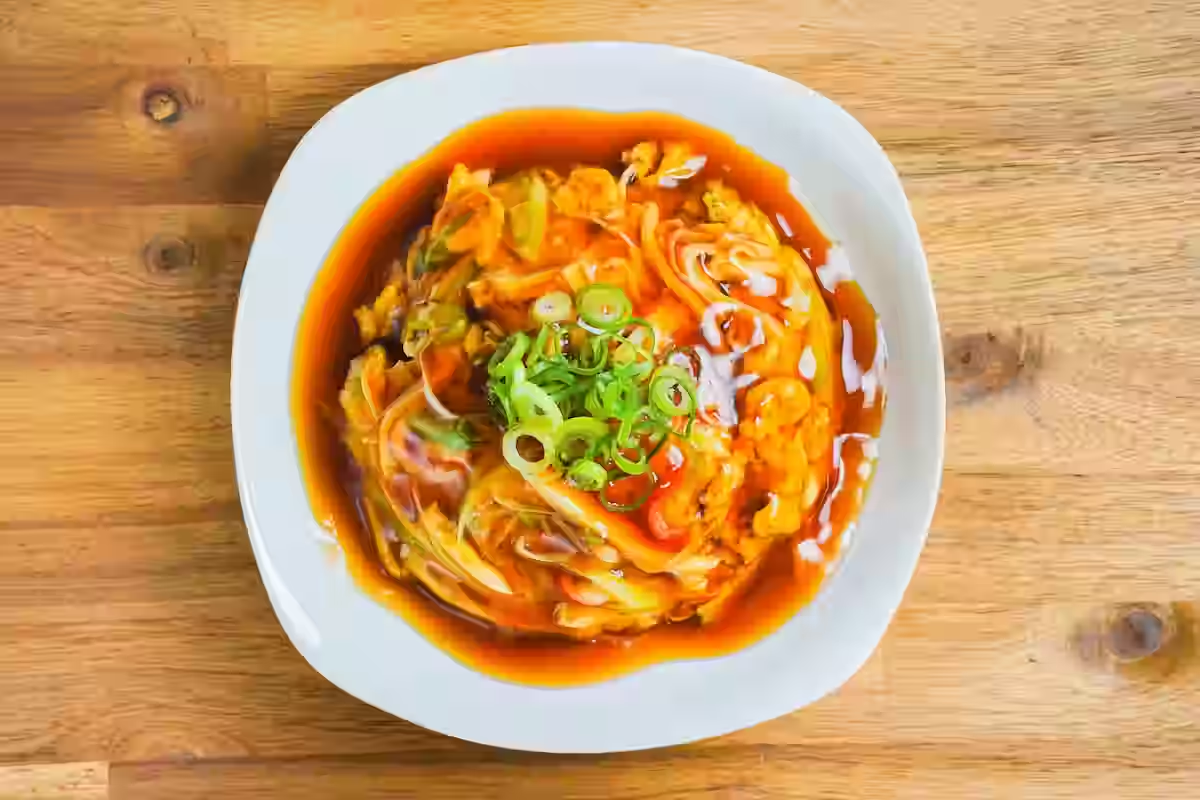
So what exactly is tenshinhan? At its core, it is a crab omelette rice bowl. Eggs get whisked with crab meat, then pan fried until soft and loose. That omelette sits on steamed rice, and a thick sauce goes on top. Some versions lean sweet and tangy. Others taste savory and clean. If you enjoy Japan’s other rice bowl dishes, our guide to oyako don covers a similarly comforting classic.
People often confuse tenshinhan with omurice, since both involve eggs over rice. They are not the same dish, though. In fact, the differences run deeper than they first appear. We will get into that comparison shortly, but first, let us look at the basics.
Quick Facts About Tenshinhan
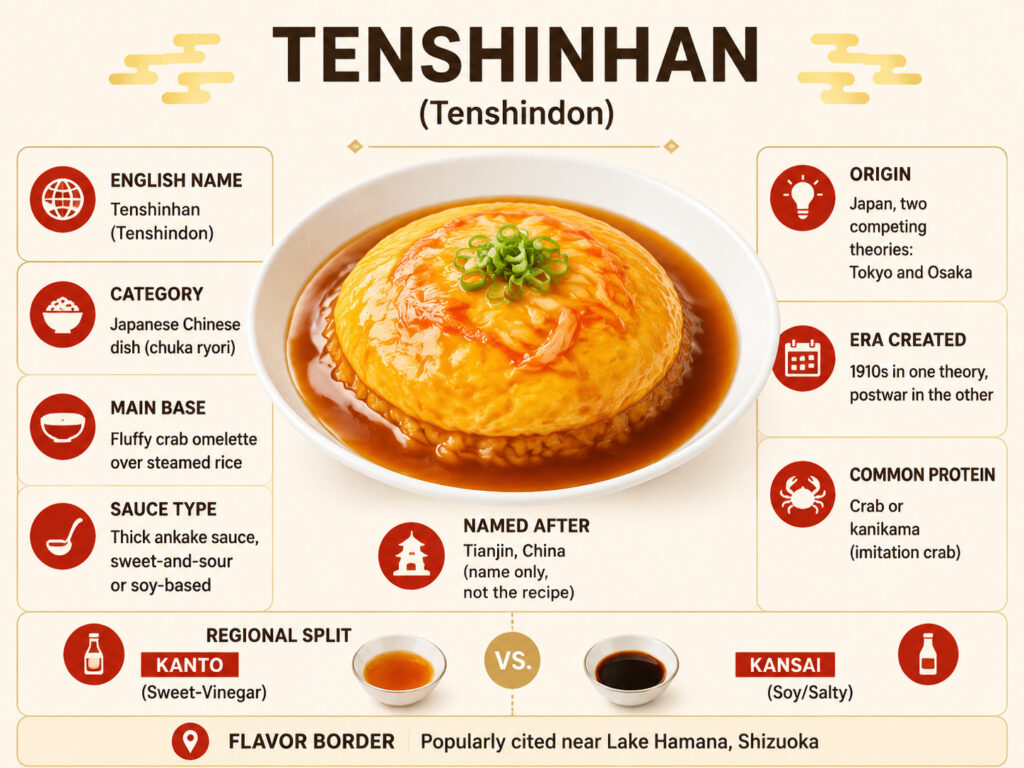
Here is a fast overview before we dig into the details.
| English Name | Tenshinhan (also tenshindon) |
| Japanese Name | 天津飯 / 天津丼 |
| Category | Japanese Chinese dish (chuka ryori) |
| Main Base | Fluffy crab omelette over steamed rice |
| Sauce Type | Thick ankake sauce, sweet-and-sour or soy-based |
| Named After | Tianjin, China (name only, not the recipe) |
| Origin | Japan, two competing theories: Tokyo and Osaka |
| Era Created | 1910s in one theory, postwar in the other |
| Common Protein | Crab or kanikama (imitation crab) |
| Regional Split | Kanto (sweet-vinegar) vs Kansai (soy/salt based) |
| Flavor Border | Popularly cited near Lake Hamana, Shizuoka |
What Tenshinhan Tastes Like
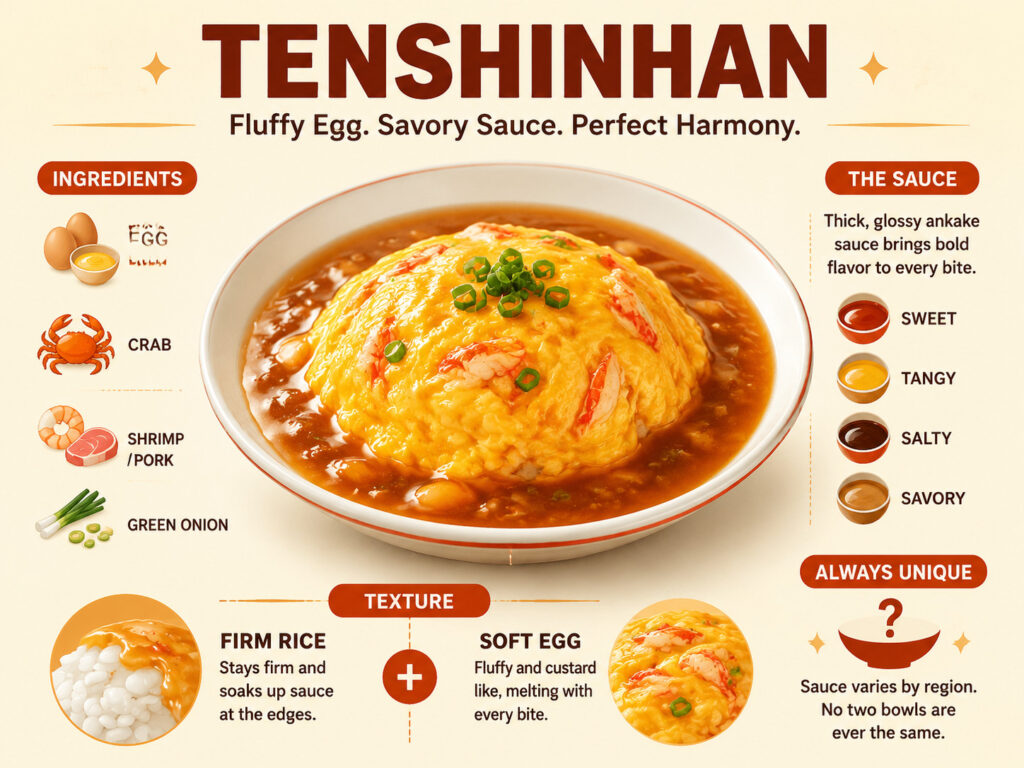
The egg is the star here. Cooks whisk it with crab, sometimes pork or shrimp, plus green onion. It gets poured into a hot pan and pulled together fast. The result stays soft, almost custard like, never rubbery. That fluffy crab omelette over steamed rice is what makes tenshinhan feel special.
Then comes the sauce, and this is where things get interesting. A thick, glossy ankake sauce covers the whole bowl. It clings to the rice underneath and seeps into every bite. Depending on where you order it, that sauce can taste sweet, tangy, salty, or gently savory. No two bowls of tenshinhan taste quite the same across Japan, and that is half the fun of trying it in different cities.
Texture matters too. The rice stays firm but soaks up sauce at the edges. Meanwhile, the egg stays loose on top, almost falling apart when you dig in. Honestly, that contrast between crisp rice and soft egg is half the appeal, and it is hard to explain until you actually try it yourself.
Tenshinhan vs Similar Dishes
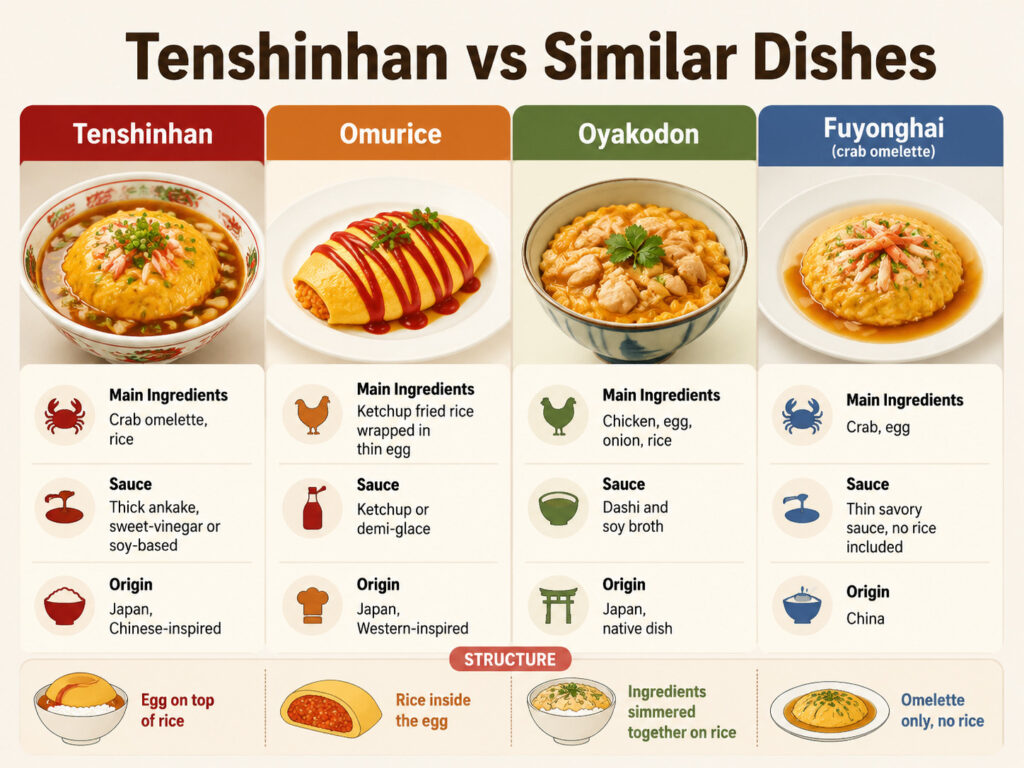
People often lump tenshinhan together with omurice or oyakodon. All three place egg over rice, sure. But the similarities mostly end there. Here is a simple comparison to clear things up.
| Dish | Main Ingredients | Sauce | Origin |
|---|---|---|---|
| Tenshinhan | Crab omelette, rice | Thick ankake, sweet-vinegar or soy-based | Japan, Chinese-inspired |
| Omurice | Ketchup fried rice wrapped in thin egg | Ketchup or demi-glace | Japan, Western-inspired |
| Oyakodon | Chicken, egg, onion, rice | Dashi and soy broth | Japan, native dish |
| Fuyonghai (crab omelette) | Crab, egg | Thin savory sauce, no rice included | China |
Notice how omurice wraps rice inside the egg, while tenshinhan places the egg on top. That is a real structural difference, not just a naming quirk. Meanwhile, fuyonghai, the Chinese crab omelette that inspired this dish, usually skips the rice bowl format entirely. So tenshinhan is really an omelette rice bowl variation of that older Chinese recipe, reshaped for Japanese tastes. Curious readers exploring Japan’s broader East-meets-West food story might enjoy our piece on Japanese fusion food.
Where Tenshinhan Actually Came From
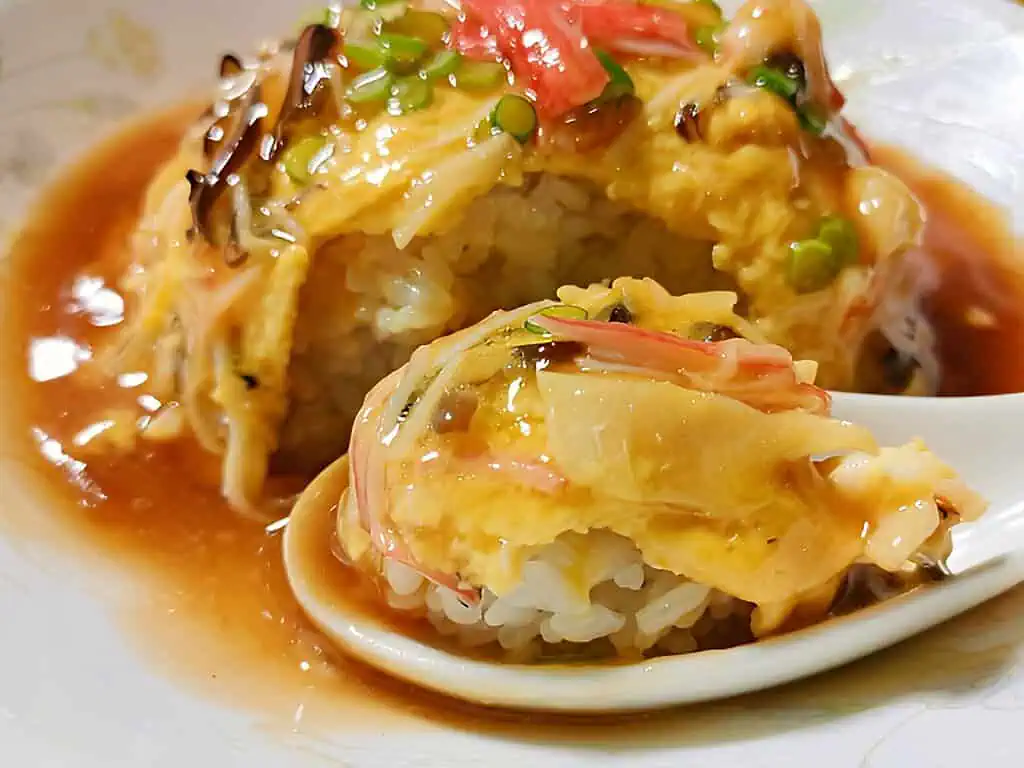
Despite the name, nobody in Tianjin ever ate this dish. It is a Japan-origin Chinese-style dish through and through. No single prefecture claims it as a local specialty, either. Instead, two restaurants in two different cities each claim credit, and the debate has never really settled.
The Tokyo Story
One theory points to Rairaiken, a Chinese restaurant that opened in Asakusa in 1910. Kan’ichi Ozaki, a former customs officer in Yokohama, founded the shop after retiring. He hired twelve cooks from Yokohama Chinatown and built a menu that ordinary Tokyoites could afford. This same restaurant is widely credited with popularizing ramen in Japan. Some food historians believe a cook there first served crab and egg over rice for customers who wanted something fast.
The Osaka Story
The other theory traces the dish to Taishoken, a Chinese restaurant near Osaka Castle. It reportedly opened not long after the Second World War, in the Babacho area. Food was scarce then, and rice itself felt precious. According to this account, the owner recalled a Chinese custom called “gaifan,” meaning rice topped with something savory. He used swimmer crab, since it was easy to source near Tianjin at the time, and named the dish after that city. The name simply stuck around ever since.
Whichever version is true, one thing stays clear. Nobody in China calls this dish tenshinhan, or eats anything quite like it. It belongs to a category Japanese cooks call chuka ryori, meaning Chinese-style food reimagined for local palates. Food historian Kazuhiro Iwama has traced this pattern across many so-called Chinese dishes in Japan. Katarzyna Cwiertka of Leiden University describes something similar in her research on modern Japanese cuisine. Foreign dishes arrive, then locals reshape them until they barely resemble the original source. Tenshinhan is a textbook example of that quiet transformation.
Kanto Style vs Kansai Style
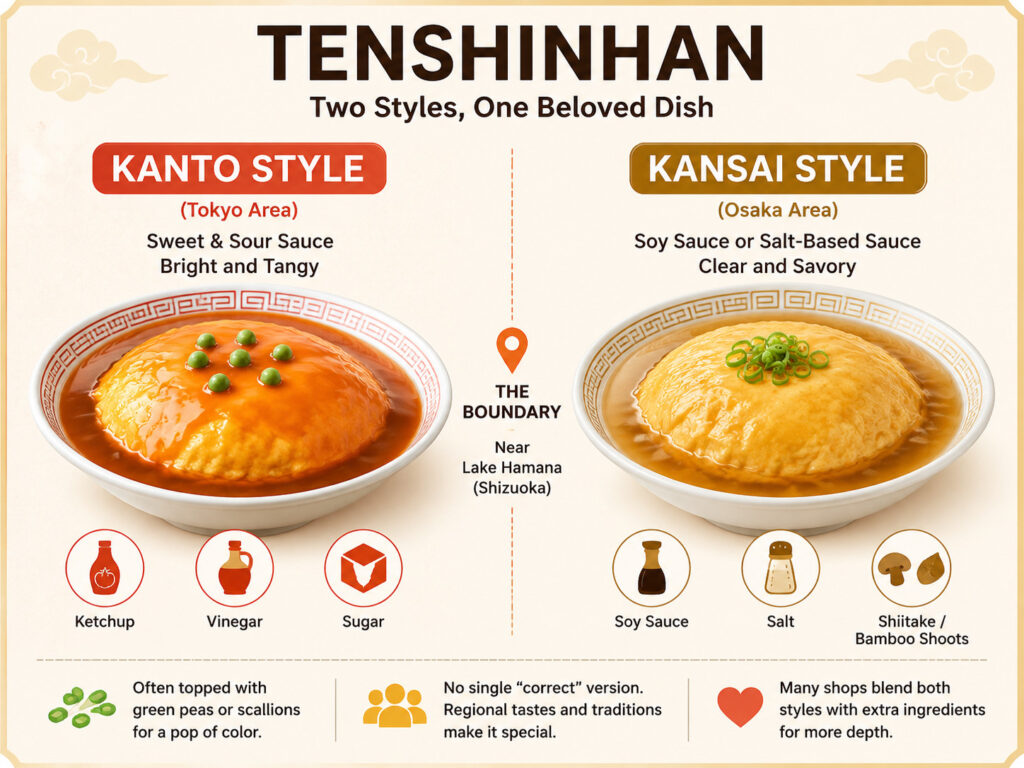
Travel across Japan, and tenshinhan changes character entirely. This regional split is one of the more fun quirks of the dish, and it maps loosely onto the two origin stories above.
- Kanto style (Tokyo area): uses a sweet-and-sour sauce tenshinhan, often built with ketchup, vinegar, and a little sugar. The flavor leans bright and tangy.
- Kansai style (Osaka area): favors a soy-sauce or salt-based sauce tenshinhan, clear and savory rather than sweet.
- Some shops blend both, adding shiitake or bamboo shoots to the sauce for extra depth.
- Toppings like green peas or scallions often finish the bowl, adding a touch of color.
So where does one style end and the other begin? Many food writers place that rough boundary near Lake Hamana in Shizuoka Prefecture. East of that line, expect ketchup and vinegar. West of it, soy and salt take over. That border is not official, of course, and plenty of exceptions pop up along the way. Still, it gives you a rough map if you are hunting for regional differences on a trip.
Ask ten different families which version is “correct,” and you might get ten different answers. That is part of the charm, honestly. There is no single authentic tenshinhan, just regional habits that grew over decades and spread from restaurant kitchens outward.
Making Tenshinhan at Home
The good news is that tenshinhan does not demand special skill. It is essentially a one-pan tenshinhan project, and most home cooks in Japan know a version by heart. You mainly need eggs, crab or kanikama, and rice you probably already have on hand.
Start by whisking two or three eggs with shredded kanikama. Add a pinch of salt and maybe some chopped scallion. Heat oil in a pan until it shimmers, then pour in the egg mixture. Stir briefly, then let it set into a soft, half-cooked mass. Slide that omelette over a bowl of hot steamed rice.
For the sauce, combine dashi or chicken stock with soy sauce, a little sugar, and vinegar if you want the Kanto style. Thicken it with a cornstarch slurry over medium heat, stirring until glossy. Then pour that sauce generously over the egg and rice. This easy tenshinhan recipe with eggs, crab, and rice takes maybe fifteen minutes from start to finish.
Some people call it a 3-ingredient quick tenshinhan, since eggs, crab, and rice really are the backbone. Everything else is seasoning. Honestly, that simplicity explains why it became such reliable comfort food across Japan, even on nights when nobody feels like cooking much.
Tenshinhan Today
Walk into almost any casual Chinese restaurant in Japan today, and tenshinhan is likely on the menu. It sits comfortably alongside gyudon and katsu-style rice bowls as a go-to lunch option. Chain restaurants, small family shops, and convenience store bento all serve their own take on it. Some add tomato, others add mushroom, and a few even sell instant versions with premade sauce packets.
It also holds a comfortable place in Japan’s food identity. This is a Japanese Chinese dish that most people never question. Nobody expects it to taste like something from Tianjin, because everyone already knows the truth by now. It is homegrown comfort, dressed up with a foreign-sounding name, and somehow that contradiction never bothers anyone.
If you ever visit Japan, try ordering tenshinhan in two different cities. Pay attention to how the sauce shifts from sweet to savory depending on where you sit. That small difference tells you something bigger about how local food culture forms, one restaurant kitchen at a time. And if you cannot travel right now, the home recipe above gets you fairly close on a quiet weeknight.
Tenshinhan FAQ
What is tenshinhan (tenshindon)?
Tenshinhan is a Japanese Chinese dish made of crab omelette over rice, finished with a thick sauce. People also call it tenshindon or kani tama don. It was invented in Japan, not China.
Which prefecture does tenshinhan come from?
No single prefecture claims it as a local dish. Two theories exist, one pointing to Tokyo’s Asakusa district, the other to Osaka. The debate remains unsettled today.
How to make Japanese tenshinhan at home?
Whisk eggs with kanikama, then cook into a soft omelette. Place it over hot rice. Pour a thickened soy or sweet-vinegar sauce on top. The whole process takes about fifteen minutes.
Tenshinhan vs regular omelette rice, what is the difference?
Omurice wraps ketchup rice inside a thin egg sheet. Tenshinhan places a crab omelette on top of plain rice, then adds a savory sauce. The flavors and structure differ quite a bit.
What is the difference between Kanto and Kansai tenshinhan?
Kanto style uses a ketchup-based sweet-and-sour sauce. Kansai style relies on a clear soy or salt-based sauce. The rough dividing line sits near Lake Hamana in Shizuoka.
Why is tenshinhan considered Japanese-Chinese cuisine?
It belongs to chuka ryori, a category of Chinese-inspired dishes reshaped for Japanese taste. The base idea borrows from Chinese crab omelette, fuyonghai, but the format is entirely local.
References
- Katarzyna J. Cwiertka, Chair of Modern Japan Studies, Leiden University, “Modern Japanese Cuisine: Food, Power and National Identity” and related publications on the adaptation of Chinese food in Japan. (Surveyed: July 2026)
- Cwiertka, K., “A note on the making of culinary tradition, an example of modern Japanese cuisine,” peer-reviewed journal article on food history, 1998. (Surveyed: July 2026)
- Iwama, Kazuhiro, “A Comparative Cultural History of Nationalism Surrounding Chinese Cuisine” (中国料理をめぐるナショナリズムの比較文化史研究), Foundation for Food Culture, research report No. 201802. (Surveyed: July 2026)
- Kacho, Yokohama Chinatown, restaurant-published article on the two competing Tokyo (Rairaiken) and Osaka (Taishoken) origin stories of Tenshinhan. (Surveyed: July 2026)
- Biteki Seikatsu, food culture article on the Kanto and Kansai sauce differences and the popularly cited Lake Hamana flavor boundary. (Surveyed: July 2026)
- Japan Ramen Franchise Association, historical record on Rairaiken, the Asakusa restaurant founded in 1910 by Kan’ichi Ozaki, linked to the Tenshinhan origin theory. (Surveyed: July 2026)
Related Articles
- Omu Rice (Surveyed: July 2026)
- Oyako Don (Surveyed: July 2026)
- Japanese Gyoza Guide (Surveyed: July 2026)
- Japanese Fusion Food (Surveyed: July 2026)




Comments