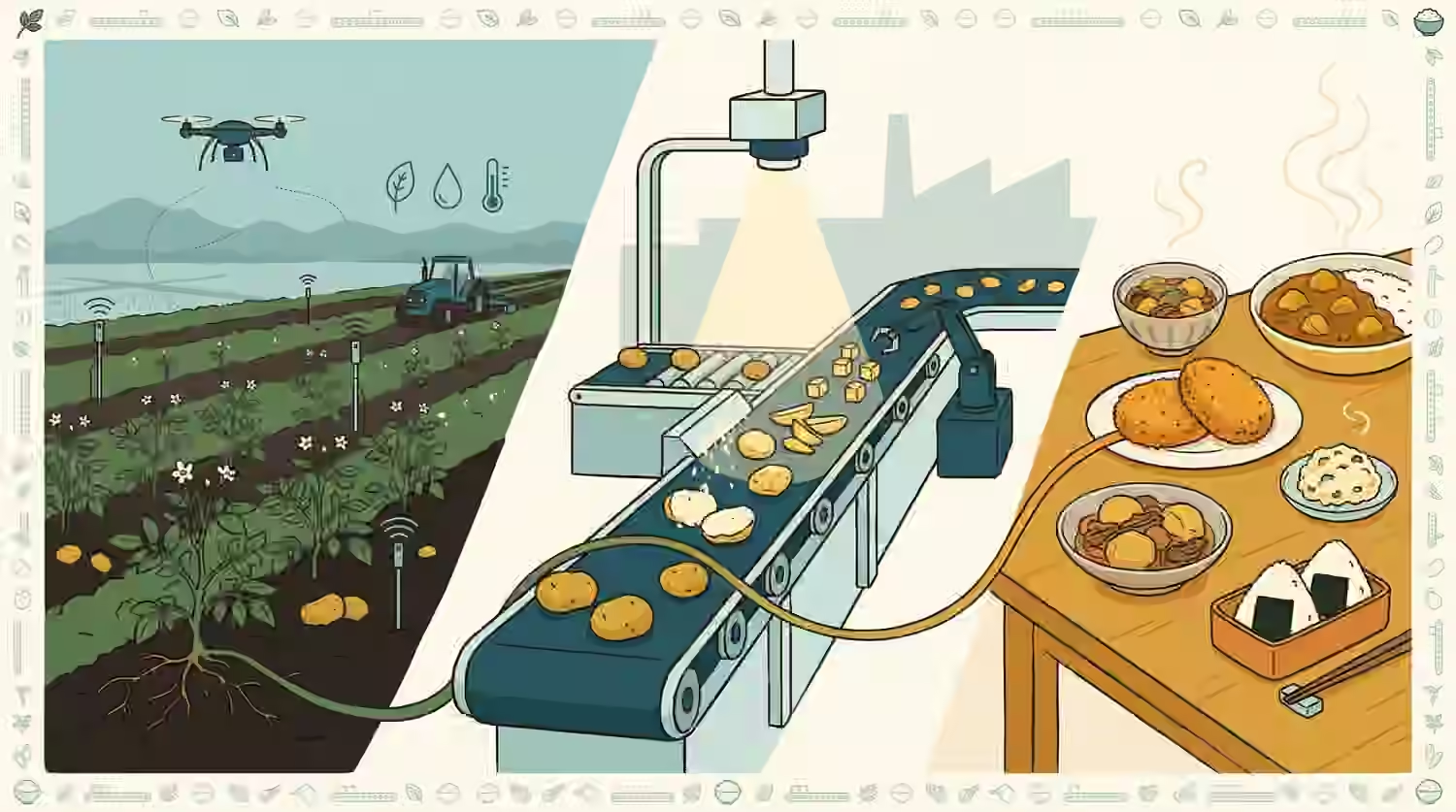
Follow one Hokkaido potato on its way to a supermarket korokke, the crisp, breadcrumb-coated croquette sold at deli counters across Japan. Before it reaches the hot-food case, field data may guide its growing season and machinery may lift it from the soil. At a processing plant, it may be graded, washed, peeled, cooked, mashed, shaped, inspected and packed. Automation across Japan’s food system connects many of those steps, but not in the same way at every stage.
Japan uses automation to address labor shortages in both farming and food manufacturing. On farms, sensors, drones and automated machinery mainly reduce workload and improve the timing of field work. In factories, sorting, cutting, inspection and packaging systems support consistency, hygiene and traceability. These tools can support stable yields, but they do not guarantee bigger harvests. This guide follows the potato first, then looks at rice, vegetables, seafood and traditional foods.
TOC
What Food Manufacturing Automation in Japan Looks Like
Food manufacturing automation in Japan means using machinery, robots, sensors and software to handle or monitor repetitive production tasks. Those tasks include sorting, washing, cutting, cooking, inspection, conveying and packaging. It differs from smart agriculture, which applies automated machinery and data systems before harvest. Distribution adds its own layer of logistics data and cold-chain monitoring. This article uses food-system automation for all of these stages together: the farm, post-harvest handling, the factory and distribution.
Quick Facts
Main drivers
Fewer farmers, labor and skills shortages in food factories, and quality expectations
Farmer outlook
MAFF projects core farmers could fall from 1.16 million to about 300,000 over the next 20 years
Smart-farming trials
Demonstrations in 217 districts nationwide, across different years, crops and technologies
Key example
Hokkaido potatoes: 1.87 million tonnes in 2024, 81% of Japan’s national total
Main limits
Cost, small fields, maintenance, operator skills, and hygienic design
Data scope
National statistics and trial results appear side by side; trial figures apply to specific sites and tasks
Stage
Main technologies
Main purpose
Farming
Sensors, drones, automated or assisted machinery, data analysis
Temperature monitoring, inventory data, traceability
Freshness, availability, less waste
Yield, Production and Labor Savings Are Not the Same
Four terms get mixed up easily. Yield is the amount harvested per unit of land. Japanese statistics often give it in kilograms per 10 ares, an area of 1,000 square meters or 0.1 hectare. Production, by contrast, is the total crop harvested across a region. Productivity compares output with the labor or money put in. Labor savings, on the other hand, simply mean fewer working hours. For example, a machine can cut hours sharply without changing yield at all. Similarly, a potato-cutting machine in a factory does not make potatoes grow bigger.
Why Japan’s Food System Is Turning to Automation
Japan is expanding automation because both farms and food factories face labor and skills shortages. Farm technology takes over physically demanding or time-sensitive work. Factory systems, meanwhile, support consistent sizing, cooking, inspection and packaging. Adoption is limited by equipment cost, irregular fields and ingredients, maintenance needs and the need for trained operators.
On the farm side, the numbers are stark. MAFF projects that the number of core farmers could fall from 1.16 million to about 300,000 over the next 20 years. That would leave only about a quarter of today’s workforce. As a result, the ministry is pushing farms toward production methods built around smart-agriculture technology.
Factories face a similar squeeze. MAFF describes labor and skills shortages in food manufacturing as a growing problem that makes higher productivity urgent. It therefore supports robots, AI and IoT. It also connects food companies with system integrators, the engineering firms that design and install automated lines. According to MAFF’s productivity page, its fiscal 2024 survey contacted about 6,000 small and mid-sized food manufacturers by phone. It collected 809 responses.
But automation does not begin inside a food factory. For many Japanese ingredients, it starts while the crop is still in the ground.
Smart Agriculture Begins Before the Harvest
Smart agriculture refers to the use of robotics, sensors, data and information technology to improve farm work and production management. MAFF frames it as farming that uses robotics and ICT for highly labor-saving, high-quality production. In Japan, the term covers far more than robot tractors. MAFF’s policy pages also include drones, satellite technology, shared and leased equipment and farm support services. They also cover WAGRI, a national agricultural data collaboration platform launched in April 2019. It supports the exchange and use of farm data through participating services.
MAFF reports that smart-agriculture demonstrations have been conducted in 217 districts across Japan, from Hokkaido to Okinawa. However, those trials span different years, crops, technologies and local conditions. They are not one single experiment.
Monitoring Crops with Data
The first job of smart farming is simply to see the field more clearly. Soil-moisture sensors, temperature and humidity monitors, and weather data can show growers when a crop is under stress. Growth records and imaging can also flag pest or disease problems earlier than a weekly walk through the rows. Data helps with timing, too, since deciding when to irrigate, spray or harvest can shape quality. A sensor only reports conditions, though. Someone still has to interpret those readings and decide what to do next, because data alone changes nothing.
Drones and Automated Machinery
Out in the field, machines take over some of the heaviest and most repetitive work. Japan’s program includes robot tractors that operate under defined conditions, agricultural drones and satellite applications. It also includes GPS-guided steering, which assists a driver rather than replacing one. Not every “smart” machine runs unmanned, so it helps to separate automated machinery from assisted machinery.
38 to 47%Simple average cut in labor time for selected operations, by crop category
91%Average cut in labor time for drone pesticide-spraying tasks
43%Average cut in labor time for automated vegetable harvesting tasks
Scope: MAFF’s 24-district demonstration dataset, mainly fiscal 2020, published August 2021. These are task-level results, not reductions in total annual farm labor.
The same report was also candid about the limits. In the demonstrations, automated vegetable harvesters were more prone to harvest losses where crop growth was uneven. Automated tractors and ride-on machinery also produced smaller labor savings in small plots. In short, results varied sharply by crop and task, so each operation needs its own assessment.
Does Smart Agriculture Actually Raise Yields in Japan?
Automation does not automatically increase crop yields. In Japan, its main contributions are fewer labor bottlenecks, better-timed field work and data that helps farmers adjust water, fertilizer or crop care. Some demonstration farms did report higher yields than their comparison baselines. Weather, variety, soil and management remained decisive, though, and higher equipment costs sometimes reduced profit.
Even so, weather and biology still set the ceiling. A NARO analysis of potato data from Tokachi and Okhotsk, two major farming regions in eastern Hokkaido, covered 1986 to 2014. It found that the decline in yields after 2010 was significantly associated with higher summer temperatures, particularly in August and September. The team published the analysis in Agricultural and Forest Meteorology in 2018. Comparing 1984 to 1990 with 2006 to 2014, planting moved about six days earlier, helped by land improvement and large machinery. Emergence, the point when shoots break the surface, advanced by only about one day. Separately, a 2016 study in Potato Research estimated that Hokkaido’s actual summer-crop yields stayed well below their modeled potential. The gap shows that yield reflects interacting environmental, biological and management factors, rather than machinery alone.
Which Technologies Affect Yield, and Which Only Save Labor?
The table below is our editorial guide to each technology’s primary role. Actual effects depend on the crop, field, system design and management.
Technology
Where used
Primary effect
Possible effect on field yield
Key limitation
Field sensors
Farm
Better monitoring and timing
Indirect
Data still need interpretation
Variable-rate fertilizing
Farm
More targeted input use
Possible in suitable fields
Needs reliable field data
Automatic water management
Rice paddies
Less time spent checking water
Indirect
Equipment and setup cost
Spray drones
Farm
Large task-time reduction
Usually indirect
Weather and trained operators
Automated harvesters
Farm
Less manual harvesting
May ease bottlenecks
Uneven growth raises harvest loss
Size graders
Post-harvest
Uniform raw material
None
Does not change farm yield
Cutting and packing lines
Factory
Consistency and throughput
None
Cleaning, changeovers, maintenance
Hokkaido Potatoes: From the Field to Japanese Favorites
Hokkaido is where Japan’s potato story becomes concrete. In 2024, Japan’s northernmost prefecture harvested 1.87 million tonnes of potatoes, according to MAFF. That was 81 percent of the national total of 2.295 million tonnes. Its reported yield was also higher, at 38.4 tonnes per hectare, compared with a national average of 32.4 tonnes per hectare. That dominant share reflects Hokkaido’s climate, land base and crop systems, so it should not be credited to automation alone. Our guide to popular dishes from Hokkaido shows where some of that harvest ends up locally.
How Japan’s Potato Supply Is Divided by Use
MAFF’s September 2026 report divides Japan’s potato demand for fiscal 2025 by use. The national total includes imported processed products converted to a raw-potato equivalent. Processed foods account for 56 percent and starch for 20 percent. Fresh-market potatoes, sold to consumers as whole, uncooked tubers, take 14 percent, and other uses 9 percent; rounding explains the one-point gap from 100. For Japanese-grown potatoes alone, the shares are 33 percent starch, 29 percent processed foods, 23 percent fresh market and 15 percent other uses.
Potatoes in Japanese Food Culture
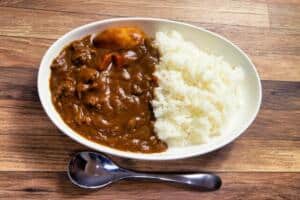
Potatoes turn up everywhere in everyday Japanese cooking. They go into nikujaga, a sweet soy-simmered stew of meat and potatoes, and into Japanese curry rice. Similarly, they fill crispy potato korokke, creamy potato salad, jaga butter, fries and chips.
Each dish, though, asks something different of the same crop. Danshaku, a round and relatively floury potato, breaks down easily and suits mashed fillings such as korokke. May Queen is elongated and comparatively waxy, so it holds its shape in simmered dishes such as nikujaga. Industrial products, on the other hand, use other varieties chosen for frying quality. MAFF lists Toyoshiro (トヨシロ) and Kitahime (きたひめ) for potato chips. It also names Hokkai Kogane (ホッカイコガネ) for French fries and Sayaka (さやか) for commercial potato salad.
What Happens After Harvest?
Depending on the final product, a potato may pass through most of the steps below. Not every product needs all of them, and the order can change.
A typical potato path, field to food
1Harvesting
2Soil and debris removal
3Inspection
4Size grading
5Washing
6Peeling
7Cutting or halving
8Cooking, freezing or seasoning
9Quality inspection
10Packaging and distribution
Some of this work starts before harvest. In soil-conditioning systems used in Hokkaido, growers remove stones, gravel and soil clods from the cultivated layer before planting. MAFF describes the method as reducing greening and bruising while lowering harvest labor. Removing clods before planting may also cut the soil and debris that must be separated after harvest.
Each later step connects to a dish. For instance, size grading decides which tubers suit fries and which suit mash. Peeling and cutting also set the cooking time for korokke filling or curry chunks. The crucial change, then, happens where an irregular farm product must become a consistent food ingredient.
How Potato Processing Equipment Sorts, Cuts and Inspects the Crop
Processing equipment turns a natural mix of sizes and shapes into predictable ingredients. It affects processing yield, the share of harvested material that becomes a usable product after trimming, peeling, cutting and inspection. It does not affect field yield. Potato lines commonly combine conveyors, washers, optical or manual inspection, size graders, peelers and product-specific cutters. The exact sequence depends on whether the potatoes will become chips, fries, mashed fillings or ready-to-cook pieces.
Once potatoes reach a processing facility, processors must manage their differences according to the final product. Modern potato processing equipment can support operations such as sizing, cutting, debris removal and conveying. As one commercial example, Milestone Equipment lists machines for sizing wet or peeled potatoes and onions and for halving oversized tubers. Its specifications show available functions, not independent evidence of performance.
Why does uniformity matter so much? Pieces of similar size cook in a similar time, so fewer come out underdone or overcooked. Consistent cuts also help a factory hit the weight and appearance that a product specification demands. Meanwhile, steady conveying keeps the whole line moving instead of stopping and starting at each station. Food lines must also be easy to clean and safe to run. That is why stainless steel, guards and washdown designs come up so often in equipment specifications.
Automation Beyond Potatoes
The same pattern appears across many other Japanese foods. In each case, machines handle repeatable measurements and movements, while workers manage exceptions, flavor, maintenance and product decisions.
Food group
Typical automated steps
Where people stay central
Rice and onigiri
Water management, planting, harvesting, rice portioning, pack weighing
A Rice Case Study: Why Labor Savings Do Not Equal Profit
Japan’s rice demonstrations show that labor, yield and profit must be measured separately. Across 30 paddy-rice districts selected in fiscal 2019, reported labor time was 9 percent lower on average. Reported yield, meanwhile, was 9 percent higher than the comparison baseline. These are demonstration outcomes, not a guaranteed effect of automation.
Individual farms, however, varied widely. Case 5 in the MAFF and NARO report was a large paddy farm that also ran greenhouse horticulture. There, total rice labor fell by 28.8 percent. The report also recorded a whole-business loss during the demonstration. It identifies higher machinery and facility costs from the smart equipment as the main factor. Saving hours and earning money, in other words, are different tests.
Traditional Foods and Modern Monitoring
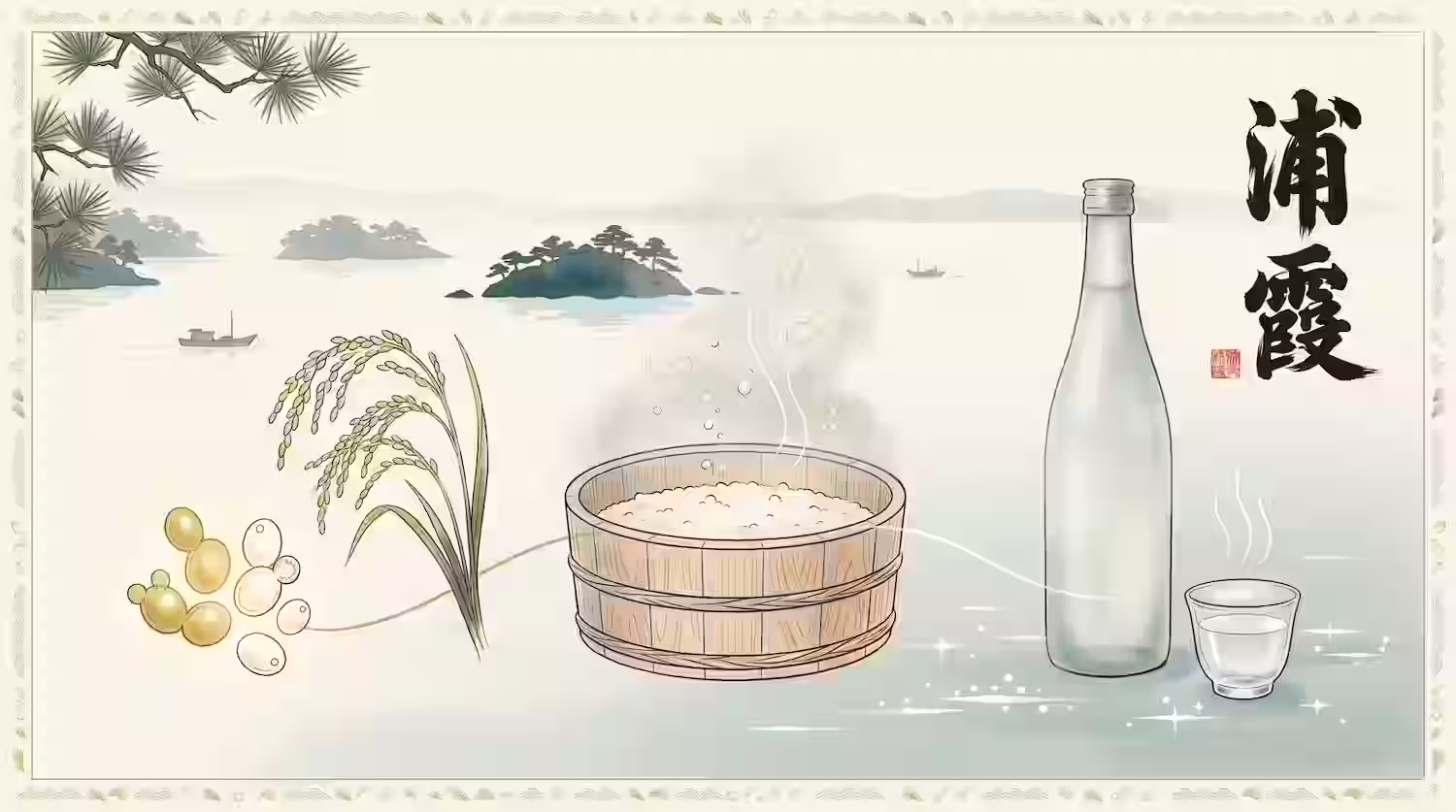
What about miso, soy sauce, sake, tofu, noodles and mochi? The common worry is that machines will erase tradition. That framing may be too simple. Sensors and automated controls do not have to determine flavor or replace accumulated knowledge. Instead, they can help producers monitor temperature, timing and consistency, while experienced workers make the calls that define the product. For the craft side, see our story on traditional miso fermentation.
More Than Speed: Safety, Quality and Food Loss
Well-designed automation can improve consistency, hygiene and record-keeping, and it may help reduce waste. None of those benefits arrives automatically. Each depends on how the equipment is chosen, set up and maintained.
Consistent Quality and Inspection
To begin with, even sizes and weights reduce uneven cooking. Inspection tools also do different jobs. Camera-based optical systems can screen for predefined visible defects under controlled lighting. Metal detectors look for metal fragments. X-ray systems can detect some relatively dense foreign objects inside a pack. Results depend on the object’s material, density and size, as well as product thickness and settings. Even then, ambiguous or hidden defects may need a person or another type of sensor.
Food Safety and Traceability
Robots may reduce direct human handling at selected steps. They improve hygiene only when their materials, installation, cleaning access and maintenance suit food production. In April 2024, MAFF published guidelines for the hygienic introduction and operation of robots in food plants. A consortium led by the Japan Sozai Association (日本惣菜協会), a prepared-foods industry association, developed them. The guidance covers equipment structure, materials, lubricants, surface treatment, installation checks, maintenance and staff education. Since June 2021, Japan has required food businesses, in principle, to apply HACCP-based hygiene management. HACCP is an international system for identifying and controlling food-safety hazards. The rule concerns hygiene management based on HACCP principles, not mandatory third-party HACCP certification.
Traceability is the second pillar. MAFF defines it as being able to follow food as it moves. In practice, that means keeping records of what comes in and goes out at each stage. When something goes wrong, those records let companies trace the source, narrow down affected lots and run recalls smoothly. For example, Japan has mandatory traceability rules for cattle and beef. Rice and rice products carry separate transaction-record and origin-information requirements. For food generally, the Food Sanitation Act treats supplier and customer records as an effort-based obligation rather than a universal mandate.
Food Loss
In this article, food loss follows the Japanese government’s statistical category: edible food discarded across manufacturing, distribution, retail, food service and households. Processing loss refers more narrowly to usable raw material lost during factory operations. Japan generated an estimated 4.61 million tonnes of food loss in fiscal 2024, according to MAFF. Business-related food loss accounted for 2.37 million tonnes, including 1.10 million tonnes from food manufacturing. The 57 percent reduction since fiscal 2000 applies to business-related food loss as a whole, not specifically to manufacturing. The new target is a 60 percent cut by fiscal 2030. However, these figures do not show how much of the progress comes from automation.
At the plant level, automation can support waste reduction when it fits the raw material and the product. Accurate cutting trims less usable flesh, and size grading can send smaller potatoes to mash instead of the bin. Likewise, better temperature control and demand forecasting help. Each of those gains depends on correct settings, trained staff, regular maintenance and a sensible production plan.
Can Small and Regional Producers Benefit?
Small producers benefit most when they automate a measured bottleneck rather than an entire process. A small miso maker or a family pickle business can start with one bottleneck, such as washing, weighing, filling, labeling or temperature logging. Shared machinery, leasing and outside farm-support services, which MAFF promotes, can also lower the entry cost.
Before buying anything, though, a sensible first step is to measure that bottleneck. Useful baseline figures include labor minutes per batch, cleaning and changeover time, product loss per 100 kilograms, and unplanned downtime. Counting the staff needed at peak production helps, too. With those numbers in hand, buying, leasing, sharing and outsourcing can be compared on the same basis. It also helps to estimate annual depreciation, maintenance, consumables and financing costs, then set them against yearly savings in labor and product loss. A machine running one product on long shifts may pay back very differently from one used for short, changing batches. For small-batch producers, the main bottleneck may be cleaning and changeover rather than speed, because a faster machine adds little if workers spend long periods dismantling, washing and resetting it.
Tasks machines handle well
Repetitive motions
Moving heavy loads
Size grading
Filling set weights
Logging temperatures
Screening for set visible defects
Tasks people still lead
Final judgment on flavor
Reading fermentation
Developing recipes
Adapting to the season
Passing on regional food culture
Building customer relationships
What Automation Cannot Solve
Automation brings real costs and practical limits, and Japan’s own trials show them clearly. MAFF’s policy mix, which covers farm services, sharing, leasing and data platforms, suggests that buying a machine is rarely enough. The main hurdles include:
Heat and weather: machines cannot remove summer heat stress on crops
Varieties, pests and disease: biology still limits what a field can produce
Field size and shape: small, irregular plots limit self-driving machinery
Variable raw materials: each crop and season behaves differently on a line
Cost and depreciation: equipment, installation and line redesign add up
Maintenance and skills: someone has to operate, clean, adjust and fix the systems
Data and older equipment: records must be secure, and new machines must fit existing lines
None of these hurdles is a reason to stand still. They do explain why progress looks uneven, and why many producers move one step at a time.
What the Automated Future Means for Japanese Food
Food-system automation in Japan is advancing on farms and in factories at the same time, but it serves different purposes at each stage. On the farm, it mainly saves labor and improves timing, which can support stable yields and quality. In the factory, it turns a variable crop into a consistent, traceable food. Automation is not replacing the identity of Japanese food. It works behind the scenes so a smaller workforce can keep familiar flavors on the table. The next time you bite into a korokke, it may be worth remembering the long road that potato traveled.
Frequently Asked Questions
Automation in Factories
How is automation used in Japanese food manufacturing?
Factories use it for sorting, washing, cutting, cooking, inspection, conveying and packaging. The aim is consistent products, safer handling and a steady production flow with fewer workers. Even so, many lines still rely on people for final checks and delicate tasks.
How are potatoes processed for Japanese foods?
Depending on the product, potatoes may go through soil removal, inspection, size grading, washing, peeling and cutting. After that come cooking, freezing or seasoning, a final check and packaging. Chips, fries and korokke each need different varieties, sizes and cuts.
Will automation replace food workers in Japan?
Not entirely. Machines increasingly take over repetitive and heavy tasks. Meanwhile, people remain essential for quality judgment, maintenance, product development and traditional skills such as reading fermentation.
How can automation reduce food loss in factories?
Accurate sorting and cutting waste less raw material, and size grading can route smaller items to other products. In addition, temperature control and demand forecasting help. These gains depend on correct settings, trained staff and good maintenance.
Farming, Yields and Costs
Can automation increase agricultural yields in Japan?
It does not guarantee higher yields. Data and precise field work help growers time operations and manage inputs, which supports stable yields and quality. Weather, varieties and field conditions still play a major role.
Can a farm save labor without improving profit?
Yes. Lower labor time does not guarantee higher profit. Depreciation, leasing, maintenance, software, training and system integration can outweigh the savings, especially when costly equipment covers only a small area.
Is all smart farm machinery fully autonomous?
No. Some machines can perform defined operations automatically, while others provide GPS guidance, straight-line steering or operator assistance. As a result, supervision requirements depend on the machine, the conditions and safety rules.
Reading the Numbers
What is the difference between yield and production volume?
Yield is the amount harvested per unit of land, such as tonnes per hectare. Production volume is the total crop harvested across an area. Automation may improve timing or reduce losses without necessarily raising either figure.
What is the difference between field yield and processing yield?
Field yield is the amount harvested per unit of farmland. Processing yield is the share of harvested material that becomes a usable product. Factory automation may improve processing yield, but it cannot change field yield after harvest.
Does a labor-saving percentage mean the whole farm saved that much time?
Not necessarily. Many Japanese demonstration figures refer to selected tasks, such as spraying or harvesting. They do not describe total annual labor across the whole farm.
Do the potato-use percentages refer only to Japanese-grown potatoes?
Not always. MAFF’s total-demand figures include imported processed products converted to a raw-potato equivalent. The report gives a separate breakdown for Japanese-grown potatoes.
How we used the data: National production and food-loss figures describe Japan as a whole. Smart-agriculture percentages come from specific demonstration sites, crops and tasks, including multi-site averages and single-farm cases. They should not be treated as expected results for every farm or factory. Commercial equipment pages illustrate available machine functions only; claims about policy, production, labor, food safety and food loss rely on government or academic sources.
MAFF and NARO – Results of the FY2019 Smart Agriculture Demonstration Project: Paddy Rice (令和元年度スマート農業実証プロジェクトの成果について(水田作)), August 2022, 30-district summary p. 2 and case 5 p. 7 (PDF) (Accessed October 2026)
MAFF Press Release – Hygiene Management Guidelines for Introducing and Operating Robots in Food Manufacturing (食品製造現場におけるロボット等導入及び運用時の衛生管理ガイドライン), April 2024 (Accessed October 2026)
MAFF Press Release – Business-Related Food Loss Estimate for FY2024 (事業系食品ロス量(2024年度推計値)を公表), June 30, 2026 (Accessed October 2026)
Agricultural and Forest Meteorology – Shimoda, S., Kanno, H., and Hirota, T. (2018). Time series analysis of temperature and rainfall-based weather aggregation reveals significant correlations between climate turning points and potato (Solanum tuberosum L) yield trend in Japan, 263, 147–155 (Accessed October 2026)
Potato Research – Deguchi, T., Iwama, K., and Haverkort, A. J. (2016). Actual and Potential Yield Levels of Potato in Different Production Systems of Japan, 59(3), 207–225 (Accessed October 2026)
Ryo Iwa is the founder and editor of foodinjapan.org. Born and raised in Japan, he writes from regional travel, market visits, and Japanese-language primary sources that rarely reach English readers, including brewing institute publications and industry glossaries. Where a figure cannot be traced to a source, the article says so.
He has been a Google Maps Local Guide for over 10 years, with more than 1,850 reviews and over 42,000 photos viewed hundreds of millions of times. He previously spent two decades as an IT consultant in Japan, the US, and the UK.

















Comments